Classification and Evolution
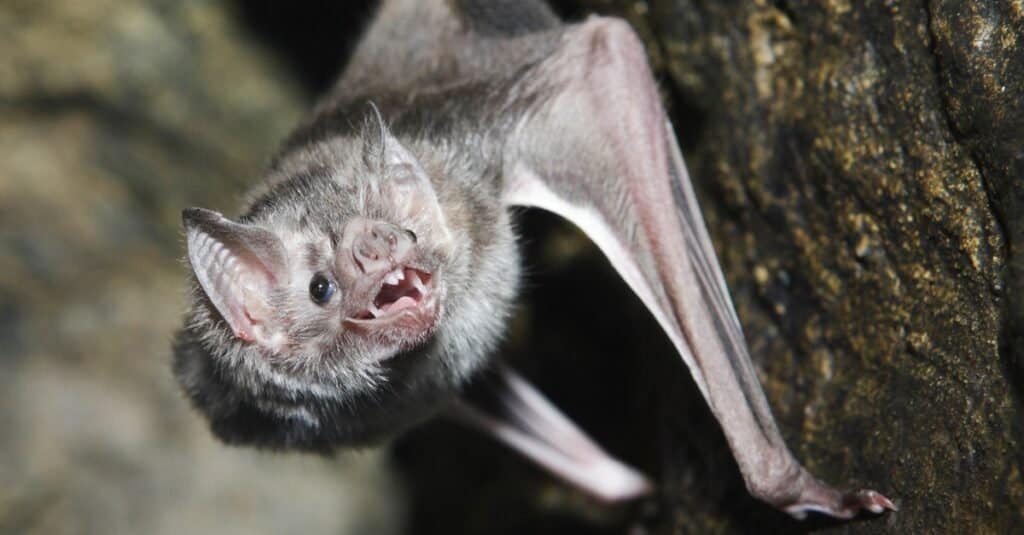
There are three different species of vampire bats alive today.
©Michael Lynch/Shutterstock.com
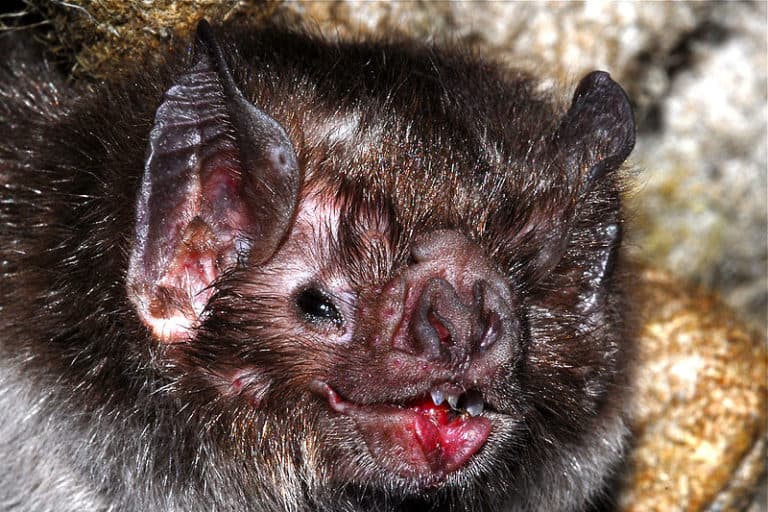
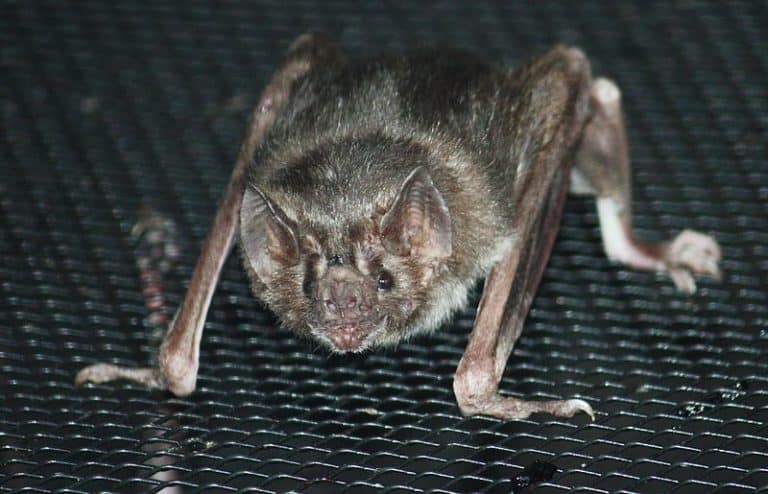
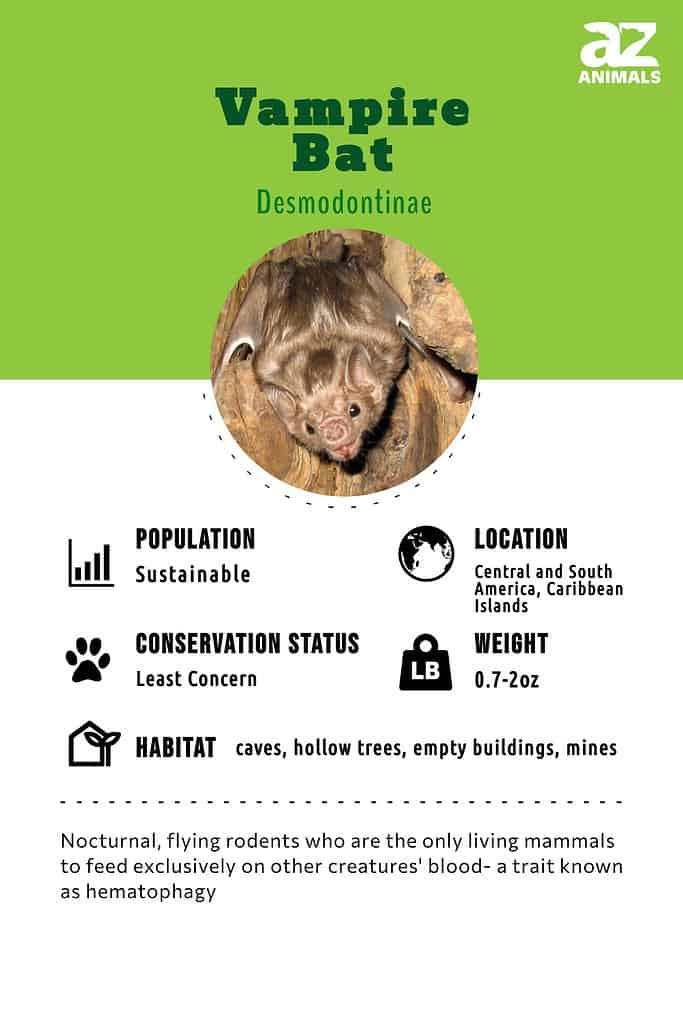
Vampire bats are a small subgroup of bat native to Central and South America. There are three recognized species of Vampire Bat, all of which also belong to a genus all their own. The Common Vampire Bat, the Hairy-Legged Vampire Bat, and the White-Winged Vampire Bat are all closely related and share the same unsavory means of acquiring nutrition, as they are the only known mammals that feed exclusively on blood. Over time, Vampire Bats are animals that have perfectly adapted to the consumption of their food source, with a leaf-shaped heat sensor on the tip of their nose that detects the ideal place for the bat to make its incision to ensure easy access to the warm blood they need to live.
Anatomy and Appearance
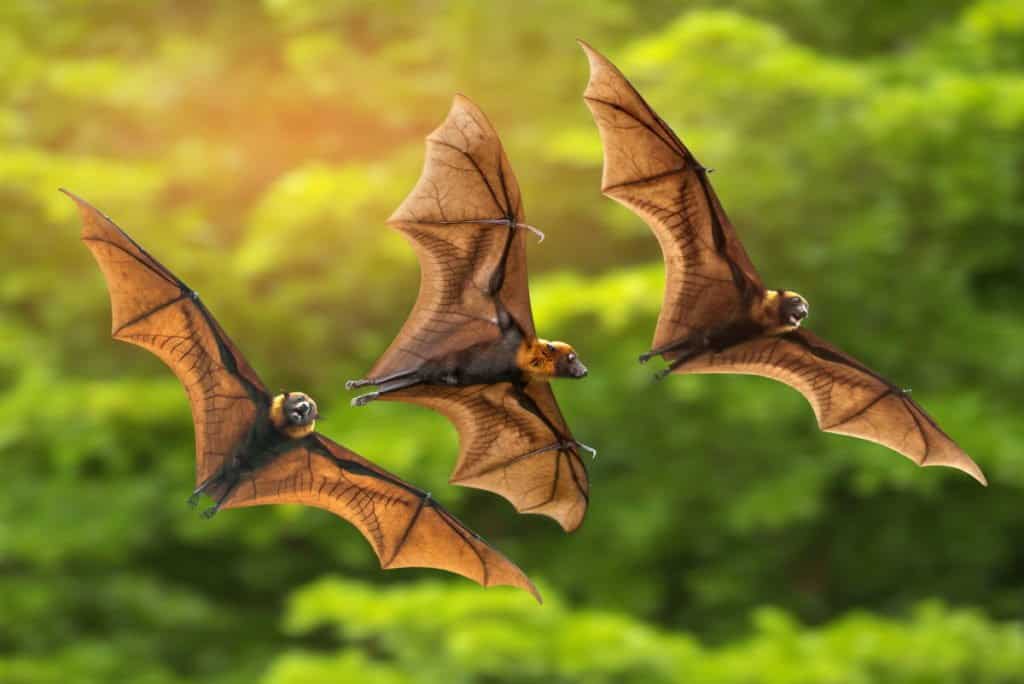
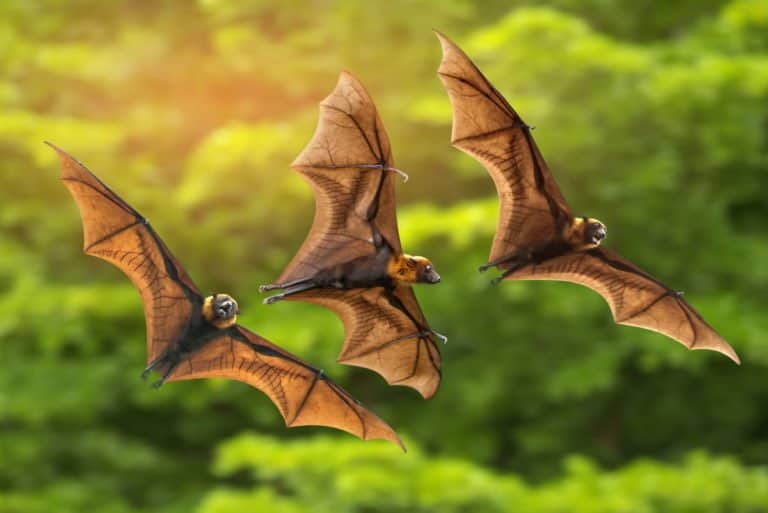
Vampire bats have a wingspan of around 8 inches.
©Independent birds/Shutterstock.com
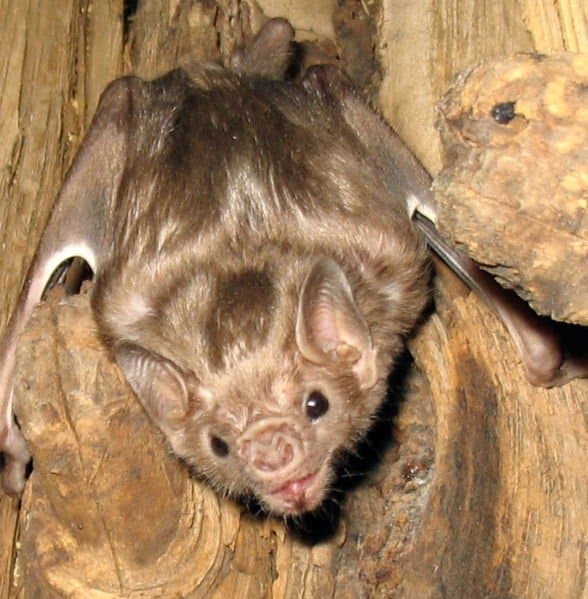
The Vampire Bat is a relatively small creature in relation to the large amounts of fear it instills, with its body typically being no larger than a human thumb. Its wings are comprised of slender, finger-like bones that are coated in a thin layer of skin, additionally, they are equipped with a thumb claw which they use for maneuvering onto its prey. Vampire Bats have brownish-grey fur with a lighter-colored belly.
As with other Bats, Vampire Bats are known to use echolocation in order to visualize their surroundings in the dark. This is achieved by producing high-pitched sounds while flying that bounce off the objects in the area, which are in turn bounced back to the bat. The amount of time the sound takes to return to the bat after they produce it can be used by the bat to understand how close or far away the things around them are.
Distribution and Habitat
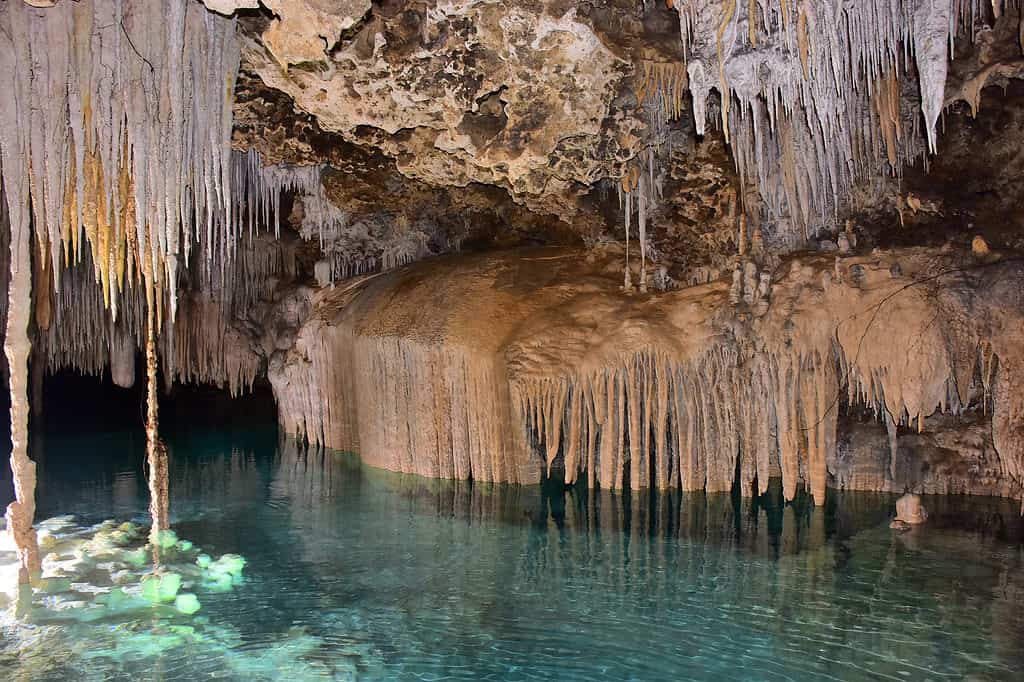
Vampire bats commonly dwell inside dark, open caves.
©nikitich viktoriya/Shutterstock.com
Vampire Bats are located throughout Central and South America, from Mexico to Northern Argentina. Vampire Bats are found in both tropical and subtropical regions and can adapt to living in both humid and dry climates. Like most bats, vampire bats are nocturnal, spending the daylight hours roosting in hollow trees, caves, mines, and even derelict buildings in colonies that can be more than 1,000 members strong. Other types of bats also tend to inhabit similar environments, but different species tend to give each other space and not interact with each other directly.
Behavior and Lifestyle
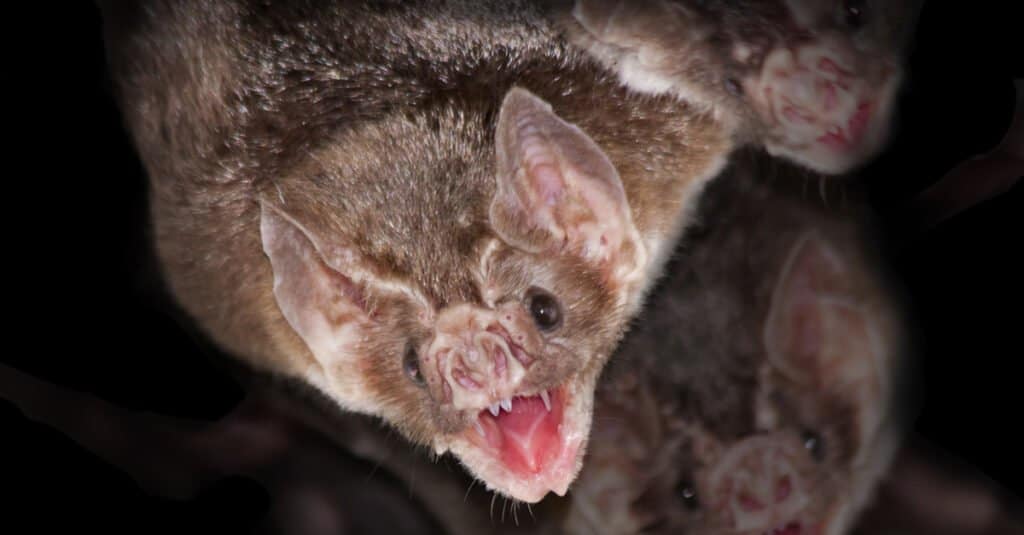
Vampire bats are nocturnal.
©belizar/Shutterstock.com
After sleeping upside in the darkness all day, Vampire Bats emerge when the moon appears in order to hunt for food. Despite being incredibly strong fliers, the design of their arms and legs means that they can also move about on the ground with surprising speed and agility. Vampire Bats fly about a meter above ground in search of a warm-blooded animal, and once found, they land close to it. The Vampire Bat then crawls up to its generally sleeping victim, before biting it and feeding on the flowing blood. Vampire Bats tend to be solitary hunters but roost together in colonies that usually contain around 100 individuals and divide into hierarchies of alpha males and around 6 females bonded them in addition to their babies.
Reproduction and Life Cycle
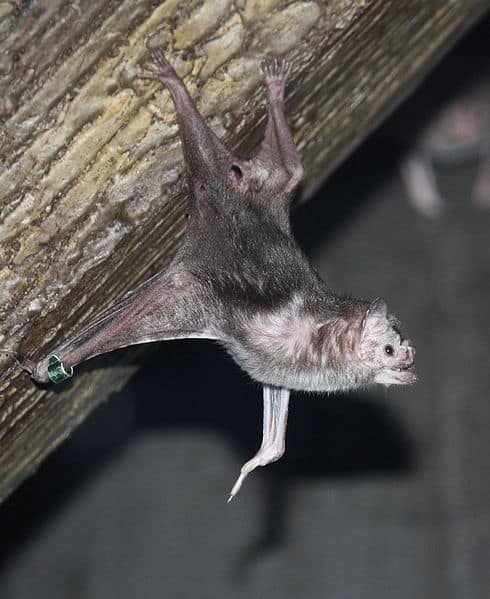
Vampire bats born in captivity wean from their mothers considerably later than those in the wild.
©Ltshears / CC BY-SA 3.0 / Wikimedia Commons – Original / License
Vampire Bats mate all year round and are known to have a fairly long gestation period in comparison to other species of small tropical bats. After between 3 and 4 months, the female Vampire Bat gives birth to a single baby which she cares for until it is weaned at between 3 and 5 months of age (those bat babies born in captivity are weaned noticeably later when they are 9 months old). As with other mammals, the young vampire bats feed on their mother’s milk until they are old enough to consume an adult diet, and will not reach their full adult weight for roughly a year. Female Vampire Bats do appear to be very caring mothers, known to care for and adopt young orphans in the colony. Vampire Bats can live for up to 12 years in the wild, although captive individuals have been known to nearly reach the age of 20.
Diet and Prey
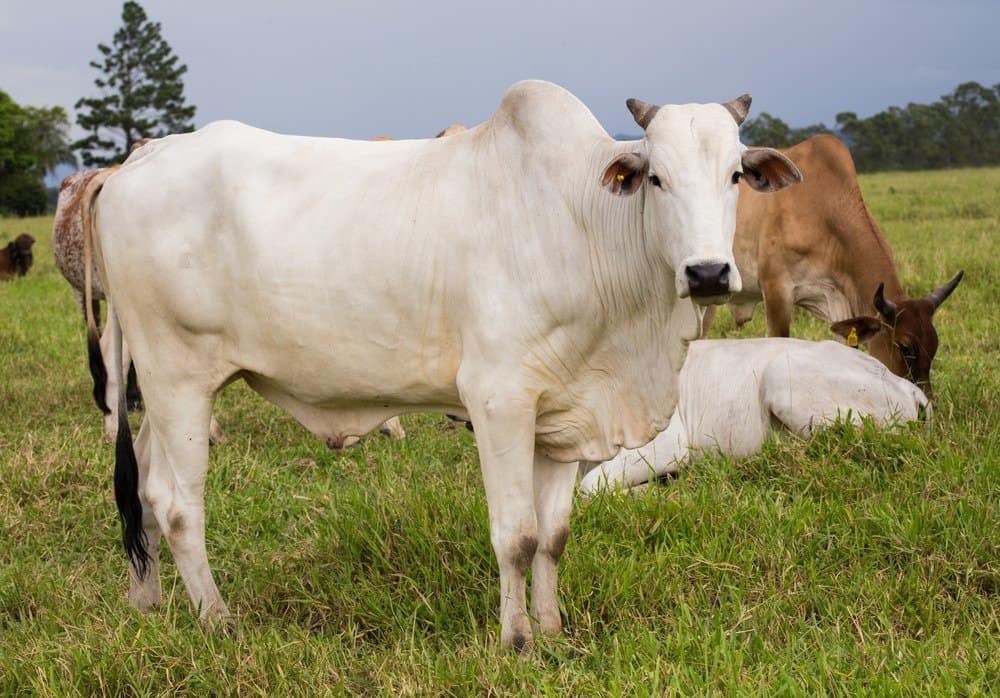
Cows are one of the animals most frequently used as a source of blood for vampire bats.
©Mostovyi Sergii Igorevich/Shutterstock.com
Vampire Bats use echolocation, sound, and smell in order to locate their food, which can measure as much as 10,000 times the size of this small creature, because of this vampire bats have adapted to exercise extreme caution while eating. First, they never land directly on their prey but instead land on the ground close by and crawl up to it, where they are able to detect veins close to the skin’s surface with ease thanks to their heatseeking nose. Using their piercing sharp incisors, the vampire bat then bites its host, immediately jumping backwards as a precaution in case the animal wakes up. Contrary to popular belief, vampire bats do not suck the blood of their victims, but rather lap it up using their grooved tongue as it flows out of the wound. Chemicals in the vampire bat’s saliva prevent bloodclots and sedate the area with natural painkillers, preventing the host from noticing they’ve been bitten. Learn more about the most venomous mammals here.
Predators and Threats
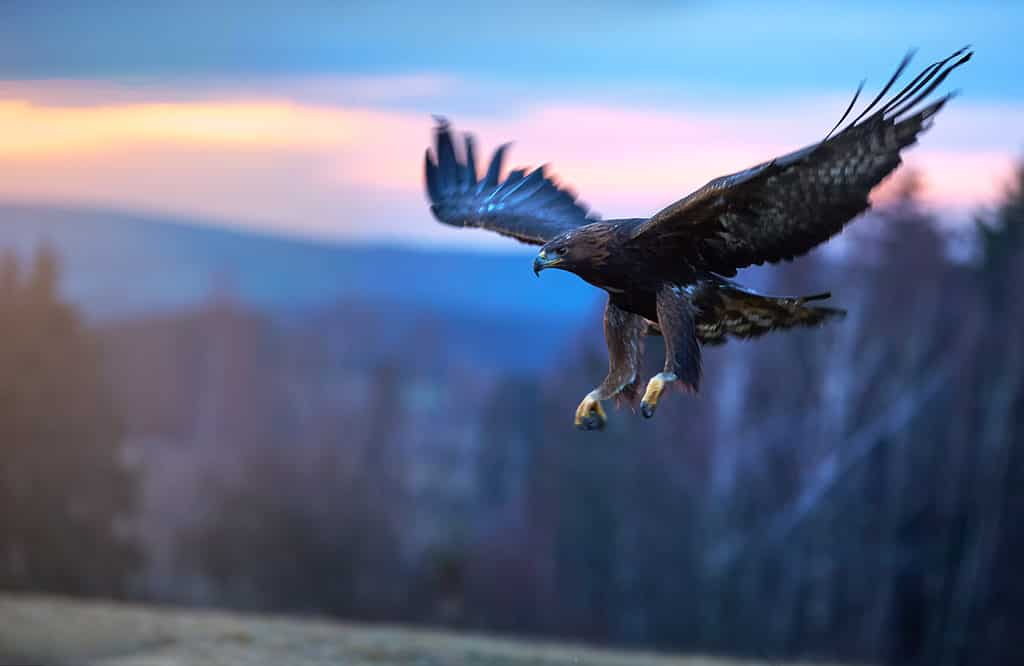
Eagles are known to feed on the vampire bat.
©Martin Mecnarowski/Shutterstock.com
In spite of its impressively complex tactics of predation, vampire bats are still prey to other animals who are stalking the night skies for a meal. Birds of Prey with keen vision such as Hawks and Eagles are the most common threats to the vampire bat in the air. Snakes have been known to hunt the bats in their desolate caverns while they sleep during the daytime. Humans have become one of the bats’ biggest threats, mostly farmers that are known to poison the Bats that commonly feed on their livestock. These poisons (known as vampiricides) are specially designed to spread throughout the whole colony through social grooming, killing hundreds of individuals at a time.
Interesting Facts and Features
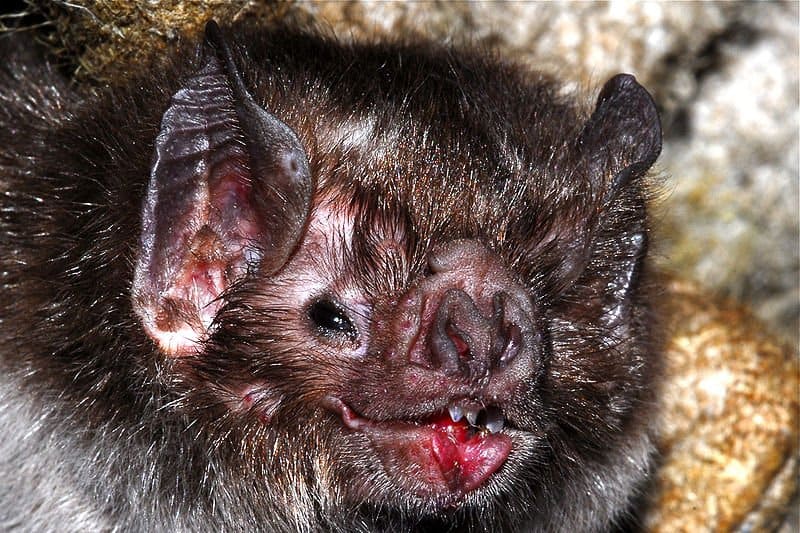
Vampire bats don’t “suck blood” in the way that we typically imagine.
©Desmodus / CC BY-SA 3.0 / Wikimedia Commons – Original / License
Vampire Bats feed exclusively on the blood of warm-blooded creatures, consuming up to a teaspoon (25ml) of blood for every 30 minutes of feeding. After their meals, vampire bats can increase in body weight to double their original size. It is said that in just one year, an average-sized Vampire Bat colony can drink the equivalent of the blood of 25 Cows, but their metabolism is so fast that they must feed every two days in order to stay alive. Vampire bats have nearly 20 teeth wich are mostly redundant due to their liquid diet, apart from the set of razor-sharp incisors which are used to puncture the flesh of their prey.
You can check out more incredible facts about vampire bats.
Relationship with Humans
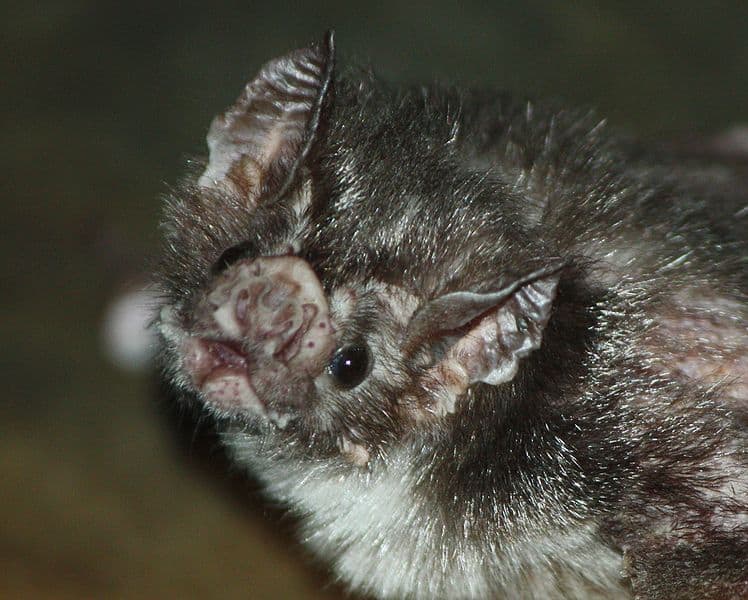
Vampire Bats can transmit rabies to humans if bitten.
©Ltshears / Creative Commons – Original
Vampire bats are consistently treated as pests by humans in their native environment. Farmers particularly have a very strained relationship with vampire bats as they oftentimes prey on their sleeping cattle. Even though the amount of blood consumed by bats is miniscule and does not harm the animal, the bite can lead to infection or disease in the animal after the bat has fed. Farmers have utilized poison as well as dynamite in more severe instances to wipe out colonies of bats 1,000s of members at a time. Folk tales that exaggerate the capabilities of these creatures and imbue them with malicious intent also have given them a bad reputation as shapeshifters and monsters.
Conservation Status and Life Today
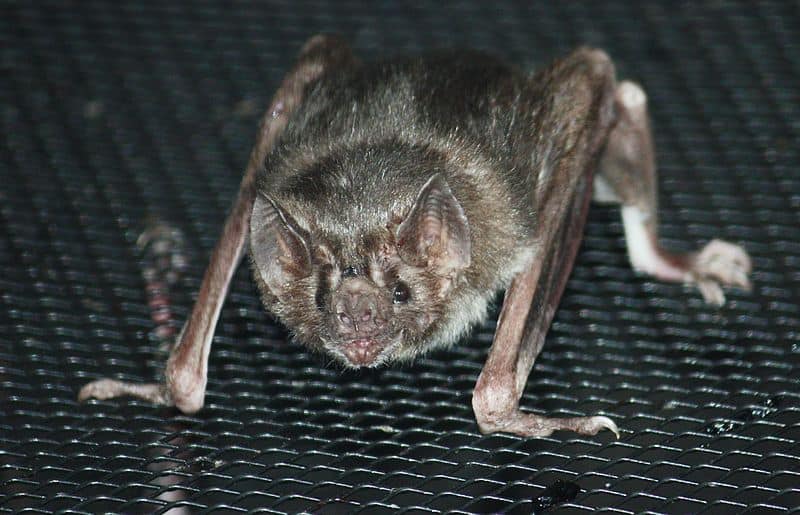
Although 5 species of vampire bat are known to have gone extinct, the three extant species are thriving.
©Ltshears / Creative Commons – Original
All 3 types of vampire bats are classified as being of Least Concern of becoming extinct in the wild for the perceivable future, due to the fact that their population is widespread and exposed to plentiful sources of food. Deforestation in regions where they live, along with human efforts to exterminate colonies that threaten livestock has led to population declines in certain areas.
Scientists have good reason to conserve vampire bat populations since discovering that the anti-coagulant found in the bat’s saliva proves to be more effective at preventing blood clotting than any known treatments, meaning that this creature could hold the key to saving thousands of lives of patients with strokes or heart attacks.
Vampire Bat Pictures
View all of our Vampire Bat pictures in the gallery.

How to say Vampire Bat in ...
Sources
- David Burnie, Dorling Kindersley (2011) Animal, The Definitive Visual Guide To The World's Wildlife / Accessed March 9, 2011
- Tom Jackson, Lorenz Books (2007) The World Encyclopedia Of Animals / Accessed March 9, 2011
- David Burnie, Kingfisher (2011) The Kingfisher Animal Encyclopedia / Accessed March 9, 2011
- Richard Mackay, University of California Press (2009) The Atlas Of Endangered Species / Accessed March 9, 2011
- David Burnie, Dorling Kindersley (2008) Illustrated Encyclopedia Of Animals / Accessed March 9, 2011
- Dorling Kindersley (2006) Dorling Kindersley Encyclopedia Of Animals / Accessed March 9, 2011
- David W. Macdonald, Oxford University Press (2010) The Encyclopedia Of Mammals / Accessed March 9, 2011
- Vampire Bat Feeding / Accessed March 9, 2011
- Vampire Bat Lifecycles / Accessed March 9, 2011
- Vampire Bat Behaviour / Accessed March 9, 2011
- Vampire Bats / Accessed March 9, 2011
- Vampire Bat Senses / Accessed March 9, 2011