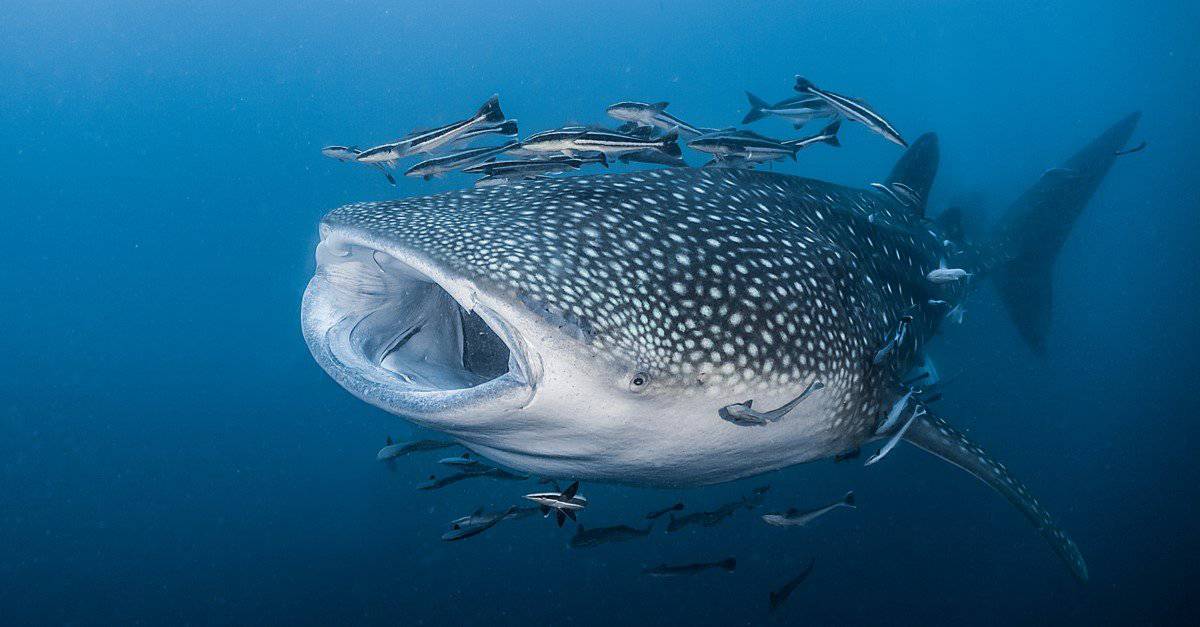
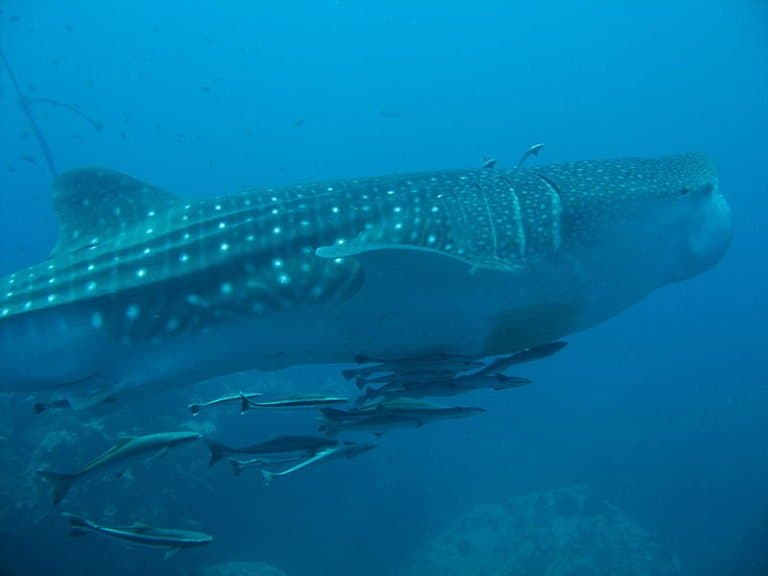





Despite their name, whale sharks are not whales; they are actually fish. Their name comes from their huge size. Often growing to 40 feet long or more, the whale shark is a fish that is about the size of a large school bus. These sharks are filter feeders, like many whales, and live on a diet of plankton and tiny krill or small fish. Whale sharks are generally peaceful fish and have been known to allow divers to hang onto their dorsal fins for a ride.
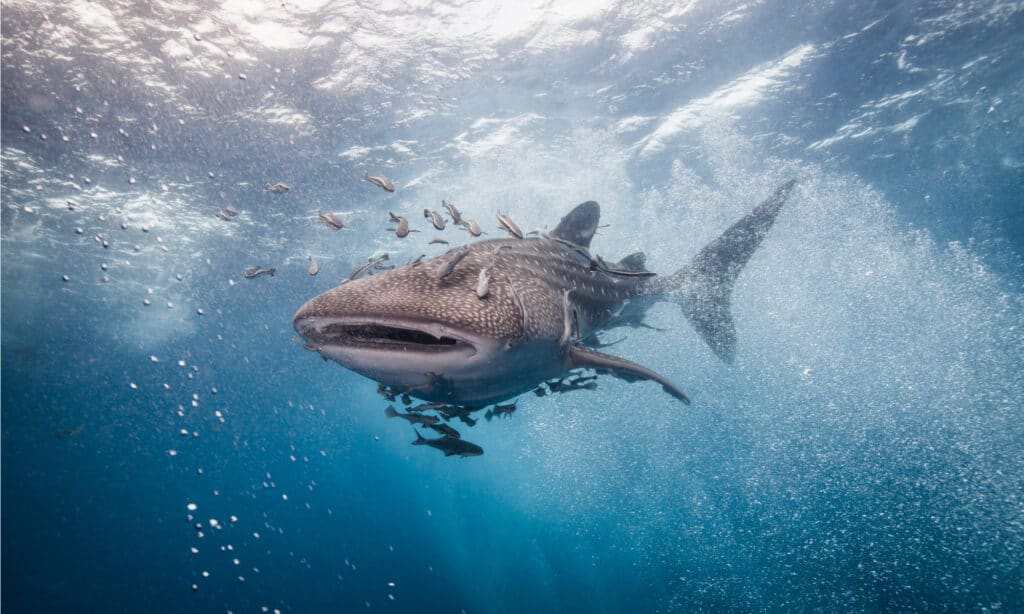
At weights of up to 15 tons, the whale shark is the largest living fish.
©Tee Wong/Shutterstock.com
Whale Shark Facts
- The purpose of whale shark teeth is unclear since they aren’t actively used.
- Whale sharks are known to be curious and often interact with boats.
- Scientists have discovered that a whale shark’s eyeballs have tiny teeth on them.
- Every year, whale sharks follow a migration pattern that takes them across thousands of miles of ocean.
- Whale shark eggs stay inside the mother and hatch there.
Classification and Scientific Name
The whale shark’s scientific name is Rhincodon typus, which is derived from the Latin words for ‘rasp’ and ‘tooth.’ The whale shark has many layers of tiny, raspy teeth that provide the basis for the name.
Whale sharks are classified in the order Orectolobiformes, which also includes nurse sharks, and are in the class Chondrichthyes (or cartilaginous fish). It is the only member of the Rhincodontidae family of sharks.
Evolution
The whale shark wasn’t discovered as a species until the early to mid-1800s. Found off the coast of South Africa, it is believed to have evolved from carpet sharks that were bottom-dwellers, although its actual history dates back to the Jurassic and Cretaceous periods, 245 to 65 million years ago. It is still considered a rare species.
Appearance And Behavior
The Whale Shark is the biggest fish in the world. It is a large fish that can grow up to 60 feet long, though most specimens reach about 40 feet in length and weigh about 15 tons. The largest known whale shark was measured at 62 feet in 2001, with a weight estimated to be over 60 tons.
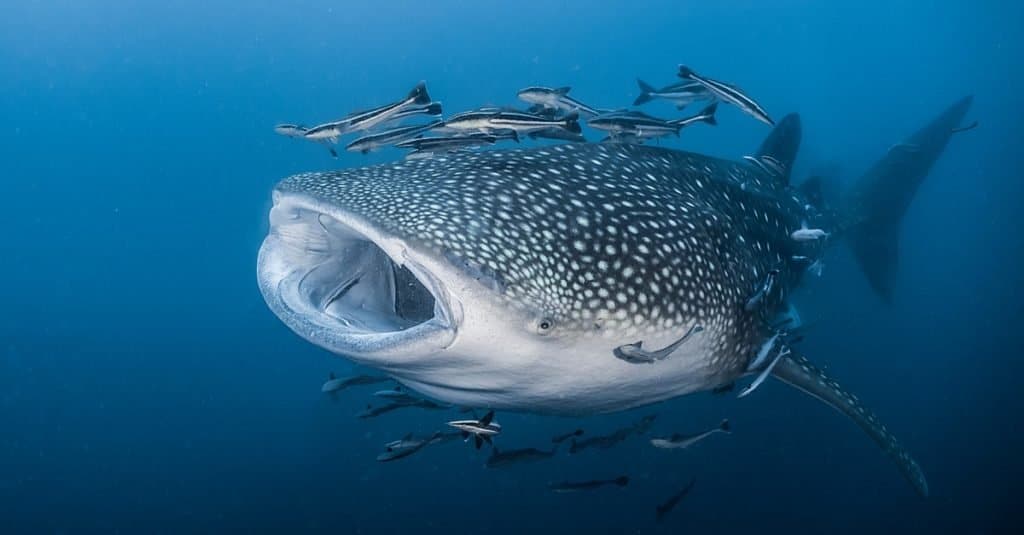
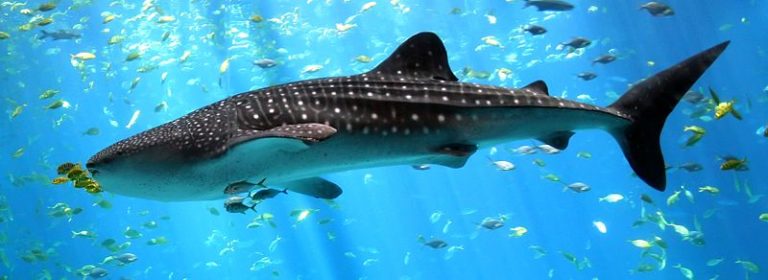
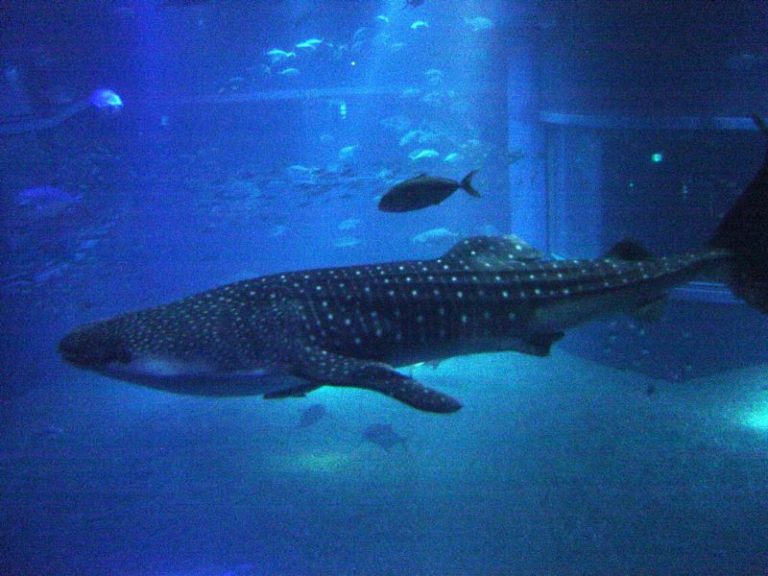
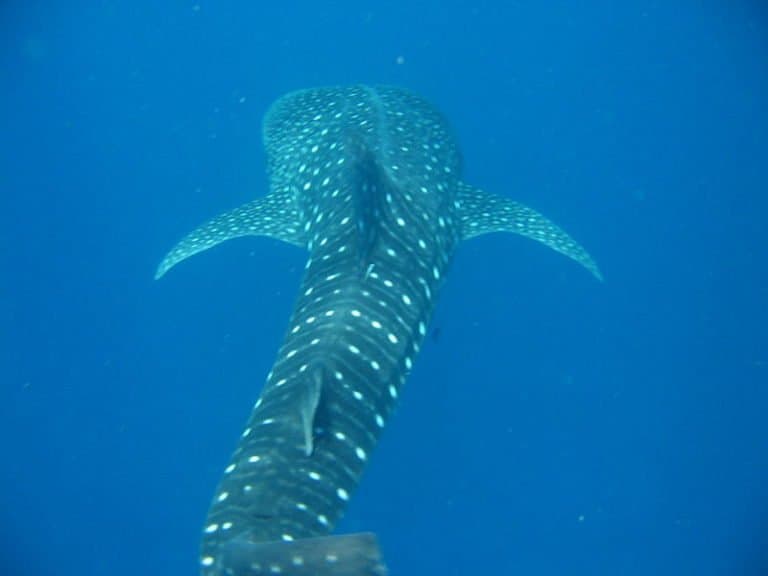
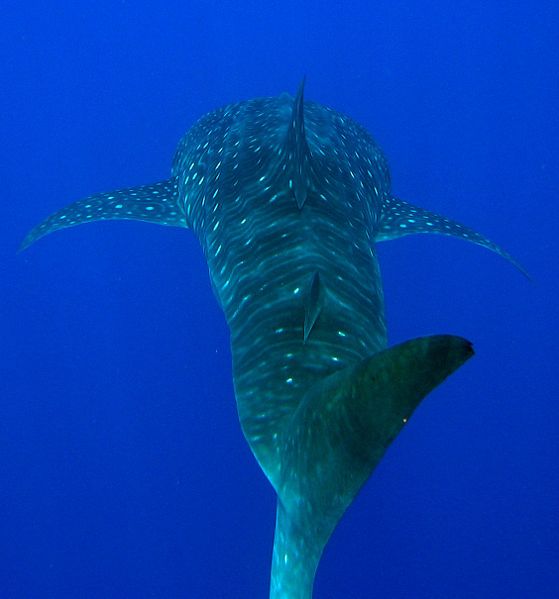
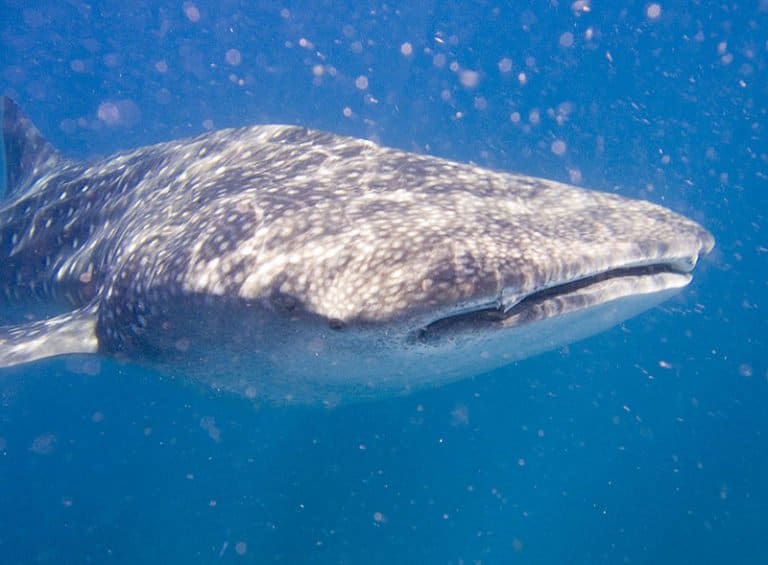
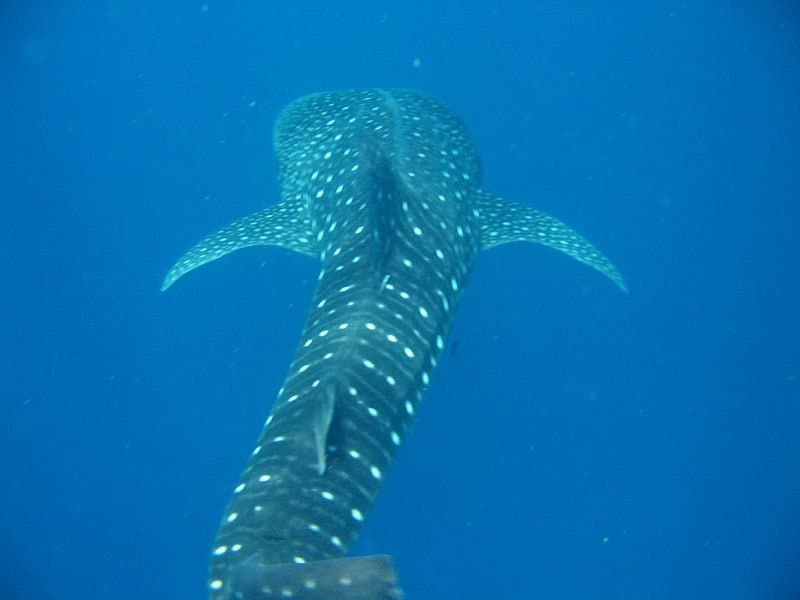
These fish have the shape of a shark, but their mouths are in the front of their large, flat heads rather than underneath, as with many sharks. Their mouths are large, with the mouth of an average-sized shark reaching more than five feet wide, allowing them to scoop up their food as they swim. Whale sharks are dark gray on top and light underneath, with a series of light spots or stripes covering the dark parts of their bodies. This helps to camouflage them as they swim.
They tend to be non-aggressive and often allow themselves to be approached by divers who can gently interact with them without any problems. These huge fish will sometimes allow divers to grab their dorsal fins and will then tow them through the water, seemingly without concern. They sometimes swim up to boats and may even bump into the crafts, but this behavior appears to be done out of curiosity and is not intended to harm. They coexist well with other sea life unless they feel threatened.
These sharks are usually solitary, living by themselves except at certain times of the year when they have been observed gathering in groups, called schools, for feeding, such as their annual migration to the coast of Australia.
Habitat
These fish are found around the world, almost always in warm, tropical, or temperate seas, with the exception of the Mediterranean Sea. They are typically found between latitude 30 degrees north and latitude 35 degrees south off the coasts of countries such as Belize, Mexico, Ecuador, the Philippines, Australia, and South Africa. They prefer water in the range of 21 to 30 °C (70 to 80°F), but they have been found in water as cold as 3 °C (37.4°F).
While they inhabit deeper waters across the oceans, they are most often found in shallow coastal waters where there is plenty of food for them.
Diet
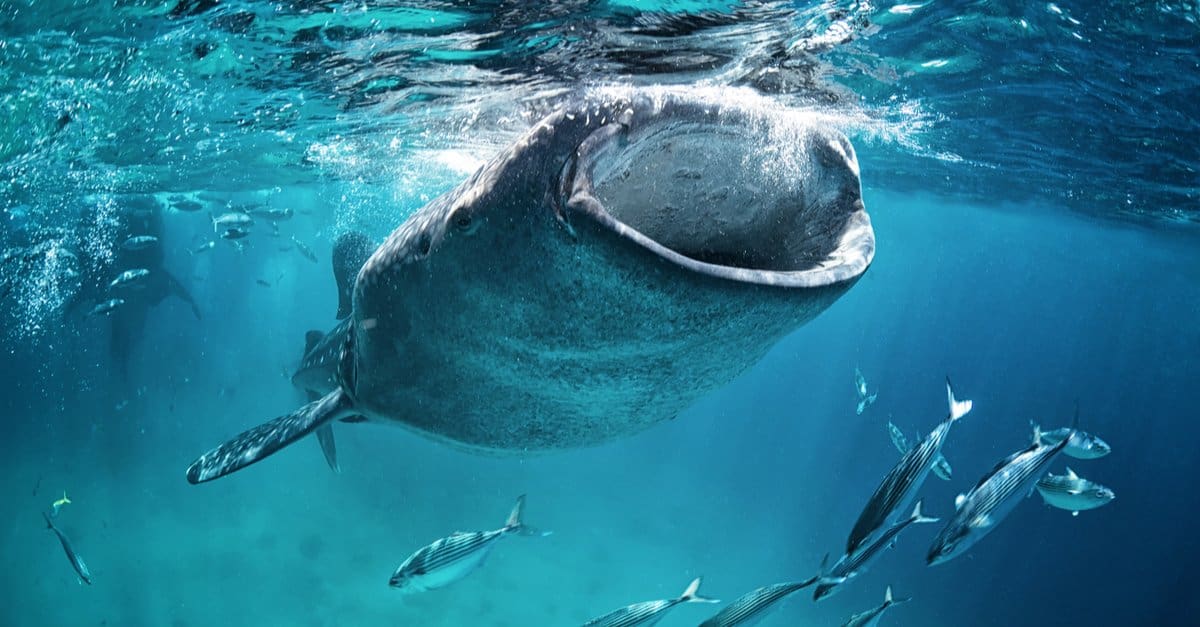
Whale sharks’ diet consists mostly of plankton.
©Fata Morgana by Andrew Marriott/Shutterstock.com
Although this giant fish is indeed a shark, it does not hunt down large prey but instead survives on a diet that mainly consists of plankton. The whale shark eats other small prey such as anchovies, krill, sardines, jellyfish, mackerel, crab, and squid. These sharks will not eat very large food, including squid or crabs that have grown too big for them.
It is a passive feeder, a method that consists mainly of the shark swimming with its mouth open so it can suck in any available food. Once it has a mouthful of food, the shark will close its mouth and remove the water through its gills, leaving its prey trapped in the gill rakers. It can then swallow the food and open its mouth again to gather more prey.
The purpose of the shark’s teeth is unclear because this shark does not use its teeth for feeding. The teeth may sometimes aid in the capture of small fish or jellyfish, but this hasn’t been established.
Predators And Threats

Humans are a threat to whale sharks, as in some cases, they are accidentally caught in our fishing nets.
©iStock.com/Avesun
Other shark species are actually some of the top whale shark predators, as well as other large oceanic predators. Great white sharks, tiger sharks, and orcas (also known as killer whales) all prey upon younger, smaller sharks, but, for the most part, such predators don’t prey on larger whale sharks because they’re just too big for predators to challenge.
Another threat to the continued existence of these sharks is humans. In some cases, humans kill them by accidentally catching them in fishing nets, where they usually end up dying. These huge fish are also still hunted in some countries, such as India, the Philippines, and China, where they are used for food, oil, and their fins.
These shark numbers have been decreasing, and in 2016, they were listed by the International Union for the Conservation of Nature (IUCN) as Endangered, which means they are at high risk of becoming extinct in the wild.
Reproduction, Babies, And Lifespan
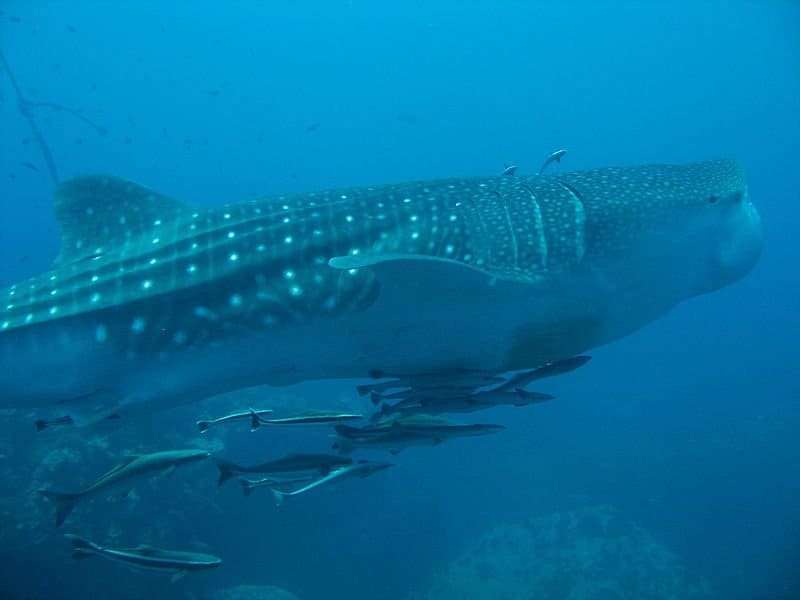
Whale shark lifespan is not known, but it is estimated at around 70 years of age.
©Schuetze77 / Creative Commons – Original
Not much is known about these sharks’ reproduction, as these big fish can be evasive if they don’t wish to be seen. Their mating behavior is uncertain, as it is unlikely to be witnessed and, therefore, not well-documented. However, scientists do know that these sharks must be 25 to 30 years old before they are ready to breed.
Once the sharks have mated, the mother shark retains the fertilized eggs inside her, so that the baby shark eggs have a safe place to develop. They will remain inside the mother until they hatch, at which time the baby sharks are born alive and fully formed, and ready to take care of themselves. For this reason, the mother does not take care of the babies once they are born.
Litter size is uncertain, but a litter of 300 whale shark babies (called pups) has been documented. The babies are about 21 to 25 inches long at birth.
Whale shark lifespan is not clearly known, but it is estimated to be around 70 years, and scientists have determined that these big fish can live for over 100 years, possibly as long as 125 years.
Population
No accurate counts of the worldwide whale shark population exist, but their numbers appear to be decreasing significantly in parts of the Atlantic and Pacific oceans. Many countries have banned or regulated the hunting of whale sharks, but such activities still occur in various parts of the world.
In China, hundreds of these fish are illegally killed each year, at least partly for their fins, which are prized for their supposed medicinal qualities. The oil is also collected to be used in food and medicine, and the meat is used either fresh or salted as a food source for some people. Some estimates show a decline of about 75 percent of the whale shark population in certain parts of the Pacific Ocean. For this reason, their conservation status is listed by the IUCN as endangered.
Whale Shark Pictures
View all of our Whale Shark pictures in the gallery.

Sources
- David Burnie, Dorling Kindersley Animal, The Definitive Visual Guide To The World's Wildlife / Accessed December 10, 2008
- Tom Jackson, Lorenz Books The World Encyclopedia Of Animals / Accessed December 10, 2008
- David Burnie, Kingfisher The Kingfisher Animal Encyclopedia / Accessed December 10, 2008
- Richard Mackay, University of California Press The Atlas Of Endangered Species / Accessed December 10, 2008
- David Burnie, Dorling Kindersley Illustrated Encyclopedia Of Animals / Accessed December 10, 2008
- Dorling Kindersley Dorling Kindersley Encyclopedia Of Animals / Accessed December 10, 2008