W
Species Profile

Woodlouse

Oniscidea

Crustaceans that compost the forest floor
iStock.com/haricono

Woodlouse Distribution

Click a location to explore more animals from that region

Invasive Species

This map shows coastal regions where Woodlouse are found.

Loading map...

Size Comparison

Human 5'8"
Woodlouse 0 in

Woodlouse stands at 0% of average human height.

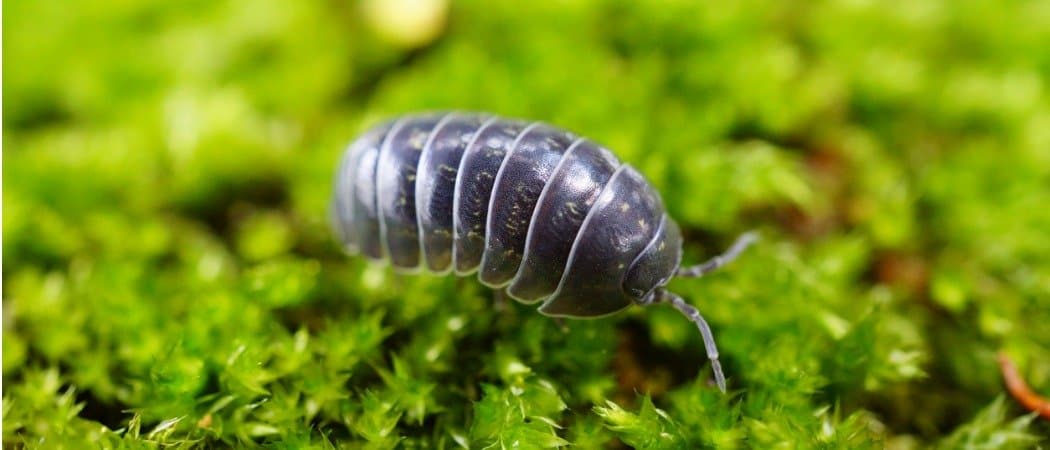
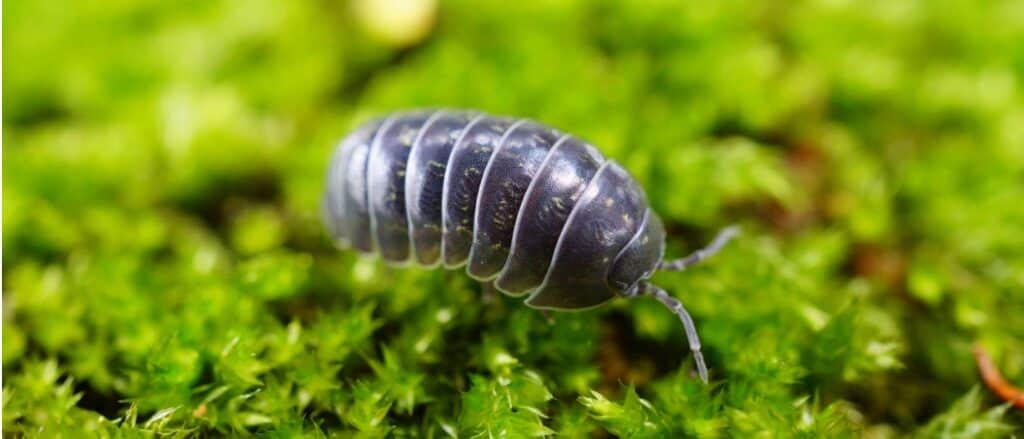
woodlouse on greenery

At a Glance

Order Overview This page covers the Woodlouse order as a group. Stats below are general traits shared across the order.
Also Known As Pillbug, Sowbug, Roly-poly, Armadillo bug, Slater, Potato bug
Activity Nocturnal+
Lifespan 2.5 years
Weight 0.002 lbs
Status Not Evaluated
Did You Know?

Adults across Oniscidea range roughly 1.5-35 mm long, from tiny soil dwellers to large Mediterranean species.

Scientific Classification

Order Overview "Woodlouse" is not a single species but represents an entire order containing multiple species.

Woodlice are terrestrial isopod crustaceans (mostly Oniscidea) that live in damp microhabitats and feed on decaying plant material, aiding decomposition. They are not insects; they breathe via modified gills and are strongly tied to humidity, hiding under logs, stones, and leaf litter.

Kingdom
Animalia
Phylum
Arthropoda
Class
Malacostraca
Order
Isopoda

Distinguishing Features

  • Crustacean with seven pairs of legs
  • Flattened, segmented, armored body
  • Antennae prominent; two pairs overall
  • Breathes with pleopodal “gills” requiring moisture
  • Some species roll into a ball (pillbugs)

Physical Measurements

Males and females differ in size

Height
0 in (0 in – 0 in)
Length
0 in (0 in – 1 in)
Weight
0 lbs (0 lbs – 0 lbs)
Top Speed
0 mph
running

Appearance

Primary Colors
Secondary Colors
Skin Type Armored exoskeleton
Distinctive Features
  • Body length ranges roughly 0.2-3+ cm across the order.
  • Lifespan ranges months to about 3-5 years, species-dependent.
  • Dorsoventrally flattened, segmented body with overlapping dorsal plates.
  • Seven pairs of walking legs; pace varies from slow to quick.
  • Two pairs of antennae; the second pair is longer and mobile.
  • Modified gills/pleopods for breathing; humidity strongly limits activity.
  • Many hide under logs, stones, and litter in damp microhabitats.
  • Mostly detritivores aiding decomposition; some graze algae or are omnivorous.
  • Coloration and patterns vary widely among families and local populations.
  • Some lineages roll into a tight ball; others cannot conglobate.
  • Uropods may protrude or be tucked, differing strongly among families.
  • Juveniles resemble adults; molts occur in two stages in many species.

Sexual Dimorphism

Sexual dimorphism is usually subtle across Oniscidea. Males commonly have modified pleopods or appendages for mating, while females develop a ventral brood pouch (marsupium) during reproduction; body size differences vary by species.

  • Pleopods often modified for sperm transfer and mating.
  • Sometimes narrower body or slightly smaller average size.
  • Occasionally enlarged or differently shaped uropods/appendages.
  • Marsupium (brood pouch) forms on ventral plates when breeding.
  • Gravid females may appear broader through the pereon.
  • Can carry developing young internally until release.

Did You Know?

Adults across Oniscidea range roughly 1.5-35 mm long, from tiny soil dwellers to large Mediterranean species.

Typical lifespans span about 1-5 years, varying with species, temperature, and moisture stability.

They're crustaceans (relatives of shrimp), not insects-most rely on humid air to keep their respiratory surfaces working.

Most species are detritivores, shredding dead leaves and wood and speeding nutrient cycling in soils.

Some lineages roll into a tight ball ("pillbugs"), while many others stay flat and fast ("sowbugs").

Females brood eggs and young in a fluid-filled pouch (marsupium), giving unusually high parental care for small arthropods.

Unique Adaptations

  • Respiration uses modified gills; many have pleopodal "lungs" that function best in humid conditions.
  • A calcium-rich exoskeleton supports life on land; some store calcium internally to rebuild after molting.
  • Water-balance behaviors and cuticle traits limit dehydration, yet most still require damp refuges.
  • Conglobation in pillbugs shields soft undersides and reduces moisture loss and predation risk.
  • A brood pouch (marsupium) protects embryos and releases miniature young, improving survival in patchy terrestrial habitats.

Interesting Behaviors

  • Mostly nocturnal, they shelter under logs, stones, and leaf litter to avoid drying out during daytime.
  • Many species aggregate in groups, reducing water loss and helping individuals locate favorable humid microhabitats.
  • Pill-rolling (conglobation) is common in some families, but many woodlice cannot roll at all.
  • Feeding often includes their own feces or microbe-rich material, helping extract nutrients from tough plant litter.
  • Ecology varies widely: from cave-adapted species to desert burrowers, but all track moisture at fine scales.

Cultural Significance

Woodlice are familiar "garden helpers," widely used in composting education and bioactive terrariums. Their presence often signals damp microhabitats and healthy detritus food webs, and they feature in children's nature study worldwide.

Myths & Legends

In early modern European folk medicine, dried "woodlice powder" was sold by apothecaries for ailments like jaundice and urinary troubles.

Across parts of Europe, traditional nicknames liken them to pigs-"sowbug" or "little cellar pig"-reflecting their rounded bodies and rooting habits.

In Japan, children commonly call pillbugs "dumpling insects," a folk name tied to the familiar ball-rolling behavior.

You might be looking for:

Common pillbug / roly‑poly

30%

Armadillidium vulgare

Widespread woodlouse that rolls into a tight ball; often the default “woodlouse” in gardens and urban habitats.

Common rough woodlouse

25%

Porcellio scaber

Gray, rough-textured, fast-moving woodlouse; very common under stones, logs, and compost, especially in temperate regions.

Common shiny woodlouse

20%

Oniscus asellus

Larger, flatter woodlouse with smoother, shinier body; typical in damp leaf litter and under rotting wood.

Common striped woodlouse

15%

Philoscia muscorum

Small, quick species with pale striping; often found in grassland edges and leaf litter, tolerating slightly drier sites.

Life Cycle

Birth 50 juveniles
Lifespan 3 years

Lifespan

In the Wild
0.5–7 years
In Captivity
1–10 years

Reproduction

Mating System Polygynandry
Social Structure Aggregation Group
Breeding Season Spring-summer in temperate; year-round in tropics
Breeding Pattern Transient
Fertilization Internal Fertilization
Birth Type Internal_fertilization

Across Oniscidea, mating typically occurs within loose aggregations in humid refuges. Males often compete and engage in pre-copulatory guarding, while both sexes may mate with multiple partners; females brood offspring in a marsupium without helper care.

Behavior & Ecology

Social Aggregation Group: 20
Activity Nocturnal, Crepuscular, Cathemeral, Diurnal
Diet Detritivore decaying leaf litter
Seasonal Hibernates

Temperament

Shy
Thigmotactic
Moisture-seeking
Non-aggressive
Defensive

Communication

generally silent
rare stridulation
aggregation pheromones
tactile antennation
fecal/food odor cues
cuticular hydrocarbon cues
body posture Conglobation
substrate-borne vibrations

Habitat

Biomes:
Tropical Rainforest Tropical Dry Forest Savanna Desert Hot Desert Cold Mediterranean Temperate Grassland Temperate Forest Temperate Rainforest Boreal Forest (Taiga) Tundra Alpine Wetland +7
Terrain:
Mountainous Hilly Plateau Plains Valley Coastal Island Riverine Volcanic Karst Rocky Sandy Muddy +7
Elevation: Up to 14763 ft 9 in

Ecological Role

Detritivores and litter processors in moist terrestrial microhabitats; occasionally omnivorous scavengers.

leaf-litter breakdown nutrient cycling soil formation microbial dispersal prey for predators

Diet Details

Other Foods:
Leaf litter Rotting wood Humus Mycelium Algal biofilm Lichens Animal feces +1

Human Interaction

Domestication Status

Wild

Oniscidea have not been domesticated for labor or production. Humans commonly interact with them as household detritivores, compost-bin residents, classroom specimens, and increasingly as captive "clean-up crew" cultures in terraria and vivaria.

Danger Level

Low
  • No venom; do not bite humans
  • Mild allergy or asthma trigger
  • Occasional greenhouse seedling grazing
  • Household nuisance in damp buildings
  • May carry microbes; minimal disease risk

As a Pet

Suitable as Pet

Legality: Generally legal; collection/import may be locally restricted.

Care Level: Easy

Purchase Cost: Up to $30
Lifetime Cost: $20 - $150

Economic Value

Uses:
Research Education Composting Pet-trade Bioindicator
Products:
  • compost
  • biomass

Relationships

Related Species 5

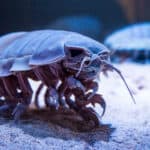
Giant isopod
Giant isopod Bathynomus giganteus Shared Order
Tongue-eating louse Cymothoa exigua Shared Order
Water louse Asellus aquaticus Shared Order
Sea slater
Sea slater Ligia oceanica Shared Order
Idotea isopod Idotea balthica Shared Order

Ecological Equivalents 5

Animals that fill a similar ecological role in their ecosystem

Millipedes
Millipedes Diplopoda Moisture-loving detritivores that fragment leaf litter and wood.
Springtails Collembola Soil microhabitat decomposers that feed on fungi and detritus.
Earthworm
Earthworm Lumbricus terrestris Detritus processors that accelerate soil nutrient cycling.
Slugs Deroceras reticulatum They shelter in damp refuges and consume decaying vegetation and microbes.
Oribatid mites Oribatida Litter-dwelling detritivores strongly tied to humid microhabitats.

Types of Woodlouse

14

Explore 14 recognized types of woodlouse

Common pill woodlouse (pillbug) Armadillidium vulgare
Rough woodlouse Porcellio scaber
Common shiny woodlouse Oniscus asellus
Common striped woodlouse Philoscia muscorum
Sea slater
Sea slater Ligia oceanica
Powder blue isopod Porcellionides pruinosus
Rathke's woodlouse Trachelipus rathkii
Nosey pill woodlouse Armadillidium nasatum
Riparian woodlouse Hyloniscus riparius
Ant woodlouse Platyarthrus hoffmannseggii
Desert social woodlouse Hemilepistus reaumuri
Beach pill woodlouse Tylos europaeus
Little sea isopod (isopod pet trade "Little Sea") Cubaris murina
Giant canyon isopod (isopod pet trade "Dairy Cow" relative) Porcellio laevis

“A female pill bug has a pouch on her belly where she carries as many as 200 fertilized eggs.”

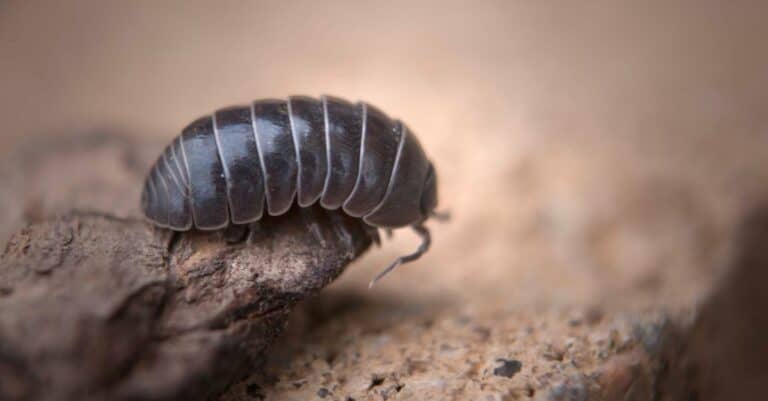
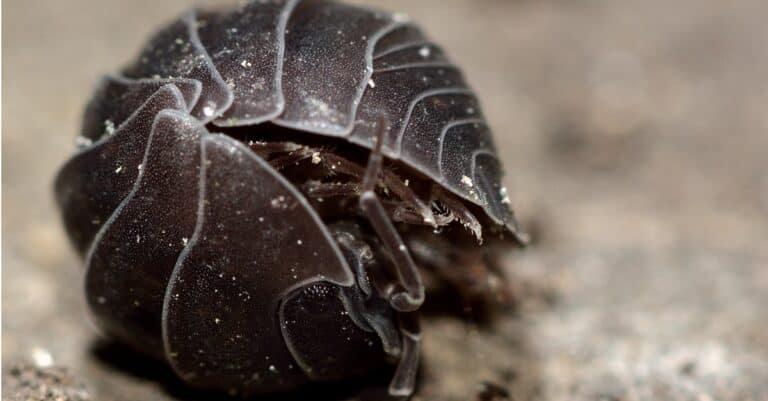
When a woodlouse feels threatened or in danger, it rolls its body up into a ball so only its shell is visible. A rolled-up woodlouse looks kind of like a pill. That’s how it earned the name pill bug. One of the most surprising facts about a woodlouse is that it’s a terrestrial crustacean and not an insect.

These tiny creatures feed on mildew, fungus, decaying leaves, and materials found in a compost pile. By eating this decaying material, woodlice help to release nutrients into the soil. During their lifespan of two to three years, they are of great importance to the ecosystem.

4 Incredible Woodlouse Facts!
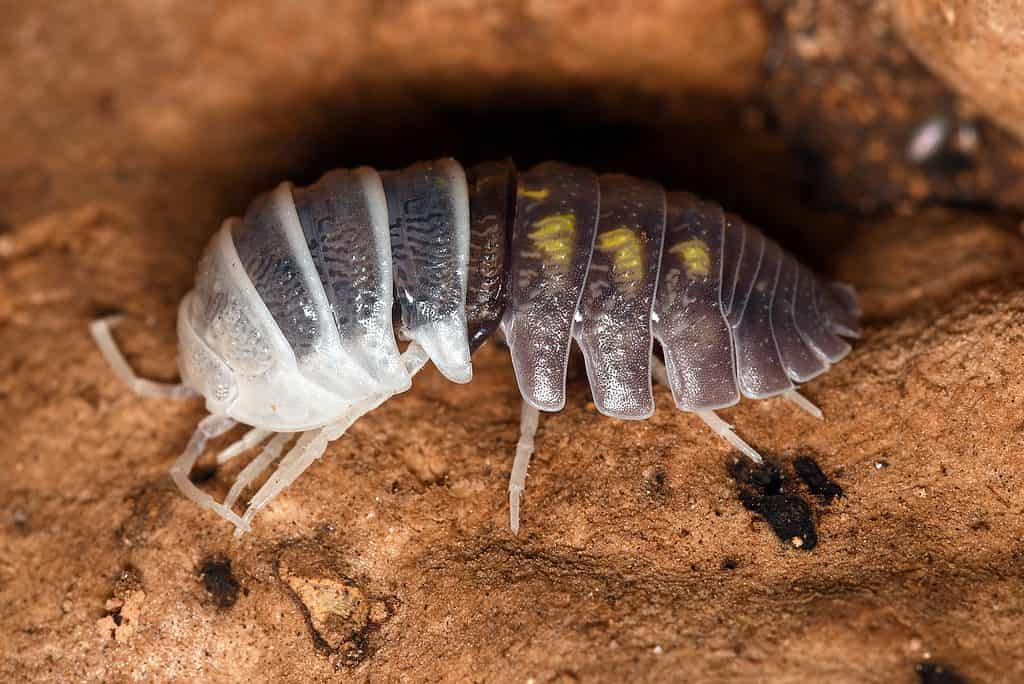
The molt of the exoskeleton’s anterior half of a terrestrial isopod Armadillidium granulatum (pill woodlice).

The molt of the exoskeleton’s anterior half of a terrestrial isopod Armadillidium granulatum (pill woodlice).

  • A woodlouse has 14 legs!
  • Its exoskeleton, or outer shell, has the appearance of armor.
  • Most of the time, they are found in a damp, dark environment.
  • The life cycle of this crustacean includes these stages: eggs, baby (manca), juvenile, and adult. Their lifespan is two to three years.

Species Types and Scientific Names
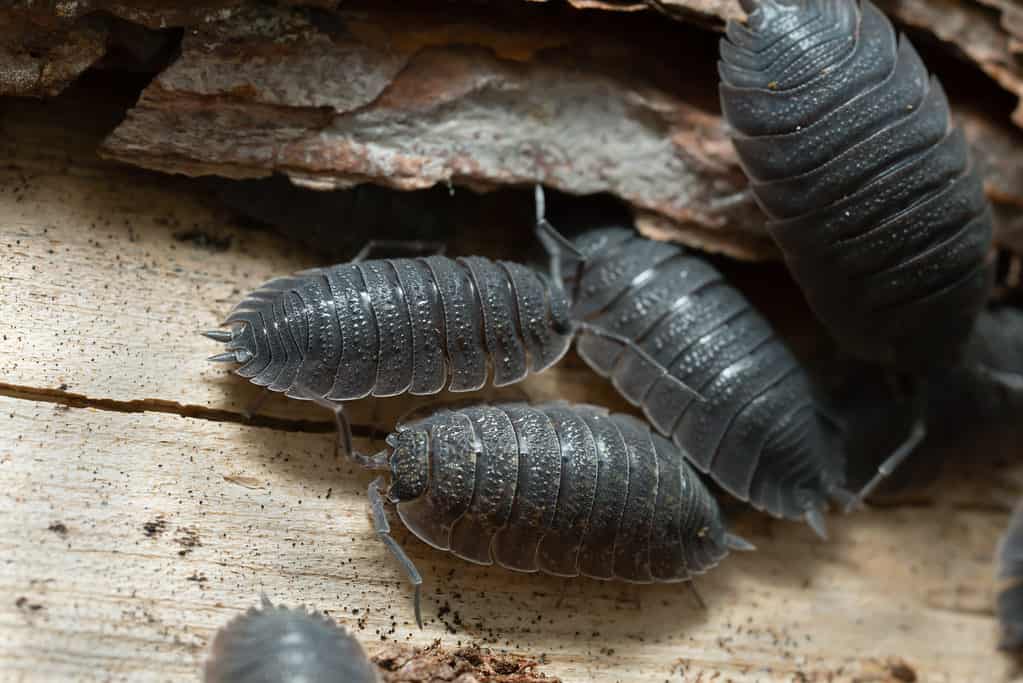
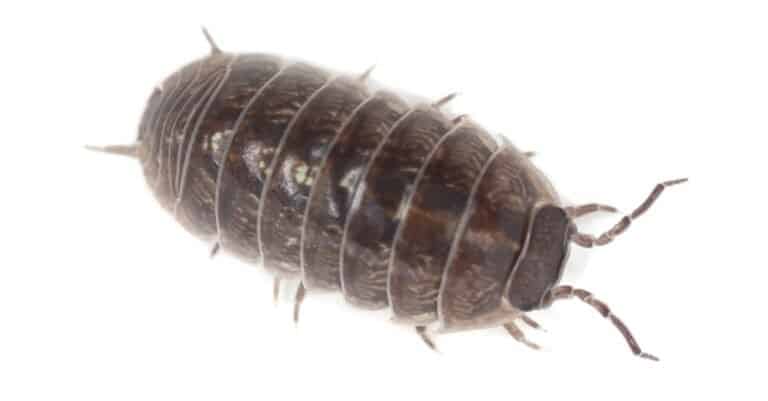
Common rough woodlouses, Porcellio scaber on wood

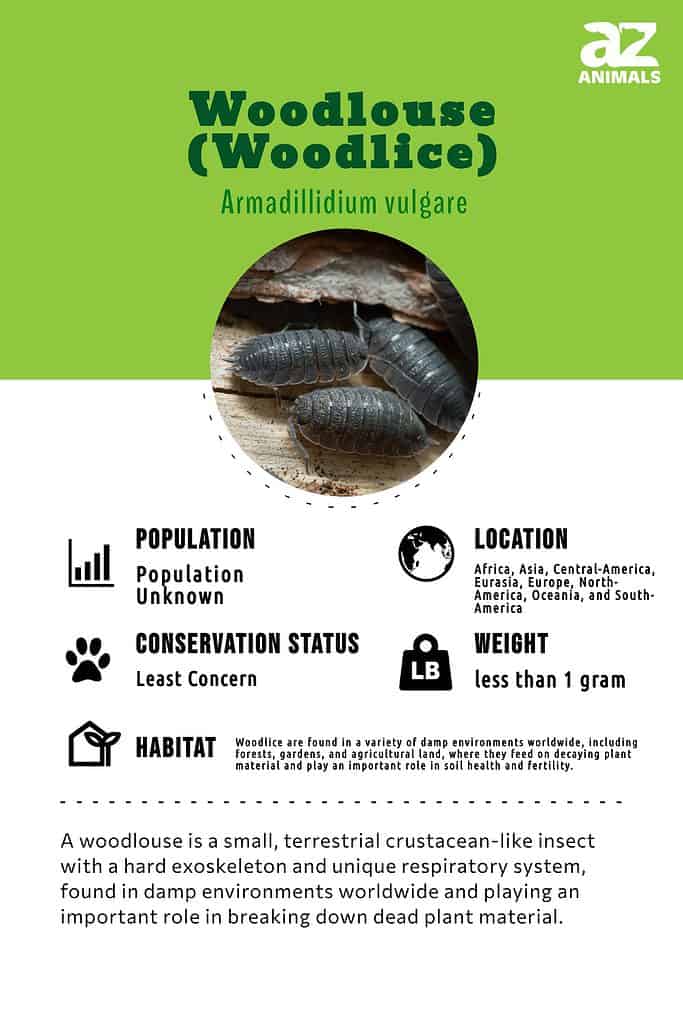
Armadillidium vulgare is the scientific name of the woodlouse.

Armadillidium vulgare is the scientific name of the woodlouse. The Latin word Armadillidium translates to little armadillo. This refers to the armor-like shell of this crustacean. They belong to the Order Isopoda and the Family Armadillidiidae. There are 3,500 plus species of woodlouse.

Some types of woodlouse are:

  • Armadillidium pictum
  • Armadillidium granulatum
  • Armadillidium nasatum
  • Armadillidium lagrecai
  • Armadillidium depressum

Additional species includes:

  • Roly-poly
  • Common rough woodlouse
  • Common woodlouse
  • Platyarthrus hoffmannseggii
  • Porcellionides pruinosus
  • Porcellio laevis
  • Asellus aquaticus
  • Ligia oceanica
  • Armadillidium klugii
  • Eleoniscus helenae
  • Trichoniscus pusillus
  • Armadillidium depressum
  • Common striped woodlouse
  • Armadillidium nasatum
  • Androniscus dentiger
  • Porcellio spinicornis
  • Trachelipus rathkii
  • Armadillidium pulchellum
  • Haplophthalmus montivagus
  • Armadillidium pictum
  • Hyloniscus riparius
  • Ballodillium pilosum
  • Porcellio dilatatus
  • Trichoniscus pygmaeus
  • Cyphodillidium absoloni
  • Armadillidium granulatum
  • Miktoniscus patiencei
  • Cylisticus convexus
  • Thermosphaeroma subequalum
  • Ligidium hypnorum
  • Alloniscus perconvexus
  • Philoscia affinis
  • Trichorhina tomentosa
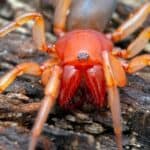
  • Woodlouse spider
  • Venezillo parvus
  • Armadillidium ruffoi
  • Venezillo arizonicus
  • Atlantoscia floridana
  • Porcellio monticola
  • Armadillidium subdentatum
  • Trichoniscoides sarsi
  • Armadillidium brevicaudatum
  • Trichoniscoides helveticus
  • Trichoniscoides albidus
  • Armadillidium variegatum
  • Porcellio alpinus
  • Armadillidium opacum
  • Trichoniscus provisorius
  • Porcellionides floria
  • Trichoniscus alemannicus
  • Metatrichoniscoides nemausiensis

The Evolution and Origins of Woodlouse
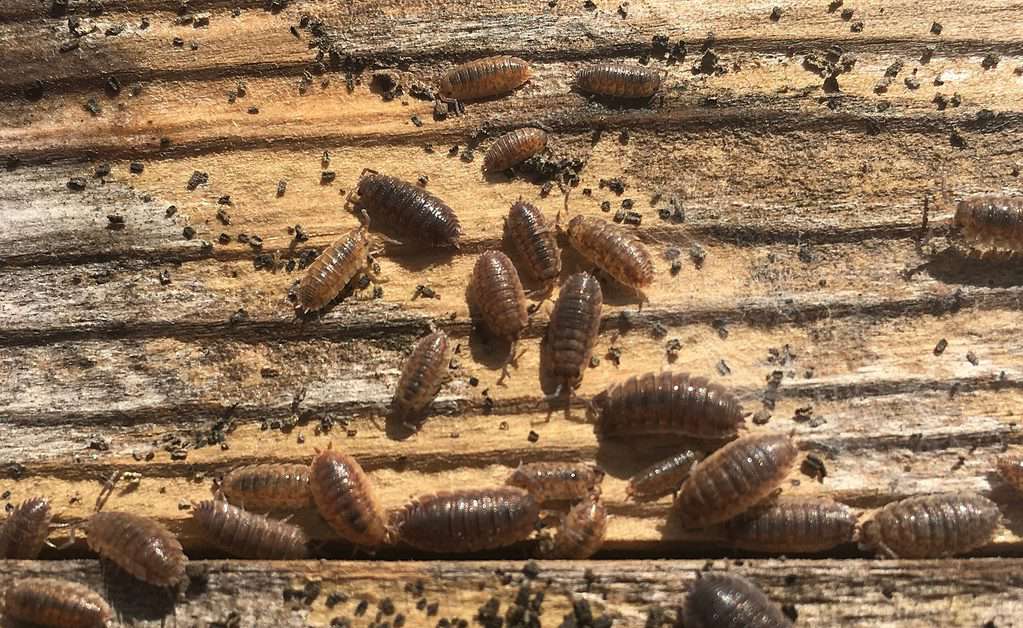
Adult and baby woodlice wood louse scattering after being disturbed pill bug sow bug walking along a grainy textured plank of wood

Adult and baby woodlice woodlouse scattering after being disturbed pill bug sow bug walking along a grainy textured plank of wood

Woodlice are a group of small, crustacean-like insects that belong to the order Isopoda. They have been around for over 300 million years, making them one of the oldest groups of terrestrial animals. Woodlice are found all over the world, and they occupy a wide range of habitats, from damp forests to urban gardens.

The evolution of woodlice can be traced back to their aquatic ancestors, which lived in the seas and oceans during the Silurian and Devonian periods. Over time, some species of isopods evolved to live on land, adapting to the harsh conditions of the terrestrial environment.

Woodlice have a hard exoskeleton that helps to protect them from predators and environmental stress. They also have a unique respiratory system, which allows them to breathe air without drying out, and they are capable of surviving in a wide range of temperatures and humidities.

The adaptability and versatility of woodlice have allowed them to thrive in many different habitats, from damp forests to urban gardens. They feed on decaying plant material, and their presence is an important indicator of soil health and fertility.

To summarize, woodlice are an ancient and fascinating group of insects that have evolved and adapted to survive in a variety of environments. They play an important role in many ecosystems, breaking down dead plant material and recycling nutrients, and providing valuable insights into the evolution of life on land.

Appearance
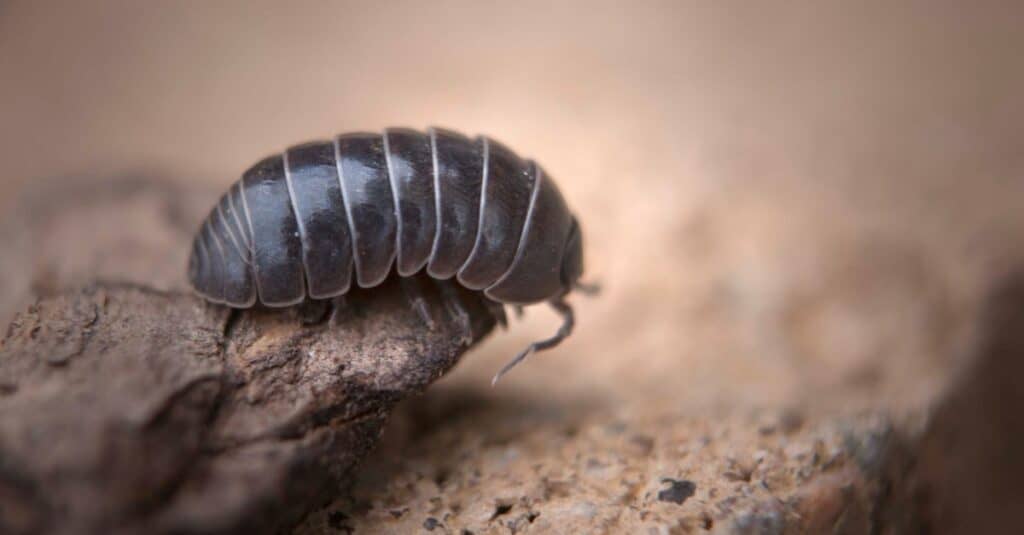
These animals live everywhere in the world except the continent of Antarctica.

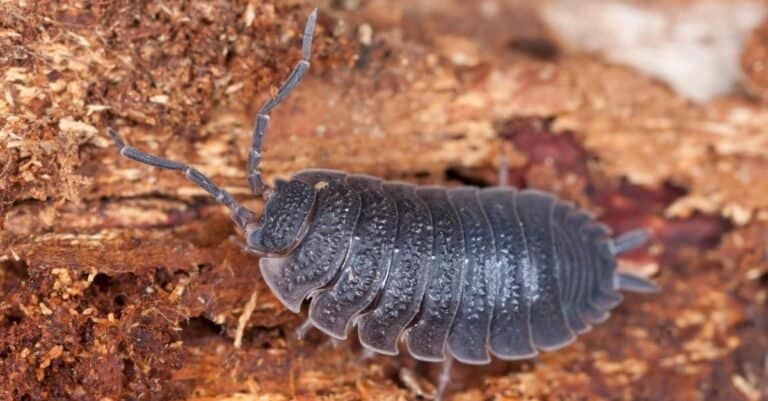
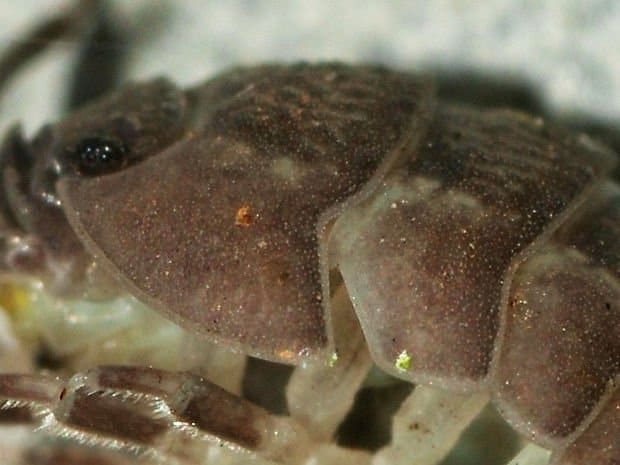
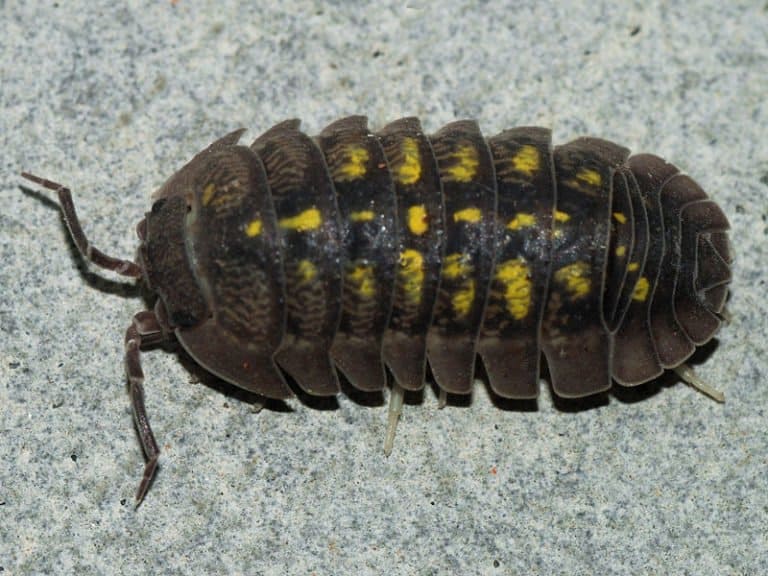
A woodlouse has a shell that is dark gray or black. One of its most well-known features is its armor-like exoskeleton made up of seven plates. They have two legs on each of these seven plates making a total of 14 legs on this little creature. Its body measures from 0.7mm to 18mm in length and is approximately 5mm wide. This crustacean has two short antennae on its head.

A sea slater is a crustacean very similar to a woodlouse. A sea slater has the same flat, dark body with an exoskeleton divided into segments. However, a sea slater at three centimeters in length is bigger in size than a woodlouse.

The main defensive behavior of a woodlouse is to roll into a ball at the first sign of a threat. This is a way to cover its vital organs to protect them from a predator. It can also make an odor-filled chemical in its body that is repellent to its predators. In addition, the gray or black color of this crustacean helps it to blend into its moist, dark habitat.

The lifespan of this creature is two to three years, so its defensive behavior is certainly effective!

Woodlice live in groups. If you lift a rock in a garden or look into a compost pile, you’re likely to see dozens of woodlice. Each individual of this type is called a woodlouse. Two or more of them are known as woodlice. A group of these crustaceans is called a colony.

Habitat

One of the most amazing facts to remember about woodlice is they live in all places in the world except Antarctica. They live in temperate to tropical climates. Gardens are a common habitat of this crustacean. Woodlice and their eggs are also found under piles of leaves, rocks, downed trees, and in the soil. Moisture and darkness are the two main features of its habitat.

Sometimes woodlice find their way into homes especially if there is a welcoming habitat near the structure. Picture a group of woodlice living in a pile of rotting wood near the wall of a home. It wouldn’t be a surprise if a few woodlice made their way inside the house from time to time. They would only stay in a home if they found the mold.

Diet

Generally, the diet of a woodlouse is herbivorous. But scientists categorize it as a detritivore because of the specific material it eats. The word detritus is in the word detritivore. Detritus is decaying or rotting material in the environment.

What does a woodlouse eat?

The diet of a woodlouse includes decaying leaves, fungus, mold, and even the droppings of other animals. So, now you see why they are called detritivores!

What eats a woodlouse?

The predators of a woodlouse include frogs, shrews, centipedes, and spiders. All of these predators share the same habitat as the woodlouse. Baby woodlice are even more vulnerable to these predators because their shell is not as sturdy.

Prevention

If you see one or two woodlice in your home, know that they are not harmful in any way. But, if you notice several of them including baby woodlice, it may mean they are feeding on mold or mildew inside your home. You may have some rotting wood due to water damage in a ceiling or floor.

Fixing the damage is going to remove any reason for woodlice to be in your home. They would rather be in your garden!

View all 442 animals that start with W

Sources

  1. University of Florida IFAS / Accessed October 8, 2021
  2. St Louis Zoo / Accessed October 8, 2021
  3. Wikipedia / Accessed October 8, 2021
  4. The Wildlife Trusts / Accessed October 8, 2021
  5. Earth Life / Accessed October 8, 2021

Rebecca Bales

About the Author

Rebecca Bales

Rebecca is an experienced Professional Freelancer with nearly a decade of expertise in writing SEO Content, Digital Illustrations, and Graphic Design. When not engrossed in her creative endeavors, Rebecca dedicates her time to cycling and filming her nature adventures. When not focused on her passion for creating and crafting optimized materials, she harbors a deep fascination and love for cats, jumping spiders, and pet rats.
Connect:

Thank you for reading! Have some feedback for us?


Woodlouse FAQs (Frequently Asked Questions)

Woodlice are herbivores, meaning they eat plants.