




W
Species Profile

Woodpecker

Picidae

Nature's carpenters and forest drummers
Hugh Lansdown/Shutterstock.com

Woodpecker Distribution

Click a location to explore more animals from that region

Loading map...
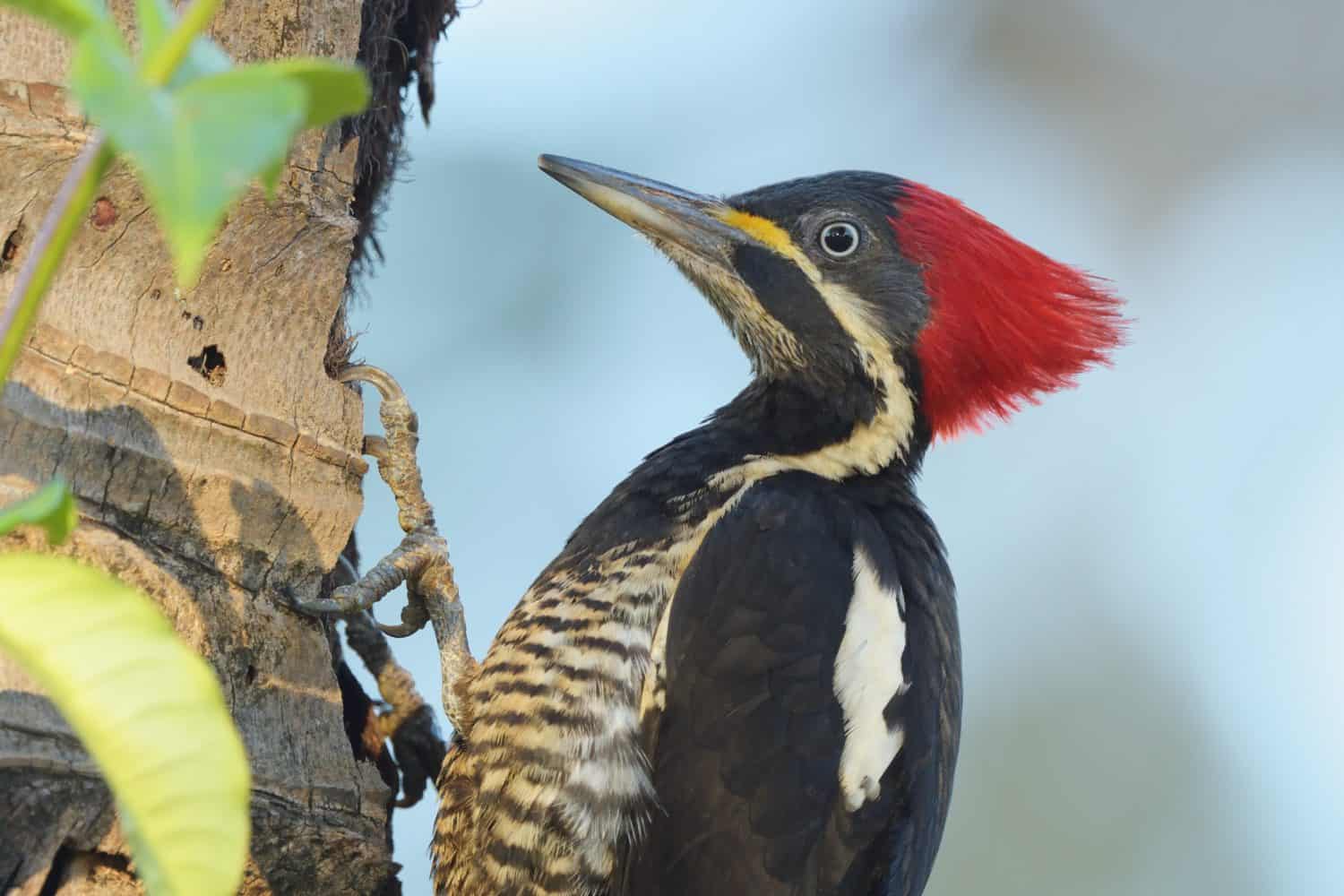
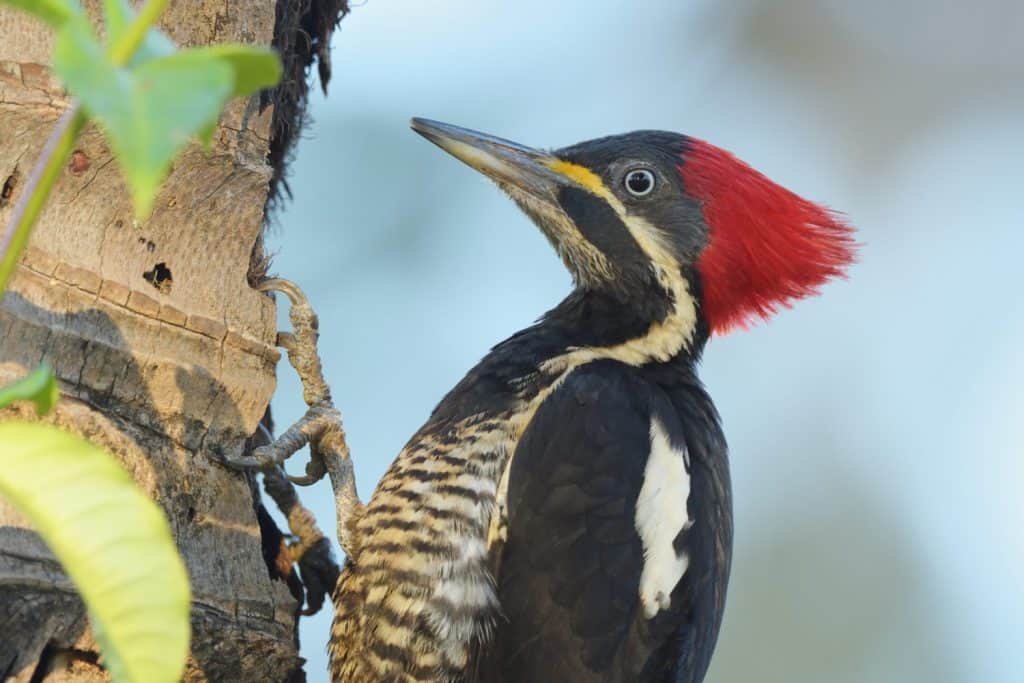
Female Lineated Woodpecker (Dryocopus lineatus) feeding on a palm tree in the pantanal, brazil, south america.

At a Glance

Family Overview This page covers the Woodpecker family as a group. Stats below are general traits shared across the family.
Also Known As Pecker, Flicker, Sapsucker, Wryneck, Drummer, Treepecker
Activity Diurnal+
Lifespan 6 years
Weight 0.56 lbs
Status Not Evaluated
Did You Know?

Family size spans tiny piculets ~7-8 cm to giants near 60 cm long, weighing ~0.007-0.6 kg.

Scientific Classification

Family Overview "Woodpecker" is not a single species but represents an entire family containing multiple species.

Woodpeckers (family Picidae) are specialized birds of the order Piciformes adapted for climbing and foraging on trunks and branches. Many species drum on wood for communication and excavate nest cavities, shaping forest habitats and providing nesting sites for other animals.

Kingdom
Animalia
Phylum
Chordata
Class
Aves
Order
Piciformes
Family
Picidae

Distinguishing Features

  • Stiff tail feathers for bracing
  • Chisel-like bill for drilling
  • Zygodactyl feet (two forward, two back)
  • Long extensible tongue for insect capture
  • Drumming behavior for signaling

Physical Measurements

Males and females differ in size

Length
♂ 9 in (4 in – 1 ft 12 in)
♀ 9 in (3 in – 1 ft 10 in)
Weight
♂ 0 lbs (0 lbs – 2 lbs)
♀ 0 lbs (0 lbs – 1 lbs)
Tail Length
♂ 4 in (1 in – 10 in)
♀ 4 in (1 in – 10 in)
Top Speed
28 mph
flying

Appearance

Primary Colors
Secondary Colors
Skin Type Feathered
Distinctive Features
  • Body length spans roughly 7-60 cm across the family.
  • Mass ranges roughly 0.007-0.563 kg across the family.
  • Typical lifespan ~4-15 years; some exceed 20 in captivity.
  • Chisel-tipped bill built for drilling and prying bark.
  • Shock-absorbing skull and neck muscles reduce impact injury.
  • Zygodactyl feet and strong claws support vertical climbing.
  • Stiffened tail feathers brace the body while hitching up trunks.
  • Exceptionally long, protrusible tongue aids deep insect extraction.
  • Drumming used for communication; rate and cadence vary widely.
  • Excavates nest/roost cavities; many species reuse or expand old holes.
  • Foraging spans insect larvae, ants, sap, fruit, and nuts.
  • Occupies forests, woodlands, savannas, orchards, and cactus deserts.

Sexual Dimorphism

Often subtle and variable: males commonly show extra red on crown or nape, while females are duller or lack that patch. Size differences are usually small, though a few species show clearer contrasts in head pattern or facial stripes.

♂
  • More extensive red crown or nape patch in many species.
  • Bolder facial markings in some species; varies by genus.
♀
  • Reduced or absent red on crown/nape in many species.
  • Slightly duller head pattern; often overlaps with male variation.

Did You Know?

Family size spans tiny piculets ~7-8 cm to giants near 60 cm long, weighing ~0.007-0.6 kg.

Across species, lifespans range roughly 4-15+ years in the wild, with some reaching ~20 years in captivity.

Many species "drum" rapid bill strikes on resonant wood to advertise territory and attract mates.

Excavated woodpecker cavities become nest sites for owls, ducks, bats, squirrels, and many insects.

Most eat wood-boring larvae and ants; some specialize on tree sap, fruit, or even ground foraging.

They can peck thousands of times daily; shock-absorbing anatomy helps limit brain injury risk.

Woodpeckers occur from boreal forests to tropical rainforests; some migrate, but many are year-round residents.

Unique Adaptations

  • Zygodactyl feet (two toes forward, two back) improve grip on bark; a few species show toe-number variation.
  • Stiffened tail feathers act as a prop, creating a tripod with the feet for vertical climbing support.
  • A long, often barbed tongue can extend far beyond the bill, aided by hyoid bones that wrap around the skull.
  • Reinforced skull and specialized neck muscles help manage repeated impacts during drilling and drumming.
  • Chisel-like bills and strong jaw muscles let many species excavate hard wood for nests and prey access.

Interesting Behaviors

  • Territorial drumming patterns vary by species and habitat, using dead limbs, trunks, or even metal roofs.
  • Cavity nesting is widespread; some species excavate new holes yearly, others reuse and maintain old cavities.
  • Foraging often follows "tap-test-probe": listen for hollow spots, pry bark, then spear or tongue-lap prey.
  • Some species store food by wedging seeds or nuts into bark crevices; others defend "granary" trees.
  • Sap-feeding species drill neat rows of holes and return repeatedly, attracting insects and other animals to the flow.
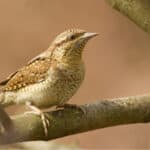
  • Not all are classic trunk-climbers: wrynecks often feed on the ground and rely on camouflage and snake-like neck displays.

Cultural Significance

Often called "forest carpenters," woodpeckers are widely seen as signs of woodland health. Their drumming features in art and folklore, while their cavities support many other species, making them notable ecosystem engineers.

Myths & Legends

In Roman mythology, King Picus was transformed into a woodpecker by the sorceress Circe; the bird became linked with prophecy and augury.

Ancient Roman tradition also associated the woodpecker with Mars; a woodpecker appears in early Rome foundation legends alongside the she-wolf.

Cherokee and other Eastern Woodland stories explain the woodpecker's red head as stained by fire or blood earned while helping others.

European rural tradition in several regions treats the woodpecker as a "rain bird," its calls or drumming taken as omens of coming weather.

An Aesop-style fable tells of a woodpecker removing a thorn from a lion, reflecting folk themes of small helpers aiding the powerful.

Conservation Status

NE Not Evaluated (family-level); member species span Least Concern to Critically Endangered (including CR(PE) taxa).

Has not yet been evaluated against the criteria.

Population Unknown

Protected Under

  • EU Birds Directive
  • Migratory Bird Treaty Act
  • National wildlife laws

You might be looking for:

Great Spotted Woodpecker

16%

Dendrocopos major

Widespread Eurasian species; black-and-white plumage with red under-tail, common in forests and parks.

Downy Woodpecker

16%

Dryobates pubescens

Small, common North American woodpecker; black-and-white with white back and short bill, often in yards.

View Profile

Pileated Woodpecker

14%

Dryocopus pileatus

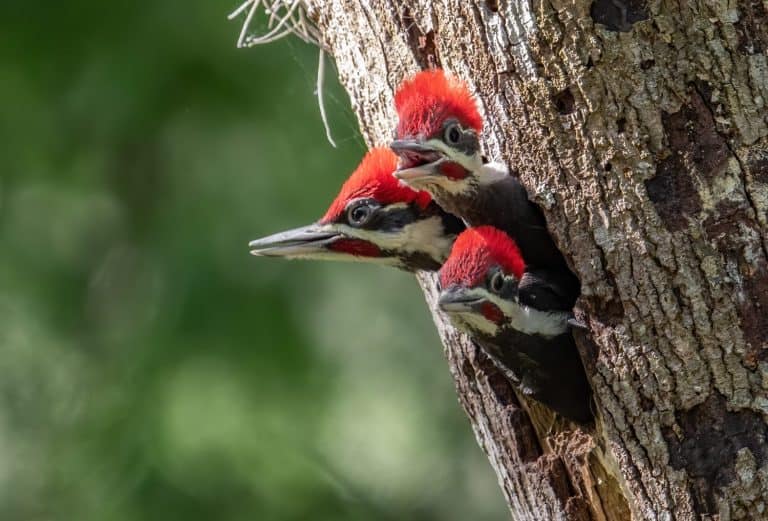
Large North American woodpecker with prominent red crest; excavates big rectangular holes in dead wood.

View Profile

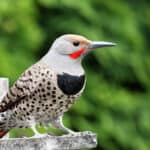
Northern Flicker

14%

Colaptes auratus

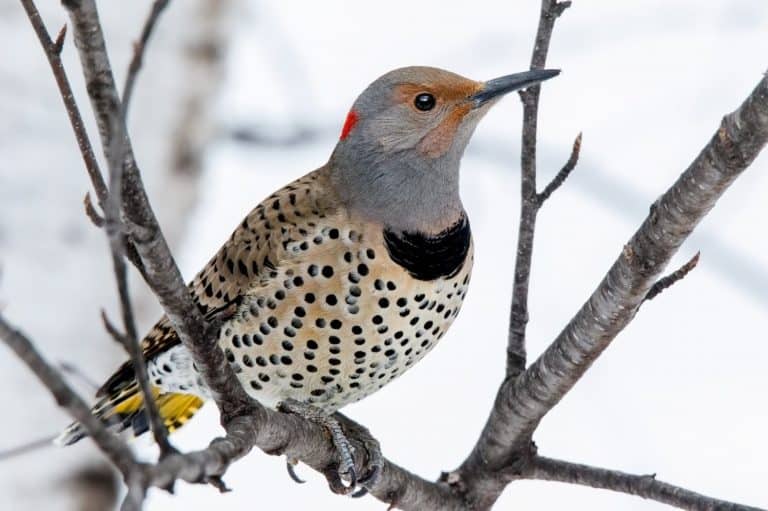
Ground-foraging woodpecker of North America; barred back, spotted belly, loud calls, eats many ants.

View Profile

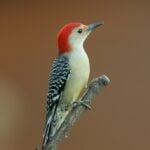
Red-bellied Woodpecker

12%

Melanerpes carolinus

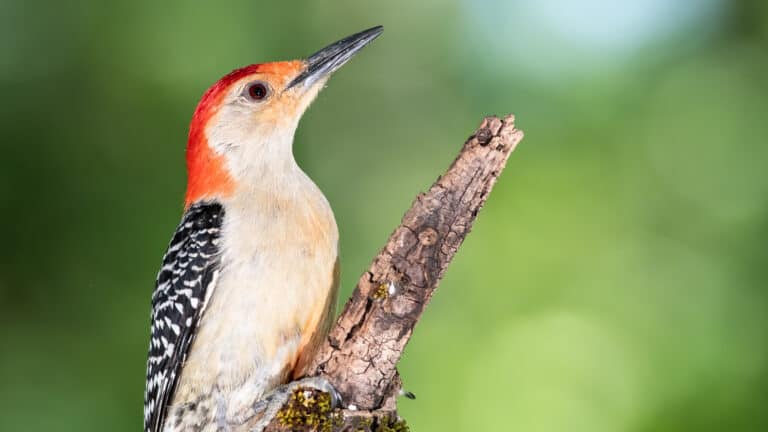
Common eastern North American species; zebra-backed pattern and red crown/nape, frequent at feeders.

View Profile

Acorn Woodpecker

10%

Melanerpes formicivorus

Social species of western North America; stores acorns in granary trees and has clown-like facial pattern.

Black Woodpecker

9%

Dryocopus martius

Largest European woodpecker; mostly black with red crown, strong excavator in mature forests.

Green Woodpecker

9%

Picus viridis

European ant-eating woodpecker; green body and red crown, often feeds on the ground in grasslands.

Life Cycle

Birth 4 chicks
Lifespan 6 years

Lifespan

In the Wild
2–20 years
In Captivity
3–30 years

Reproduction

Mating System Monogamy
Social Structure Socially Monogamous
Breeding Season spring through summer; varies by latitude
Breeding Pattern Seasonal
Fertilization Internal Fertilization
Birth Type Internal_fertilization

Most woodpeckers form territorial seasonal pairs with biparental cavity nesting; extra-pair copulations and occasional polygyny/polyandry occur. A minority are cooperative breeders with helpers. Reproduction via internal fertilization; pair bonds may persist multiple seasons.

Behavior & Ecology

Social Pair Group: 2
Activity Diurnal, Matutinal, Crepuscular
Diet Insectivore beetle larvae

Temperament

Territorial
Wary
Bold
Curious
Aggressive

Communication

sharp calls
rattles
churrs
whinnies
scolding notes
drumming on wood
bill tapping
crest raising
wing flashing
posture displays

Habitat

Biomes:
Tropical Rainforest Tropical Dry Forest Savanna Desert Hot Mediterranean Temperate Grassland Temperate Forest Temperate Rainforest Boreal Forest (Taiga) Alpine Wetland Freshwater +6
Terrain:
Mountainous Hilly Plateau Plains Valley Coastal Island Riverine Rocky +3
Elevation: Up to 14763 ft 9 in

Ecological Role

Forest insect predator and ecosystem engineer through cavity excavation

pest control cavity creation habitat provisioning seed dispersal

Diet Details

Main Prey:
Other Foods:
Fruit Berries Nuts Tree sap Mast

Human Interaction

Domestication Status

Wild

Woodpeckers have never been domesticated. Across regions they've been occasionally kept short-term for rehabilitation, falconry-bait history in a few places, or research, but most handling is regulated under wildlife protection laws.

Danger Level

Low
  • Painful peck if handled
  • Scratches from strong claws
  • Rare zoonotic parasites
  • Noise nuisance from drumming
  • Occasional siding/tree damage

As a Pet

Not Suitable as Pet

Legality: Generally illegal without wildlife permits.

Care Level: Expert Only

Purchase Cost:
Lifetime Cost: $2,000 - $30,000

Economic Value

Uses:
Forestry Tourism Research Conservation
Products:
  • ecotourism
  • pest-control

Relationships

Related Species 8

Toucans
Toucans Ramphastidae Shared Family
New World barbets Capitonidae Shared Family
Asian barbets Megalaimidae Shared Family
African barbets Lybiidae Shared Family
Honeyguides Indicatoridae Shared Order
Puffbirds Bucconidae Shared Family
Wrynecks
Wrynecks Jynx Shared Family
Piculets Picumninae Shared Family

Ecological Equivalents 5

Animals that fill a similar ecological role in their ecosystem

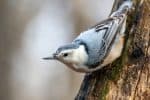
Nuthatch
Nuthatch Sitta spp. Climb trunks and probe bark crevices for hidden insects.
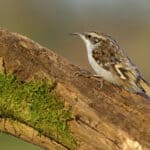
Treecreepers
Treecreepers Certhiidae Spirals up tree trunks, gleaning arthropods from bark and cracks.
Carpenter bees and wood-boring beetles Xylocopa spp.; Cerambycidae Both use dead wood, and their larvae are a major foraging target.
Sapsuckers Sphyrapicus spp. Sap-feeding niche overlaps with other species that wound bark to access sap and nectar.
Hornbills
Hornbills Bucerotidae Rely on tree cavities and overlap in nesting-site competition in the tropics.

Types of Woodpecker

33

Explore 33 recognized types of woodpecker

Speciess (31)

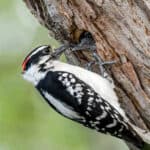
Downy Woodpecker
Downy Woodpecker Dryobates pubescens
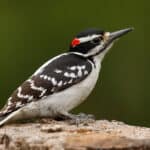
Hairy Woodpecker
Hairy Woodpecker Dryobates villosus
Pileated Woodpecker
Pileated Woodpecker Dryocopus pileatus
Northern Flicker
Northern Flicker Colaptes auratus
Gilded Flicker Colaptes chrysoides
Red-bellied Woodpecker
Red-bellied Woodpecker Melanerpes carolinus
Red-headed Woodpecker Melanerpes erythrocephalus
Acorn Woodpecker Melanerpes formicivorus
Yellow-bellied Sapsucker
Yellow-bellied Sapsucker Sphyrapicus varius
Red-naped Sapsucker Sphyrapicus nuchalis
Williamson's Sapsucker Sphyrapicus thyroideus
Great Spotted Woodpecker Dendrocopos major
Syrian Woodpecker Dendrocopos syriacus
Middle Spotted Woodpecker Dendrocoptes medius
Lesser Spotted Woodpecker Dryobates minor
White-backed Woodpecker Dendrocopos leucotos
Black Woodpecker Dryocopus martius
Green Woodpecker Picus viridis
Grey-headed Woodpecker Picus canus
Eurasian Wryneck Jynx torquilla
Red-cockaded Woodpecker Dryobates borealis
Ivory-billed Woodpecker
Ivory-billed Woodpecker Campephilus principalis
Crimson-crested Woodpecker Campephilus melanoleucos
Lineated Woodpecker Dryocopus lineatus
Great Slaty Woodpecker Mulleripicus pulverulentus
Common Flameback Dinopium javanense
Black-rumped Flameback Dinopium benghalense
Eurasian Three-toed Woodpecker Picoides tridactylus
American Three-toed Woodpecker Picoides dorsalis
Bar-breasted Piculet Picumnus aurifrons
White-barred Piculet Picumnus cirratus

Subspeciess (2)

Red-shafted Flicker Colaptes auratus cafer Subspecies
Yellow-shafted Flicker Colaptes auratus auratus Subspecies

Quick Take

  • Achieving a 30-year lifespan is a requirement met only under perfect environmental conditions.
  • The Eopicius fossil from 35 million years ago created evolutionary questions regarding skeletal durability.
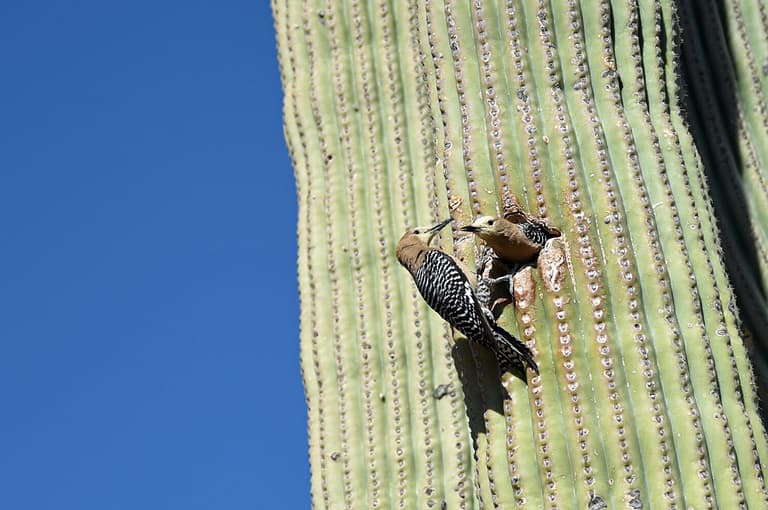
  • Surprisingly, Gila woodpeckers bypass wooded habitats to survive on desert cacti.
  • Establishing a breeding group of 12 birds was necessary to manage Acorn woodpecker offspring.

Woodpeckers are birds that live in nearly every region of the world except for New Guinea, New Zealand, Madagascar, Australia, and both the North and South Poles. The family Picidae includes approximately 240 to 241 recognized species of woodpeckers. Approximately 20 of these species are at risk of extinction.

A detailed wildlife infographic about woodpeckers, showing diagrams of their internal anatomy, evolutionary history, and various species found across the globe.
Nature’s most extreme engineering: From skulls that act as shock absorbers to tongues that wrap around their brains, these birds are built for impact. © A-Z Animals

An Amazing Bird: Woodpecker Facts

  • A woodpecker’s tongue is typically twice the length of its beak, able to reach into crevices for insects. The bird’s tongue or its saliva is sticky, too, so it can cling to its prey.
  • The woodpecker’s tongue wraps around the back of its head between the tissue and the bone, acting as a shock absorber when the bird is drumming.
  • Woodpeckers are birds with feathers on their noses that keep wood debris out of the birds’ nostrils while they are boring holes.
  • Woodpeckers use their jackhammer-like beaks to dig out bugs, but they also drum their bills to create rhythms for attracting mates, staking a claim, and sometimes, just for fun.
  • Woodpeckers can grow to incredible sizes. The largest woodpecker ever, the imperial woodpecker, was nearly 23 inches in length but is potentially extinct today.

Where to Find Woodpeckers
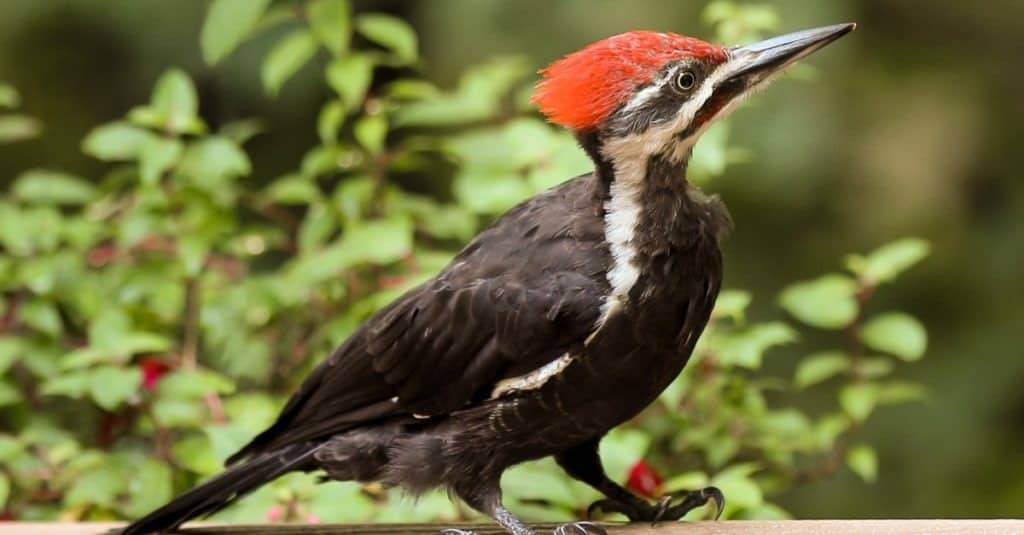
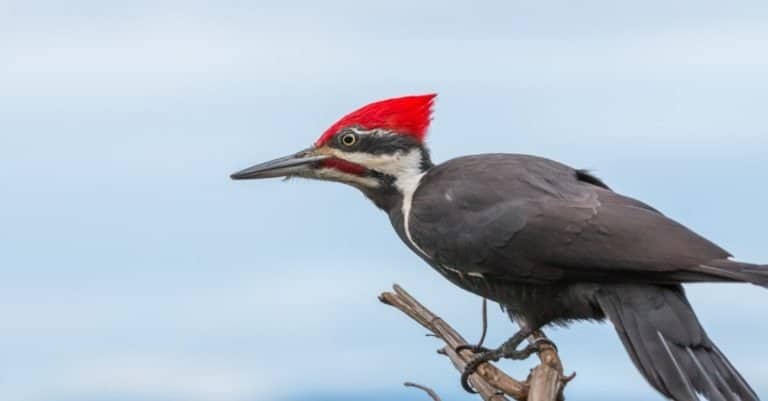
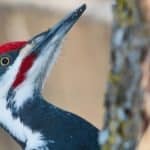
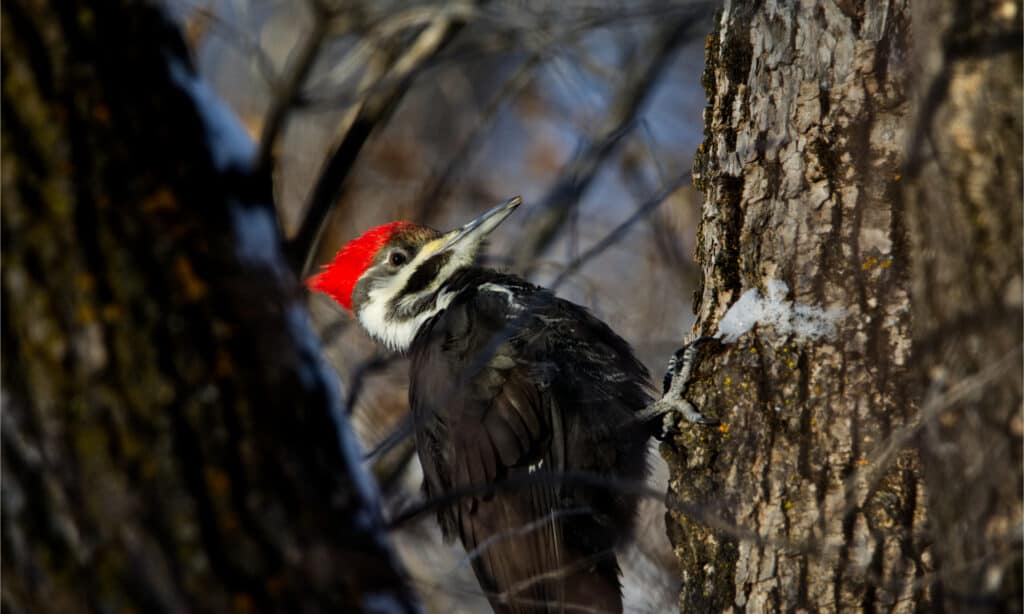
Close up of male Pileated Woodpecker

Woodpeckers live almost everywhere in the world, wherever there are wooded habitats.

Woodpeckers live almost everywhere in the world, wherever there are wooded habitats. A small number of species prefer rocky areas instead, and one species, the Gila woodpecker, subsists on a diet of cacti in its desert habitat. These birds do not live in the extreme polar regions of Australasia or Madagascar.

Classification and Scientific Name
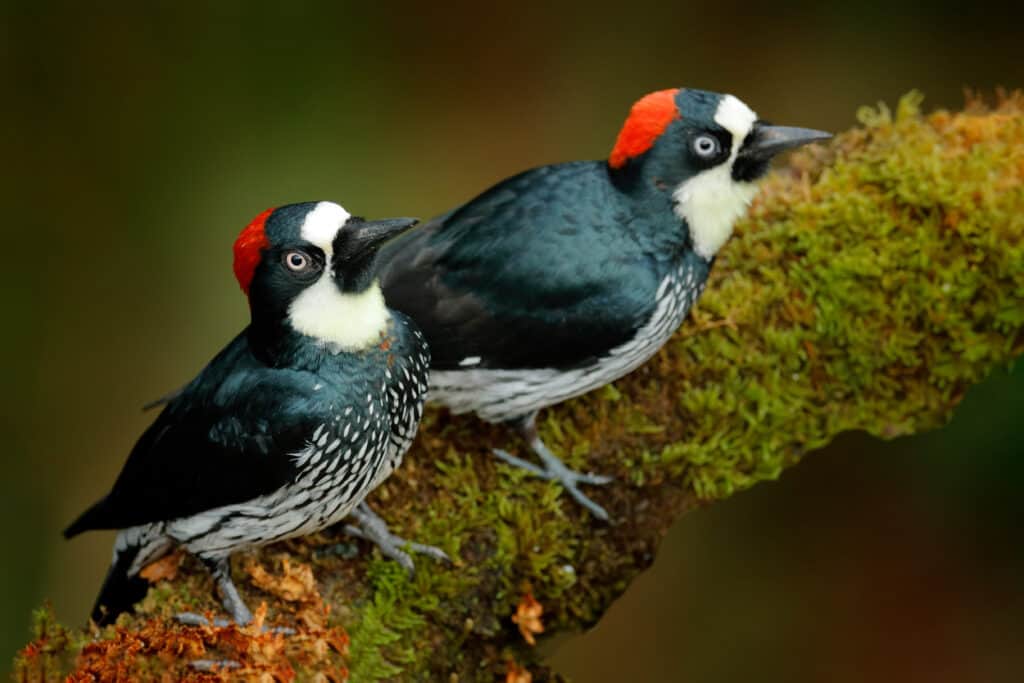
Acorn woodpecker

The International Ornithological Congress recognizes 240 – 241 species, all of which belong to the Picidae family.

Although experts disagree on the total number of woodpecker species, the International Ornithological Congress recognizes approximately 240 to 241 species, all of which belong to the Picidae family. They are divided into 36 genera within this family.

Evolution and Origins

Woodpeckers are a fascinating group of birds known for their unique behavior of drilling into trees and other wooden structures with their powerful bills. These birds belong to the family Picidae, comprising approximately 240 – 241 species worldwide.

The earliest known fossil of a woodpecker-like bird dates back to the late Eocene period, approximately 35 million years ago. This fossil, known as Eopicius, was discovered in Wyoming and is believed to be an ancestor of modern woodpeckers. Over time, woodpeckers have evolved specialized adaptations that enable them to excavate wood and feed on insects found within it.

One of the most distinctive features of woodpeckers is their powerful bills, which are used for drilling into trees and other wooden structures. The bills are made of a hard material called keratin, which is the same material that makes up human hair and nails. The bill is also shaped like a chisel, with a sharp edge that is used to chisel away wood. In addition to the bill, woodpeckers have a long, sticky tongue that they use to extract insects from deep within the wood.

Woodpeckers have also evolved a unique way of perching on trees, which involves using their stiff tail feathers to support themselves. These feathers, known as rectrices, are located at the base of the tail. They are used to provide support and stability when the bird is drilling into wood.

Common Types of Woodpeckers
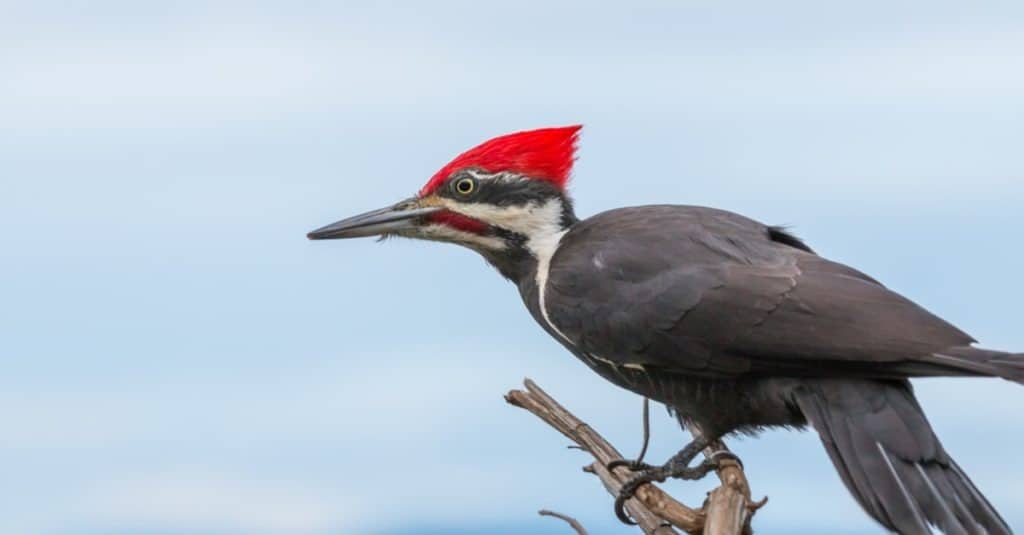
Pileated woodpecker ( Hylatomus pileatus ) looking for food on Vancouver island , Canada.

The downy woodpecker is the smallest type of woodpecker in North America, measuring up to 7 inches long.

Here are some of the most common woodpeckers:

  • Downy Woodpecker (Dryobates pubescens): The downy woodpecker is the smallest type of woodpecker in North America, measuring up to 7 inches long. They generally live in forested areas within tree cavities that are hollowed out by nesting pairs.
  • Gila Woodpecker (Melanerpes uropygialis): The Gila woodpecker is a medium-sized woodpecker that inhabits the southwestern United States and western Mexico and ranges from 8 to 10 inches in size. These woodpeckers prefer to nest in saguaro cacti in the low desert scrub of the Sonoran Desert.
  • Hairy Woodpecker (Dryobates villosus): The hairy woodpecker grows to approximately 10 inches in length and is similar in appearance to the downy woodpecker. These birds are known to follow pileated woodpeckers and pick through insects that the larger birds may have missed.
  • Pileated Woodpecker (Dryocopus pileatus): The pileated woodpecker is a large species that can grow up to 19 inches in length and is native to North America. These birds prefer mature forests and excavate large holes within dead trees to roost at night.
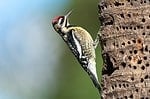
  • Yellow-Bellied Sapsucker (Sphyrapicus varius): The yellow-bellied sapsucker ranges from 7 to 8 inches in size and inhabits Canada and the northeastern United States. These birds are migratory, traveling as far south as Panama in the summer months.

Size, Appearance & Behavior
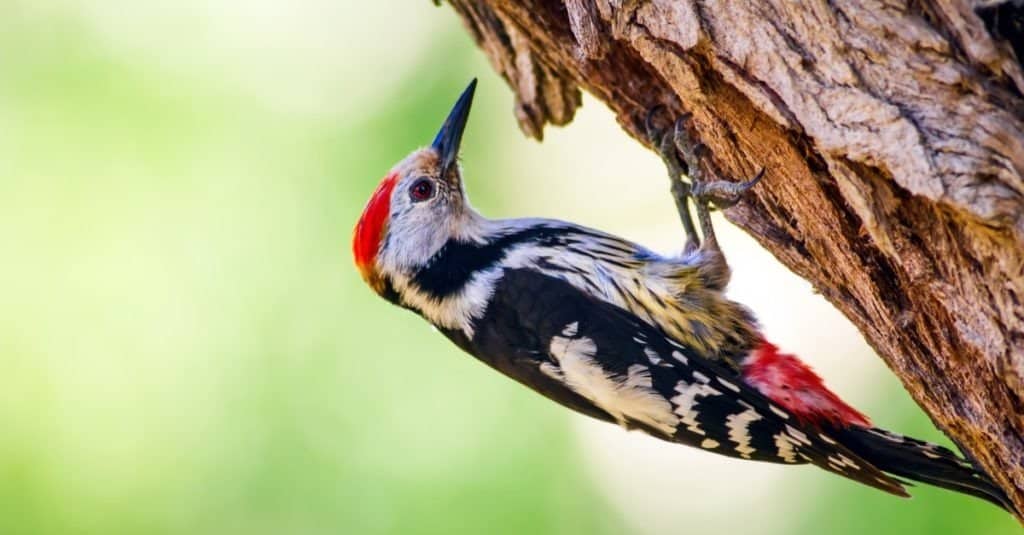
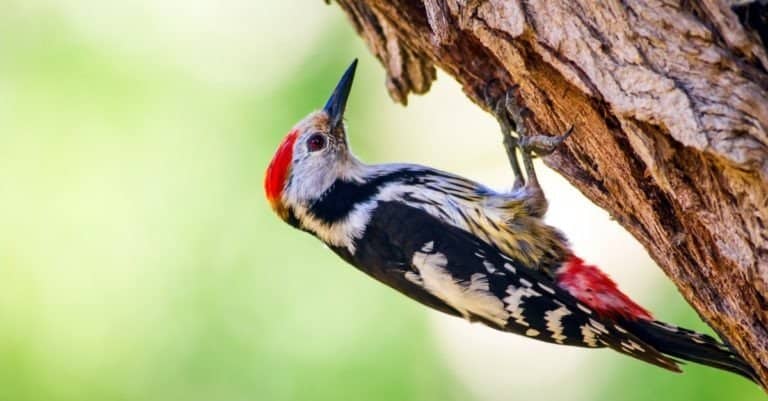
Woodpecker on Middle Spotted Woodpecker. Dendrocopos medius.

Woodpeckers range in size from the tiny piculet to the pileated and great slaty woodpeckers.

Ranging in size from the tiny piculet, which measures less than three inches from tip to tail, to the pileated and great slaty woodpeckers, which measure up to 20 inches in length, the size of these distinctive birds varies significantly.

With a few exceptions, all woodpeckers share distinctive features, such as:

  • A chisel-tipped beak
  • Zygodactyl feet with opposing toes
  • A contrasting crest or feathery tuft on the crown
  • Strong short legs
  • Stiff tail for balance
  • Exceptionally long, sticky tongues
  • Shock-absorbing skull bone
  • Nostril feathers to prevent inhaling debris

Woodpeckers are not songbirds, but both males and females do vocalize to express warnings, attraction, and territorialism. Their range of calls includes:

  • Twitters
  • Trills
  • Whistles
  • Chattering
  • Shrieks
  • Wails
  • Rattles

Each species sounds somewhat different, but the sounds they make are loud enough to travel in densely forested habitats. Even baby nestlings communicate with their parents with sounds.

Most species do not migrate but remain in their chosen habitat year-round. Two North American woodpeckers that do migrate are the northern flicker (Colaptes auratus), including its yellow-shafted subspecies, and the yellow-bellied sapsucker (Sphyrapicus varius), which is a full migrant.
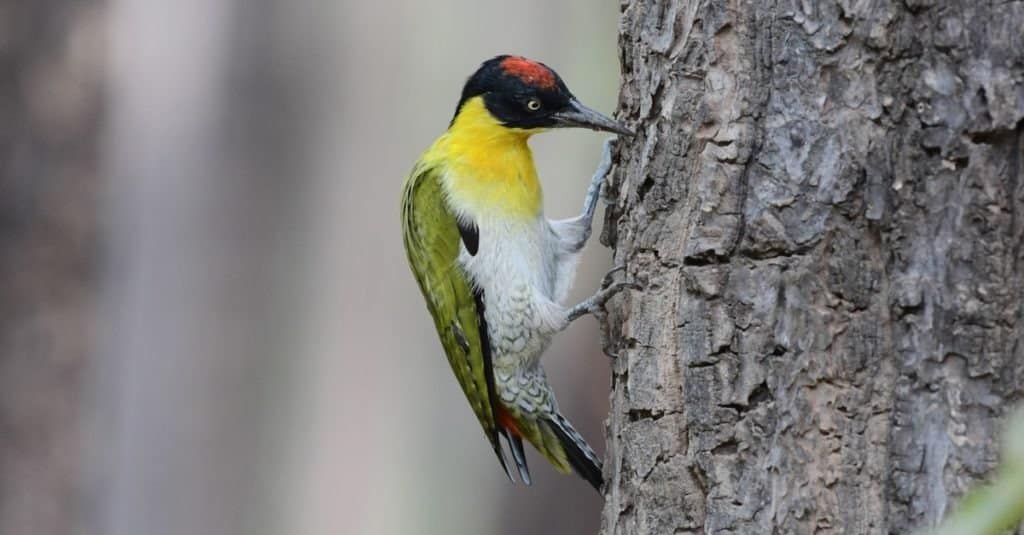
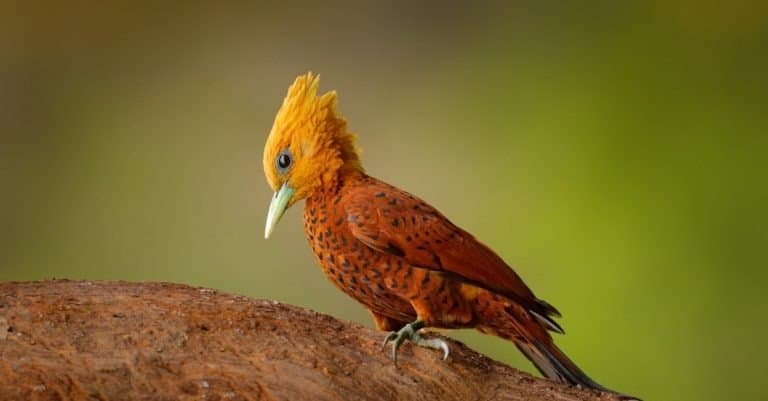
Woodpecker,Yellow Woodpecker Red Head,Bird climbing,woodpecker climbing tree, Yellow bird, tree drill bird

Insects and larvae make up most of the woodpecker’s diet.

Diet

Insects and their larvae are the mainstays of the woodpecker’s diet, but they eat other foods too. Birds’ eggs, baby birds, small rodents, or reptiles are all part of a woodpecker’s diet if they are available. As omnivores, woodpeckers eat fruit, nuts, and even tree sap.

Like most birds, the woodpecker plays a crucial role in maintaining the health of the natural environment. By boring holes in trees and extracting insects with its long, sticky tongue, this bird helps prevent potentially harmful insect damage. For example, woodpeckers eat the larvae of the emerald ash borer beetle, which was responsible for the destruction of millions of ash trees in North America.

In turn, three woodpecker species have also benefited. Populations of some woodpecker species, particularly the red-bellied woodpecker, have increased in areas affected by the emerald ash borer beetle, as these birds feed on the beetle’s larvae.

Predators and Threats

Loss of habitat due to human encroachment is the most significant threat to woodpeckers worldwide. For example, insecticides used by large agricultural companies to eliminate crop-eating pests wipe out a major food source for the local woodpecker population.

In the natural environment, woodpeckers are under threat from predators even before they hatch. Snakes and birds like grackles steal in and eat the eggs in an unprotected nest. Feline predators of adult birds include feral cats, bobcats, and mountain lions. Some of the canine threats include foxes and coyotes. Larger birds of prey, such as hawks, may also consider woodpeckers to be part of a balanced diet.

Reproduction, Babies, and Lifespan

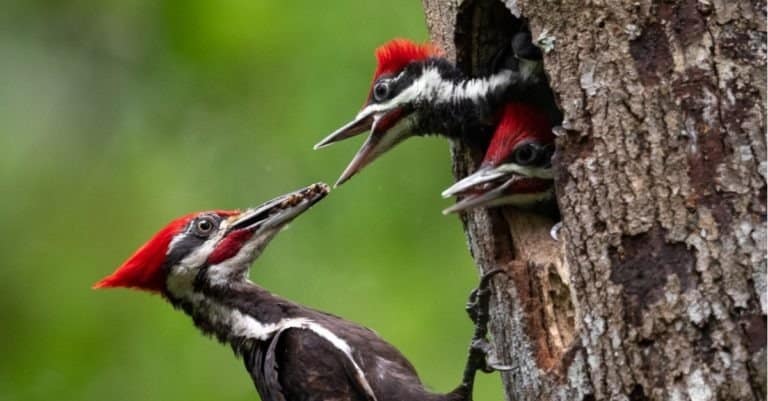
Woodpeckers will nest in existing holes in tree trunks, but when necessary, they will excavate their own. Some woodpeckers will even nest in a telephone pole or a human dwelling. Most species use a nesting site for a single breeding season and then move on.

Woodpeckers are monogamous with a few exceptions. For example, acorn woodpeckers may establish a breeding group of up to 12 birds and then raise the nestlings together.

Females lay two to five eggs. Because they are protected within the tree trunk, woodpecker eggs have a better chance of hatching into live chicks than those in more exposed nests. Both parents take turns keeping the eggs warm during the 12-14-day incubation period.

Once a baby first hatches, it develops quickly and is ready to leave the nest in about 30 days. On average, woodpeckers live between four and 12 years. Some can live up to 30 years if environmental conditions are just right.
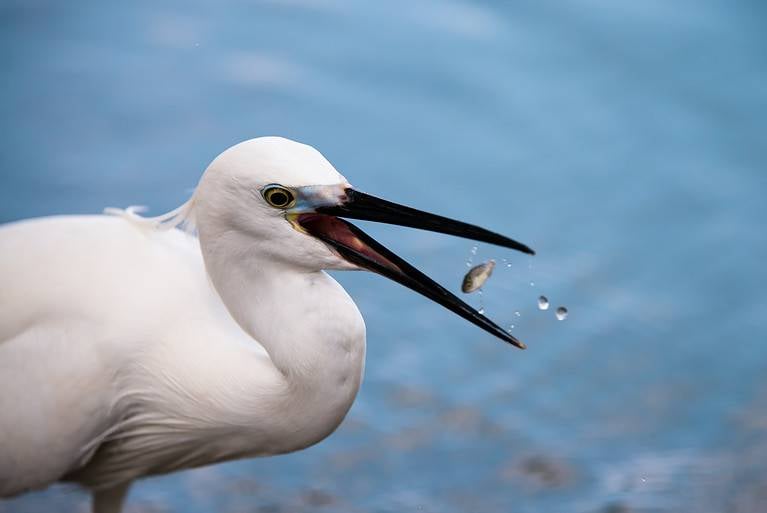
A woodpecker’s tongue is typically twice the length of its beak, able to reach into crevices for insects. The bird’s tongue or its saliva is sticky, too, so it can cling to its prey.

Population

Of the approximately 240 recognized woodpecker species, nearly 20 are threatened with extinction, mainly due to habitat loss. The Bermuda flicker is extinct. The ivory-billed and imperial woodpeckers are generally considered extinct or possibly extinct, while the Okinawa woodpecker is critically endangered.

View all 442 animals that start with W

Sources

  1. Wikipedia / Accessed January 5, 2021
  2. Audubon / Accessed January 5, 2021
  3. Hickory Knolls Discovery Center / Accessed January 5, 2021
  4. Penn State Extension / Accessed January 5, 2021
  5. Dickinson County Conservation Board / Accessed January 5, 2021
  6. USDA Forest Service / Accessed January 5, 2021
  7. AZ Central / Accessed January 5, 2021
  8. Britannica / Accessed January 5, 2021
  9. The Spruce / Accessed January 5, 2021
Rebecca Bales

About the Author

Rebecca Bales

Rebecca is an experienced Professional Freelancer with nearly a decade of expertise in writing SEO Content, Digital Illustrations, and Graphic Design. When not engrossed in her creative endeavors, Rebecca dedicates her time to cycling and filming her nature adventures. When not focused on her passion for creating and crafting optimized materials, she harbors a deep fascination and love for cats, jumping spiders, and pet rats.
Connect:

Thank you for reading! Have some feedback for us?


Woodpecker FAQs (Frequently Asked Questions)

Yes, woodpeckers eat both meat and vegetable matter. Their diet includes insects, grubs, birds’ eggs, and small rodents as well as fruit, nuts, and tree sap.