Quick Take
- Achieving population stability requires a single female to scatter up to 400 eggs simultaneously.
- The Weberian apparatus creates sensory sensitivity by routing sound waves directly through the internal vertebrae.
- Surprisingly, the X-Ray Tetra survives in hard brackish water coastal environments.
- Executing the wet season migration is mandatory to find the acidic conditions necessary for fry development.
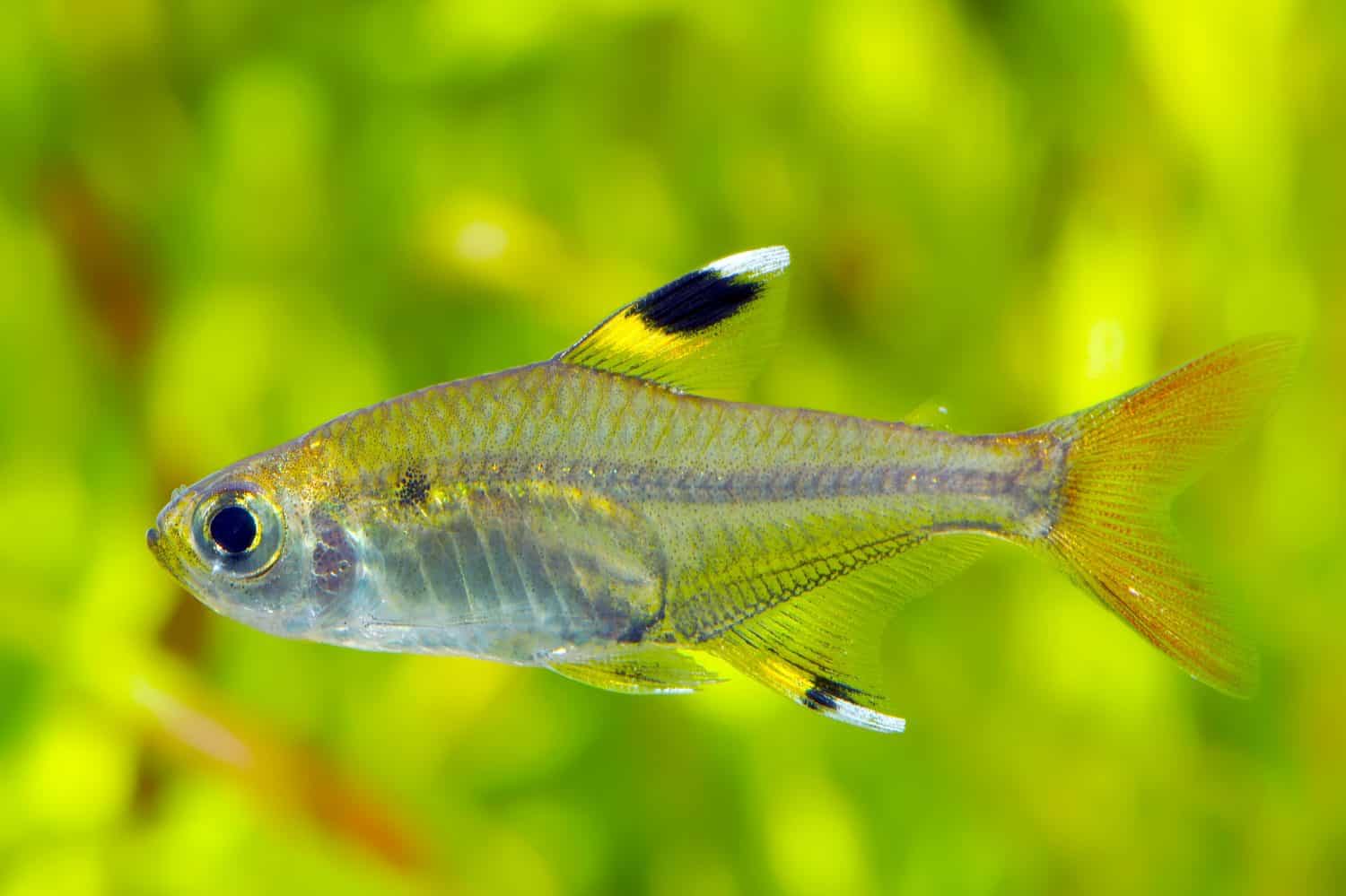
The X-Ray Tetra is a small species of schooling fish that is naturally found in the Amazon River’s coastal waters in South America. The X-Ray Tetra fish is also known as the Golden Pristella Tetra and the Water Goldfinch because of the faint golden coloration of their translucent skin.

Classification and Scientific Name
The X-Ray tetra was first described by Albert Ulrey in 1894 and has since become one of the most popular freshwater fish kept in aquariums. Although the X-Ray tetra (Pristella maxillaris) is the only known species in its genus, it is closely related to other small and colorful South American fish, including the nearly 150 other tetra species. Among these other types of tetra are:
- Neon Tetra (Paracheirodon innesi)
- Rainbow Tetra (Nematobrycon lacortei)
- Bloodfin Tetra (Aphyocharax anisitsi)
- Emperor Tetra (Nematobrycon palmeri)
- Buenos Aires Tetra (Hyphessobrycon anisitsi)
- Lemon Tetra (Hyphessobrycon pulchripinnis)
- Ember Tetra (Hyphessobrycon amandae)
- Congo Tetra (Phenacogrammus interruptus)
- Black Neon Tetra (Hyphessobrycon herbertaxelrodi)
- Ruby Tetra (Axelrodia riesei)
Anatomy and Appearance
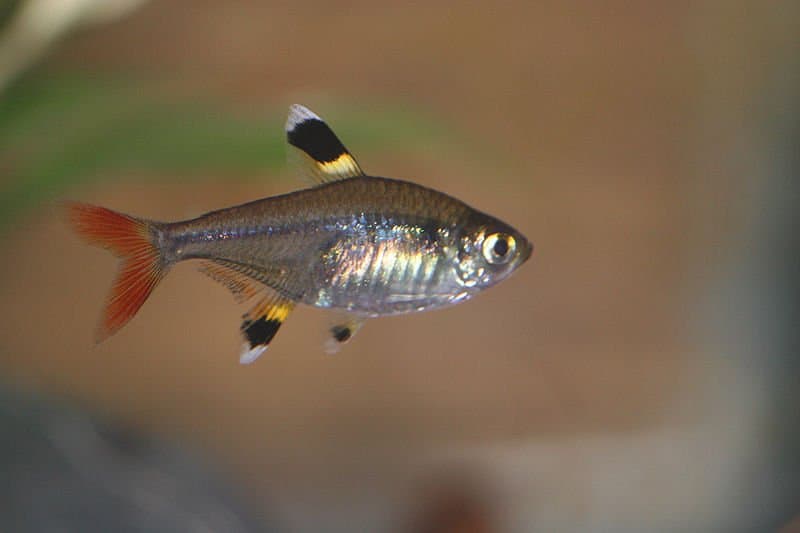
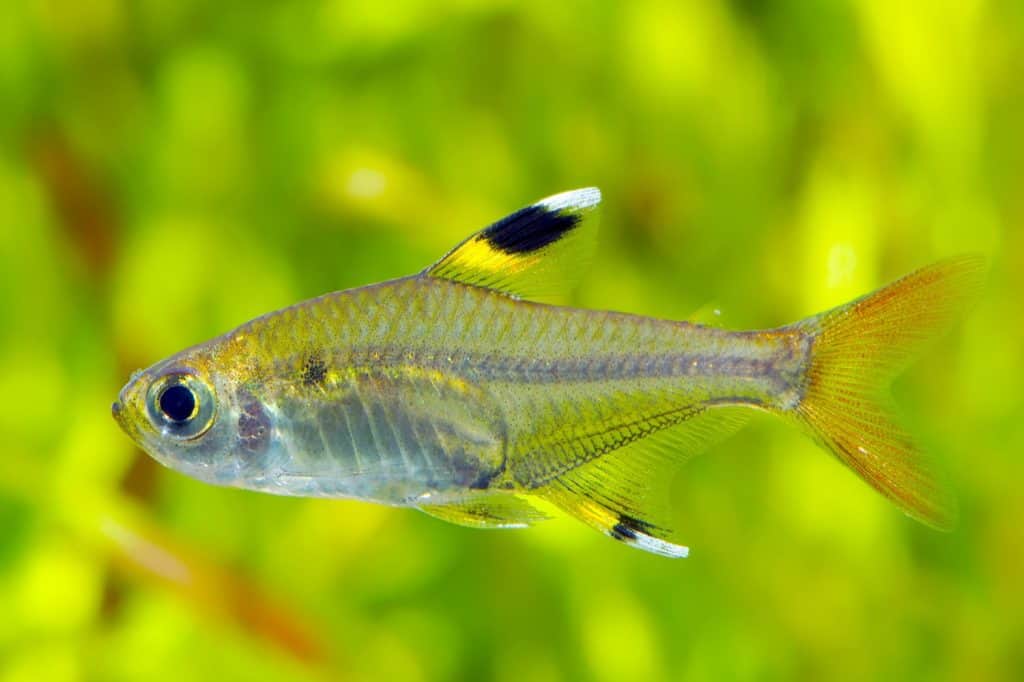
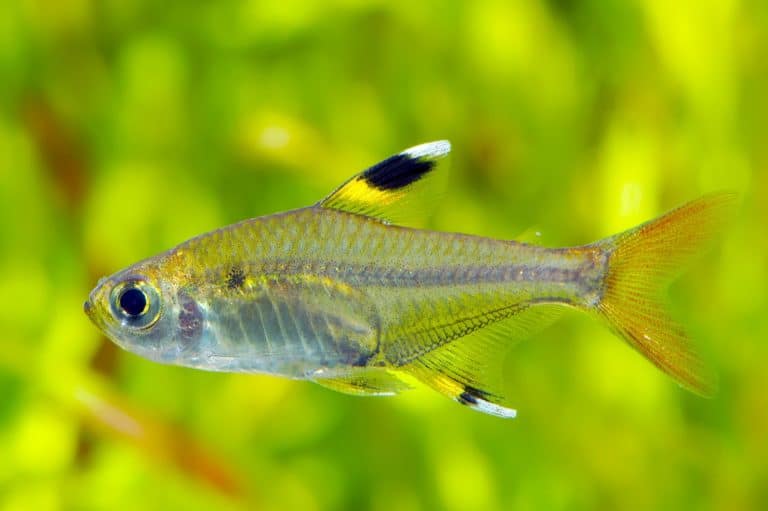
The X-ray tetra gets its name from its almost transparent skin.
©Debivort at the English language Wikipedia / Creative Commons – Original
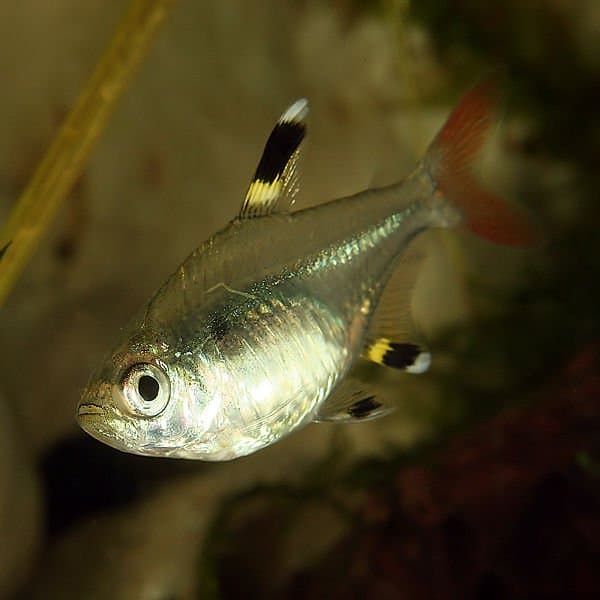
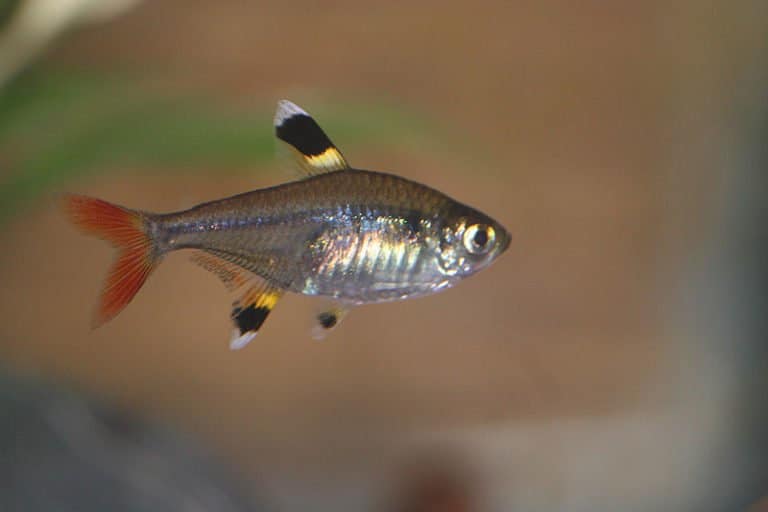
The most distinctive feature of the X-Ray Tetra fish is the translucent layer of skin that covers its small body, which allows the fish’s backbone to be clearly seen. The scales of the X-Ray Tetra are a silvery-yellowish color that is very faint, looking almost golden in some lights. The X-Ray Tetra also has a red-tipped tail and strikingly striped dorsal and anal fins that are yellow, black, and white in color.
This is a relatively small species of fish (1.5 inches) that actually has a bony internal structure known as the Weberian apparatus, which is used in picking up sound waves and contributes to the X-Ray fish’s acute sense of hearing (this bony structure is also found in many of their relatives).
Females are generally slightly larger and rounder than the more slender males, although the two are very similar in appearance.
Distribution and Habitat
The X-Ray Tetra is found in the Amazonian coastal waters of Brazil, Guyana, and Venezuela in South America. They differ greatly from other Tetra species as they can tolerate the harder brackish water closer to the coast, as well as their usual freshwater environments. They inhabit clear-water streams and tributaries during the dry season, and with the coming of the rains, the X-Ray fish then move into the flooded marshlands where the water is softer and more acidic. It is during the wet season that the X-Ray Tetra breed, as they have better water conditions and a higher abundance of food.
Behavior and Lifestyle
Like many other small, colorful fish, the X-Ray Tetra is a schooling species inhabiting the region between the bottom and middle of the water as a group. They are incredibly peaceful and tolerant of other species in their habitats. The X-Ray Tetra is one of the most adaptable species of Tetra as it can inhabit both fresh and brackish water, in both acidic and alkaline conditions. It is widely observed that those X-Ray fish that are kept in tanks can change quickly from being peaceful to becoming skittish in the presence of larger, predatory fish, with the same behavior known to be displayed if the school size is not big enough.
Interesting Facts and Features
The Weberian apparatus (the bony structure) in the X-Ray Tetra’s body works by transmitting sound waves that have been received by the swim bladder, sending them through its vertebrae, and then taking them to the inner ear. The result is that the X-Ray Tetra has excellent hearing.
The transparency of the skin is thought to be a form of protection as predators find it much harder to spot them (along with their light yellow markings) amongst the dense vegetation and shimmering water. Not only is the yellowish X-Ray Tetra popular in tanks, but an albino version of the species is also now commonly found in artificial communities worldwide.
Reproduction and Life Cycle
During the rainy season, the X-Ray Tetra return to the floodplains to spawn. Unlike many similar fish that give birth to live young, the female X-Ray Tetra lays between 300 and 400 eggs by scattering them among the vegetation. When it is ready to spawn, the see-through skin means that the eggs can also be easily seen. X-Ray Tetra fry begin to hatch as early as 24 hours later and become free swimming within a few days. Once able to swim, the small and dull white young can find better food sources and soon develop their characteristic adult markings. X-Ray fish usually live for three or four years in the wild, but can get to older ages in captivity.
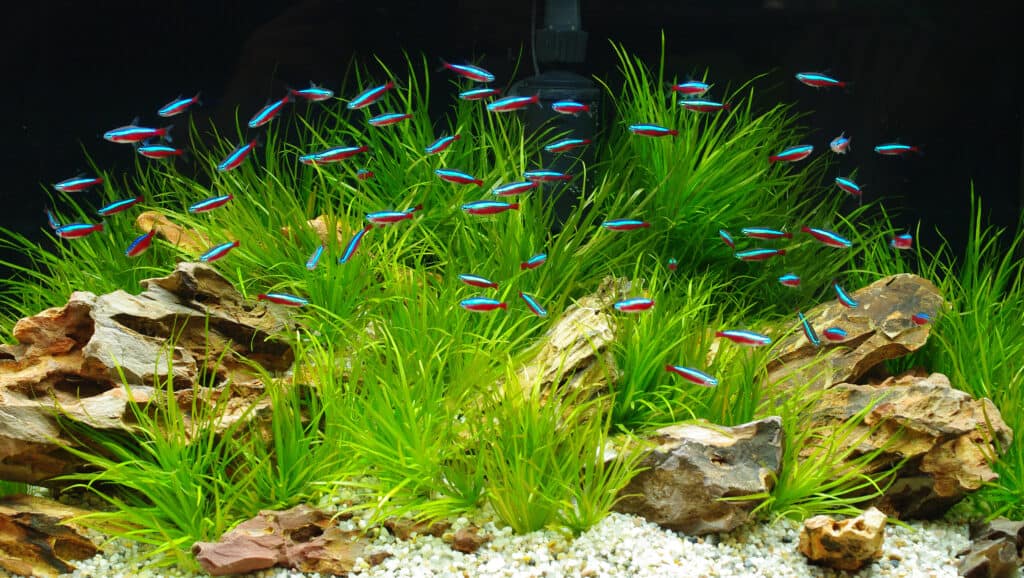
X-ray Tetras can be kept in the same aquarium with other small, schooling fish such as these neon tetras.
©Dobermaraner/Shutterstock.com
Diet and Prey
Like many other small species of fish that live in the Amazon River, the X-Ray Tetra is an omnivorous animal whose diet is made up of both animals and plants. X-Ray Tetra primarily hunt worms, insects, and small crustaceans that live close to the riverbed. Its fry feed on insect larvae. Although it is also known to supplement its diet with aquatic plants, it is predominantly a micro-predator that feeds on small invertebrates. In artificial communities, X-Ray Tetra needs a variety of food sources, including brine shrimp and bloodworms, alongside the standard flakes and pellets to ensure that it has a fully nutritious diet.
Predators and Threats
The small size of the X-Ray Tetra means that it should not be kept in the same aquarium as larger, predatory fish, but it can cohabitate the tank peacefully with other small, schooling fish that pose no threat. In the wild, X-Ray Tetra are preyed upon by several aquatic predators, including larger fish and frogs, and they are threatened by birds and snakes if close to the water’s surface. Its populations are thought to be the most under threat from rising pollution and habitat loss in general.
Relationship with Humans
Since it was first described in 1894, this unique animal has been the subject of much fascination because of its nearly transparent body. The X-Ray Tetra is now one of the most popular species of tropical fish to be kept in household tanks, mainly due to the ease of care since they are hardy, adaptable, and undemanding. The fast breeding rate is also thought to be one of the reasons why this fish has become so popular. Today, aquarium X-Ray Tetra do not come from the wild but are commercially farmed for the trade, mainly in Eastern Europe and in the Far East.
Conservation Status and Life Today
The X-Ray Tetra (Pristella maxillaris) is listed as Least Concern on the IUCN Red List, meaning it is not currently considered under threat in its environment. However, increasing industry in the Amazon Basin means that there has been an increase in the levels of pollution in the water and, therefore, a decrease in water quality, leading to slight population declines in certain areas.
X-Ray Tetra Pictures
View all of our X-Ray Tetra pictures in the gallery.

Sources
- David Burnie, Dorling Kindersley (2011) Animal, The Definitive Visual Guide To The World's Wildlife / Accessed March 31, 2011
- Tom Jackson, Lorenz Books (2007) The World Encyclopedia Of Animals / Accessed March 31, 2011
- David Burnie, Kingfisher (2011) The Kingfisher Animal Encyclopedia / Accessed March 31, 2011
- Richard Mackay, University of California Press (2009) The Atlas Of Endangered Species / Accessed March 31, 2011
- David Burnie, Dorling Kindersley (2008) Illustrated Encyclopedia Of Animals / Accessed March 31, 2011
- Dorling Kindersley (2006) Dorling Kindersley Encyclopedia Of Animals / Accessed March 31, 2011
- Animal World / Accessed March 31, 2011
- About Fish Online / Accessed March 31, 2011
- Seriously Fish / Accessed March 31, 2011