









The Yorkshire Terrier, while considered a purebred today, initially wasn’t. Their original parents, the Clydesdale and now-extinct Paisley terriers, were crossbred to give us the very feisty, tenacious, brave, and quite pushy Yorkshire Terrier.
It was first known as the Broken-Haired Scotch Terrier, later called the Toy Terrier, before the name Yorkshire Terrier was settled on in 1870 to commemorate its origins, just as the name suggests, to the historic county of Yorkshire in Northern England during the Industrial Revolution in the 1800s. This area and period saw an enormous influx of Scottish immigrants to work in the mines and textile mills, but they didn’t come alone: They brought Clydesdale and Paisley terriers with them.
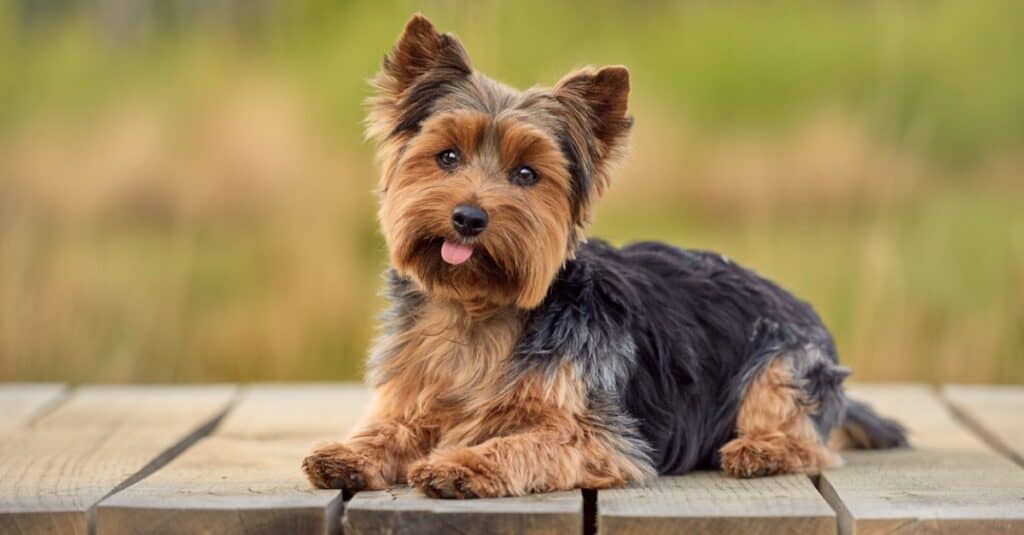
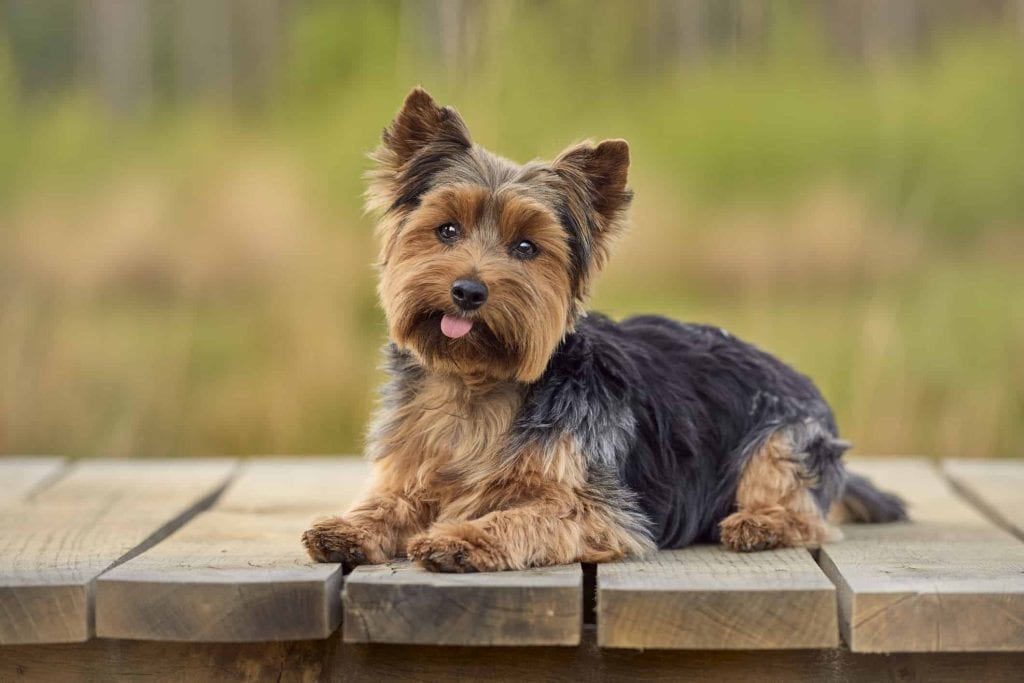
Scottish immigrants to Yorkshire, England, during the Industrial Revolution bred Yorkies from two well-known breeds of Scottish terriers.
©iStock.com/Kurt Pas
Initially bred from the two breeds to exterminate rodents and other pests that hid in crevices and holes of the mines and textile mills, the Yorkshire Terrier advanced to hunting small animals that lived in burrows and cracks of rocks in forests, which made the breed popular for its fearlessness in hunting down prey.
That popularity grew so much during this time that they were welcomed into homes as pets. The interest was, in part, fueled by the dog’s small stature and silky fur. English society loved them too, and the English and American Kennel clubs officially recognized the Yorkshire Terrier in 1886 and 1885, respectively.
Temperament and Behavior
The Yorkie regularly appears on the American Kennel Club’s Most Popular Breed List. There is no shortage of reasons why: They don’t shed much (making them a great choice for those with allergies), they are highly intelligent and easily trained, they get along well with other household pets (even cats), they are independent, and they are ridiculously cute.
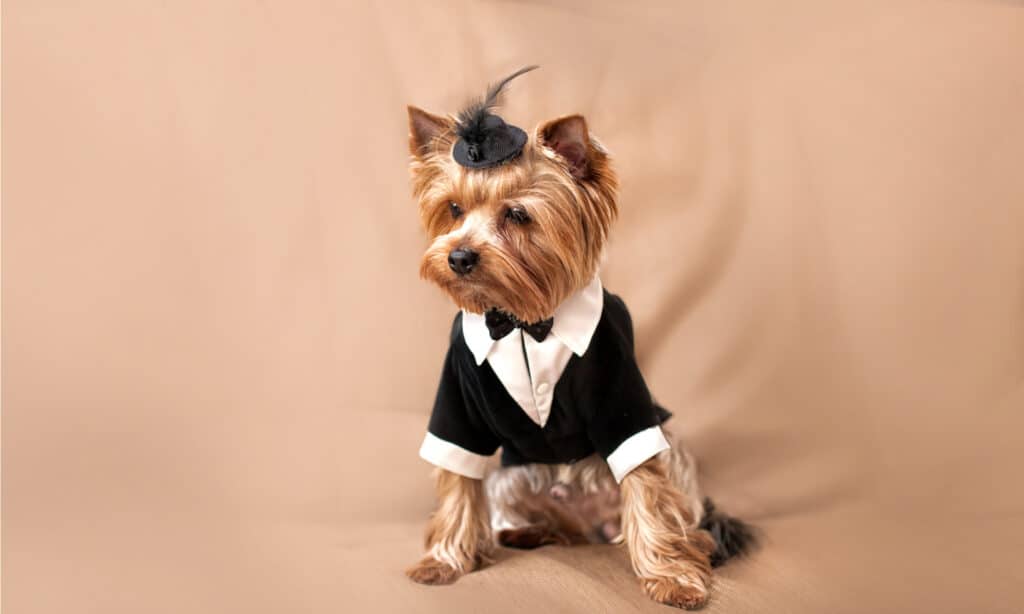
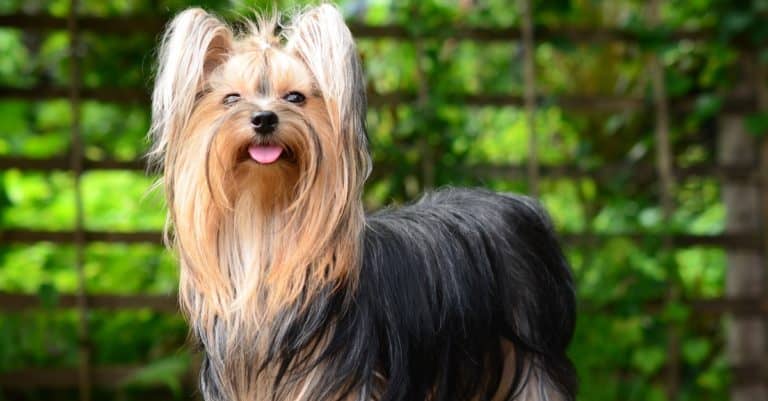
Yorkshire Terriers are extremely intelligent, but they can be aloof and fierce despite their cute appearance.
©Artsiom Kuchynski/Shutterstock.com
All dogs require early socialization, though, and the Yorkshire Terrier is no different. Early exposure to varying sights, sounds, people, and experiences ensures this dog will be well-rounded and friendly.
This breed makes an excellent companion, but these dogs do need a strong leader and defined limits and boundaries. If coddled or spoiled too much, this dog can become shrill, suspicious, and even nasty. You don’t want to find yourself on the losing side of this little but fiercely stubborn breed.
Yorkshires are active, energetic, and love to play retrieval games (fetch, frisbee, balls/sticks), but they are small and fragile, so be sure not to push them to extremes. Thirty minutes of daily exercise is appropriate. It is not recommended to take them for runs or bike rides.
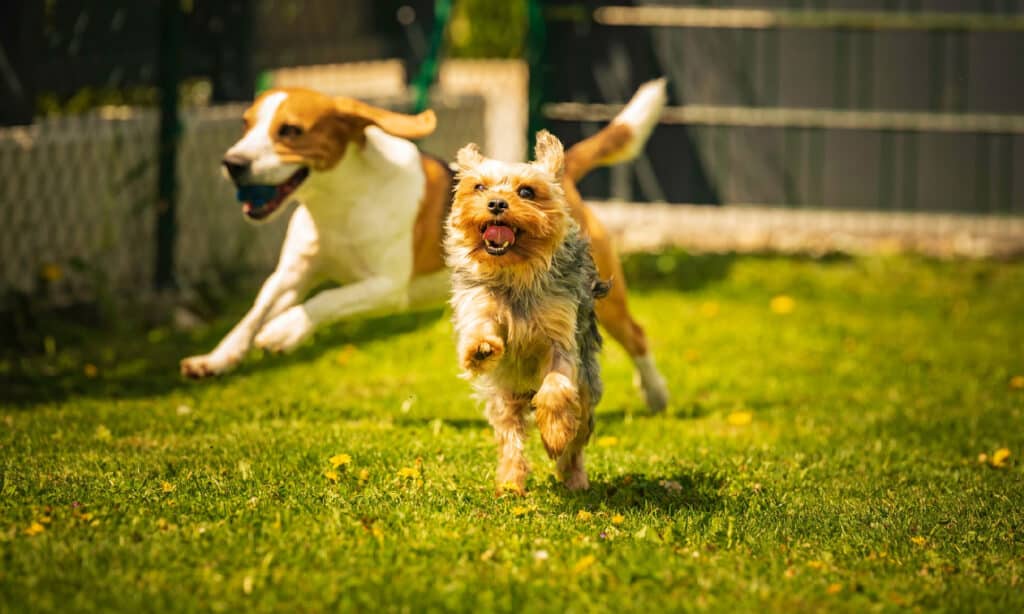
The active and energetic Yorkshire Terrier benefits greatly from a regular exercise schedule.
©iStock.com/Przemysław Iciak
The Yorkshire Terrier may not be the best choice (but certainly not a bad choice) for a family with young children who can play too roughly for the petite and somewhat physically frail Yorkie. This breed is known to snap or growl at children, even if they mean the dog no harm. It is important to have clearly defined boundaries for interactions between your pet and children. Socialization, training, and consistent and fair discipline can dissuade many of the problems one might see with this breed.
Appearance, Size, and Weight
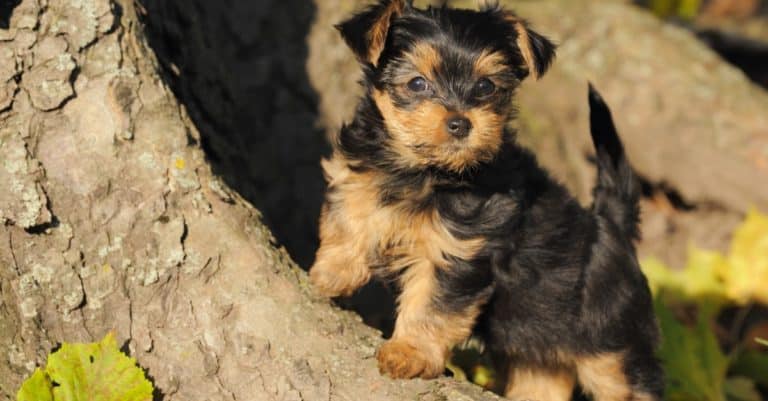
What distinguishes the Yorkie from other terriers is its blue and gold coloring in adulthood. They are born with a tan and black coat, but as they move into adulthood, the black becomes a notable blue shade, and the tan lightens into a rich and regal gold.
When we say this dog is petite, we mean it. An adult Yorkie typically weighs between 4 and 7 pounds, although it is not unheard of for one to weigh 10 pounds, and grows to 7-8 inches tall when measured to the ridge between the shoulder blades. It is ideal if the length and height are of equal proportion. Males and females can be the same size and weight.
If a Yorkshire Terrier is smaller or larger than what is typical, this may indicate a health issue. Ask your veterinarian to screen them for health problems common to the breed.
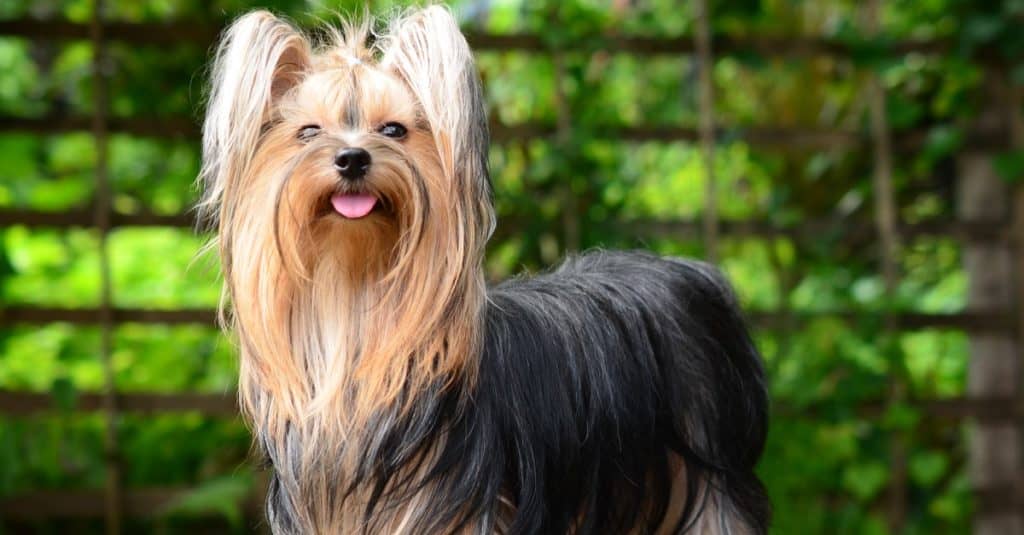
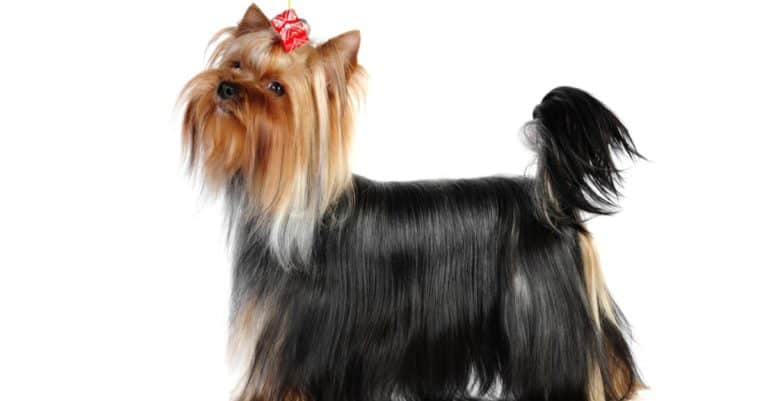
Adult Yorkshire Terriers feature a silky blue and gold-colored coat, despite being born black and tan.
©Mr. SUTTIPON YAKHAM/Shutterstock.com
Common Health Issues
The Yorkshire Terrier enjoys a lifespan of 12-15 years and is a relatively healthy breed; however, like with all dog breeds, there are genetic disorders to watch out for and a few problems to be aware of that affect dogs of such small size.
Yorkies are known to fall victim to hypoglycemia, periodontal disease, Legg-Perthes disease, retinal dysplasia, luxating patella (kneecap displacement), collapsed trachea, liver shunt, and pancreatitis. Some of these are genetic; others are lifestyle-related.
Getting your Yorkie from a reputable and responsible breeder can reduce the risk of this dog having any of these issues, and regular screenings by a veterinarian can catch these issues early.
The Best Dog Food
A moderately active Yorkie only needs about 150 calories a day, which is not a lot. It is helpful to split their feedings into small meals throughout the day, up to four times. This breed does not need a lot of food.
Nutritionally poor diets are linked to hypoglycemia in Yorkshire Terriers, so make sure they are eating a well-balanced meal with adequate protein and fat. Their long coats could benefit from a formula that is high in omega-3 and omega-6 fatty acids.

Yorkshire Terriers do not need a lot of daily calories, even if they are eyeing you for yours.
©iStock.com/yacobchuk
Maintenance and Grooming
Yorkies need daily brushing to keep their coat soft, silky, and free of mats, tangles, and debris. The trick is to never brush a dry coat. Dry brushing can break the dog’s fine hair. Spritzing the dog’s coat with water or a shine conditioner should dampen the coat safely enough to brush it.
Occasional professional grooming is always recommended. However, you can groom them at home. Just speak with your veterinarian, breeder, or groomer for tips and tricks. Online videos of grooming can be helpful, too.
Since Yorkshire Terriers are prone to periodontal disease, it is advised that you brush their teeth every day for at least a few minutes. A dog will become comfortable with its teeth being brushed if a routine is maintained.
Yorkshire Terrier Pictures
View all of our Yorkshire Terrier pictures in the gallery.

tsik/Shutterstock.com
Sources
- American Kennel Club / Accessed January 31, 2025
- Yorkie Info Centre / Accessed January 31, 2025
- Wag Walking / Accessed January 31, 2025
- Your Pure Bred Puppy / Accessed January 31, 2025
- Borrow My Doggy / Accessed January 31, 2025
- The Nest / Accessed January 31, 2025
- Dog Time / Accessed January 31, 2025
- Yorkshire Terrier Guide / Accessed January 31, 2025
- Yorkie Info Center / Accessed January 31, 2025
- Yorkie Advice / Accessed January 31, 2025
- Animal Wised / Accessed January 31, 2025
- Pets World / Accessed January 31, 2025
- Trudog / Accessed January 31, 2025
- The Happy Puppy Site / Accessed January 31, 2025
- Family Pet Planet / Accessed January 31, 2025
- Rover / Accessed January 31, 2025