

O
Species Profile

Oilfish

Ruvettus pretiosus

Deep-water predator with a waxy secret
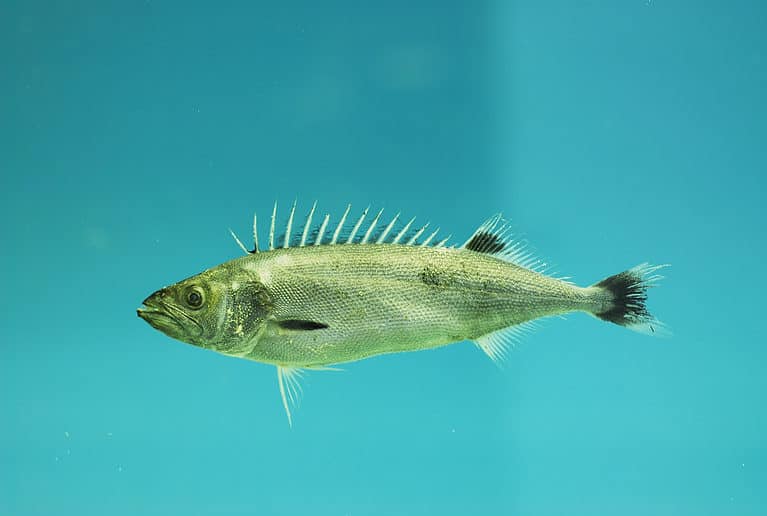
Porco_Rosso/Shutterstock.com

Oilfish Ocean Range

Marine Species

Ruvettus pretiosus (oilfish) is found around the world in tropical to warm-temperate seas. It lives offshore over continental slopes, seamounts, and near islands, mainly in mid to deep water (mesopelagic to bathypelagic) rather than on reefs. Seen in the Atlantic, Indian, Pacific, Mediterranean and Red Sea, usually 100–800 m deep.

Loading ocean map...

Ocean Regions 5

atlantic_ocean pacific_ocean indian_ocean mediterranean_sea red_sea
Oilfish

At a Glance

Ocean Species
Diet Piscivore
Activity Nocturnal+
Lifespan 12 years
Weight 63 lbs
Status Least Concern
Did You Know?

Maximum reported length: 300 cm total length (FishBase/FAO).

Scientific Classification

The oilfish (Ruvettus pretiosus) is a large, deep-water, predatory ray-finned fish (a snake mackerel) noted for its very oily flesh rich in wax esters. It occurs widely in tropical to warm-temperate oceans and is sometimes marketed as a food fish, though overconsumption can cause gastrointestinal issues due to indigestible wax esters.

Kingdom
Animalia
Phylum
Chordata
Class
Actinopterygii
Order
Scombriformes
Family
Gempylidae
Genus
Ruvettus
Species
pretiosus

Distinguishing Features

  • Elongate, robust body typical of snake mackerels
  • Deep-water pelagic lifestyle; frequently caught on deep longlines
  • Very oily/waxy flesh (high wax-ester content), the basis of the common name

Physical Measurements

Length
4 ft 11 in (1 ft 8 in – 9 ft 10 in)
Weight
55 lbs (11 lbs – 139 lbs)
Top Speed
12 mph
swimming

Appearance

Primary Colors
Secondary Colors
Skin Type Thick-skinned, firm body with very small/embedded scales giving a smooth-to-leathery feel; flesh extremely oily and wax-ester rich.
Distinctive Features
  • Maximum recorded total length about 300 cm (3.0 m).
  • Elongate, cylindrical 'snake mackerel' body; large head with wide gape.
  • Prominent, sharp fang-like teeth suited for piscivory and squid predation.
  • Two separated dorsal fins and a deeply forked caudal fin for cruising pursuits.
  • Large eyes and dark coloration consistent with mesopelagic to deep-slope habits.
  • Very high wax ester content in flesh; heavy consumption may cause keriorrhea (oily diarrhea).
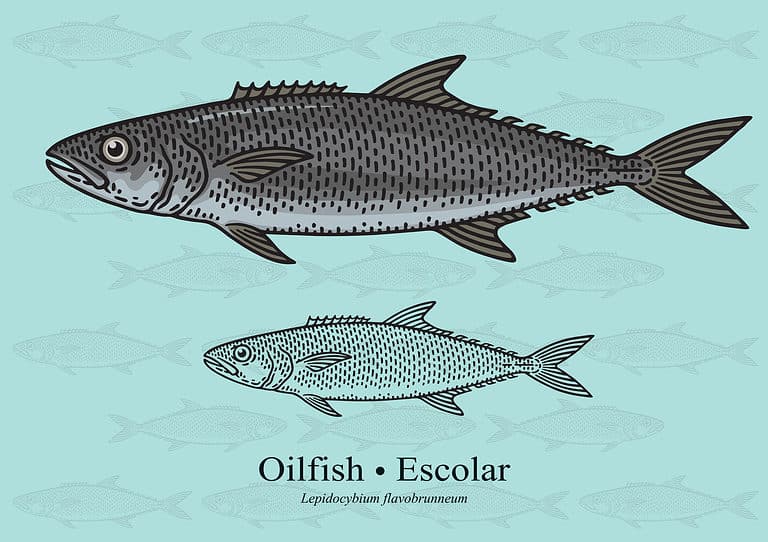
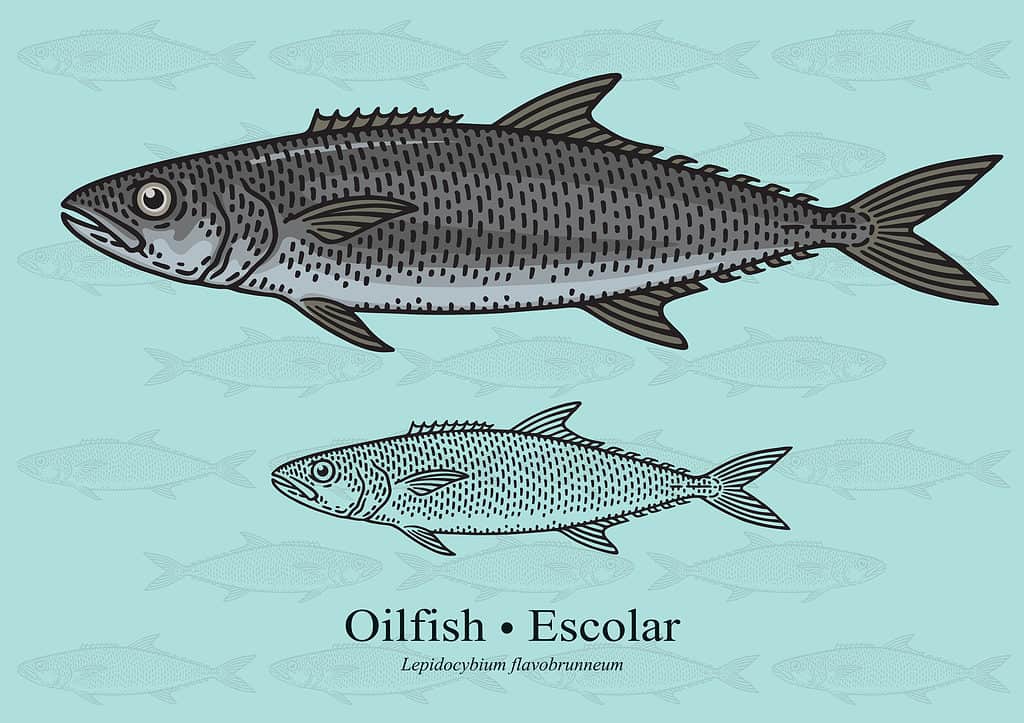
  • Frequently confused in markets with escolar (Lepidocybium flavobrunneum), another wax-ester-rich gempylid.
  • Wide tropical to warm-temperate oceanic distribution; typically taken over deep water on slopes and seamounts.

Did You Know?

Maximum reported length: 300 cm total length (FishBase/FAO).

Lives deep: commonly reported from ~100-800 m depth (FishBase).

Circumglobal in tropical to warm-temperate oceans (Atlantic, Indian, Pacific; incl. many oceanic islands and slopes).

Its muscle lipids are rich in indigestible wax esters (the same issue associated with "keriorrhea" after eating some gempylids).

Often confused in markets with escolar (Lepidocybium flavobrunneum); both are sold under misleading names like "butterfish" or "white tuna" in some places.

A top midwater predator: diets reported for the species include fishes and cephalopods (FAO species accounts).

Unique Adaptations

  • Wax-ester-rich tissues: wax esters are energy-dense and can aid buoyancy in deep water, but are poorly digested by humans-explaining the species' notable food-safety reputation (documented for gempylids; public-health advisories commonly cite wax esters as the cause of keriorrhea).
  • Scombriform (gempylid) open-ocean design: a streamlined, midwater lifestyle typical of snake mackerels, suited to long-distance cruising and ambush in the mesopelagic (family-level functional morphology described in FAO gempylid accounts).
  • Wide thermal tolerance within warm seas: recorded from tropical through warm-temperate regions across multiple ocean basins, indicating flexibility in temperature regimes compared with many strictly tropical deepwater fishes (distribution summaries: FishBase/FAO).

Interesting Behaviors

  • Mesopelagic/bathypelagic predation: typically encountered over continental slopes, seamounts, and open-ocean waters where it hunts in dim light (reported by capture patterns in deep longlines/handlines; FAO/FishBase).
  • Opportunistic feeding: takes fast-moving prey such as fishes and squid, consistent with the family Gempylidae's predatory ecology (FAO).
  • Low encounter rate near shore: most records come from offshore/deeper fisheries, reflecting a life largely below the epipelagic zone (FishBase depth/habitat summaries).

Cultural Significance

Oilfish (Ruvettus pretiosus) is known in seafood trade and on food-safety labels. Eating large amounts can cause oily diarrhea (keriorrhea), leading to advisories and some bans. It is often confused with escolar, a common mislabeling example.

Myths & Legends

Name history rather than folklore: the common name "oilfish" reflects its unusually oily flesh, while the species epithet pretiosus ("precious" in Latin) echoes early naturalists' habit of giving laudatory names to striking oceanic animals.

Modern diner stories say oilfish (Ruvettus pretiosus), often sold as 'butterfish' or 'white tuna,' tastes very rich but can cause oily diarrhea, making it a famous seafood mislabeling story.

Fishers' lore: in some longline fleets, oily snake mackerels like oilfish (Ruvettus pretiosus) are a memorable bycatch kept by some for rich flesh, avoided by others for a bad reputation among crews.

Conservation Status

LC Least Concern

Widespread and abundant in the wild.

Population Unknown

Life Cycle

Lifespan 12 years

Lifespan

In the Wild
10–14 years

Reproduction

Mating System Promiscuity
Social Structure Aggregation Group
Breeding Pattern Transient
Fertilization Broadcast Spawning
Birth Type Broadcast_spawning

Oilfish are oviparous, releasing eggs and sperm into the water column (pelagic broadcast spawning) with no nest-building or parental care. Adults are generally solitary but likely form brief spawning aggregations; mating is presumed promiscuous with transient pairings.

Behavior & Ecology

Social Shoal Group: 1
Activity Nocturnal, Crepuscular
Diet Piscivore Fish (especially small-to-medium midwater fishes; stomach-content summaries commonly report fishes as the dominant prey, with cephalopods secondary-reported in FishBase species accounts for Ruvettus pretiosus).

Temperament

Apex-leaning mesopredator; generally non-territorial and avoids prolonged close contact with conspecifics.
Opportunistic forager on fishes and cephalopods; interactions likely driven by prey density rather than social bonding.
Across deep-water gempylids, sociality is low; aggregation frequency increases locally where prey concentrates.

Communication

No species-specific vocalizations reported in standard references E.g., FishBase; FAO fisheries identification guides
Hydrodynamic/lateral-line sensing to track prey and nearby conspecific movement in low light.
Vision-based spacing and alignment when loosely aggregating Short-range, dim-light conditions
Olfactory/chemical cueing for prey detection; likely incidental cues from injured prey.
Tactile contact appears uncommon; body contact likely accidental in dense feeding situations.

Habitat

Open Ocean Deep Sea Seabed/Benthic Coastal
Biomes:
Terrain:
Coastal Island Rocky
Elevation: Up to 3280 ft 10 in

Ecological Role

Upper/mid-level deep-water predator (mesopelagic-bathypelagic) linking deep scattering-layer prey to larger pelagic predators.

Regulates populations of midwater fishes and cephalopods through predation Transfers energy from deep pelagic food webs to higher trophic levels (and to fisheries via longline bycatch/landings) Serves as prey for large oceanic predators (e.g., large sharks and billfishes), supporting higher-trophic-level food webs

Diet Details

Main Prey:
Mesopelagic and benthopelagic fishes Cephalopods Large pelagic and bathyal crustaceans

Human Interaction

Domestication Status

Wild

Oilfish (Ruvettus pretiosus) is not domesticated and has no history of breeding or farming. People catch it in deep ocean waters (about 100–800 m) with longlines. It is sold in markets, sometimes mislabeled. Its high wax-ester oil can cause stomach problems in people. It is rarely kept in aquariums because of its size.

Danger Level

Moderate
  • Foodborne gastrointestinal effects from wax esters (indigestible oils) in the flesh: can cause keriorrhea (oily orange diarrhea), abdominal cramps, nausea, and urgency-risk increases with portion size; this is the primary documented human-health issue associated with consuming oilfish/gempylids (FDA consumer advisories and multiple public-health reports on gempylid wax-ester illness).
  • Seafood-market risk: mislabeling/substitution within gempylid-associated market names can lead to unintended consumption by sensitive individuals or larger-than-advised servings (food-safety/consumer protection issue).
  • Physical hazard: large, powerful fish handled on deck can cause minor injury (thrashing, spines/teeth), but it is not considered an aggressive threat to swimmers/divers due to its deep-water habitat.

As a Pet

Not Suitable as Pet

Legality: Not a typical regulated 'pet' species; possession is generally governed by local wildlife collection/transport rules and marine fishing regulations. In practice it is not offered in the aquarium trade and would usually require permitted capture and specialized transport (deep-water species).

Care Level: Expert Only

Purchase Cost:
Lifetime Cost: $50,000 - $250,000

Economic Value

Uses:
Commercial food fish (regional/occasional) Bycatch in deep-water longline fisheries Seafood trade item with food-safety/labeling considerations
Products:
  • fresh/frozen fillets or steaks (often marketed under various common-name conventions)
  • processed seafood products where gempylids may be substituted or misidentified (market-name/labeling risk)
  • limited value for sport fishing relative to pelagic gamefish; more often a deep-water catch/bycatch

Relationships

Predators 6

Shortfin mako shark
Shortfin mako shark Isurus oxyrinchus
Blue shark
Blue shark Prionace glauca
Bigeye thresher Alopias superciliosus
Swordfish
Swordfish Xiphias gladius
Striped marlin Kajikia audax
Bigeye tuna Thunnus obesus

Related Species 6

Escolar
Escolar Lepidocybium flavobrunneum Shared Family
Snake mackerel Gempylus serpens Shared Family
Silver gemfish Rexea solandri Shared Family
Black gemfish Nesiarchus nasutus Shared Family
Black snake mackerel Nealotus tripes Shared Family
Snoek Thyrsites atun Shared Family

Ecological Equivalents 5

Animals that fill a similar ecological role in their ecosystem

Escolar
Escolar Lepidocybium flavobrunneum Deep-water predatory gempylid similar to its close relatives. Flesh is very oily and contains wax esters that are difficult to digest and can cause keriorrhea in people. Found in tropical to warm-temperate oceans and often sold interchangeably with related species.
Snake mackerel Gempylus serpens Co-occurring deep-water meso- to bathypelagic predator that strongly overlaps in habitat (off-shelf/slope waters) and diet (fish and cephalopods), and shares the elongate snake mackerel body plan and ambush/active predatory behavior typical of Gempylidae.
Pomfret / butterfish Pampus spp. Not closely related but often compared in markets and by taste because both have rich, oily flesh. Both are midwater predators with high fat content, though Pampus live in shallower waters and lack the wax esters found in oilfish.
Escolar-like snake mackerels Rexea spp. Gemfishes occupy similar slope and offshore pelagic habitats and are piscivorous and teuthophagous predators. They overlap with oilfish in depth use and prey fields, feeding on mesopelagic fishes and squids.
Cutlassfish Trichiurus lepturus A large, elongate pelagic predator that overlaps with oilfish in feeding on midwater fishes and squid. Commonly associated with continental slope and outer-shelf systems in warm waters and can occupy similar trophic roles despite belonging to different families.

The oilfish (Ruvettus pretiosus) is a species of snake mackerel found in the temperate and tropical waters of the Atlantic and Pacific Oceans. They inhabit deep waters, living in pairs and silently swimming through the dark water. It is a popular game fish in certain areas of the world, but many countries have regulations on the importation and sale of its meat. Find out everything there is to know about the oilfish, including where it lives, what it eats, and why you may not want to consume it.

5 Amazing Oilfish Facts

  • Oilfish contain high levels of wax esters, which are indigestible to humans. 
  • Eating oilfish meat can cause symptoms like severe diarrhea, nausea, and vomiting in some people.
  • Some fish sellers will mislabel oilfish as cod, causing some countries to ban their importation.
  • This species is often bycatch from fisheries, meaning fishermen accidentally catch them.
  • They live in deep water as far as 2,600 feet below the water’s surface.

Classification and Scientific Name

The oilfish (Ruvettus pretiosus) belongs to the Actinopterygii class in the Scombriformes order, which encompasses nine families of bony fish. They are classified in the Ruvettus family and are known as snake mackerels, and the family includes 25 species. They are the only known member of the Ruvettus genus. 

Appearance
Oilfish

Eating oilfish meat can cause symptoms like severe diarrhea, nausea, and vomiting in some people.

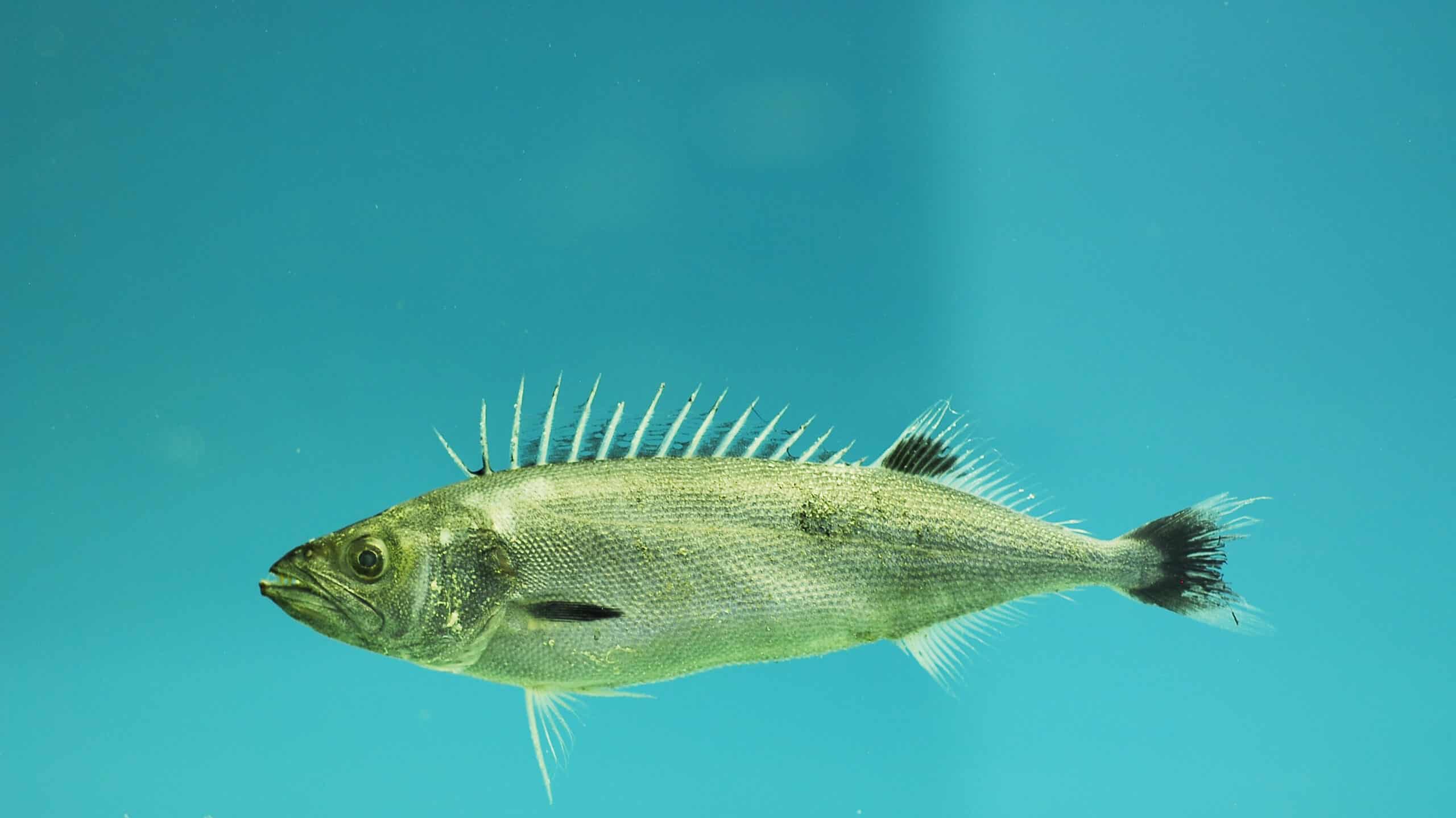
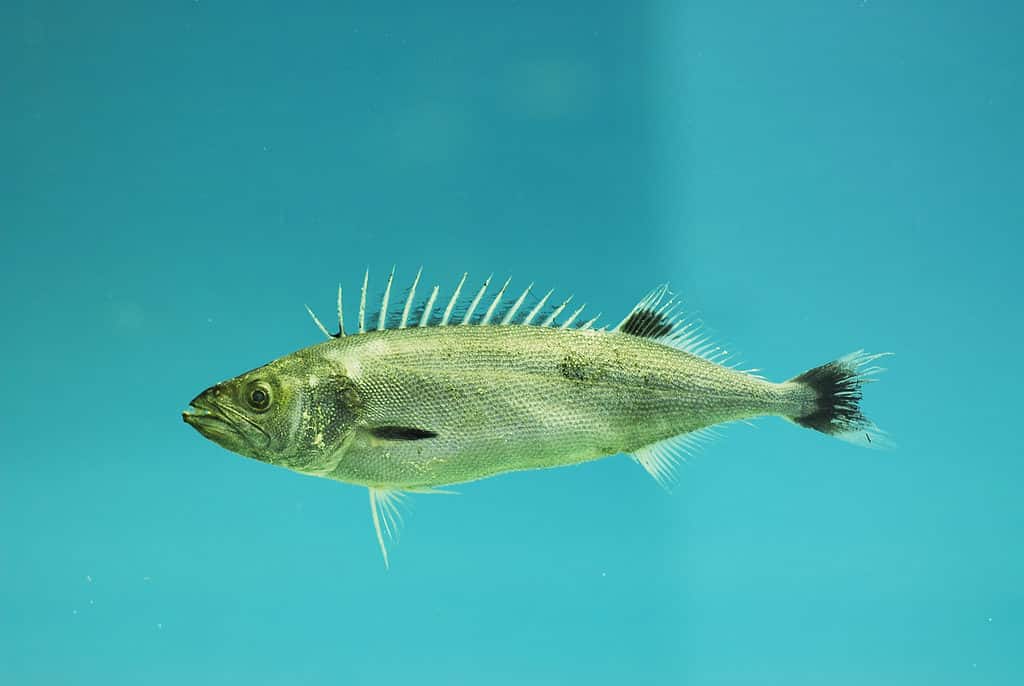
The oilfish is a snake mackerel fish with a torpedo-shaped body, large eyes, and rough, dark-colored scales. Its body is brown with black fin tips and can grow up to ten feet long, weighing 140 pounds. However, the average oilfish is at most five feet. They look similar to a barracuda and feature fang-like teeth. Their bodies contain mercury and high amounts of oil. The oilfish and the similar fish, escolar, contain around 20% of indigestible wax esters. The fish does not metabolize these esters, and they accumulate in its skin and muscle meat.

Distribution, Population, and Habitat

The oilfish has a cosmopolitan distribution in temperate and tropical waters near the coast in the Atlantic and Pacific Oceans and the Mediterranean Sea. They live in relatively deep waters between 330 and 2,600 feet below the water’s surface. You can find them along the sea floor and water columns. 

Predators and Prey

What Does Oilfish Eat?

The oilfish is an opportunistic carnivore, eating what is abundant and easy to catch in its environment. Their primary diet includes squid, small fish, and crustaceans, but they will settle for whatever they can swallow. Oilfish have even been recorded eating their way through a whale’s stomach. However, this is a rare occurrence. 

What Eats Oilfish?

Their exact predators are unknown, but they are most likely preyed on by tuna and marlin, like other snake mackerels.

Reproduction and Lifespan

Oilfish are solitary creatures, lurking in deep water alone or in pairs. Not much is known about their mating habits, except that they reproduce sexually through spawning. Fertilization occurs outside the body, with males releasing their sperm and females their eggs. Spawning occurs during mid to late summer. Their spawn size and lifespan are unknown.

In Fishing and Cooking

Oilfish are edible, but the oil they produce is not digestible by humans. Many countries have advisories or bans against this fish due to the adverse side effects that can occur after eating. Some people can consume oilfish and feel fine, but others experience oily diarrhea, ranging from mild to severe, accompanied by nausea, vomiting, and headaches. The fish’s oil is also not broken down by cooking or freezing. 

Because oilfish has a pleasant taste, some fish sellers intentionally mislabel it as butterfish or cod. Due to this deceptive tactic, Japan and Italy have placed import bans on oilfish. The US FDA states that while symptoms may be unpleasant, this species does not pose a serious health risk to the public.

Threats and Conservation Status

The IUCN lists the oilfish as LC or of “least concern”. This species’ population size is stable (without exact figures) and relatively common in its range. While there are no significant threats to the oilfish, they are often bycatch from tuna and swordfish fisheries, which could indirectly impact their population.

View all 88 animals that start with O

Sources

  1. Cambridge University Press / Accessed December 14, 2022
  2. Centre for Food Safety / Accessed December 14, 2022
  3. UNED / Accessed December 14, 2022
  4. NSUWorks / Accessed December 14, 2022
  5. IUCN Red List / Accessed December 14, 2022
Niccoy Walker

About the Author

Niccoy Walker

Niccoy is a professional writer for A-Z Animals, and her primary focus is on birds, travel, and interesting facts of all kinds. Niccoy has been writing and researching about travel, nature, wildlife, and business for several years and holds a business degree from Metropolitan State University in Denver. A resident of Florida, Niccoy enjoys hiking, cooking, reading, and spending time at the beach.
Connect:

Thank you for reading! Have some feedback for us?


Oilfish FAQs (Frequently Asked Questions)

Oilfish have a rich, pleasant flavor, and are a popular game fish in some regions of the world. However, many countries advise you not to eat its meat due to gastrointestinal discomfort.