




W
Species Profile

Woolly Rhinoceros

Coelodonta antiquitatis

Shaggy titan of the mammoth steppe
Aunt Spray/Shutterstock.com

Woolly Rhinoceros Distribution

Click a location to explore more animals from that region

Loading map...

Size Comparison

Human 5'8"
Woolly Rhinoceros 5 ft 11 in

Woolly Rhinoceros is 1.0x the height of an average human.

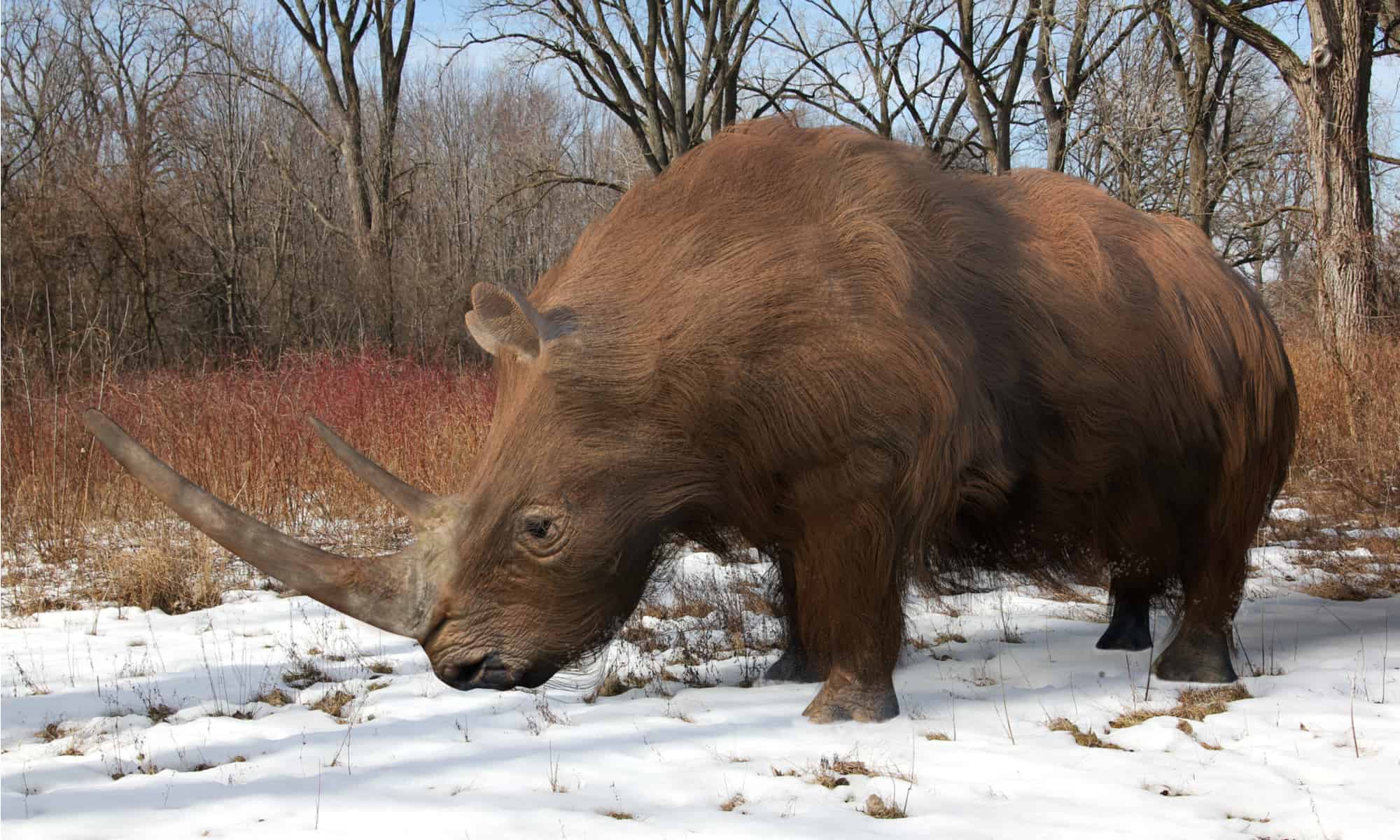
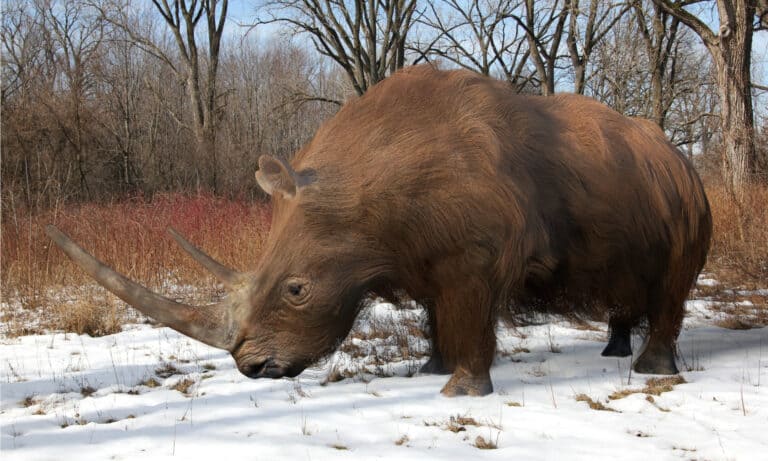
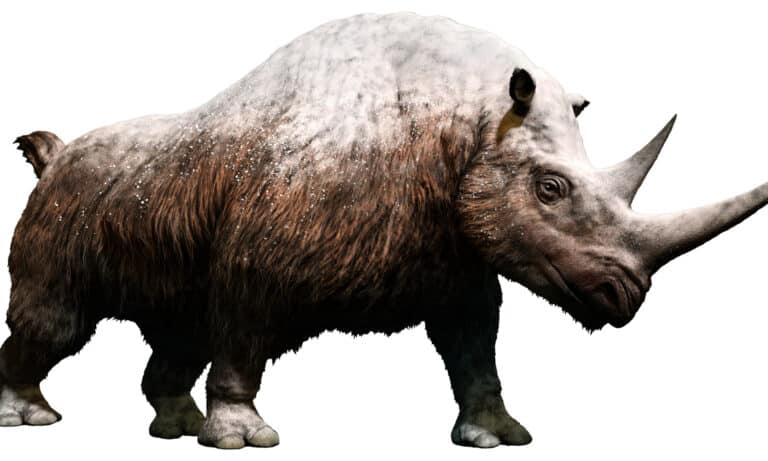
An illustration of the extinct Woolly Rhinoceros slowly making his way through an Ice Age forest. The woolly rhinoceros was a member of the Pleistocene megafauna, common throughout Europe.

At a Glance

Wild Species
Also Known As Woolly rhino, Steppe rhinoceros, Steppe rhino, Ice Age rhinoceros, Ice Age rhino, Cave rhinoceros, Cave rhino, Pleistocene rhinoceros
Diet Herbivore
Activity Cathemeral+
Lifespan 35 years
Weight 3000 lbs
Status Extinct
Did You Know?

Adults stood about 1.6-2.0 m at the shoulder and measured roughly 3.3-3.8 m long.

Scientific Classification

The woolly rhinoceros (Coelodonta antiquitatis) was an extinct Ice Age rhinoceros of Eurasia, adapted to cold steppe-tundra environments. It had a thick coat, a robust build, and two horns, likely used for display and foraging. It went extinct near the end of the Late Pleistocene.

Kingdom
Animalia
Phylum
Chordata
Class
Mammalia
Order
Perissodactyla
Family
Rhinocerotidae
Genus
Coelodonta
Species
antiquitatis

Distinguishing Features

  • Thick woolly coat for cold climates
  • Two horns, prominent nasal horn
  • Short legs, barrel-shaped body
  • Broad head and high-crowned grazing teeth

Physical Measurements

Height
5 ft 11 in (5 ft 3 in – 6 ft 7 in)
Length
11 ft 8 in (10 ft 10 in – 12 ft 6 in)
Weight
2.5 tons (2.0 tons – 3.3 tons)
Tail Length
1 ft 12 in (1 ft 8 in – 2 ft 4 in)
Top Speed
25 mph
running

Appearance

Primary Colors
Secondary Colors
Skin Type Thick fur
Distinctive Features
  • Shoulder height about 1.6-2.0 m; very robust, barrel-chested body.
  • Body length roughly 3.0-3.8 m; short tail and compact cold-adapted profile.
  • Dense double coat: long guard hairs over thick insulating woolly underfur.
  • Large anterior horn commonly ~0.6-1.0 m; some fossils suggest longer individuals.
  • Smaller posterior horn behind the first; both keratinous and strongly curved.
  • Pronounced shoulder hump from enlarged withers and strong neck musculature.
  • Broad, low-slung head with wide nasal bones supporting massive horns.
  • Short ears and reduced extremities, minimizing heat loss in steppe-tundra.
  • Wide, grazing-adapted lips and strong incisors for tough mammoth-steppe grasses.

Sexual Dimorphism

Dimorphism appears moderate: males were generally larger and tended to have more robust, sometimes longer horns, while females averaged slightly smaller body size and horn mass. Differences are inferred from fossil size distributions, not always clear-cut.

  • Typically more massive skull and horn bases; thicker nasal region.
  • Slightly smaller average body size; comparatively lighter horn build.

Did You Know?

Adults stood about 1.6-2.0 m at the shoulder and measured roughly 3.3-3.8 m long.

Body mass is commonly estimated around 1,800-2,700 kg, similar to living white rhinoceroses.

The anterior horn could reach about 1.0-1.3 m and was laterally flattened, unlike most modern rhinos.

Dental wear and stable-isotope studies indicate a grazing diet dominated by grasses and sedges.

Soft tissue and hair are known from Starunia (Ukraine) specimens preserved in ozokerite-rich sediments.

The latest directly dated remains cluster around ~14,000 radiocarbon years BP, before full Holocene conditions developed.

Unique Adaptations

  • Dense underwool plus long guard hairs formed a thick insulating coat suited to steppe-tundra winters.
  • Compact body and shortened distal limbs reduced heat loss by lowering surface area relative to volume.
  • Hypsodont, high-crowned cheek teeth resisted abrasion from gritty grasses and windblown mineral dust.
  • A prominent shoulder hump anchored powerful neck muscles to support a heavy head and two horns.
  • Enlarged nasal passages and turbinate structures likely helped warm and humidify frigid inhaled air.

Interesting Behaviors

  • Likely swept snow with its flattened front horn to uncover winter grasses and sedges.
  • Probably mostly solitary or in small family units, inferred from sparse multi-individual fossil sites.
  • Seasonally ranged across steppe-tundra river corridors, tracking productive grazing patches and snow conditions.
  • Head-to-head clashes are suggested by depicted confrontations in Ice Age art and occasional healed cranial injuries.
  • Likely dust- or mud-bathed for skin care and parasite control, as seen in living rhinoceroses.

Cultural Significance

Depicted prominently in Upper Paleolithic art-especially at Chauvet Cave-the woolly rhinoceros became an iconic Ice Age animal. Rare mummified finds (e.g., Starunia) helped establish deep-time faunas and past cold-steppe environments.

Myths & Legends

In France's Chauvet Cave (c. 36-30 ka), charcoal drawings show rhinoceroses facing off, often interpreted as a remembered confrontation narrative.

The early-1900s Starunia 'hairy rhino' discoveries sparked local newspaper legends of buried monsters preserved in the earth's waxy mud.

Nineteenth-century Europe framed woolly rhinos within popular 'antediluvian beast' stories-dramatic relics from a world before modern climates.

Conservation Status

EX Extinct

No known individuals remaining.

Population Unknown

Life Cycle

Birth 1 calf
Lifespan 35 years

Lifespan

In the Wild
0–45 years

Reproduction

Mating System Polygyny
Social Structure Solitary
Breeding Season Unknown; possibly year-round, seasonal peaks
Breeding Pattern Transient
Fertilization Internal Fertilization
Birth Type Internal_fertilization

Direct evidence is lacking; inferred from living rhinocerotids. Adults were likely solitary, with males competing and ranging to access receptive females. Pairing was brief during estrus, with internal fertilization and females raising single calves alone.

Behavior & Ecology

Social Crash Group: 1
Activity Cathemeral, Crepuscular
Diet Herbivore steppe grasses

Temperament

Wary
Territorial
Aggressive

Communication

snorts
grunts
bellow-like calls
scent marking
dung piles
urine spraying
scraping/rubbing
body postures

Habitat

Biomes:
Tundra Temperate Grassland Alpine Boreal Forest (Taiga)
Terrain:
Plains Plateau Valley Riverine Hilly
Elevation: Up to 8202 ft 1 in

Ecological Role

Cold-steppe megagrazer shaping vegetation and nutrient flows

grazing lawn creation nutrient cycling seed dispersal snow clearance

Diet Details

Other Foods:
Steppe grasses Sedges Forb

Human Interaction

Domestication Status

Wild

Never domesticated. Late Pleistocene humans interacted via hunting/scavenging for meat and hides, and through symbolic depiction (cave/portable art). Extinct by ~14-12 ka BP; known from Eurasian steppe-tundra fossil and archaeological contexts.

Danger Level

High
  • Defensive charge when threatened
  • Injury from long nasal horn
  • Maternal aggression near calves
  • Crushing injuries from massive body

As a Pet

Not Suitable as Pet

Legality: Not applicable; extinct species cannot be kept as pets.

Care Level: Expert Only

Purchase Cost:
Lifetime Cost:

Economic Value

Uses:
Subsistence Materials Research Museum Tourism
Products:
  • meat
  • hide
  • horn
  • bone

When the Ice Age melted, its thick wooly coat was no longer needed and its ecosystem changed; thus, the Wooly Rhinoceros became extinct.
Classification and Evolution

The Woolly Rhinoceros was a member of the Order Perissodactyla and the Family Rhinocerotidae and the Subfamily Rhinocerotinae from which it evolved. Ancestors from this Subfamily diverged during the Pliocene era. Its closest living relative from that line is the Sumatran rhinoceros.

Its genus and species scientific name is Coelodonta antiquitatis. The first word meaning “hollow tooth” because of the difference of its molar teeth from those in the rhinoceros genus, thus putting it into a different genus of its own. The second word means “of antiquity.” There were two subspecies: C. a. praecursor (from the middle Pleistocene) and C. a. antiquitatis (from the late Pleistocene).

Description

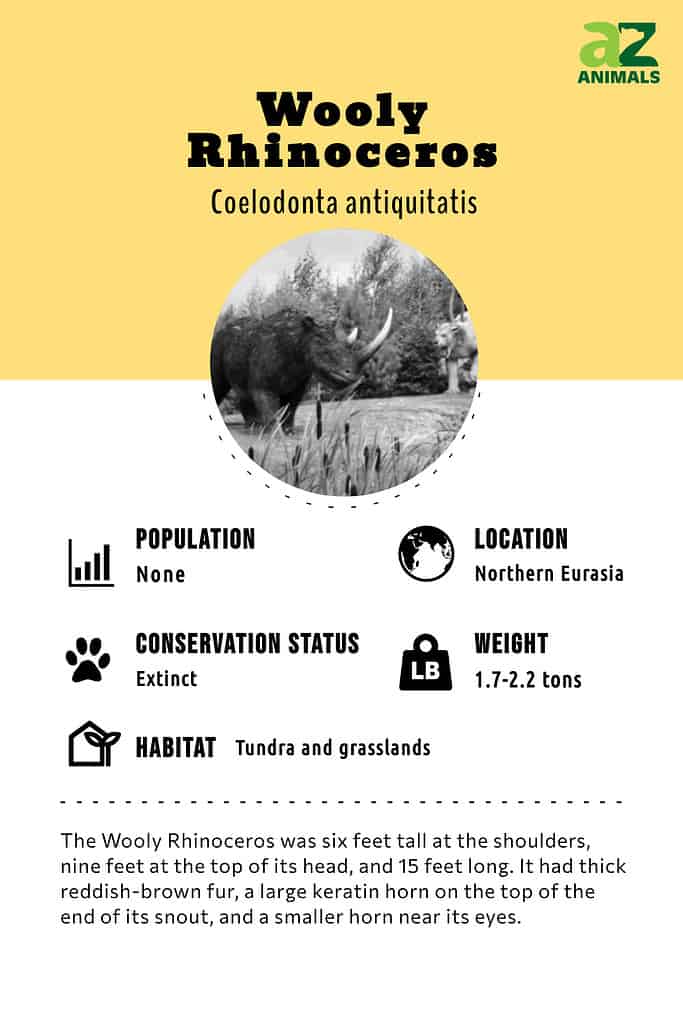
The woolly rhinoceros had short, stocky legs, but it stood about six feet tall at the shoulders. Its body was covered in a thick reddish-brown fur. It was about 15 feet long from the tip of its snout to the base of its tail. This rhino’s most distinctive features were the large keratin horn on the top of the end of its snout, which was about 3 feet tall, and the secondary smaller horn near its eyes. These ancient creatures weighed about 1.7-2.2 tons, or 3400-4400 pounds, but they might have weighed even more.
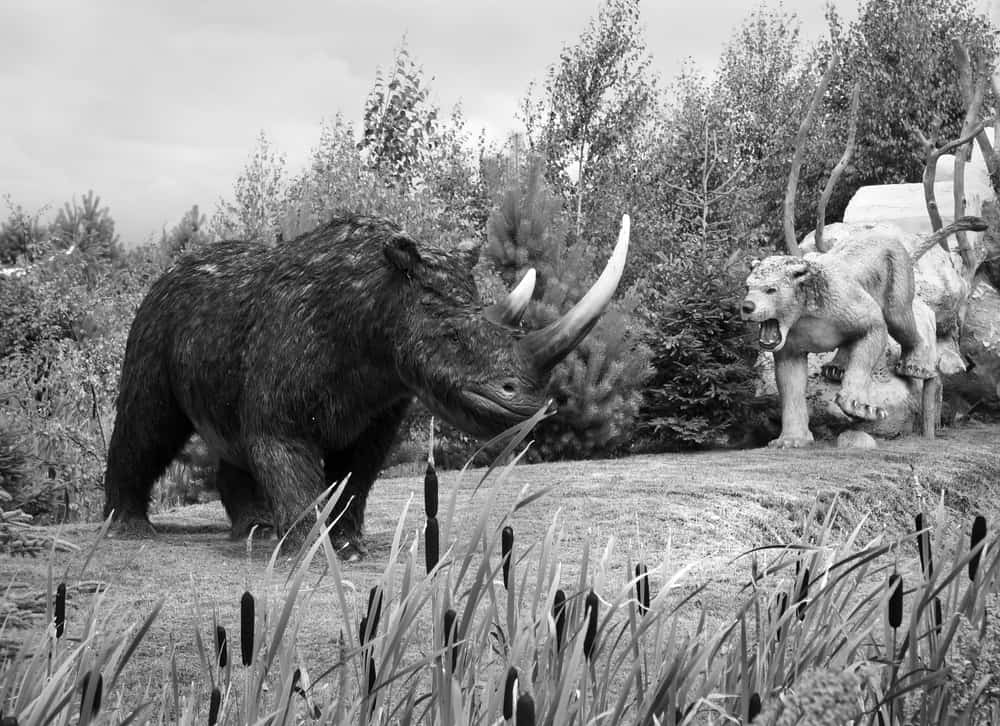
Wooly Rhinoceros

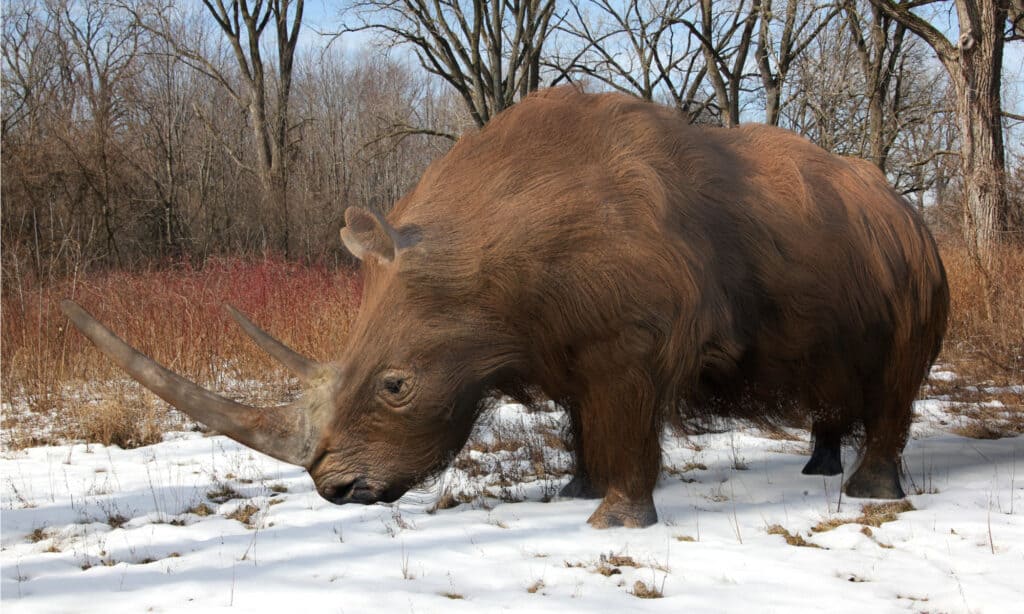
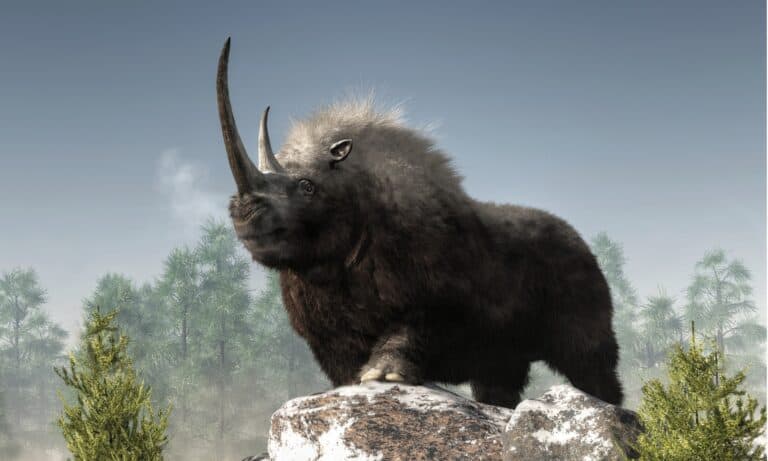
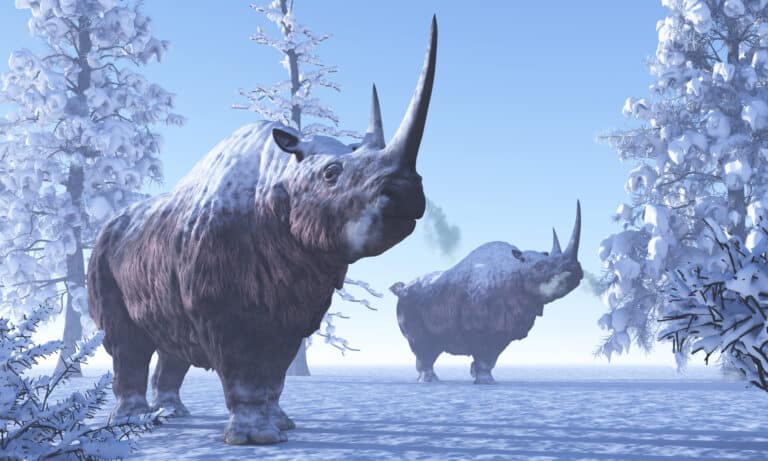
Model of an ancient Wooly Rhinoceros, a herbivore with an amazing pair of horns.

Diet

The woolly rhinoceros was a herbivore. Only the toughest grass could survive in the tundra and frigid grasslands where these equally tough animals roamed, so the woolly rhino had strong, massive teeth and a well-developed jaw, which were perfectly suited to the steppe grasses that made up nearly the entirety of their diet. Scientists believe that in addition to grasses and sedge, the woolly rhinoceros probably ate foods such as artemisia, mosses, shrub sprouts, lichen, and other herbaceous plants.

Habitat

The woolly rhinoceros lived during the Pliocene and Pleistocene epochs, during the time of the ice age, from about 3,600,000 years ago until fewer than 15,000 years ago. They roamed all over the tundra and grasslands in the continent that is now Europe, as well as into parts of what is now Asia. The loss of their habitat as the ice age ended was a large contributor to their eventual demise almost 12,000 years ago.

Threats And Predators

The greatest threats to the woolly rhinoceros, in the end, were excessive hunting by humans, changing weather, and loss of habitat and food supply. During the time when they thrived, though, adult woolly rhinoceroses had very few natural predators, so only humans were their true threat. On the other hand, juvenile and baby rhinos were a different matter. Baby woolly rhino predators included cave lions and prehistoric hyenas.

Discoveries and Fossils

Although the first woolly rhinoceros skull was found in 1335 in Austria, at the time, they believed it to belong to a dragon. After the discovery of bones in 1769, the species was first described. Then the first documented partial remains of a woolly rhinoceros were discovered in Siberia, in the Vilyuy River in 1771. In 1877, more Siberian remains were found in the Yana River. It wasn’t until 1907 that a full specimen was found, followed by a second intact specimen a few months later in the same area, this time in Starunia.
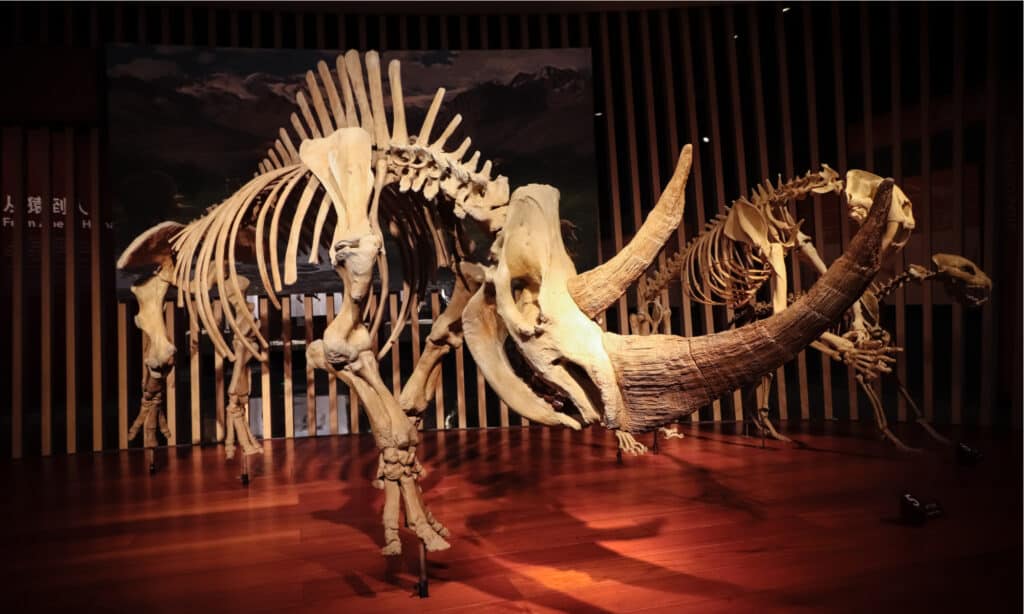
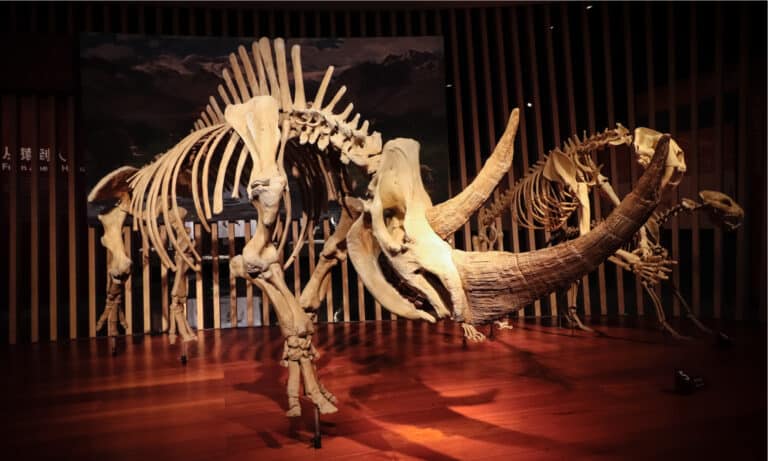
Fossil of woolly rhinoceros (Coelodonta antiquitatis) at Shanghai Natural History Museum. The Woolly rhinoceros became extinct during last glacial period around 10,000 years ago.

Fossil of woolly rhinoceros, which became extinct during the last glacial period around 12,000 years ago.

One of the most important discoveries was “Sasha,” a mummified juvenile rhino whose fur and even soft tissues were preserved when she was found in Yakutia in 2014. Six years later in 2020, a completely intact rhino, around four years old at the time of its death, was discovered in the same location. The 2020 discovery is considered perhaps the best woolly rhinoceros specimen ever found, as its internal organs and even its nasal horn were intact. The oldest fossil of a woolly rhinoceros found so far was in Tibet and it dates back to over three and a half million years ago, though we know they were still alive as recently as 12,000 years ago.

Extinction

The last of these animals appears to have lived around 12,000 years ago. At this time, they were being hunted by humans and other creatures. The woolly rhinos’ fur pelts, as well as their meat would no doubt have been prized gains for Pliocene and Pleistocene era hunters and their clans. Overhunting, in addition to changing climate and habitat loss, all contributed to the extinction of this ancient beast. Their thick fur meant they were well-suited for the extreme cold of the ice age, and when the weather began to warm up again, the wooly rhinoceros couldn’t adapt. Food sources likely suffered the same fate, contributing even more to the eventual demise of the species.

Similar Animals

The closest living relative of the woolly rhinoceros is the Sumatran rhinoceros. Here are some similar ancient animals:

  • Giant rhino – Paraceratherium, which lived during the Oligocene epoch about 20-30 million years ago, lacked the horn that makes true rhinos so distinctive. They stood nearly 15 feet tall at the shoulder and could weigh up to 20 tons.
  • “Thin plate beast” – At a shoulder height of nine feet, Elasmotherium was not as large as the giant rhino, but it did have a horn. Although no examples of the horns survived, scientists believe the horn was massive, based not only on the rhino’s size but on the size of the hole left in Elasmotherium’s skull where the horn was attached.
  • Woolly Mammoth – Although they share no common ancestry, the woolly mammoth was another massive furry creature that lived during a similar period of time and co-existed with the woolly rhinoceros. Woolly mammoths were about the same size as modern elephants, with the main distinction being their fur coat and their massive tusks.
View all 442 animals that start with W

Sources

  1. GBIF / Accessed May 20, 2022
  2. Wikipedia / Accessed May 20, 2022
  3. Reading Museum / Accessed May 20, 2022
  4. Mongabay / Accessed May 20, 2022
  5. Britannica / Accessed May 20, 2022
  6. Earth Touch News Network / Accessed May 20, 2022
  7. Syfy / Accessed May 20, 2022
  8. Animals Time / Accessed May 20, 2022
Austin S.

About the Author

Austin S.

Growing up in rural New England on a small scale farm gave me a lifelong passion for animals. I love learning about new wild animal species, habitats, animal evolutions, dogs, cats, and more. I've always been surrounded by pets and believe the best dog and best cat products are important to keeping our animals happy and healthy. It's my mission to help you learn more about wild animals, and how to care for your pets better with carefully reviewed products.
Connect:

Thank you for reading! Have some feedback for us?


Woolly Rhinoceros FAQs (Frequently Asked Questions)

The woolly rhinoceros roamed the earth between three and a half million and 14,000 years ago, during the Pliocene and Pleistocene epochs.