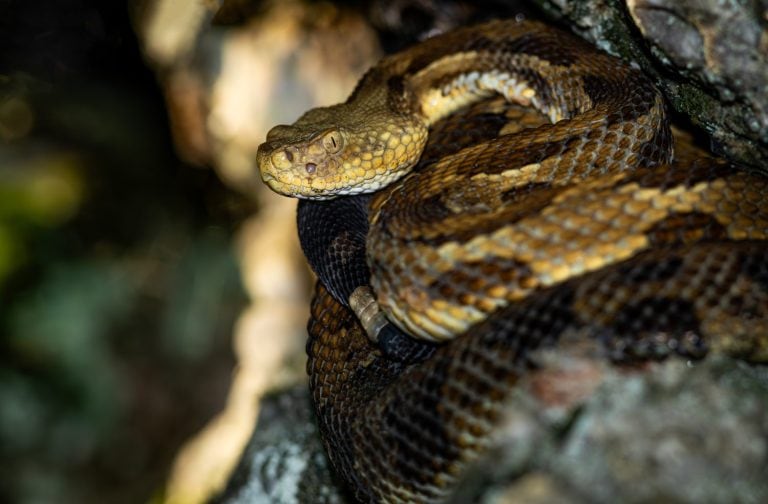
In North America, there are 15 species of rattlesnake, all venomous vipers. One of the largest pit vipers in the eastern United States is the timber rattlesnake. This snake is also known as the American viper, black rattlesnake, canebrake, eastern rattlesnake, and timber rattler. The venom of this snake contains hemotoxins and neurotoxins, which target the circulatory and nervous systems. Its venom is powerful enough to kill a human. But how large do these snakes get, and how large was the largest timber rattlesnake ever recorded? Keep reading to find out.
Timber Rattlesnakes
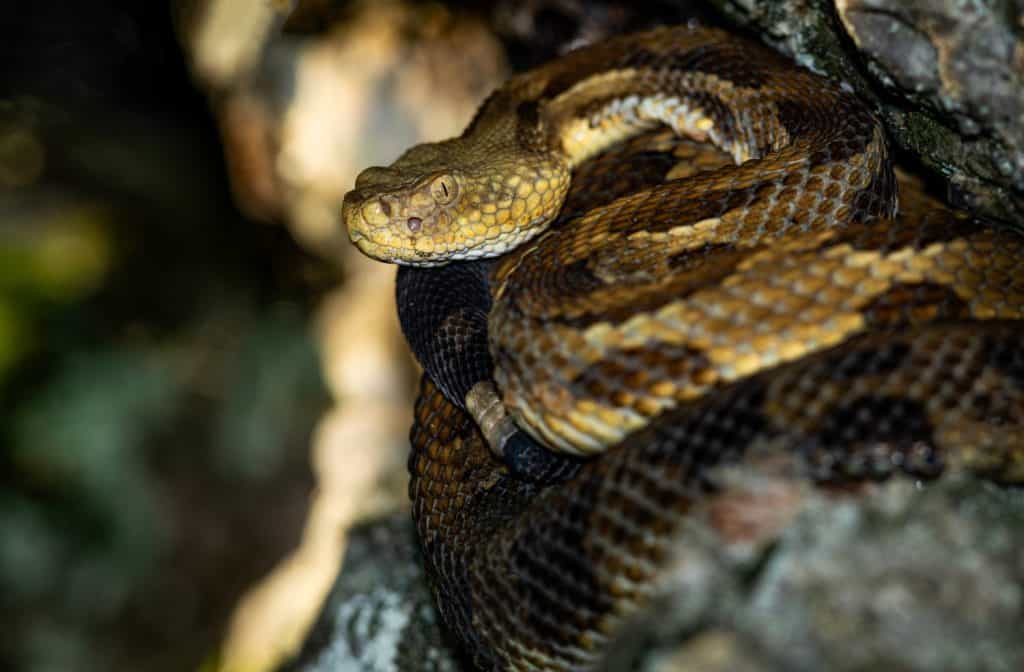
Timber rattlesnakes are widely distributed throughout the eastern half of the U.S.
©Mark F Lotterhand/Shutterstock.com
The timber rattlesnake (Crotalus horridus) is a pit viper in the subfamily Crotalinae. Pit vipers can be found in Asia and the Americas. Members of the Crotalinae subfamily are characterized by movable fangs and a heat-sensing pit organ located between their eyes and nostrils. Learn where timber rattlesnakes can be found, how to identify them, what they eat, and how much danger they present to humans.
Habitat
In the United States, timber rattlesnakes are widely distributed across the eastern half of the country. They can be found as far west as East Texas and Minnesota, and as far east as North Florida and New Hampshire. This species prefers deciduous forests with steep terrain as its primary habitat. Males and non-gravid females prefer deep wooded places with a more closed forest canopy. Pregnant females prefer open, rocky ledges with higher temperatures.
Appearance
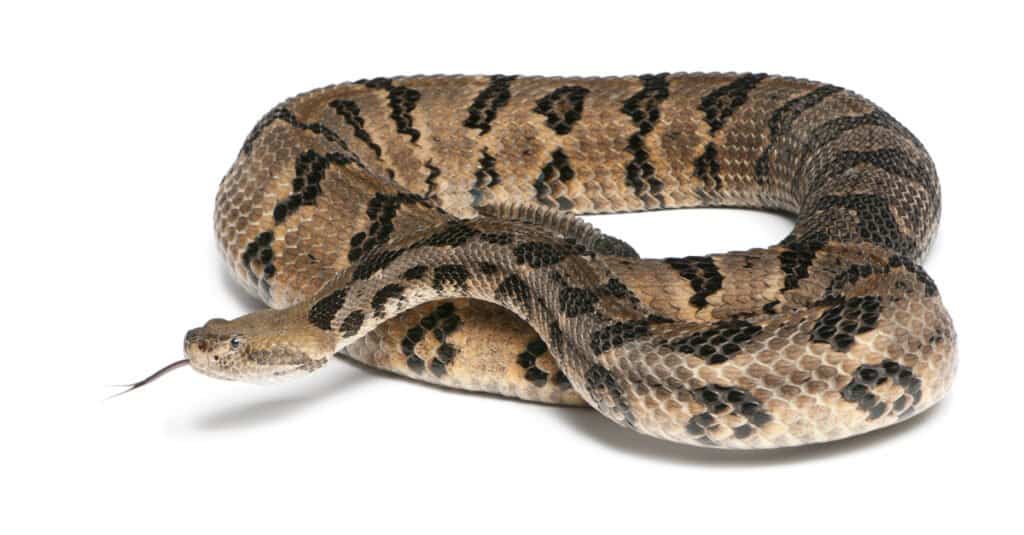
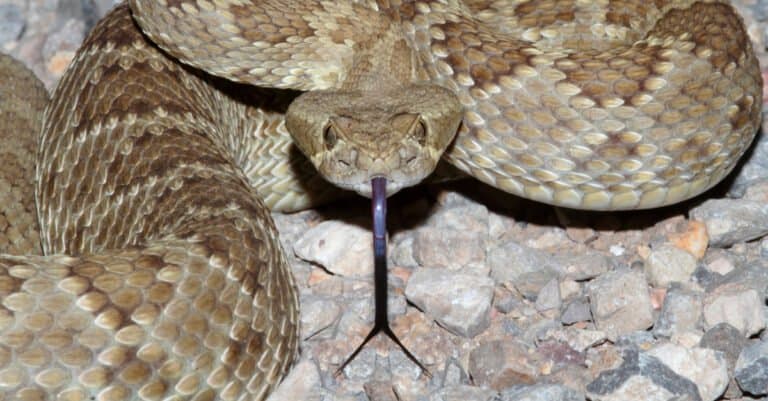
Timber rattlesnakes collect air molecules with their tongues to help them scent prey.
©Eric Isselee/Shutterstock.com
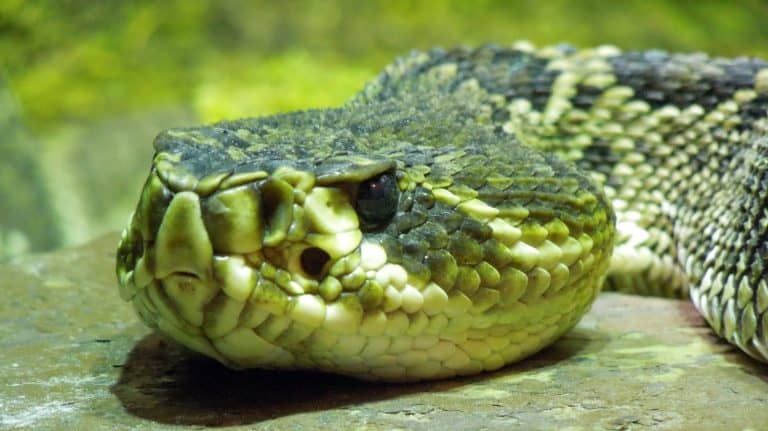
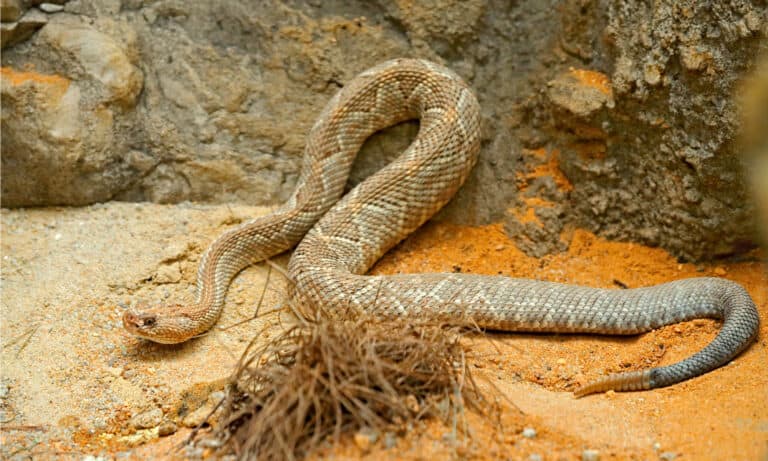
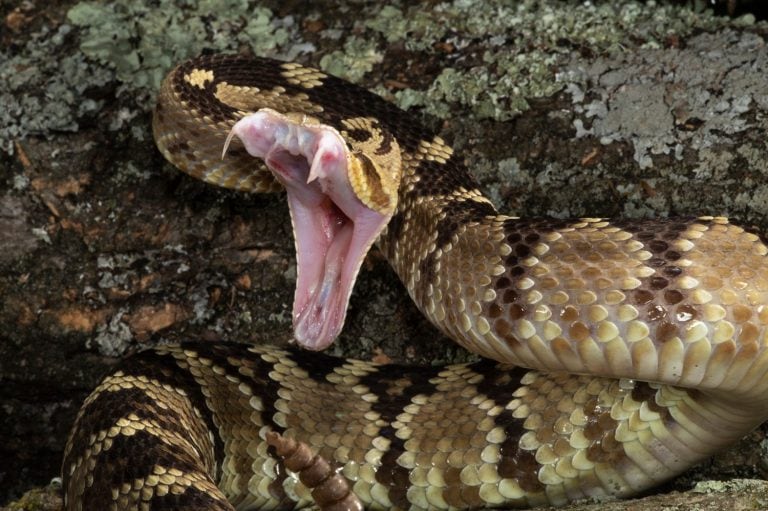
The timber rattlesnake has 21–26 rows of dorsal scales in the middle of its body. They have broad heads that are wider than their necks and a dark line extending from each eye to the jaw. As noted above, they have heat-sensing pits between their eyes and nostrils. Their bodies are typically yellow, tan, brown, or gray, but they can be completely black in the northern parts of their range. They have dark patterns that become more V-shaped in appearance closer to the tail. They have black tails that end in the distinctive rattle.
Diet
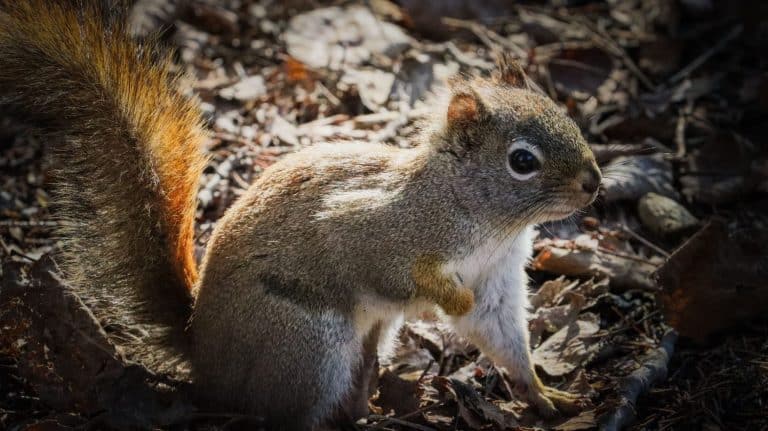
The timber rattlesnake’s primary prey is small mammals such as squirrels and rabbits. In addition to ground-dwelling birds like bobwhites, many songbird species have also been documented as prey. Tall grass and fallen logs are commonly used as camouflage so rattlesnakes can ambush their victims. Timber rattlesnakes detect their prey’s body heat using their pit organs. They also track via scent. Scent molecules from the air are collected on the snake’s tongue and transferred to its Jacobson’s organ for analysis.
Danger
The venom of the timber rattlesnake, like that of other vipers, can be fatal. However, bites from timber rattlesnakes are uncommon and the antivenom is highly effective when quickly administered. Most timber rattlesnake bites occur when the snake is provoked, as these snakes are generally not aggressive and tend to avoid humans. If a bite is left untreated, it can not only cause devastating effects on the blood and nervous system, swelling and blackening of the skin near the bite site are also common occurrences. Medical assistance should be sought immediately if a venomous snake bites a person or animal, to reduce the amount of damage that may result.
How Large Was the Largest Timber Rattler Ever Recorded?
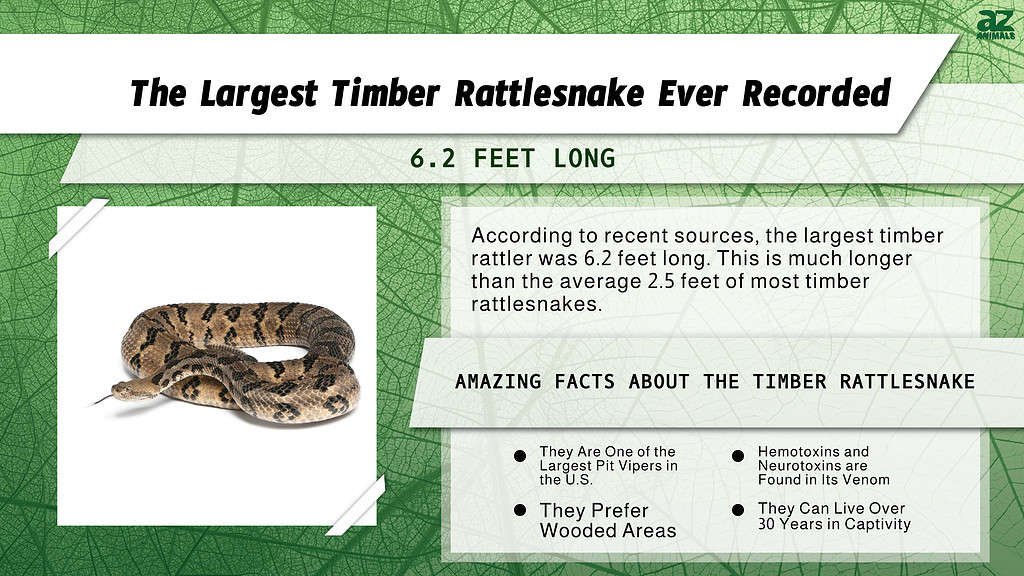
The record for the biggest timber rattler to date is approximately 6.2 feet, or 189cm, in length. Adult timber rattlesnakes are around 2.5–5 feet long on average, weighing between 1.1 and 3.3 pounds. However, there are verified reports of snakes weighing over 5 pounds. There have also been stories of these rattlesnakes reaching up to 7 feet long, but these claims are unsubstantiated.
How Long Do Timber Rattlesnakes Live?
These pit vipers generally live for about a decade in the wild, although up to 20 years is not unheard of. However, their lifespan can as much as triple in captivity. A timber rattlesnake housed in a facility may live for up to 30 years or even longer. In some cases, they have been known to live up to 37 years in captivity.
Conclusion
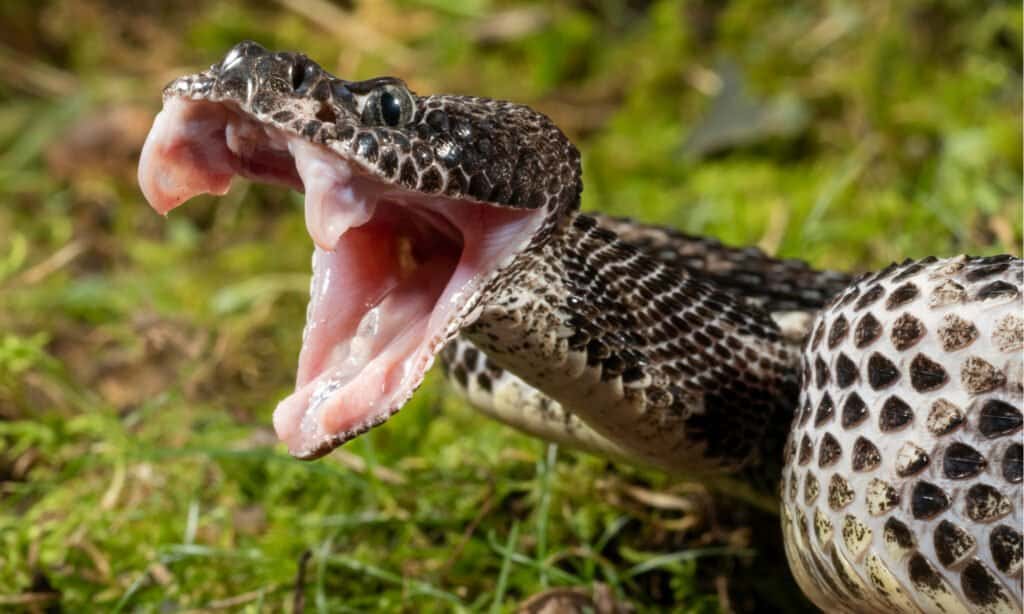
Timber rattlesnake populations continue to fall in several Appalachian states in spite of their protected status.
©Joe McDonald/Shutterstock.com
The timber rattlesnake is categorized as endangered in several states, including Connecticut, Illinois, Indiana, Massachusetts, New Hampshire, New Jersey, New York, Vermont, and Virginia. Only one colony of timber rattlesnakes remains in the state of New Hampshire, having been eradicated from Maine and Rhode Island. In many Appalachian states, they are protected from extinction, yet their numbers continue to dwindle. This is unfortunate, as timber rattlesnakes play an essential role in the ecosystem. While out for a walk, if you come across one of these snakes, please do not disturb it. Never attempt to handle a snake that you find on the ground, as this is how most people are bitten.