Quick Take
- Officials gave one firm instruction about the rescued cub, and the family had to guess why.
- A snack for the shivering cub may have sparked a bigger problem than the family realized.
- Someone was probably watching the whole rescue from the trees, and she wouldn't have been pleased.
- Bears are usually strong swimmers, so why did this one nearly go under, and why is fall such a risky season?
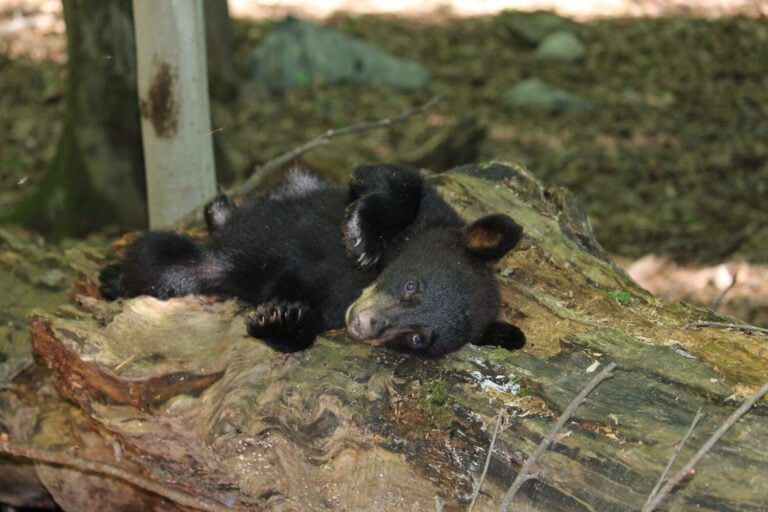
The Zamniuk family was boating on Okanagan Lake in British Columbia on a mid-September weekend when they spotted a bear cub swimming, CBC News reported on Sept. 20, 2026. At first, they weren’t worried.
“All of a sudden, his little nose kept going under the water and he was blowing little bubbles,” said Christina Zamniuk. “He could barely paddle anymore.”
The family got the cub on board, where it was visibly shivering and shaking from the cold water. They named it Boo Boo.
They immediately called the B.C. Conservation Officer Service (COS) and the B.C. SPCA, and were told to bring the cub to shore and avoid interacting with it more than necessary. The COS didn’t come to the scene. “I gave him the address and everything,” Zamniuk said. “They didn’t go.”
Boo Boo got cheese, then a shove
While the cub warmed up in the sun, the Zamniuks fed it some cheese. WildSafeBC, an educational program aimed at preventing conflict with wildlife, notes on its black bear species page that bears “can become more assertive or destructive when they have learned to associate humans and their activities with food”.
The family reached shore in the direction the cub had been swimming. Once there, it didn’t want to leave the boat.
“He wanted to stay with us. So, we gave him a little shove and he plopped in the water, he swam to shore and we saw him run off into the woods,” Zamniuk said.
Officers wanted hands off the cub
“Nobody was really much help,” Zamniuk said. The COS gave her no clarity on what could happen to the cub next.
She offered her own guess at the reason for the instructions. “They were just so adamant about us not touching the bear because I guess if you have your human scent on them or they get too used to people, then they can’t survive on their own,” she said.
WildSafeBC said in an email that the outcome was good for both the cub and the people who rescued it. A spokesperson from its Central Okanagan branch reminded the public to avoid contact with wildlife, and said a cub’s mother is likely close by and could become defensive toward people near her cub. The COS should always be the first call when an animal is in distress. Its reporting line is 1-877-952-7277.
Black bears usually swim well
“Black bears are usually good swimmers, and this case is rare that the animal would need human intervention,” the WildSafeBC email read. Boo Boo came aboard shaking from the cold water, after its nose had started slipping under.
September is a very active time for bears, the organization said, so encounters may occur more often. Fall is when bears go through hyperphagia, or “extreme eating,” trying to take in as much as 20,000 calories a day to build fat for winter denning. A black bear can smell food more than half a mile away, and it can lose 30% of its body weight over the winter.
British Columbia has an estimated 120,000 to 150,000 black bears, according to WildSafeBC, and they account for 14,000 to 25,000 calls a year to the Conservation Officer Service.
The COS confirmed the incident in an email to CBC News on Sept. 20 and said that, at the time, its officers had received no more reports of a suspected orphan bear cub in the area.