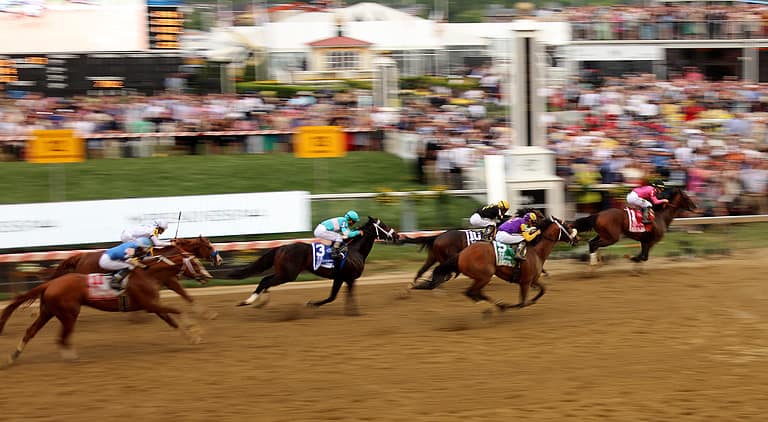

The Belmont Stakes annual race for three-year-old Thoroughbred horses is held at Belmont Park in Elmont on Long Island, New York. This race is the third and oldest race in a series of Thoroughbred horse races known as the “Triple Crown.” Each year, the Belmont Stakes comes last in the season after the Kentucky Derby and the Preakness Stakes. If a horse can win all three Triple Crown races, it will join the prestigious ranks of Triple Crown champions. This is an exclusive group that includes only 13 horses in all of history, as of 2022.
To celebrate this race’s incredible tradition and its highest of celebrations and lowest of defeats, this article will cover five of the biggest upsets in Belmont Stakes history. Let’s review five of the biggest long-shot winners now, ranked according to their shocking wins and ascendance to greatness.
Background on the Belmont Stakes
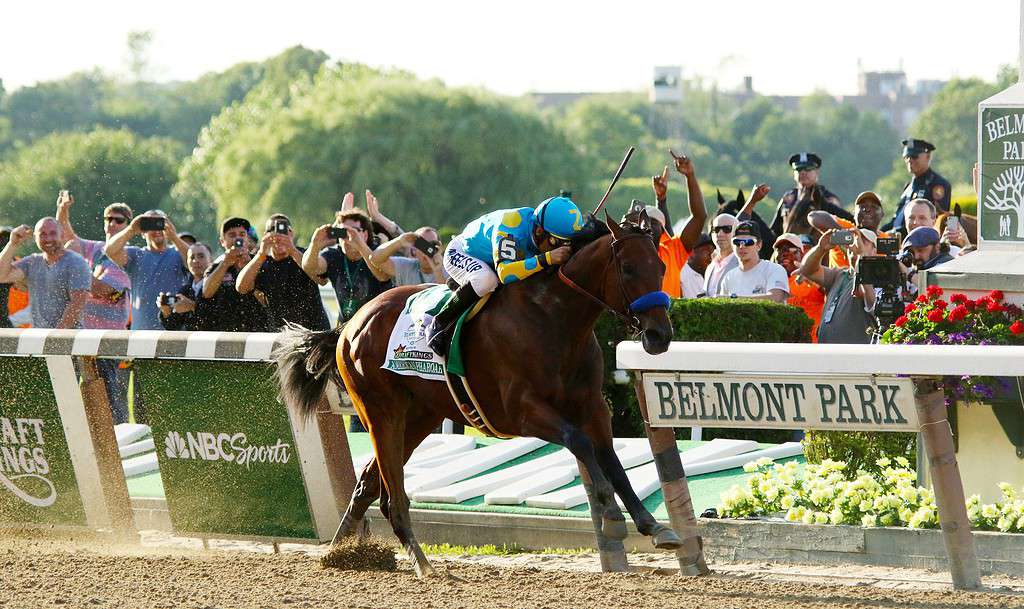
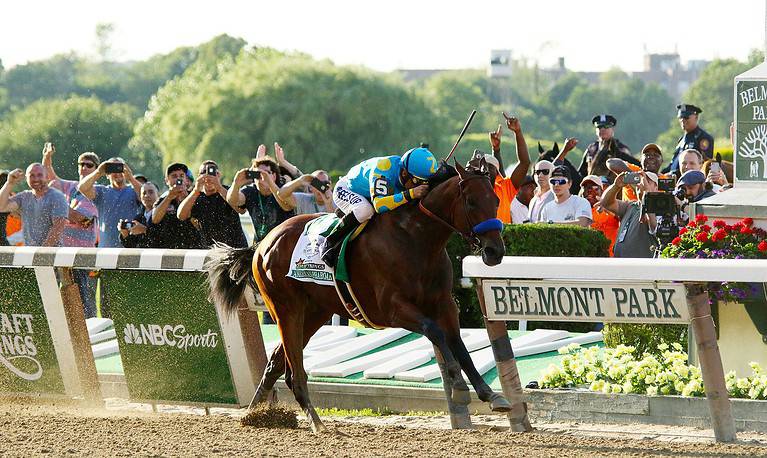
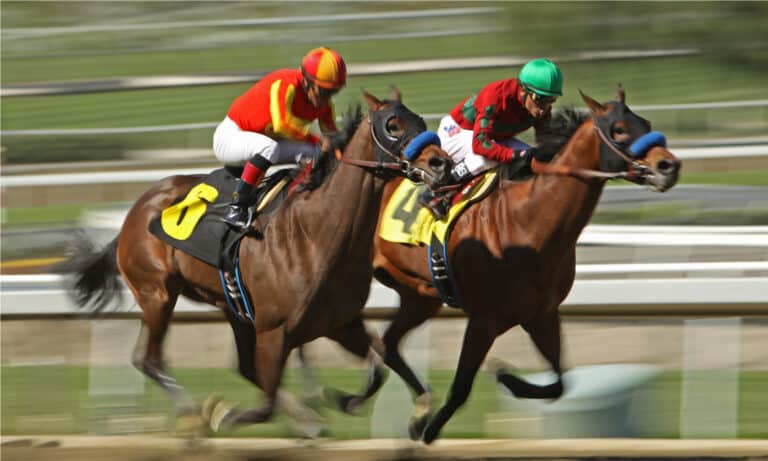
The famous winner American Pharaoh in the Belmont Stakes in 2015.
The Belmont Stakes is a horse race that began in 1867. This race was named after the financier, diplomat, and sportsman August Belmont.
The Belmont Stakes is one of the most-attended racing events in the United States and often draws millions of television viewers. This iconic race holds an esteemed place in American culture and tradition. The Belmont Stakes is traditionally referred as “The Run for the Carnation.” This refers to the award for winning the Belmont Stakes: a blanket of hundreds of white carnations. However, the Belmont Stakes is also referred to as the “The Test of the Champion.” It gained this nickname for good reason. The race is significantly longer than the other Triple Crown races, at 1 and 1/2 miles. This distance has changed a few times over the years, but most recently returned to the 1 and 1/2 mile distance, making it longer than the 1 and 3/16 of a mile Preakness Stakes and 1 and 1/4 of a mile Kentucky Derby.
This longer distance always puts three-year-old Thoroughbred racing horses to the test. The distance requires a high speed and immense stamina to win the race. This can be challenging for three-year-old Thoroughbreds who have never raced that far before.
Winners of the Belmont Stakes
As a challenging race and exciting event, it is rare for a horse to win the entire Triple Crown, taking home wins in all three races. In fact, many horses enter the Belmont Stakes as front-runners having won the two previous races, only to falter at Belmont Park. To date, only 13 horses have ever become the Triple Crown Champion. The most recent winners were American Pharaoh, who won the 147th Belmont Stakes in 2015 and Justify, who won the 150th Belmont Stakes in 2018. The horse with the fastest ever-recorded time in the Belmont Stakes is Secretariat, who completed the fastest 3/4 mile in only 70 seconds. In fact, Secretariat is among the top 10 fastest horses to ever win the Belmont Stakes.
Nine horses enter the Belmont Stakes each year. Only one will emerge as the victor. Who will it be this year?
About Thoroughbred Horses
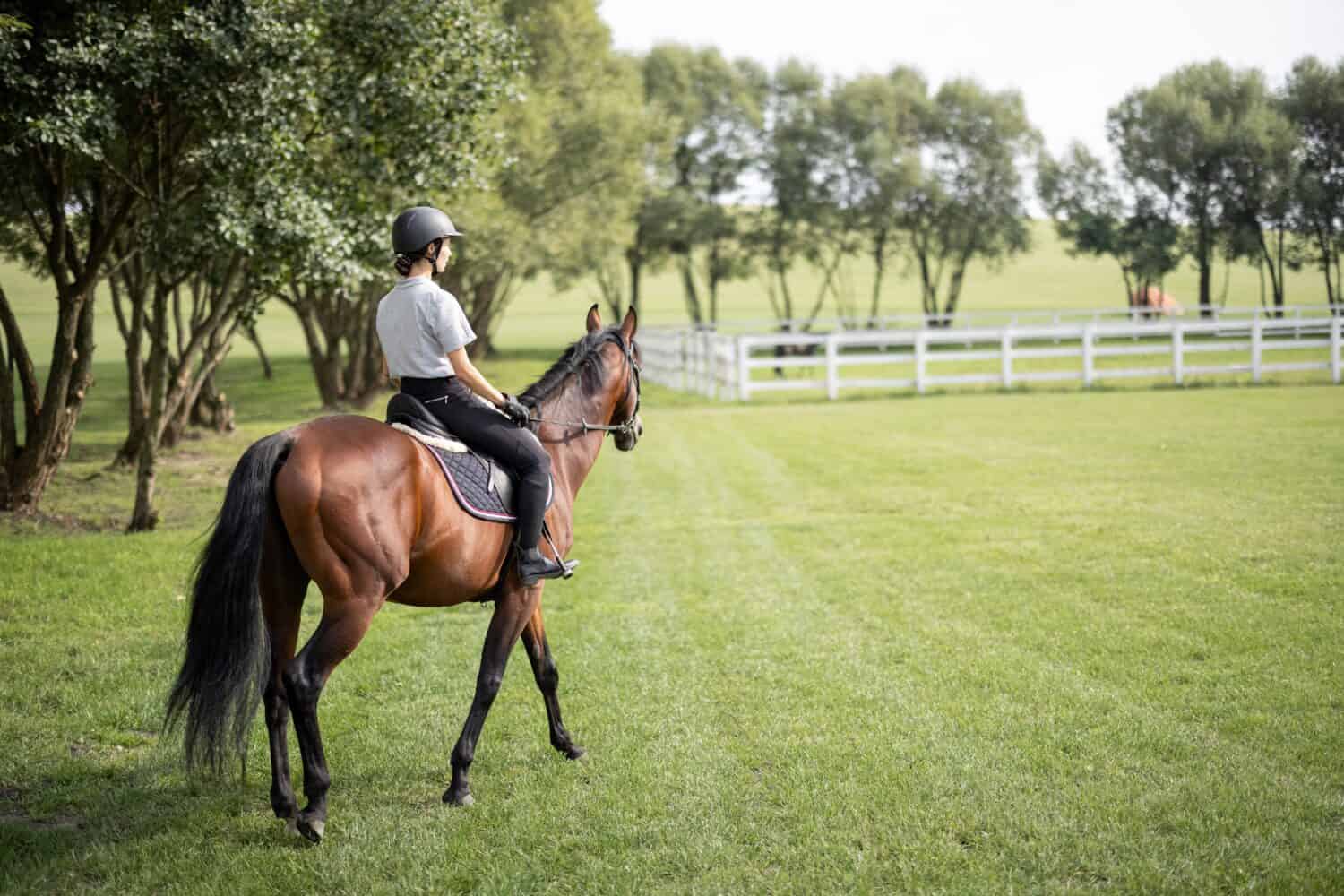
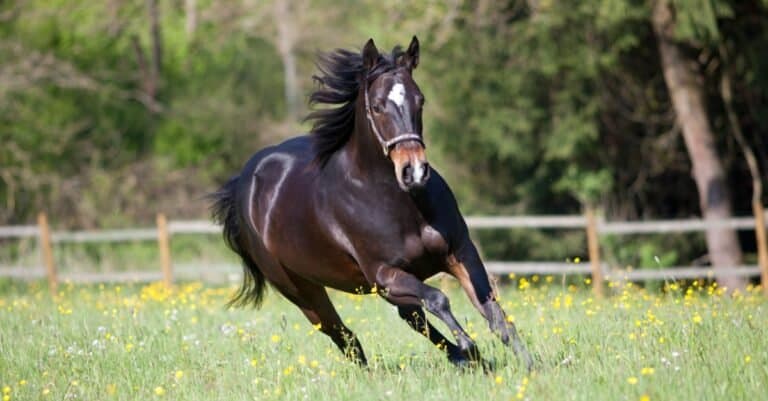
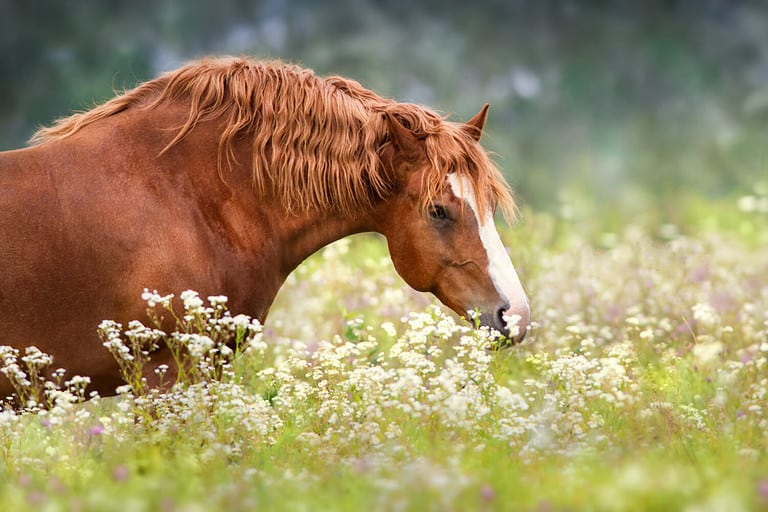
Thoroughbred horses were bred to be powerful runners and jumpers and are the breed that participates in the Triple Crown Races, including the Belmont Stakes.
©RossHelen/Shutterstock.com
Thoroughbred horses are developed for horse racing. However, the term “thoroughbred” is sometimes used to refer to any purebred horse. However, technically, the only true Thoroughbreds are the breed developed in England specifically for the skills of speed, agility, and endurance needed to compete in racing and jumping. This breed is registered in the General Stud Book of the English Jockey Club.
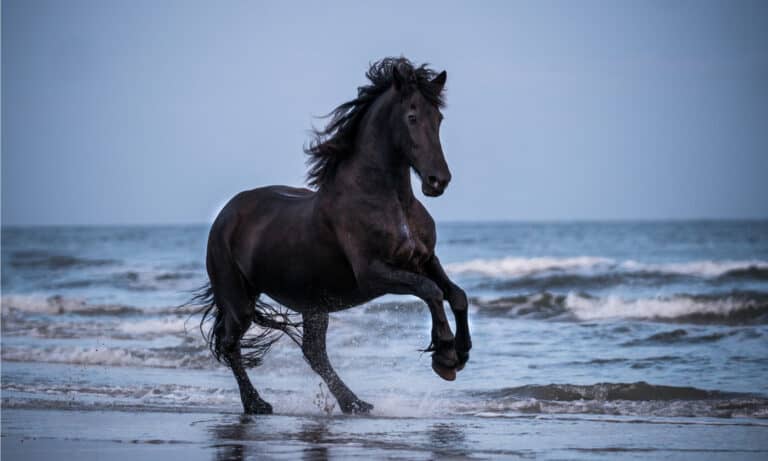
Thoroughbreds have broad chests, short backs, and lean bodies, with long legs that help give the horses long strides. These horses tend to have significant muscles throughout their legs and hindquarters, though they still appear graceful. The coat of a Thoroughbred is typically bay, chestnut, black, brown, or gray. Thoroughbred horses are also known for being very intelligent, forming strong bonds, and communicating well with their partners and trusted riders.
Biggest Upsets in the Belmont Stakes
2002, Sarava
In 2002, War Emblem began the Belmont Stakes as the recent winner of the Kentucky Derby and Preakness Stakes. He was a heavy favorite for winning the Belmont Stakes and could have finished the race with a Triple Crown victory. He was poised to be the first Triple Crown winner since 1978.
War Emblem’s victory was stolen by Sarava, a bay colt from Europe who had recently won the first stakes race in his career at the ungraded Sir Barton Stakes. When the field broke from the gate, War Emblem stumbled to his knees at the beginning of the race. Sarava stole the lead, battling fiercely with star runner Medaglia d’Oro. Sarava gained a half-length lead right at the wire, and went on to win the Belmont Stakes after odds of 70-1. This is regarded as the longest-shot victory to ever take the Belmont.
2004, Birdstone
In 2004, the chestnut horse Smarty Jones entered the Belmont Stakes undefeated. Then, Birdstone, a homebred Grade 1 winning juvenile entered the scene. Birdstone raced for Marylou Whitney Stables, having been trained by Nick Zito. In 2004, Birdstone competed in the Kentucky Derby, but sat out the Preakness. He entered Belmont Stakes with jockey Edgar Prado facing odds of 36-1. He came in flying to overtake Smarty Jones in the final stretch and won the Belmont Stakes.
Birdstone eventually retired with five wins in nine starts and is living out his retirement at Old Friends, the Thoroughbred Retirement Center in Georgetown, Kentucky.
2008, Da’Tara
In 2008, Big Brown entered the Belmont Stakes having dominated the Kentucky Derby and Preakness Stakes. However, rumors swirled about a hoof problem. Despite this, he was a favorite to win the race on the hot and humid Belmont Stakes day.
Out of nowhere, Da’Tara came in as the underdog and the horse with the longest shot in the field. He emerged from only having a maiden victory and odds of 38-1 to swiftly gain the lead under jockey Alan Garcia. Da’Tara won by 5.25 lengths, victorious over the previously-undefeated Big Brown. Da’ Tara did not win another race after the Belmont Stakes.
1999, Lemon Drop Kid
In 1999, the Kentucky Derby and Preakness Stakes winner Charismatic was ready to take the Triple Crown. Then a Grade 1 winning juvenile named Lemon Drop Kid swept past Charismatic and crossed the finish line. Lemon Drop Kid is a bay horse with no white markings bred in Kentucky by William S. Farish III & William S. Kilroy, who entered the Belmont Stakes after finishing ninth in the Kentucky Derby and third in the Peter Pan Stakes.
At Belmont Stakes, Lemon Drop Kid was considered a longshot due to facing odds of almost 30-1. Lemon Drop Kid was ridden by José A. Santos, who led him to overtake Charismatic in the stretch and hold of his nearest competitor, Vision And Verse, winning the race by a head.
However, the victory was tainted and attention stolen from Lemon Drop Kid due to his rival, Charismatic, dramatically finishing the race with a career-ending injury.
1987, Bet Twice
In 1987, a horse named Alysheba won the Kentucky Derby and Preakness Stakes over his rival, Bet Twice, despite a near fall in the Kentucky Derby. However, Bet Twice had come in second in both of these Triple Crown races and was prepared to end the Belmont Stakes as a victor. Bet Twice faced odds of 9-1, while Alysheba was a favorite with 4-5 odds.
Bet Twice gained a decisive victory, winning the race by 14 lengths, ridden by Craig Perret.