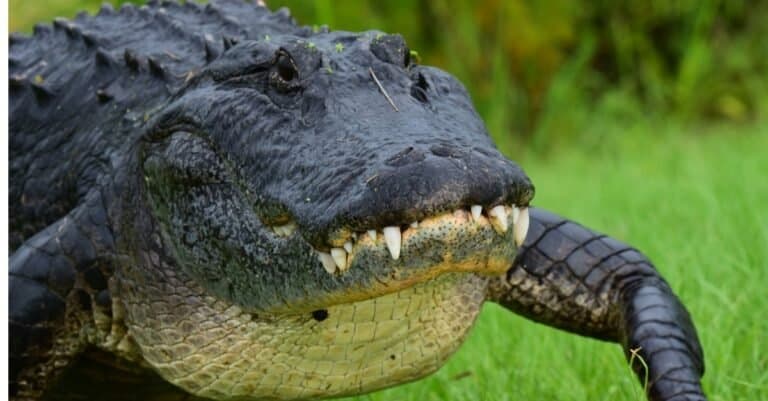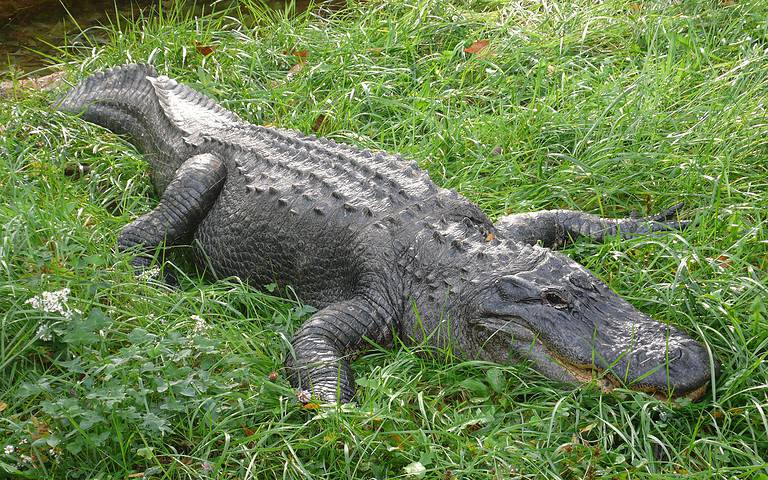

In the southwest region of Arkansas, gators grow to hefty sizes. Although they may be similar in length when compared to alligators in other states, there’s something about southwest Arkansas that allows for an alligator to weigh more than a grand piano! Discover three reasons why the largest gator in Arkansas grew so big.
The Mike Cottingham Alligator
Mike Cottingham, a taxidermist and avid hunter has long been going after alligators. He’s become so adept with his hunting skills that just looking at an alligator’s head tells him all he needs to know about its size. While out hunting on private land, he came across the native alligator he knew would be one for the books. Another smaller alligator had already escaped, and he was ready for the giant. After a first attempt, he and his team regrouped and went back to snare the gator. It took about 20 minutes to wrestle with the monster gator but eventually, his team of five managed to get it out of the water.
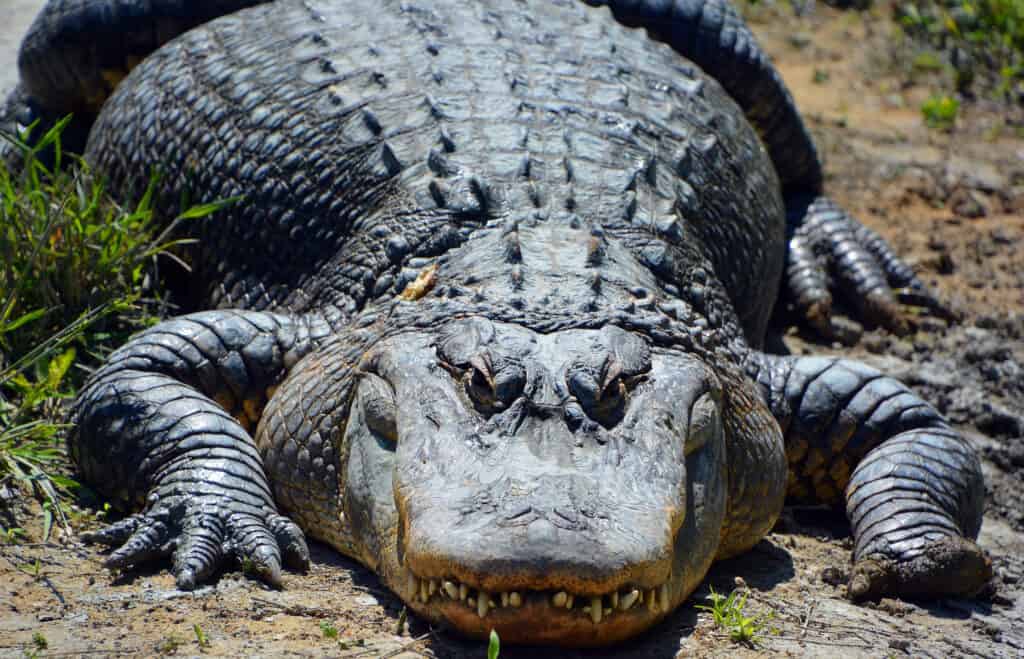
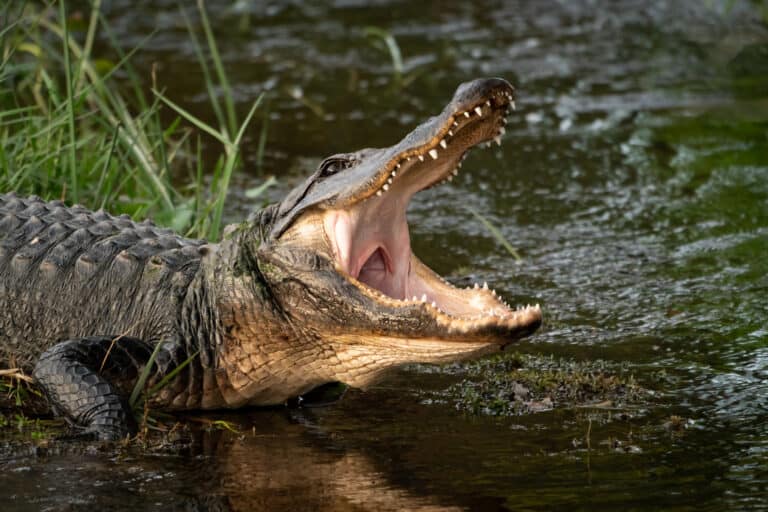
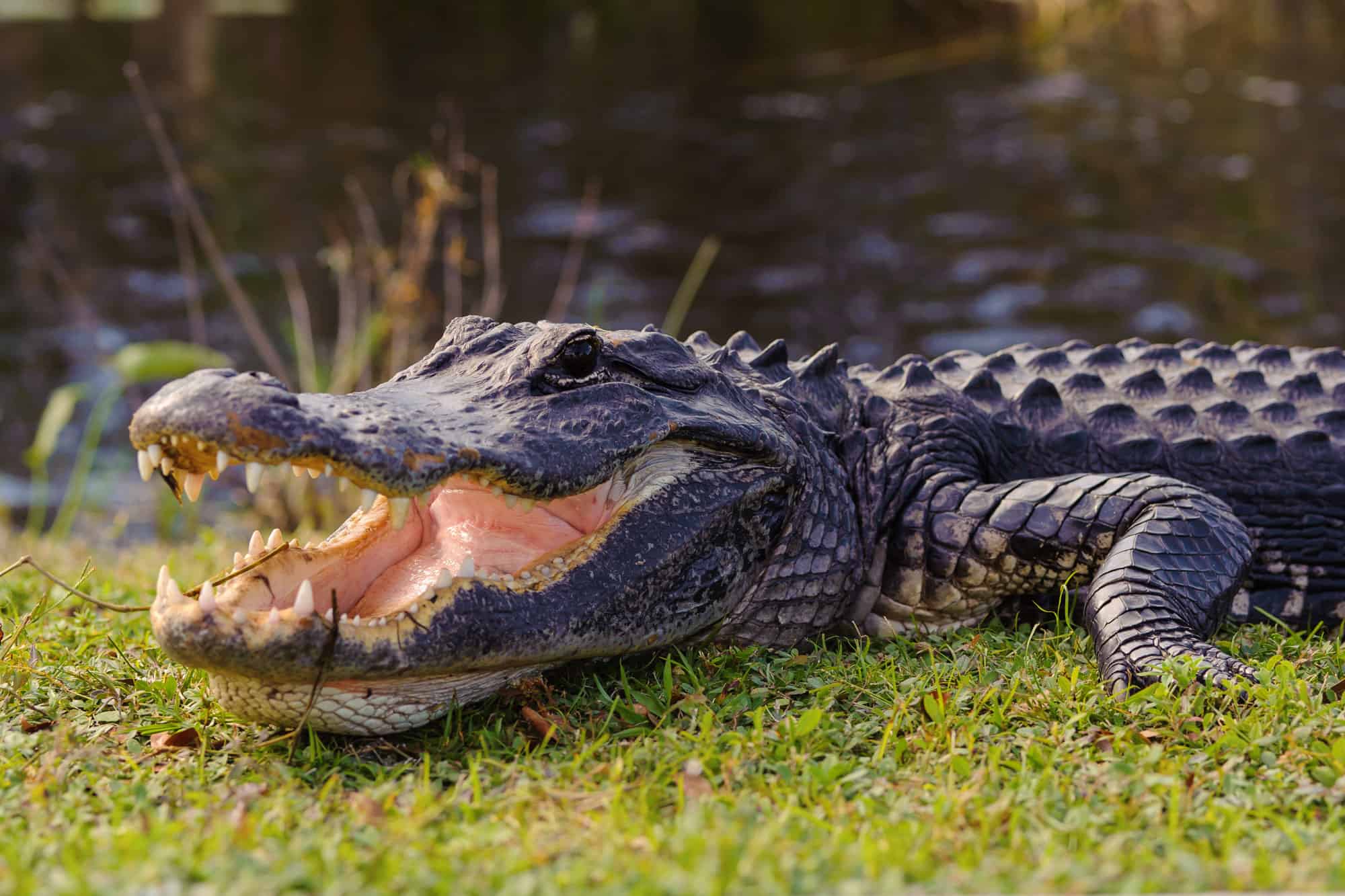
Male alligators continuously grow throughout their lifetimes, often reaching their full size at about 20 years of age.
©meunierd/Shutterstock.com
3 Reasons the Mike Cottingham Alligator Grew So Big
1. The Mike Cottingham Alligator’s Age
Male alligators continuously grow throughout their lifetimes, often reaching their full size at about 20 years of age. When they’re in captivity, they’re much more likely to reach these older ages than when they’re out in the wild, encountering other animals, including humans, who may hunt them. Since the Mike Cottingham alligator managed to make it to somewhere between 30 and 40 years of age (as estimated by Eley Talley, Assistant Regional Wildlife Supervisor at AGFC), being able to reach such an older age was definitely a factor in why this alligator grew so large.
2. The Mike Cottingham Alligator’s Home Environment
As you know, an animal in captivity has a much greater survival rate, able to enjoy a long, drawn-out life. Although the Mike Cottingham alligator was not in captivity, it did reside on private lands. With this space to roam and grow for three to four decades, the alligator was undisturbed throughout the majority of its life — until it met Mike Cottingham.
3. The Mike Cottingham Alligator’s Diet
Considering the Mike Cottingham alligator was living primarily undisturbed on private land, it also had dibs on whatever prey animals it could turn into meals. It’s likely it snacked on several deer throughout its time alive. That area is known to have wild hogs, which the alligator also made sure to turn into a hearty, meaty source of sustenance over its nearly four decades of enjoying the space.