
Quick Take
- Baboons have developed a shockingly coordinated strategy to raid farms, and by the time guards respond the damage is already done. See their raiding tactics →
- 52 baboons once broke out of one of the world's most visited zoos, and how they did it has never been explained. Read about the 2018 escape →
- Baboons don't just huddle for warmth. Who they choose to huddle with reveals something surprising about their social structure. Discover their huddling habits →
- GPS collars are changing how conservationists handle baboon conflicts, though the bigger impact isn't the tracking itself. Explore the GPS collar impact →
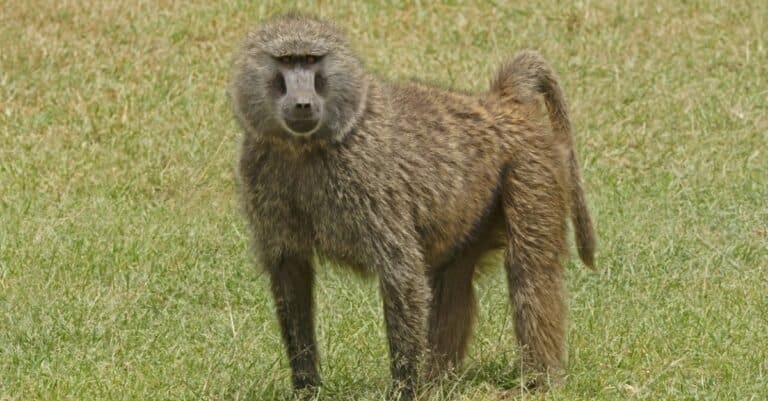
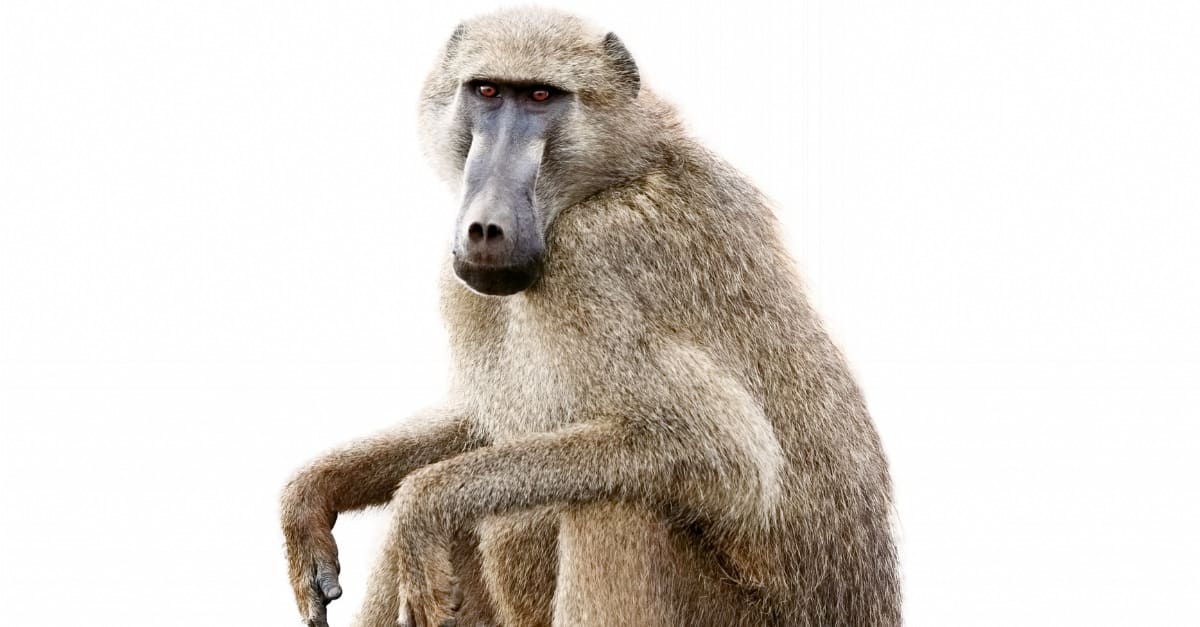
There are six species of baboons contained in the genus Papio: olive, yellow, chacma, Guinea, Kinda, and hamadryas baboons. The first five species are found across sub-Saharan Africa, while hamadryas baboons are found farther north. Hamadryas baboons are the only baboon species found outside Africa, in the mountains in Saudi Arabia and Yemen. Baboons are among the world’s largest Old World monkeys. Their physical sizes vary dramatically by species and sex as a result of sexual dimorphism.
Old World Monkeys
Baboons are distinctly separated from New World monkeys by several clear geographical boundaries and physiological traits. They are found on savannas and in semi-arid regions in Africa.
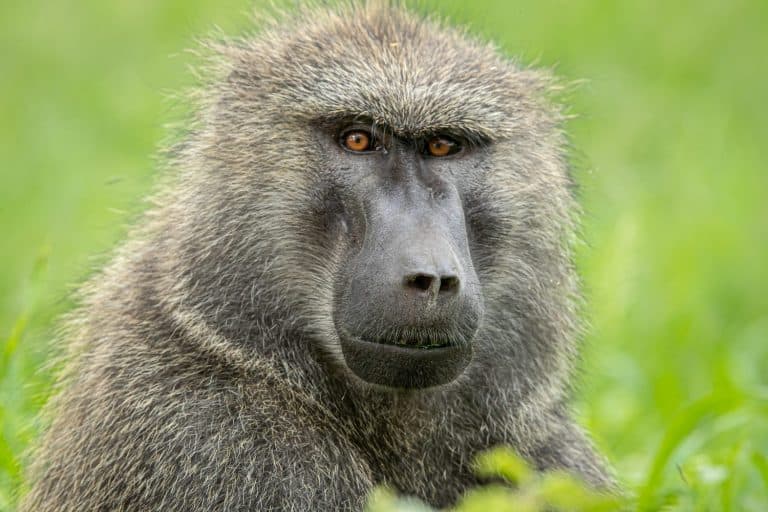
New World monkeys are found in the tropical forests of Central and South America. Baboons have narrow noses with downward-facing nostrils, thirty-two teeth, and tough, ischial callosities, or sitting pads, on their rumps.
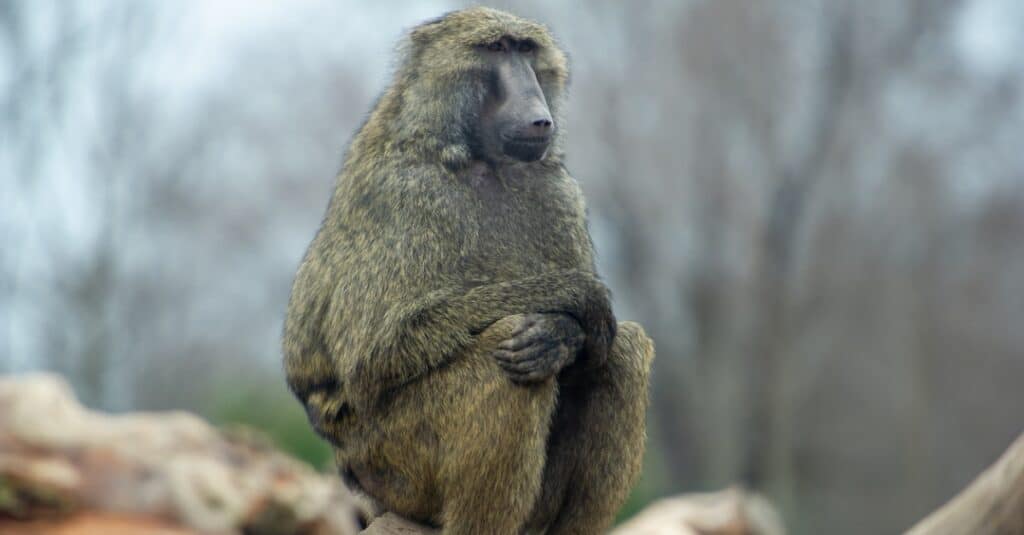
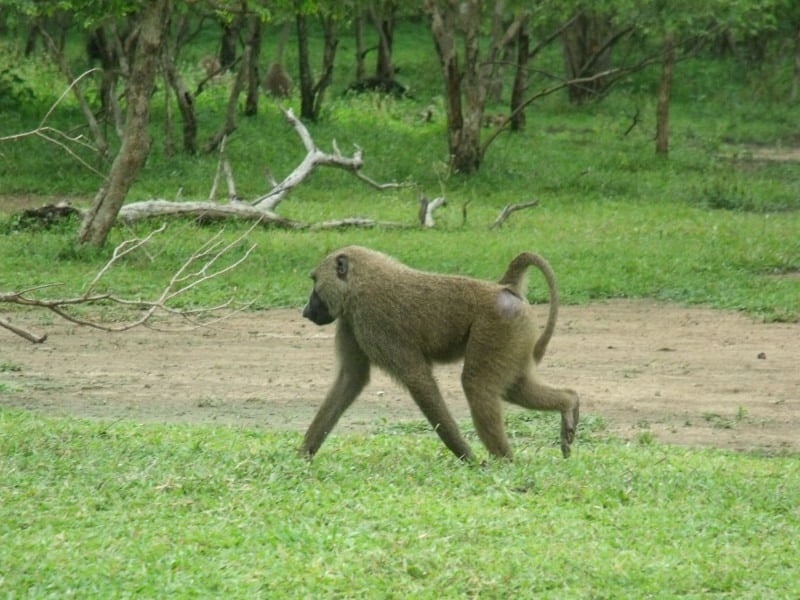
Lacking prehensile tails, Baboons spend much of their time on the ground.
©iStock.com/flyzone
New World monkeys have broad noses with side-facing nostrils, thirty-six teeth, and lack ischial callosities. While many New World monkeys have evolved to have prehensile tails, which they use to grip tree branches, baboons have non-prehensile tails that cannot grasp objects, hence their ground-dwelling lifestyle.
Baboons Are Adaptable Omnivores
Because of their flexible omnivorous diets and ability to thrive in varied habitats, ranging from tropical forests and semi-arid deserts to urban edges and human settlements, most baboon populations remain stable.
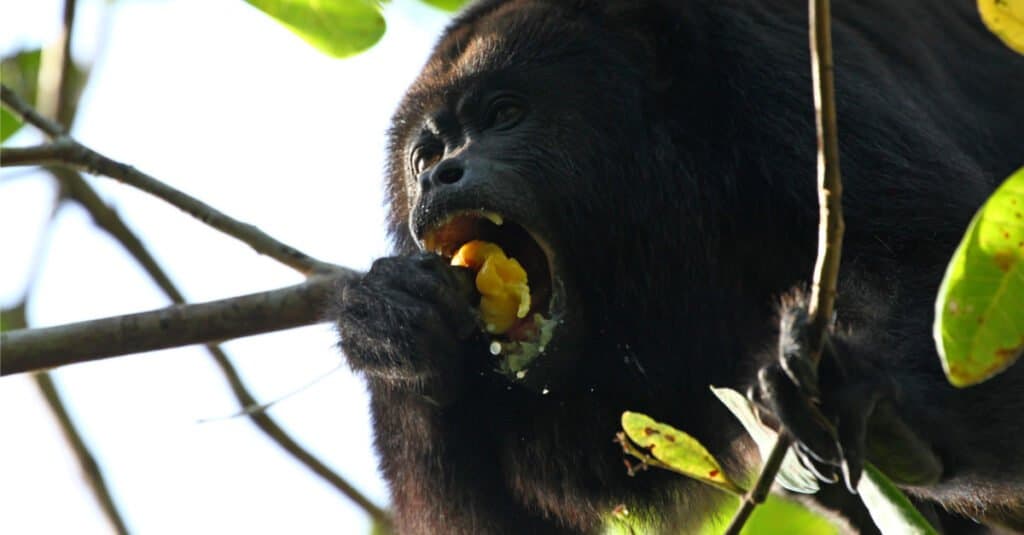
Baboons will eat practically anything that they can fit in their mouth.
©iStock.com/andyjkramer
However, baboons tend to eat more plant matter than animal flesh. The average baboon diet consists mostly of plant matter like grasses, roots, fruits, seeds, and leaves, supplemented with small amounts of meat and insects.
According to the IUCN Red List, all six recognized baboon species are currently classified as of Least Concern.
Farmers Don’t Like Baboons
Baboons can be a problem for farmers. They are considered destructive pests throughout much of Africa. This is because a troop of baboons can wipe out entire crops in a matter of minutes.
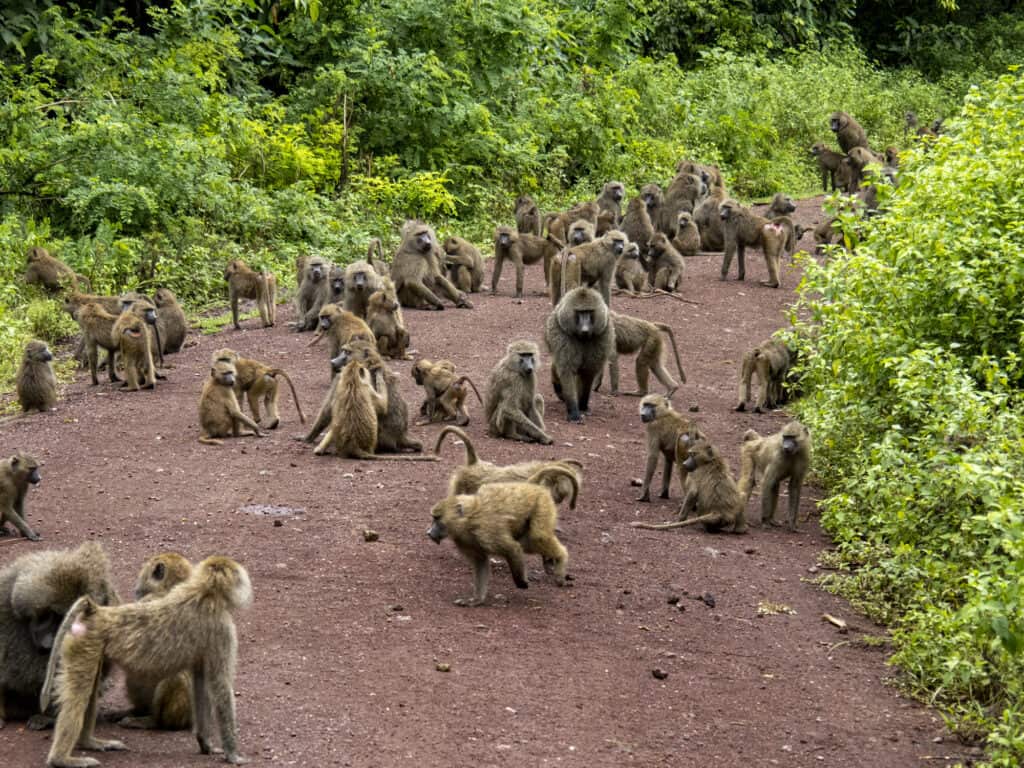
Large groups of baboons raid crops and force farmers to erect electric fences to keep them out.
©iStock.com/Elise Morris
Baboon troops use guards to watch for unprotected crops. When the guard signals that the coast is clear, the troop moves into the fields.
As baboons move through fields, they destroy everything in their paths. During a raid, baboons quickly ravage crops, carrying off large amounts of food to a safe location before farm help can respond.
Working together in large groups, baboons can decimate a field in minutes. A single baboon raid can wipe out a farmer’s crops and annual income.
Baboons Form Impressive Troops
A group of baboons is called a troop. Savanna baboons (olive, yellow, Guinea, and chacma baboons) form large troops that can contain hundreds of members.
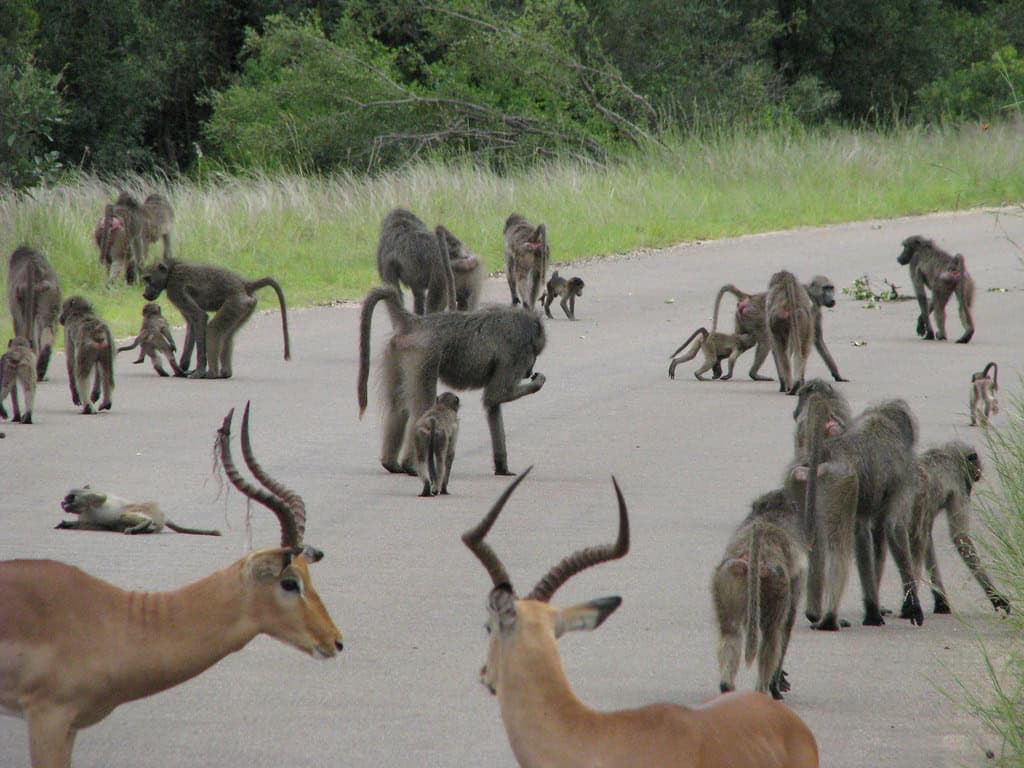
A troop of baboons may consist of over 100 individuals.
©"impala & baboons" by rosemary_mcd is licensed under BY-ND 2.0. – Original / License
The troops have a complex hierarchy and unique social behaviors. Males, for example, use their strength to dominate rivals, and troop members spend countless hours bonding through grooming. When they groom each other, special endorphins are released, giving them pleasure. This helps encourage social behavior within the troop.
Baboons Are Escape Artists
Baboons are cunning monkeys, always up for a challenge, such as escaping from their enclosure. Fifty-two baboons once escaped from the Paris Zoological Park, also called Vincennes Zoo.
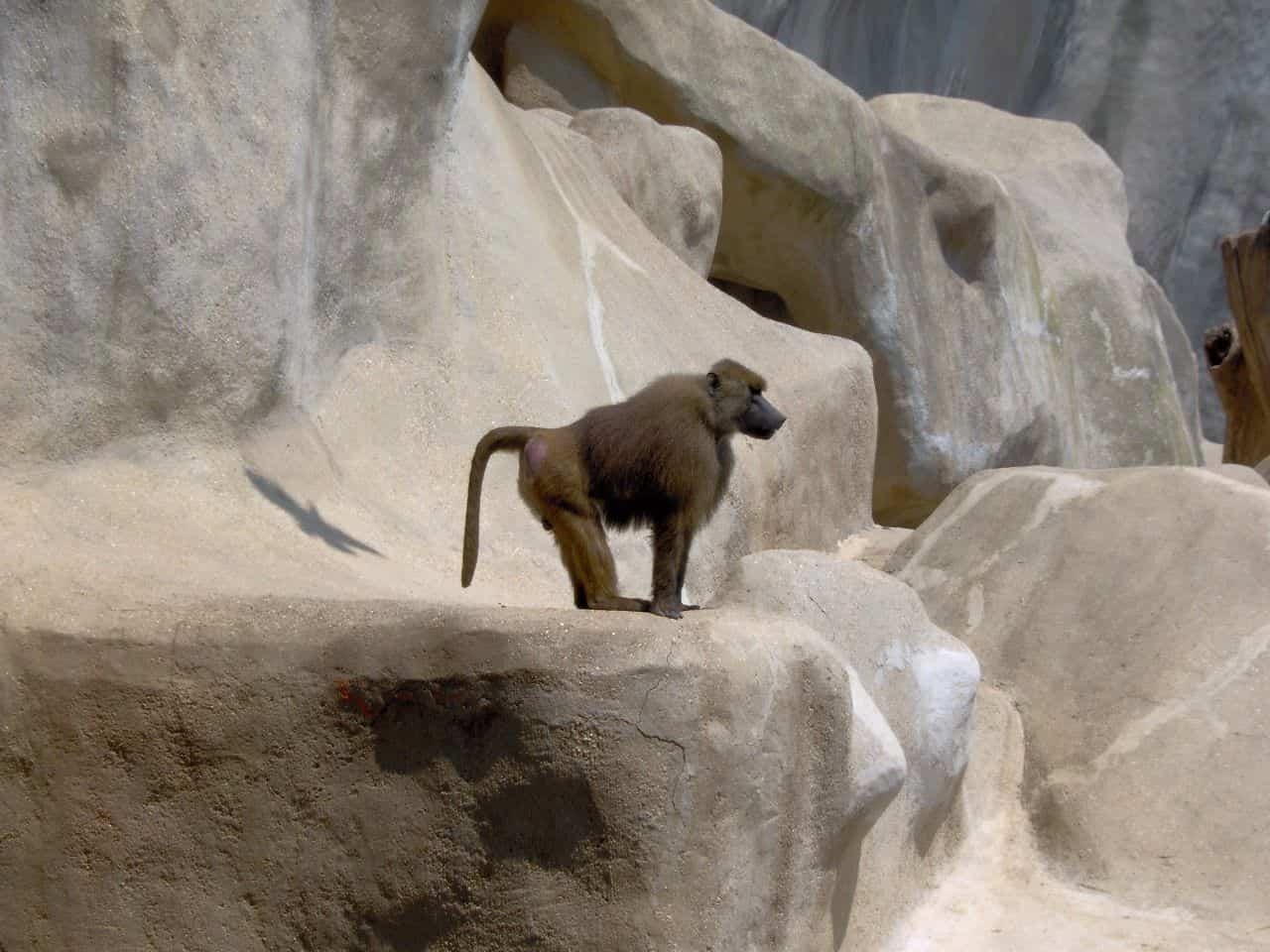
Baboons are smart and have escaped from zoos.
©Mathae, CC BY-SA 3.0, via Wikimedia Commons – Original / License
The incident occurred on January 26, 2018. Because baboons are large and can be aggressive when stressed, authorities quickly evacuated all visitors, closed the zoo, and called in dozens of police officers, firefighters, and marksmen with tranquilizer guns.
The baboons never made it out of the zoo. They congregated around the Grand Rocher, a massive fake rock centerpiece that serves as the visual anchor of the zoo. Within a few hours, zookeepers used nets and food to herd the majority of the troop back into their enclosure.
However, how they escaped in the first place remains a mystery.
Baboons Steal Goose Eggs
As opportunistic omnivores, baboons will eat practically anything they can fit into their mouths, including Egyptian goose eggs.
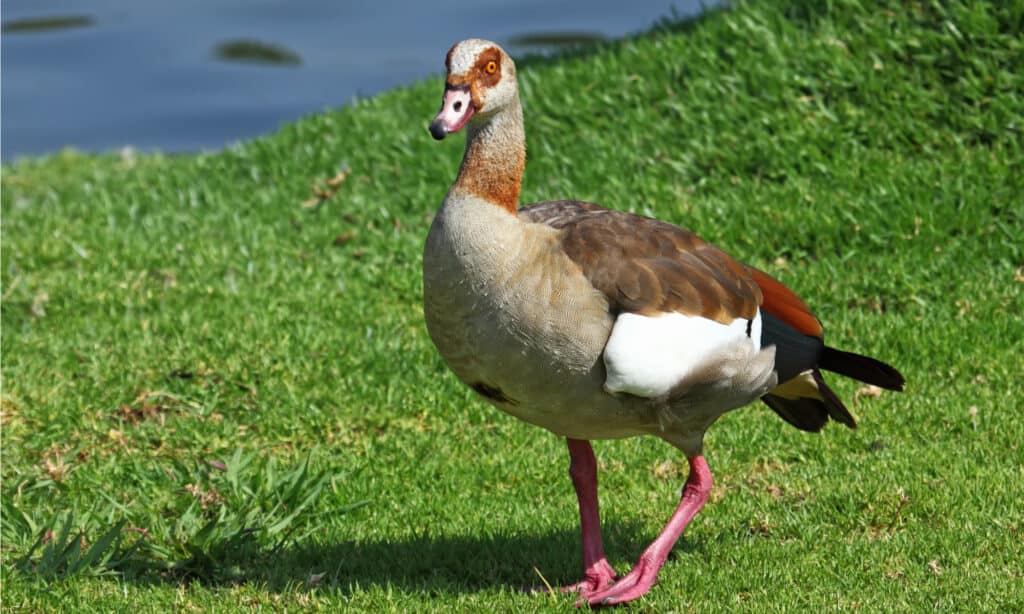
Baboons have been known to fight Egyptian geese for their eggs.
©LeonP/Shutterstock.com
In Kruger National Park in South Africa, baboons and Egyptian geese have been known to fight over eggs.However, a goose is no match for a baboon, and in most cases, the baboon emerges the victor.
Because Egyptian geese repeatedly use specific, predictable breeding grounds near the park’s rivers and waterholes, baboons have learned to target these locations during the breeding season.
Baboons Huddle to Stay Warm
Baboons frequently engage in huddling as a vital survival strategy for thermoregulation, social bonding, and protection against predators. During cold nights or chilly mornings, members of a troop pack closely together to minimize exposed surface area and conserve core body heat.
This physical closeness is influenced by the troop’s social hierarchy and family relationships, as individuals typically choose to huddle with close relatives, grooming partners, or dominant members.
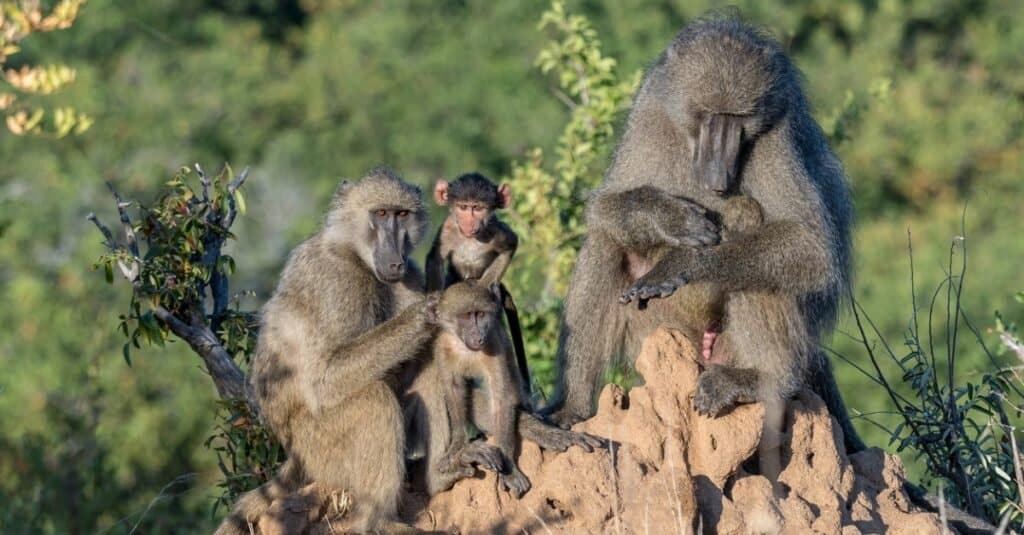
Baboons are affectionate and cuddle for warmth.
©Grobler du Preez/Shutterstock.com
Beyond temperature control, huddling strengthens social bonds, reduces group stress, and provides collective security, making it harder for nocturnal predators to isolate and target a single monkey.
New Technology Is Tracking Their Movements
GPS tracking technology is a powerful conservation tool that dramatically improves baboon survival rates by mitigating dangerous human-wildlife conflicts. As their habitats become more fragmented by human activity, baboons frequently venture into urban areas and agricultural zones to forage for high-calorie food, which exposes them to fatal risks such as vehicle collisions, dog attacks, and retaliatory shootings by humans.
Baboons are being fitted with GPS collars to track their movements.
©Florence Bond – Copyright A-Z Animals
By using high-resolution GPS collars, wildlife professionals receive real-time location data, allowing rangers to intercept approaching troops and safely herd them back into the wilderness. The data collected also allows urban planners to map conflict hotspots and design effective corridors that guide baboons away from human settlements while preserving their natural migration routes.