
The animal kingdom is a fascinating place filled with all types of exotic animals. While no animals are mundane, some will genuinely blow your mind. With over one million animal species in the world, there are many incredibly fascinating animals to consider. From their appearance to their abilities, each of the animals on A-Z’s list has at least one characteristic that will make your jaw drop.
Sharks that Glow in the Dark
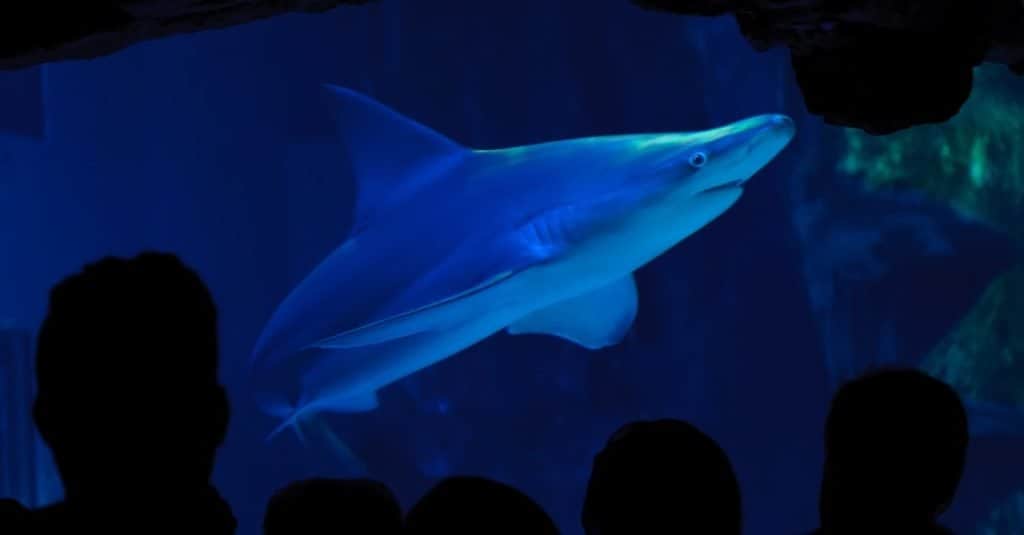
Sharks have special electroreceptor organs that allow the shark to sense electromagnetic fields and temperature shifts in the ocean.
©Anna Kucherova/Shutterstock.com
There are at least 15 species of sharks that glow by producing light using tiny cells called photophores, which are controlled by hormones. These cells are embedded in their skin. Found throughout the world’s oceans, these sharks live in the mesopelagic zone, 650-3,280 feet below the water’s surface where very little sunlight penetrates. Marine biologists theorize that the sharks use the light to blend into their surroundings. This adaptation allows sharks to stalk their prey unseen. The kitefin (Dalatias licha), which grows up to 6 feet long, is the largest light-producing animal, called luminescent vertebrates, on record.
Slow Lorises are the Only Venomous Primate
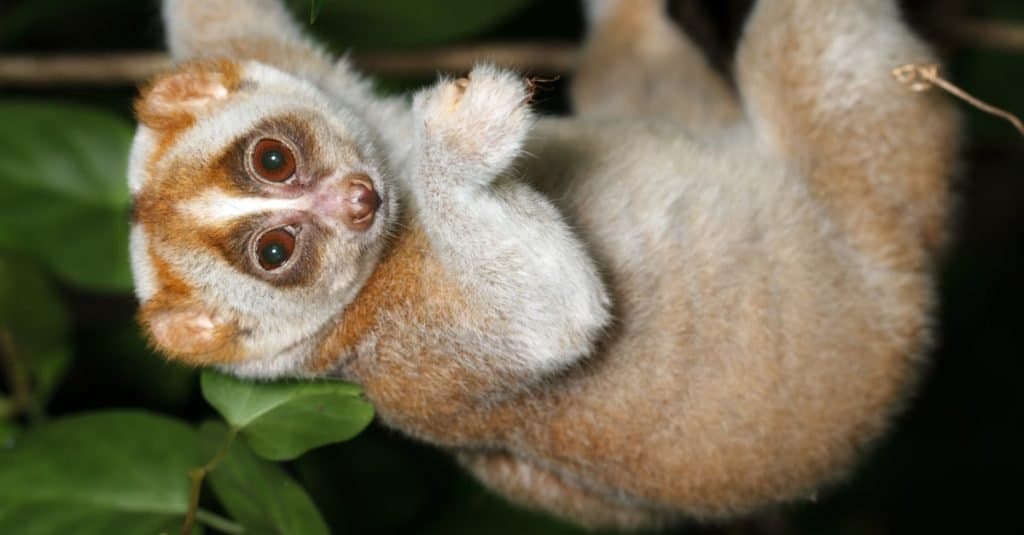
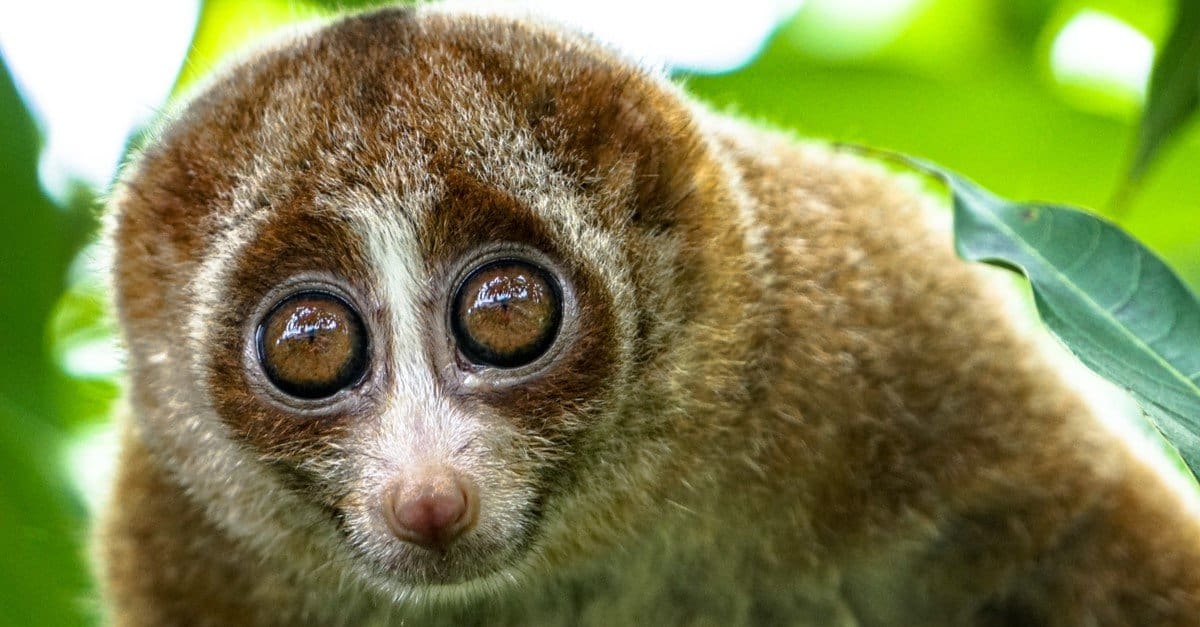
Slow lorises may be slow, but they can travel around 8 kilometers in one night.
©Nachaliti/Shutterstock.com
Of the more than 200,000 venomous animals in the world, only one is a member of the primate family: the slow loris (Nycticebus) To create its venom, this slow loris raises its arms, licking the underpart of its upper arm, to access oil from brachial glands. When this oil mixes with the loris’s saliva it creates a flesh-eating toxin. Scientists believe that the most common reason that slow lorises use their venom is to protect their territory.
Wood Frogs Freeze Themselves
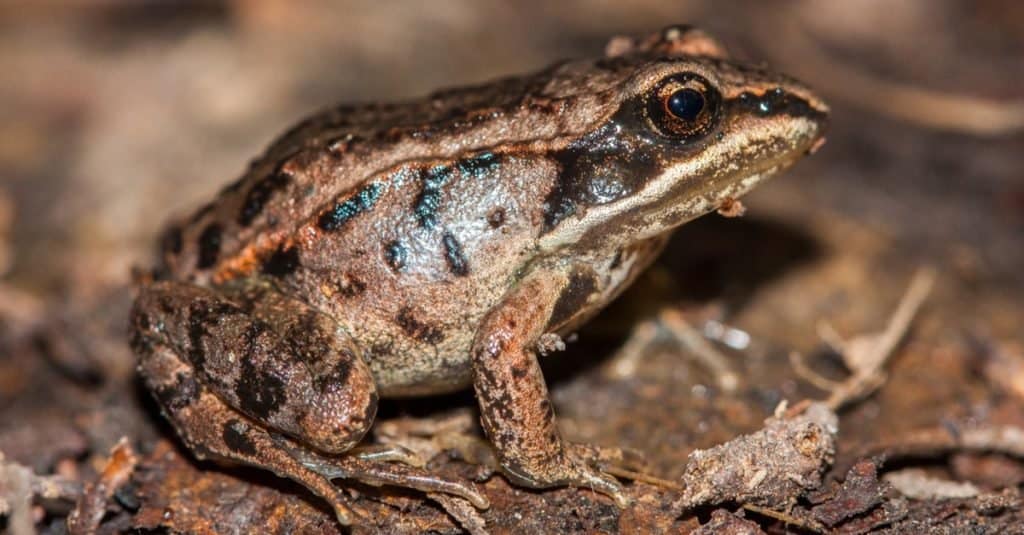
The wood frog has a broad distribution over North America, extending from the Boreal forest of Canada and Alaska to the southern Appalachians.
©Viktor Loki/Shutterstock.com
Wood frogs (Lithobates sylvaticus or Rana sylvatica) have a unique way of surviving when the mercury dips below freezing. When faced with cold weather, these little amphibians will freeze solid! Nucleating proteins in the frog’s body draw water away from their cells, preventing damage. Simultaneously, the frog’s liver produces cryoprotectants, that act as a natural antifreeze of sorts. The frogs enter a state of suspended animation in which their heart and brain activity become practically nil. Wood frogs can tolerate several freeze and thaw cycles. Once the mercury begins to rise, these amphibians thaw from the inside out!
Turtles Get Oxygen Through Their Bums
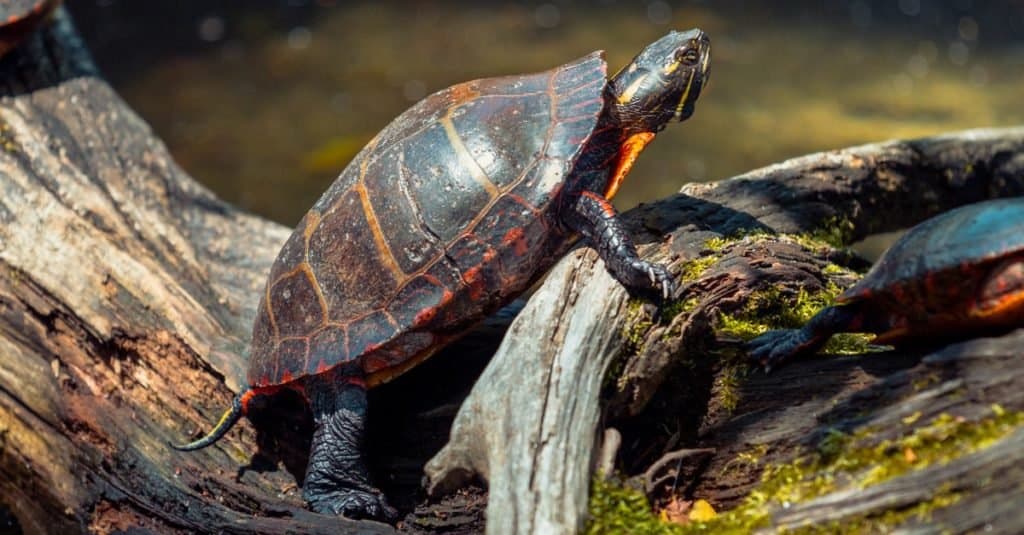
Painted turtles will take in oxygen and expel carbon dioxide through their bums while hibernating.
©Jonathan Novack/Shutterstock.com
Some species of turtles, including painted turtles (Chrysemys picta), take in oxygen and let out carbon dioxide through their bums when the weather gets cold. Hibernating for up to 5 months, they use sacs lined with blood vessels near their cloaca to take in oxygen and release carbon dioxide. These blood vessels disperse the oxygen throughout the turtle’s body while collecting carbon dioxide to expel.
Mole Rats Make Other Female Mole Rats Infertile
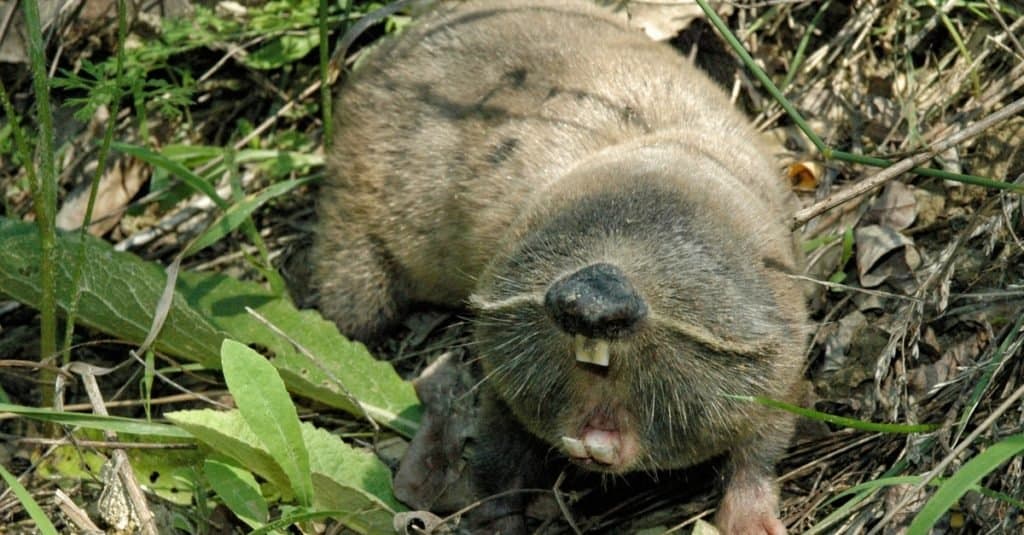
A mole rat’s incisors can be moved independently and can even work together like a pair of chopsticks.
©Bildagentur Zoonar GmbH/Shutterstock.com
Mole rats live in colonies with one queen who is usually lighter in color than all the other mole rats who serve as her servants. To make sure that she is the only mole rat to give birth, she secretes a substance in her urine that makes all other female mole rats infertile. When the queen dies, brutal fights erupt to determine who the new queen will be. These skirmishes often result in multiple deaths. About six months after the new queen is established, she starts secreting the substance in her urine.
Horned Lizards Squirt Blood From Their Eyes
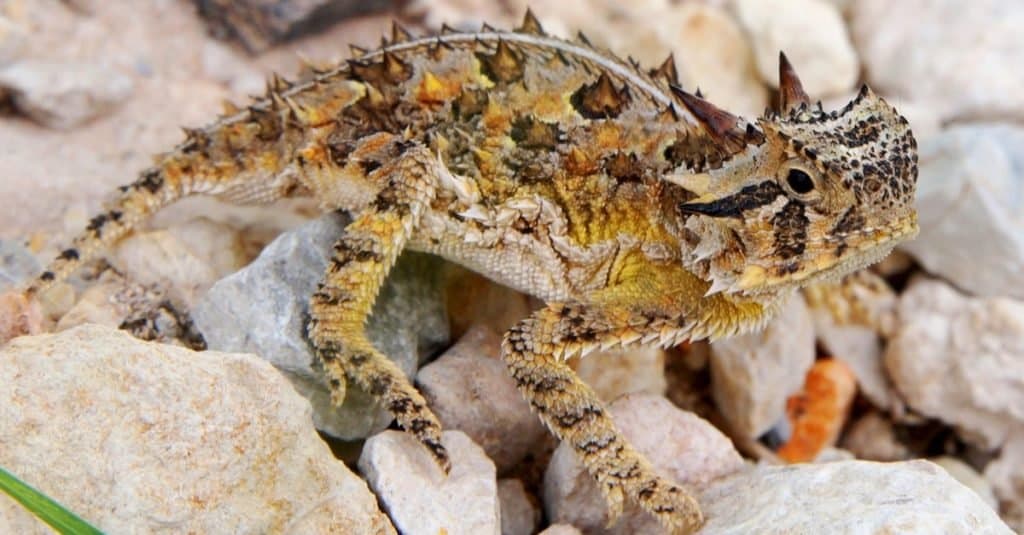
The spiky Texas horned lizard’s appearance and coloration help it to blend into sparse vegetation. Its horns may make it less palatable. It can also inflate to appear larger.
©Matt Jeppson/Shutterstock.com
Horned lizards, also called horny toads have two constricting muscles that line the significant veins around their eyes. When a horned lizard feels threatened, these muscles contract, building pressure that eventually causes the blood vessels to rupture, causing blood to squirt from its eyes.
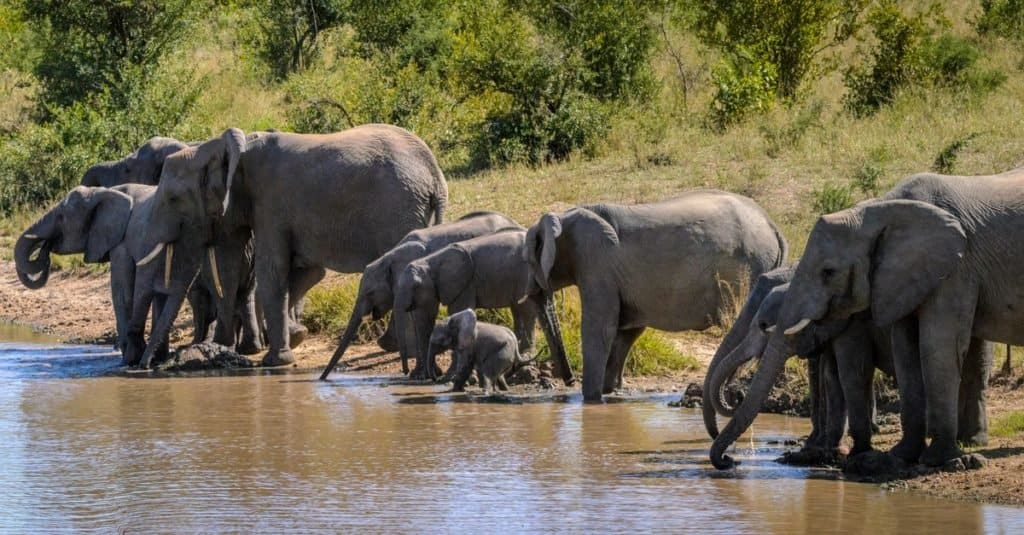
Elephants Have Specific Danger Calls for Bees and Humans
©Roger de la Harpe/Shutterstock.com
Elephants have specific sounds that they make to communicate with each other. When researchers in Kenya played a recording of people talking in the local language near a herd of resting elephants, the elephants grew restless and emitted a low rumbling sound. A recording of the elephants’ response, was played to a different group of resting elephants, who became similarly agitated, even though they had not heard the human voices. The rumble is very similar to the sounds elephants make when bees are nearby. However, the bee rumble is accompanied by the elephants violently shaking their heads.
Dogs Smell the Passage of Time

Dogs are about as intelligent as toddlers, but they have an uncanny “scents” of time.
©Marina Plevako/Shutterstock.com
Dogs can predict when it is time for you to return home as long as it’s a routine occurrence. When you leave home, your scent is strong in the house. Over time, your scent begins to fade. According to researcher Alexandria Horowitz, dogs can tell when it is time for you to return by how much of your scent is left in the house.
Reindeer Eyes Turn Colors Depending on the Season
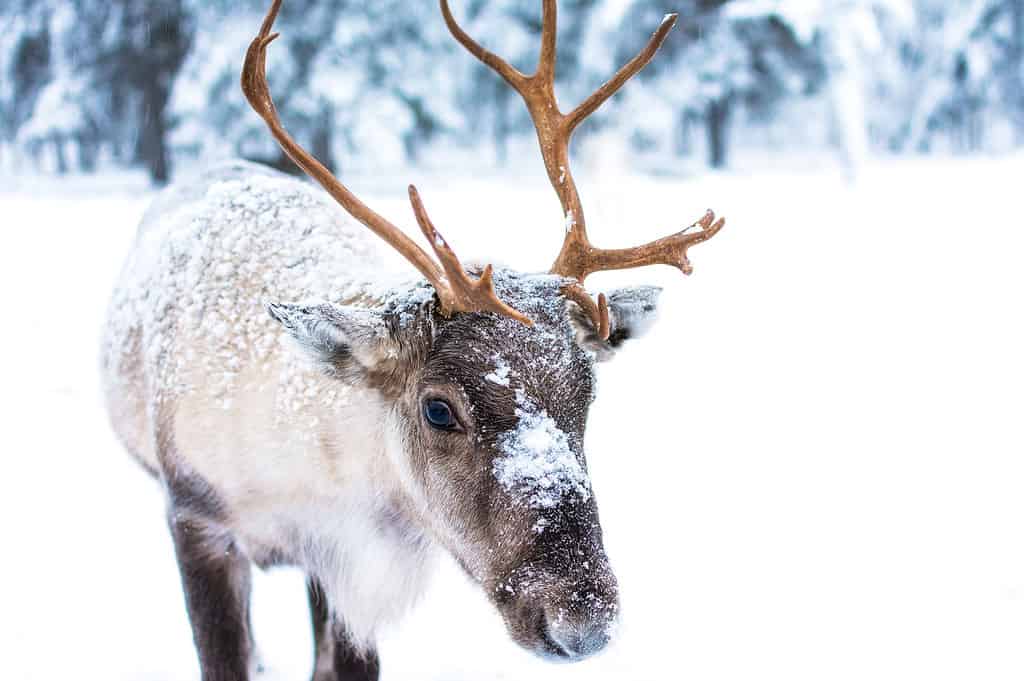
Both the male and female reindeer grow antlers.
©Jellis Vaes/Shutterstock.com
A shiny, mirrored layer behind the retina in the reindeer’s eyes changes colors based on the season. When it’s summer, the layer, called the tapetum lucidum, is a golden color, but as winter arrives, it turns blue. Scientists theorize that the reindeer’s eyes turn blue in the winter to take advantage of available light as they often live in areas where there is no sunlight in the winter.
Flamingos Eat With Their Heads Upside Down
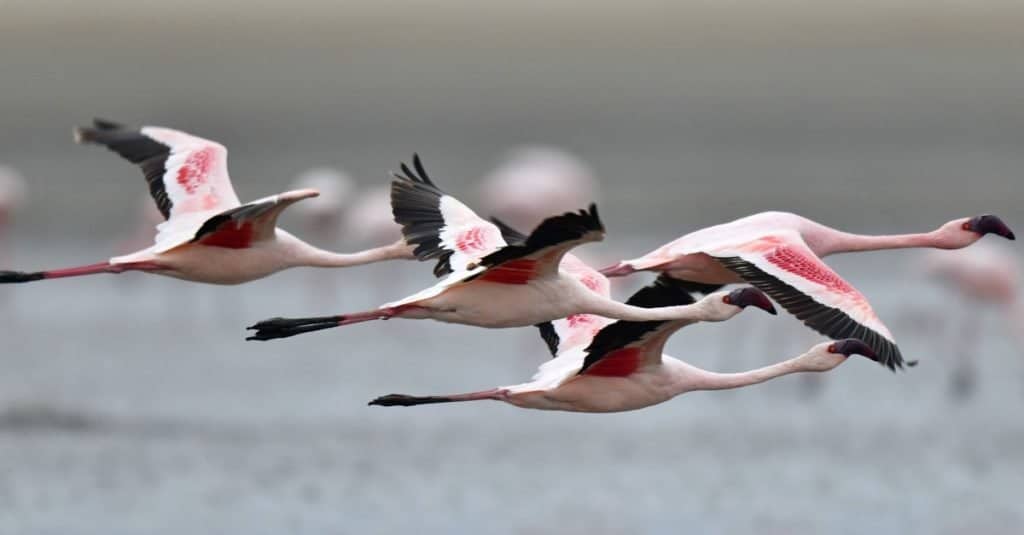
The name flamingo is a nod to the bird’s brightly colored feathers.
©Sergey Uryadnikov/Shutterstock.com
Flamingos must turn their heads upside down to eat because their mouth acts like a large sieve. As filter-feeders, flamingoes stick their heads underwater, filling their mouths with all sorts of savory delights as well as unsavory mud and rocks. They capture the food in comb-like extensions on their beaks using their tongues, filtering out the unappetizing items.
Penguins Do a Thousand Animal Wave
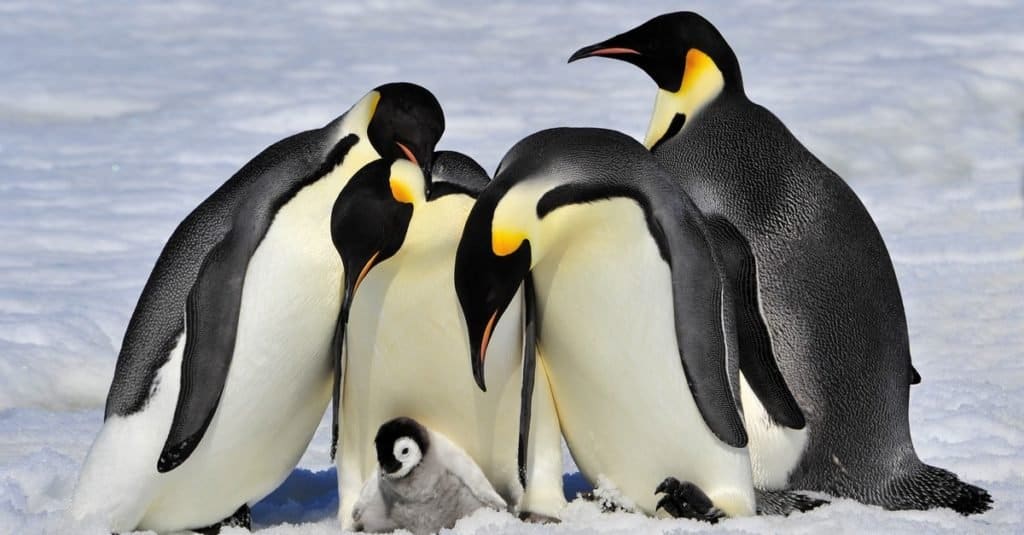
The black and white tuxedo look donned by most penguin species is clever camouflage called countershading.
©vladsilver/Shutterstock.com
Weather conditions, like 200 miles per hour winds and –58-degree weather, make it hard for emperor penguins to survive Antarctic winters. Therefore, they huddle together in groups of up to 1,000 birds relying on each other’s body warmth to stay warm. When a single penguin moves as little as 0.8 inches, the whole group moves the same amount to keep the huddle together. This small movement typically happens every 6 to 12 seconds and resembles a stadium crowd doing a wave, only better.
Worker Fire Ants Take 250 Power Naps Daily
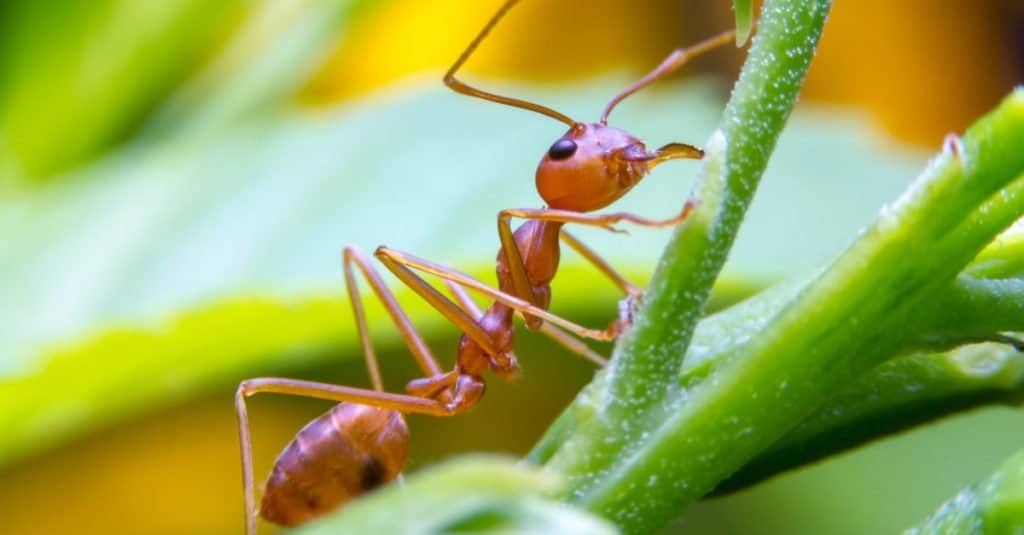
Fire ant colonies are typically comprised of female worker ants and one queen, who is responsible for laying the eggs.
©wnarong/Shutterstock.com
Researchers have discovered that worker fire ants take up to 250 power naps daily. Each nap lasts only about a minute. About 20% of a colony is asleep at all times. While the workers get about four hours of sleep a day, the Queen luxuriates with nine.
Polar Bears Have Black Skin
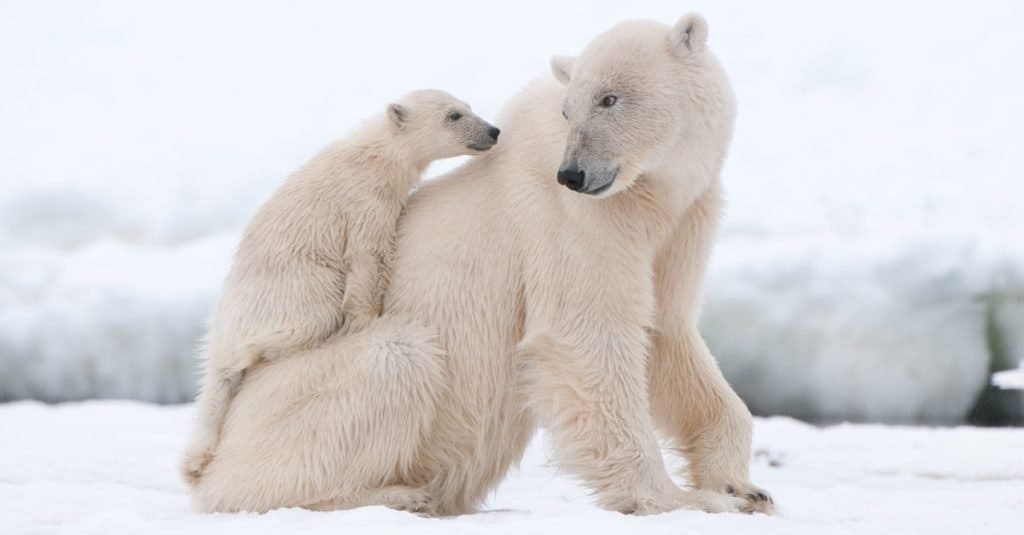
Polar bear with cub. Because they spend most of their lives on the sea ice of the Arctic Ocean depending on the ocean for their food and habitat, polar bears are the only bear species to be considered marine mammals.
©Gecko1968/Shutterstock.com
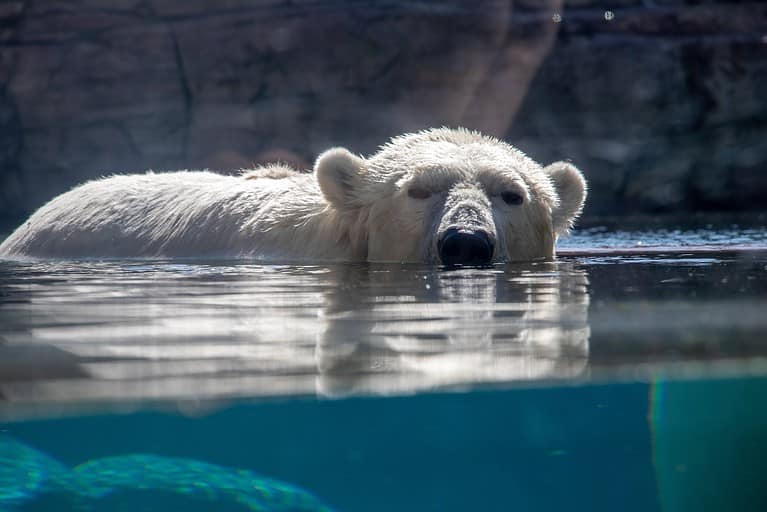
Polar bears have black skin beneath their translucent fur, helping them absorb as much heat as possible. Their fur, which appears to be white, actually consists of hollow transparent tubes made of keratin. These tubes allow the heat to reflect and scatter, keeping these majestic animals warm.