
Quick Take
- Mongolian horses are adapted to extreme temperatures and can survive on sparse grazing, making them ideal for life on the Mongolian Steppe.
- Mongol warriors travelled with several horses each, allowing them to cover long distances without exhausting individual mounts.
- Horses helped the Mongols maintain their vast empire through the yam relay system, which used fresh mounts to carry messages quickly between distant regions.
- Horses remain an important part of Mongolian culture today, providing transport, food and a connection to the country's nomadic heritage.
Mongolian horses are a small, hardy breed that has played an important role in the history of Asia. Adapted to the harsh conditions of the Mongolian Steppe, these horses can survive extreme temperatures and travel long distances across challenging terrain. This hardiness has made them one of the most valuable animals to the Mongol people. However, their most remarkable contribution was the role they played in the rise of the Mongol Empire. Keep reading to learn how these horses helped build and sustain one of history’s largest empires, from carrying warriors into battle to transporting messages through the famous Yam relay system.
The Unique Mongolian Horses
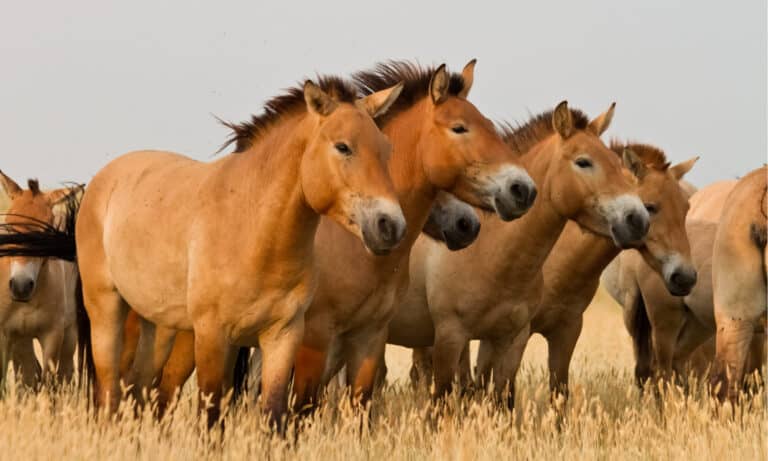
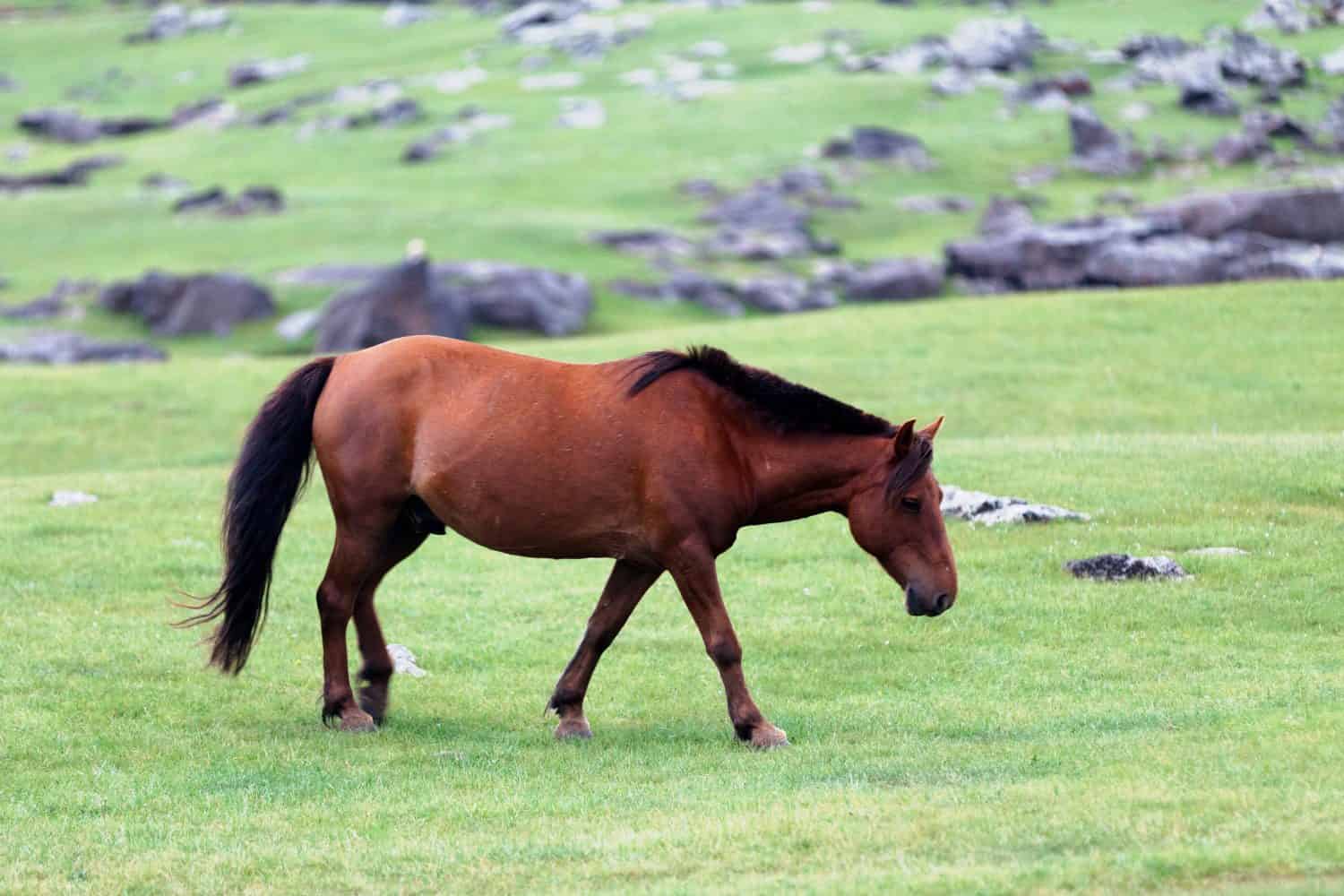
Mongolian horses originated on the Eastern Steppe thousands of years ago and have adapted to survive in some of the harshest conditions in the world. They live in semi-feral herds, and only the fittest survive. Mongolian horses can withstand extreme temperatures, from hot and dry summers to freezing winters as low as -40°F. They have a thick, double-layered coat to survive the low temperatures. However, winters on the Mongolian Steppe can be particularly harsh when much of the area becomes covered in snow. To find food, they use their hooves to scrape away the snow and ice until they can access the vegetation beneath. They can survive on sparse vegetation and even store fat during the summer to help them survive the winters.
Mongolian horses are relatively small, standing approximately 12 to 14 hands at the withers (48 to 56 inches). They have a stocky build for their size, with short legs, a short neck, and a large head. Mongolian horses have a lot of stamina, meaning they can travel long distances across challenging terrain.
The Importance of Horses in the Rise of the Mongol Empire
The Mongol Empire began in 1206, when Genghis Khan united several nomadic tribes. Following the unification of the tribes, he began expanding his territory through a series of military advances, conquering much of northern China and Central Asia. His successors then continued the expansion, claiming huge amounts of territory. The empire eventually reached approximately nine million square miles at its peak. This made it the largest contiguous land empire in history, stretching from east Asia into parts of Europe.
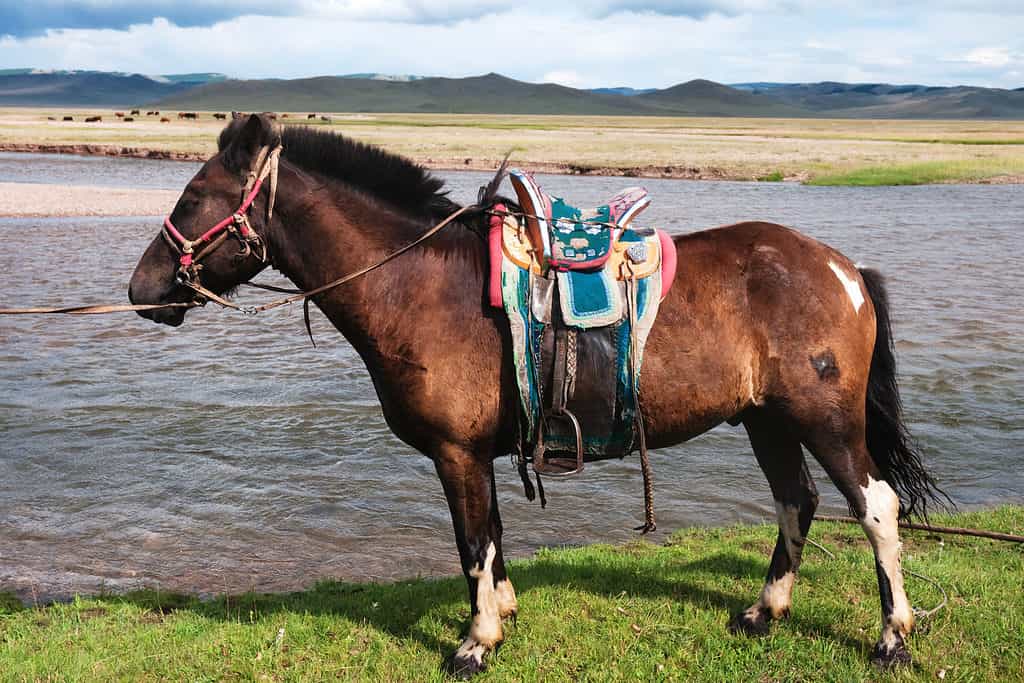
Mongolian horses were used by Genghis Khan’s army as they could travel great distances while surviving on poor grazing.
©Maxim Petrichuk/Shutterstock.com
The Mongol people already relied heavily on horses, using them for travel and to transport supplies. However, horses also became one of the most important aspects of Genghis Khan’s rising force, as they meant that warriors could travel much further than armies that moved on foot. Mongolian horses were particularly useful as they could survive on just the sparse grazing found across the steppe, even while travelling long distances. They could also cope well with the challenging terrain and different climates, meaning the army’s forces could expand across vastly different areas.
The horses were also an important source of food for the armies as they travelled. Mares could be milked, and the milk was sometimes fermented into a traditional drink known as airag. Although the Mongol warriors relied heavily on the horses for transport, any that died or were killed in battle were then used as a source of food.
Horses in Mongol Warfare
One of the biggest advantages to the Mongolian armies was the number of horses that they used. Rather than relying on a single horse, each warrior took several horses with them on military campaigns. Estimates vary, but most historical accounts suggest that each warrior took four to six horses with them. This meant that they could regularly change horses during long journeys, preventing horses from becoming too tired, while the army continued moving.
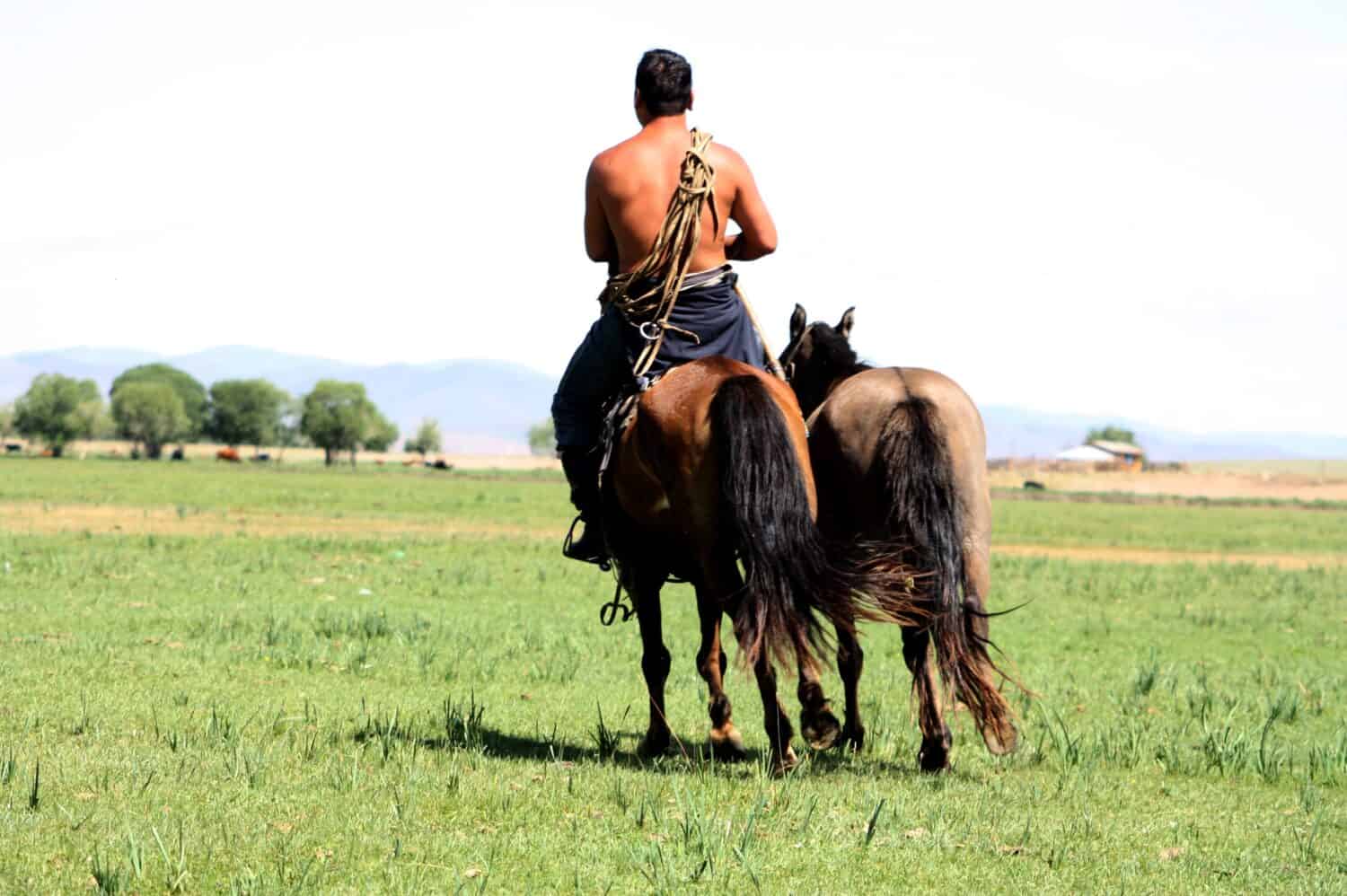
Mongol warriors took spare horses with them so they could change mounts regularly.
©Tulga-VeG/Shutterstock.com
This system of continually changing horses also gave them an advantage during battles, as they could approach enemy forces quickly, attack, and then retreat before their opponent had time to respond. This strategy made it difficult for their enemy to know where they would attack next. It also allowed the Mongol armies to use tactics such as feigned retreats to draw out their opponents.
The Yam Relay System
As the Mongol Empire expanded, its rulers needed a reliable way to communicate with government officials and military commanders. This led to the creation of the yam, which was an extensive relay-based postal system that connected strategic locations across the entire empire. The system was organized by Ögedei Khan, Genghis Khan’s son and successor, in the early to mid-1200s.
The Yam consisted of a network of relay stations, approximately 20 to 40 miles apart. These stations provided fresh horses, food, and lodgings for messengers. Messengers had to carry a Paiza, a small tablet indicating authorization by the Mongol Empire, in order to access the relay station’s services. The stations allowed messengers to swap horses and continue on without any delays. They could alternatively pass the information on to another messenger who would continue the journey.
- 1206 Genghis Khan united several nomadic tribes, beginning the Mongol Empire
- Early to mid-1200s Ögedei Khan organized the yam relay system
- 59 years later
- 1259 Möngke Khan died; the empire later divided into separate khanates
This relay system allowed messages to travel much faster than they could using a single rider on a single horse. Messages could travel 120 to 190 miles per day, vastly speeding up the transfer of information. This made the yam system a vital part of the Mongol Empire. It is also widely regarded as one of the earliest influences of modern communication and postal systems. Centuries later, America’s Pony Express also used a mounted relay system, this one transporting mail between Missouri and California.
Mongolian Horses Today
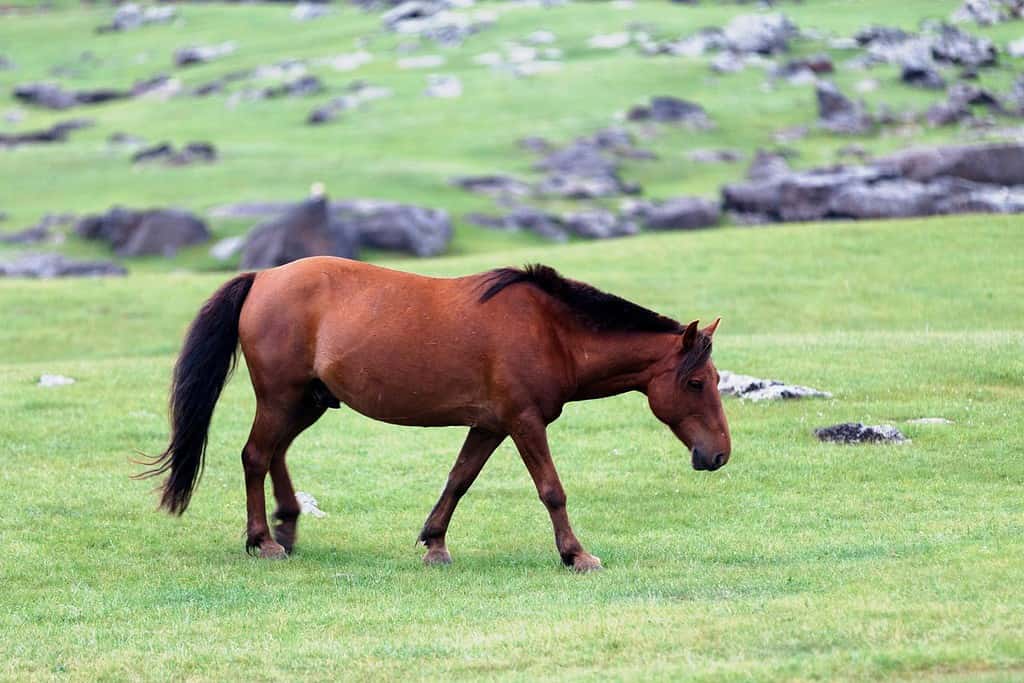
Mongolian horses are still an important part of the country’s nomadic heritage.
©BreizhAtao/Shutterstock.com
Although the Mongol Empire eventually divided into separate khanates following the death of Möngke Khan in 1259, Mongolian horses have remained an important part of Mongolian life. Many Mongolians still use them for travelling across the steppe and transporting supplies, as well as for herding livestock. They also still provide many communities with milk and meat.
Horses have a major cultural significance in Mongolia, as they are closely associated with the country’s nomadic heritage. Horsemanship is taught from a young age, often as soon as children can walk. A traditional Mongolian proverb says, “A Mongol without a horse is like a bird without wings.”
Horses are also part of many traditional festivals. One of the best known is the Naadam Festival, which takes place every July and features three traditional activities, including horse racing. The racing takes place across the open steppe and features races of various distances. Many of the competitors are children who have grown up on horseback as part of their everyday life. However, the most famous horse race in Mongolia is the Mongol Derby, which is the longest horse race in the world, covering 620 miles through the steppe. The race is based on the Yam relay system, with riders changing horses every 25 miles. The horses are all semi-wild, and participants ride almost 30 different horses over the course of the race.