
Quick Take
- Scientists expected one pigment duo to armor parrot feathers. The result stunned them.
- A decade-old study declared certain feathers safe from bacteria. A bigger test says otherwise.
- Some feather colors shrugged off the attack entirely. Can you guess which?
- If this pigment is so risky, why haven't parrots evolved without it?
Parrots’ characteristic brightly colored feathers signal good health and reproductive fitness, while helping them blend into their tropical habitats. However, these vivid shades can come at a cost, as a parrot’s most colorful feathers may actually be its weakest link.
Parrots’ Bright Feathers Are Highly Susceptible to Bacterial Breakdown
Parrots have some of the brightest pigmented feathers of any bird in the world. But these beautiful shades come at a cost; some of the pigments responsible for these beautiful shades may also make feathers more susceptible to bacterial degradation.
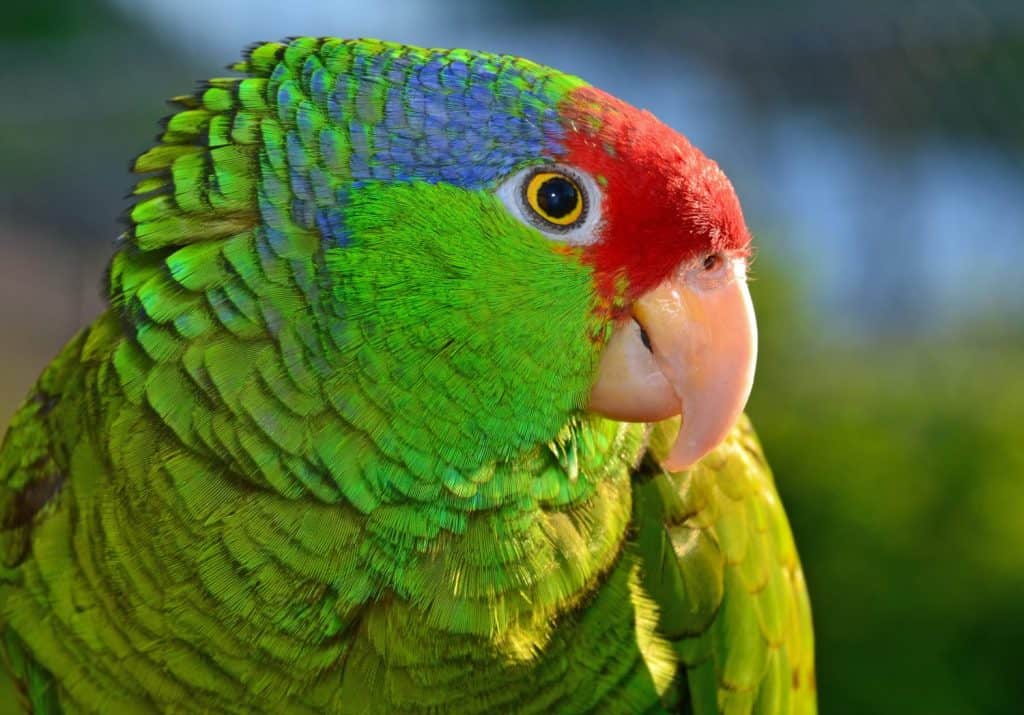
Parrots’ brightly colored feathers are susceptible to bacterial degradation.
©Tracy Starr/Shutterstock.com
According to a new study published in the Journal of Experimental Biology, parrot feathers exposed to the bacterium Bacillus licheniformis begin to degrade. This directly contradicts a 2010 study that noted red feathers were just as protected from bacteria as melanin-rich black feathers.
The previous study noted that the presence of psittacofulvins in the feathers was likely responsible for the protection of the brightly colored feathers. However, this study was relatively small. The new study expanded on the number of feathers tested from a variety of species. Once concluded, the results were clear: brightly colored parrot feathers do not fare well when exposed to B. licheniformis.
How Researchers Determined Parrot Feathers Were Vulnerable to Bacterial Breakdown
To determine which feathers, if any, would be affected by the bacterium Bacillus licheniformis, researchers collected thousands of feathers in various colors to conduct their tests. To control for variants, researchers selected feathers from parrots of related species.
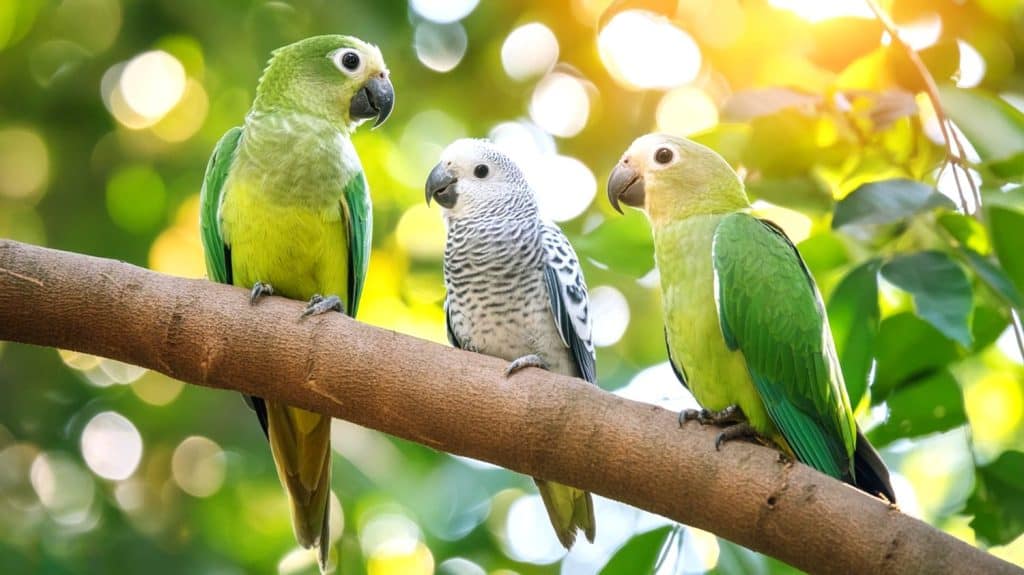
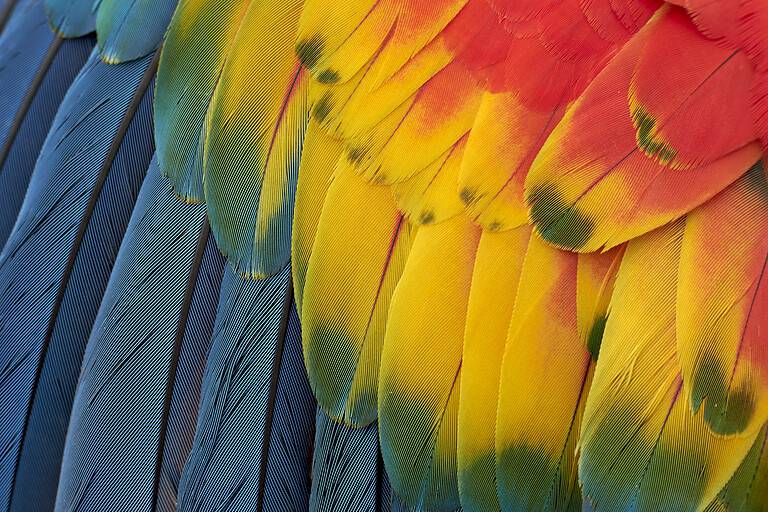
Thousands of feathers from various parrot species were tested in the study.
©Habib CREATIVE/Shutterstock.com
The feathers were placed in a liquid solution containing B. licheniformis, allowing the bacteria to break down the keratin within the feathers. As the bacteria do this, they release proteins into the solution. The proteins from each feather color are then measured to determine the amount of damage caused by contact with the bacteria.
When the experiment concluded, the brightest-colored feathers sustained severe structural damage. Not all feathers fared poorly, however.
Not All Parrot Feathers Fared as Poorly as the Most Colorful Feathers
The study tested a wide variety of feather colors from multiple related parrot species. Red, yellow, orange, and green feathers degraded quickly when exposed to Bacillus licheniformis. However, other feathers did not degrade as quickly.
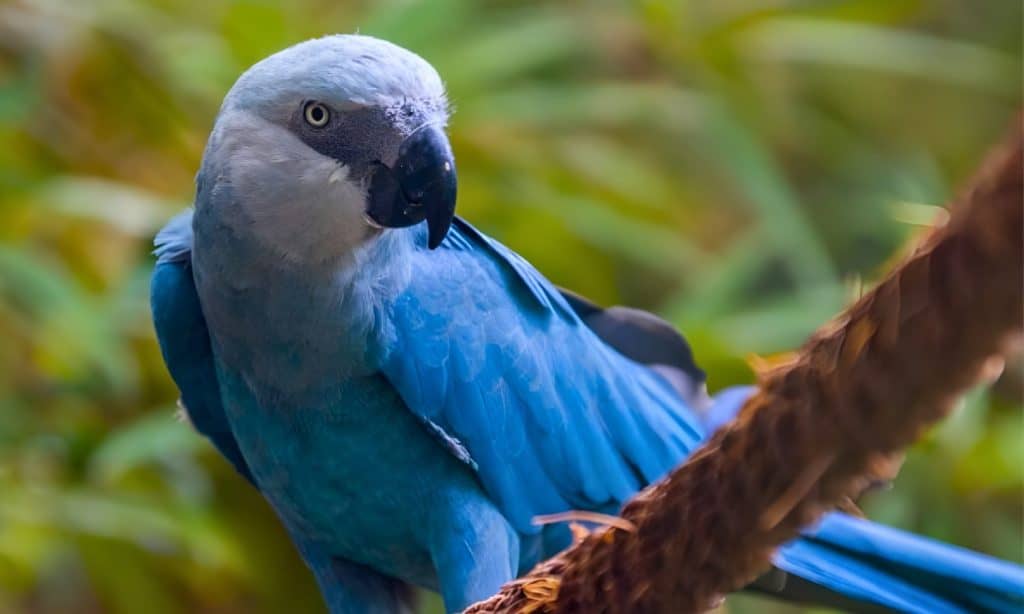
Blue, gray, and white parrot feathers were more resistant to bacterial degradation than feathers containing psittacofulvins.
©Harsha_Madusanka/Shutterstock.com
According to the study, blue, gray, and white feathers performed substantially better than more colorful ones. Black feathers were the least degraded by the bacterium. Given the high melanin levels in the black feathers, this did not surprise researchers. However, because a 2010 study noted that red feathers were also fairly resistant to bacterial breakdown, the degradation of the red feathers was unexpected.
Researchers needed to look further into psittacofulvins to understand their role both in the coloration of feathers and in resistance to bacteria.
How feather colors held up against B. licheniformis
-
Degraded quickly
- Red, yellow, orange, green
-
Less degradation
- Blue, gray, white
-
Least degraded
- Black
What Caused the Feathers to Break Down?
The study notes that the bright coloration of parrot feathers results from psittacofulvins, the very pigments researchers suspect may make feathers more susceptible to bacterial breakdown.
Other birds with brightly colored feathers get their coloration from carotenoids. Substituting carotenoids with psittacofulvins makes red, orange, green, and yellow feathers vibrant, but it also makes them vulnerable to the bacterium Bacillus licheniformis.

The presence of psittacofulvins in the red, orange, yellow, and green feathers was linked to increased susceptibility to bacterial degradation.
©kingma photos/Shutterstock.com
B. licheniformis is detrimental to feathers, yet psittacofulvin-based coloration remains widespread despite potential drawbacks. Because of this, researchers believe there may be an unknown benefit to brightly colored feathers containing psittacofulvins.
“Our findings really highlight the array of factors influencing feather coloration,” study author and postdoctoral researcher Alexander Downie of the Max Planck Institute for Evolutionary Anthropology explained in a press release. “It’s not just about being bright.”
It’s not just about being bright.
So, what is the role of psittacofulvins outside of coloring parrots’ feathers? According to the study’s authors, more research is needed to solve that mystery.
Why the Melanin and Psittacofulvins Did Not Protect the Feathers
Before the study was conducted, the working hypothesis was that the combination of melanin and psittacofulvins protected colorful parrot feathers by making them more resistant to bacterial degradation. As it turns out, despite the melanin present, feathers containing psittacofulvins were surprisingly vulnerable to bacterial degradation.
Melanin makes colorful parrot feathers stronger by strengthening keratin. This, along with protection against bacteria, leads to vibrant, strong feathers. However, when psittacofulvins are present, the melanin’s protective power may be overridden.
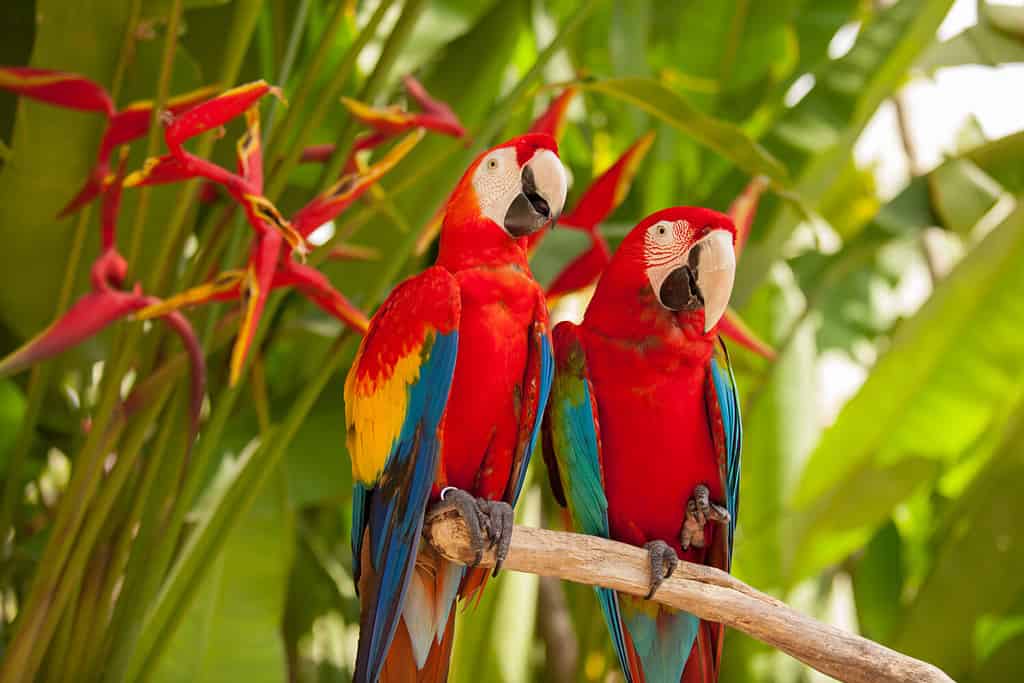
Further research is needed to determine why feathers containing psittacofulvins are particularly vulnerable to bacterial degradation.
©Katia Titova/Shutterstock.com
According to the new study, psittacofulvins may make keratin more vulnerable to bacterial enzymes, making feathers much less resistant to bacteria. This, according to postdoctoral researcher at New York University and the study’s lead author Jarome R. Ali, shocked the research team.
“We thought psittacofulvins would combine with melanin to protect feathers,” Ali explained in a press release, “so our findings were entirely unanticipated.”
Ali went on to explain that these findings differed from previous studies, given the scope of the feathers examined. However, Ali states that studies involving parrots are never straightforward, and perhaps the unexpected results should not have been so unexpected.
“Parrots often seem to break the rules,” Ali stated. “In retrospect, we shouldn’t be surprised that they surprised us.”