
Quick Take
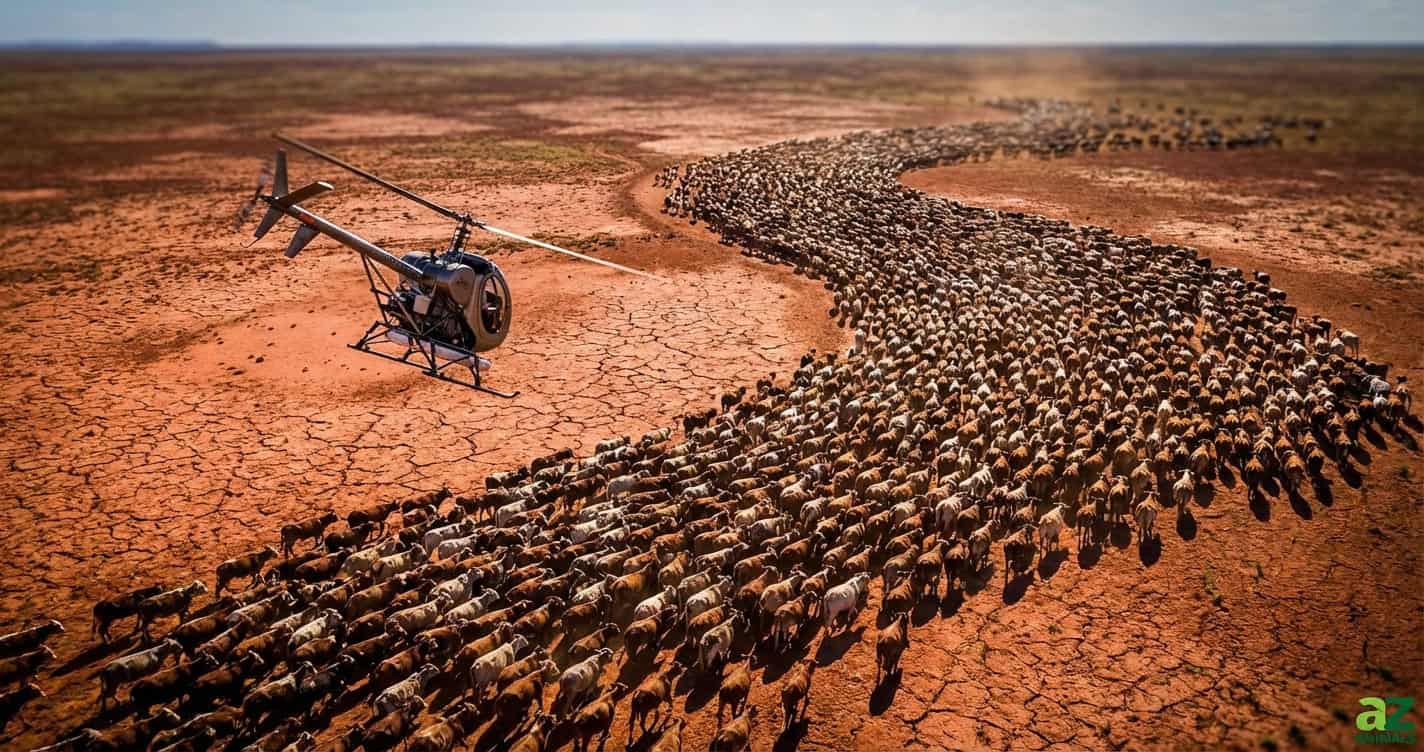
- Managing 17,000 cattle across 6 million acres requires a specialized aerial strategy using helicopters.
- A lean crew of only 8 station hands manages these vast outback distances and cattle populations.
- Anna Creek exists in an arid, difficult environment, with water management a must for protecting their investment.
- Recent satellite surveys revealed extensive earthworks and infrastructure changes at Anna Creek Station, which have led to legal scrutiny and allegations of unauthorized dam construction.
Anna Creek Station is famous because its immense scale requires cattle mustering to be done very differently from typical ranches. In reporting on the station’s scale and role in South Australia’s outback, Anna Creek apparently covers almost 24,000 square kilometers, which is roughly 6 million acres. But what exactly does it take to run a ranch of this size, and how many cattle actually live on Anna Creek Station?
We’ve taken a deep dive into Anna Creek Station, a cattle range that is so remote and large in its scale that any new additions to the herd must be mustered in via helicopter. Here’s a look at Anna Creek Station: how it operates, how the vast space is used, its business history, and some current decisions that may shape its future.
Where Is Anna Creek Station, and Why Is It So Big?
Anna Creek Station is in northern South Australia, and it is about 160 km east of Coober Pedy, between Oodnadatta and Marree, and tied to the William Creek area, making it fairly well-known to locals. It is also bordering Kati Thanda-Lake Eyre, with Lake Eyre’s wider catchment and waterways part of why water management in this region is such a charged topic. But more on that later.
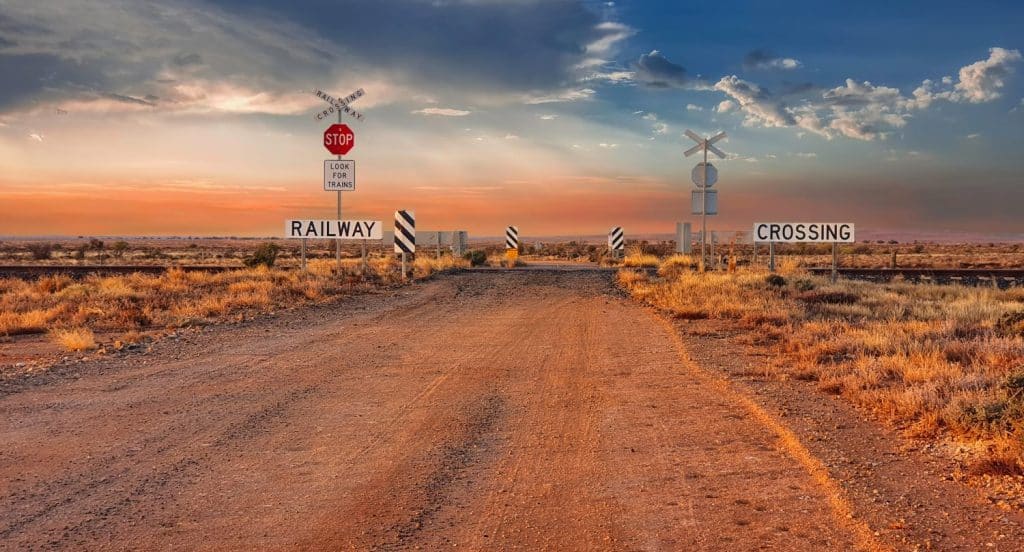
Australia’s outback is an arid, difficult place to run any business.
©electra/Shutterstock.com
In arid Australia, huge leases and swathes of land can actually be a purposeful survival adaptation. The station’s various land types behave very differently in drought and after rain; some of those lands include sand hill country, swamps, and tableland, with an annual rainfall of about 140 mm.
Having such a large property gives land and business managers flexibility, especially in animal-based operations. It allows them to move cattle away from overgrazed or struggling areas and keep them closer to reliable water sources during drought. While this helps their operations run more smoothly, managing land at this scale is far from easy—especially considering the large number of cattle they care for.
How Many Cattle Live on the Anna Creek Property?
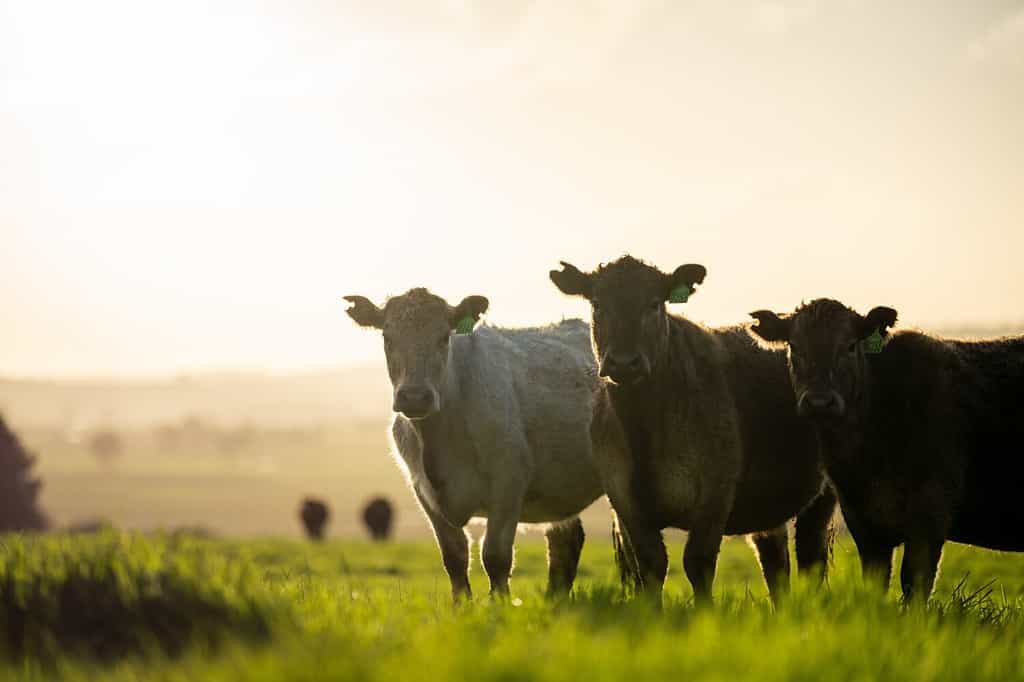
As of 2025-2026, the number of cattle most consistently cited by their owners is about 17,000, along with the note that the station is run for breeding and fattening in season. The concept of “season” is important, as cattle numbers at Anna Creek have historically increased or decreased depending on rainfall.
©William Edge/Shutterstock.com
An ABC report on rebuilding after drought describes the herd recovering to almost 17,000 cattle after better rainy seasons. Good seasons, like the one previously mentioned, mean more cattle: over 5,000 calves were branded that year, and around 4,000 animals were sent to slaughter as part of the operation’s turnoff cycle.
Ultimately, cattle living at Anna Creek are raised for beef, with an enormous working production unit that just happens to occupy an even larger amount of space. Still, this doesn’t explain why helicopters are used for mustering cattle. Let’s explore this fascinating aspect of Anna Creek Station.
Why Helicopters Are Used to Muster Cattle At Anna Creek
When anyone has to run cattle across a property measured in thousands of square kilometers, the hardest part is getting the job done in a timely and safe fashion. This is especially true given the hot and dangerous environment that Anna Creek is positioned within.
Helicopters help cover the country quickly, and they can also help in locating dispersed cattle. Workers at Anna Creek use their helicopters to apply steady pressure, guiding cattle toward fences, gates, yards, and water points without weeks of chasing them on the ground.
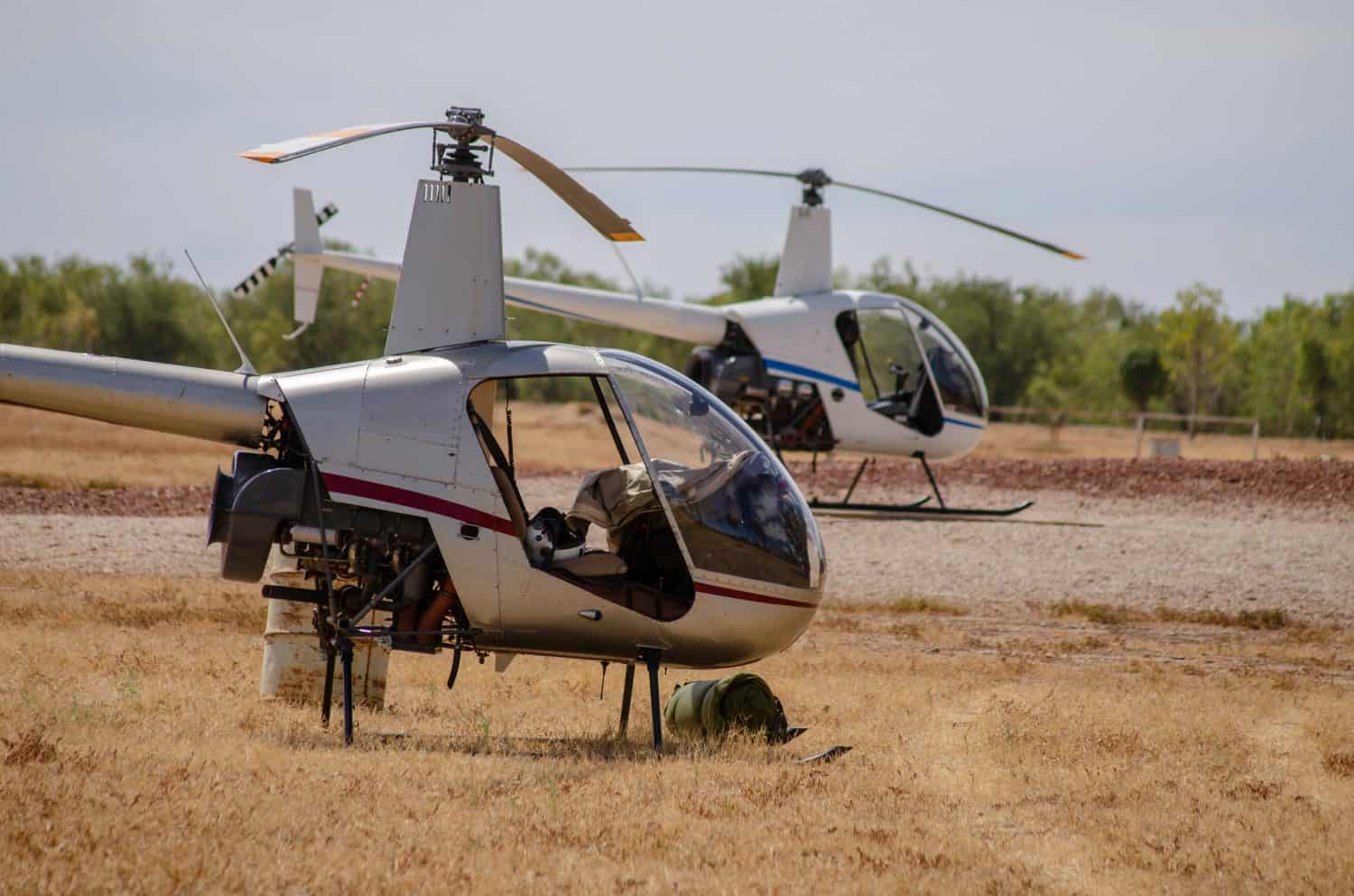
Helicopters are integral to operations at Anna Creek, given how large the property is.
©RaGS2/Shutterstock.com
Indeed, the owners of Anna Creek recently said they wanted to upgrade their operations on their land, investing in new water and trucking yards. Having consistent water access and the ability to load cattle efficiently when a selling window opens is a must for a business like this, especially if their moneymakers are spread across so many acres.
What a Muster Looks Like on Anna Creek
According to Anna Creek, here is their process for mustering cattle from start to finish—with helicopters playing a key role at every step.
1. Decide the purpose of the muster, and pick a weather window.
A muster can have various goals, such as branding, weaning and drafting, preparing cattle for sale, moving them away from poor feed, or relocating them to better water sources. On huge outback stations, timing is crucial due to heat and road conditions. In reality, a muster can take several days when factoring in travel across such vast distances.
2. Stage crews and equipment.
Anna Creek’s staffing model remains lean, with recent reports indicating a team of around 11 employees, including station hands and support staff. A crew that size can’t waste half the day commuting from the homestead to the job, so multi-day work often means staging closer to the desired area and running a mobile operation.
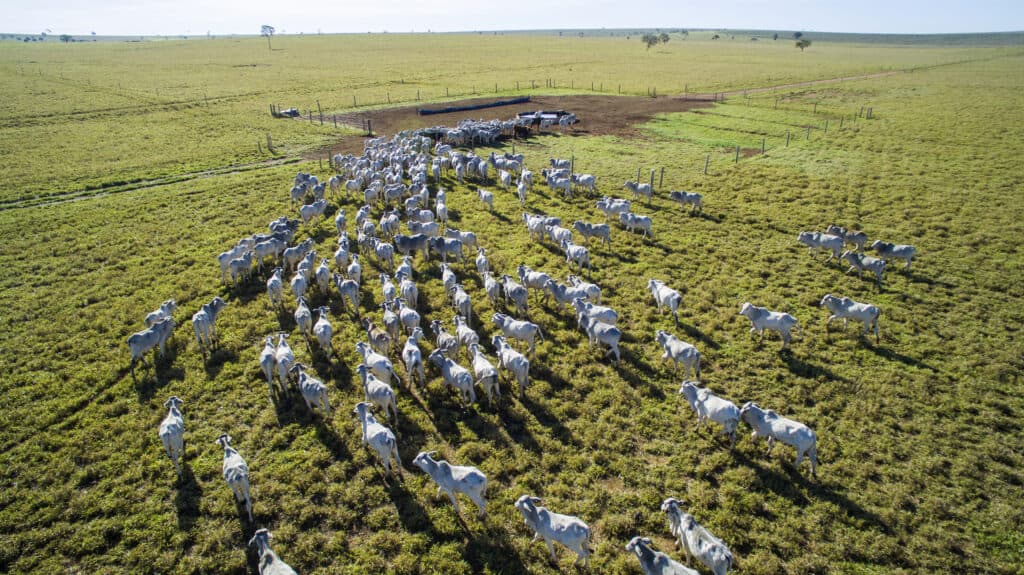
Finding and moving cattle at Anna Creek is easier said than done.
©Paulo Vilela/Shutterstock.com
3. Locate cattle.
This is where aircraft and scouting earn their keep, as finding cattle across 6 million acres is easier said than done. A helicopter can search wide areas quickly and spot cattle tucked into scrub or spread out around water points. Ground crews then take to all-terrain vehicles and bikes, rounding up the cattle in question.
4. Start the push.
The goal of any ranch is to move cattle toward a fence line, gate, lane, or water-based holding area that can feed into their business’s yards. The helicopter keeps the main group of cattle flowing, while ground crews hold the herd’s edges and prevent escapees from getting away.
5. Water cattle when the distances are long.
Cattle may need time to drink water and reduce their overall stress before the final push home. This is why Anna Creek’s business owners stress their need for new and additional water options, but it is also why earthworks and water control become such a serious subject in this region.
6. Yard work: draft, brand, weigh, and sort.
Once cattle arrive, the job becomes hands-on, as whatever goal they had in mind to begin with can now start in earnest. Calves are branded, and steers and heifers are separated into groups. Their health and conditions are also assessed so that managers can decide who is ready to go and who needs more time.
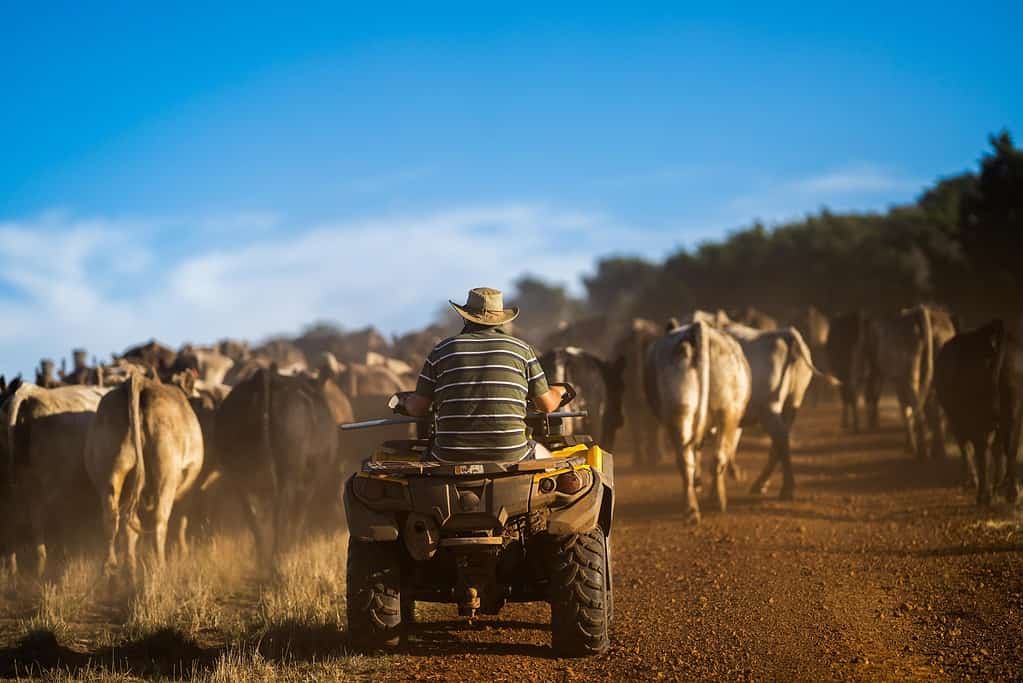
On-the-ground help is also necessary for moving cattle at Anna Creek.
©William Edge/Shutterstock.com
7. Load-out and transport.
You can do a perfect muster and still lose money if loading is slow or transport is delayed, making it impossible for the station to capitalize on a good market window. Anna Creek’s muster is an impressive operation, even more so when you consider just how finite their time can be during certain seasons.
The History of Anna Creek Station
Anna Creek was once an area named in 1858 by explorer Col Warburton, with a pastoral lease purchased in January 1863 by Julius Jeffreys, John Warren, and William Bakewell. This is how Anna Creek Station began and why it perseveres today.
Additionally, early operations were not purely cattle. The station actually began with sheep, including an early count of 7,300 sheep, and later shifted its focus after persistent dingo pressure made sheep less viable. The homestead moved to its current site around 1872, and it remains the heart of operations to this very day.
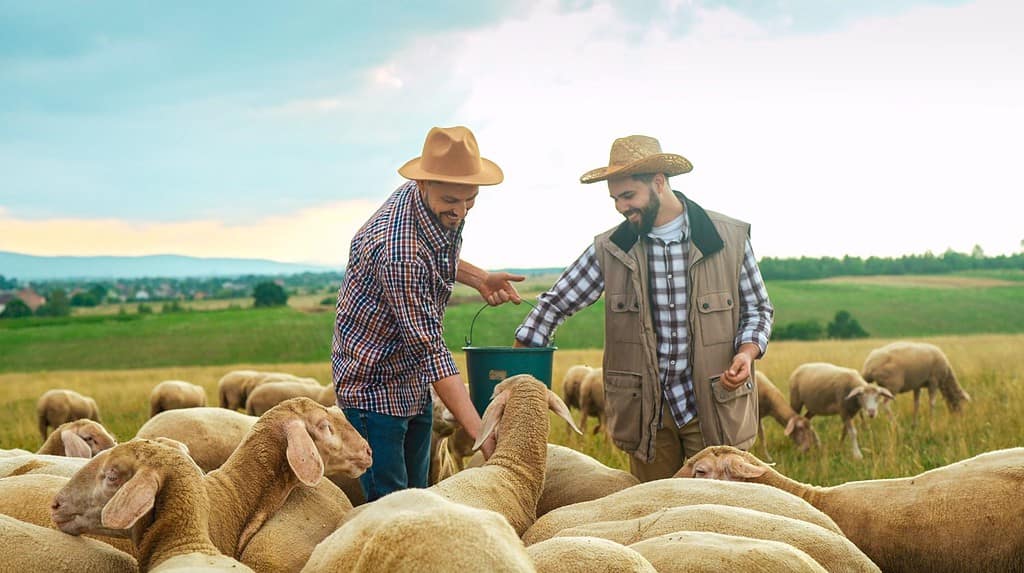
There were once sheep at Anna Creek, before dingoes became too big a problem.
©VesnaArt/Shutterstock.com
Anna Creek’s most recent major ownership change occurred in 2016, when the Williams family purchased the station. Owner Wayne Williams has spoken about the personal significance of the acquisition. Their stated goal is to invest in water infrastructure and trucking yards to improve station operations, but this may not be as feasible as they hope. Recently, Anna Creek’s owners have come under public scrutiny due to legal charges related to alleged illegal dam construction and earthworks on the property.
Illegal Dam Allegations and the Operations of Anna Creek
In late 2025, Anna Creek’s water and land development became embroiled in controversy. Local Australian news outlets report that the station’s owners were charged over alleged illegal dams and earthworks affecting inland rivers and waterholes in outback South Australia. Given that the station borders the Kati Thanda–Lake Eyre region, where waterways and culturally significant sites are deeply tied to the landscape, it became a widely-known issue.
The Arabana people first noticed changes at Anna Creek during a heritage survey. Subsequent satellite surveys identified at least 21 sites with earthworks totaling 14.25 km. Among the alleged structures is a dam wall reported to be about 2 km long across Balta-Baltana Creek, as well as additional construction at William Spring. Prosecutors are seeking orders to remove the dams and remediate all altered sites under multiple South Australian laws.
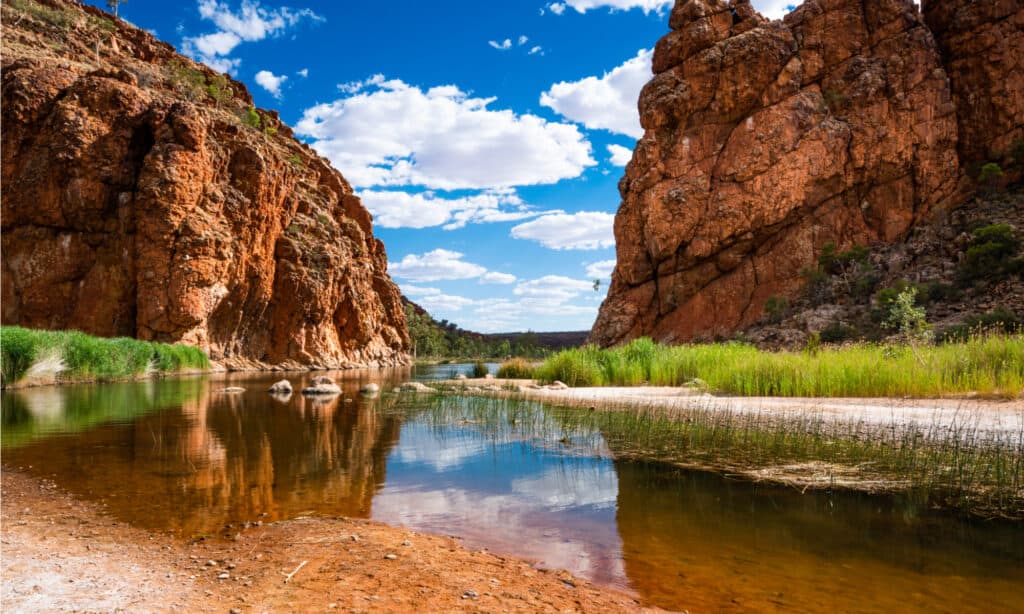
Anna Creek was reportedly damming some of the rivers on their property, triggering legal action.
©Keitma/Shutterstock.com
Water infrastructure may be central to how cattle stations operate in arid country, but Anna Creek may not be allowed to make the changes they hope to make. As of February 2026, the legal process regarding the alleged illegal dams at Anna Creek Station is ongoing, and the outcome, such as dam removals, remediation, or future restrictions, remains undetermined. These legal outcomes could affect grazing patterns, cattle access points, animal health, and the practicality of moving cattle safely and efficiently.
Will Anna Creek Keep Growing?
Anna Creek’s enormous footprint is not the kind of thing you casually expand, especially when faced with controversial lawsuits. However, infrastructure is essential if Anna Creek Station wants to carry more cattle and keep them healthy. While infrastructure improvements such as better water distribution and trucking yards could enhance operations at Anna Creek, ongoing legal proceedings over alleged unauthorized earthworks have cast uncertainty over future development plans.
The station will always be constrained by rainfall and by the land’s capacity to support cattle without causing damage—damage that Anna Creek may or may not have realized they were causing by damming and altering the landscape.
Ultimately, Anna Creek Station is operated by a lean crew raising cattle for beef in a low-rainfall region, using aircraft and modest infrastructure because the vast distances require it. They are accomplishing all of this under increasing scrutiny regarding water management in one of Australia’s most sensitive outback landscapes.