
Quick Take
- The shark struck from a direction that tells you exactly how it hunts. See how sharks hunt →
- To a shark below, a surfer on a board may look like something else entirely. Why boards resemble seals →
- One quirk of shark behavior may explain why he walked away without a scratch. Explore the exploratory bite →
- Wildlife officials won't call it an attack, yet this one doesn't fit their argument neatly. Read the incident debate →
Jack Canigiula was sitting out past the breakers off northern Santa Barbara County on Sunday, waiting on a wave, when something hit the back of his board hard enough to throw him into the air.
Canigiula, who is 21, put the shark at 15 to 20 feet long and said it charged without warning, KTLA reported. “Was sitting out the back when a huge dark shape bolted under me and blew up on the back half of my board from underneath,” he wrote on Instagram. “It had my board in its mouth and I was able to kick it and push myself away from it.”
Another surfer nearby, Dylan Stolley, watched the shark push Canigiula two feet clear of the water. Then it let go. Canigiula climbed back on what was left of his board, paddled to the beach and posted a picture of himself on the sand afterward, grinning. “Super grateful to walk away without a scratch,” he said.
Why It Came From Underneath
Great white sharks are in that stretch of water at this time of year. There are also more of them than there were a generation ago, since California made it illegal to catch or kill them in 1994. The adults gather along the central and northern coast from late summer through the fall, in enough numbers that October has a local nickname, Sharktober.
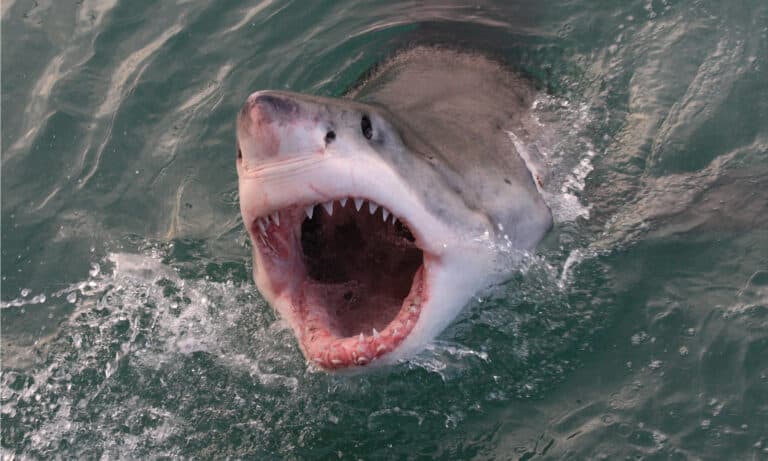
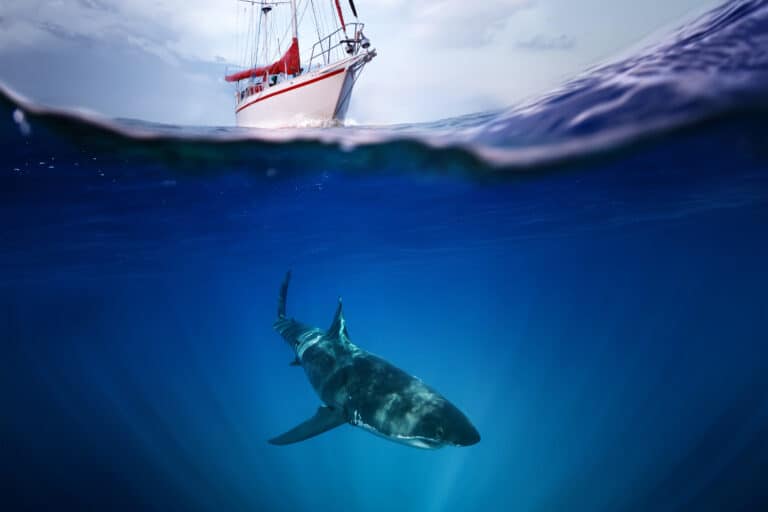
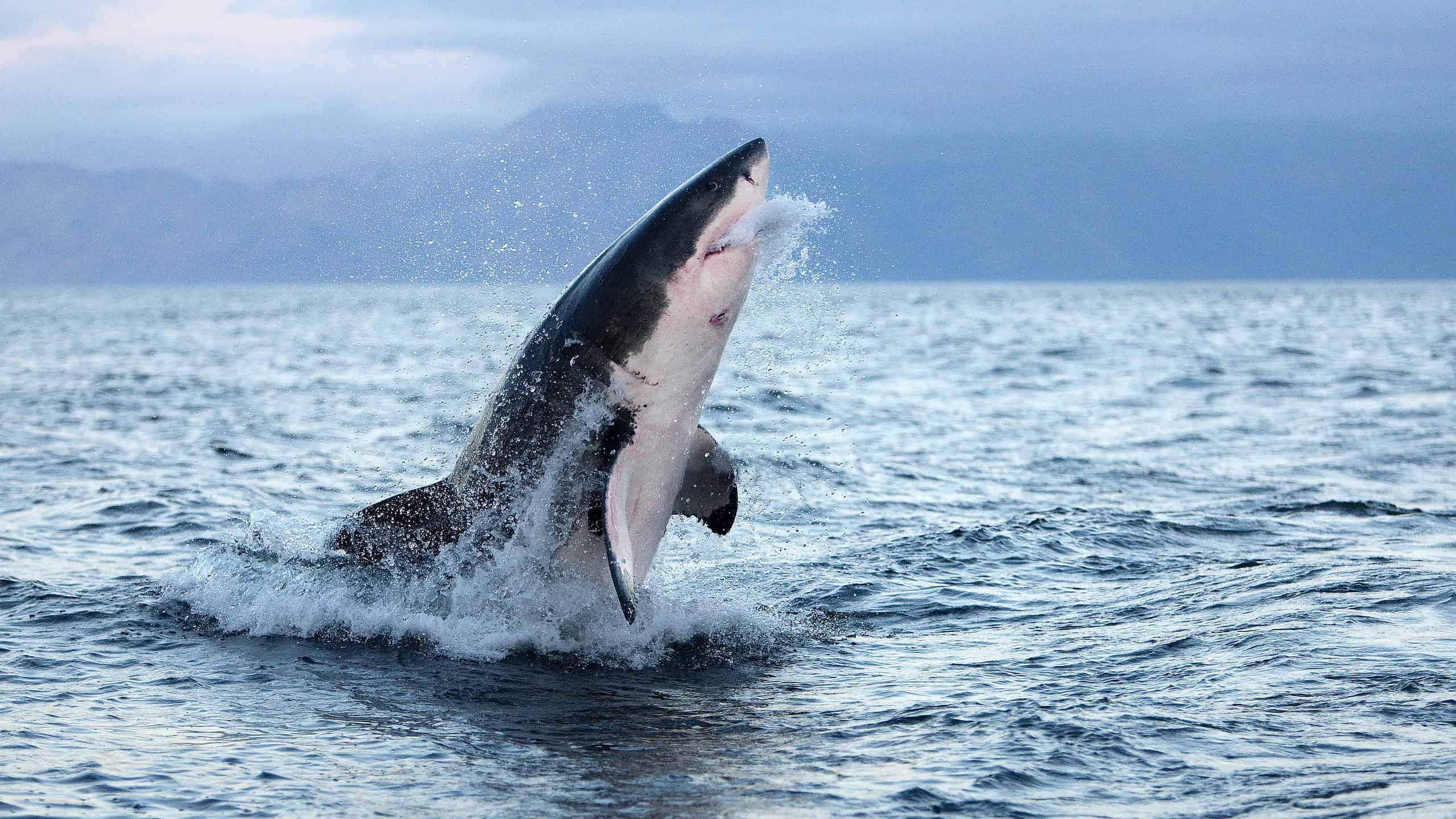
The species often waits in deeper, darker water before accelerating straight up toward a target at the surface.
©iStock.com/ShaneMyersPhoto
Hitting from directly below is how a white shark hunts. When it goes after a seal or a sea lion, it starts deep and shoots straight up toward the surface at more than 25 mph, sometimes leaving the water entirely with the animal in its jaws. Great whites can also weigh over two tons. Put that much shark behind that much speed and the impact alone can stun a seal before the teeth do anything. That same upward strike lifted Canigiula and his board two feet into the air.
- LC Least Concern
- NT Near Threatened
- Vulnerable VU
- EN Endangered
- CR Critically Endangered
- EW Extinct in the Wild
- EX Extinct
Why the Board
Look up from underwater and a person lying on a surfboard is a dark shape against bright sky. A team of researchers tested how much that shape resembles a seal in 2021. They filmed seals and sea lions, people swimming and people paddling boards, all from below, then adjusted the footage to match what a white shark’s eye would pick up. The movements weren’t meaningfully different. And the shape of a paddled board was closer to a seal with its flippers spread than a seal with its flippers spread is to the same seal with its flippers tucked in.
When a shark can’t tell what something is by looking, it has another way to check: its mouth. That’s also likely why Canigiula came out unhurt. Great whites often take a single bite of something unfamiliar, then let go, especially when it turns out to be a person. They do the same with rafts and surfboards.
Attack, or Incident
California’s wildlife agency avoids the word attack and asks people to say “incident”, because most scientists don’t believe the shark means anything by it. Some researchers go further. They point out that most bites on surfers cause only minor or moderate injuries, far too little to disable a seal, and read them as a shark exploring its surroundings rather than hunting.
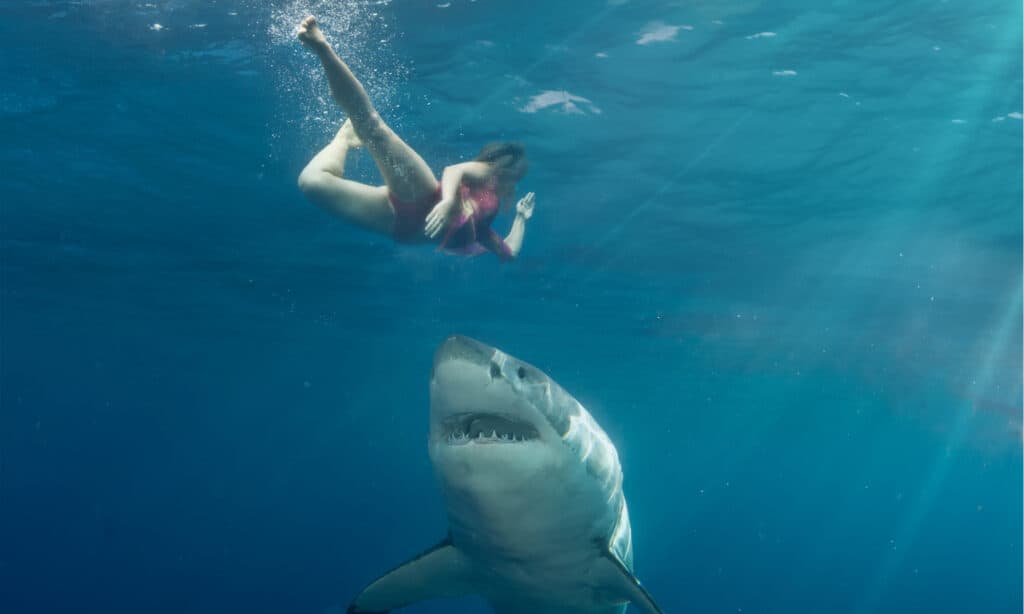
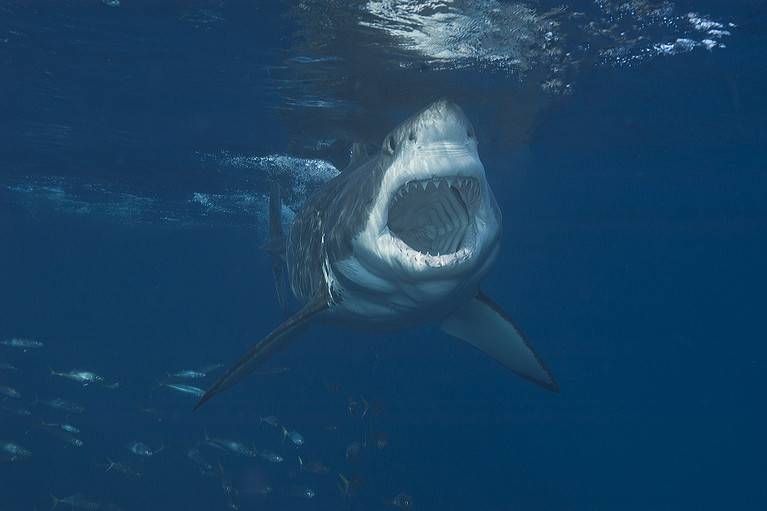
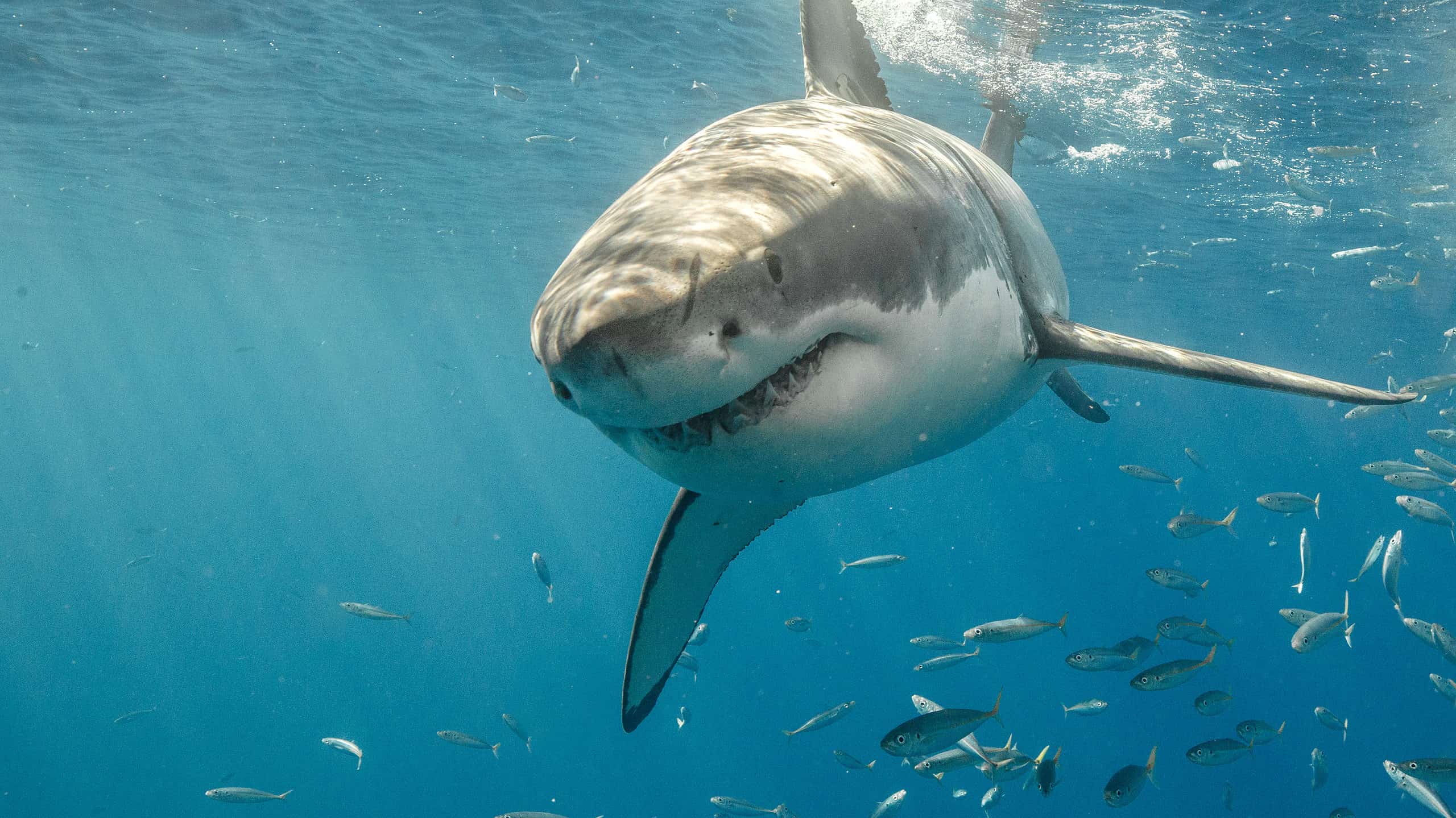
Great white sharks typically take a single testing bite of an unfamiliar object before losing interest and swimming off.
©Willyam Bradberry/Shutterstock.com
Sunday’s encounter doesn’t fit that argument neatly. It had the marks of a hunting strike: speed, surprise, a hit from straight below, a body thrown out of the water. It still ended the same way those gentler bites do. The shark let go of the board, and Canigiula paddled in on what was left of it.