
Quick Take
- Running from a turkey may be the worst move you can make, and the reason says a lot about how these birds think.
- A state wiped out its wild turkeys for over a century, then pulled off a comeback that now causes problems on suburban streets.
- One innocent habit in your backyard can turn a wild bird into a neighborhood bully, and officials say it can end badly for the bird.
- Turkeys run on a strict social ladder, and they may see you as a rung to climb. The article explains when it gets worst.
A woman on Old Farm Road in Newton, Massachusetts, had a flock of wild turkeys behind her that wouldn’t leave. Bystander video aired by Boston 25 News on Nov. 22 shows the birds trailing her as she tries to get away, until a group of strangers steps in.
The audio, posted by WKYC on Nov. 23, carries the bystanders’ voices. “Yeah, they’re gobbling at her,” one says. People shout “Go away,” someone warns, “He’s gonna bite you,” and another voice says, “They won’t leave her.”
“Oh, there’s another one coming. Oh no,” a voice says, followed by “Get in the car.” Once inside, the woman is heard saying, “Jeremy, I’m in a stranger’s car.” The turkeys didn’t budge until the driver stepped in, Boston 25 News said in its video report. The WKYC audio ends with a voice saying “He’s chasing them.”
One bystander in the WKYC video asked, “Were you feeding them?” MassWildlife’s turkey conflict page says fed turkeys stop roaming for natural food, settle into small neighborhood areas and lose their fear of people. Turkeys that repeatedly challenge or attack people “may ultimately have to be lethally removed.”
From 37 birds to an estimated 30,000 to 35,000
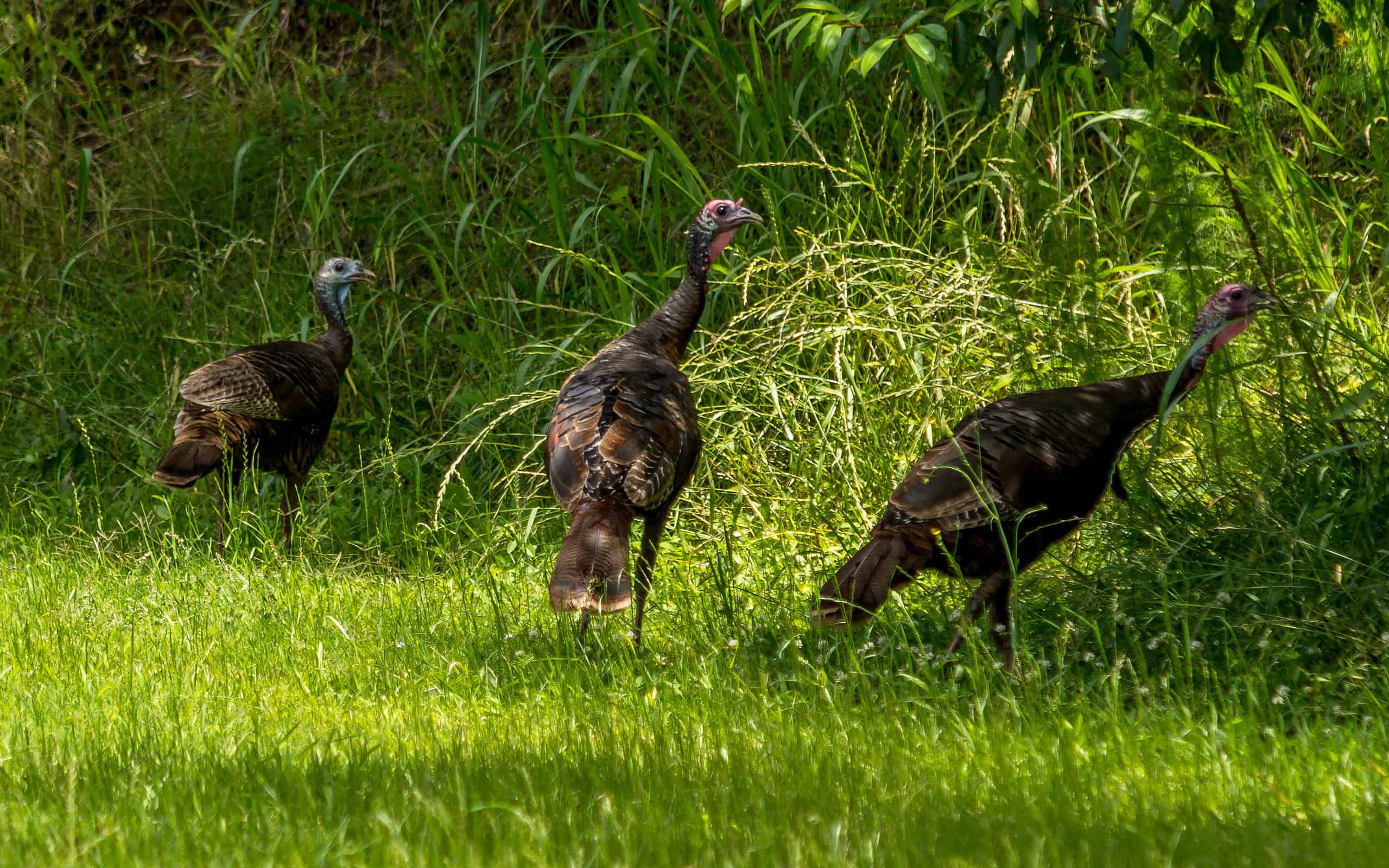
Wild turkeys were once widespread in Massachusetts, according to MassWildlife’s turkey profile. Habitat loss wiped them out, and the last known native bird was killed in 1851.
The state went more than 120 years without them. The National Wild Turkey Federation (NWTF) says in its August 2026 state-by-state history that MassWildlife released 37 wild-trapped birds from New York in 1972 and 1973.
They went into the Berkshires, and by fall 1978 the flock was about 1,000, according to MassWildlife. More birds moved in from adjacent states, and turkeys soon ranged through most of Massachusetts west of the Connecticut River.
From 1979 to 1996, 561 Berkshire County turkeys were moved to 26 sites in 10 other counties, according to the NWTF. Wild turkeys are now found everywhere in the state except Nantucket.
In 1991, 19 years after the first release, Massachusetts named the wild turkey its official game bird. MassWildlife now estimates the population at 30,000 to 35,000 birds.
A flock ranks everyone, including people
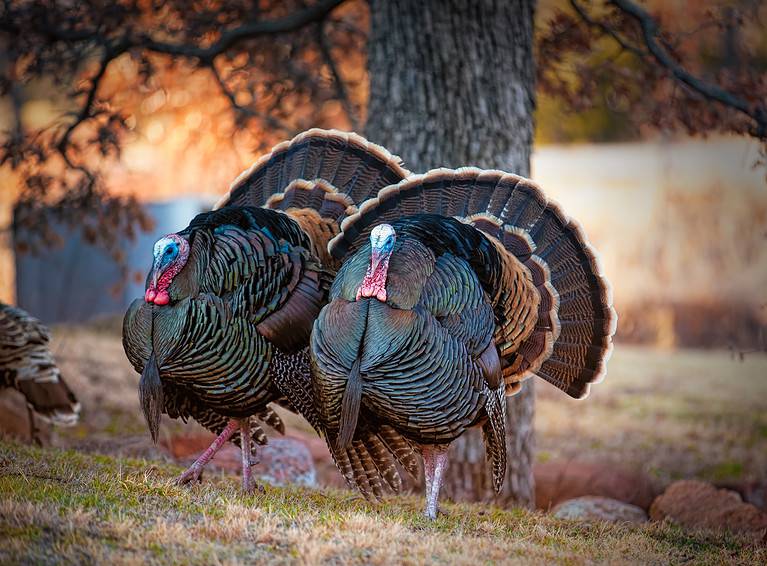
Wild turkeys live by a pecking order, MassWildlife says, with each bird dominant over those of lower status. They may try to dominate people they view as subordinates. A tom weighs about 16 to 25 pounds and a hen about 9 to 12.
Turkeys learn from each other, often by imitation, and they remember the layout of their home ranges and where the food is. In suburbs and cities, they rely heavily on seed in and around bird feeders and can become quite habituated to specific spots.
Birds that grow used to people and to foods like bird seed are likely to lose their fear and try to dominate people, the agency’s conflict page says. Once that behavior sets in, it’s very difficult to change.
Turkeys treat running as submission
MassWildlife’s advice starts with posture. Stand your ground or move toward the birds, keep them in front of you, and never turn your back or run, because turkeys view that as submissive behavior.
Look bigger by raising your hands above your head, holding your jacket open, or opening and closing an umbrella. Shout or use an air horn, swat a broom, or spray water from a hose. A dog on a leash also deters them.
In Newton, the birds stayed put until a driver stepped in, according to Boston 25 News.
For the neighborhood, the agency says to take down bird feeders and never feed turkeys on purpose.
Gobbling starts in March
Outdoor Life reported in 2021 that restoration had grown the national flock to between 6 and 7 million birds. The population had slipped from its early-2000s high-water mark, the magazine said then, with the steepest declines in the Southeast.
In Massachusetts, gobbling usually starts in March and can last through May, and MassWildlife says turkeys try to dominate people most often during breeding season.