
Quick Take
- Is it play, practice, or payback? Scientists are split on why these orcas target rudders.
- One researcher says the orcas could sink far more boats if they wanted to. Her argument is hard to shake.
- The hotspot has shifted, and a sailor's shortcut can't save them there. Find out what's driving the move.
- One orca in this tiny population carries a dark secret that has triggered a government investigation.
Gage Butler, a sailor from San Diego, was aboard the 43-foot yacht Seika on Aug. 29, 2026, when three or four orcas started ramming its steering near the mouth of the Ría de Pontevedra in Galicia, Euro Weekly News reported. “We lost half of the rudder and they continued to attack for about eight minutes,” Butler said on Instagram. The Seika reached land on its own with nobody hurt.
Orcas have been hitting boats off Spain and Portugal since 2020. On July 23, 2026, they broke the rudder of the yacht Idem about a mile off Estaca de Bares, the northernmost point of mainland Spain, and it sank. The latest damage reported came Aug. 30, when a yacht lost its rudder in the northern Ría de Vigo and was escorted into Baiona.
Watch Good Morning America’s report on YouTube
Are the orcas still breaking rudders?
Yes, as recently as late August, and most of the 2026 damage came off Galicia. Salvamento Marítimo, Spain’s maritime rescue service, said it handled four orca episodes on July 23 alone. The Idem’s crew reported orcas circling their rudderless boat, which sank from a leak after a nearby motorboat rescued both people aboard.
Within days, three orcas rammed the Swedish yacht Vai off Cabo Ortegal, and two more yachts lost rudders off A Coruña on July 25, according to Euro Weekly News. In Portugal, one couple took 20 minutes of blows off Praia do Guincho on July 2, and another lost a rudder off Leixões on Aug. 27.
The Atlantic Orca Working Group, a Spanish-Portuguese research collective, has logged more than 700 interactions since 2020. Researchers trace them to roughly 15 orcas.
How many boats have they sunk?
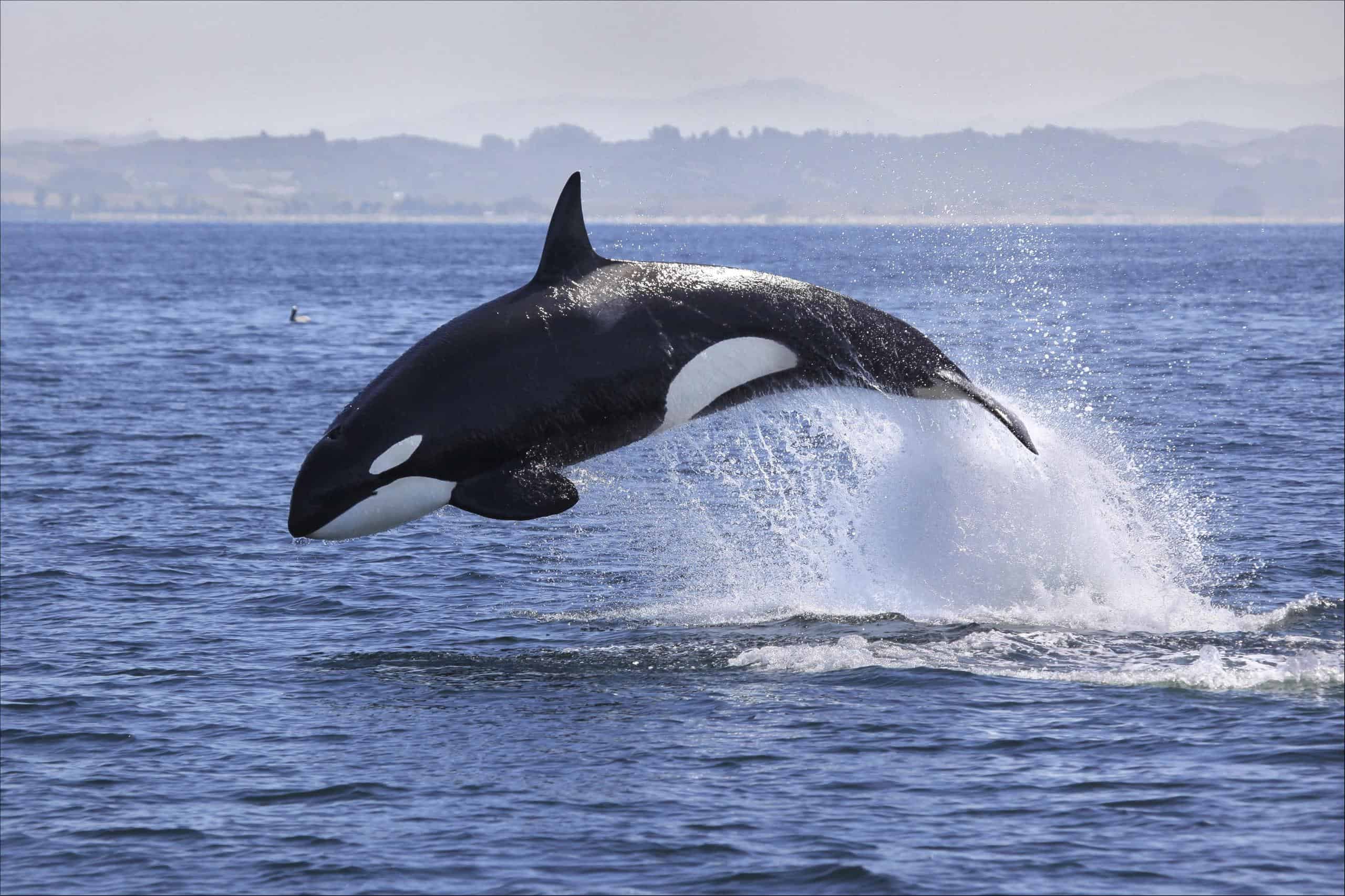
An adult orca breaches. Orcas are the largest members of the dolphin family. ©Tory Kallman/Shutterstock.com
©Tory Kallman/Shutterstock.com
The Idem is at least the eighth, according to groups that track the incidents.
The two before it went down off Portugal within a month of each other in 2025, The Maritime Executive reported. One was the French yacht Ti’fare, whose crew of two parents and three young children boarded a life raft and were picked up by a fishing boat. Nobody has been hurt in any encounter.
Why do they do it?
The leading explanation, Live Science reported, is social learning: young orcas appear to watch adults ram a rudder, then try it themselves. Butler said he was “pretty sure” the smaller ones were “juveniles just playing with the boat.” The orcas pick slow sailing yachts with large rudders, and the goal may be to make the boat spin.
Orcas belong to the dolphin family, and adults can reach 26 feet and 13,200 pounds, according to Reuters. Lamya Essemlali, president of the conservation group Sea Shepherd France, argued in October 2025 that they could sink a yacht every time if that were the goal. “They wouldn’t have sunk four or five like they have, they would have sunk the 600,” she told The Maritime Executive, before the latest sinkings.
Researchers once floated the idea that a female called White Gladis started it after a traumatic run-in with a boat. That turned into an online revenge story most scientists studying the population don’t endorse. Spanish biologist Fernando López Mirones has another theory: young orcas use the rudder as a stand-in for bluefin tuna during hunting practice.
Why have attacks shifted toward northern Spain?
The orcas follow Atlantic bluefin tuna, their main food, up the coast every summer. Spain’s environment ministry (MITECO) said interactions kept falling sharply between the Gulf of Cádiz and the Strait of Gibraltar in summer 2025 while rising slightly off Galicia and the Cantabrian coast.
The Cruising Association, which tracks reports for skippers, found almost no yachts were attacked in shallow water, and more boats now take a shallow route along the south coast. October 2025 was an unusually busy month for attacks off Galicia, where no shallow route exists.
How many Iberian orcas are left?

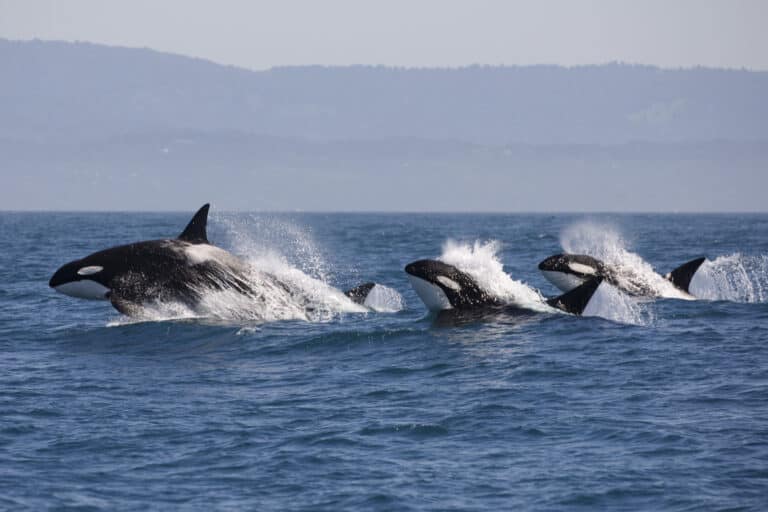
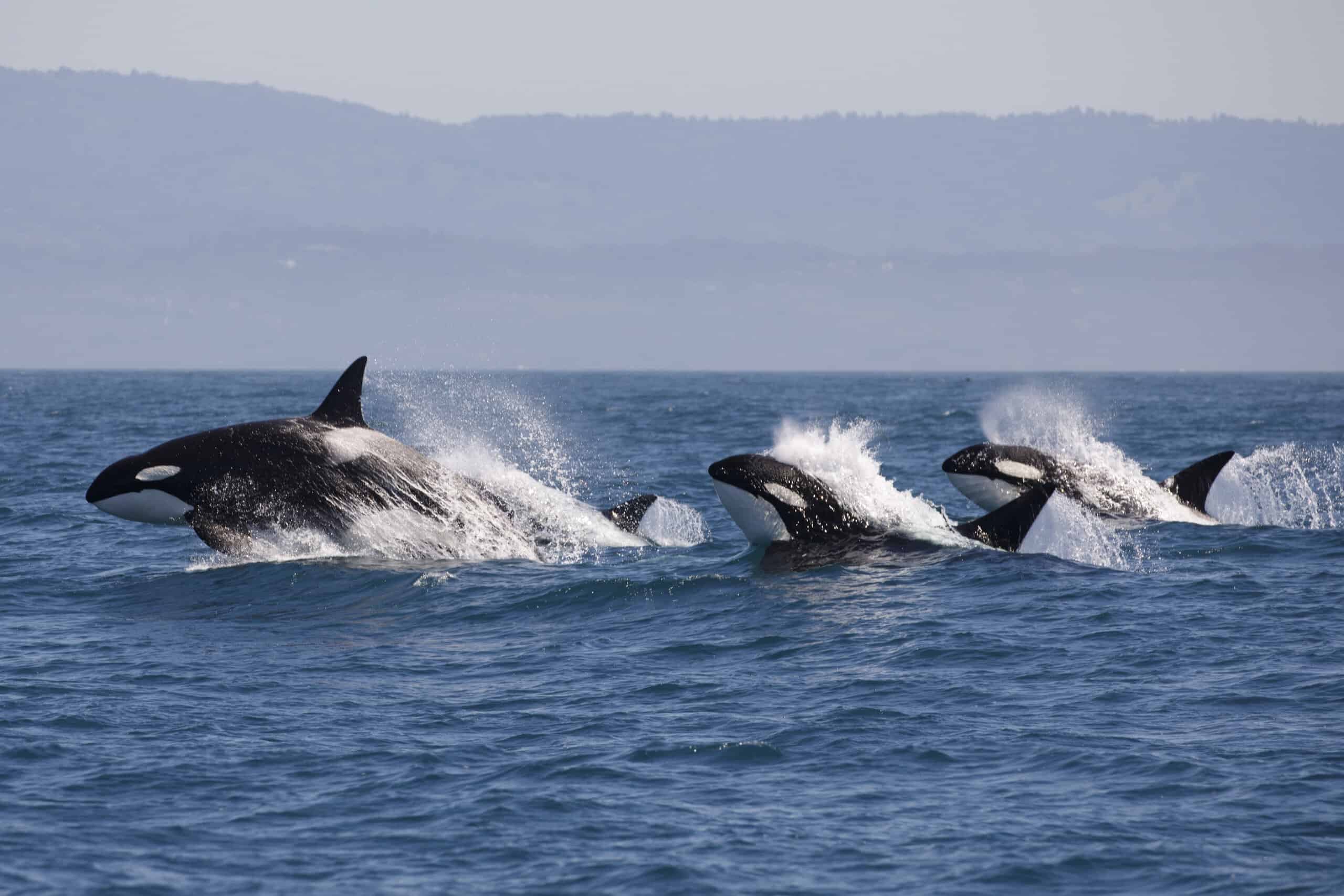
A pod of orcas surfaces together. Orcas live and travel in family groups. ©cullenphotos/iStock.com
©iStock.com/cullenphotos
Between 30 and 40, The Guardian reported. The International Union for Conservation of Nature lists the population as critically endangered.
In August, the oldest of them, a female called Toñi, turned up with pellet wounds in her dorsal fin, MITECO said. ARA reported she is 60, a grandmother to several of the boat-ramming orcas, and has ten pellet impacts.
On Sept. 2, MITECO sent the case to the environmental prosecutor and the Guardia Civil, saying its inquiry points to a Spanish-flagged boat that allegedly fired in Portuguese waters. Her wounds appear to be healing, and she has been seen with her group off Galicia.
What should sailors do?
MITECO’s current advice: keep the boat moving, head for the coast or shallower water, keep people away from the sides, and report the encounter on VHF channel 16. Deterrents that could harm or disturb the orcas are banned.
That differs from older tips about cutting the engine and letting go of the wheel. For 2026 the ministry added a risk map for Galicia and advises avoiding those zones from July to October.