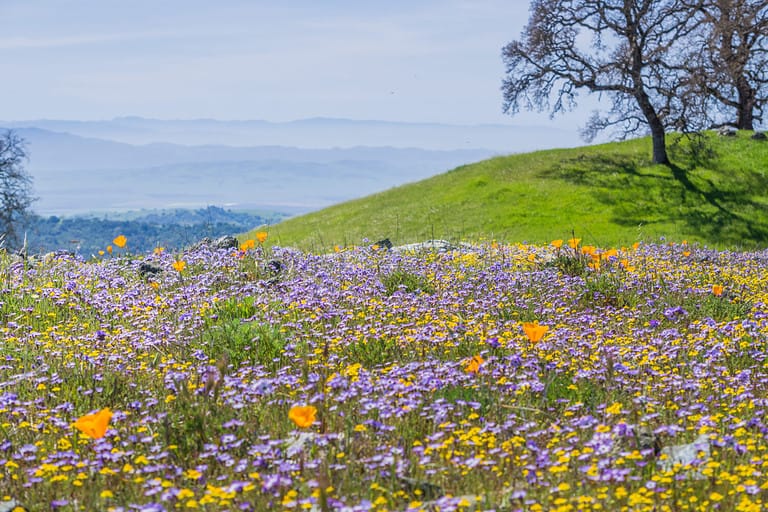

The desert landscapes abound throughout The Silver State. Sagebrush, an aromatic shrub, brings entire deserts to life, demonstrating how flowers can thrive in semi-arid and arid conditions. But what other flowers can you bank on in the state? Discover the best perennial flowers for Nevada!
What Are Perennial Flowers?
Perennial flowers are those that are hardy, able to tolerate cold climates, returning to bloom in the spring. Some rebloom and others bloom for long periods, but they typically blossom during one season of the year. Their lifespans vary though some only live between three and five years. You can enjoy them again and again — though not for too long. Perennials vary in terms of maintenance.
While some require careful attention, others are quite hardy, thriving despite poor soil conditions or poor care. These flowers make for solid long-term investments since they keep on giving. In Nevada, where it’s dry, perennials do well because once they are established, they don’t need nearly as much water as other types of demanding plants.
The Best Perennial Flowers for Nevada: 10 Flowers You Can Bank on
1. Coneflower
Scientific name: Echinacea
USDA Zones: 3 – 9
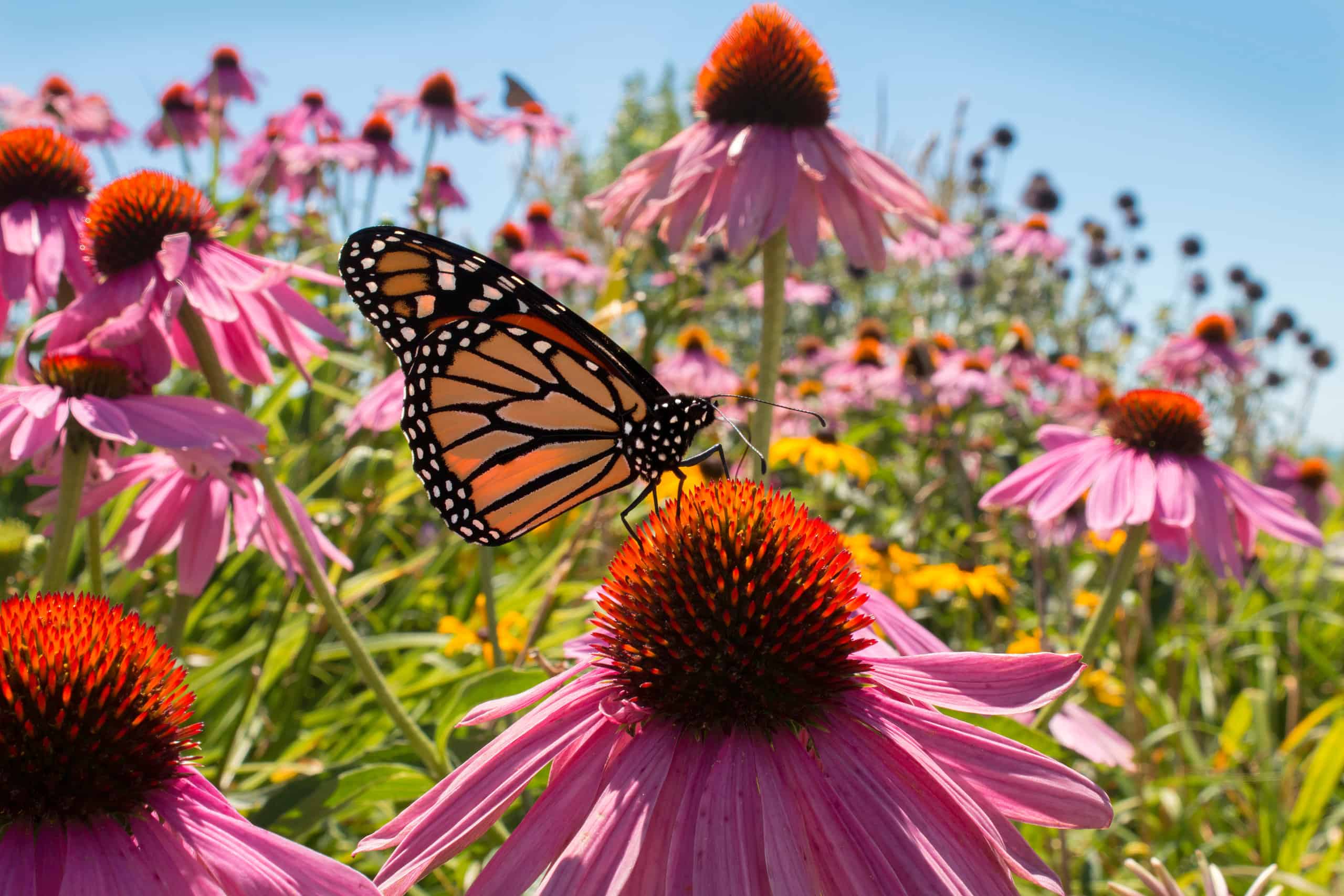
Coneflowers are some of the best perennial flowers for Nevada. They’re both breathtaking and low maintenance. They’re a tough variety that produces big, dazzling flowers. The most common color for coneflowers is purple but you can also select from a range of different colors including green, yellow, and pink. These flowers are quite showy and do best in sunny areas though they’re hardy, so they still do well if it’s partly shady also. These flowers aren’t overly fussy when it comes to soil, but you should keep it moist.
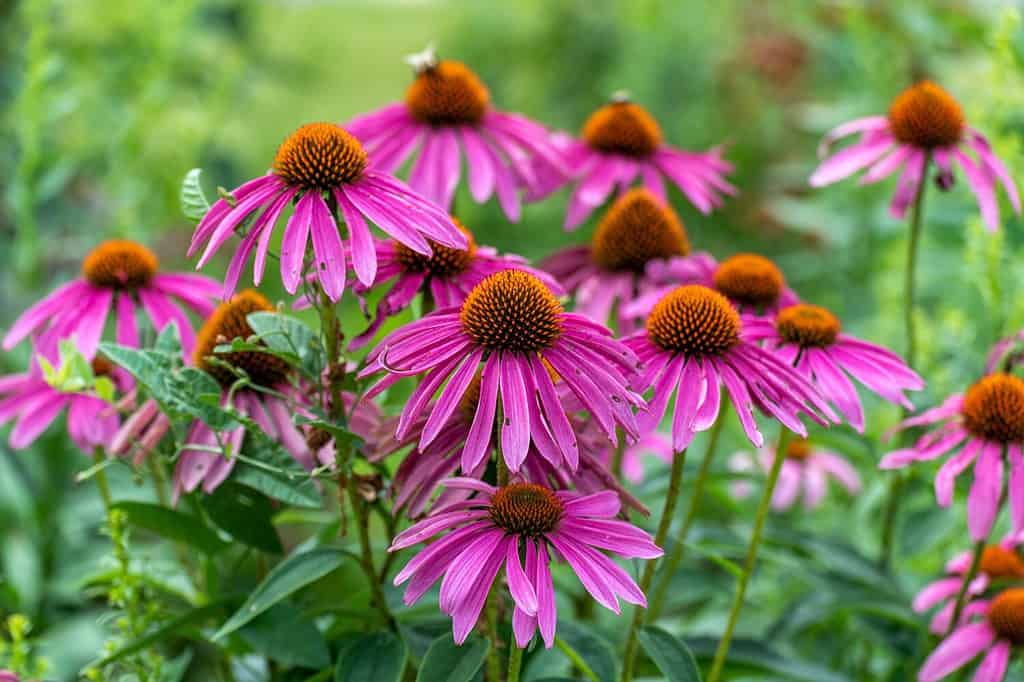
Coneflowers are low maintenance flowers you can grow in Nevada.
©Barbara Smits/Shutterstock.com
2. Blanket Flower
Scientific name: Gaillardia
USDA Zones: 3 – 10
Blanket flowers have bright orange centers with bi-colored petals of orange and yellow. They appear much like daisies and do best with evenly moist soil. But even if it gets dry, these flowers are tough. Grow them in a sunny area to watch them flourish. They can tolerate a little bit of shade, however. You can expect these to grow up to two or three feet tall.
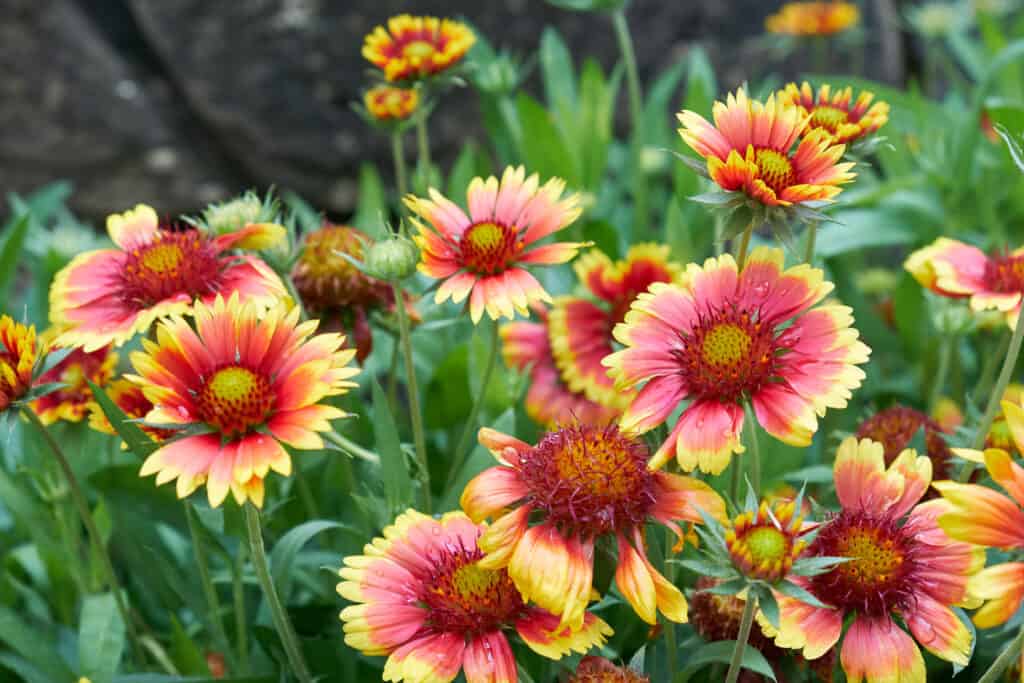
Blanket flowers resemble daisies.
©iStock.com/Iseo Yang
3. Daylily
Scientific name: Hemerocallis
USDA Zones: 4 – 9
Daylilies have a trumpet shape, and they add a pop of color to your garden along with their beautifully contrasting foliage. You can select them in a variety of colors, whether you want something warmer like red and pink, or something brighter like yellow and orange. They stay in bloom for only a couple of weeks, but you can keep your garden flourishing by selecting different varieties that bloom at different times during the season. You can also select between dwarf plants or the kinds that grow up to four feet tall. The soil should be well drained and kept evenly moist. These flowers thrive in full sun but can also tolerate partial shade.
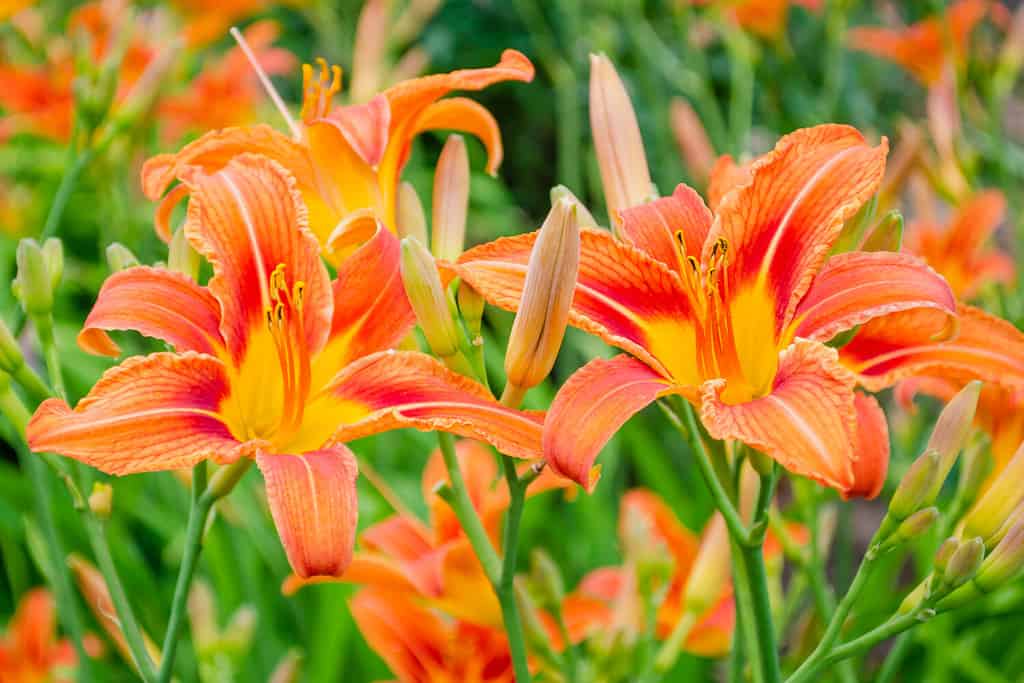
Daylilies are trumpet-shaped.
©Oksana Akhtanina/Shutterstock.com
4. Shasta Daisy
Scientific name: Leucanthemum × superbum
USDA Zones: 4 – 9
Shasta daisies are another big and showy flower that has a bright yellow center and white petals. These are great for both brightening and lighting up your flower bed. These thrive when you place them in full sun and that’s where they look best as well. The soil should drain well and remain evenly moist.
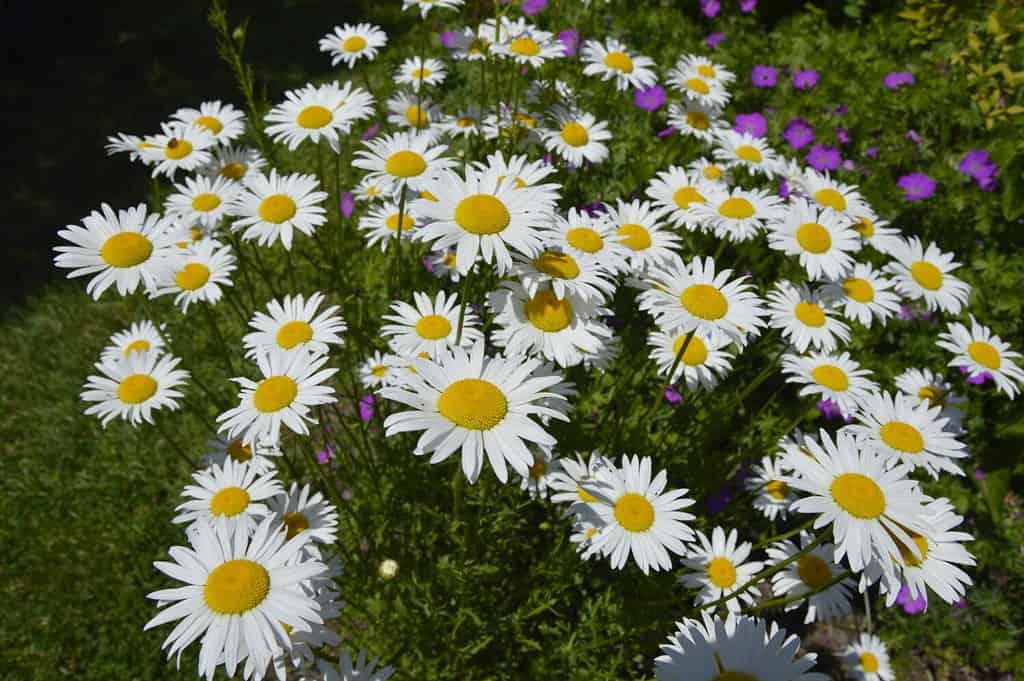
Shasta daisies are simple yet showy flowers.
©Heeji Choi/Shutterstock.com
5. Yarrow
Scientific name: Achillea millefolium
USDA Zones: 3 – 9
Yarrow is a perennial plant that grows up to three feet tall with a matching spread. This plant is unique, and its flowers are small and cluster together. You can pick from a variety of colors including yellow, red, gold, pink, rose, and white. Just make sure to select the cultivar you prefer. These flowers thrive both in full sun and in partial shade and so long as your soil drains well, these plants are content.
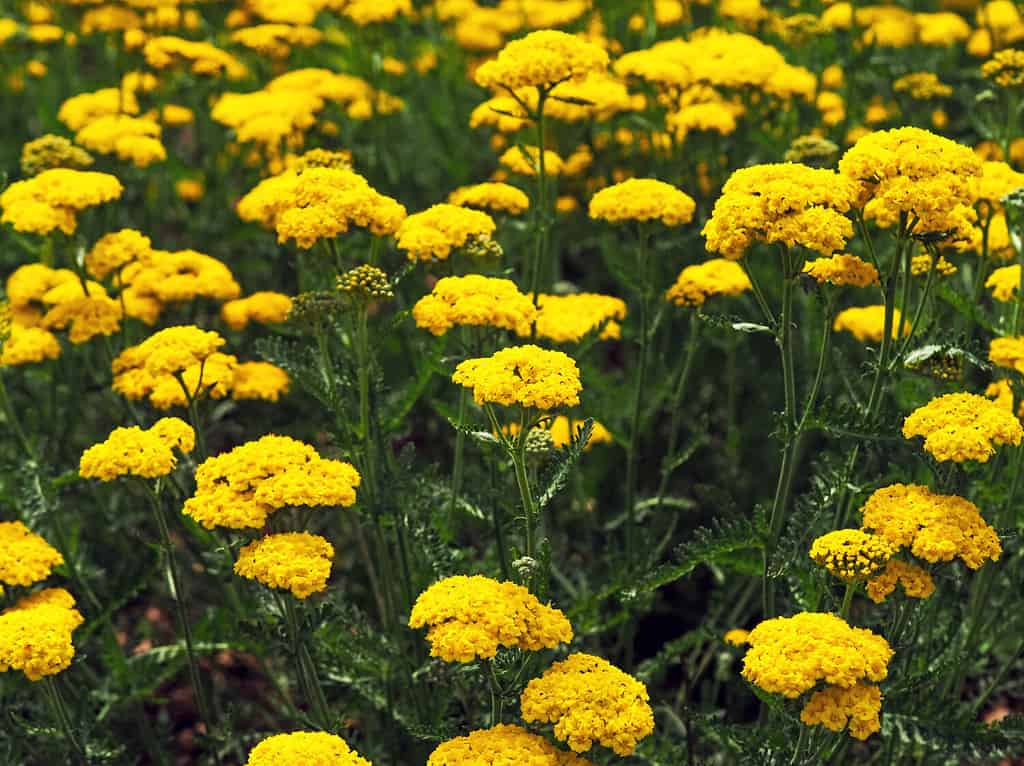
Yarrow is yet another perennial that thrives in Nevada.
©AngieC333/Shutterstock.com
6. Russian Sage
Scientific name: Perovskia atriplicifolia
USDA Zones: 4 – 9
You can distinguish Russian sage by its purply blue blooms, which look a lot like lavender. It has a feathery appearance, delicately arching as it reaches over three to four feet tall. Aside from its unique color, it also offers an herbal scent to passersby. Grow Russian sage in full sun to partial shade so it flourishes. It’s hardy, able to tolerate any kind of soil — just ensure it drains nicely.
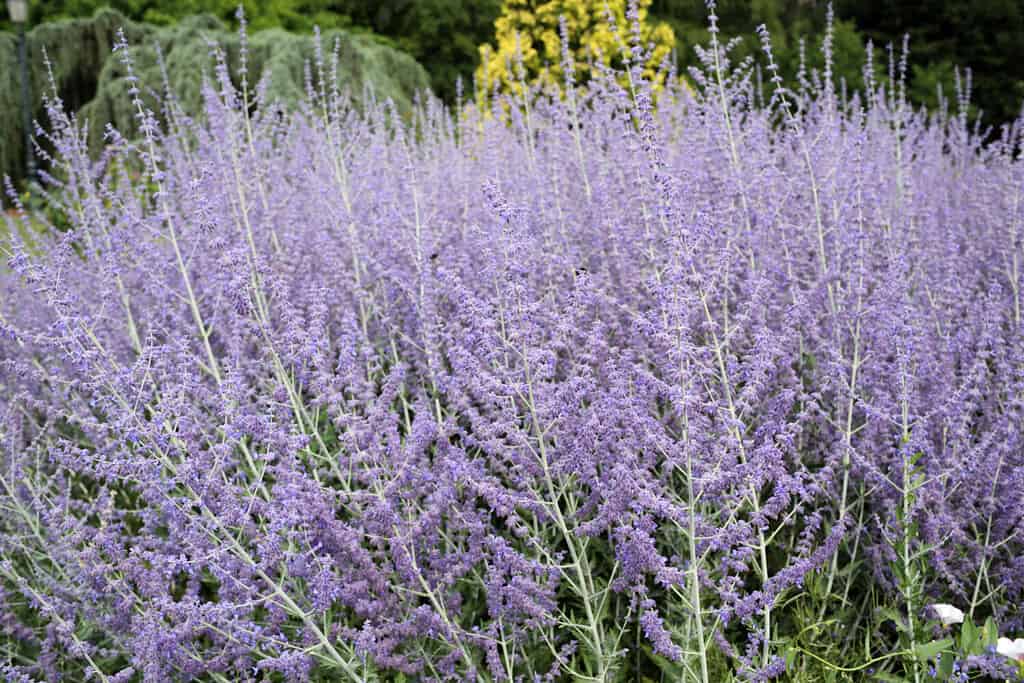
Russian sage resembles lavender.
©loflo69/Shutterstock.com
7. Hollyhocks
Scientific name: Alcea rosea
USDA Zones: 3- 8
Technically, hollyhocks are not a perennial but they’re on this list because they behave as if they were. These flowers are actually a biennial that boosts your garden with a pop of color and some height. The flowers are shaped like bells and sit atop their tall spikes, beautifully showy. Before the flower spikes, the foliage first forms a rosette. You can select from a variety of colors, including purple, rose, and red, or go for a lighter aesthetic and try light pink or white.
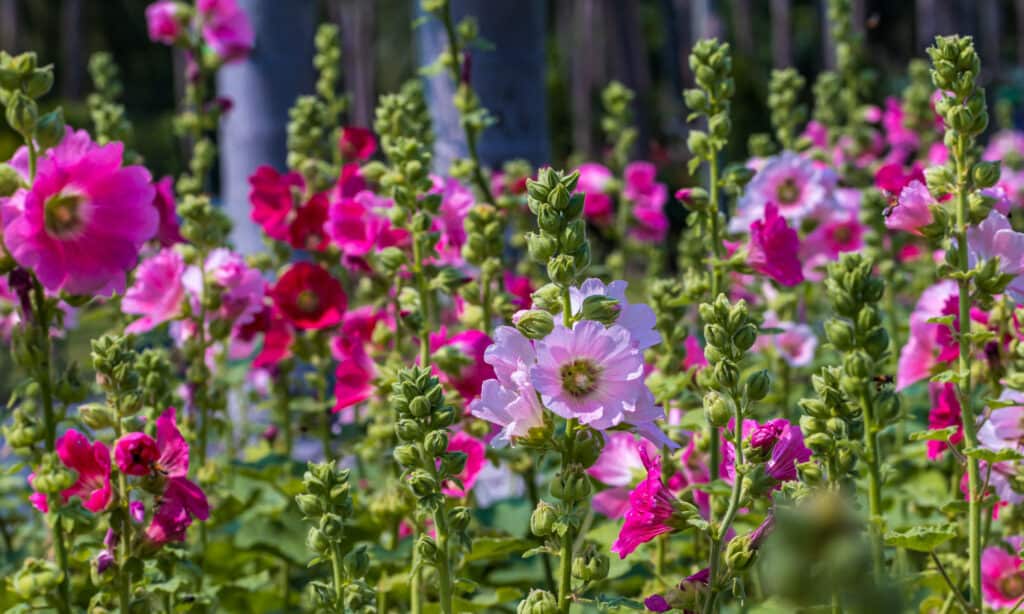
Not technically a perennial, hollyhocks behave much like one.
©Alohapatty/Shutterstock.com
8. Hostas
Scientific name: Hostas spp.
USDA Zones: 3 – 9
Hostas are more appreciated for their foliage, but they do produce flowers as well. The flowers don’t last too long and usually start dying off within a few days. Nevertheless, hostas serve as a wonderful background for any other showy, colorful flower you plant in your garden. The foliage offers a striking and pleasing contrast, thriving in colors that include deep green along with yellow and white edges. Hostas do best in partial shade and can flourish in full sun, but they need a break from direct sunlight to thrive.
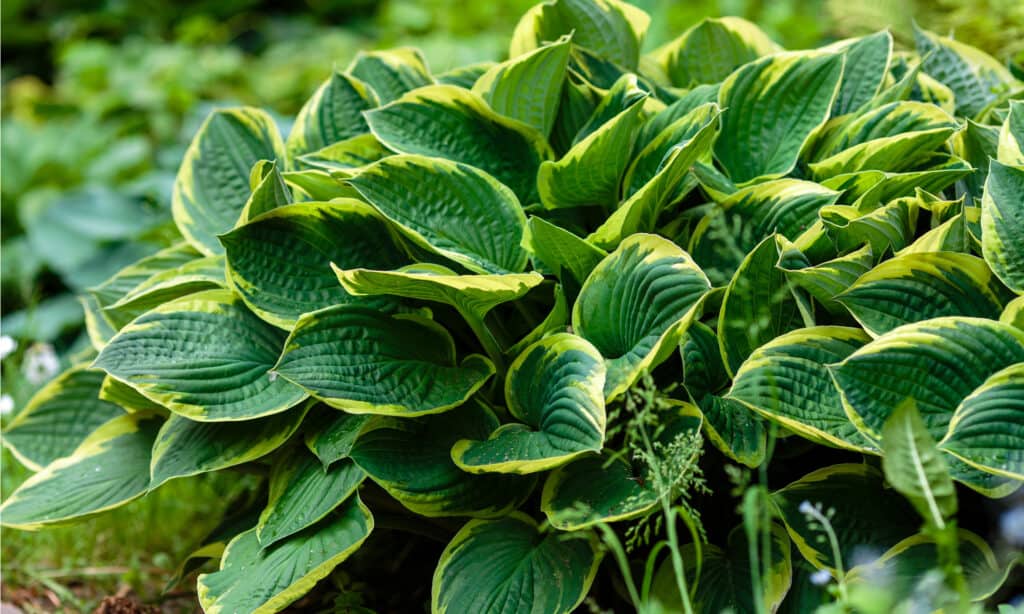
Hostas produce flowers but are most appreciated for their foliage.
©Flower_Garden/Shutterstock.com
9. Beebalm
Scientific name: Monarda didyma
USDA Zones: 4 – 9
Beebalm can handle Nevada’s heat and to get in early on these blooms, plant them during the fall season. Use the seeds! These flowers grow easily—they don’t need a lot of water, sunlight, or time to get going over the winter. They don’t even mind the type of soil you place them in. If you like birds, this is a great flower to have in your garden as it calls them over (including hummingbirds!).
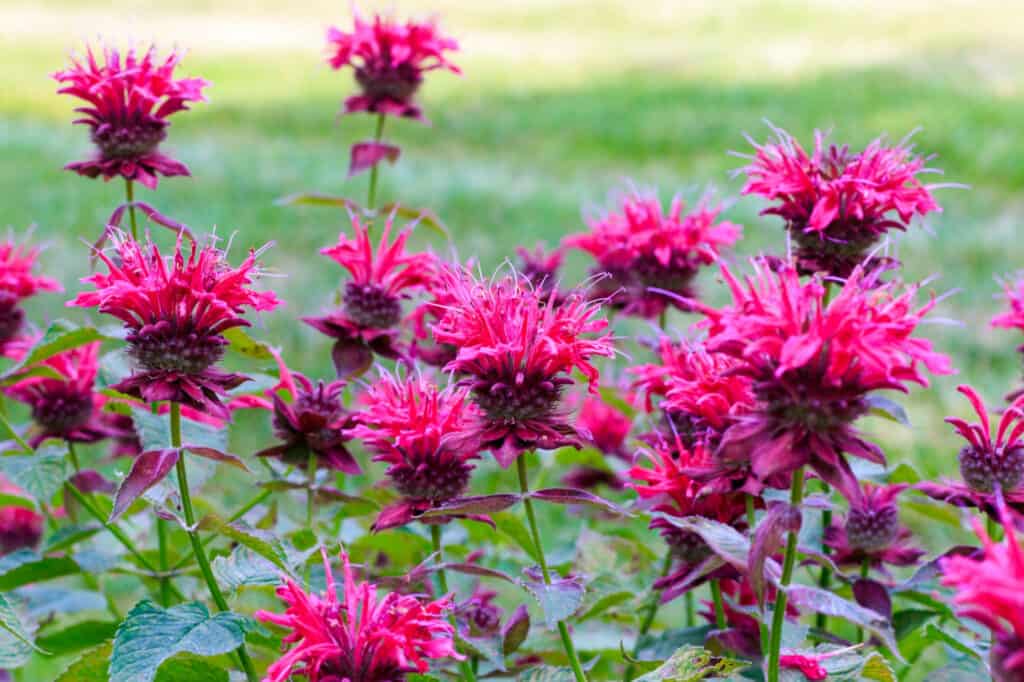
Beebalm thrives even in unpleasant conditions.
©Bryan Pollard/Shutterstock.com
10. Coreopsis
Scientific name: Coreopsis spp.
USDA Zones: 3 – 10
Coreopsis is another daisy-like flower that you can add to your garden in Nevada. Traditional coreopsis is golden yellow, but you can always try something different and select a pink or red variety. You can also select from a shorter plant that only reaches 18 inches or go for a dramatic look with plants that reach up to four feet tall. Some shade is okay for coreopsis, but you really want to aim for full sun. The soil should drain well and should be sandy or loamy.
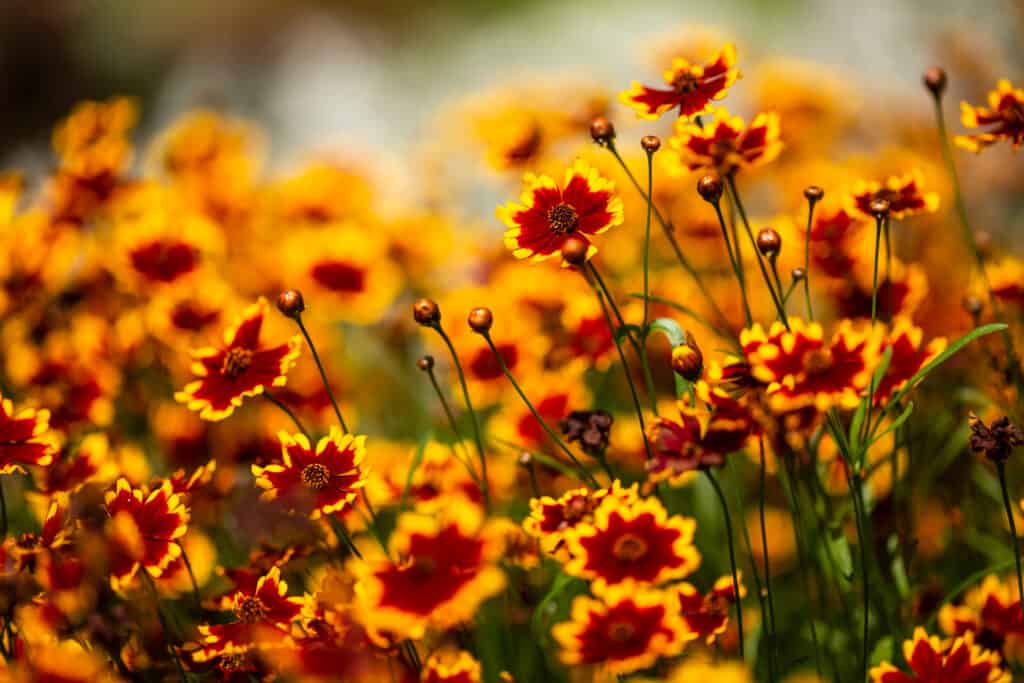
Coreopsis plants are easy to care for.
©RuthG/Shutterstock.com
11. Milkweed
Scientific name: Asclepias
USDA Zones: 4 – 9
Milkweed is the type of plant you stop and marvel at. It blooms beautifully and doesn’t require much in terms of maintenance. You get gorgeous shades of both purple and pink, all while you do the minimum. These flowers flourish even when the soil is poor. You can grow them pretty much anywhere. They grow no matter if it’s excessively hot or bitterly cold and they attract a range of pollinators.
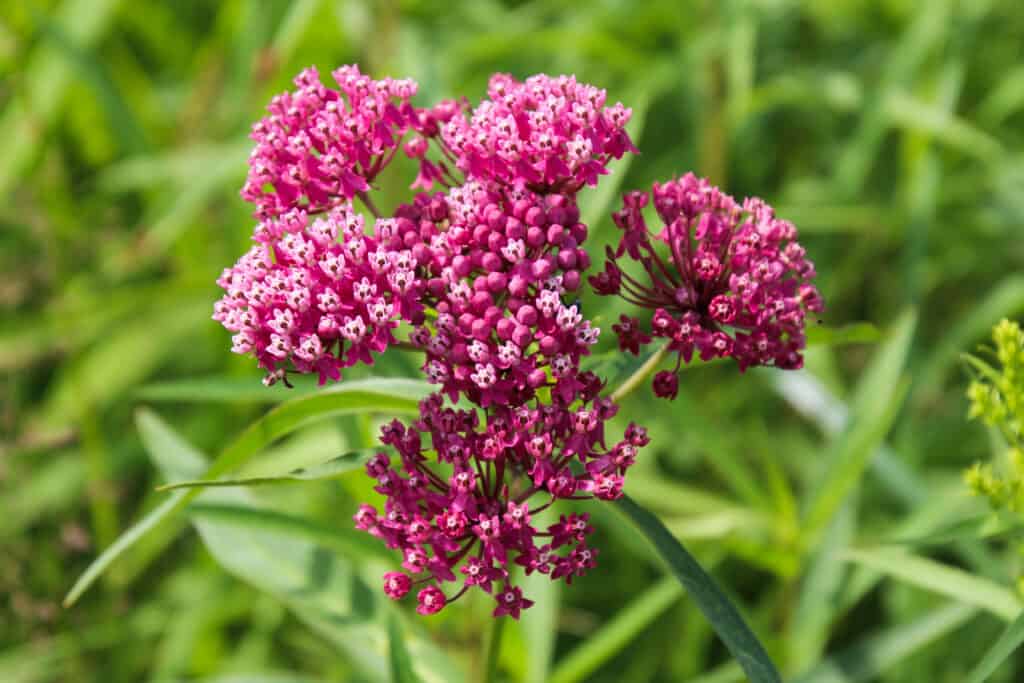
Milkweed can blossom nearly everywhere!
©Stacey Welu/Shutterstock.com
12. Columbine
Scientific name: Aquilegia
USDA Zone: 3 – 9
These vertical-growing flowers are some of the best perennial flowers for Nevada. They’re stunning, and you don’t need a lot of space for them to blossom. Plant them alongside other flowers as a cross-pollinator or spruce up your small garden space with their visual appeal. Partial shade is ideal for these flowers though they also tolerate cooler days and full sun.
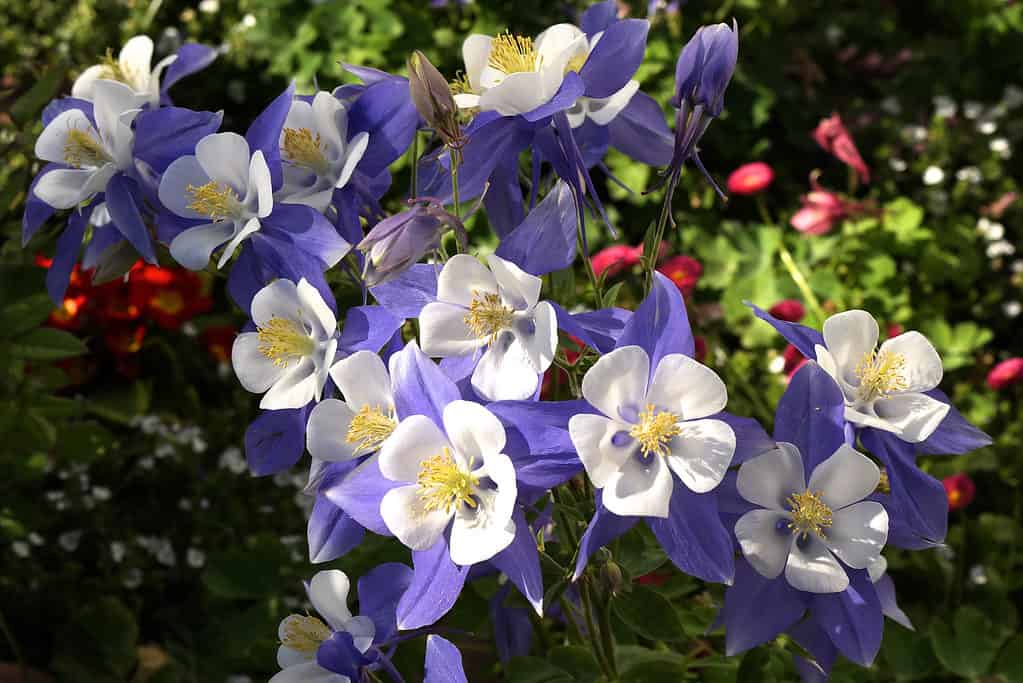
Columbine flowers don’t require a lot of space.
©iStock.com/Linda Jo Heilman