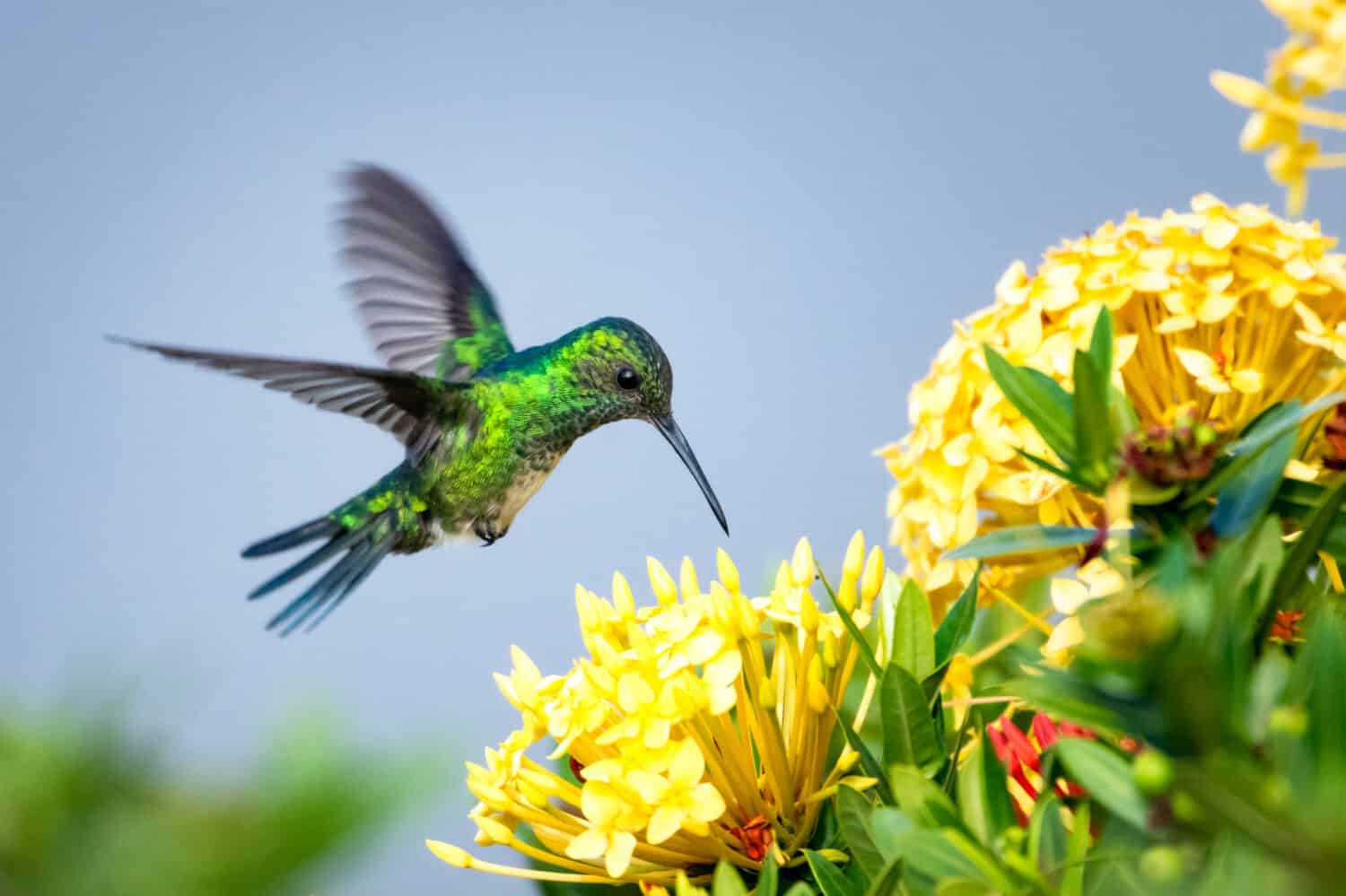

Quick Take
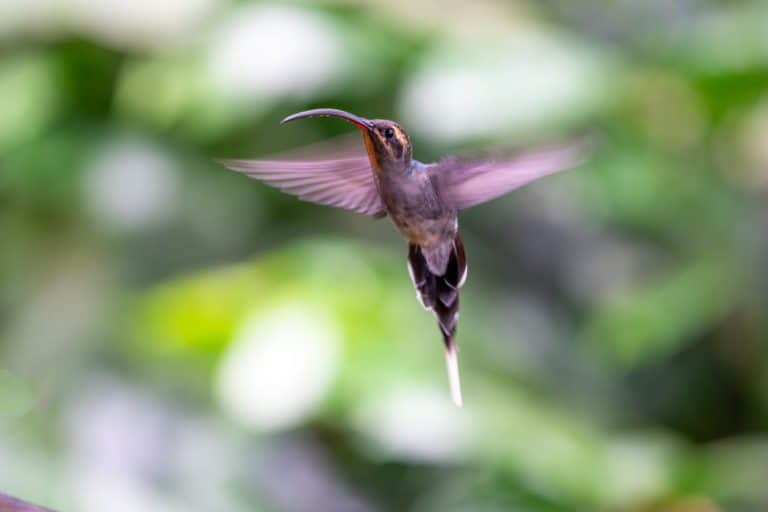
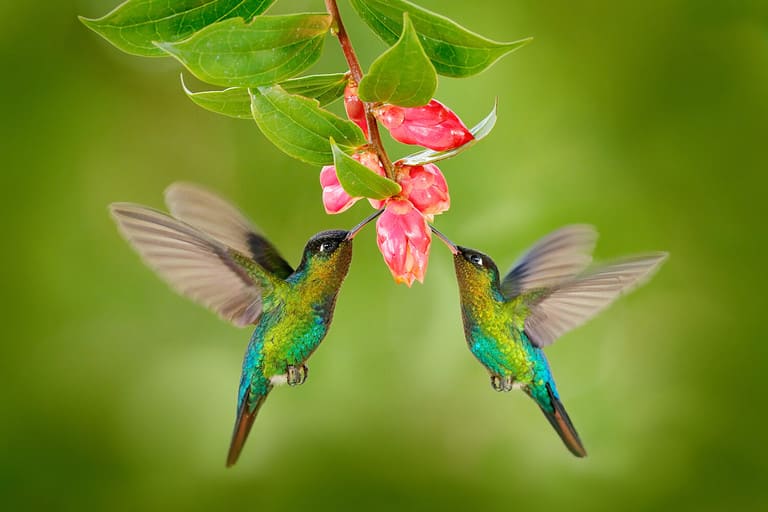
- Hummingbirds must consume up to 50% of their body weight in nectar each day, feeding every 10 to 15 minutes, which makes the act of eating a full-time job.
- The corolla tube on some flowers creates a barrier that restricts nectar access for insects, making these species ideal for hummingbirds to feed upon.
- Prioritizing flower shape over petal color is just one way to make a thriving hummingbird garden.
- Establishing generous clusters of hummingbird-approved plants is necessary to manage territorial guarding during their migration season.
A hummingbird or two visiting your backyard garden consistently is truly magical. If you want more moments with hummingbirds, and you want them reliably, all season long, the single best thing you can do is plant the right flowers. What should you plant to attract hummingbirds to your yard? We’ve interviewed a reputable source to bring you the answers.
According to Bob Mulvihill, a Lead Ornithologist at The National Aviary, hummingbirds and flowers have spent millennia shaping each other. “Hummingbirds of all kinds are uniquely adapted to feed on nectar produced by flowers having a long corolla tube, which is a narrow funnel formed by fused petals,” he explains. “This is because hummingbirds and the plants they pollinate have co-evolved to have a mutualistic relationship that benefits them both.”
What plants have evolved to attract hummingbirds best, and what are these delightful little birds truly seeking from your backyard garden? Here’s how you can build an ideal habitat on your own property, a habitat that keeps hummingbirds returning again and again.
What Are Hummingbirds Seeking from Your Yard?
Before you head to the nursery for a whole new roster of plants and blooms, it’s important to understand hummingbirds. They are constantly burning through energy at an extraordinary rate, consuming roughly half their body weight in nectar every single day and feeding approximately every 10 to 15 minutes, which makes the act of eating a full-time job. They are also constantly managing their territory to protect their best food sources.
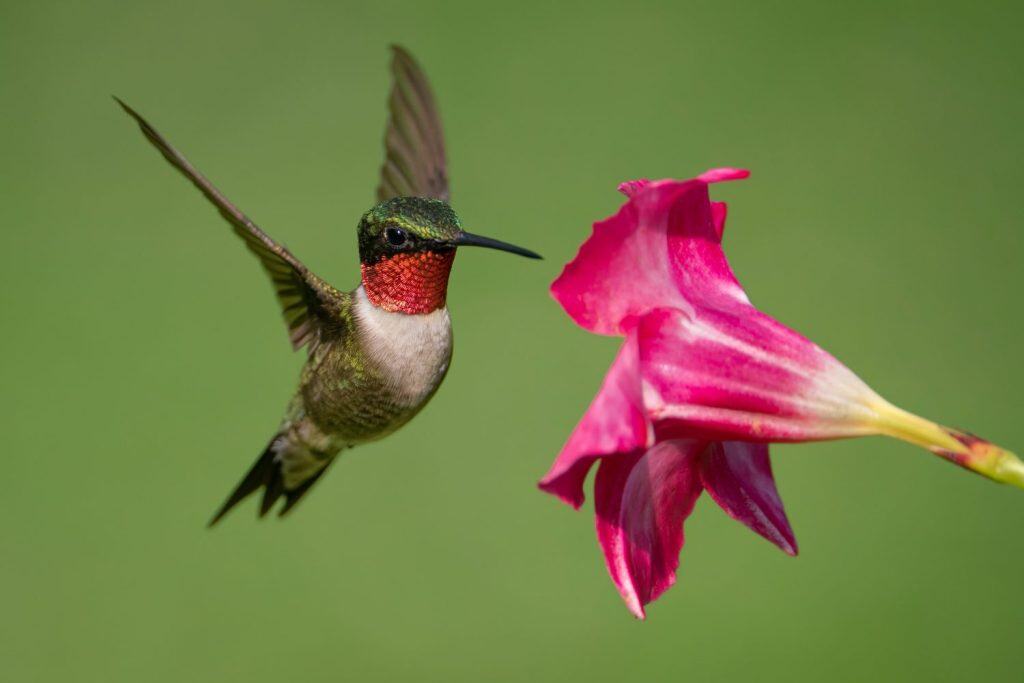
Certain plants are more likely to attract hummingbirds based on their nectar amounts and petal types.
©Matt Cuda/Shutterstock.com
Mulvihill points out that this territorial behavior is worth understanding before you plant anything: “Hummingbirds are one of the few kinds of birds that directly guard food resources, and they will try to claim patches of choice wildflowers as their exclusive territories even during the migration season, just like they do at your feeders all summer long.”
What does this mean from a practical planting perspective? Well, a single dominant bird may actually chase away other hummingbirds if you plant too little. That’s why you need to be sure to plant flowers in generous clusters and spread your plantings across different areas of the yard so that multiple birds have room to establish their own territories.
Color matters too, though perhaps not quite in the way you might think. As Mulvihill tells us, “in ‘selecting’ hummingbirds as their principal pollinators, plants have evolved longer corolla tubes and petals and sepals that are colored mostly with shades of red, pink, and orange.” It also explains why hummingbird-adapted flowers tend not to have convenient perches for insects: they are exclusively designed to be accessed by a creature that can hover.
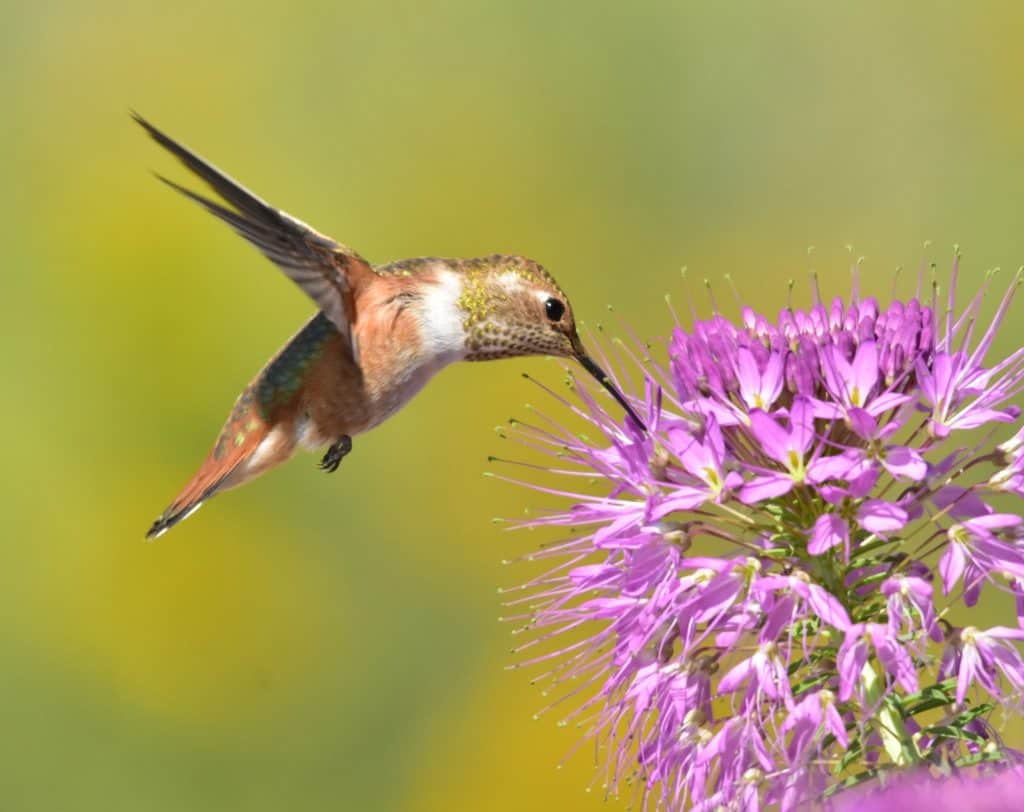
Some hues are closely linked to hummingbirds, including red and orange.
©Facebook – Original
Red and orange are the hues most strongly associated with hummingbird flowers, for exactly the reasons Mulvihill describes. However, hummingbirds will also visit pink, coral, purple, and blue flowers when nectar is plentiful, so do not feel constrained by a singular palette. Flower shape and nectar volume matter much more than color alone. If you understand these basic design principles, choosing the right plants for your garden becomes much more intuitive.
The Best Native Plants for Hummingbirds
Serious hummingbird gardeners should always start with native plants. They have evolved alongside local hummingbird populations, aligning with local bloom timing, and their nectar tends to be more reliably abundant than that of many cultivated hybrids.
Based on your planting Zones and local climate, here are some of the best plants you can choose if you want hummingbirds to find your backyard and return to it again and again.
Cardinal Flower (Lobelia cardinalis, Zones 3–9)
Often considered the gold standard of hummingbird plants, the cardinal flower has tall spikes of brilliant scarlet blooms that appear in midsummer and carry on into fall, which is exactly when hummingbirds need to be fueling up for their migration.
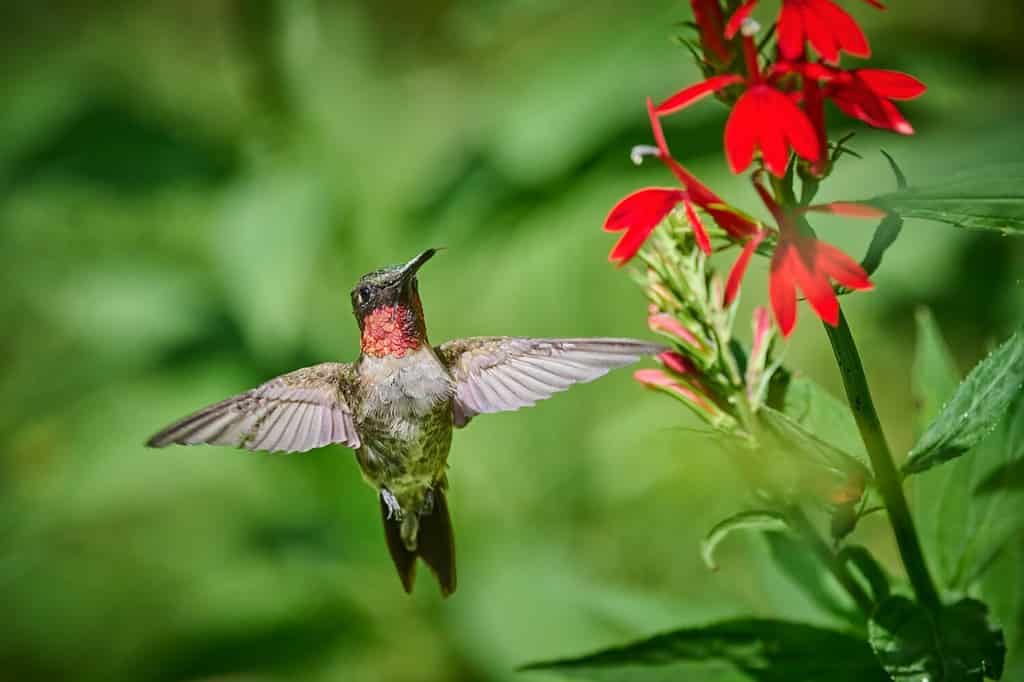
Hummingbirds often seek out cardinal flowers for their bright blooms.
©Patrick Jennings/Shutterstock.com
Mulvihill names it among the classic eastern North American hummingbird flowers, and it thrives in moist, rich soil, tolerating both partial shade and full sun, making it an excellent choice for rain gardens, pond edges, or any low spot in the yard that tends to stay damp. It is also deer-resistant and self-roots from older stems, which means a single plant can multiply over a few decent seasons.
Red Monarda (Monarda didyma, Zones 4–9)
Also known as Bee Balm or Oswego Tea, this is another essential plant for any hummingbird garden. Mulvihill notes that while Cardinal Flower likes sun, Red Monarda “will grow well in shade, but both like to have damp feet.”
Its showy, pom-pom-like flowers in red and fuchsia produce generous nectar and bloom through midsummer, bringing in butterflies and native bees alongside hummingbirds. Keep in mind that Bee Balm is prone to powdery mildew, so give plants at least 18 to 24 inches of spacing and water at the base rather than overhead to reduce dampness.
Eastern Columbine (Aquilegia canadensis, Zones 3–8)

Having a flower that blooms in early spring will help your hummingbird garden have food year-round.
©TamasV/Shutterstock.com
Columbine blooms in spring, which makes it especially valuable, as it provides critical early-season nectar when hummingbirds are returning from their winter range and food sources are still scarce. Its distinctive red and yellow flowers are adaptable, growing best in part to full shade, making it ideal for woodland gardens or shaded borders.
Spotted Jewelweed (Impatiens capensis, Zones 2–11)
A native annual that Mulvihill also recommends for eastern states, Spotted Jewelweed self-seeds prolifically in moist, shaded spots and can blanket a damp corner of the yard in blooms by late summer and fall. It asks very little of you in return, making it the perfect choice for gardeners who aren’t looking for finicky plants.
Indian Paintbrush (Castilleja coccinea, Zones 4–8)
For gardeners in the West, Mulvihill points to Indian Paintbrush as “very attractive to hummingbirds.” This striking wildflower, with distinctive bracts in shades of scarlet and orange, is iconic across western meadows and prairies, deeply embedded in the hummingbird food web of that region. It can be tricky to establish from seed, so sourcing established plants from a native nursery is often your best bet.
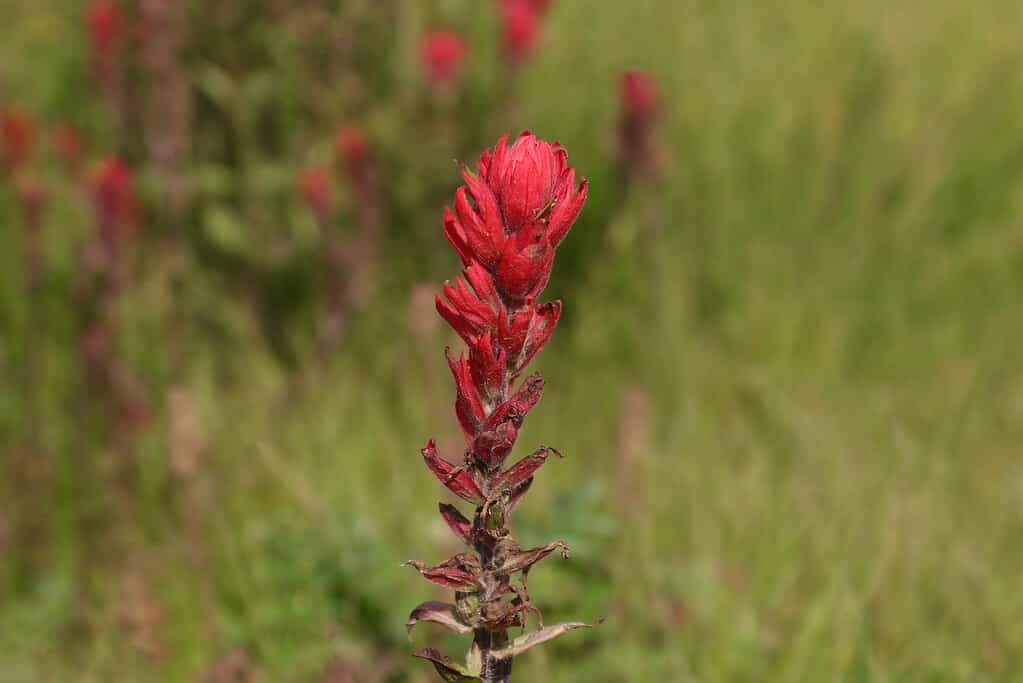
Hummingbirds enjoy this native plant, but make sure you don’t try to establish it from seed.
©Nancy Strohm/iStock via Getty Images
Hummingbirds are one of the few kinds of birds that directly guard food resources, and they will try to claim patches of choice wildflowers as their exclusive territories even during the migration season, just like they do at your feeders all summer long.
Bob Mulvihill, a Lead Ornithologist at The National Aviary
Nursery-Grown Annuals and Perennials Worth Adding
Mulvihill is clear that the appeal of hummingbird plants does not stop at wild species: “Any flower with a long red or orange corolla tube will attract hummingbirds, and that includes annual nursery-grown flowers that you can plant in your gardens and borders.” For home gardeners, that opens up a wide and colorful range of options. Here are some ideal plants to consider.
Salvias
Among the most versatile and widely available choices are salvias. A hummingbird’s long tongue is perfectly adapted to these tubular flowers, and the genus is so diverse that there is a salvia for almost every garden condition and season. Just pay attention to your Zone and blooming times, as hummingbirds need more food some months compared to others.
Coral Honeysuckle (Lonicera sempervirens, Zones 4–9)
This vining plant earns a special mention, as it solves a problem many gardeners have: what to put on a fence or trellis that will also bring wildlife value, as well as an attractive scent. Unlike the invasive Japanese honeysuckle, coral honeysuckle remains only where you plant it, growing vigorously but never too aggressively.
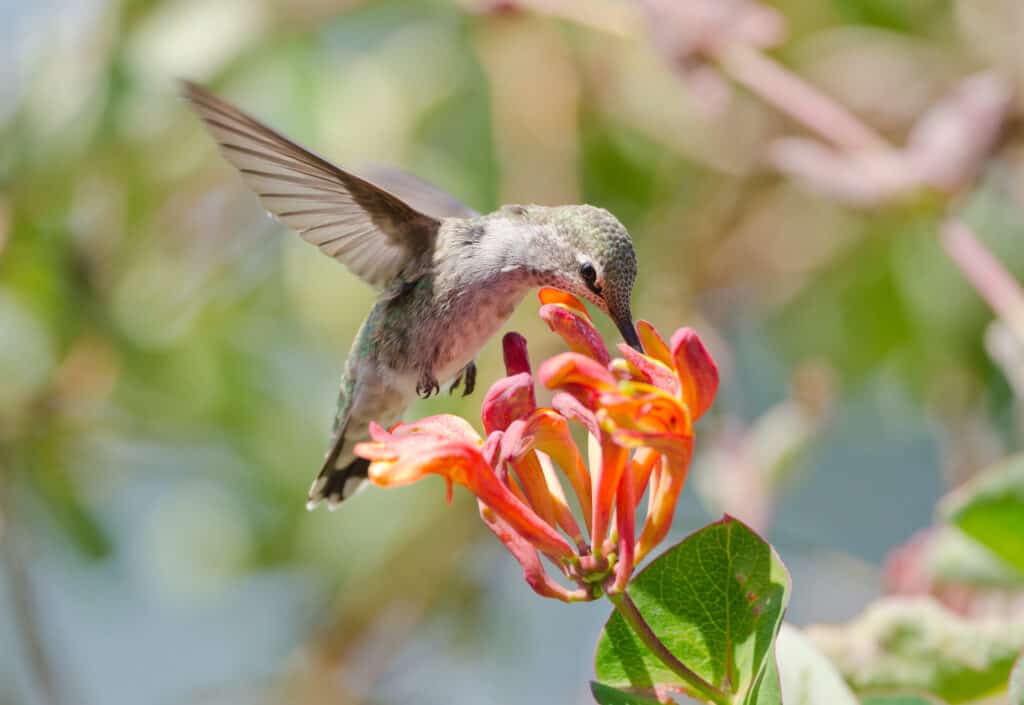
Hummingbirds enjoy the flowers of most honeysuckle plants.
©Birdiegal/Shutterstock.com
Plus, its clusters of narrow, red-orange trumpet flowers bloom from late spring well into fall, and the vine provides dense cover that nesting birds also appreciate. Choose a mostly sunny spot with reasonably moist soil and be sure to provide a structure for the plant to climb.
Crocosmia (Crocosmia spp., Zones 6–9)
A South African native that hummingbirds find irresistible, this plant has blood-red flowers on stems that can reach up to four feet tall and is one of the most reliably powerful hummingbird attractors in a summer garden.
Plant this option in well-drained soil in full sun, at least six to eight hours a day, and divide them every two to three years to prevent overcrowding and maintain strong subsequent blooms. If you’re in a northern Zone, dig the corms up in fall and store them in a cool, dark place over winter to keep them thriving.
What About Other Types of Flowers?
It is worth noting that hummingbirds will visit almost any nectar-producing flower, including popular annuals like zinnias and marigolds. But, as Mulvihill explains, these flowers “do not produce as much nectar and hummingbirds are in competition with bees, butterflies, and other insects for what nectar there is. The nectar in hummingbird-adapted flowers is mostly ‘reserved’ for hummers.”

Hummingbirds are attracted to most flowers, but some offer more nectar than others.
©Melissa Burovac/Shutterstock.com
While this does not mean you should rip out your zinnias, as they are still worth growing and hummingbirds will still use them, the most reliable, concentrated food source for hummingbirds will come from other types of flowers. Prioritize any longer-tubed, redder flowers first and fill in with other flowers if needed.
Mulvihill also tells us about a singular plant that every gardener drawn to hummingbird plants should avoid: “Although it is native and pretty and will attract hummingbirds, avoid the Trumpet Vine (Campsis radicans), because it is highly invasive, easily grows out of control even in a backyard, and it is very difficult to remove once it has developed a deep root system.”
While Trumpet Vine works and will attract hummingbirds, the maintenance it creates is rarely mentioned, and it is also rarely worth the effort. Speaking of, here are some additional tips to help you work smarter, not harder, when creating a hummingbird garden.
Tips for Building a Lifelong Hummingbird Garden

Adding a water source to your hummingbird garden will keep them coming back consistently.
©Rick Scuteri/Shutterstock.com
There are a few things worth mentioning if you’re hoping to build a hummingbird garden that lasts a lifetime. Some of those tips include:
- Succession planting will be your advantage. To keep hummingbirds visiting all season, choose plants that bloom at different times. Thinking through your bloom sequence in conjunction with hummingbird behavior, from first arrival to last departure, will help you fill in any gaps in your garden, giving you year-round viewing opportunities.
- Plant in clusters. Mass plantings are much easier for hummingbirds to spot in flight compared to individual plants scattered around the yard. Aim for groups of at least three to five plants of the same species and place them where there is open airspace around the blooms so birds can easily hover.
- Pay attention to fertilizer. Overfertilizing, especially with high-nitrogen formulas, encourages healthy foliage, but at the expense of flowers. Less fertilized soil generally produces stronger blooms on most hummingbird plants, so keep this in mind.
- Skip the pesticides. Hummingbirds hunt small insects for protein, especially when feeding their young. Pesticides reduce this food source and can harm the birds directly, so be sure to keep your hummingbird garden as organic as possible.
- Add water somewhere. A mist attachment on a garden hose, alongside a shallow birdbath positioned near your plants, gives hummingbirds a place to bathe and drink, which makes the whole space more attractive to them.
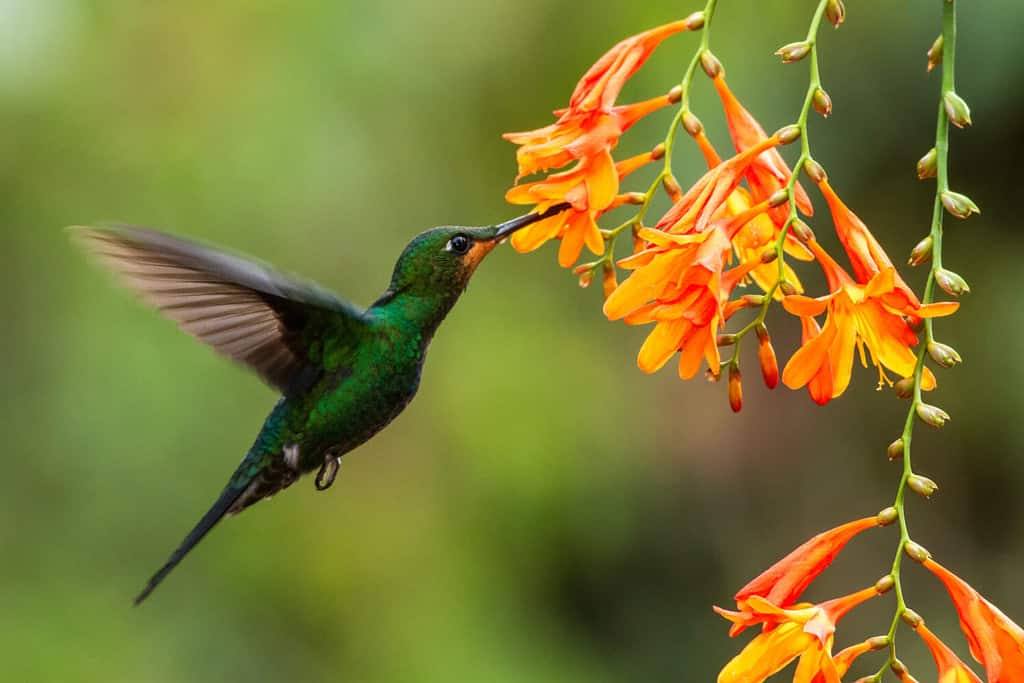
There’s more to a good hummingbird garden than your feeder; planting correctly is also very important.
©Jiri Hrebicek/Shutterstock.com
With these flowers and tips in mind, you’ll give hummingbirds a reason to stop in your garden and return again and again. These plants, more than any feeder, will keeps them in your yard; enjoy their comings and goings this season, and all the seasons to come!