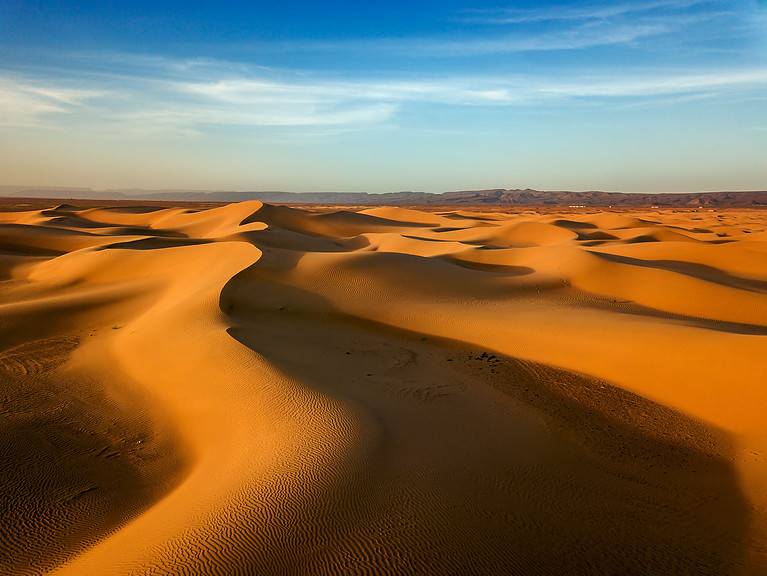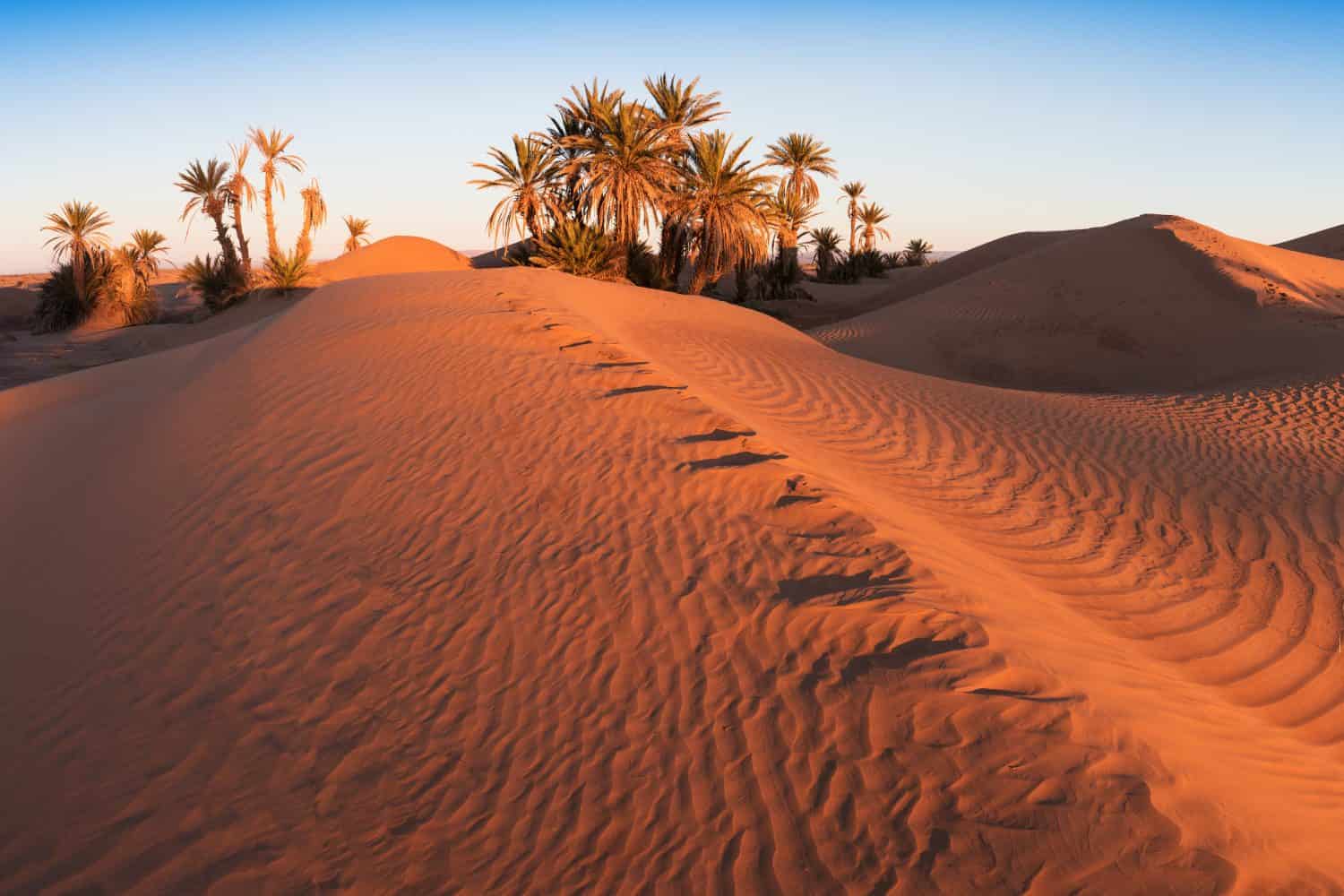

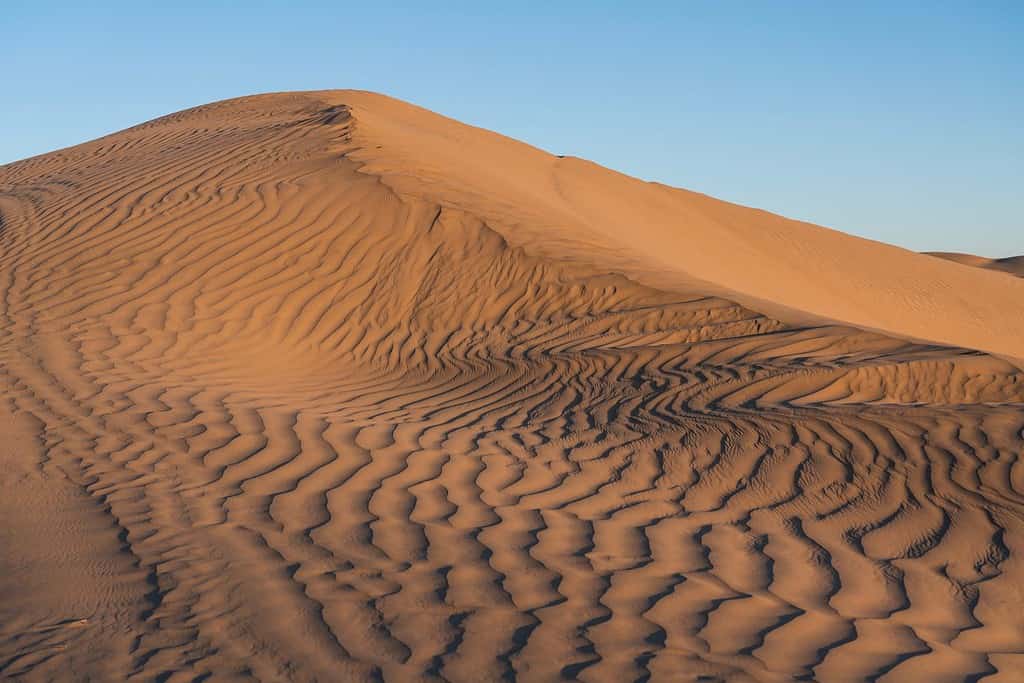
The Sahara Desert is the largest and hottest desert in the world.
©Laci Gibbs/Shutterstock.com
The Sahara Desert, which stretches across North Africa, is the largest desert in the world (excluding the frosty deserts of the Arctic and Antarctica). With temperatures reaching above 120 degrees Fahrenheit during the summer in some areas, the Sahara is also the world’s hottest desert.
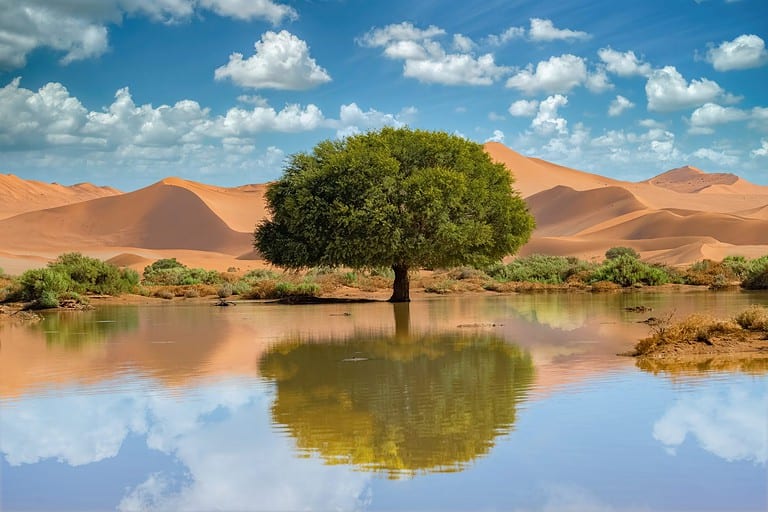
The Sahara Desert gets a dismal three inches or less of rainfall per year. This makes it hard to believe that any large source of water in the desert is nothing short of a mirage. But more than 5,000 years ago, a full river did flow here.
The Discovery of the Tamanrasset River
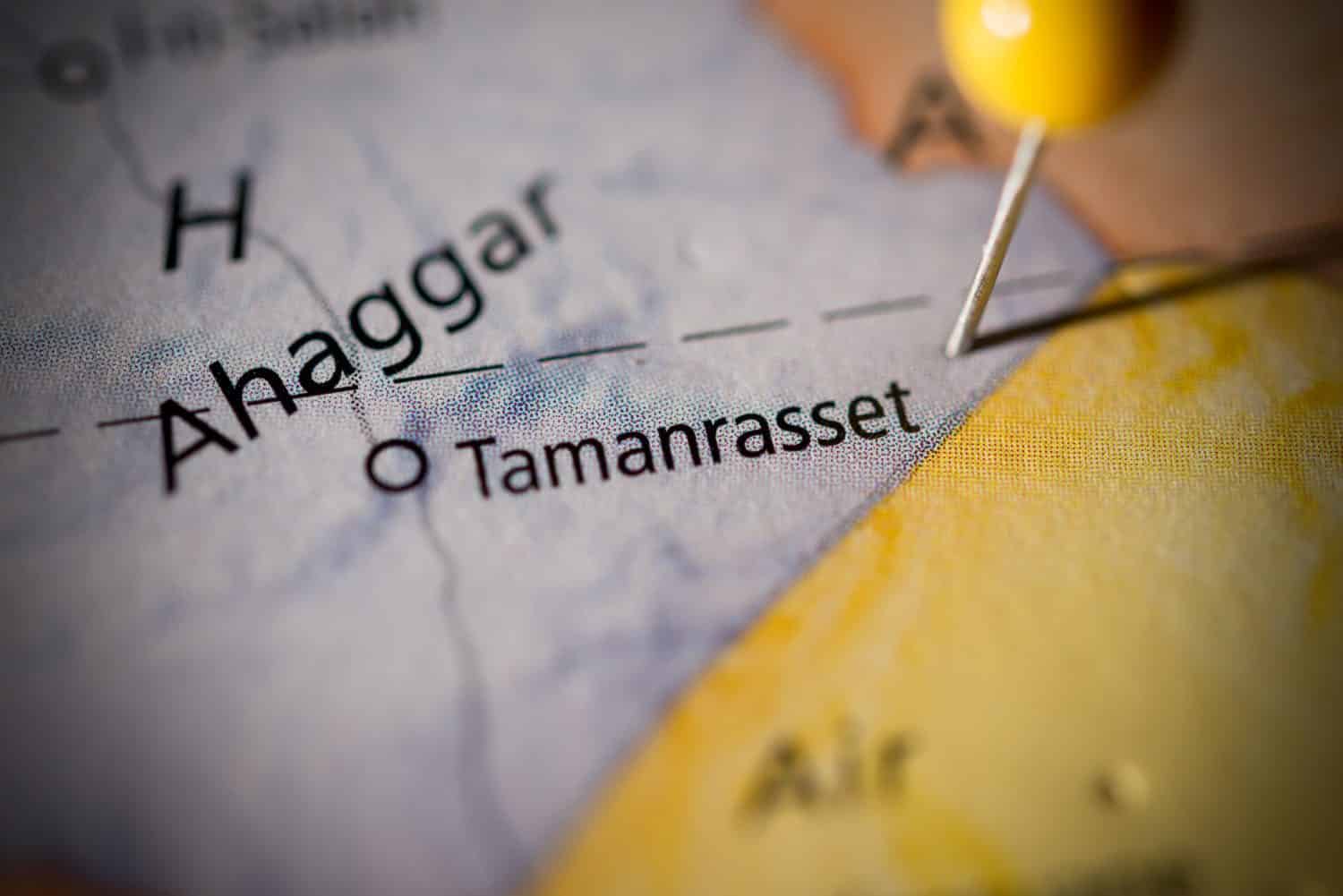
The Tamanrasset River was named after a city in the middle of the Sahara Desert, close to where the discovery was made.
©Tudoran Andrei/Shutterstock.com
A group of French researchers found evidence of a former prehistoric river in 2015. Using satellite imagery with microwave detection, they discovered bedrock and fossil water buried under the sands of the Sahara. This showed that a river had once surged deep below.
Tamanrasset River was named after the nearby Tamanrasset, Algeria, a city within the Sahara Desert. Despite being in the middle of a vast sandy wilderness, Tamanrasset is a thriving oasis community compared to its surroundings.
Earlier researchers uncovered Cap Timiris Canyon off the northern coast of Mauritania in 2003. This massive underwater canyon in the Atlantic Ocean contained remnants of river sediment. This discovery indicated there was once a river spanning across that area. However, the river’s existence and magnitude was just speculation. But by 2015, the French researchers were able to confirm that the Tamanrasset River had fed into the Cap Timiris Canyon. The course of the river and the canyon were in near-perfect alignment, making Cap Timiris Canyon the mouth of the Tamanrasset River.
Where Was the Tamanrasset River?
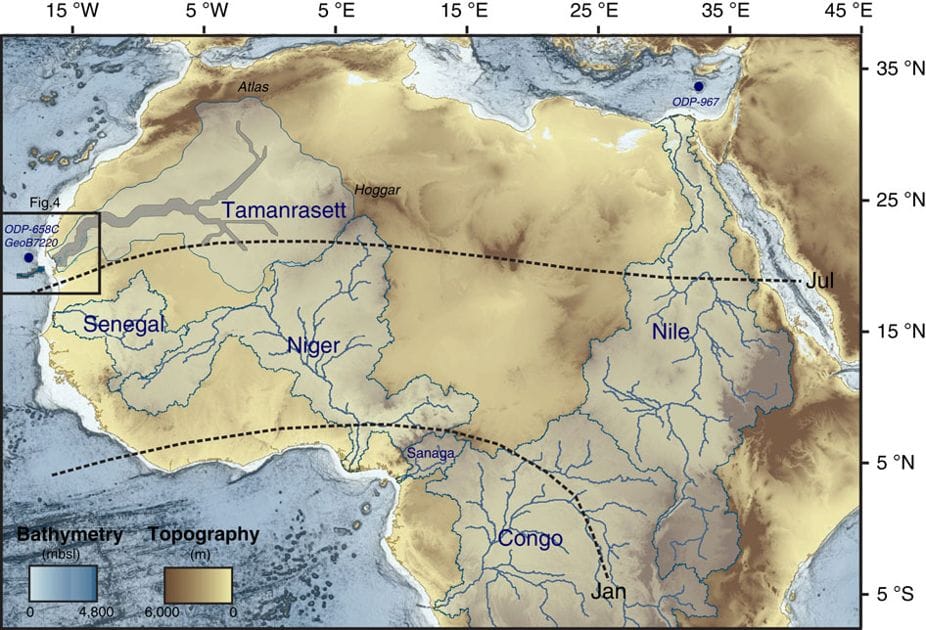
The image above shows estimated outlines of the former Tamanrasset River.
©Skonieczny, C.; Paillou, P.; Bory, A.; Bayon, G.; Biscara, L.; Crosta, X.; Eynaud, F.; Malaizé, B.; Revel, M.; Aleman, N.; Barusseau, J. -P.; Vernet, R.; Lopez, S.; Grousset, F./CC BY 4.0 – Original / License
Researchers first detected traces of the river in Mauritania. When mapping out the size of the river, they discovered a vast water system across the Sahara Desert, called a “paleodrainage network.”
How Big Was the Tamanrasset River?
Imagery of the riverbeds show that the Tamanrasset River was more than 1.8 million square kilometers and 2,777 kilometers long. If the river were still flowing today, the Tamanrasset would rank as the 11th largest river in the world.
How Old Is the Tamanrasset River?
The Tamanrasset River is believed to have been active during the African humid period. This phase began around 14,500 years ago and ended around 6,000 to 5,000 years ago.
What Was Life Like Along the Tamanrasset River?
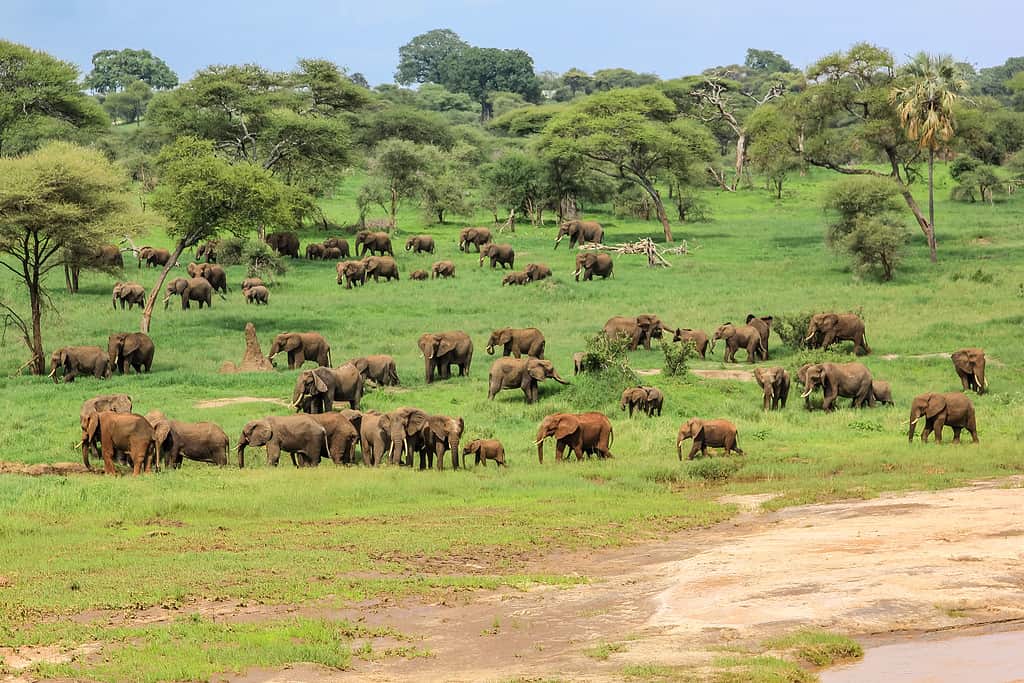
During the African humid period, vegetation and herds of animals were abundant.
©Benny Marty/Shutterstock.com
When thinking of the Sahara Desert, it’s easy to picture towering sand dunes, sharp winds, and blistering heat. However, it wasn’t always this way. During the African humid period mentioned above, the region was lush and green. Because of frequent monsoons and changes in the earth’s orbit, existing lakes overflowed and new ones, like the Tamanrasset, formed. Vegetation like trees and grasses were also abundant.
During this time, the Sahara Desert—including along the Tamanrasset—was overflowing with fauna as well. Fossil records indicate a wide variety of wild mammals grazed there, including hippos, rhinos, gazelles, and giraffes. Dozens of species of birds and fish also found a home here due to the abundance of water and fresh grassland.
The conditions were also perfect for hunters, gatherers, and fisherman. Over time, the region gave way to pastoralists and domesticated animals. For centuries, the Sahara Desert prospered.
What Happened to the Tamanrasset River?

After centuries of prosperity, the Tamanrasset River dried up and was undiscovered until 2015.
©A Buldygina/Shutterstock.com
Around 5,000 years ago, the Sahara Desert became barren and covered in sand. It’s unclear what caused such an abrupt and harsh change. Vegetation in the Sahara became scarce, and the once overflowing rivers and lakes became barren. Unlike the other West African rivers such as the Niger and Senegal, the Tamanrasset River did not survive this intense climate shift.
Compared to other African river sites, there limited evidence of Paleolithic activity and civilization along the Tamanrasset River. However, because the discovery of the secret river is relatively new, there is a great probability of more exciting finds in the future.