
Quick Take
- Two Himalayan colors look nearly identical, and the only way to tell them apart is by checking one surprisingly small physical detail. Seal vs. chocolate differences →
- Certain Himalayan coat colors are almost exclusively born female, and the genetic reason why is more complex than most cat owners realize. Why tortie colors are female →
- The rarest Himalayan color requires both parents to stack multiple recessive genes simultaneously, a genetic combination so unlikely that its appearance is considered a near-miracle. The rarest color explained →
- One Himalayan color can be so faint it almost disappears entirely against the cat's own fur, leaving owners unsure whether their cat even has points. Cream points that nearly vanish →
Himalayan cats were developed by crossing a Persian cat and a Siamese cat. They are known for their friendly temperaments and colorpoint coat patterns. Himalayans have big blue eyes, short muzzles, and long fur in a variety of beautiful color patterns. In this article, we’ll discuss the ten basic Himalayan cat coat colors and two patterns, ranking the colors from the most common to the rarest.
Himalayan Cat Patterns
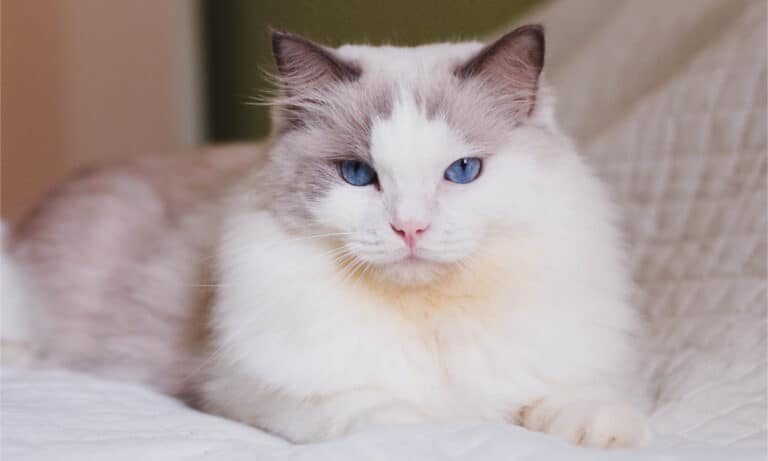
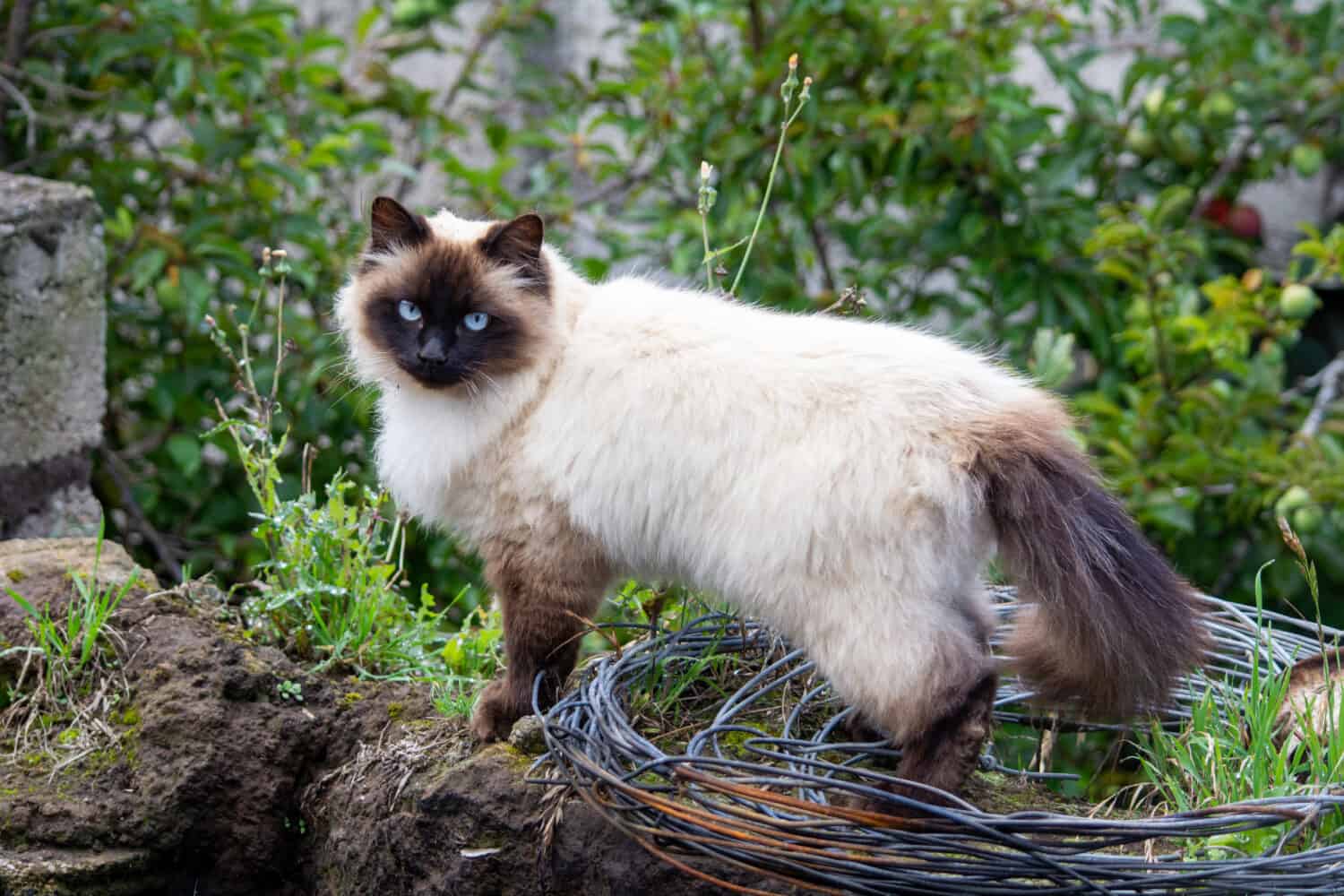
Himalayan cats always have predominantly white or cream fur with darker points on their face, ears, legs, feet, and tail. These points may be lilac, chocolate, blue, flame, cream, seal, tortie, blue-cream, chocolate tortie, or lilac cream. They may also have lynx or tortoiseshell patterns.
Classic Point
According to the Cat Fancier’s Association (CFA) breed standards for Himalayans cats with the point pattern have solid or tortie points with cream or white base coats. Classic point Himalayans may have any of the following coat colors:
- Lilac
- Chocolate
- Blue
- Flame
- Cream
- Seal
- Tortie
- Blue cream
- Chocolate tortie
- Lilac cream
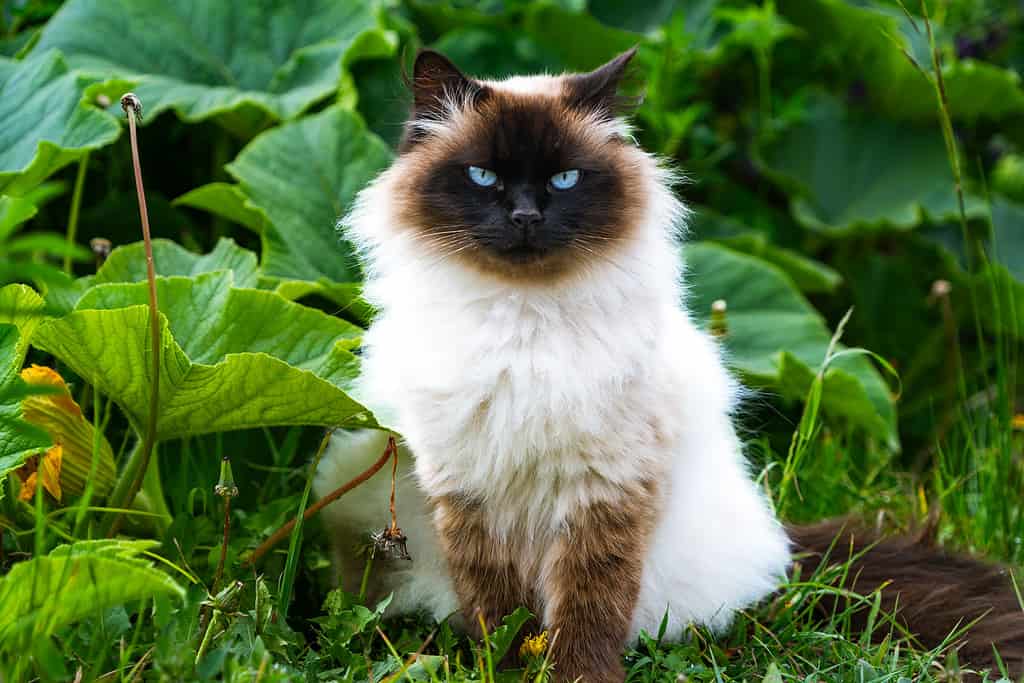
Himalayan cats have 10 different classic point coat colors.
©ecuadorplanet/iStock via Getty Images
Lynx Point
With the classic tabby “M” on the forehead and striped or tabby points, lynx point Himalayan cats are also known as tabby points. They can be any of the following colors:
- Lilac
- Lilac cream-lynx
- Chocolate
- Chocolate tortie-lynx
- Blue
- Blue-cream
- Flame
- Cream
- Seal
- Tortie
#10: Seal Point
Seal point Himalayans have dark brown points in either classic, lynx, or tortie patterns. Their noses and paw pads match their rich brown fur, which is what differentiates them from chocolate point cats, which have cinnamon-colored noses and paw pads. Seal point is the most common and widely recognized color pattern for Himalayan cats.
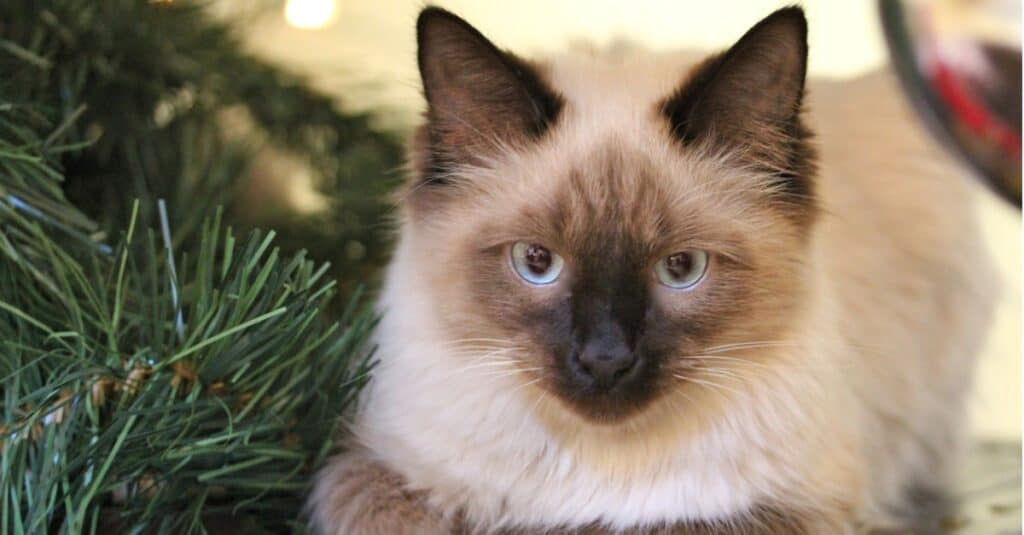
Seal point Himalayans have brown noses and paw pads.
©iStock.com/Celesty
#9: Blue Point
Blue point Himalayans have cool-toned white fur that can appear bluish in the right lighting. Genetically, blue is caused by the recessive dilute gene, which makes black appear as a bluish-grey. However, the color is relatively common. The cats may have classic or lynx point markings. Their noses and paw pads are a slate blue color.
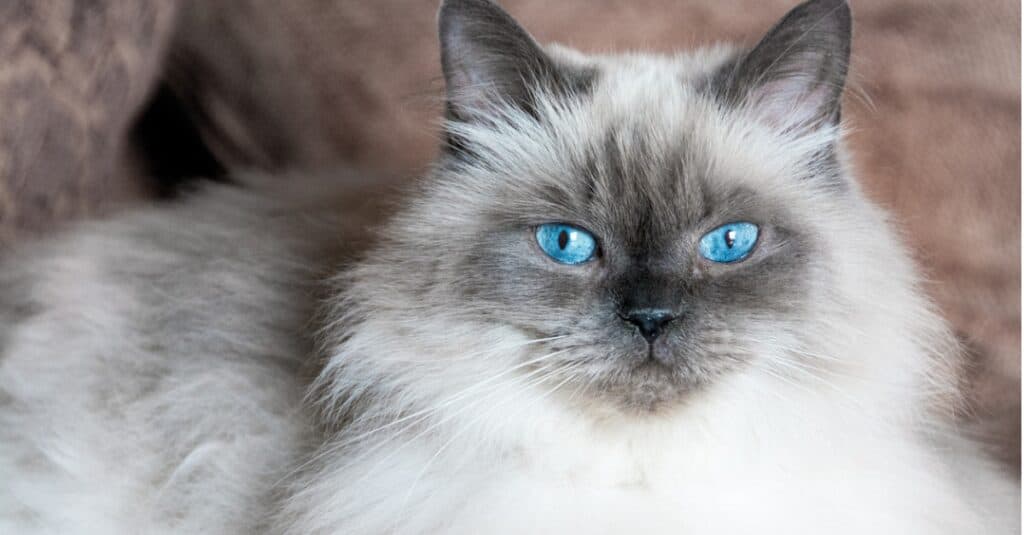
Blue point Himalayans have bluish-white fur.
©iStock.com/Louis-Michel DESERT
#8: Chocolate Point
These cats have ivory bodies and deep brown points, much darker than you’ll see in a lilac point cat. They may have solid, lynx, or tortie point markings. Chocolate point Himalayans look very similar to the more common seal points but can be distinguished by their cinnamon-colored noses and paw pads. Chocolate develops due to recessive color genes, meaning both parent cats must have this gene in their lineage in order to have chocolate point kittens. They may or may not show chocolate coloring themselves.
#7: Flame Point
Flame point Himalayans are quite popular due to their stunning looks. The color “flame” is the same as you’ll see in a classic orange tabby. These cats can have classic or lynx markings. You may also see the same orange tone in Himalayans with tortoiseshell patterns. Their noses and paw pads are flesh-toned to coral pink.
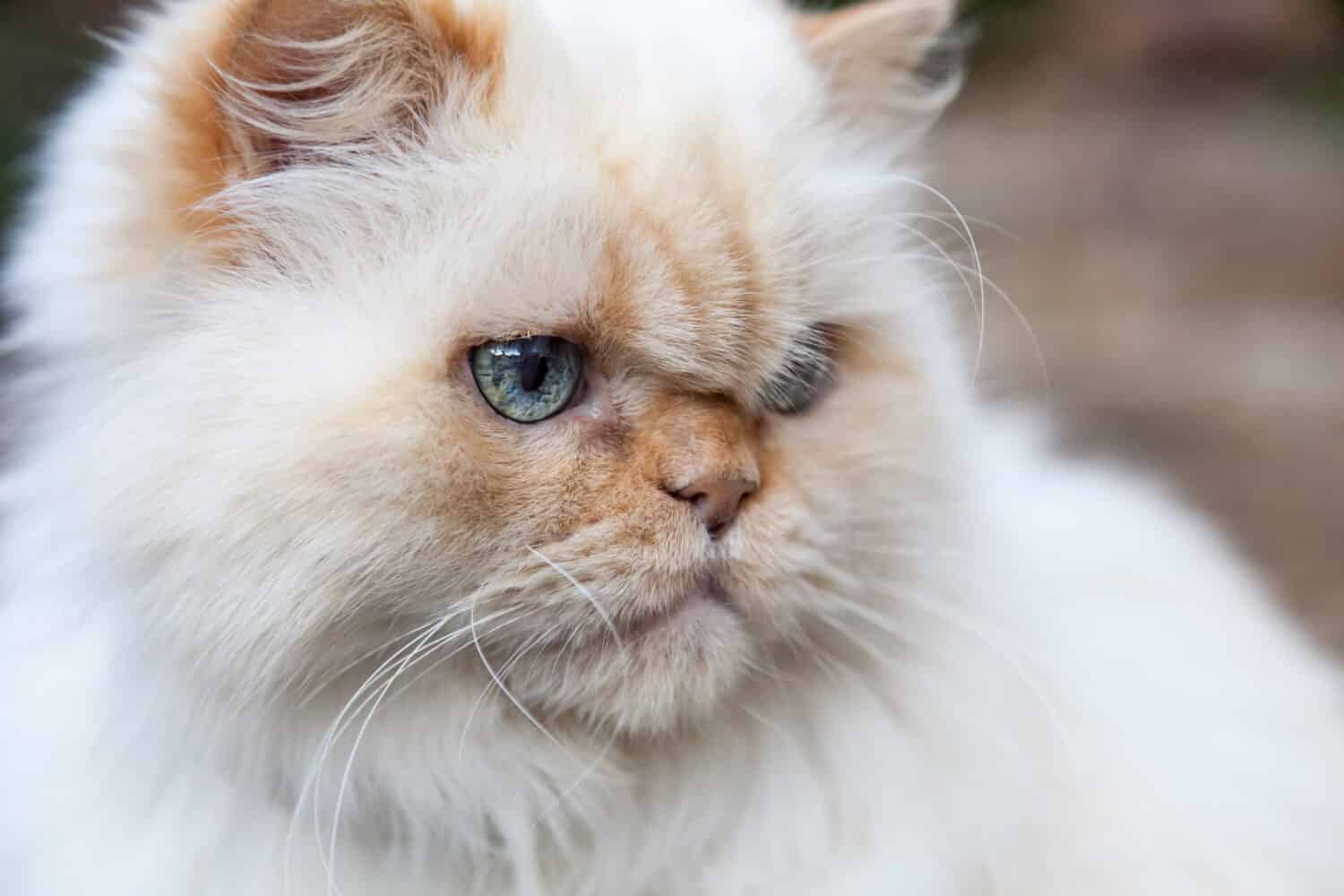
Orange points in Himalayan cats are referred to as “flame points.”
©cdrin/Shutterstock.com
#6: Cream Point
Cream point Himalayan cats may have classic, lynx, or tortie point markings. Their points can also look incredibly subtle, as sometimes the cream points can blend in with their white or cream-colored base coats. Cream is a dilute orange, or flame, color. While the gene is recessive, cream point Himalayans are fairly common.
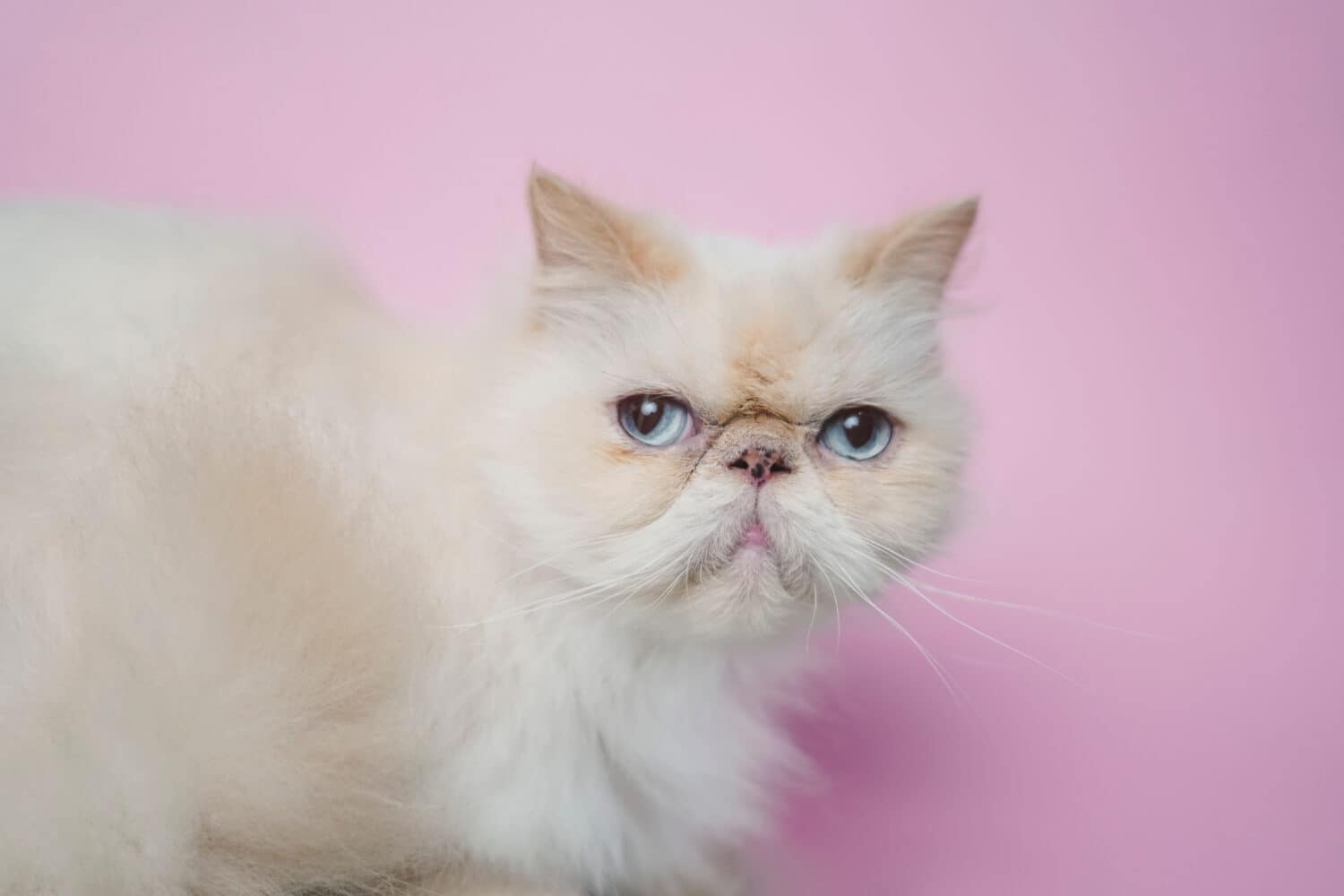
Some cream points hardly look like they have points, as the darker and lighter fur colors blend together.
©Ana Francisconii/Shutterstock.com
#4: Blue Cream Point
Blue cream point Himalayan cats have bluish white or creamy white bodies. They have blue points with cream patches. They have also been described as blue and cream-colored in a diluted tortoiseshell pattern. Their noses and paw pads are a slate blue and/or pink. Both parents must carry the recessive colorpoint gene, the dilute gene, and the orange gene. Most blue cream point Himalayans are female due to the genetics required to breed this color pattern.
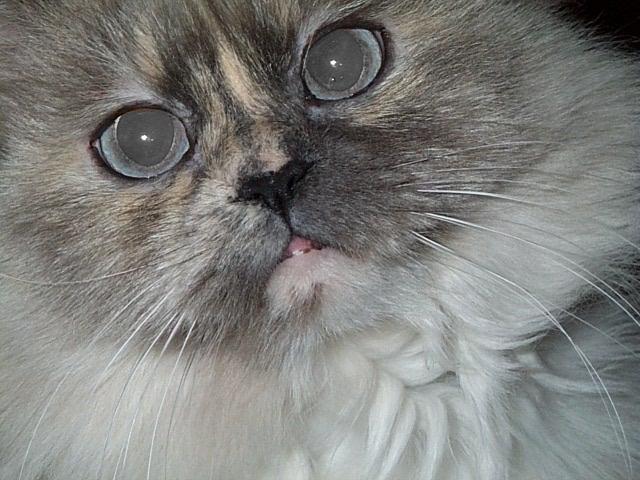
Most blue cream point Himalayans are females.
©Michael Cornelius / Creative Commons – Original
#3: Tortie Point
Tortoiseshell point Himalayans have creamy white or pale fawn bodies with seal-colored points and
unbrindled patches of red and/or cream. Their noses are a seal brown and/or coral pink. The mother must have the dilute/orange gene combination and be bred with a non-orange male. Tortie point Himalayans are nearly always female.
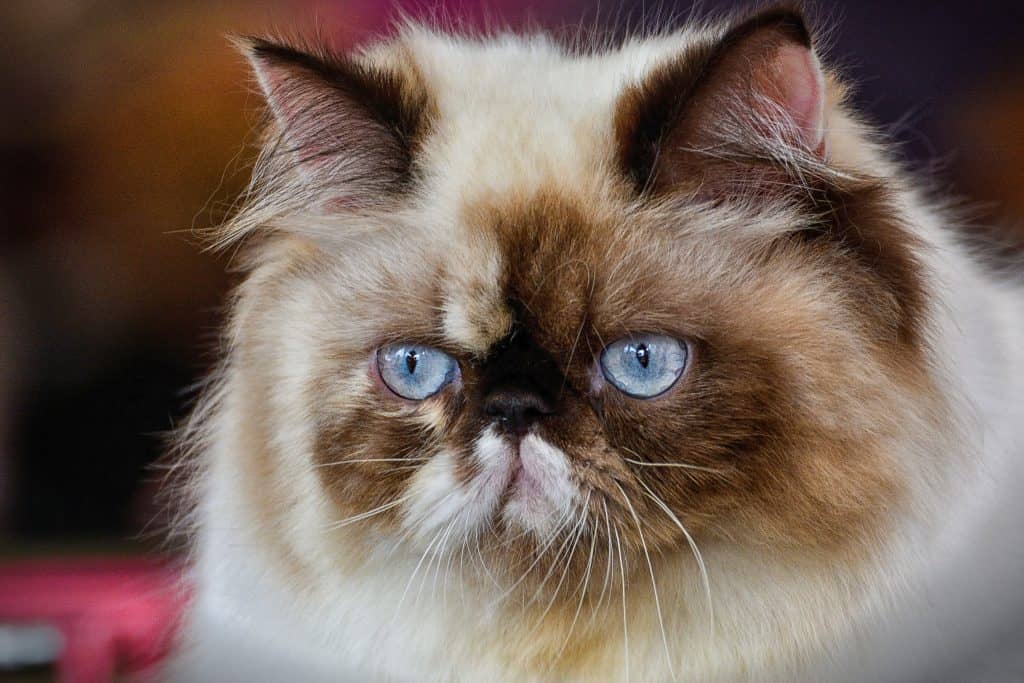
Tortie points have seal points and unbrindled patches of red and/or cream.
©Dody.bukittinggi / CC BY-SA 4.0 – Original
#2: Chocolate Tortie Point
Breed standards describe a tortoiseshell point Himalayan as having an ivory body with chocolate points and unbrindled patches of red and/or cream. Their noses and paw pads are cinnamon pink or coral pink. Breeding a chocolate tortie point Himalayan requires both parents to carry recessive genes for pointed color, the dilute gene for chocolate, and the sex-linked red gene that causes the tortoiseshell pattern. These cats will nearly always be female.
#2: Lilac Point
The color “lilac” is caused by dilute chocolate genes but can appear as a pale, warm-toned gray. These cats have light gray points on white or cream-colored fur. Lilac point Himalayan cats may also have the lynx point pattern. Kittens must inherit both chocolate and dilute genes from each parent, meaning they need double recessive genes. This makes lilac point Himalayan cats very rare. You can distinguish them from blue point Himalayans by their lavender-pink noses and paw pads.
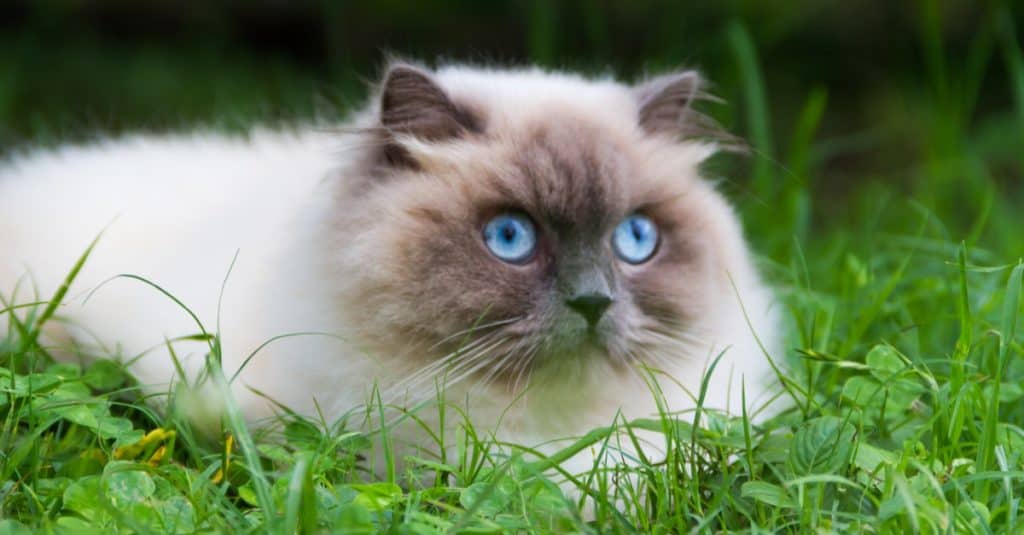
Lilac point Himalayans must inherit both chocolate and dilute genes from each parent.
©Gabriela Bertolini/Shutterstock.com
#1: Lilac Cream Point
The breed standards describe a lilac cream point as having a “glacial white body.” These cats have lilac points with cream patches. Their noses and paw pads are a lavender pink color and/or pink. Both lilac and chocolate are autosomal recessive traits, so to produce lilac cream kittens, both parents must carry the dilute gene. Lilac cream cats have the same lilac points as seen in the image above, but mixed with patches of pale cream due to the addition of the tortoiseshell gene.