Horses are powerful domesticated animals, historically used by humans for various types of labor. All domesticated breeds belong to the subspecies Equus ferus caballus. Many breeds almost died off because of shifts in labor practices brought about by the Industrial Revolution (c. 1760 to c. 1840). However, determined breeders worldwide worked diligently to protect them. Therefore, most have made an incredible comeback. Continue reading to learn more about the 13 biggest horse breeds alive today.
13. Russian Heavy Draft
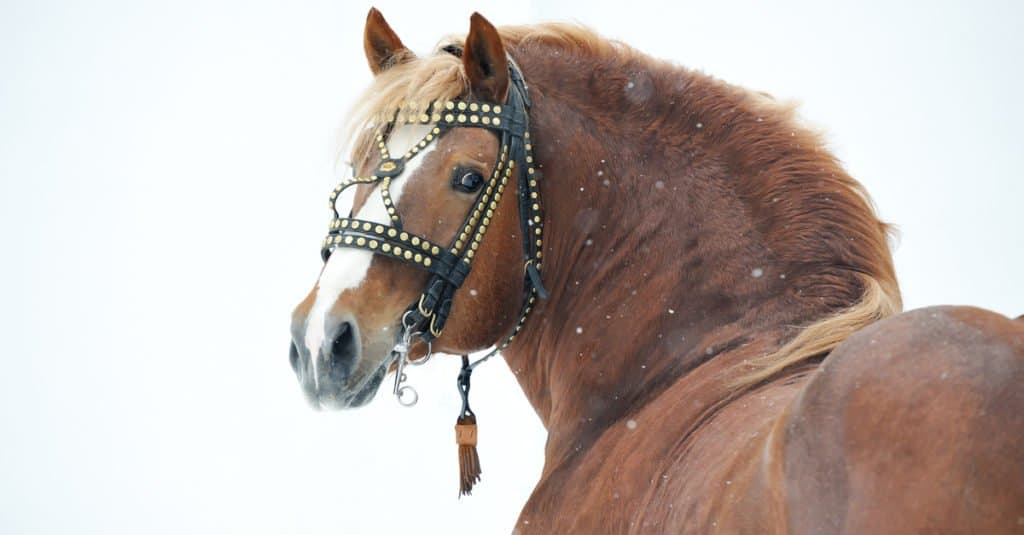
The Russian heavy has short legs but a massive body.
©arthorse/Shutterstock.com
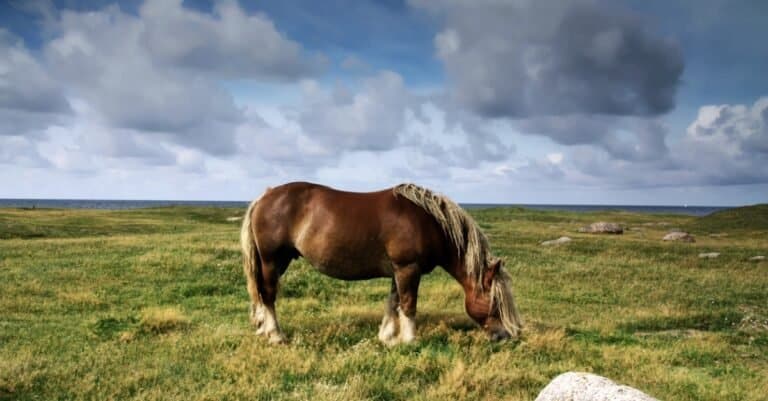
The Russian heavy has short legs compared to other draft breeds, intended to give it superior traction. Equestrians developed this breed in Russia over several decades, and it was officially recognized as a breed in 1952. They are still seen pulling wagons around the countryside. This breed weighs approximately 1,420 pounds and stands about 58 inches tall. Strawberry, bay, and chestnut are standard colors.
12. Vladimir Draft Horse
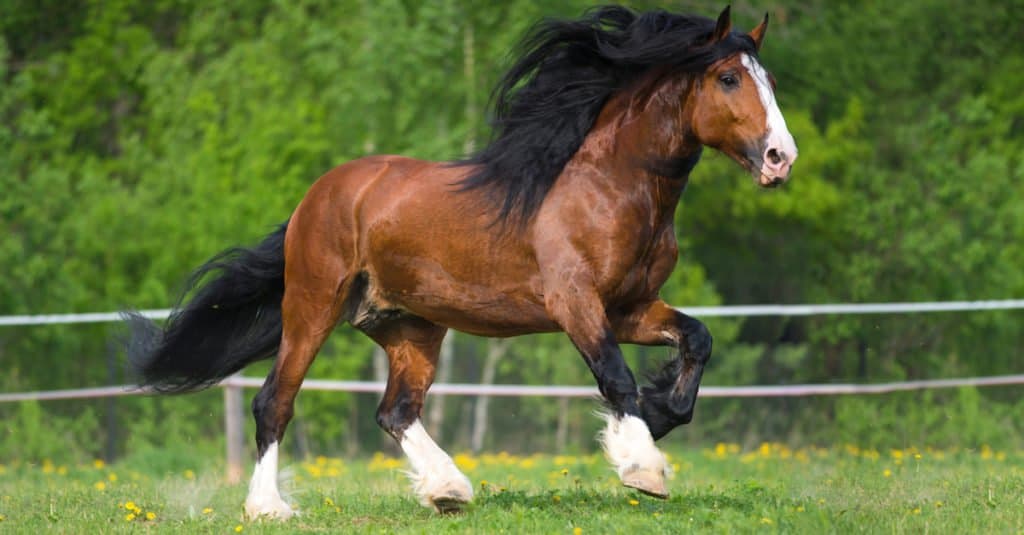
The Vladimir draft horse has a unique Roman nose.
©Makarova Viktoria/Shutterstock.com
The Vladimir draft horse was recognized as a breed in 1946. Breeders developed this breed to pull Vladimir Trokia sleighs through the snow. These animals usually have four white feet with feathering on their legs. While bay is the most common color, this breed comes in several others. Today, they are often driven in teams of three to pull sleighs for tourists. The Vladimir draft horse stands 58 inches tall and weighs approximately 1,580 pounds. Its rear end is usually short and extremely powerful.
11. Dutch Draft
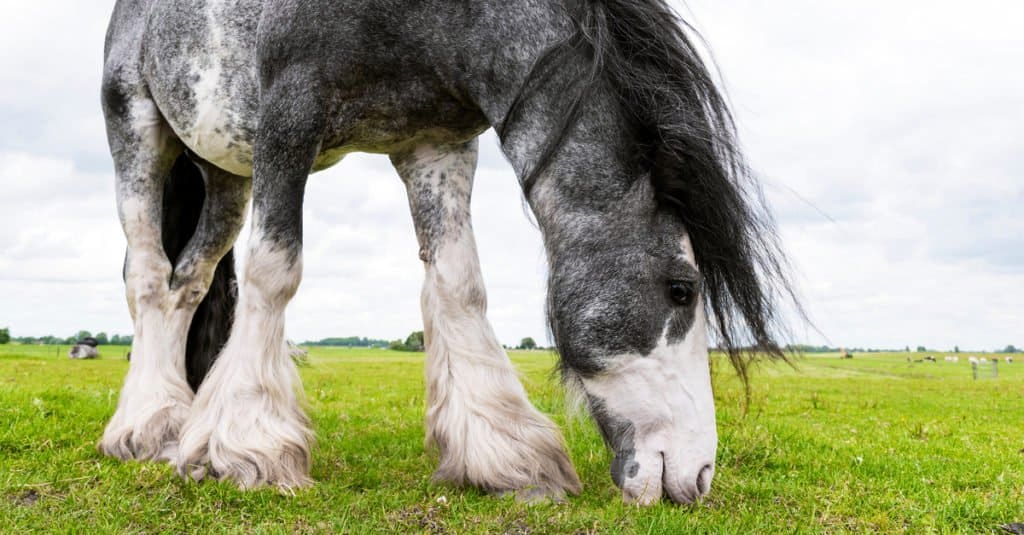
The Dutch draft is known for being a cold-blooded horse.
©Serhii Milekhin/Shutterstock.com
Dutch breeders created the Dutch draft horse from local stock shortly after World War I. This cold-blooded horse moves exceptionally well for its size. These animals can be bay, black, gray, or chestnut. While their initial purpose was to help with logging and farming, today, they are mostly show ponies. The Dutch draft horse stands approximately 62 inches tall and weighs around 1,500 pounds.
10. Comtois Horse
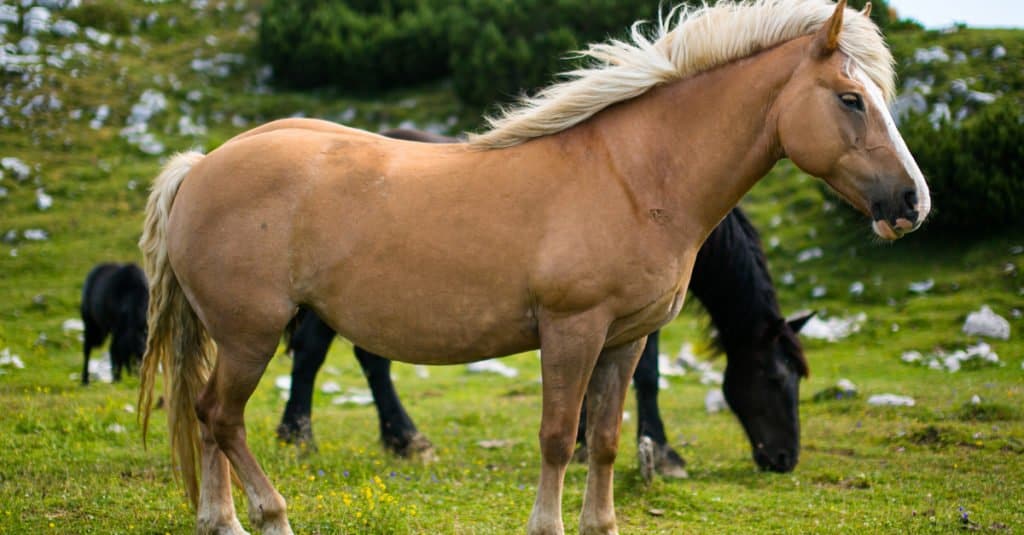
The Comtois horse originated back in the 6th century.
©Luka Dakskobler/Shutterstock.com
Bred in the Jura Mountains during the 6th century, Comtois horses have extremely muscular hindquarters. They also have light feathering around their short legs. They can be any color, though most have a silvery tint. These horses stand approximately 60 inches tall and weigh around 1,580 pounds.
9. American Cream
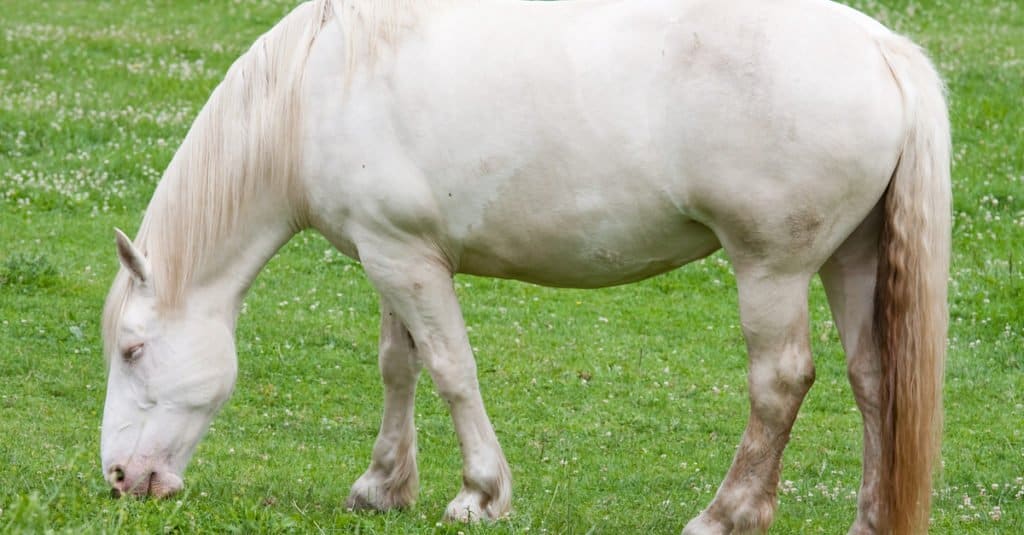
The American cream famously originated in Iowa.
©Nancy Kennedy/Shutterstock.com
The American cream is the only cold-blooded horse breed developed in the United States. All animals of this breed are a solid cream (gold champagne) color with pink skin and amber eyes. American creams stand approximately 62 inches tall. Typically, mares weigh 1,600 to 1,800 pounds while stallions weigh 1,900 to 2,000 pounds.
8. Irish Draught
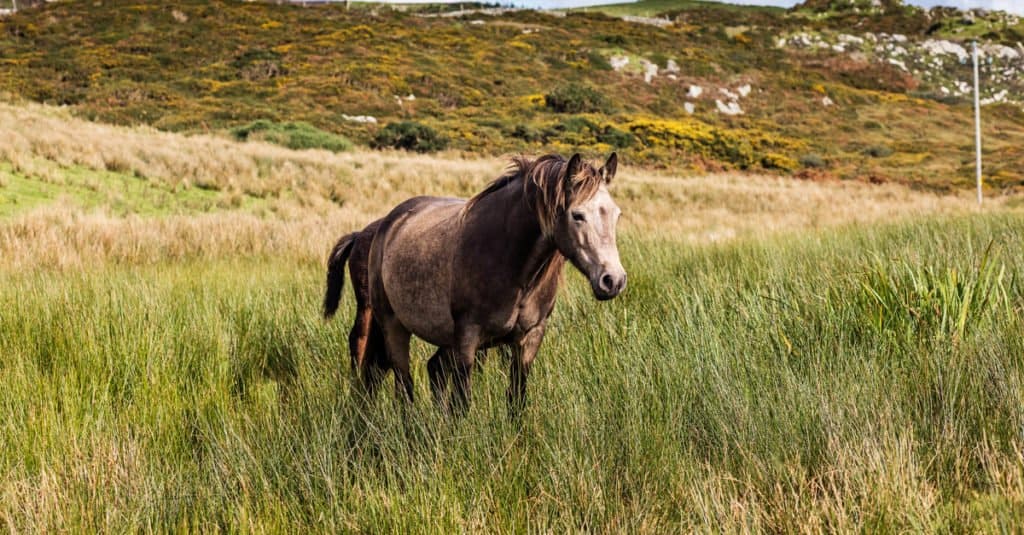
The Irish Draught is both useful for farmers and agile for riding.
©Bartkowski/Shutterstock.com
The Irish draught was developed in Ireland during the 18th century to be strong enough to work on a farm and limber enough to make an excellent mount. While gray and chestnut are the most common, these animals can come in several different colors. Excessive white above the knees is considered a fault. This breed often lives to be over 30 years old, stands approximately 64 inches tall, and can weigh over 1,400 pounds.
7. Boulonnais
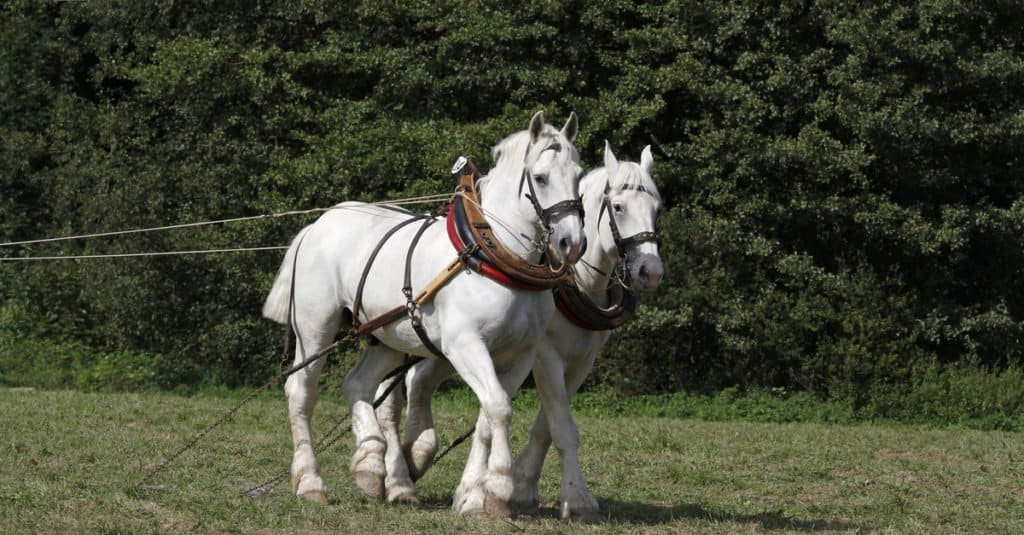
The Boulonnais has the best temperament of the large horse breeds.
©Bildagentur Zoonar GmbH/Shutterstock.com
The Boulonnais, also called the white marble horse, was bred in France. There are at least three variations of this horse, which soldiers initially bred before the Crusades. Today’s Boulonnais gets its size and heaviness from those developed last to aid in farming. This animal has a great temperament, making it adaptable. The Boulonnais stands approximately 64 inches tall and weighs around 1,320 pounds.
6. Suffolk
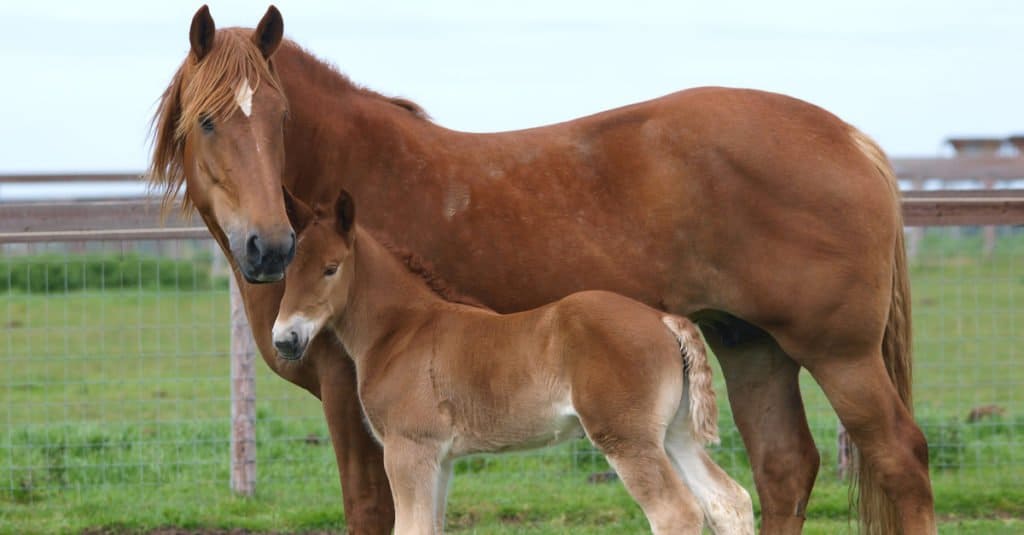
The Suffolk has powerful rear legs.
©iStock.com/nigelb10
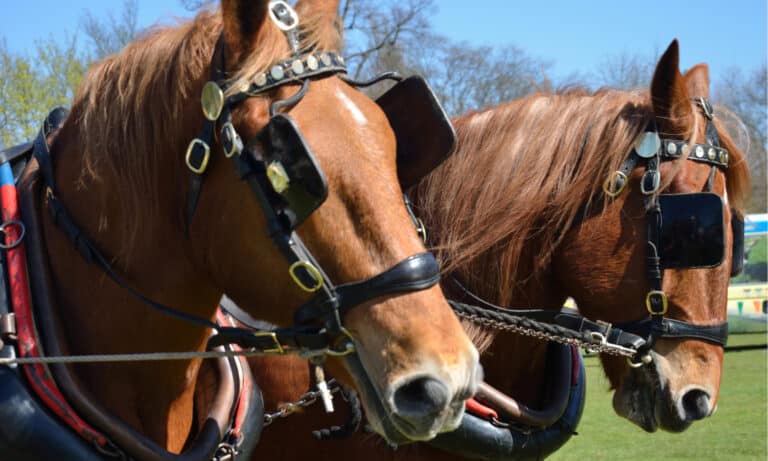
Farmers developed the Suffolk horse solely for farm work in Suffolk and Norfolk, England. All Suffolks trace their lineage back to Crisp’s Horse of Ufford, which was foaled in 1768. These animals are always chestnut in color. They weigh around 1,800 pounds and stand approximately 66 inches tall, with a rounder appearance than larger draft animals. These horses have powerful rear legs.
5. Belgians
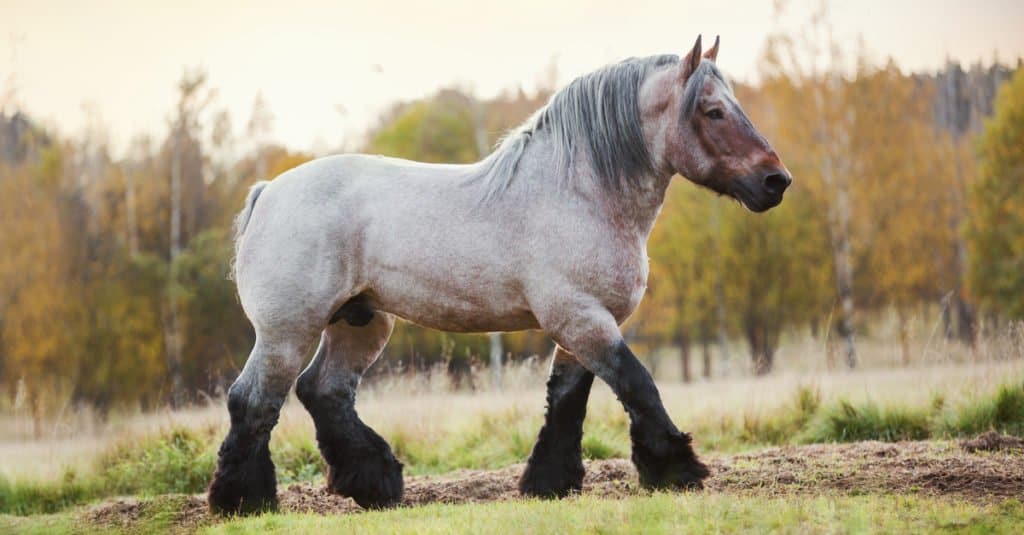
Belgians are among the strongest draught horses in the world.
©OlesyaNickolaeva/Shutterstock.com
Breeders first created the Belgian draught horse from Brabant draught horses in Belgium. Most Belgians in the United States weigh less than those found in Belgium and surrounding countries. While most Belgians in the U.S. are chestnut with a flaxen mane and tail, other colors are also acceptable both in the U.S. and overseas. These animals are often used in heavyweight pulling contests, as they are among the strongest draught horses. On average, they stand 67 inches tall and weigh approximately 1,763 pounds.
4. Australian Draught Horse
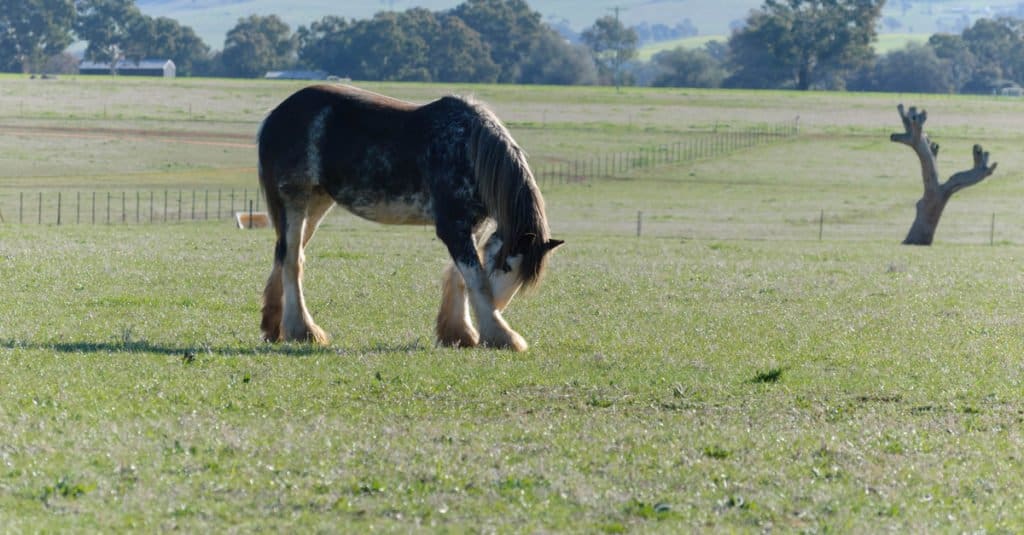
The Australian draught can withstand harsh weather conditions.
©iStock.com/lonewolfshome
Farmers developed the Australian draught horse around 1850. These horses come in all colors, and the legs have feathering. Breeders see excessive white markings as a fault because of Australia’s harsh weather. A registration process for Australian draught horses was not established until 1978. These horses stand around 68 inches tall and weigh approximately 1,980 pounds.
3. Percheron
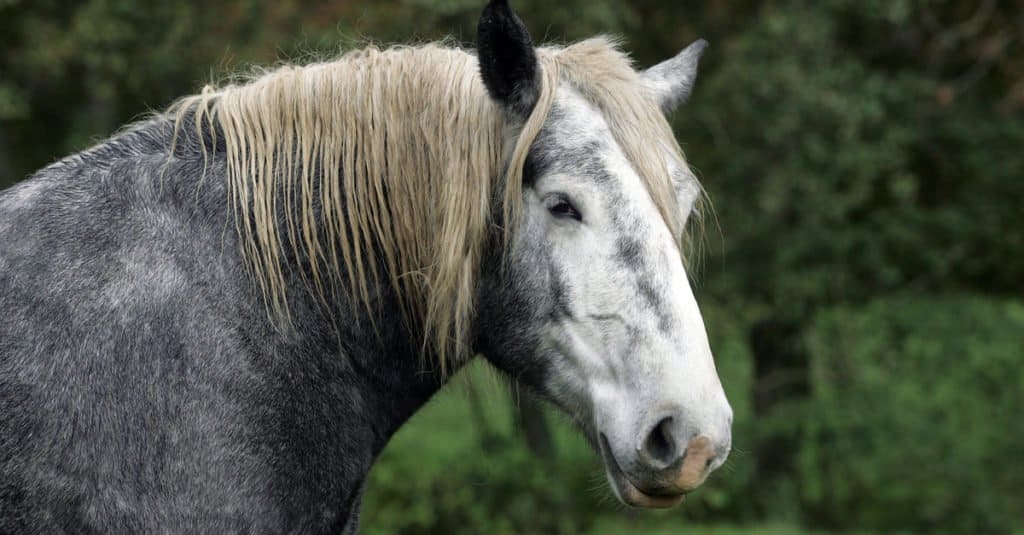
The Percheron is actively bred by the French government.
©slowmotiongli/Shutterstock.com
Farmers in the Perche province of France’s Normandy region originally bred the Percheron. Horses of this breed in the United States are slightly taller than those bred in France. The French government still actively breeds this horse, often crossing it with lighter breeds to create dressage horses. In France, gray is the most common color for registered Percherons, but black is also accepted. In other countries, such as the United States, Percherons may be any color. These horses usually stand approximately 68 inches tall and weigh 2,200 pounds.
2. Clydesdales
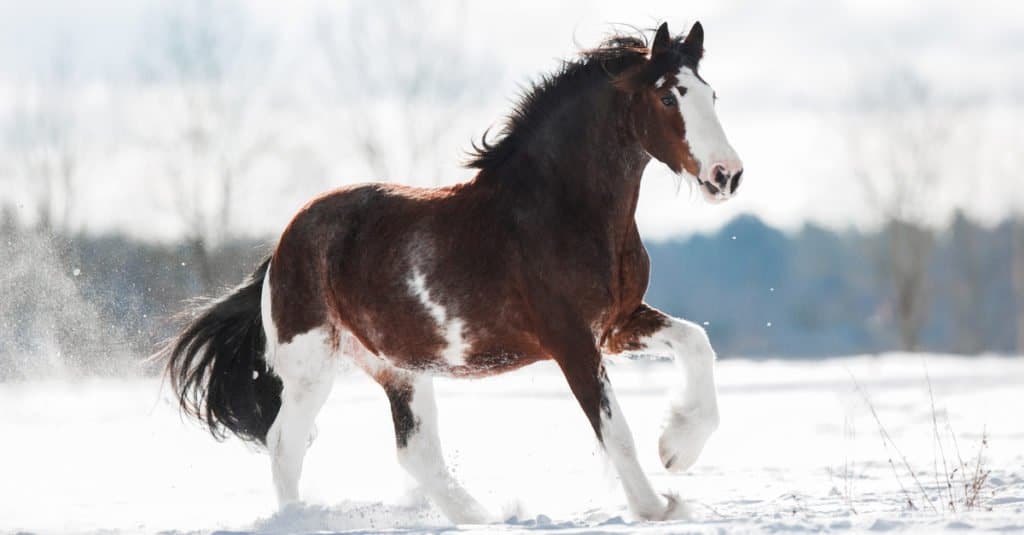
Clydesdales are often seen in parades.
©OlesyaNickolaeva/Shutterstock.com
Arguably best known for their appearances in Budweiser commercials, Clydesdales were originally bred in Scotland. Soldiers wearing heavy armor rode them into battle along the Clyde River. They are often seen in parades, where people are excited to see their leg feathering and high-stepping gait. Clydesdales can come in any color. Breeders consider white markings around their feet and on their faces to be desirable traits. These horses weigh around 1,907 pounds and stand approximately 68 inches tall.
1. Shire
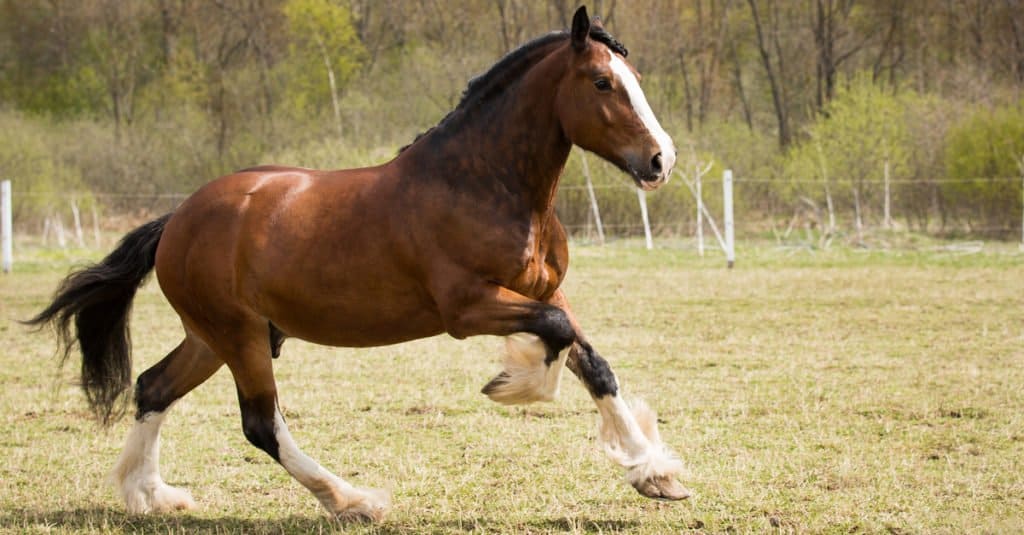
The Shire was originally bred to pull heavy carts on farms.
©Marina Kondratenko/Shutterstock.com
The average shire is approximately 68 inches tall and weighs around 2,200 pounds. Originally bred to pull heavy carts on farms, in breweries, and coal mines, living history farms still use the shire. They are commonly black, bay, or gray; chestnut is not accepted in the United Kingdom breed standard. While white markings on the face or a front leg are not considered faults, excessive white is undesirable. The Romani cob was developed by the Romani people using a mix of breeds such as Shire, Clydesdale, Dales Pony, and Fell Pony, among others, to create a strong and manageable working horse.
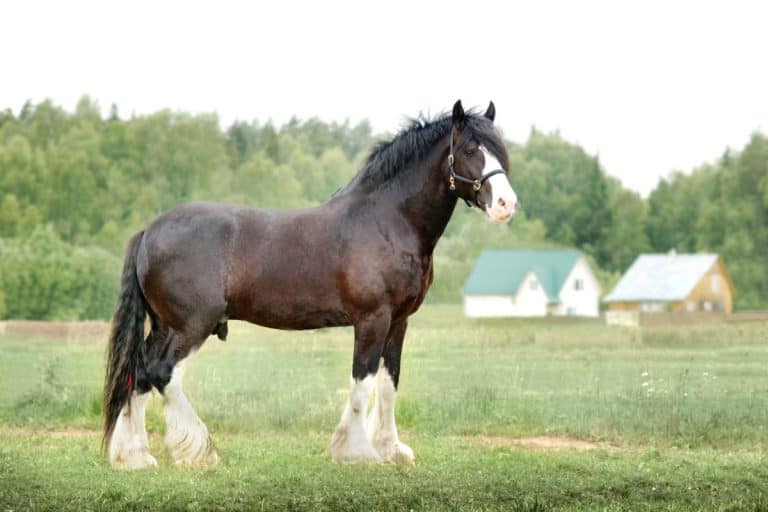
![Sampson (later renamed Mammoth)[1] was a Shire horse gelding born in 1846 and bred by Thomas Cleaver at Toddington Mills, Bedfordshire, England.](https://a-z-animals.com/media/2022/12/Sampson_horse.jpeg)