
Many wildcats in the world will blow you away with their sheer size and strength. When you see lions, tigers, leopards, and other large felines at the zoo, they can often seem smaller at a distance, but make no mistake. Many of the wildcats found in the United States, Africa, Asia, and other parts of the world are quite massive, and you probably wouldn’t want to run across them while on safari. Many of the largest wildcats are longer than grown men are tall, and others weigh more than two or three human beings combined.
To show you what we mean, we have composed this list of the largest wildcats to get you excited about your next wildlife adventure.
Snow Leopard
Undoubtedly one of the largest wildcats in the world, the snow leopard is big and beautiful. Found in central and southern Asia, the average male snow leopard is about two feet tall at the shoulders and approximately seven feet long when you include its tail. That’s as long as a king-sized bed or as long as NBA basketball legend Shaquille O’Neal is tall, and he towers over most other humans. Though they are large, snow leopards are still smaller than most other cats on this list, coming to about 90 pounds. The female snow leopards are a bit smaller than the males, typically about six feet long.
Snow leopards are solitary creatures that do not form social groups. They prefer to live alone until mating season approaches. The cat breed is so solitary that humans rarely see it. This breed primarily hunts during dusk and dawn, making them even more difficult to spot. They’ll often mark their territory with scratches, scents, and urine, so they have their own special hunting spot. However, they are also known to travel up to 80 miles for food. Snow leopards hunt by slowly sneaking up on their prey and then pouncing with their strong legs. Their primary prey consists of sheep and wild goats, though they also eat rabbits, marmots, birds, and other sources of protein.
Unlike some other large cats, snow leopards don’t roar, but instead communicate by mewing, hissing, and chuffing. Snow leopards typically only live about 18 years in the wild. Sadly, there are fewer than 4,000 left in the world, so if you see this giant cat in the wild, leave it alone.
Leopard
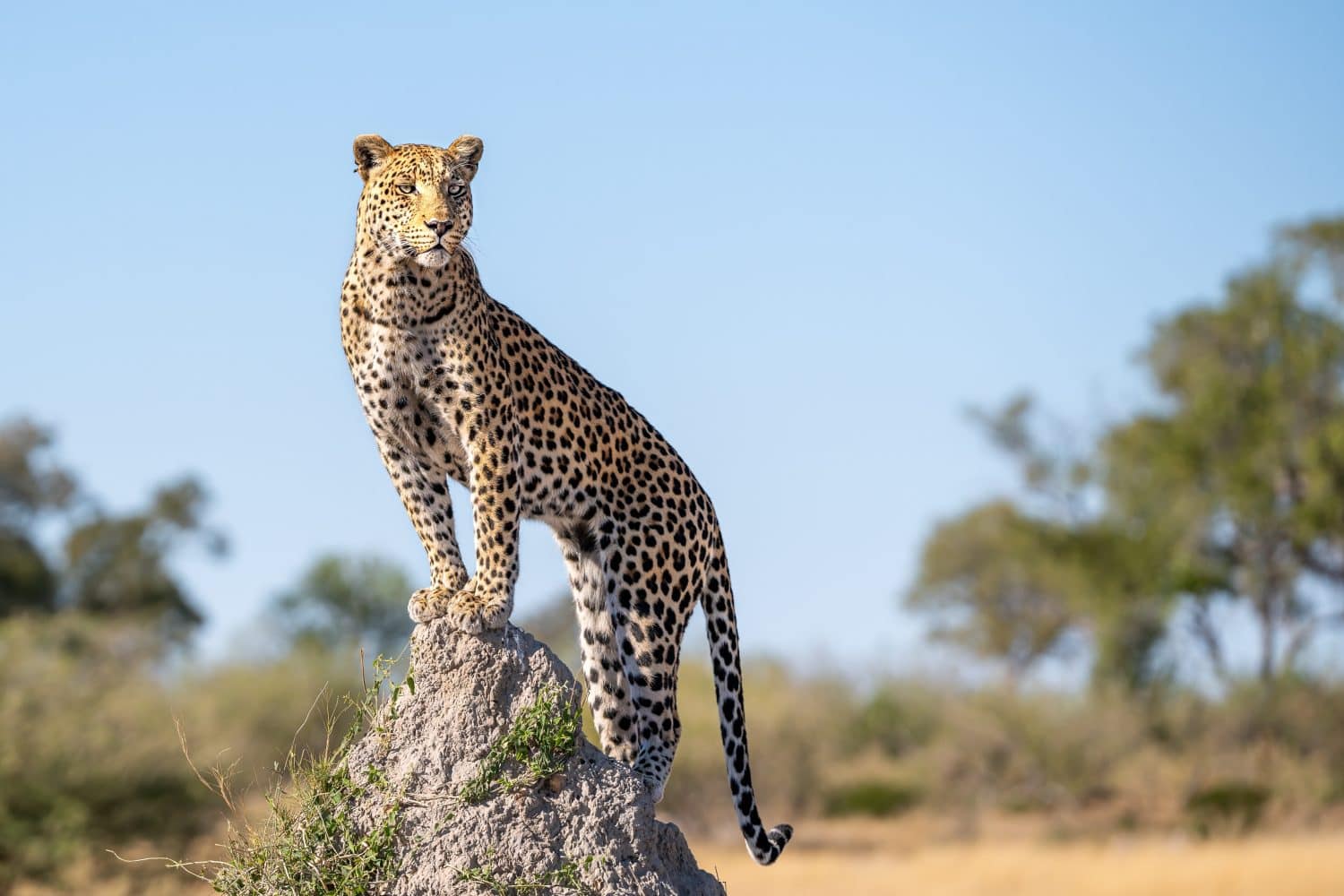
Leopards are stealthy hunters that are about as tall as many of the stools in your home.
©Tomas Drahos/Shutterstock.com
The leopard is another of the largest wildcats in the world. You’ll mostly find this mighty cat in parts of India, Africa, the Malay Peninsula, and the Middle East. There are various subspecies of this cat, including the Indian leopard, African leopard, Amur leopard, and Anatolian leopard, among others.
An average male leopard weighs about 68 pounds, while the female typically comes in at between 51 and 60 pounds. Though there is some variation when it comes to size, especially when dealing with the different types of leopards, most variations of this cat breed are between 6 and 8 feet long. Both male and female leopards are typically between 17.5 and 30.5 inches tall. That’s about as tall as a Great Dane dog and taller than many counter stools.
Leopards are fascinating creatures. Like a jaguar, a leopard is covered with spots, and it looks similar to that other cat. However, you can tell them apart by looking at the spots. The leopard’s spots are closer together and smaller. Leopards are mostly active and do most of their hunting at night. Their diet consists of reptiles, primates, birds, hoofed animals, and insects. With the ability to run up to 36 MPH and jump 10 feet vertically, they are mighty predators.
During the day, leopards can often be found sleeping in rocky areas or on tree branches. They communicate by snarling, purring, and mewing. In some parts of the world, leopards have the conservation status of being “vulnerable,” so it’s best to leave them alone.
Cougar
Next, we have the cougar, which is a large cat that can be found in parts of North, South, and Central America. Cougars are quite large, with the males typically weighing between 120 and 160 pounds and the females about 75 and 110 pounds. Both male and female cougars will grow to approximately 5-6 feet in length. That’s the length of a twin or full-size mattress! Imagine a carnivorous cougar stretching out alongside your bed! Cougars are interesting because they resemble the typical domestic cat, but they are much more threatening.
Cougars are adaptable to many different types of climates, as they can be found in forests, deserts, swamps, and mountains. This breed is known to travel long distances, often up to 600 miles, so they’re likely to see many different environments. Cougars communicate by mewing, hissing, growling, and purring.
Unlike many other animals, cougars typically depend on sight more than smell when hunting prey. Common prey includes sheep, horses, cattle, and insects. However, deer typically make up a majority of their diet. The cougar hunts by stalking and then finding an opportunity to ambush its prey. This breed lives for about 10 years in the wild and 20 years in captivity.
Jaguar
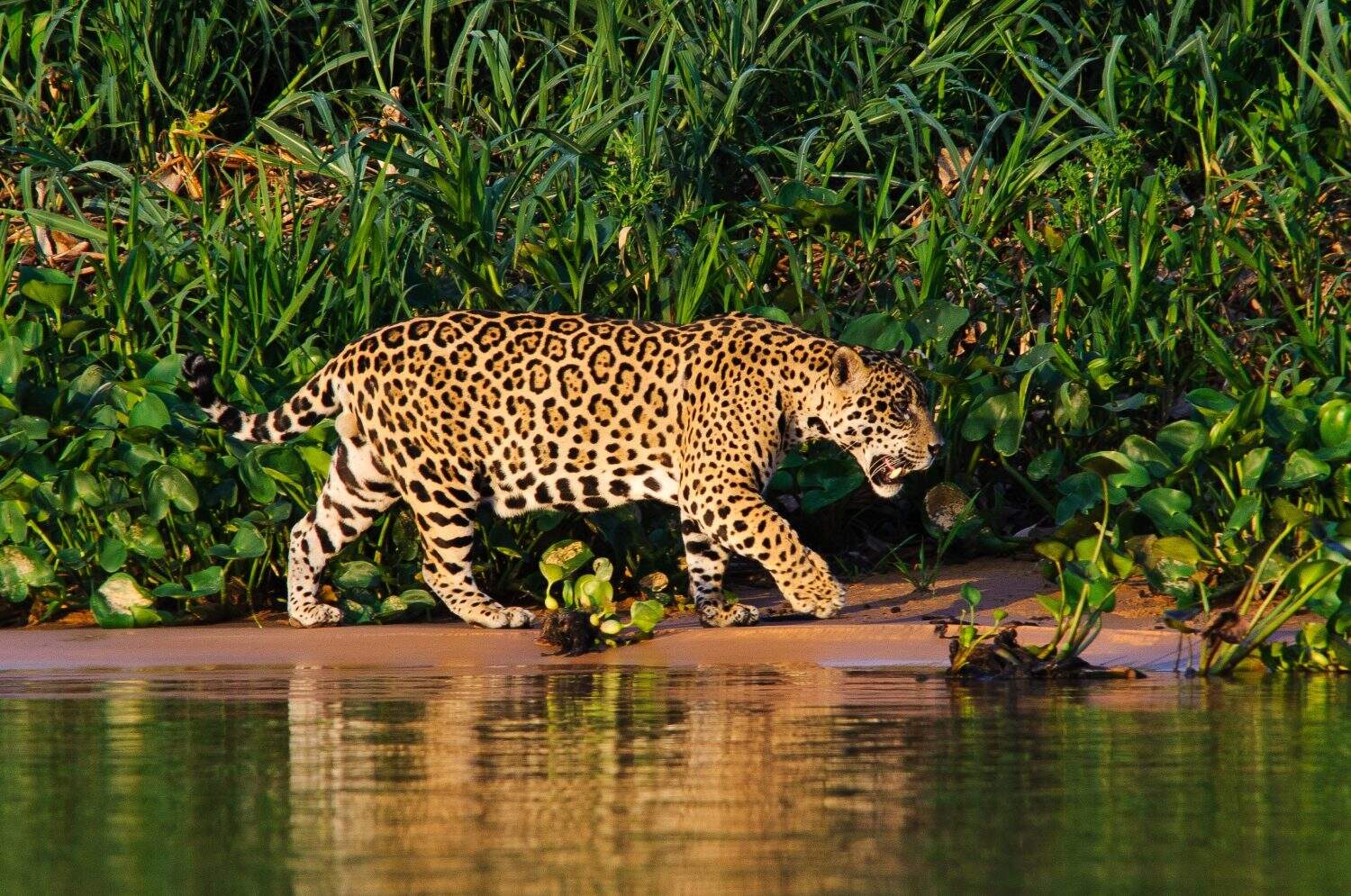
In addition to being one of the largest wildcats, the jaguar is also one of the deadliest.
©Marcos Vergueiro/Shutterstock.com
One of the deadliest wildcats is the jaguar. While sometimes found in the United States, they are most commonly found in Central and South America. A male jaguar will typically weigh between 110 and 250 pounds, while the female will often weigh between 80 and 200 pounds. Female jaguars are typically between 4.5 and 6 feet long, while males are often 5-6 feet long. That’s a little longer than the average couch. However, you don’t want to snuggle next to one of these.
The jaguar looks similar to the cougar, but the jaguar is a more imposing force as it is typically stronger, larger, and more muscular. Jaguars are among the few breeds of cat that can roar, which they’ll do when they are looking to stake territory, communicate, or express anger. A jaguar is typically at the top of the food chain where it lives. Also like the cougar, the jaguar likes to sneak around and stalk its prey before ambushing it at the last moment. The jaguar has the strongest bite of all of the largest wildcats, enabling it to penetrate the skull of its prey if it chooses to do so.
Jaguars are keen hunters who are not overly selective in their choice of prey. They’ll hunt and eat deer, crocodiles, armadillos, frogs, horses, monkeys, sloths, turtles, and almost anything else in the vicinity when they’re hungry. The jaguar population is at risk from poachers and deforestation. The lifespan of a jaguar in the wild is about 12-25 years, and it can live over 20 years in captivity.
Cheetah
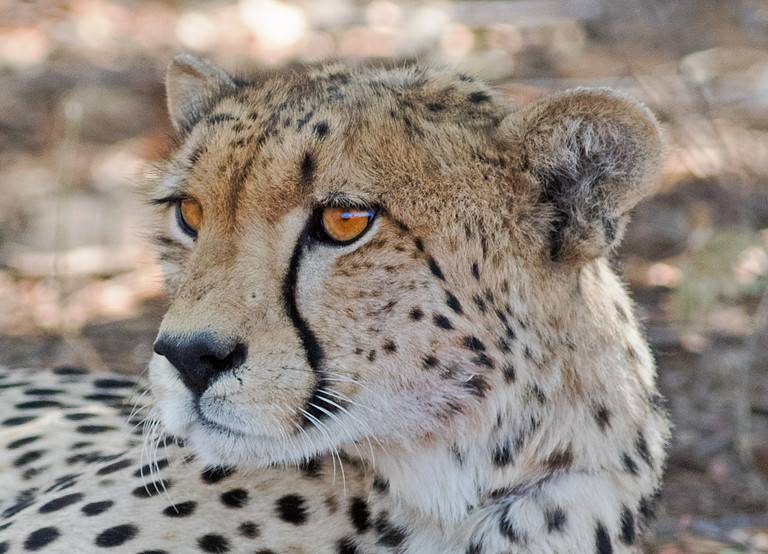
In addition to being one of the fastest creatures on the planet, the cheetah is also one of the largest wildcats in the world. Found in parts of Iran and southern and eastern Africa, the male cheetah comes in at between 46 and 158 pounds, and they’re generally as tall as three feet at the shoulders. That makes this cat as tall as an emperor penguin or the height of a standing acoustic guitar. When you include their tail, their body length is between 4 and 5 feet, which is as long as a standard park bench. The dimensions of the females are on the lower end of the ranges listed above.
Most people know that Cheetahs are fast, with the ability to run 60 miles per hour. They can get to that speed in three seconds. In shorter bursts, cheetahs can run between 75-80 MPH. The cheetah uses its long tail to make quick and abrupt turns. Cheetahs do not roar, but instead they yowl, growl, chirp, and purr to communicate. The diet of a cheetah can depend on where it lives, but prey will generally include gazelle, hares, guinea fowl, impalas, and sometimes wildebeests and zebras. They typically hunt at dusk and dawn. Unlike some of the other cats, they’re not particularly aggressive, and sometimes other predators will steal their food.
Female cheetahs will start giving birth to babies at two years of age. Once grown up, cheetahs can live close to 12 years in the wild and 20 years in captivity.
Lion
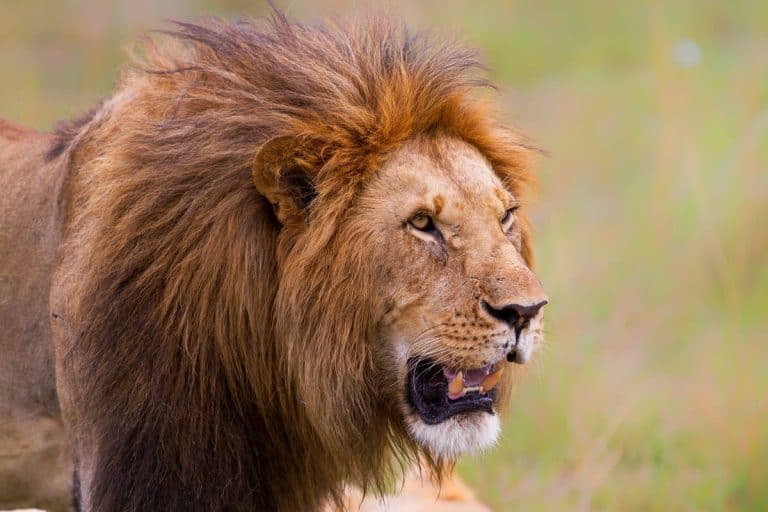
Despite what most people may believe, lions are not the largest of all wild cats, but they’re among the largest. While some lions live in India, most are located in Africa.
Though they’re not the largest felines, they are still quite large. Males typically stand up to four feet high at the shoulders, making them as tall as a hockey goal post. Many male lions can also measure close to 10 feet long when you include their tail, which makes them as long as a smaller U-haul truck. Finally, males can weigh up to 550 pounds. Female lions range from 5.5 to 6.6 feet long, including their tail, and they typically stand about 3.5 feet tall.
Lions live and work in groups called prides, and numerous members of the pride are often involved in hunting prey. They typically hunt during early morning or early night when it’s darker and they can more easily sneak up on their victims. Lions are extremely strong, but they can’t run for long periods, so they strategize and use teamwork to get their meals. Typical prey of lions includes wildebeest, zebras, buffalo, antelope, and warthogs. The female lions do most of the hunting because they’re smaller and faster. While they do that, the males protect the territory.
The lifespan of lions in the wild is approximately 12 years, but they can live twice as long in captivity. Sadly, the lion population worldwide is dwindling rapidly. Lion populations have declined drastically in recent history, with the number of lions dropping by 43% over the last two decades. Today, there are about 23,000, so these majestic beasts must be protected.
Tiger
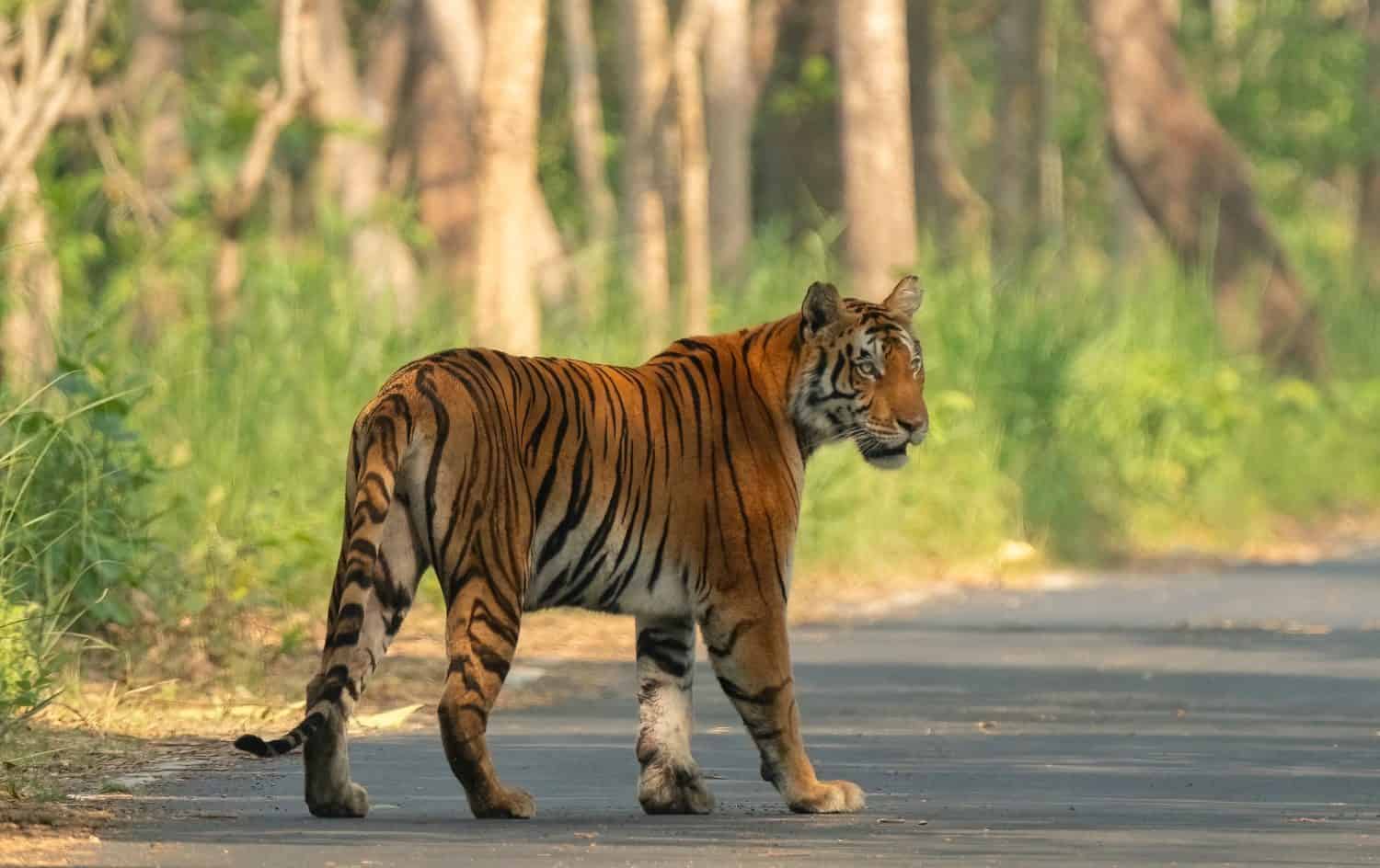
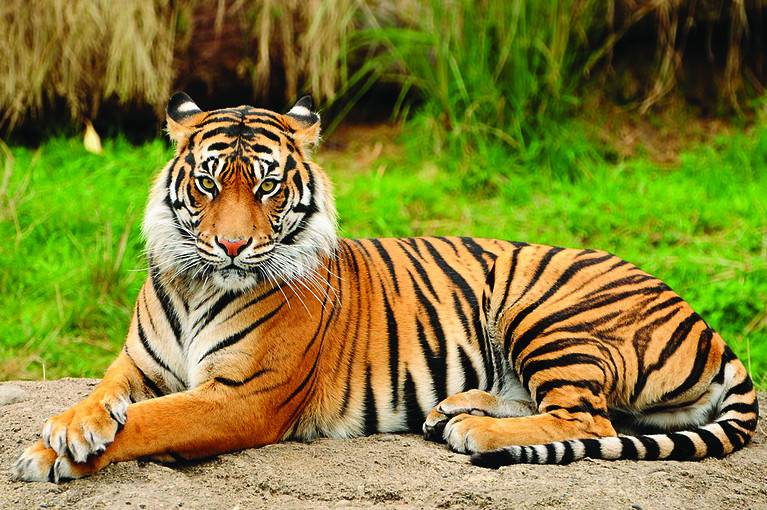
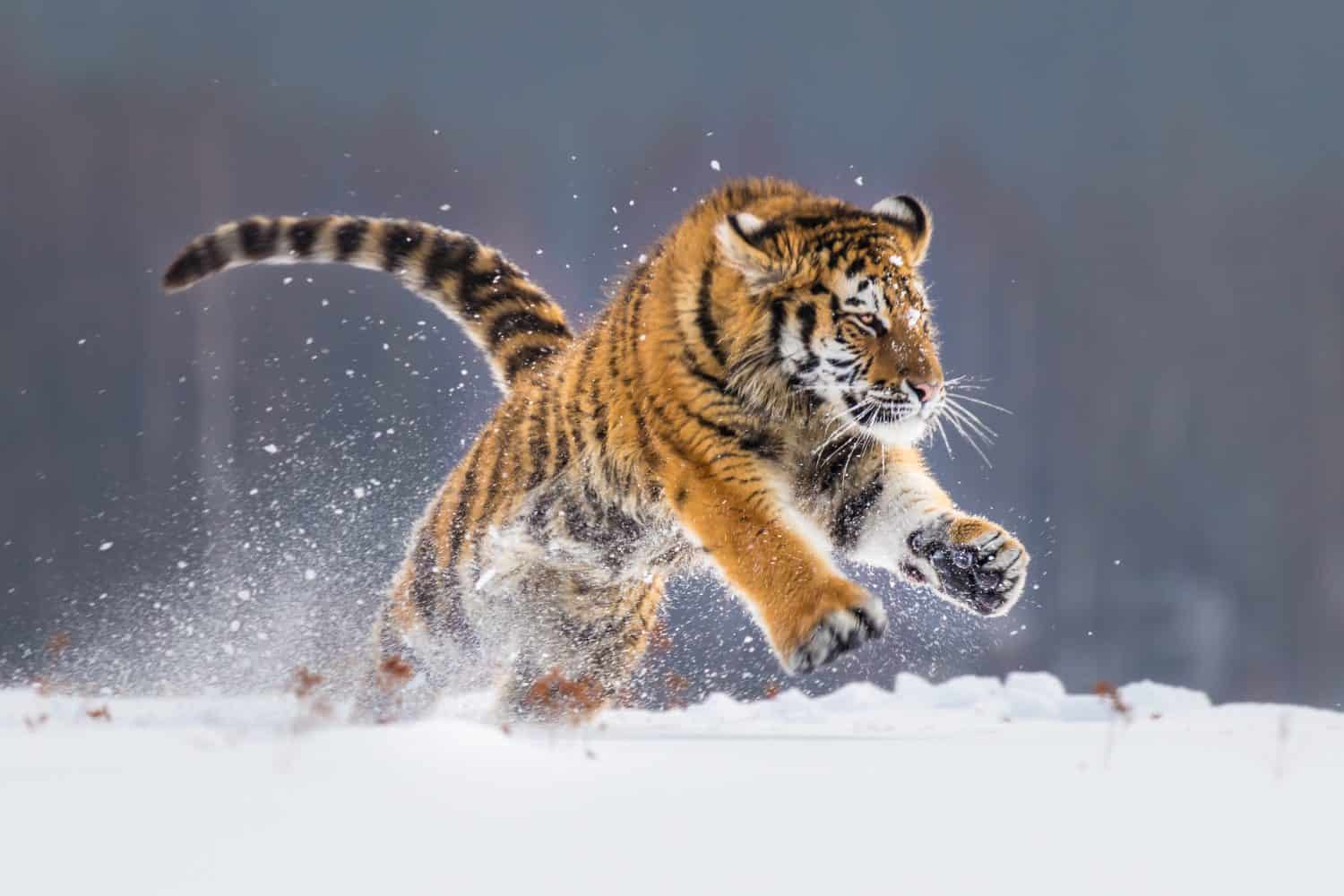
The mighty tiger beats out the “king of the jungle” as the largest wildcat in the world.
©AshishKumarPhotography/Shutterstock.com
Finally, we have the title holders for the official largest wildcats in the world, which are tigers. This breed is larger than lions are by almost any metric, and it’s really not even close. You’ll find tigers in Asia and the Sunda Islands, and if you’re near one, you won’t miss it. There are various tiger breeds in the world, including Amur, Bengal, Chinese, Indo-Chinese, and Sumatran tigers.
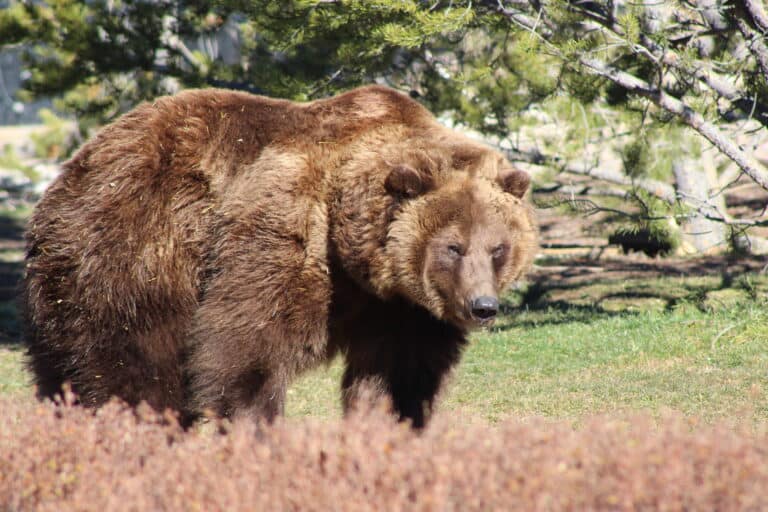
The Amur, or Siberian tiger, is typically the largest of them all, and a male can weigh close to 650 pounds, which is roughly the same size as an adult male grizzly bear. Females of this breed typically reach a maximum weight of around 370 pounds. The fully grown male is usually about 3.3 feet tall at the shoulders. Most impressive is that the male can measure upwards of 12.1 feet long when you include the length of the tail. That is almost as long as some African elephants or almost the width of a common two-car garage door. The females are a bit smaller, but they’re no slouch at about nine feet long, including the tail.
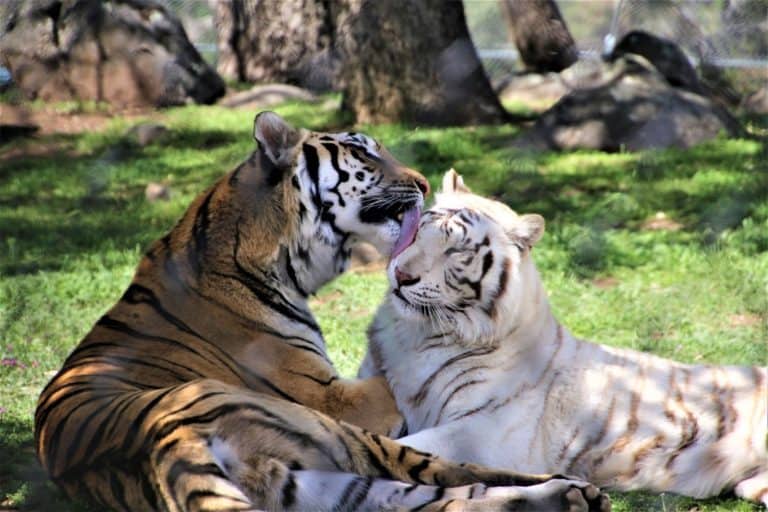
Though tigers are social creatures, they typically live solitary lives. They can swim quite well, and they seem to know that they’re a dominant force in nature, so they’re not afraid to hunt at night or in the middle of the day. Tigers tend to prefer prey that is medium to large, with examples including boar, deer, buffalo, and other hoofed animals. Though it’s not as common, they’ve also been known to attack and hunt crocodiles, bears, and even leopards. Tigers are very resilient creatures that often live well into their 20s both in the wild and in captivity.
Like all of the other large wildcats on this list, tigers are quite impressive, and they’re just another fascinating cog in the wonderful machinery of nature.