
Quick Take
- Achieving a 4,400 pound pull capacity remains the standard for the Ardennes breed today.
- Maintaining a 2,000 pound mass creates significant energy requirements for the Ardennes draft horse.
- Julius Caesar categorized these powerful war engines as rustic, contrary to typical military standards.
- Utilizing the Ardennes during World War 1 was necessary before mechanized solutions became viable.
Long before the Industrial Revolution that brought about so much amazing modern technology, humans relied on the strength and power of many different animals. One of the most iconic animals that humans have worked alongside is the horse. Horses boast strength and power, and listen dutifully to human commands, making them perfect for farming, travel, and, in the past, even war.
One of the oldest breeds is the Ardennes, which dates back to ancient Rome and the time of Julius Caesar. This Instagram post by @explainingthewild highlights this remarkable breed. Read on to learn more about their history.
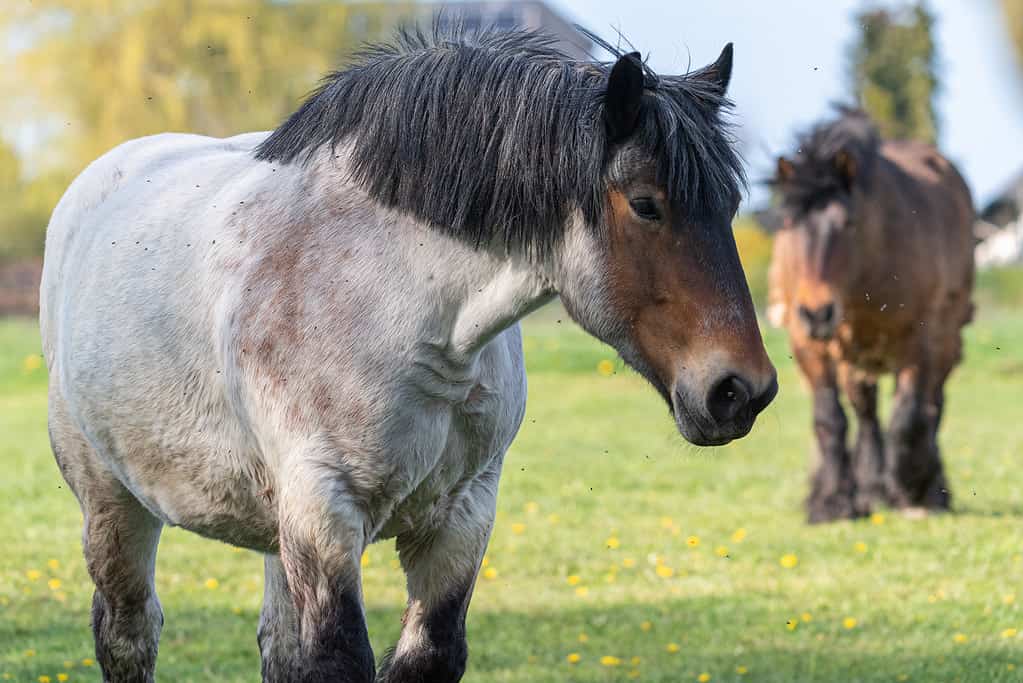
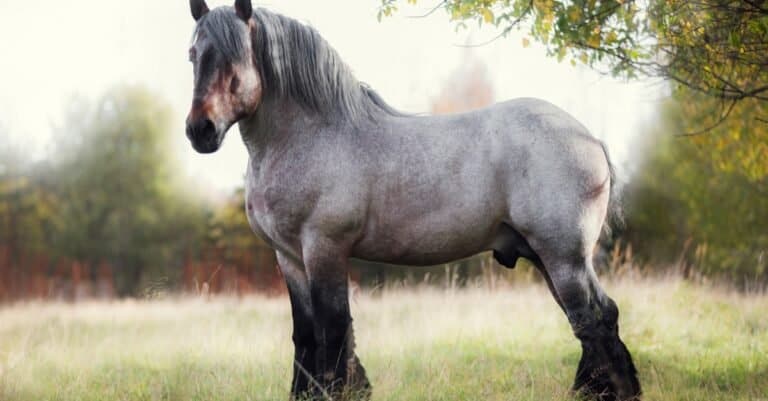
Ardennes horses have dense bones and strong muscles that make them stocky.
©OK-Photography/iStock via Getty Images
From War to Farming
Horses have been a part of both farming and war throughout history. Long before we had tractors and tanks, heavy horses were the engines of development. The most iconic breed is the Ardennes draft horse. Similar to their modern appearance, these horses are a muscular breed that is perfect for tough work like farming. Their origins are in the Ardennes region, from which they get their name. This region includes modern-day Belgium, France, and Luxembourg.
The ancestry and use of these horses date back over 2,000 years. Documents from ancient Rome attest to the existence of these horses. In his Commentarii de Bello Gallico, Julius Caesar described the horses of the region now known as the Ardennes as rustic and tireless. The modern Ardennes breed is believed to be descended from these ancient horses. They are praised for their rustic and tireless nature—traits that also make them excellent farm horses.
Throughout the medieval period, Ardennes horses were essential for both war and work. Their ability to pull heavy equipment, such as wagons and supplies, made them essential for both war and agricultural work. In fact, the horses were even used in World War I before mechanization took over. When not at war, these horses were perfect for agriculture.
Their strength allows them to plow land, pull wagons full of crops, and traverse a variety of terrains. This work ethic made them ideal for farming, especially before machinery was available. Not only did they help on farms, but they were also used for industrial work. Because of their strength and reliability, they were often used to haul goods from mines before tractors became widespread.
About the Ardennes Draft Horse
The Ardennes draft horse is a heavy, compact, and muscular breed that grows to roughly five feet tall. Their stocky build means they are quite heavy, weighing about 1,500 to 2,000 pounds. Most Ardennes horses are brown and are notable for their thick necks and broad chests, features characteristic of their stocky build.
Despite their impressive strength, they are quite calm—most are patient, highly intelligent, and easy to train. This temperament makes them perfect for demanding work, such as farming. A healthy Ardennes can pull about 1.5 to 2 times its own body weight, typically between 2,250 and 4,400 pounds at a time. This is the equivalent of pulling the weight of trucks and SUVs. The practical abilities of these horses have made them treasured throughout time.
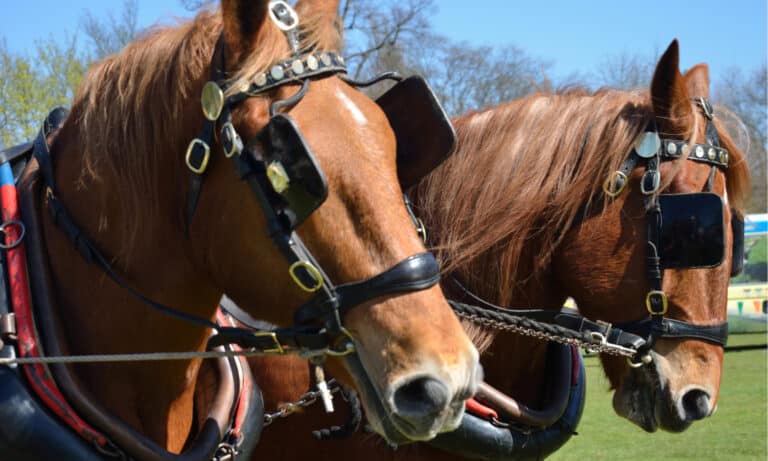

![Sampson (later renamed Mammoth)[1] was a Shire horse gelding born in 1846 and bred by Thomas Cleaver at Toddington Mills, Bedfordshire, England.](https://a-z-animals.com/media/2022/12/Sampson_horse.jpeg)