
Quick Take
- Mongoose pups deliberately avoid their own parents when choosing a mentor, and the reason behind this behavior reveals something remarkable about how they grow up. Meet the mongoose mentors →
- A tiny mongoose has been caught on video making lions back down, and most people would probably guess its secret weapon incorrectly. See the surprising standoff →
- A black market commodity made from mongoose fur may be hiding in plain sight in some art studios. Discover the hidden trade →
- Mongooses pass down cultural traditions the same way dolphins and primates do, and the mechanism behind this turns out to be stranger than you'd expect. Explore mongoose culture →
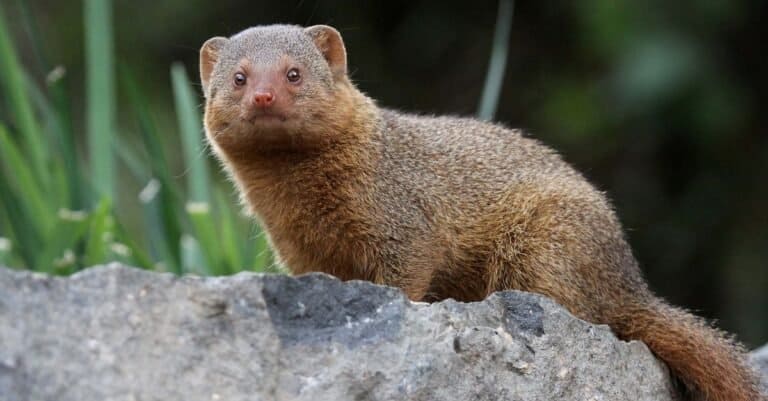
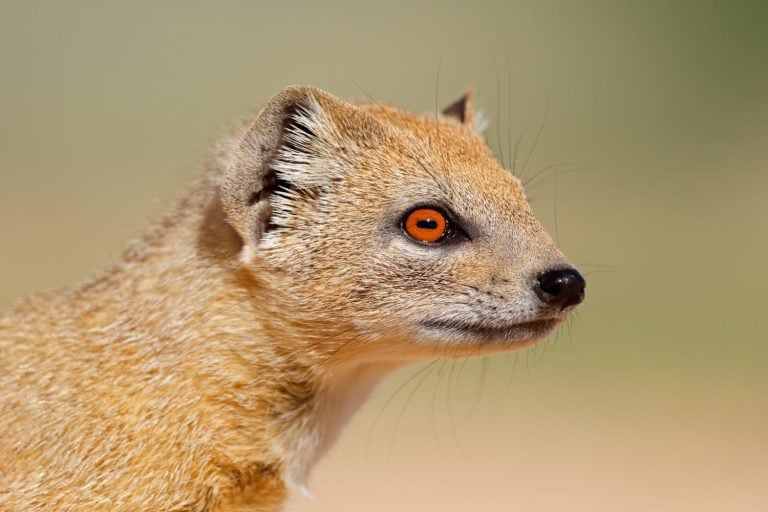
The mongoose is a weasel-like mammal belonging to the family Herpestidae. A close relative of the meerkat, mongooses have long bodies, tapered snouts, and short legs. They can range in size from 7 inches to around 2 feet long. It’s normal for a mongoose to have gray or brown fur, and certain species even have ringed tails and striped coats. These small, quick-footed critters are full of surprises. Read on to learn 10 amazing mongoose facts.
1. Mongooses’ Mutated Cells Resist Snake Venom
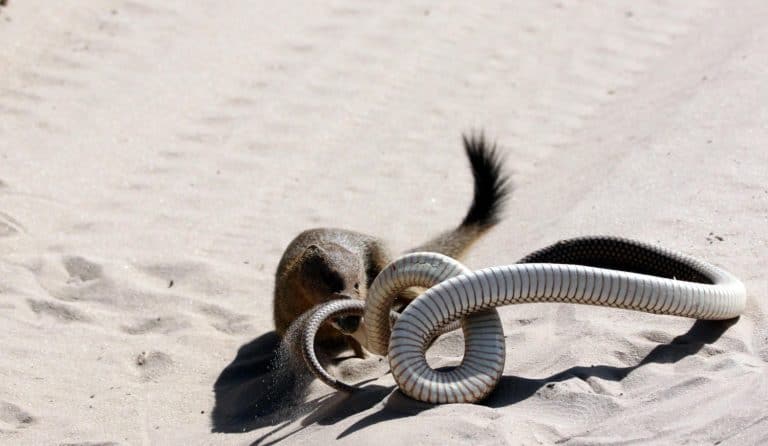
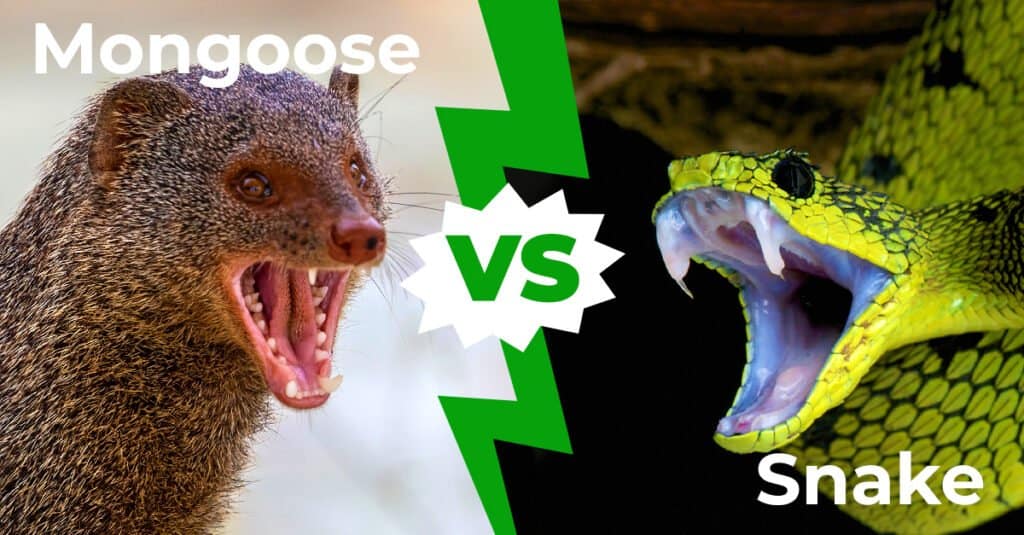
First on our list of incredible mongoose facts, they will happily take on venomous snakes. When it comes to a snake vs. a mongoose, this small mammal has a unique advantage. While they’re not fully immune to cobra venom as once believed, most mongoose species in the family Herpestidae have varying levels of resistance to snake neurotoxins. The mongoose’s resistance to snake venom is due to a mutation in its nicotinic acetylcholine receptors. This mutation stops neurotoxins from binding to the muscle and nerve cells, which keeps their muscles and nerves functioning.
2. Mongoose Bodies Are Built for Battle
Mongooses are quick-footed animals built for battle. Along with snake venom resistance, a mongoose also uses its lightning-fast reflexes and thick coat of fur to avoid the snake’s bite altogether. Mongooses jump and dance around the snake to confuse it and tire it before striking. They aim straight for the back of the skull to deliver a quick, killing bite.
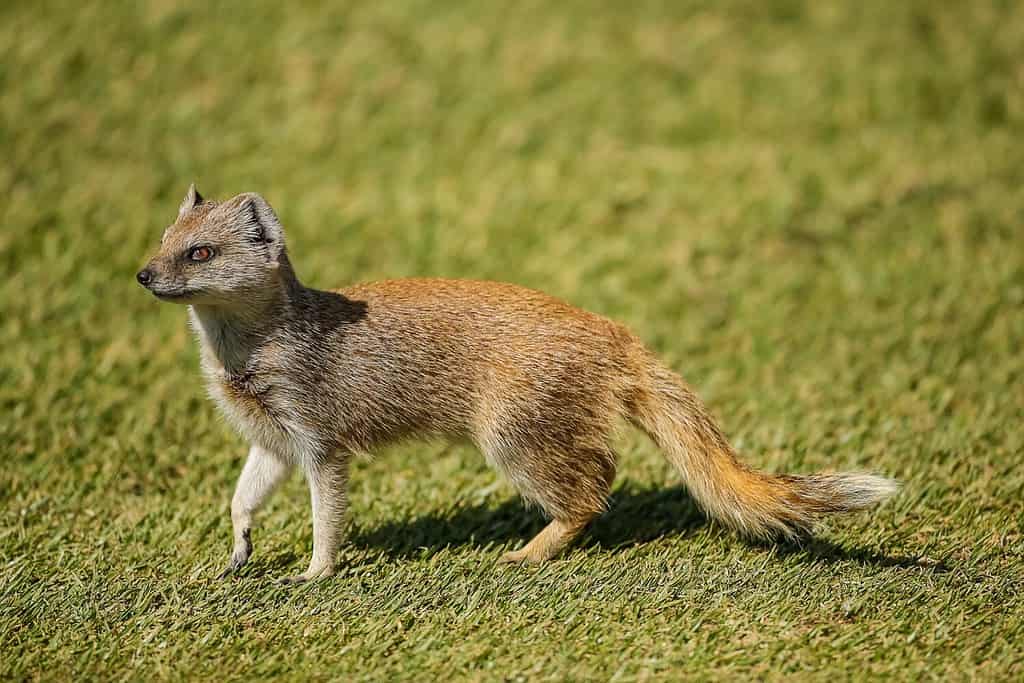
The mongoose has an agile, venom-resistant body built for battle.
©Tyrone Winfield/Shutterstock.com
3. Mongooses Live in Large Groups
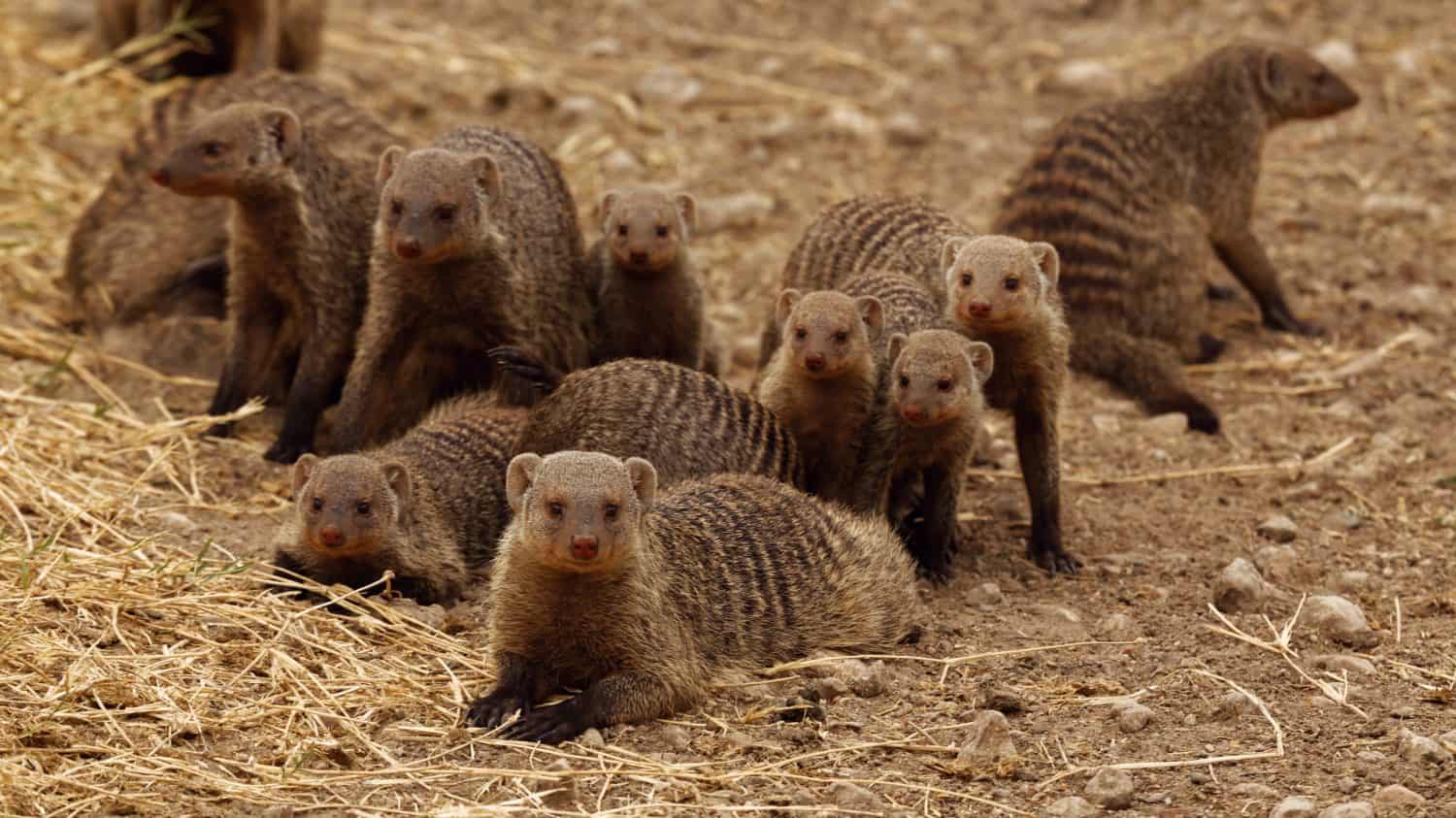
Species like the banded mongoose (Mungos mungo) and the common dwarf mongoose (Helogale parvula) are very social and live in large colonies. Others, like the Egyptian mongoose (Herpestes ichneumon), are more solitary. These groups can have up to 50 members. Living in colonies helps them communally care for the young, watch for predators, and mob larger predators.
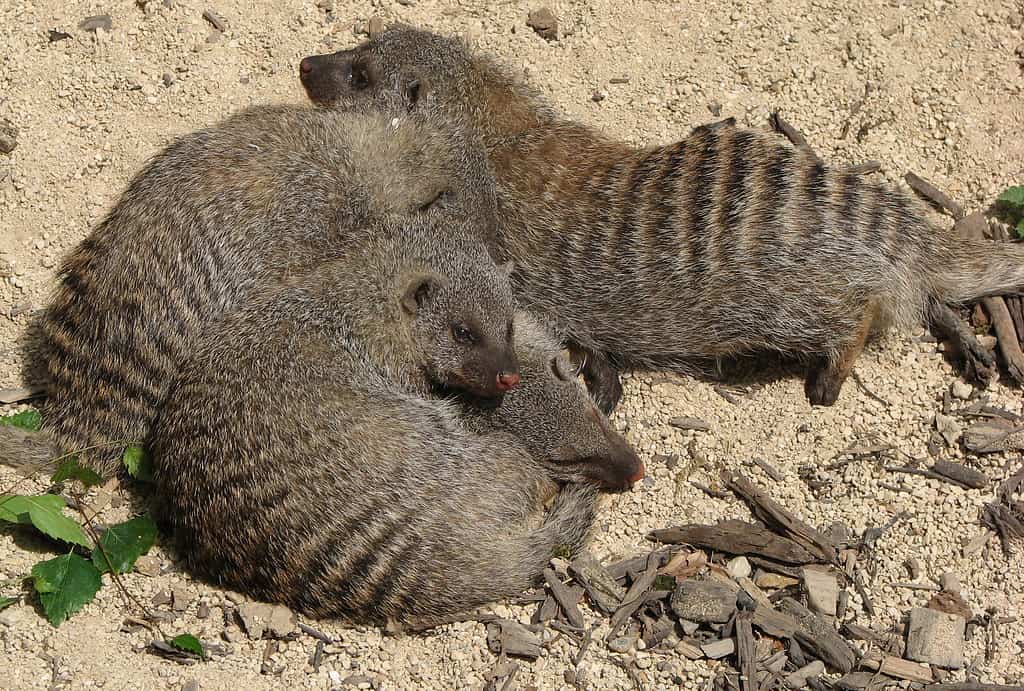
While you may imagine the mongoose to be a solitary creature, some species live in large groups.
4. Mongoose Pups Have Special Chaperones
As mentioned above, some mongooses produce large communal litters and raise their young together. When banded mongoose pups leave the den, they choose someone other than the parent, like an older sibling or a cousin, to be their chaperone as they grow. The pups form special one-on-one bonds with their chaperones, spending all their time with the adults who serve as their mentors. The chaperone plays with the pup, feeds it, and teaches it until the pup reaches adulthood.
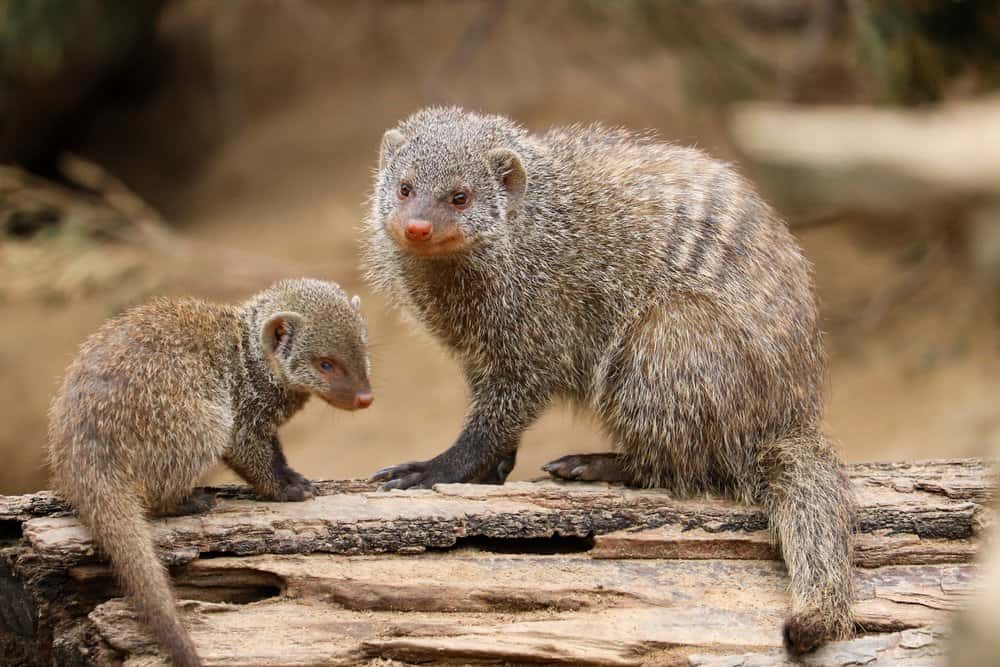
A mongoose pup spends all of its time with a mentor that is not its parent.
©Cassidy Te/Shutterstock.com
5. Mongooses Have Cultural Traditions
The banded mongoose might be small, but that doesn’t stop it from having cultural traditions like primates, dolphins, and killer whales do. Researchers discovered that mongoose pups copy foraging traditions from their chaperones. Even more surprisingly, scientists found that the pups continued to preserve those traditions as they got older.
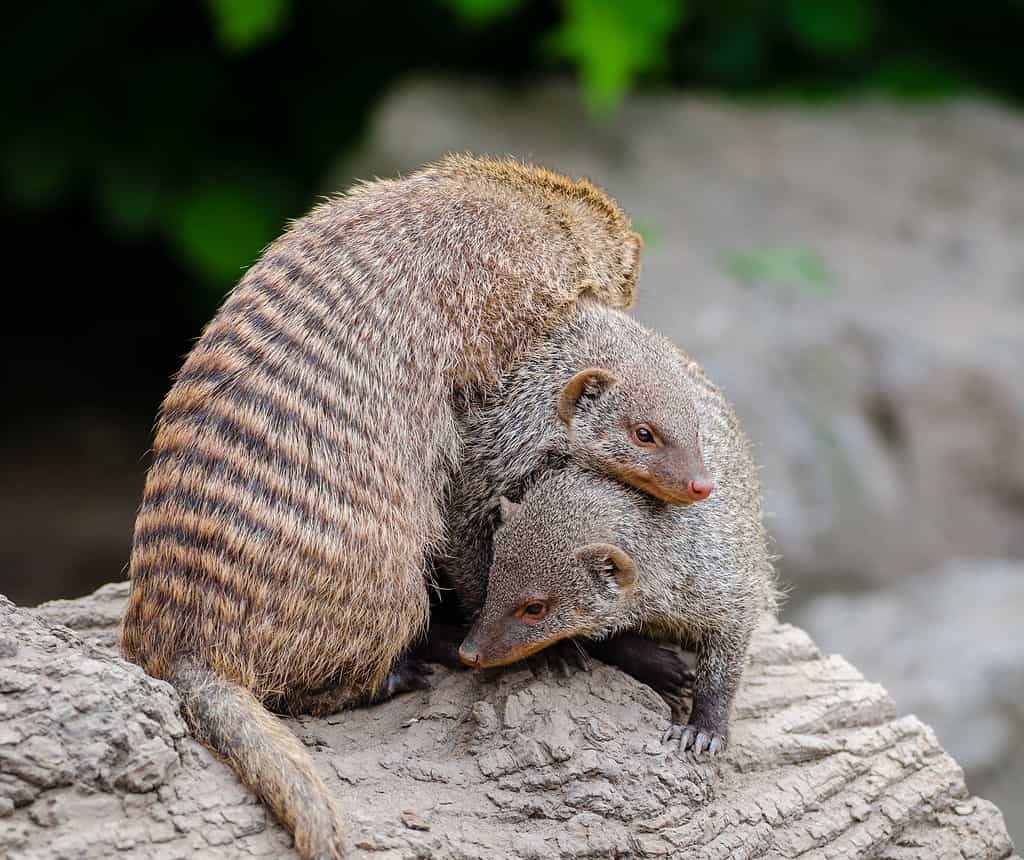
Mongooses pass on foraging traditions to their young.
6. Synthetic Fur May Be Saving Mongooses
Synthetic fur just might save some mongoose species. In 1972, India prohibited buying and selling mongoose parts. This included their hair. However, the black market for mongoose hair continues to thrive. Regular arrests are still taking place for smugglers transporting mongoose hair. The hair is typically used to make illegal paintbrushes.
Thankfully, paintbrush companies are stepping up to help. New mongoose-free alternatives are being made to replace the real thing. Different brands are creating proprietary mixes of hairs that can mimic the texture of mongoose hair. Eventually, synthetic hairs might be able to save real animals from extinction.
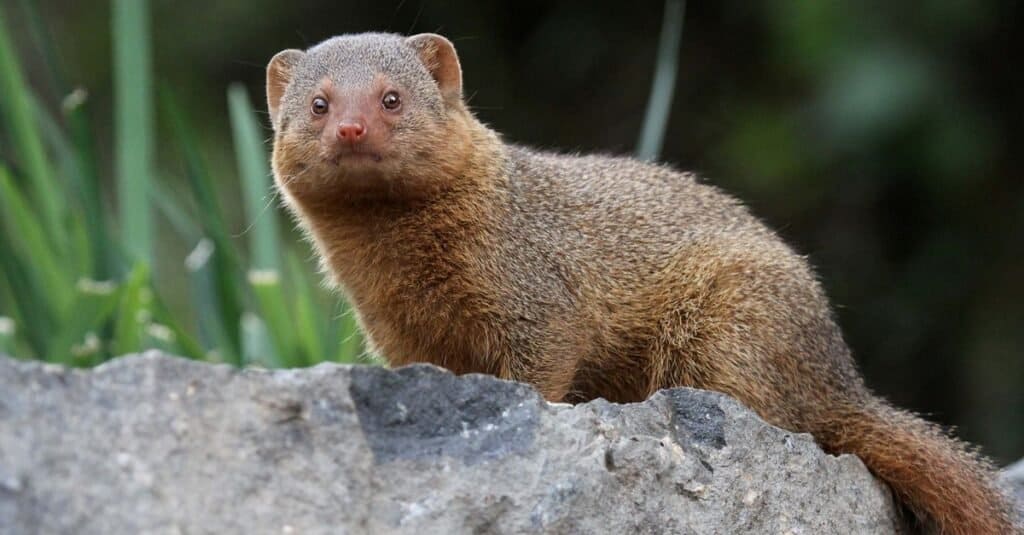
The synthetic hair industry is helping the mongoose, which has been hunted to dangerous levels for its hair.
©steve bushman/Shutterstock.com
7. Mongooses Have Been Known to Fend Off Lions
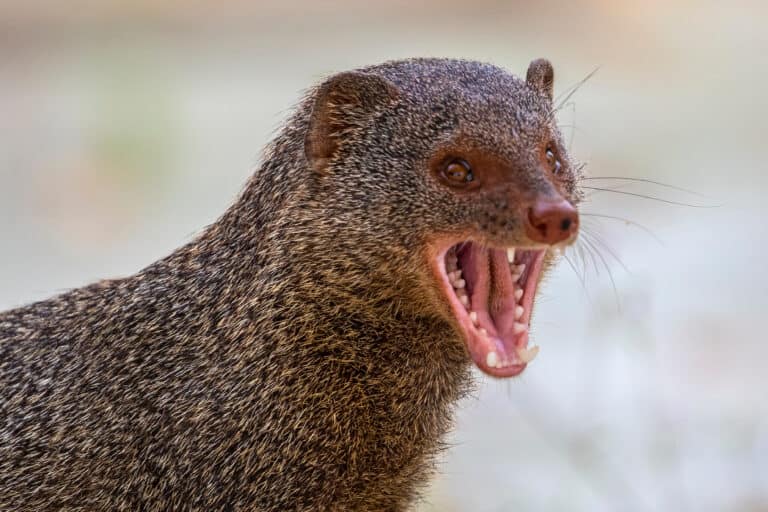
Next on our list of incredible mongoose facts: lions may retreat in the face of an angry mongoose. Viral videos have shown mongooses taking on multiple lions and coming out on top. Mongooses are unpredictable and hyper-aggressive for their small size. When defending territory or pups, mongooses have even been known to attack lions directly by biting their tails or legs. As for the lion, a mongoose may be too small a meal to risk getting an infected bite or being mobbed by the mongoose’s pack of relatives.
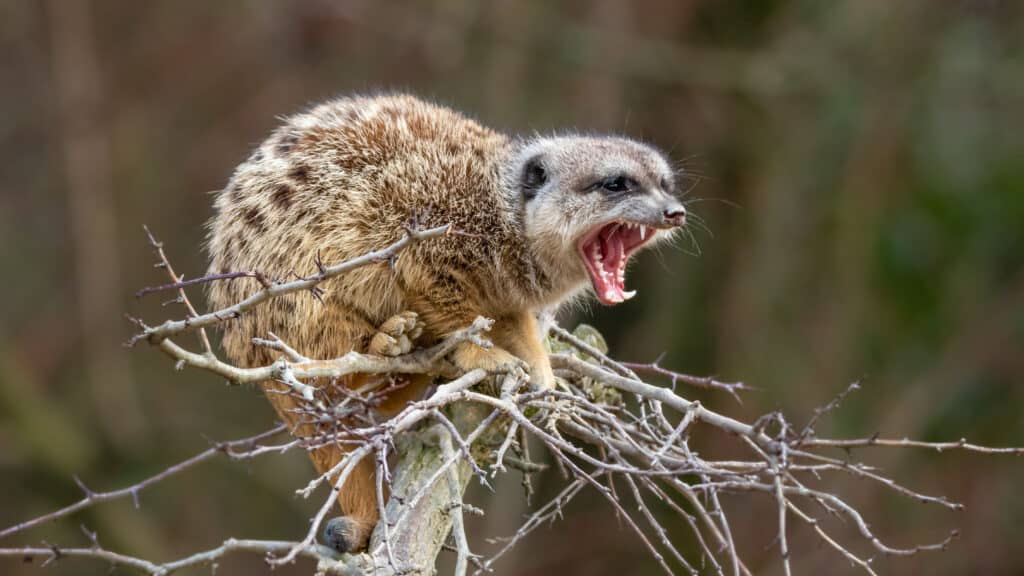
Mongooses are incredibly aggressive for their small size.
©MartinJGruber/Shutterstock.com
8. Some Mongooses Are Semi-Aquatic
The water mongoose (Atilax paludinosus), also called the marsh mongoose, is the only semi-aquatic mongoose species. Native to the wetter areas of sub-Saharan Africa, they prefer slow-moving rivers, streams, lakes, marshes, swamps, and other bodies of water bordered by abundant vegetation. However, unlike most semi-aquatic animals, they do not have any webbing between their toes. These mongooses primarily eat aquatic animals like fish, crustaceans, snails, and amphibians.
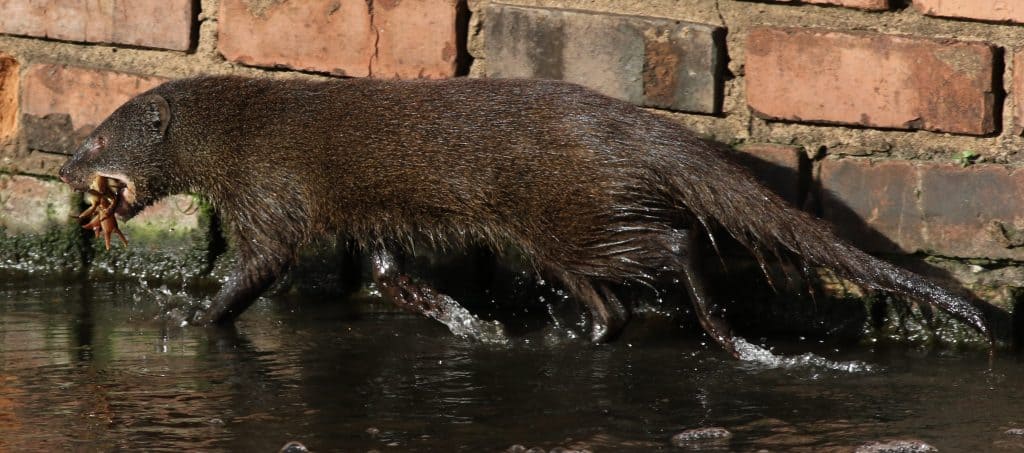
The marsh mongoose is the only semi-aquatic mongoose species.
9. Invasive Island Mongooses Are Killing Birds
Back in the 1800s, several islands in Hawaii and the West Indies released mongooses to control rodent populations. The mongoose’s job was to kill enough rodents to secure the sugar cane plantations. Unfortunately, this decision continues to haunt the islands today. These island mongooses are threatening the survival of native island species, particularly birds. Of course, it’s not the mongoose’s fault. They never asked to come to the island in the first place.
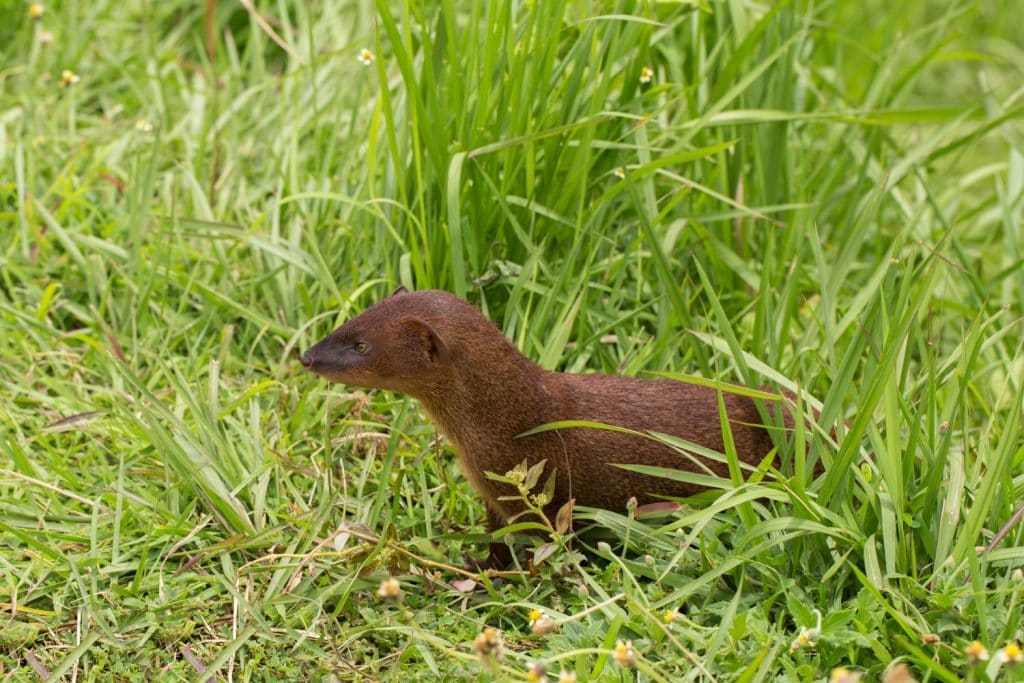
Some islands in the West Indies have bird species that are threatened by introduced mongooses.
©dwi putra stock/Shutterstock.com
10. Mongooses and Hornbills Are Friends
Common dwarf mongooses and hornbill species, including the southern yellow-billed hornbill (Tockus leucomelas) and Von der Decken’s hornbill (Tockus deckeni), have a cooperative relationship where they help each other forage for food while avoiding threats. The birds serve as lookouts, scanning their surroundings for danger, while the mongoose pack moves through the grass, digging into termite mounds and flushing insects, lizards, and small mammals out of hiding. The hornbill follows the mongooses to snatch the fleeing prey and gives a loud warning call if a predator is spotted in the area.
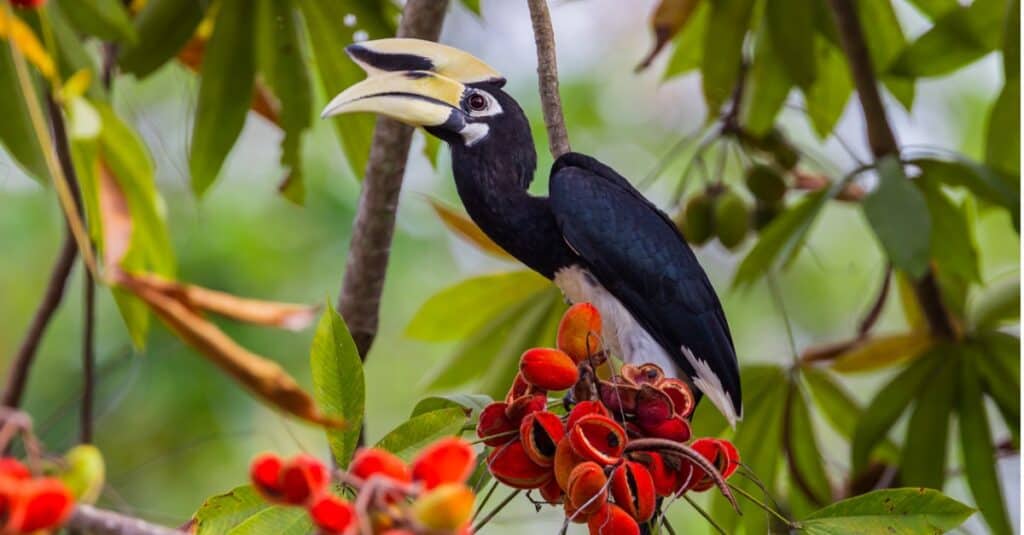
Dwarf mongooses and hornbills have a mutualistic relationship.
©iStock.com/kajornyot