
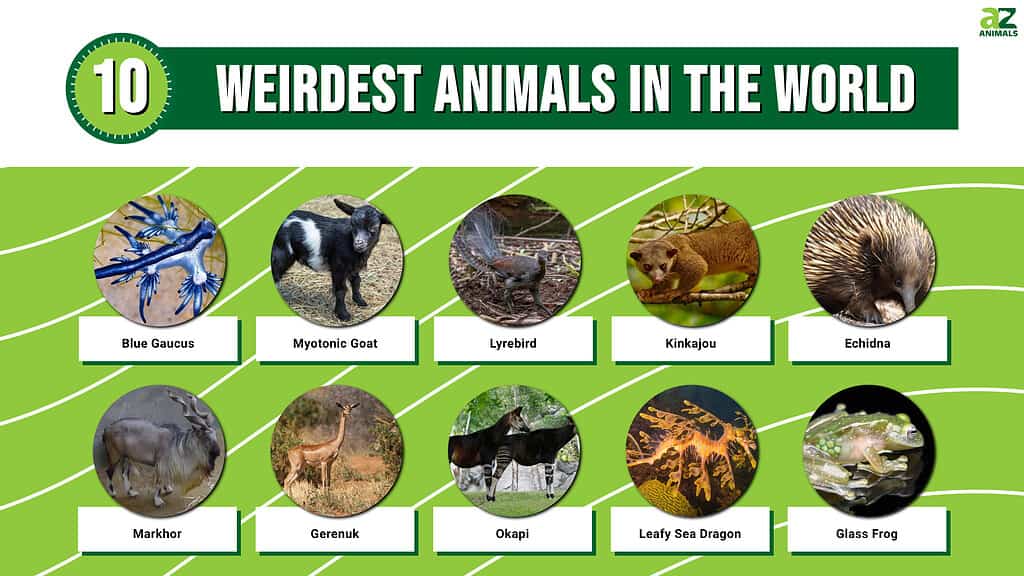
Imagine that you were at an animal show and you had been chosen to pick out the world’s weirdest animal. You are presented with one animal from each of the 8.7 million surviving species of animals globally. Like a judge at a dog show, you may pull out some animals, like the elephant with its long trunk and the giraffe with its long neck, as finalists, but when it comes time to name the weirdest animals in the world, these animals barely get noticed. Continue reading to discover some of the more unique animals in our world, based on their rarity and at least one characteristic that sets them apart.
Glass Frog – Transparent Abdomen
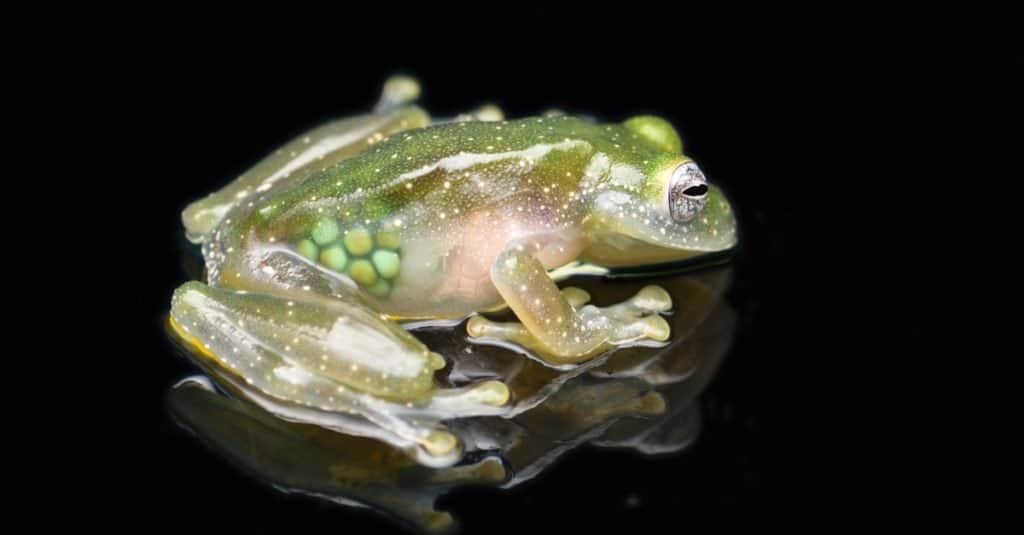
The translucent skin of this species permits an observer to see the frog’s beating heart.
©petrdd/Shutterstock.com
The glass frog’s unique characteristic is its transparent abdomen, through which you can see its internal organs. Viewers witness the heart pumping blood into the arteries and food moving through the stomach and intestines.
These animals, which live in tropical rainforests, are also unique in that males guard the nest until the eggs become tadpoles while the mother is nowhere to be found. Guarding the nest can be challenging work because carnivorous wasps love to feed on these rainforest eggs. Male glass frogs use their long back legs to kick the wasps away.
Leafy Sea Dragon – Looks Like a Leaf
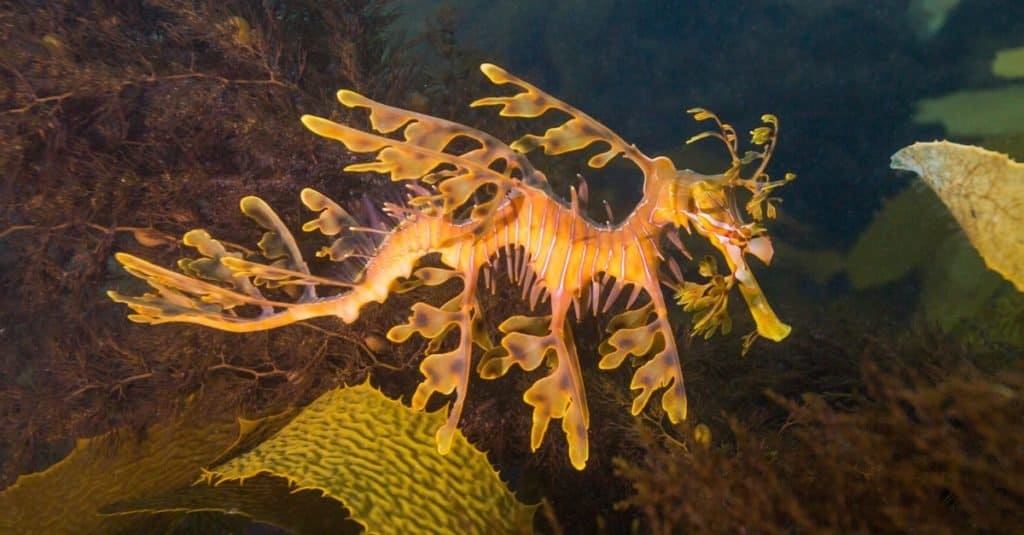
Leafy Sea dragons do not have any predators. Their combination of excellent camouflage, tough jointed plates, and sharp dorsal spines offer adequate protection.
©AshtonEa/Shutterstock.com
If you are diving in the waters off the Australian coast and see something resembling a twig in the seas, you may want to pay attention because it may be a leafy sea dragon. While it may look like a twig, it does not use these body parts to move through the water. Instead, it has two minuscule fins that are almost transparent, which leafy sea dragons use to propel themselves. Male leafy sea dragons have a unique sticky area under their tails where the females lay their eggs. Then, the male carries the eggs for about 5 weeks before releasing them into the water.
Okapi – Strange Coloring Pattern
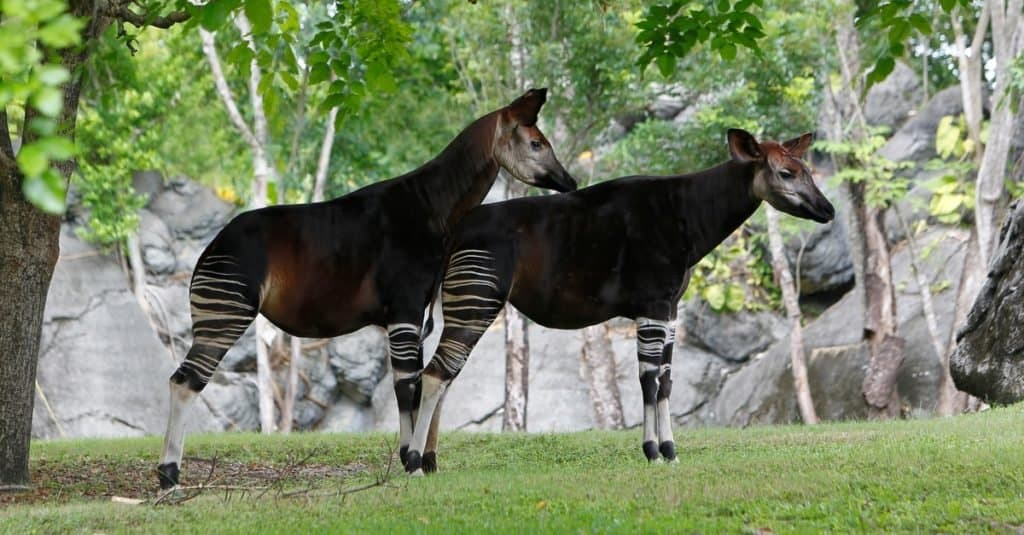
The okapi’s long prehensile tongue is used to strip leaves from branches and vines.
©slowmotiongli/Shutterstock.com
The strange coloring pattern on the okapi makes you wonder if this animal is a species of deer or zebra, but okapis are the only living relative of the giraffe. You can see the resemblance in the okapi’s head. These animals live in the Ituri Forest, a dense rainforest in the Democratic Republic of the Congo.
Okapis rely on their hearing to warn them when danger is nearby. Scientists believe that the white stripes on the okapi’s hindquarters and front legs may make it easier for calves to follow their mothers. These stripes camouflage them from their predators. While calves can walk within 30 minutes of birth, they do not defecate until they are about 6 weeks old so as not to attract predators.
Gerenuk – Long Neck
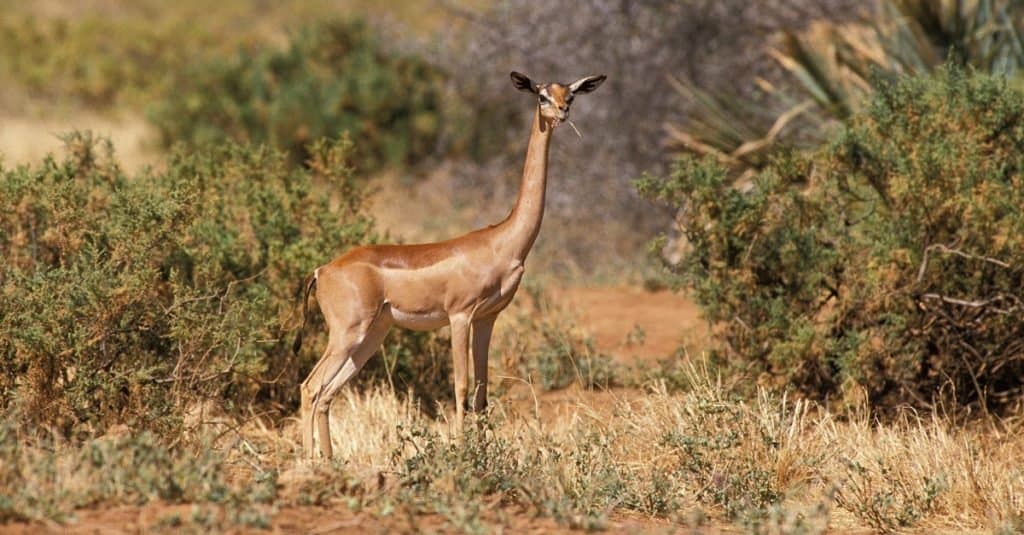
A gerenuk at the Samburu Park in Kenya.
©slowmotiongli/Shutterstock.com
The East African gerenuk has an extremely long neck and the ability to rear up and stand on its back legs. This allows gerenuks to pluck leaves from trees and eat plants that other animals cannot reach. Standing on their hind legs, they can be up to 6 feet tall.
This member of the antelope family has proven difficult to raise in captivity because of their shy nature and their unusual dietary requirements. Gerenuks seldom drink water. Instead, they rely on their diets to provide the liquid that they need.
Male gerenuks have unique s-shaped horns that curve backward over their bodies, which can be up to 17 inches long, while females have straighter horns. When a male senses that a female is ready to breed, he will mark her with special secretions from scent glands beneath his eye before kicking her several times, before mating.
Markhor – Spiral Horns
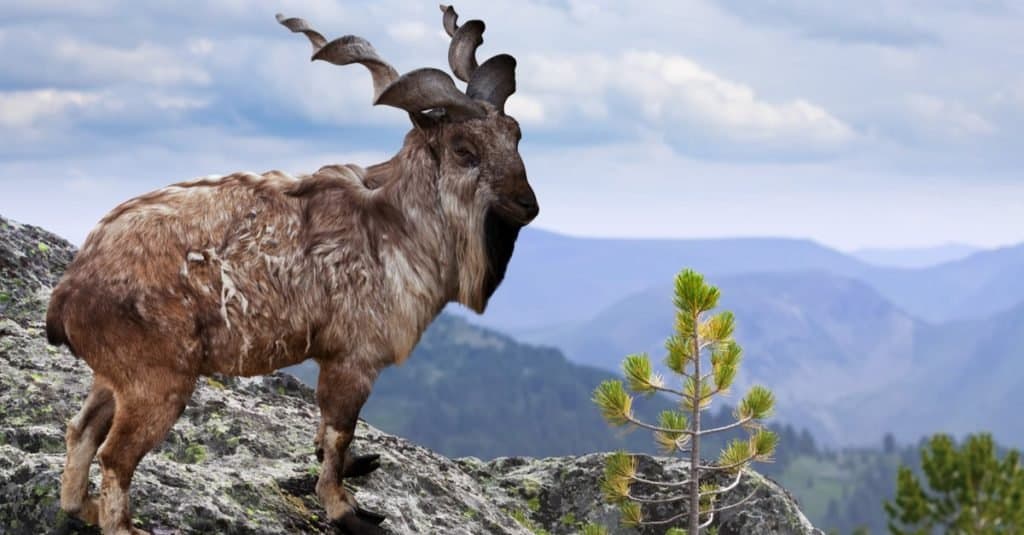
Markhor is Persian for snake.
©BearFotos/Shutterstock.com
The unusual spiral horns, which can grow to be five feet long, make the markor one of the weirdest animals! These Himalayan animals have extremely wide hooves, which they use to step on snakes to kill them. Their broad hooves also help them keep their footing.
Male markhors have long, thick beards and tufts of hair on their legs. Like horses, the length of their coat varies by the season. Females of this species, the largest of the goat family, live in herds of 50-to-100 animals.
Echidna – A Mammal that Lays Eggs
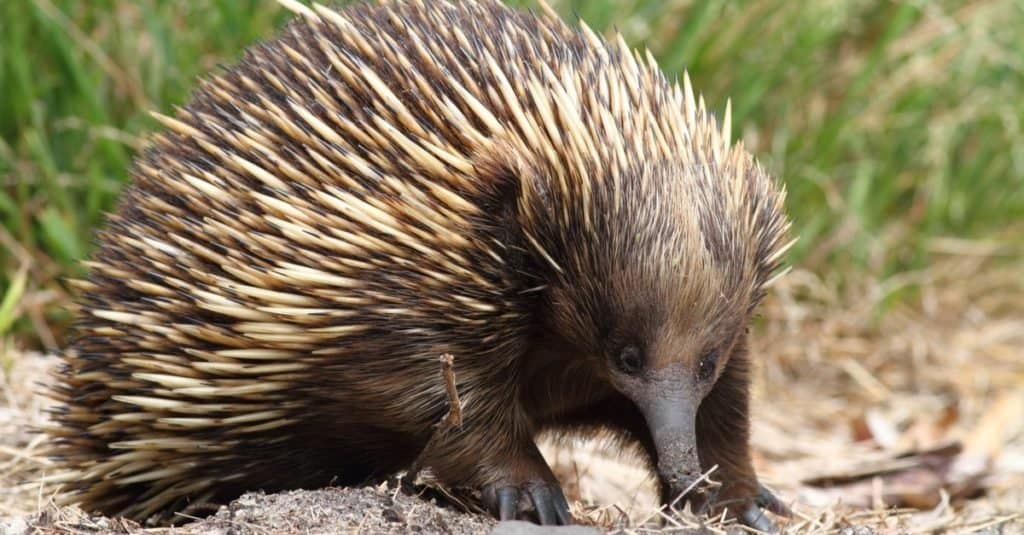
The platypus and the echidna (pictured) are the only mammals that lay eggs.
©Wayne Butterworth/Shutterstock.com
Besides the platypus, the echidna is the only mammal that lays eggs. Native to Australia, Tasmania, and Papua New Guinea. Solitary animals, echidnas have tiny eyes and do not see well. They compensate by having keen hearing and a great sense of smell. The body of the echidna is covered with beige-and-black spines, similar to porcupines.
This animal has unusual feet with exceptionally long second toes. Echidnas use these long toes to comb their body, collecting bugs to eat. When it senses that predators are nearby, the echidna quickly digs a hole in the ground. It digs straight down until only the very tip of its tail is showing above ground, and it stays there until the danger has passed. Their short legs are extremely powerful, allowing them to dig into the ground quickly.
Kinkajou – Tree-dwelling Mammal
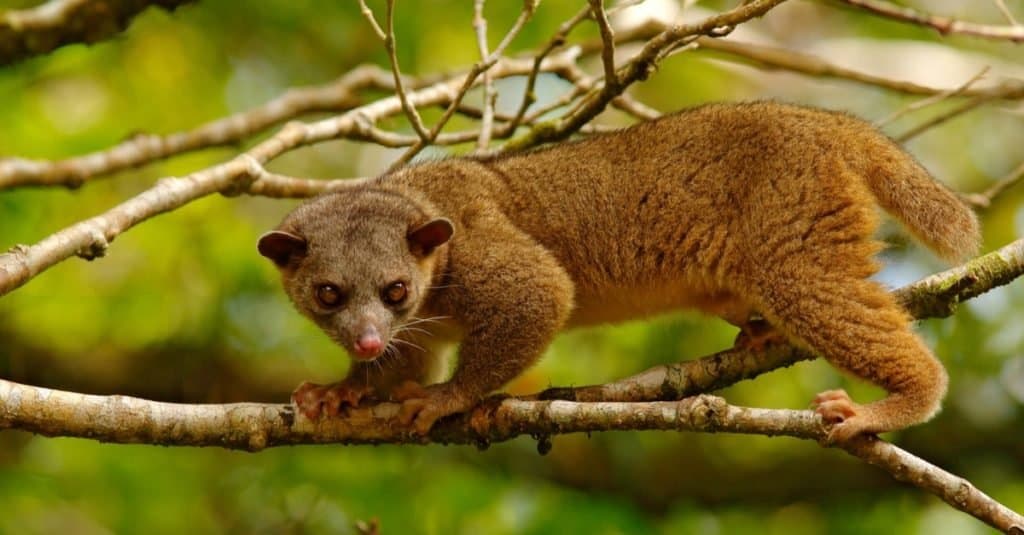
A Kinkajou can rotate the ankles on their hind feet backward!
©Ondrej Prosicky/Shutterstock.com
The kinkajou is one of the few mammals, besides primates, that is adapted to a tree-dwelling lifestyle.. These animals can turn their feet around so that they can efficiently run backward, qualifying them as one of the world’s weirdest animals! While the kinkajou’s body is only about 20 inches long, its tail can be as long as its body. It uses its tail to cover up while it is asleep. You may be able to spot this Central and South American animal hanging upside down near the tops of trees, where it might be using its long tongue to steal honey, its primary food source, from bees! This is why the kinkajou is often called a honey bear.
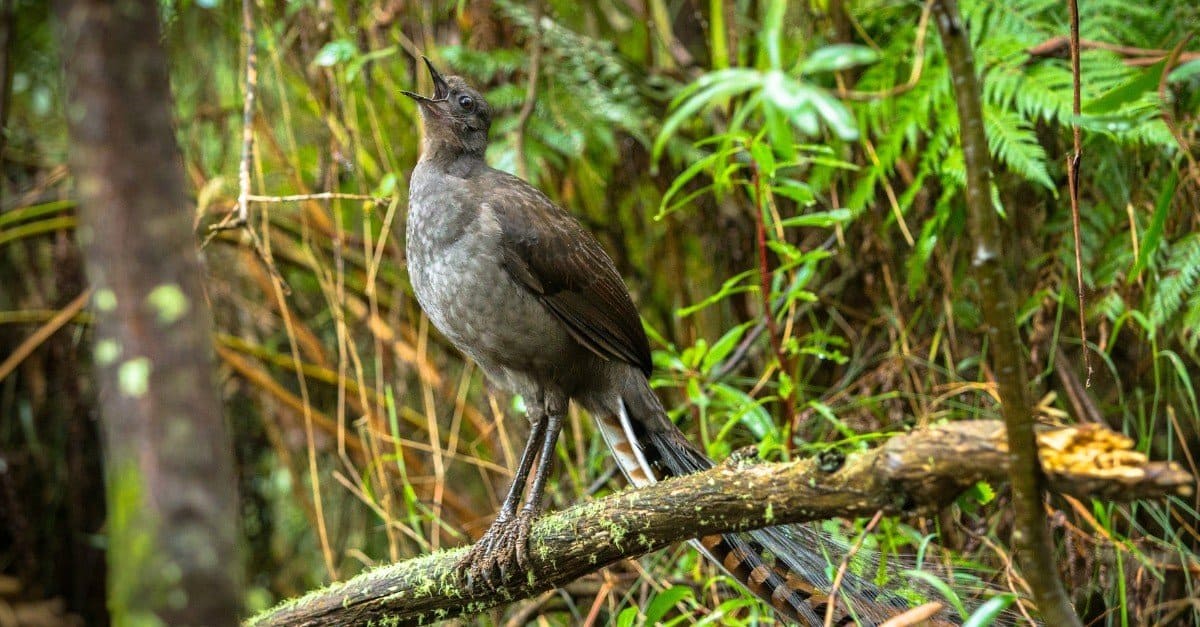
Lyrebird – Mimics Environmental Sounds
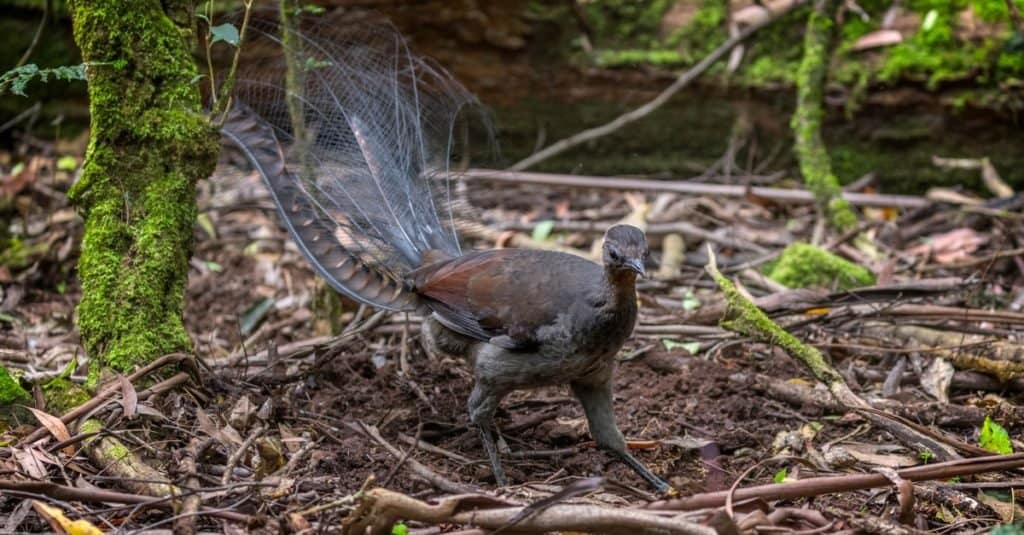
The lyrebird has been described as having the most elaborate, complex, and beautiful song in the world.
©Nico Faramaz/Shutterstock.com
While many birds can mimic the sounds of other birds, the lyrebird is unique in its ability to mimic environmental sounds. While most birds have a four-part syrinx that they use to produce their songs, Australia’s lyrebird only has a three-part one. Scientists are unsure if this is the mechanism that allows them to make unique sounds, like chainsaws and cameras clicking, making it one of the world’s weirdest animals!
This ground-dwelling bird is also superb for the environment. Lyrebirds use specially designed feet to rake through leaf litter, moving up to 352 tons of earth each year, more than any other animal on earth, including gophers, moles, and earthworms! Their digging hastens natural decompensation, a key component of a healthy forest.
Myotonic Goat – Faints When Scared
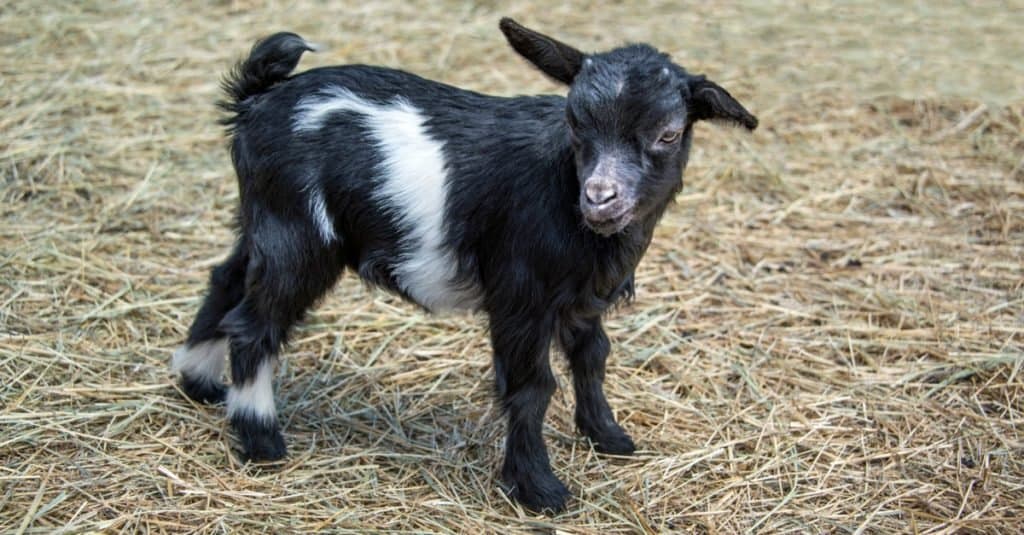
When something surprises or startles them, myotonic goats fall over!
©Georgia Evans/Shutterstock.com
Often called fainting goats, myotonic goats are among the weirdest animals. These animals fall down when they are startled, and their limbs become rigid. Myotonic goats are born with a rare condition called Myotonia congenita. When they are startled, their muscles do not relax, so they topple over. This breed of goat comes in a variety of shapes and sizes.
The origins of myotonic goats are mysterious. In the 1880s, four myotonic goats were brought to Tennessee by a farmer named John Tinsley, who was thought to have come from Nova Scotia. He never shared how they came to have their myotonic tendencies, but when he eventually moved away, he sold them to Dr. H. H. Mayberry, whose research into the history of these strange goats came to nothing. But he did begin breeding them himself, and these weird goats, sometimes referred to as Tennessee fainting goats, grew in number.
Blue Glaucus – Unique Blue-Colored Mollusk
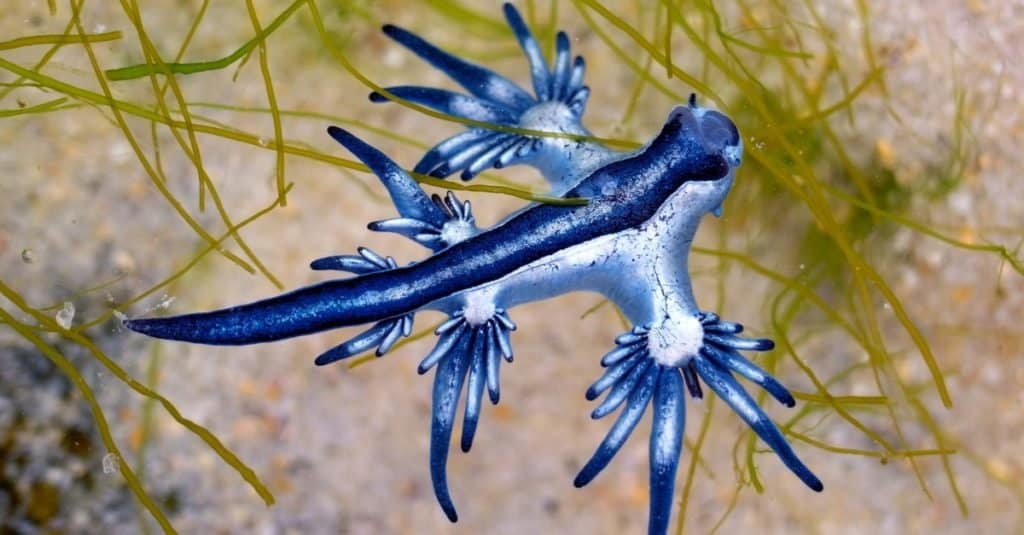
The blue on a blue dragon’s back helps it blend in with the reflective surface of the ocean.
©Sahara Frost/Shutterstock.com
Also known as the blue dragon, the blue glaucus is a mollusk found in the Atlantic, Indian, and Pacific Oceans. Floating through the water on its back, an air bubble in its stomach keeps it afloat. This animal has a rare feeding and protection pattern that it uses while floating in groups, called a fleet. Blue dragons use venom to kill other venomous, often much larger, marine life. They then use their radular teeth to cut the animal into bite-sized pieces. While dining, the blue dragon collects venom from its food, which it then uses to kill its next prey.
While they are usually found in the ocean, wind can blow blue dragons onshore, which kills them, though they can continue to release venom, so it’s best to leave them. Researchers are not sure how many blue glaucuses are in the world, but they think that warming oceans and more storms are allowing them to expand their territory.