









G
Species Profile

Golden Saint

Canis lupus familiaris

Gentle giant, golden heart

Golden Saint Distribution

Click a location to explore more animals from that region

Origin Location

This map shows the native origin of the Golden Saint. As a domesticated species, they are now found worldwide.

Loading map...

Size Comparison

Human 5'8"
Golden Saint 2 ft 3 in

Golden Saint stands at 39% of average human height.

At a Glance

Domesticated
Also Known As Saint Retriever, Golden Bernard, Saint Bernard–Golden Retriever mix, Saint x Golden mix, Golden Saint dog, Golden Retriever–Saint Bernard cross
Diet Omnivore
Activity Diurnal+
Lifespan 10 years
Weight 77 lbs
Status Not Evaluated
Did You Know?

As Canis lupus familiaris, Golden Saints show extreme domestic-dog variability-littermates can differ greatly in size and coat.

Scientific Classification

The Golden Saint is a deliberate cross between a Saint Bernard and a Golden Retriever. As a domestic dog mix, individuals vary in size, coat length, and temperament, often combining the Saint Bernard’s giant build with the Golden Retriever’s biddability and sociability.

Kingdom
Animalia
Phylum
Chordata
Class
Mammalia
Order
Carnivora
Family
Canidae
Genus
Canis
Species
Canis lupus

Distinguishing Features

  • Large to giant body size potential
  • Thick, often medium-long coat
  • Drop ears; broad head often inherited
  • Generally friendly, people-oriented demeanor

Physical Measurements

Males and females differ in size

Height
♂ 2 ft 4 in (1 ft 12 in – 2 ft 7 in)
♀ 2 ft 2 in (1 ft 10 in – 2 ft 6 in)
Length
♂ 4 ft 7 in (3 ft 9 in – 5 ft 5 in)
♀ 4 ft 7 in (3 ft 11 in – 5 ft 5 in)
Weight
♂ 121 lbs (79 lbs – 165 lbs)
♀ 110 lbs (71 lbs – 165 lbs)
Tail Length
♂ 1 ft 4 in (12 in – 1 ft 8 in)
♀ 1 ft 5 in (1 ft 2 in – 1 ft 8 in)
Top Speed
25 mph
running

Appearance

Primary Colors
Secondary Colors
Skin Type Double coat
Distinctive Features
  • Large, heavy-boned build; often taller and broader than typical retrievers.
  • Broad head with gentle expression; medium drop ears with feathering.
  • Thick, water-resistant double coat; length ranges medium to long.
  • Feathering on tail, legs, and chest; more pronounced in longer coats.
  • Loose lips and jowls; drooling can be noticeable, especially after drinking.
  • Deep chest and sturdy neck; may inherit Saint Bernard-like dewlap.
  • High shedding year-round; heavier seasonal blowouts require frequent brushing.
  • Heat sensitivity from dense coat; prioritize shade, water, and cooler exercise times.
  • Joint-stress risk in giant mixes; keep lean to support hips and elbows.
  • Bloat risk in deep-chested dogs; use slow feeding and avoid hard exercise after meals.

Sexual Dimorphism

Males are typically heavier, broader-headed, and more thick-necked, while females are slightly smaller with finer bone. Both sexes vary strongly due to mixed parentage, but dimorphism is usually noticeable in overall mass and head width.

♂
  • Heavier frame with broader chest and thicker neck ruff.
  • Larger head and wider muzzle; more pronounced jowls.
  • Often taller at the shoulder; slower-maturing body musculature.
♀
  • Slightly lighter build with narrower chest and finer legs.
  • More tapered head and muzzle; usually less drool-prone.
  • Often earlier physical maturity; coat feathering can still be abundant.

Did You Know?

As Canis lupus familiaris, Golden Saints show extreme domestic-dog variability-littermates can differ greatly in size and coat.

Many adults land between 32-82+ kg, blending Saint Bernard mass with Golden Retriever athletic, people-focused movement.

Temperament often mixes Golden biddability with Saint Bernard calm; early training prevents leash-dragging strength habits.

Thick double coats are common; seasonal "blowouts" can be intense, especially if the Golden coat genes dominate.

Large-breed risks matter most: hip/elbow dysplasia, cruciate tears, and bloat (GDV) are key concerns.

Some inherit Saint Bernard drooling and jowls; keeping face folds clean helps prevent skin irritation and odor.

Lifespan commonly trends shorter than smaller dogs, often around 8-12 years, reflecting giant-breed biology.

Unique Adaptations

  • Human-directed sociability and trainability-traits amplified in domestic dogs versus wild canids through long-term domestication.
  • Powerful scenting and tracking ability from Canidae heritage, useful for games like nose work and search drills.
  • Insulating double coat and dense undercoat in many individuals, improving cold tolerance but raising heat-stress risk.
  • Large chest capacity and strength support pulling and carrying tasks, yet require joint-protective conditioning.
  • "Soft mouth" tendency from retriever lineage, enabling gentle retrieves when properly trained and reinforced.

Interesting Behaviors

  • Leaning "full-body hugs" against people, a Saint Bernard-style affection that can unintentionally knock kids over.
  • Carrying toys or household items around calmly, combining retriever mouth softness with guardian-like presence.
  • Friendly watchdog pattern: deep bark at arrivals, then quick social approach once introduced.
  • Snow and cool-weather enthusiasm; many choose shady, cold surfaces indoors when warm.
  • Slow-to-mature puppyhood-adolescent clumsiness and boundary-testing can last longer than in smaller breeds.

Cultural Significance

Golden Saints blend two modern icons: the Golden Retriever as family companion and the Saint Bernard as Alpine-rescue symbol. They also reflect contemporary "designer mix" culture-selecting within Canis lupus familiaris for temperament, size, and companionship.

Myths & Legends

Alpine lore celebrates Saint Bernards of the Great St. Bernard Hospice, especially Barry, credited with rescuing many snowbound travelers.

A famous Saint Bernard legend claims the dogs carried small brandy barrels on their collars to revive victims in the snow.

Victorian-era stories sometimes said Golden Retrievers descended from Russian circus dogs-an enduring origin tale around the breed's beginnings.

European folklore often casts loyal dogs as guardians between worlds, echoing the watchdog-and-companion roles domestic dogs came to embody.

Conservation Status

NE Not Evaluated

Has not yet been evaluated against the criteria.

Population Stable

Life Cycle

Birth 8 pups
Lifespan 10 years

Lifespan

In the Wild
6–13 years
In Captivity
6–13 years

Reproduction

Mating System Polygynandry
Social Structure Managed Domestic
Breeding Season Year-round; females cycle about twice yearly
Breeding Pattern Not Applicable
Fertilization Managed Selective
Birth Type Internal_fertilization

Golden Saints reproduce via human-managed pairings; no stable pair bonds. Natural dog promiscuity/polygynandry is constrained by selection for temperament and health (hip/elbow dysplasia, cardiac issues) and by size-mismatch/dystocia risk.

Behavior & Ecology

Social Pack Group: 4
Activity Diurnal, Crepuscular, Cathemeral
Diet Omnivore Salmon

Temperament

Friendly
Gentle
Biddable
Patient
Protective
Social
Sensitive
Stubborn

Communication

barks
whines
grumbles
howls
tail wagging
body leaning
pawing
licking
scent marking
mouthy play

Habitat

Biomes:
Temperate Forest Temperate Grassland Boreal Forest (Taiga) Tundra Alpine Mediterranean Desert Hot Desert Cold Savanna Tropical Dry Forest Tropical Rainforest Freshwater Wetland Marine +8
Terrain:
Plains Hilly Valley Mountainous Coastal Island
Elevation: Up to 16404 ft 3 in

Ecological Role

Domesticated human-associated omnivore; companion and working support, not a wild predator.

companionship therapy support search and rescue property alerting

Diet Details

Other Foods:
Rice Sweet potato Pumpkin Carrots Blueberries

Human Interaction

Domestication Status

Domesticated

Domestic dogs were domesticated from wolves in Eurasia over 15,000 years ago for hunting, guarding, and companionship. The Golden Saint is a modern deliberate companion cross, combining retriever trainability with Saint Bernard size.

Danger Level

Low
  • accidental knockdowns due to size
  • rough play with small children
  • protective barking in strangers
  • bite risk if poorly socialized
  • drool-related slipping/tripping hazard

As a Pet

Suitable as Pet

Legality: Generally legal; follows local dog licensing and leash laws.

Care Level: Moderate

Purchase Cost: $300 - $2,500
Lifetime Cost: $20,000 - $60,000

Economic Value

Uses:
Companionship Therapy Service Breeding Rescue

Quick Take

  • A common ingredient hiding in most dog food bags poses a serious risk to this breed, yet most owners never think to check the label. Explore the ingredients →
  • Golden saints are unusually quiet dogs, and that silence can actually be the first sign something is wrong. Care for a quiet breed →
  • Training this breed has a closing window, and missing it makes everything significantly harder once they hit full size. Start training early →
  • Golden saints can weigh up to 200 pounds, yet overfeeding them is actually one of the worst things you can do, and the reason behind this is counterintuitive. See feeding guidelines →

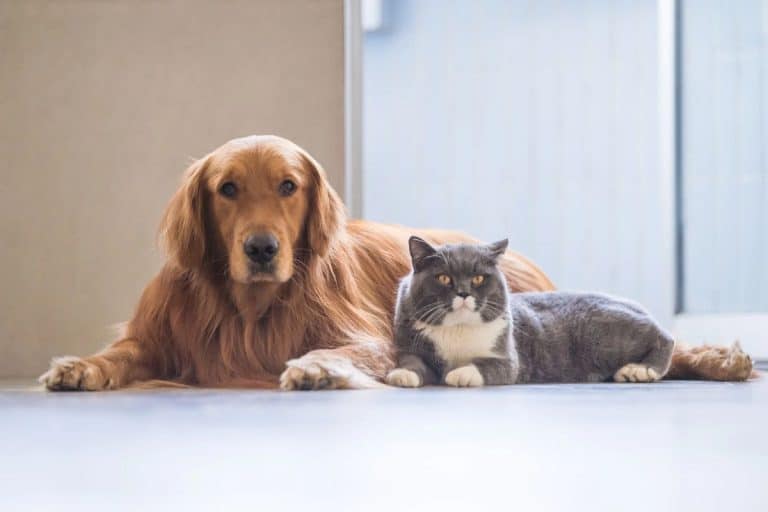
The golden saint is a designer crossbreed made by crossing a Saint Bernard with a golden retriever. These dogs are known for having a great temperament and being very easy to take care of. Whether you get one from a breeder or an animal rescue, you’ll love owning one of these soft and lovable dogs.

An infographic showcasing the Golden Saint dog breed with sections on its 100-200 lb weight, gentle temperament, and care requirements.
Massive size, tiny maintenance? Discover the designer breed that combines 200 pounds of fluff with a temperament built for first-time owners. © A-Z Animals

Owning Golden Saint: 3 Pros and Cons

ProsCons
Gentle personality: Golden saints are big, sweet, and affectionate dogs that love to spend time with their families.Extra brushing: The soft fur of a golden saint needs to be brushed every few days to keep it from matting.
Unique appearance: The luxurious fur of a golden retriever looks great when mixed with the majestic Saint Bernard.Separation anxiety: Golden saints are incredibly attached dogs that spend most of their time with their owners.
Great for new owners: Golden saints are quiet dogs that are easy to take care of, especially if you remember to take them to the vet regularly.Large breed concerns: Large breeds like golden saints often have joint and heart issues that must be treated as they get older.

Size and Weight

Golden saints are large dogs with big paws, sweet faces, and fluffy fur. These dogs typically weigh between 100 and 200 pounds and can stand between 30 and 36 inches tall. Although female golden saints are usually smaller, the difference is not significant, especially when you consider the random tendency for this hybrid to be smaller like its golden retriever parent.

Common Health Issues

Like their Saint Bernard ancestors, these are large dogs with a moderate chance of genetic health concerns. In particular, your veterinarian should look out for signs of either diabetes or hypothyroidism, both of which can drastically impact your dog’s life span. As big dogs, they are also at risk of developing heart conditions, arthritis, and joint dysplasia in either the hips or elbows. Make sure to take your golden saint to the vet at least once a year.

Temperament

These dogs are sweet, gentle, and friendly, with excellent personalities. Because they are so big, these pups typically have a lot of self-restraint, especially if they are raised as house dogs. However, this also means it’s essential to spend time with your dog when they are a puppy so they learn how to handle themselves before they grow too large. Golden saints in particular can struggle with self-restraint because they are much larger than their golden retriever ancestors.

One of the main benefits of owning one of these dogs is that they are good dogs for first-time owners. These pups are calm while still being playful, and they can be left to themselves for several hours without engaging in destructive behaviors. However, because they are big dogs, it’s important to remember that your golden saint doesn’t want to be cooped up all day.

How to Take Care of Golden Saint

Golden saints are large dogs with quiet personalities. Just because they aren’t vocalizing doesn’t mean their needs are being met; always remember to check in with your dog if you haven’t heard anything from them in a few hours. You also need to take your golden saint to the vet regularly to make sure they don’t develop any health conditions. If you catch the problem early, there’s a good chance you can treat it before it gets serious and greatly increase your dog’s lifespan.

The Best Dog Food

Because golden saints are so big, they need to eat often to feel full and maintain enough calories to burn throughout the day. However, because exercise is difficult for dogs with such large limbs, it’s usually not a good idea to overfeed them with calories and give them too much energy to burn. The solution is to find a high-protein kibble or make homemade dog food with lean meat. Then, feed your dog several small portions throughout the day to make sure their stomach doesn’t get empty, which can make large dogs very frustrated.

It’s something you’ll want to bring up when you take your dog for vet visits, but this breed is susceptible to heart conditions, so you should know about the link between dog food with legumes and heart failure in dogs. You may want to pay attention to make sure your dog food is legume-free.

Maintenance and Grooming

These dogs have long and fluffy fur that needs to be brushed at least once a week. Use a soft brush that won’t snag, then brush with gentle motions until your dog’s fur is shiny. If you do this every few days, your golden saint won’t pick up mats even if they spend time running around outside.

Your dog needs to go to the groomer at least once a season. Combine this with regular bathing, tooth brushing, and nail trimming to keep your pup in a happy and healthy condition.

Training

These dogs are sweet and love to learn new commands, so they’re actually relatively easy to train. Make sure to start working with them early so they can learn basic commands before they grow too large to be easily managed. As they get bigger, these dogs may become clumsy while they adjust to their new size. Spend plenty of time with your pup during this period to keep them from losing their confidence, as it can be very hard to restore when they get older.

Exercise

Golden saints are large dogs that need a lot of exercise. Unfortunately, because they are so big, these dogs often have trouble moving when they get older. This means that the best way to help your golden saint be healthy is to give them plenty of chances to exercise when they are young. As soon as you start noticing that your dog is having trouble moving, switch to slower and more relaxing walks. To keep meeting exercise requirements, you can always take two shorter walks in a day.

Puppies

The puppies are small and adventurous, but they’ll get big quickly. This means that you should give them as many good experiences as you can while they’re still little and have the freedom to move around. Carry your puppy, take them to the park to run, and give them plenty of attention. When they get older, they’ll want to spend most of their time sleeping at your feet while you watch television or work.

Golden Saints and Children

These dogs are sweet and gentle enough to hang out with older children. However, because these dogs can be nervous and shy, they don’t do well around young children who don’t know how to respect a dog’s boundaries. Keep a close eye on your dog during social gatherings, and rescue them from the situation if they start to get tired or nervous.

Dogs Similar to Golden Saints

Golden saints combine the large size and sweet personality of a Saint Bernard with the fluffy fur and family-friendly nature of a golden retriever. If you’re looking for something similar, try another designer hybrid or one of these two breeds.

  • Saint Berdoodle: With the gentle personality of a Saint Bernard and the hypoallergenic hair of a poodle, Saint Berdoodles are a popular choice for large households that include people with allergies.
  • Golden Shepherd: Golden Shepherds combine the stature of a German Shepherd with the luxurious fur of a golden retriever. These dogs are majestic, athletic, and great for active families.
  • English Cream Golden Retriever: English golden retrievers are a little smaller and have lighter fur, making them an interesting choice as a designer dog breed.
View all 261 animals that start with G

Sources

  1. Wag Walking / Accessed May 21, 2021
A-Z Animals Staff

About the Author

A-Z Animals Staff

AZ Animals is a growing team of animals experts, researchers, farmers, conservationists, writers, editors, and -- of course -- pet owners who have come together to help you better understand the animal kingdom and how we interact.
Connect:

Thank you for reading! Have some feedback for us?


Golden Saint FAQs (Frequently Asked Questions)

The golden saint crossbreed is a relatively new designer breed with fluctuating costs. If you adopt from a rescue, you can usually find one of these puppies for an average price of $500. If you want to buy directly from a breeder, you can usually expect to pay around $1,000.