
Quick Take
- The alligators weren't invading. A 1972 finding explains why a flooded yard looks like home to them.
- Late November is the worst time for a gator to lose its den, and the reason lies underground.
- Wading out seems faster, but one rule of alligator country shows why it's a gamble with a baby and a wheelchair.
- Once an alligator is in range, the water becomes its advantage, and the speed it can reach may surprise you.
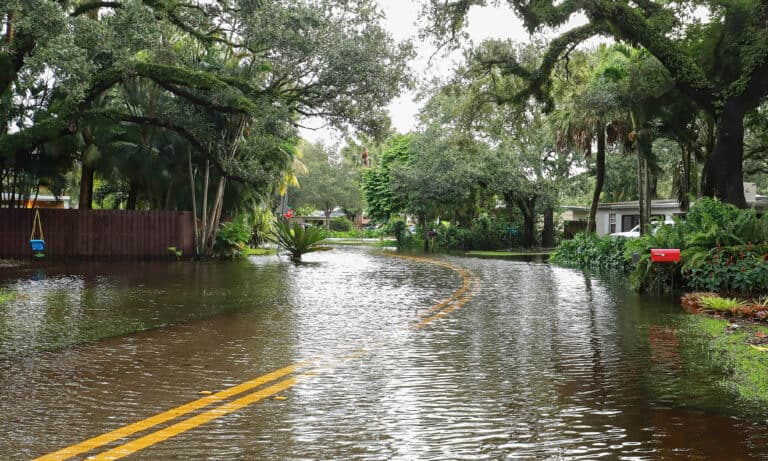
Getting out of a flooded house is hard enough. With a six-month-old, an eight-year-old in a wheelchair, and alligators in the water around the house, this family couldn’t wade out on their own.
That was the call deputies in Volusia County, Florida, answered on Monday, November 23, 2026. WFLA reported that the Volusia County Sheriff’s Office was called to a home in the Stone Island neighborhood. The family there had asked for help leaving, because the floodwater was rising and multiple alligators were surrounding the house. Deputies brought a raft and floated everyone out, including the baby and the child who used a wheelchair. “All are safe and dry,” the sheriff’s office said afterward.
The River Came to Them
The water came from the river. WFTV, covering the same day, reported [Stone Island residents surrounded by floodwaters as the St. Johns River continued to rise]src. Stone Island was one neighborhood among many. The same station was also covering floodwater in downtown Sanford’s streets and devastating floods across central Florida. The water standing in that family’s yard was river water, spread out across a neighborhood.
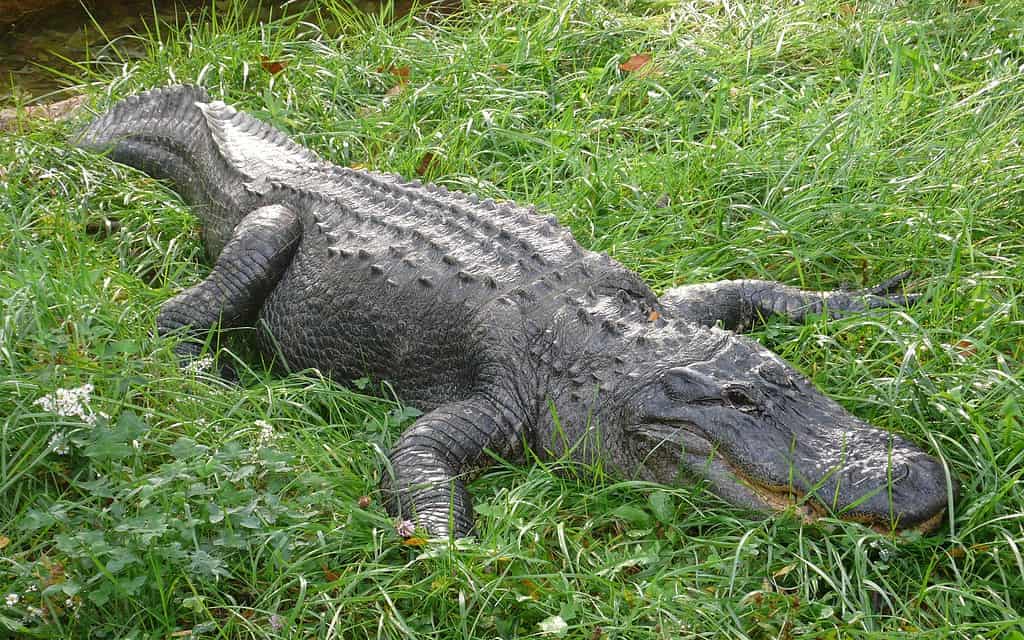
Alligators slow down as temperatures drop, entering a hibernation-like state called brumation through the winter.
Why the Alligators Were at the Door
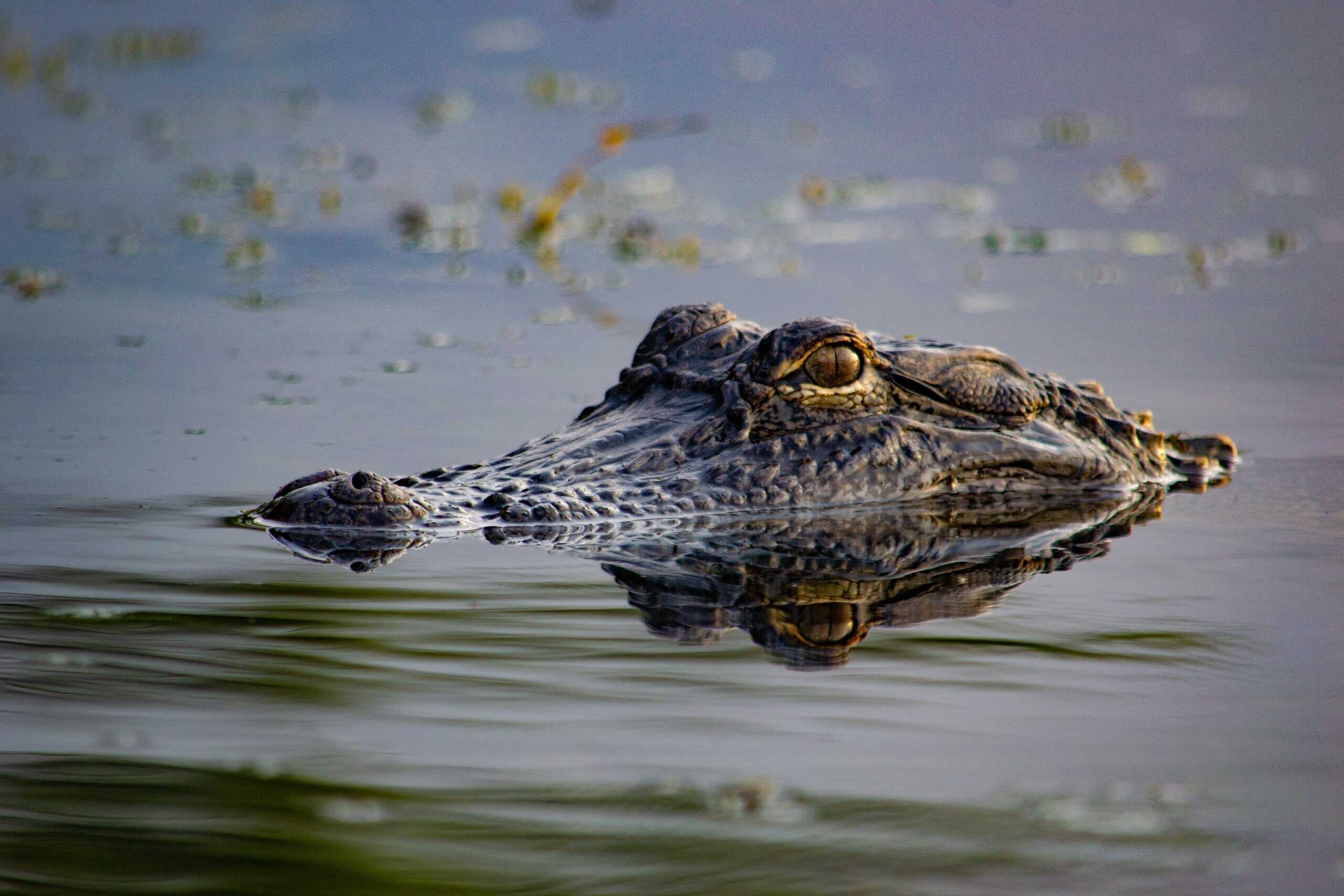
Alligators stay close to water. In 1972, researchers worked out how alligators gain and lose heat, and they concluded that water is the most important part of an alligator’s habitat. Without it, an alligator can barely get around, and its chances of survival drop sharply. So when a river spreads into a neighborhood, the alligators’ habitat spreads with it. To an alligator, a flooded yard is simply more water.
A Hard Time of Year to Lose a Den
Late November is when alligators are slowing down for the cold. They [slow their eating when temperatures drop below 70 degrees and go into brumation below 55 degrees]src. Brumation is the reptile version of hibernation. The body slows down and the animal stops eating, but it stays alert enough to move around and drink. For American alligators, it usually starts in November and ends in late February.
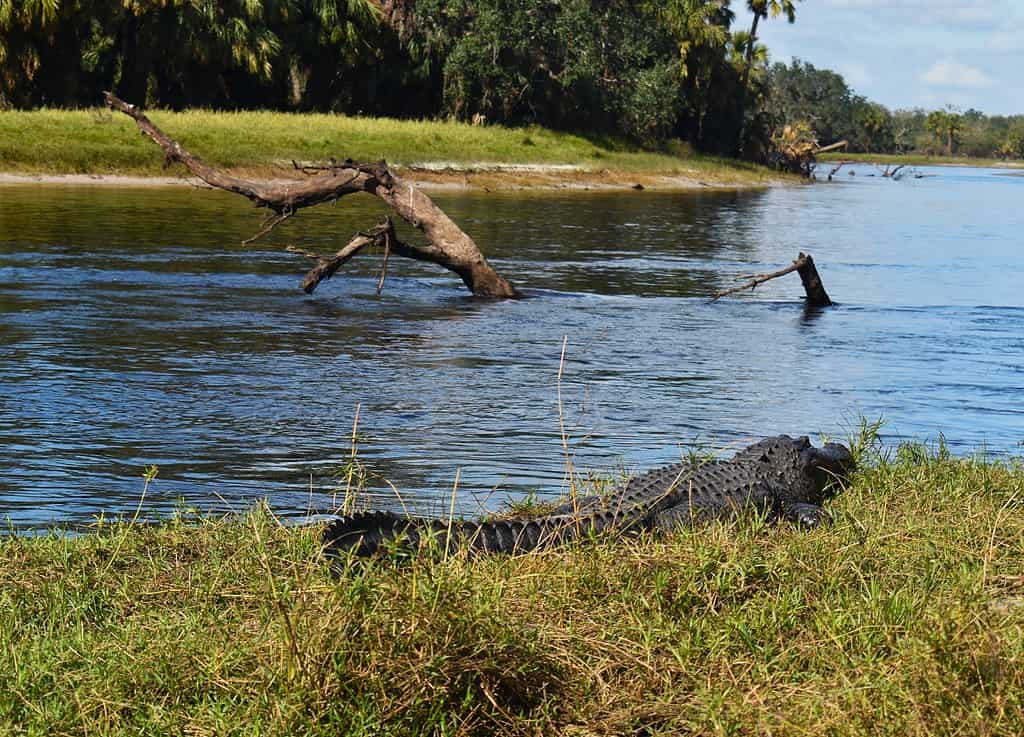
Alligators favor riverbanks, since water is the most important part of their habitat and they spread wherever it does.
©SuJo Studios/Shutterstock.com
A gator heading into that stretch has stopped hunting and is looking for shelter. Often that shelter is a den dug into the bank of a river, pond or swamp. The entrance is underwater, and the tunnel climbs above the water table, so there’s a pocket of air to breathe at the far end. That pocket only works while the water stays below it. A river high enough to threaten a family’s living room can rise past it too, and then the whole floodplain is open water. An alligator looking for somewhere new doesn’t have to go far to end up beside somebody’s front steps.
Why a Raft and Not a Walk
Nobody wades through that. The usual advice in alligator country is to stay around 30 feet from any place an alligator might be lurking, because alligators react on instinct and are quick to strike at anything that comes too close. In a flooded yard, every patch of water is a place an alligator might be lurking. A family moving slowly with a baby and a wheelchair has no way to keep that distance, and an alligator lying still in the water is easy to miss.
20 mph
32 km/h
Swimming speed an alligator can reach by pushing with its muscular tail
Once something does come too close, the water is the alligator’s home ground. Pushing with its muscular tail, an alligator can reach speeds of around 20 miles per hour while swimming. A raft carried the six-month-old and the eight-year-old over the water instead of through it.