
Quick Take
- A gator in ocean rocks seems wrong, and a quirk of its anatomy explains why it couldn't stay long.
- The gator looked dead, and the weather that week shows why.
- Wildlife officials won't release most removed gators back into the wild, and the reason may surprise you.
- How much does an 8-foot gator weigh? The estimate may not match your guess.
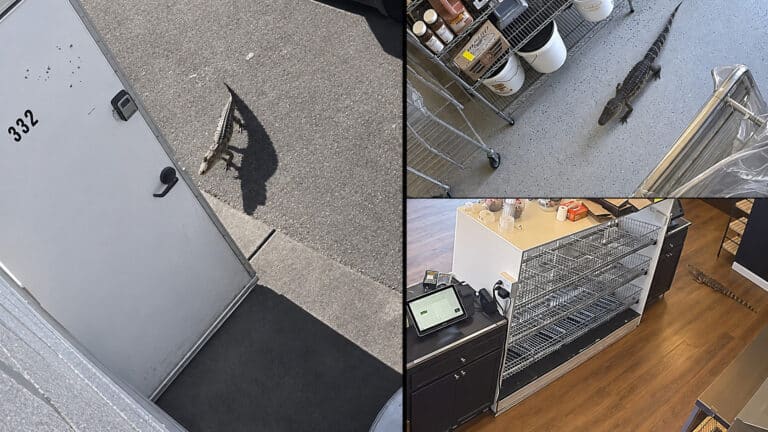
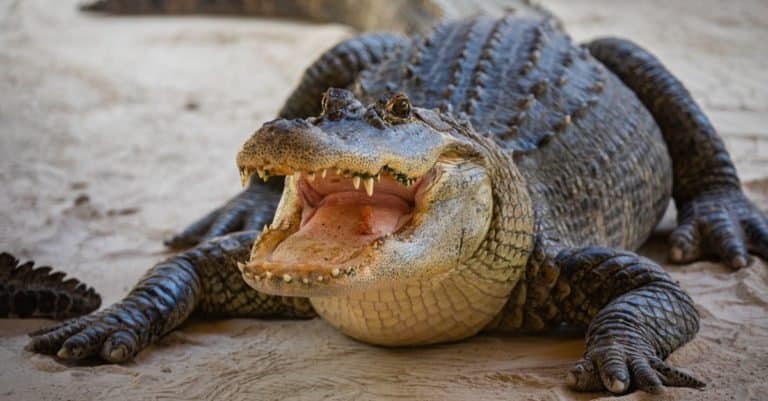
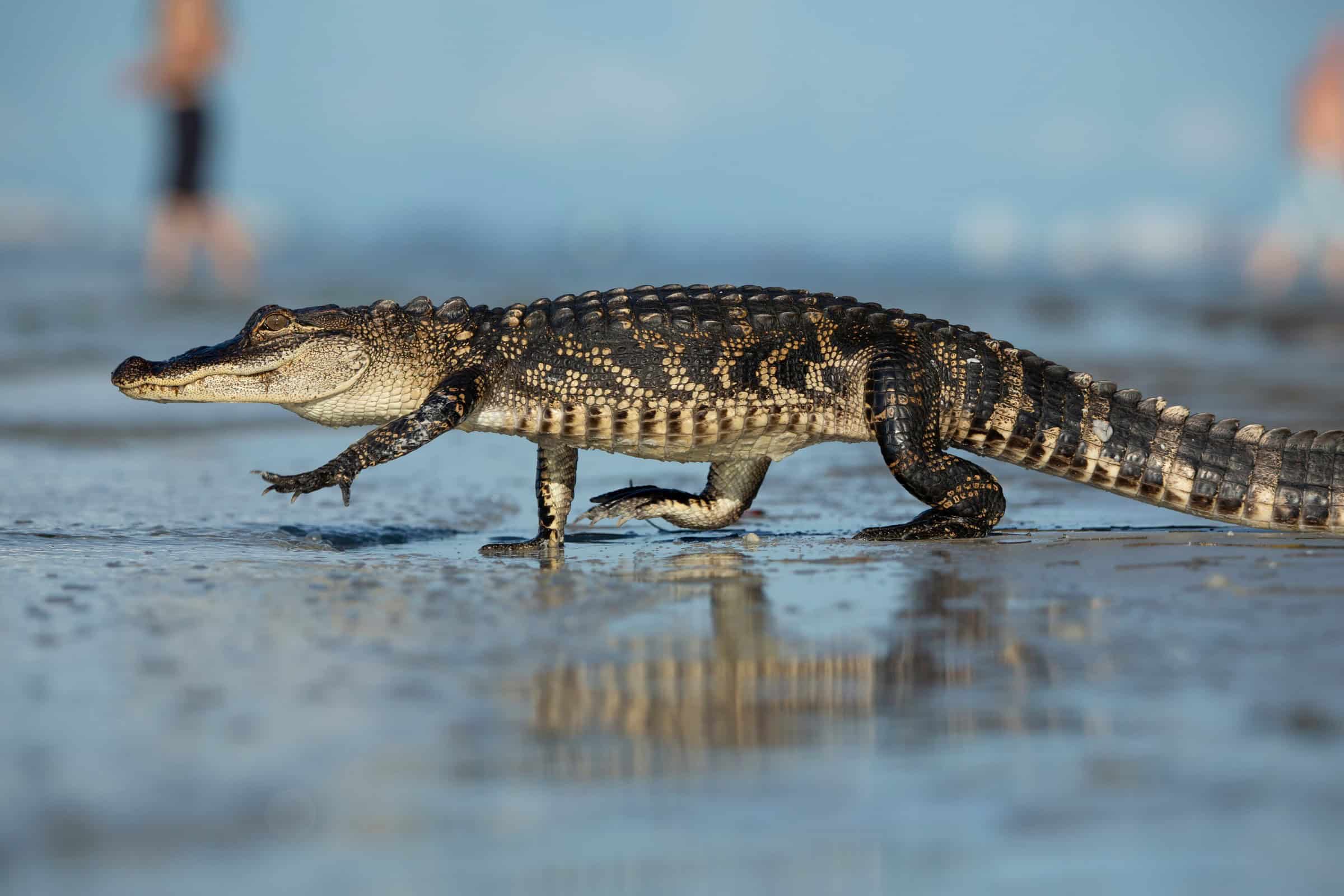
Justin Southerland, 41, told TCPalm he sat on an 8-foot alligator on a Florida jetty on Nov. 14 until “they got tape” for its mouth. The gator lived. Florida Fish and Wildlife Conservation Commission (FWC) spokesperson Arielle Callender said it was relocated to a freshwater canal in the area.
What happened on the jetty?
Southerland said he had asked his friend Anthony Richards, 26, to “ride around on the coast and hit some pawn shops and some bait stores and buy some junk.” The two Okeechobee men started in Stuart, then stopped at the park’s jetty, a popular spot for surfers.
“We weren’t on the jetty 10 minutes,” Southerland said. He stopped to watch a man fishing, looked down and saw the gator lodged in the rocks. He thought it was dead.
“He was already trapped, he couldn’t get above where he was at because everything was slick,” Southerland said. He called the state park and asked for FWC, and an officer came. The three of them freed the gator.
“Once we got him on top of a flat rock, however, the catch pole failed,” Southerland said. “It wouldn’t hold, so I sat on him until they got tape, which inadvertently warmed him up.”
The gator, which he described as not “too spicy,” slapped him with its tail. With its mouth taped, it went into the officer’s vehicle.
Watch WPBF’s report on YouTube
Why was an alligator in ocean rocks?

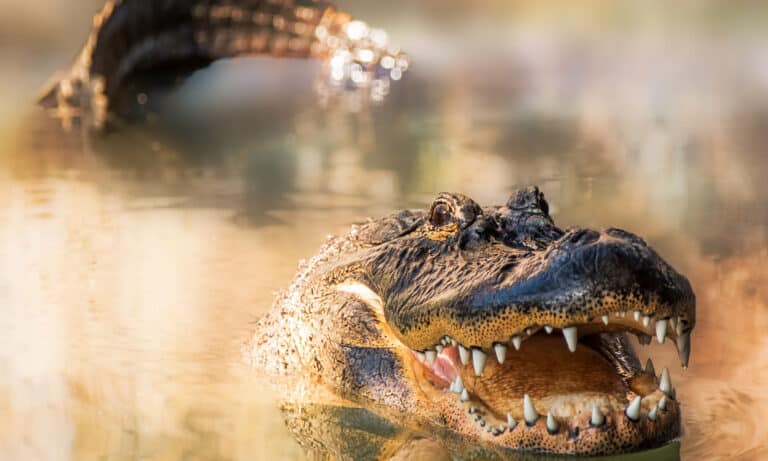
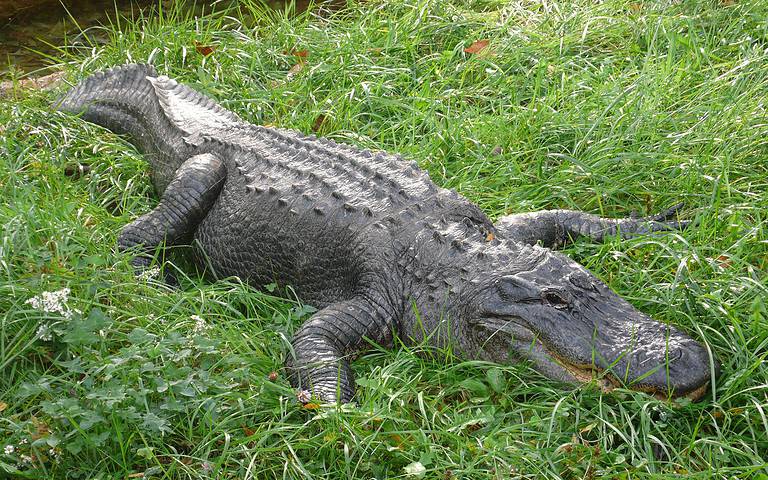
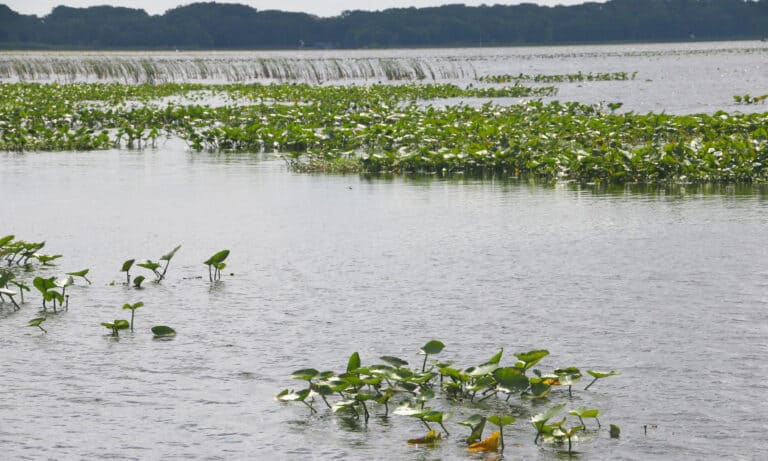
An alligator basks on a Florida riverbank, the kind of freshwater home gators prefer. ©FlagtailsPhotography/Getty Images
©FlagtailsPhotography/iStock via Getty Images
FWC says alligators prefer freshwater lakes and slow-moving rivers and can also be found in brackish water. They can tolerate saltwater for short periods.
The limit comes from their anatomy. A 2023 study in Animal Behavior and Cognition explains that crocodiles have salt glands in the tongue and alligators lack them. In salty water, an alligator takes on salt and loses body water through its skin, with no way to excrete the excess. In that lab study, juvenile alligators kept in water at 12 parts per thousand salt cut back on feeding within the first week.
Rick O’Connor, a Sea Grant extension agent with UF/IFAS in Escambia County, wrote that alligators have turned up on Gulf barrier islands for decades. They “cannot tolerate seawater very long and must eventually return to freshwater.”
Why was it so sluggish?
Callender described the gator as “lethargic.” “He was basically in a catatonic state almost,” Southerland said. “He was on the verge of hypothermia.”
Alligators rely on outside heat to regulate their body temperature, according to FWC. They are most active between 82 and 92 degrees, stop feeding below about 70 degrees and go dormant below 55.
Modeled weather data for the inlet put the Nov. 14 low at about 55 degrees and the high at 68, three days after a high near 85. By FWC’s thresholds, that day never got warm enough for an alligator to feed, and the morning sat at the edge of dormancy.
How big is an 8-foot alligator?
Likely around 130 pounds. That estimate comes from a length-weight equation by Chabreck and Joanen, printed in a 2018 Southeastern Naturalist paper. The same equation gives about 105 pounds at 7.5 feet and 158 pounds at 8.5 feet, and recent meals and body condition move real weights further.
FWC says nearly all alligators are sexually mature by about 7 feet, and females rarely exceed 10 feet. Florida’s length record is 14 feet 3.5 inches, and its weight record is 1,043 pounds.
Why did this gator get a ride to a canal?
FWC’s Statewide Nuisance Alligator Program sends contracted trappers to remove gators that are at least 4 feet long and seen as a threat to people, pets or property. The agency does not relocate those animals. Relocated gators often try to return to their capture site, and releasing one among an established population would likely cause fighting.
FWC said its officer found this gator lethargic, captured it and moved it to a freshwater canal nearby.
What should you do if you find one?

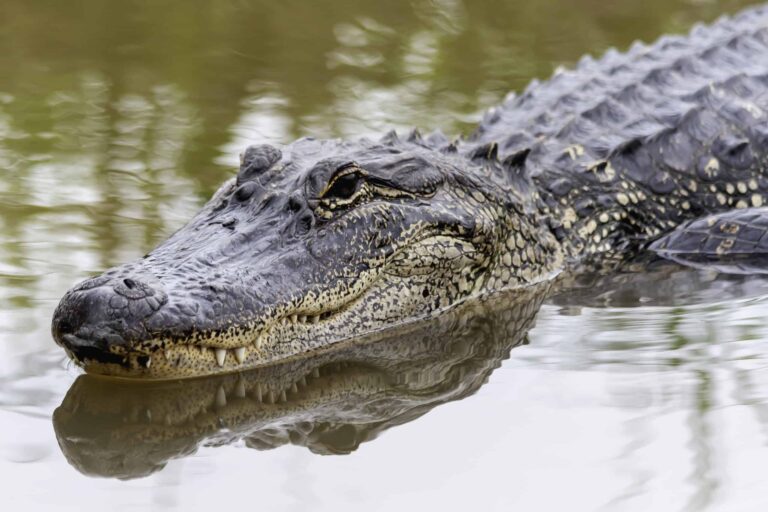
A cyclist gives an alligator room on a Florida trail. ©Geofox/Shutterstock.com
©Geofox/Shutterstock.com
FWC says to keep your distance and call its Nuisance Alligator Hotline at 866-392-4286, also listed as 866-FWC-GATOR. Never handle an alligator, even a small one. It is illegal, and bites can cause serious infection.
Southerland went hands-on with a background most beachgoers lack. He said he has experience trapping alligators and grew up hunting and fishing. He also said he has a big fear of drowning and was not going to watch anything drown.