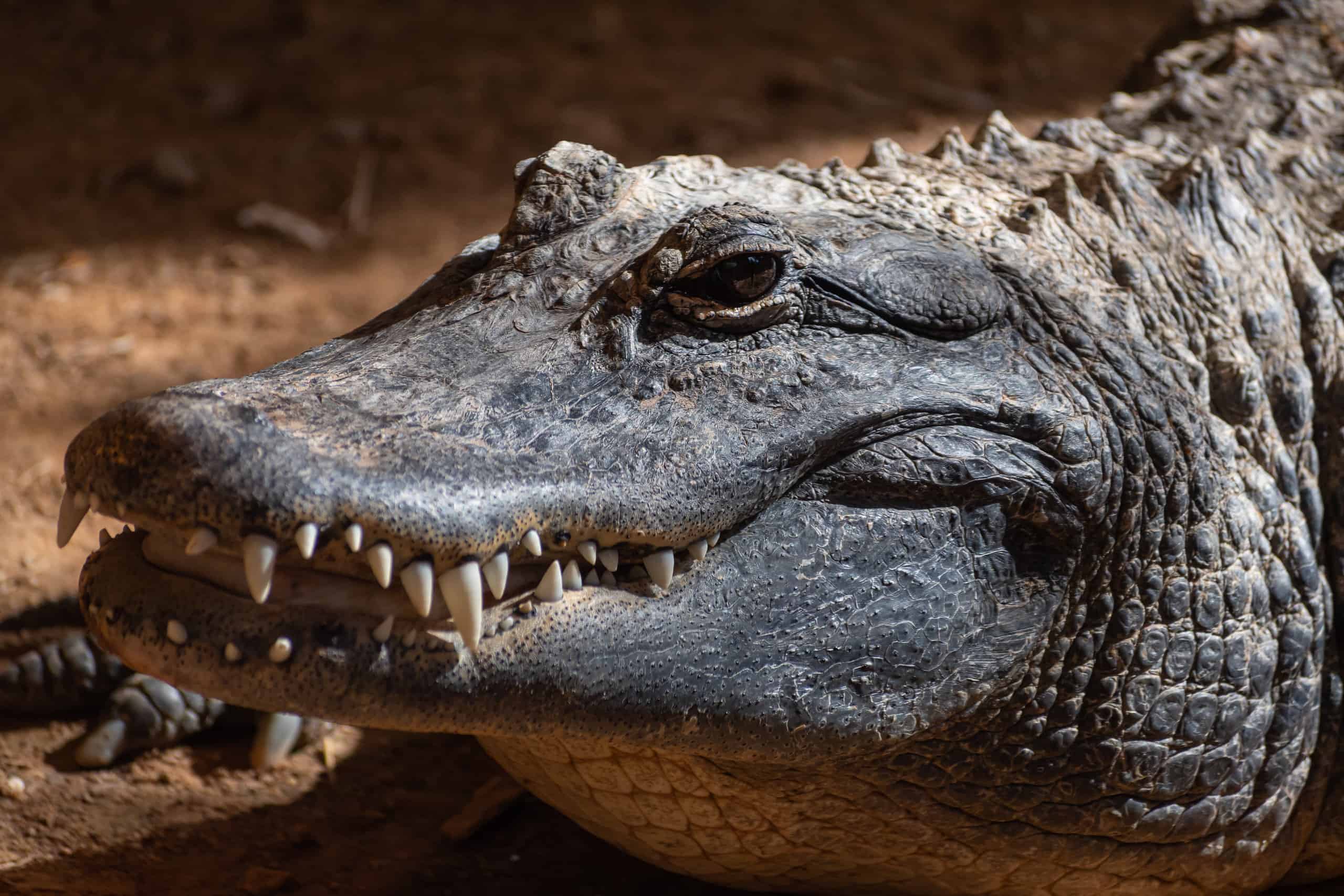

Alligators are divided into two types: American and Chinese Alligator. The latter, unfortunately, has only one species remaining, with critically low numbers. American alligators, in contrast, thrive in various habitats. While alligators are known to occupy Florida, especially the Everglades, they are also known to thrive in the southeastern United States. But where do alligators live in Texas?
Texas is the second-largest state in the US, behind Alaska, with a total area of 268,596 square miles. As a result, it is not surprising that its ecosystems are diverse and rich. The American Southeast’s coastal wetlands and those in North Carolina and eastern Texas are home to American alligators. This article will explore what alligators inhabit the Texan lands, where they live, what they eat, and other fascinating facts.
This post was updated on October 22, 2025 to clarify that only one species of Chinese alligator remains, regulation of the American alligator, Texas range, number of alligators in both Florida and Louisiana, rarity of fatal alligator attacks, PSI, and land speed.
Where Do Alligators Live in Texas?
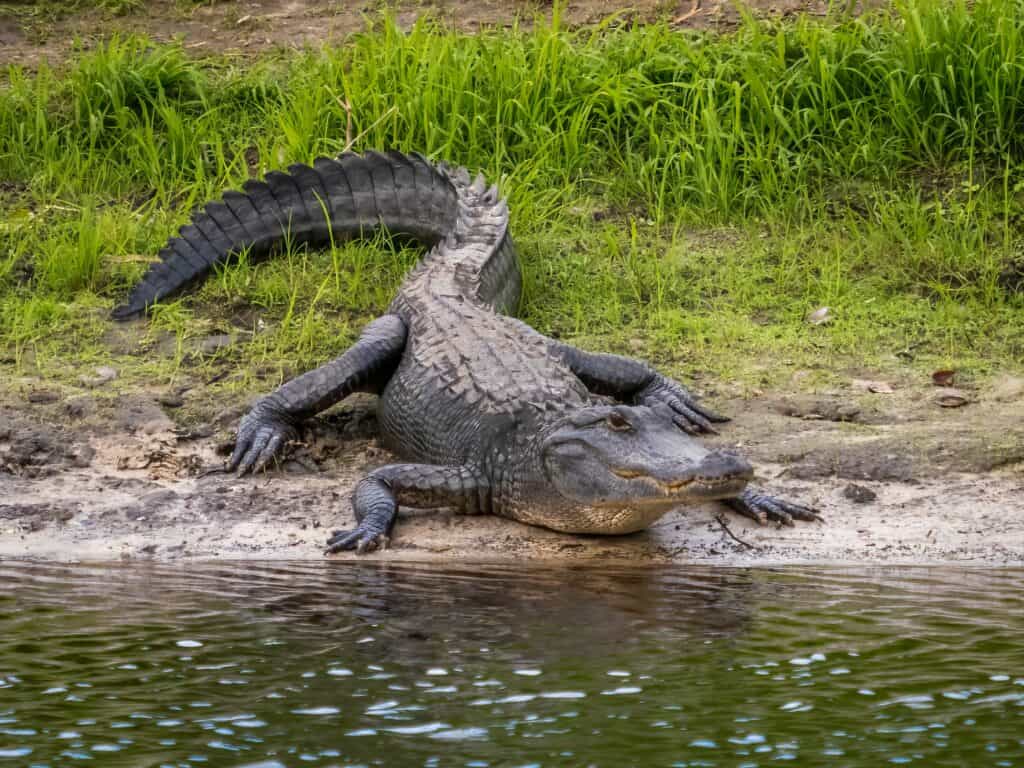
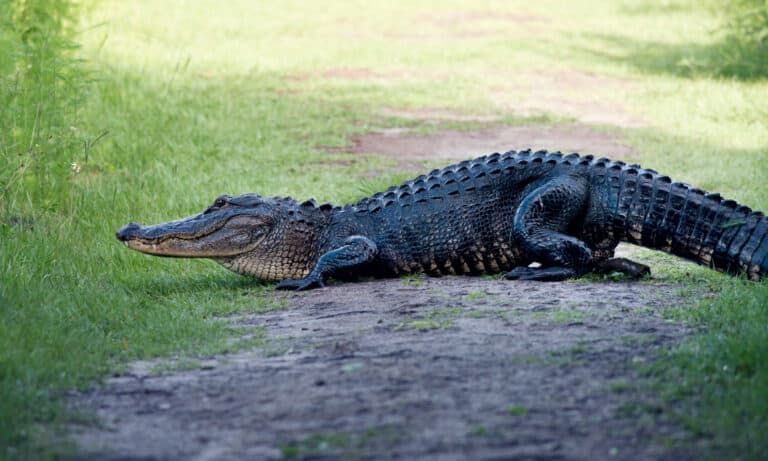
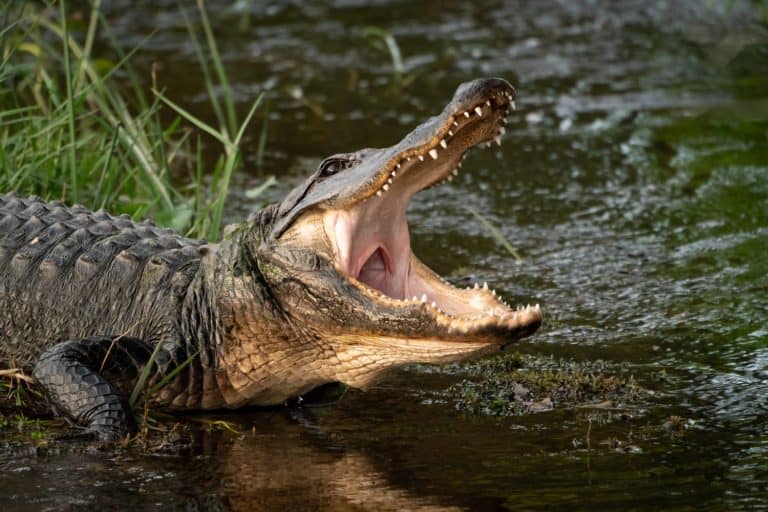
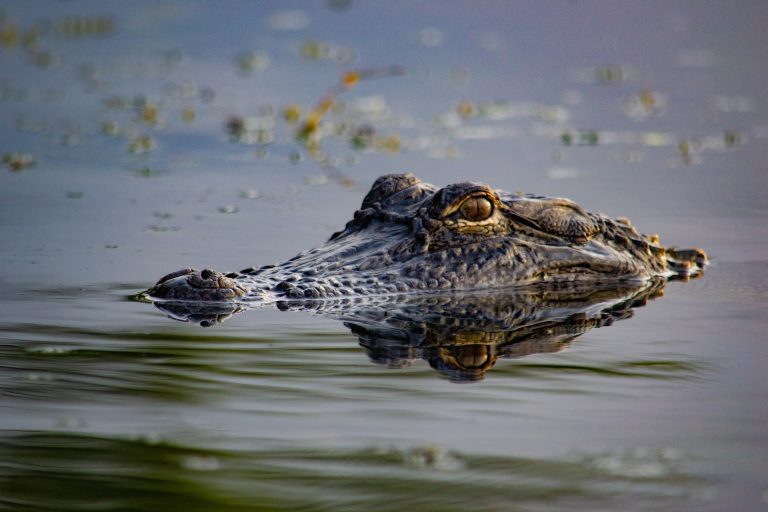
Alligators can be found in brackish areas in the eastern part of Texas.
©Jim Schwabel/Shutterstock.com
In the eastern part of Texas, brackish areas, ponds, wetlands, marshes, rivers, lakes, and swamps are home to American alligators. The gator population in the state is difficult to track because they are often cautious animals. Still, it is estimated that there are 400,000 to 500,000, with the majority clustered in the state’s south, east, and southeast.
The biological region of Texas’ coastal marshes and prairies is home to numerous American alligators, with the upper Texas coast having the greatest concentration. Along the several river systems, communities have migrated inland to freshwater lakes. After reaching severely low population levels in the middle of the 20th century, the alligator has since recovered and is now sought recreationally and economically in many southeastern states. The American alligator itself is no longer listed as endangered, but it is regulated. Because it is classified as “threatened by the resemblance of appearance,” the Convention in International Trade in Endangered Species (CITES) Treaty governs its management and harvest.
Once an endangered species, the alligator is now a protected game animal in Texas. The Sabine River in East Texas, the Gulf of Mexico, the Rio Grande, and westward toward Interstate 35 are all inhabited by the Texas American alligator. About 120 counties are included in this area, with areas east of I-35 and the Gulf Coastal Plains having the highest densities.
How Many Alligators Live in Texas?
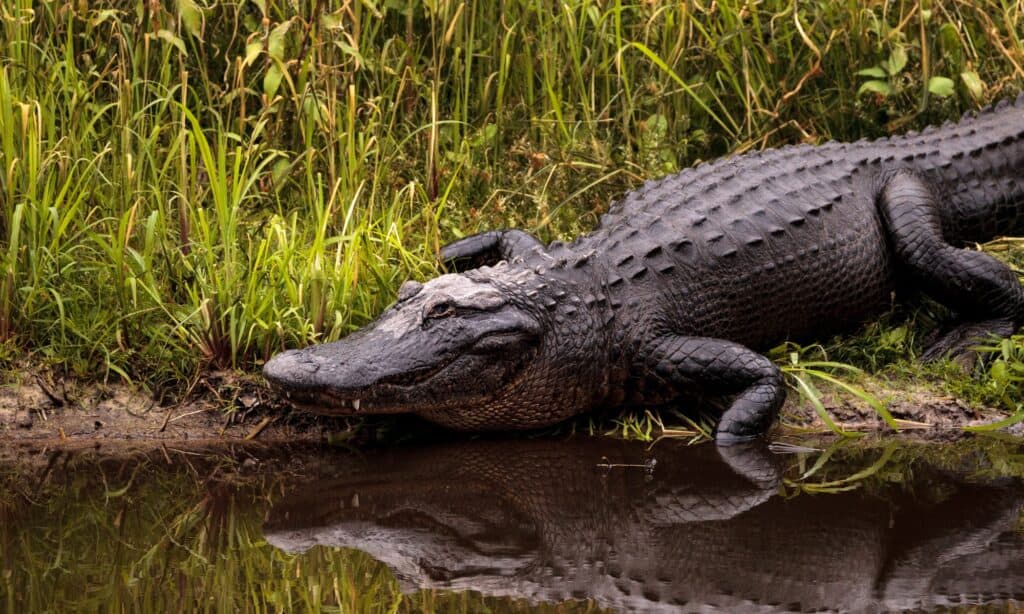
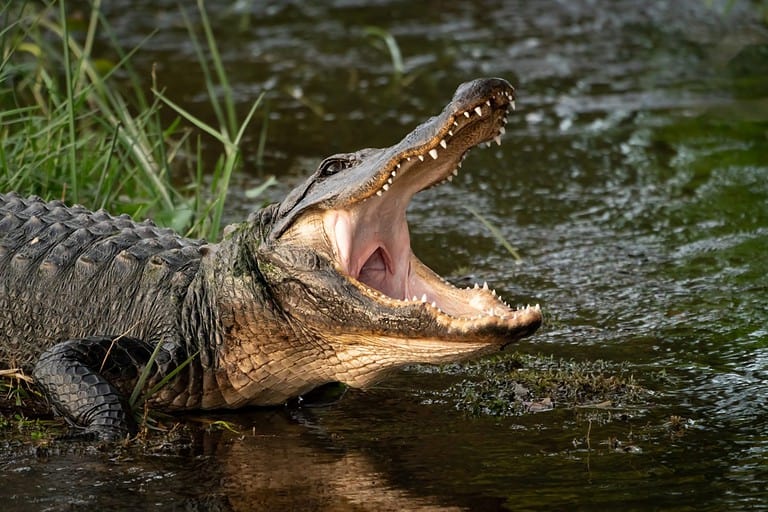
There are around 500,000 alligators in Texas.
©iStock.com/LagunaticPhoto
According to the Texas Parks and Wildlife Department, Texas is home to between 400,000 and 500,000 alligators. For comparison, Wyoming, the state with the fewest people, has a population of 578,758. That is roughly equivalent to Texas’ estimated alligator population! Texas, however, has one of the highest population densities, with around 29 million residents. Accordingly, there is roughly one alligator for every sixty people.
The number of alligators in Texas isn’t the highest in the nation either. According to estimates, there are 1.3 million alligators in Florida and 2 million in Louisiana. There are an estimated 250,000 alligators in Georgia and 100,000 in South Carolina, both states below Texas. North Carolina, Oklahoma, Arkansas, Mississippi, and Alabama are other states that have alligator populations.
Although many alligators exist in Texas, it’s vital to remember that they are not present everywhere in the state. Instead, they are most often found in wetlands or along the Gulf coast. In Dallas, Austin, and San Antonio, alligator sightings are uncommon, and only the eastern part of Texas contains alligators.
Where Else Are Alligators Found in the US?
The American alligator may be common in the country’s swamps and marshlands, but they are not found all across the United States. The southernmost regions of Florida, Louisiana, Georgia, Alabama, and Mississippi, as well as coastal South and North Carolina, eastern Texas, the southeast corner of Oklahoma, and the southern tip of Arkansas, are the only places in the United States where you can see American alligators.
Over three million alligators are thought to live in Florida and Louisiana, which account for the bulk of alligators in the country. The only region in the world where both alligators and crocodiles are known to coexist is southern Florida.
Are Alligators in Texas Dangerous?
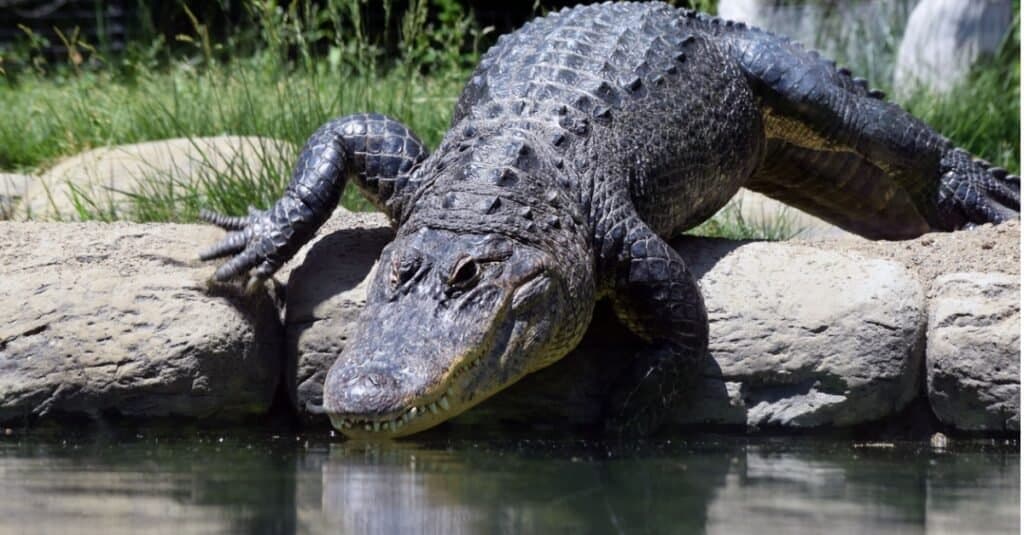
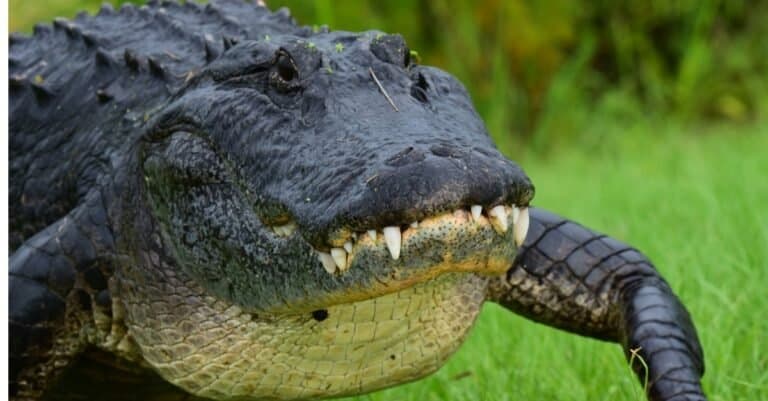
With jaws that generate up to 2,980 PSI, alligators are among the deadliest animals you may encounter in Texas.
©iStock.com/Bradley Proxmire
Alligators are generally dangerous reptiles, given their huge, massive bodies, fast-swimming skills, and most importantly, their notoriously strong jaws that can generate up to 2,980 PSI! The American alligator is also among the deadliest animals you may encounter in Texas!
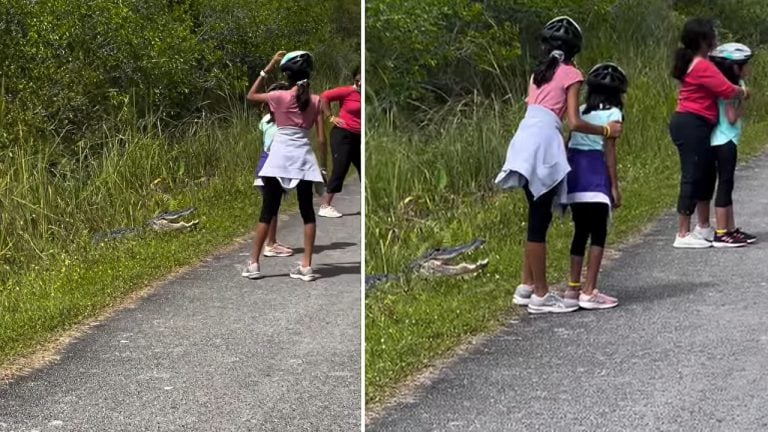
Alligators can be dangerous; the best action is to keep your distance. When in alligator country, always heed warning signs that warn of their potential presence and keep all dogs on leashes. One man paid the price for not adhering to these rules by losing his life. Tommy Woodford, 28, was swimming with a woman near Orange, Texas, in July 2015 at 2:30 in the morning when they spotted an alligator. Tommy did not leave as the woman did. The woman claimed that the alligator attacked him and dragged him under as the man began to mock the alligator. Fatal alligator attacks in the United States are infrequent, nevertheless.
Since their lower jaw and teeth completely fit within their upper jaw when their mouths are closed, American alligators can be recognized visually by the absence of any lower teeth. Although their closing muscle exerts at least 2,125 PSI (with some sources claiming 2,980 PSI), they have weak jaw-opening muscles that may be readily overcome by simply holding their mouth shut with your hands.
Do Alligators Attack People?
Given a few records in the states where alligators are often seen, it can be concluded that alligators indeed attack people. Fortunately, though, alligator assaults are not very common. But suppose an alligator killed a person, would they eat the body? And what would they do if they came across a human carcass?
Fatal alligator attacks on humans are very rare in the U.S. However, documented fatal attacks exist, and in some rare instances remains have been found in stomachs. But there have also been numerous instances where the victim’s body was discovered intact. Alligators are opportunistic feeders, so if one came upon a body, it would probably eat it as well. As of early 2022, the most recent alligator fatality is a 71-year-old man murdered in Louisiana by a 504-pound alligator. During a hurricane, the man was attacked while inspecting the side of his house for damage.
Between 2010 and 2019, there were 8 fatal alligator attacks in the US. A deadly Texas alligator attack in 2015 was the state’s first since 1836, demonstrating how uncommon they are throughout much of the alligators’ territory.
When they attack, alligators can run fast. Land speed measured in a Florida study was about 11 mph in short bursts. They can swim up to 20 MPH underwater, making them hard to spot. The quickest humans can swim 5-6 miles per hour and run a little over 25 miles per hour. We’re frequently slower than this because most of us aren’t Olympic athletes! Alligators are more sedentary than we usually imagine, yet this seeming sluggishness is them saving energy. When they are prepared to move, they do so quickly.
What is the Largest Alligator Found in Texas?
The largest alligator ever discovered in Texas reportedly measured an astounding 14 feet, four inches and weighed about 900 pounds. Even though the enormous beast was captured in 1998, it was not formally acknowledged. The enormous 14-foot-3-inch male alligator captured in May 2013 holds the record for the official length, which isn’t much smaller. Braxton Bielski, 18, captured the enormous monster, which weighed 800 pounds, in Choke Canyon Reservoir. Few people, including Braxton and his father, were permitted to go hunting there. Only a small number of licenses are provided annually to control the number of alligators in the lake. The enormous catch was all the more amazing because it was his first time alligator-hunting, and nobody had even remotely predicted he’d catch anything, much less something that may set a record.
Big Tex is the biggest alligator ever captured alive in Texas, despite not being the biggest ever discovered in the state. Capturing and rehoming Big Tex, a 13-foot 8 inches, 900 pounds alligator, was no simple chore. Big Tex had lived at Trinity River National Wildlife Refuge’s Lake Champion since he was a baby, and he was starting to get too close to the shoreline where people were fishing and snapping pictures. Although he didn’t assault anyone, it was decided to capture and rehome him because of his lack of fear of people.
What Do Alligators in Texas Eat?
Spiders, crawfish, shrimp, insects, minnows, and crabs are among the prey items for American alligators under 3 feet long. Some may eat small vertebrates even at smaller size. However, they will consume other types of food that are small enough to swallow completely.
Although the alligator is often a lone predator, smaller and younger alligators have a reputation for sticking together in packs, especially when hunting. The alligator attacks considerably larger species in addition to eating fish, small mammals, and birds. Adult alligators have been observed hunting deer, and they have also been observed killing and devouring smaller alligators.