
Quick Take
- Aleks, a white tiger, was found by Ukrainian soldiers in a forest. He was emaciated and suffering a number of medical issues.
- Lothar, a lynx, was rescued from private owners who could no longer care for him. He was suffering extreme anxiety from gunfire and explosions, causing a rapid decline in his health.
- Both big cats were transported from Ukraine to a wildlife sanctuary in the UK.
- The rescue was a coordinated effort among conservationists, veterinarians, and global shipping company DHL.
War coverage usually focuses on the human toll. It often ignores the equally devastating effect on a silent population of animals. These victims of wartime aggression can’t speak for themselves. In many cases, they also can’t fend for themselves when their humans release them or abandon.
That is exactly what happened to two big cats in Ukraine.
How Did a White Tiger and a Lynx End Up in Ukrainian Woods?
For Aleks, a white tiger, and Lothar, a lynx, life in captivity was all they knew. They were each part of the often-hidden world of illegal, exotic pet, private ownership in Ukraine. Wildcats kept as pets often suffer neglect from uneducated or uncaring owners. These stressors are present even before the trauma of war.
When the Ukrainian conflict intensified, both Aleks and Lothar were directly impacted by life in a war zone.
Their Incredible Rescue Story
For Aleks, discovery meant the difference between life and death. Ukrainian soldiers near Kharkiv found the distresses cat in the forest. He was in terrible condition, suffering from parasites, skin infections, dehydration, and malnutrition. He also had impaired liver and kidney functions. When soldiers discovered him, Aleks was so weak he could not stand up on his own.
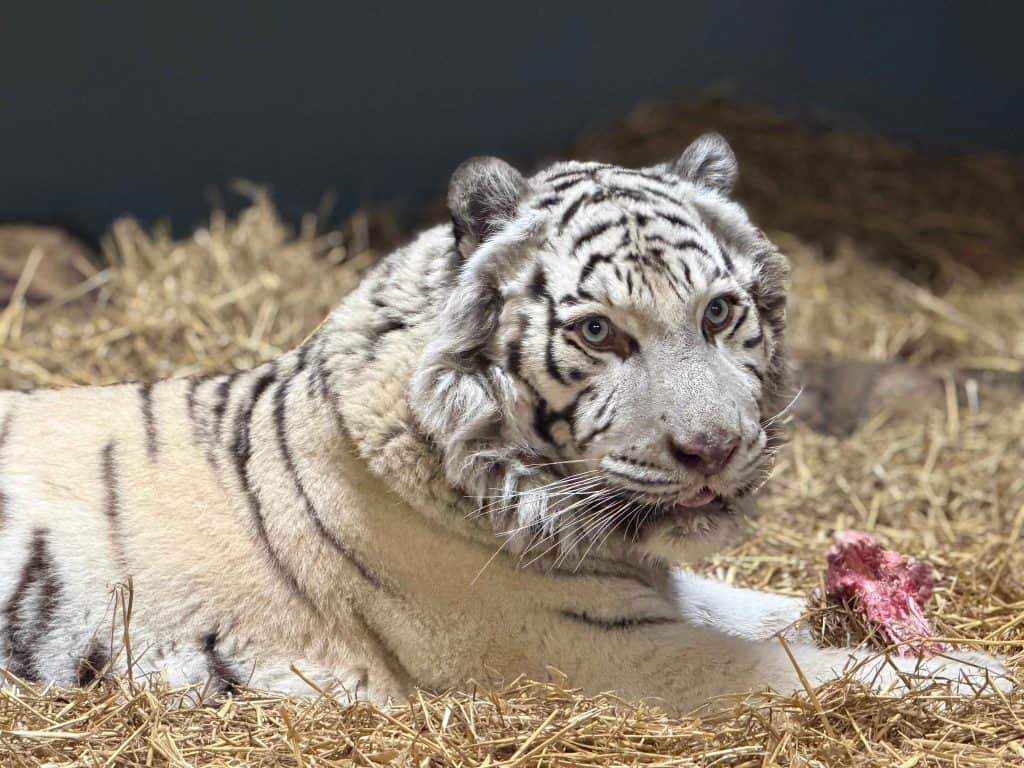
Aleks, a white tiger, was found by Ukrainian soldiers in the forest. He was rescued and rehabilitated.
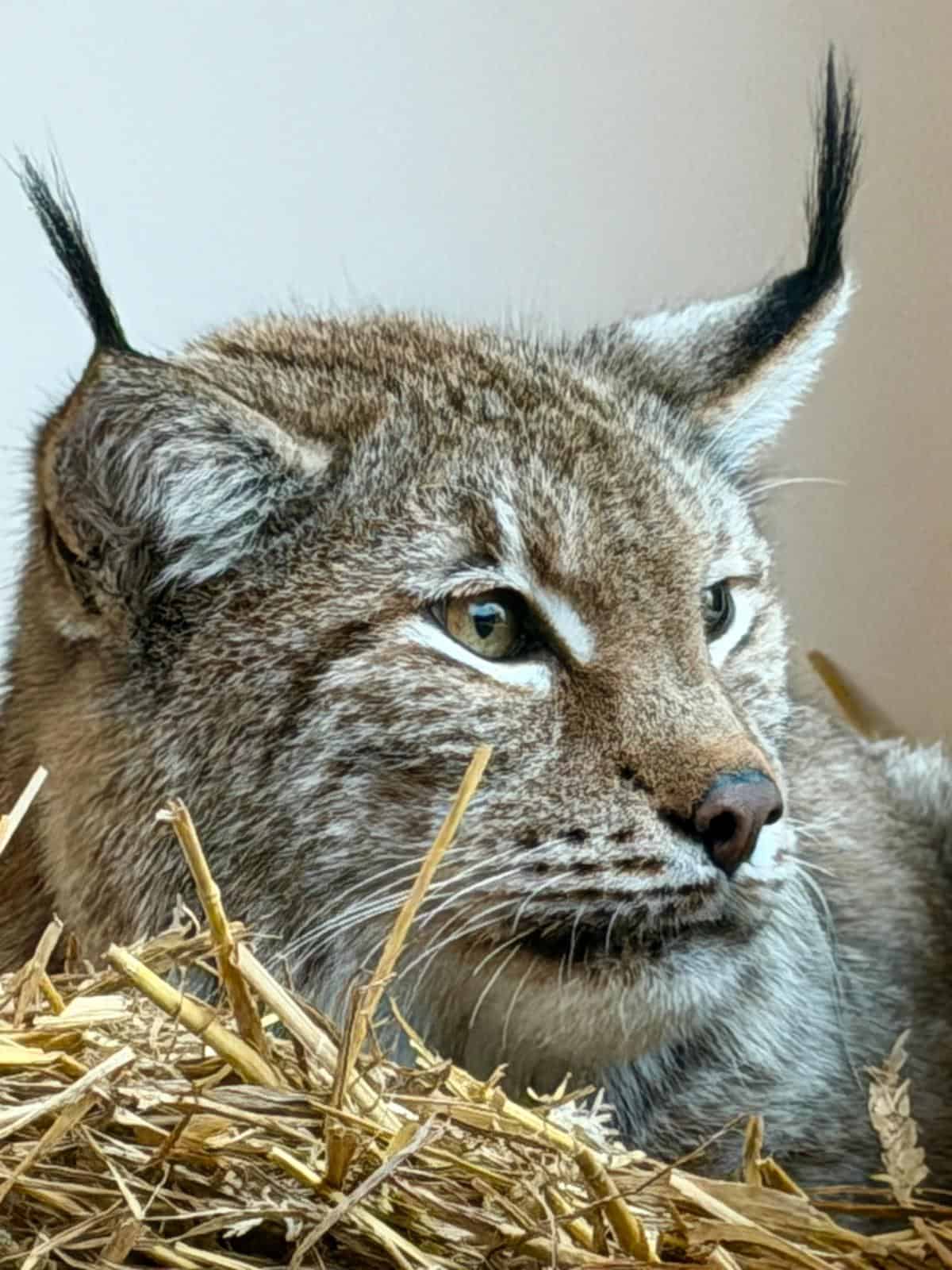
Lothar, the lynx, was rescued from a private residence, where his owners had abandoned him due to the ongoing conflict. Suffering significant anxiety from the gunfire and explosions, he had stopped eating and his health was in decline.
Both big cats were initially transferred to the Wild Animals Rescue Center in Ukraine. The center, founded by Natalia Popova and UAnimals, provides temporary shelter and medical care for big cats and other predators caught up in the current conflict. Their work focuses on the hardest-hit areas of the country, Donetsk and Luhansk.
According to the center’s website, Aleks and Lothar are just two of the many wild animals kept in captivity that ended up abandoned by private owners and zoos as the war advanced. Ukrainian soldiers are often the ones who find the abandoned animals and call the center for help.
How Did Aleks and Lothar End Up In the UK?
Because Wild Animals Rescue Center is a temporary shelter, longer-term plans for the two big cats were needed. Lincolnshire Wildlife Park stepped in to provide that help.
As one of the UK’s largest facilities, Lincolnshire Wildlife Park is dedicated to rescuing animals and providing lifelong sanctuary.
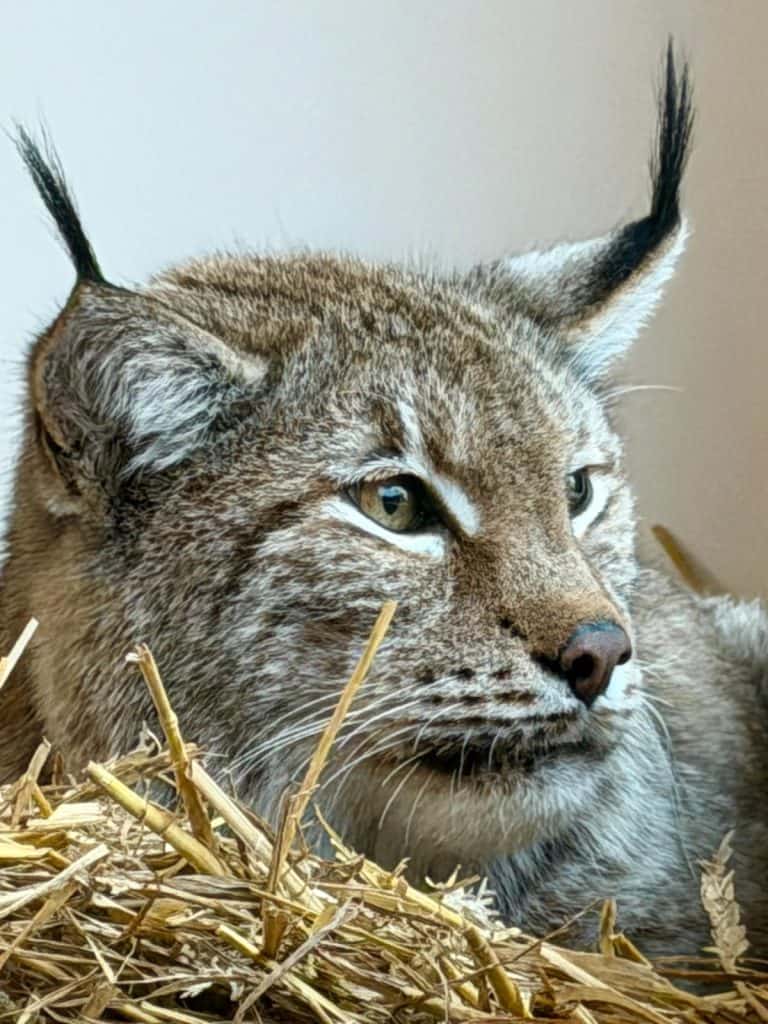
Lothar, a lynx, was rescued from private owners in Ukraine who could no longer care for him.
The two cats’ journey is a testament to international cooperation focused on animal welfare.
The rescue took the combined efforts of non-government organizations (NGO), veterinarians, customs authorities, Lincolnshire Wildlife Park, and global shipping agent DHL.
Their 1,600 mile journey spanned several countries and required significant support along the way.
The journey, which lasted two days, began on February 25, 2026. Aleks and Lothar were loaded into specially designed, climate-controlled transport crates aboard a large van. The vehicle took them from Ukraine to Calais, France, through the Eurotunnel to the UK, and then finally to Lincolnshire Wildlife Park.
Both cats were immediately examined by veterinarians, then released into a specially built enclosure.
What Is Life Like Now for Aleks and Lothar?
Unlike their days of fending for themselves and terrible stress, both Aleks and Lothar now enjoy the attention and treatment they deserve. They receive ongoing veterinary care, enjoy regular meals, and can rest and relax knowing they are safe from harm.
“Aleks and Lothar were born in captivity and would not survive in the wild,” says Steve Nichols, Chief Executive Officer of Lincolnshire Wildlife Park. “They lack the instincts typical of wild animals, such as hunting. Facilities like ours are the only way animals like them can live a safe and fulfilling life.”
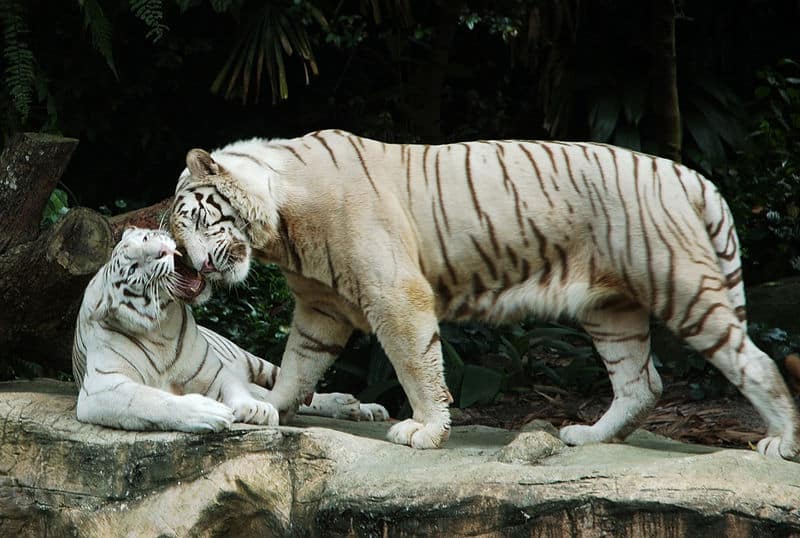
Big cats born in captivity lack the critical skills required to survive in the wild.
©PlasticTV, CC BY-SA 3.0, via Wikimedia Commons – Original / License
The Wildlife Park team reconstructed an area of Bengal Gardens specifically for Aleks. He now has clean and spacious pens where he can rest and feel safe. Lothar made his home in the Animal Holding Enclosure where he could recover and enjoy a more peaceful existence. The lynx has an assortment of terrains and climbing frames to explore.
The Problems with Private Ownership of Big Cats
While war may bring the issue of illegal private ownership to light, it is an ongoing problem around the world, not just in conflict-torn countries. Wildcats kept as pets or in other inappropriate settings often face severe neglect. Many end up abandoned or released when their needs exceed an owner’s ability to adequately care for them.
Many are defanged or declawed by unqualified individuals. Most don’t have their specific nutritional needs met, leading to metabolic bone disease (MBD) and stunted growth. All face the likelihood of psychological issues due to being caged in small enclosures. Few get appropriate veterinary care.
While landmark legislation was passed in the United States banning backyard breeding and ownership of big cats, the trend still continues around the world. Globally, big cats are still illegally caught and trafficked to satisfy the exotic pet trade and the black market for body parts. Worldwide, an average of nine tigers each month are seized by authorities.