
Quick Take
- New 2026 research shows that most rescued Bengal slow lorises released back into the wild die within a few months.
- Their biggest threat is each other, as slow lorises are venomous and use toxic bites during brutal territorial fights.
- Viral videos of “cute pet” lorises fuel poaching, while captured lorises often suffer tooth removal, trauma, and loss of survival skills.
- Conservationists now stress soft-release models, habitat surveys, and long-term monitoring to improve survival.
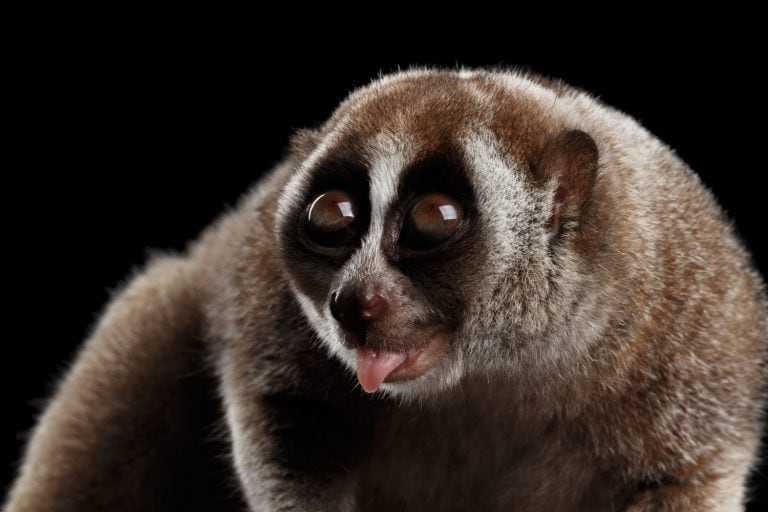
While they may look like innocent, wide-eyed plush toys on social media, slow lorises hide a far more violent reality. New research from 2026 shows that for these endangered primates, returning to the wild after rescue from the pet trade can be less of a “homecoming” and more of a death sentence.
Despite their gentle reputation, slow lorises are the only venomous primates on Earth. They wield a potent mix of toxic saliva and sharp teeth to fight for territory, and the battles are brutal. For a rescued loris, the forest is not always a peaceful sanctuary — it can be a high-stakes battlefield where a single bite from a rival may cause rotting flesh or fatal allergic shock.
Conservationists are increasingly finding that simply “setting them free” is not enough. Only a small number of Bengal slow lorises survive their first six months after release. Protecting the species now requires a careful, science-based strategy that accounts for the animal’s complex biology, territorial behavior, and the lasting trauma of the illegal pet trade.
Loris Aggression
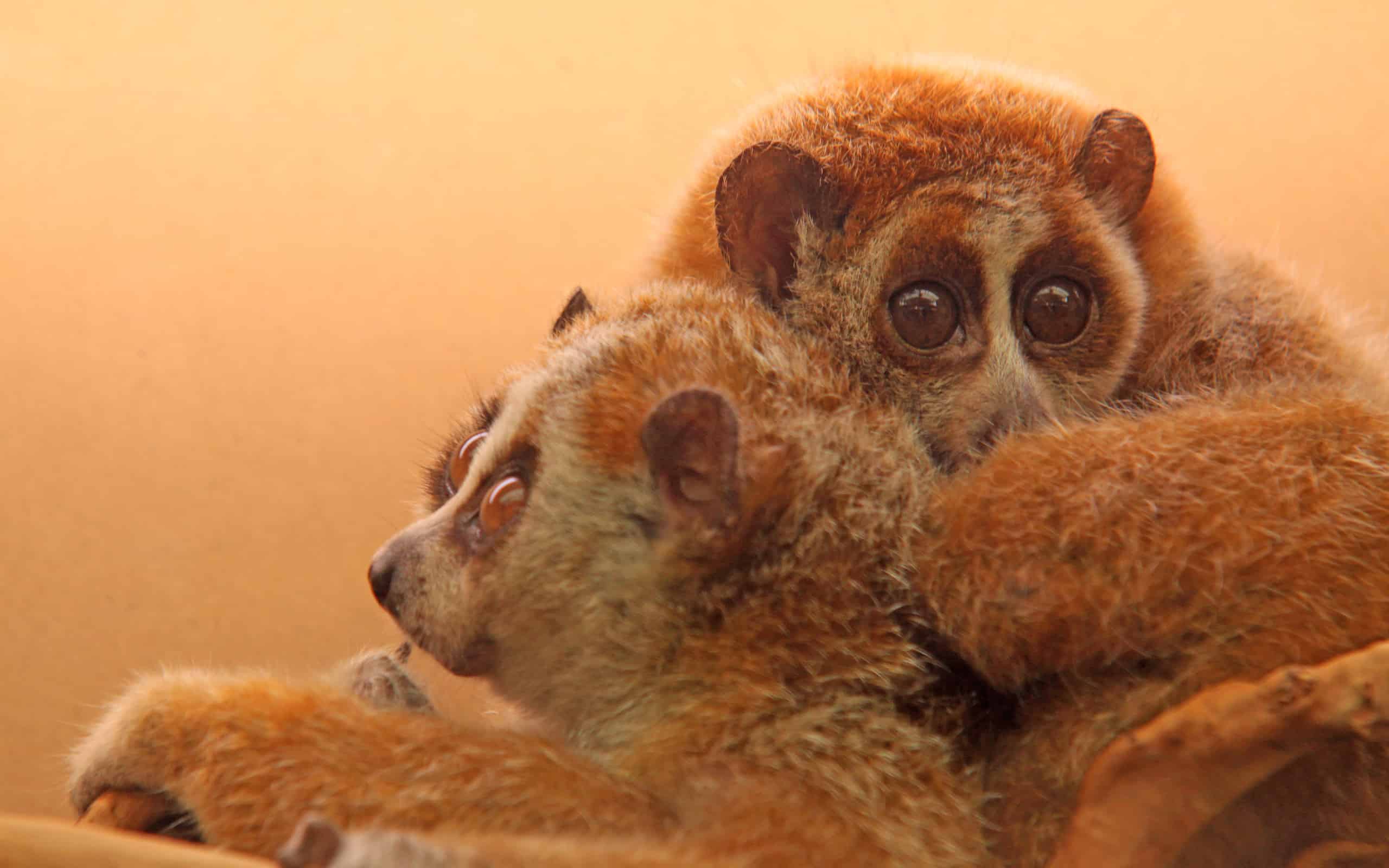
While most primates use loud calls or bluffing displays, the slow loris is one of the world’s only venomous mammals. Its slow, deliberate movements are not a sign of vulnerability or weakness, but rather a specialized part of its calculated hunting and defensive strategy.
The mechanics of a loris attack are both sophisticated and gruesome. A loris begins by licking a brachial gland on its inner upper arm to collect a specialized oil. When mixed with saliva, this secretion activates a potent toxin. The loris then delivers the venom through a “toothcomb” — a row of needle-like lower teeth that act almost like hypodermic needles — injecting the toxic slurry into a rival’s bloodstream.
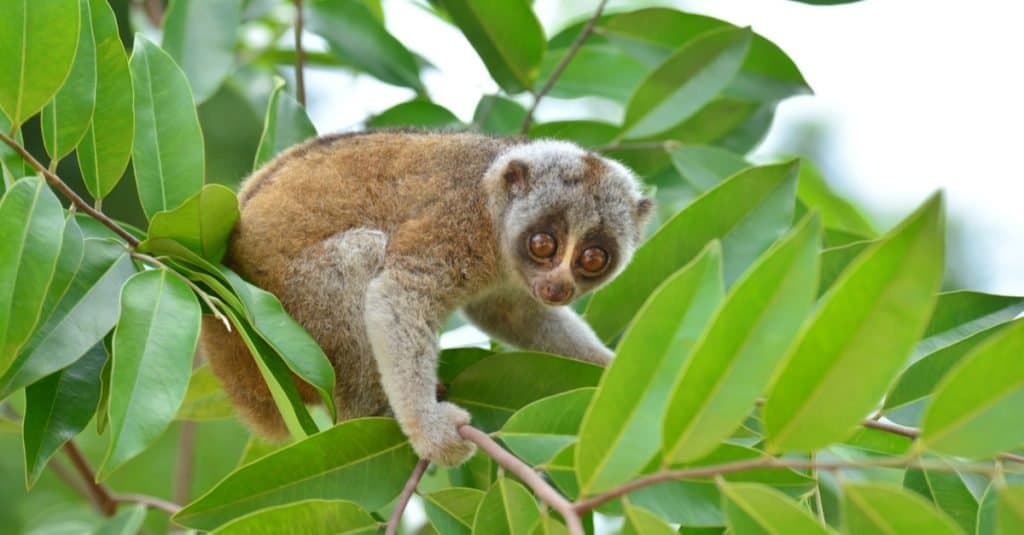
Slow lorises have a toxic bite.
©Conservationist/Shutterstock.com
In the heat of a territorial dispute, these bites serve as much more than a simple warning. The resulting wounds often lead to necrosis, causing the flesh around the bite to die rapidly, or to sepsis as deep infections spread through deep punctures. In extreme cases, the victim can die within hours from anaphylactic shock triggered by the toxin.
Interestingly, slow lorises rarely use this venom for hunting; instead, they reserve it primarily for combat with other lorises. Males are fiercely territorial, marking boundaries with urine to create a scented “map” of their domain. When a rescued loris is released into a territory already claimed by a resident animal, it is instantly perceived as an intruder. Without a “soft-release” strategy to slowly integrate the newcomer’s scent into the environment, the new loris is likely to face a fatal attack within the first few days of its release.
Viral Loris Videos Often Depict Cruelty
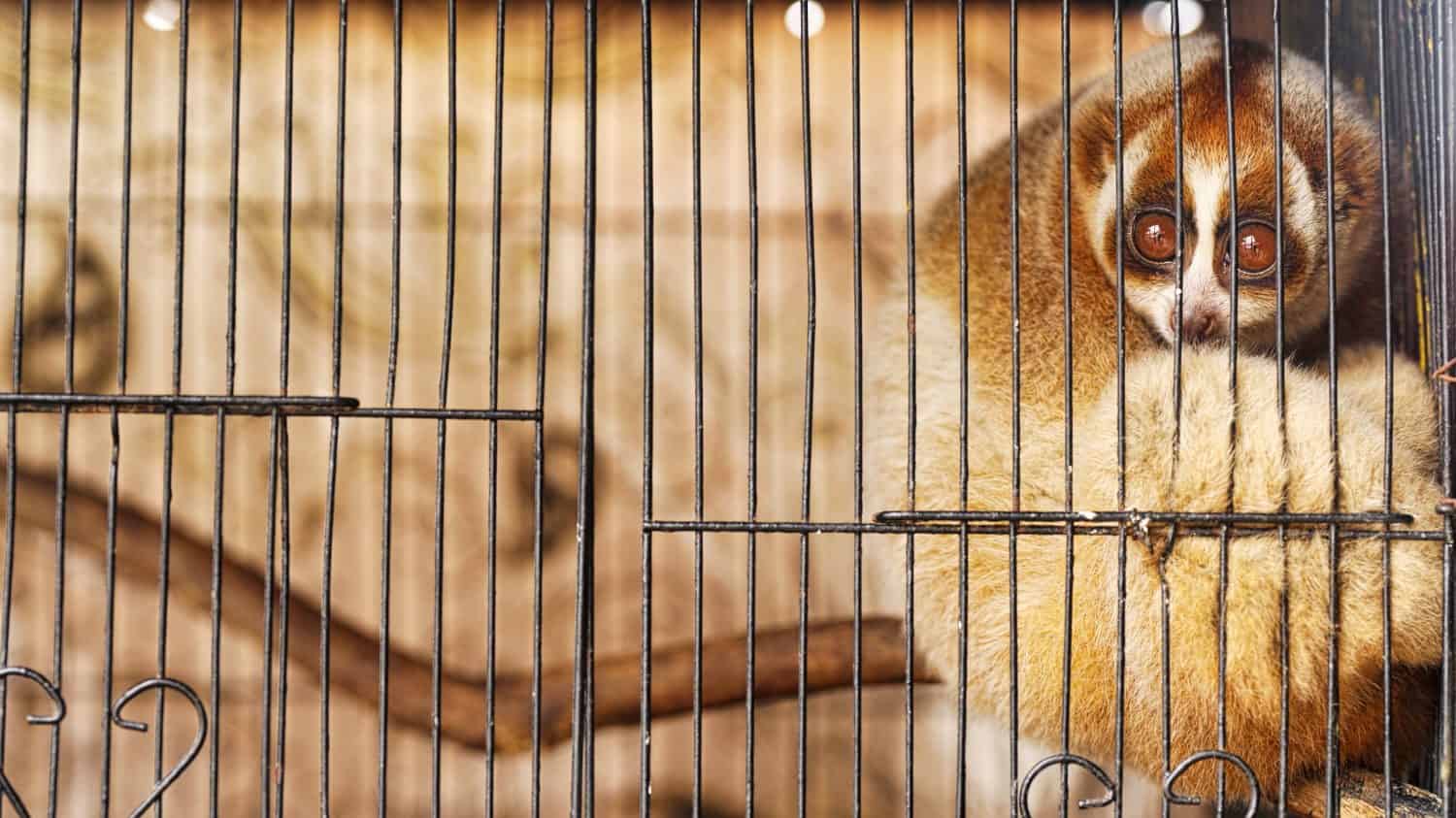
The longer slow lorises live in captivity, the harder it is for them to reintegrate into the wild.
©Spice Footage/Shutterstock.com
The brutal journey from a poacher’s trap to a rescue center often leaves slow lorises with permanent scars. The illegal pet trade subjects these nocturnal primates to intense physical and psychological trauma, which can severely hinder their ability to survive if they ever return to the wild.
This suffering is frequently masked by social media platforms like TikTok and YouTube. Viral videos showing lorises being tickled or holding miniature umbrellas may seem like harmless entertainment, but they often document animal cruelty. These “cute” clips thrive on a misunderstanding of the animal’s natural behavior and needs.
For example, one of the most iconic slow loris behaviors — raising its arms when tickled — is actually a desperate stress response. In this posture, the loris is actually trying to reach the brachial glands in its armpits to prepare a venomous bite. While an uninformed viewer might think the animal looks playful or submissive, it is actually terrified and preparing to defend itself.
The Brutality of Poaching
Because slow lorises are venomous, illegal traders often mutilate them to make them “safe” for buyers to handle. Traffickers frequently use pliers or nail clippers to rip out or clip the animals’ teeth, typically without any anesthesia. This procedure causes excruciating pain, massive blood loss, and often fatal infections. The damage from this process is permanent; without its specialized “toothcomb,” a loris cannot defend its territory or gouge bark to reach the tree sap and gum it needs to eat. Without these tools, survival in the wild is impossible.
The illegal trade itself is notoriously lethal. Despite being nocturnal, lorises are frequently kept in brightly lit homes or markets. This constant exposure can cause severe stress and permanently damage their sensitive eyes. During transport, poachers often cram animals into dark, poorly ventilated crates. Research suggests that between 30 percent and 90 percent of poached lorises die during transport before they ever reach a buyer. Those that do survive frequently develop obesity or diabetes due to improper diets of rice balls, pizza, and other human foods.
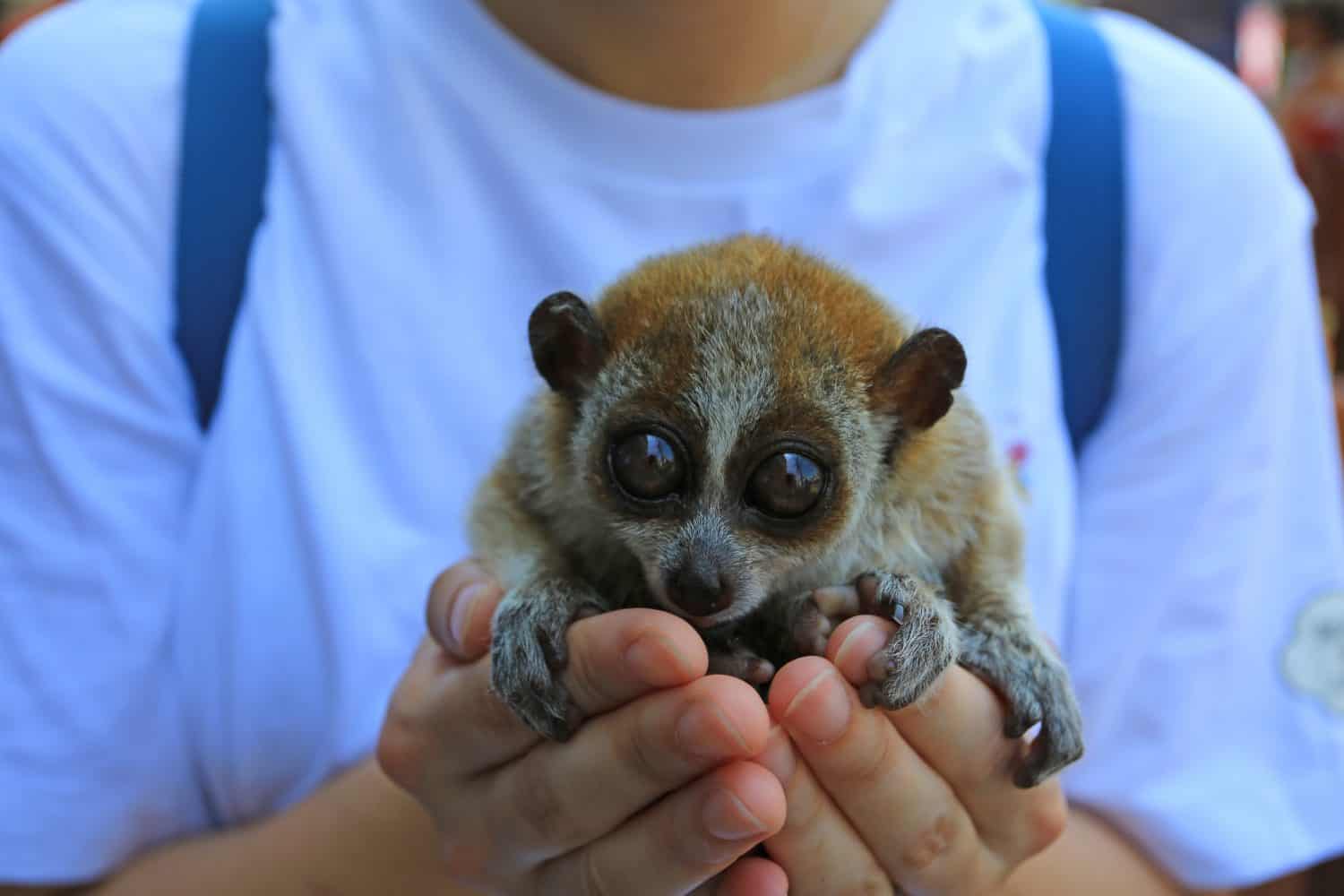
Many captive slow lorises in the illegal pet trade suffer from kidney failure, pneumonia, and diabetes.
©Lewis Tse/Shutterstock.com
Sadly, even rescue can unintentionally create new challenges for these animals. The longer a slow loris remains in captivity, the lower its chances of surviving in the wild after release. Animals kept in cages for extended periods can suffer from muscle atrophy and lose their natural fear of rivals. This leaves them especially vulnerable in the competitive wild.
The “Death Trap” Study
Researchers from the Little Fireface Project and Anglia Ruskin University tracked nine rescued Bengal slow lorises (Nycticebus bengalensis) after they had been released into Bangladesh’s Lawachara National Park. Their 2026 study, published in Global Ecology and Conservation, shows that even a healthy habitat can become a “death trap” for animals that are naturally territorial.
The results of this study were grim. Researchers used radio telemetry to monitor the animals. The results were stark: only two of the nine lorises survived longer than six months, resulting in a survival rate of just 22 percent. The first few days following the release were the most dangerous. Within the first ten days alone, three of the animals had already died.
Medical examinations revealed a consistent cause of death: violent attacks from other lorises. The victims bore toxic bite wounds on their heads, faces, and digits. These injuries were clear signs of intense territorial conflicts with the forest’s resident population.
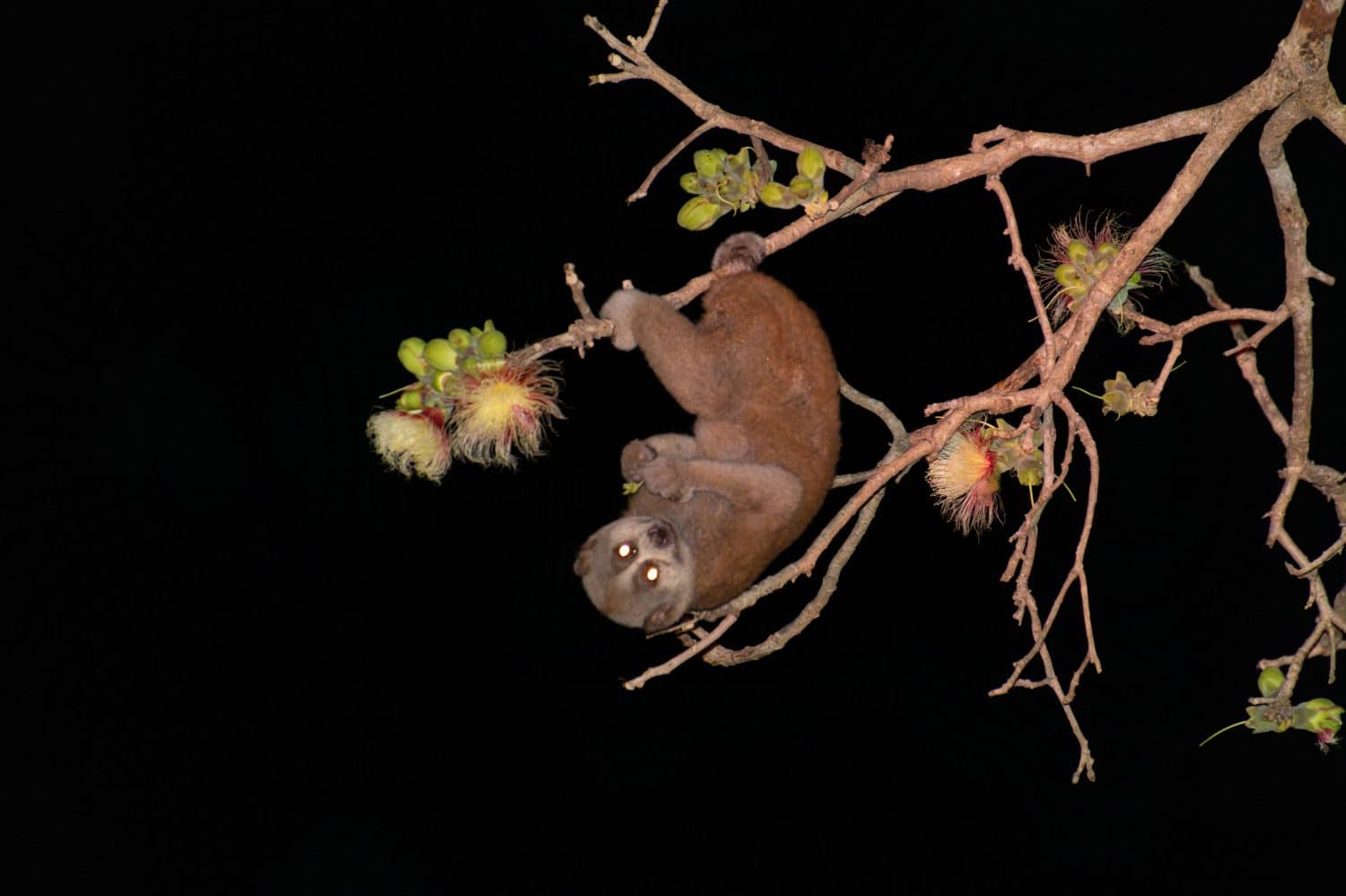
Slow lorises use all four limbs to move slowly and deliberately through the trees.
©timla wildlife/Shutterstock.com
Territorial Displacement and Survival Strategies
This study highlights a major flaw in some conservation practices. Without careful management, even protected forests can unintentionally become dumping grounds for confiscated wildlife. When new animals are introduced into habitats that are already full, the existing territorial structures are disrupted.
Slow lorises are nocturnal and navigate their world largely through scent. Because of this, they do not view newcomers as neutral additions to the forest. Instead, the resident population sees them as immediate threats competing for vital resources such as tree gum and mating opportunities.
The behavior of the two surviving lorises provided researchers with an important clue for future conservation. Unlike the animals that died quickly, these two survivors traveled across much larger areas. Rather than attempting to integrate into established local territories, they actively avoided them. These survivors lived on the fringes of the habitat, constantly moving to evade resident lorises. Eventually, they found less contested parts of the forest where they could settle safely. This study underscores a critical lesson: returning an animal to the wild without careful planning can inadvertently expose them to deadly conflict with their own species.
Redefining Rehabilitation
The findings from 2026 have become a major wake-up call for global conservation groups. To transform release sites from “death traps” into genuine refuges, organizations like the IUCN and the Little Fireface Project are promoting science-driven wildlife rehabilitation. This shift ensures that the transition back to the wild is handled with the same level of care as the initial rescue.
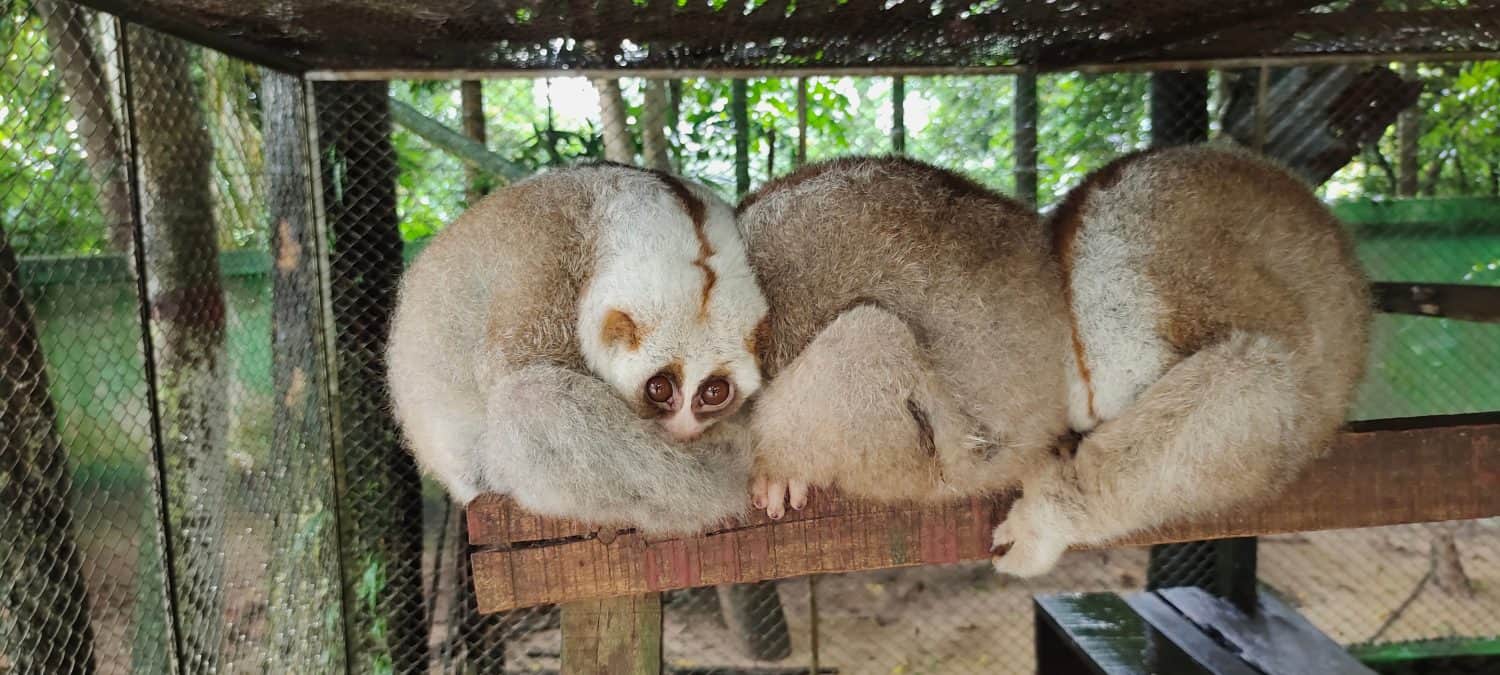
The illegal pet trade is the primary threat to the slow loris’s survival.
©kazi suhel tanvir mahmud/Shutterstock.com
Experts are increasingly recommending soft-release methods rather than the traditional hard-release (simply opening a crate and immediately letting an animal run free). Many modern programs now favor the use of acclimatization pens. These large outdoor enclosures allow lorises to adjust to local weather, sounds, and vegetation while staying safe from predators and rivals. This gradual transition period is vital for the animal’s physical and mental preparation.
In addition to physical comfort, these acclimatization pens serve a critical social function. They allow resident lorises in the surrounding area to slowly become familiar with the newcomer’s scent over several weeks. By the time the enclosure is finally opened, the rescued animal is no longer a total stranger or sudden intruder to the area. This gradual familiarity can significantly reduce the intensity of territorial attacks and give the rescued loris a much better chance at a peaceful integration.
Rigorous Site Surveys
Before a single slow loris is released, conservationists must carefully evaluate the local population density. Releasing an animal into a habitat that has already reached its “carrying capacity” — meaning it is full of resident lorises — dramatically increases the risk of violent conflict. To prevent this, researchers now specifically search for less crowded pockets of forest. They also ensure the chosen area has an abundant supply of tree gum to minimize competition for food from the very start.
A successful release also depends on the animal itself. While in rehabilitation, lorises must transition away from soft fruits to a natural diet of insects and tree gum so they can forage independently once they are free. A thorough check of their dental health is also essential. Because the “toothcomb” is vital for survival, only animals with intact teeth can be released back into the wild. Individuals whose teeth were removed or clipped by poachers typically require permanent care in a sanctuary, as they can no longer defend themselves or feed properly in the wild.
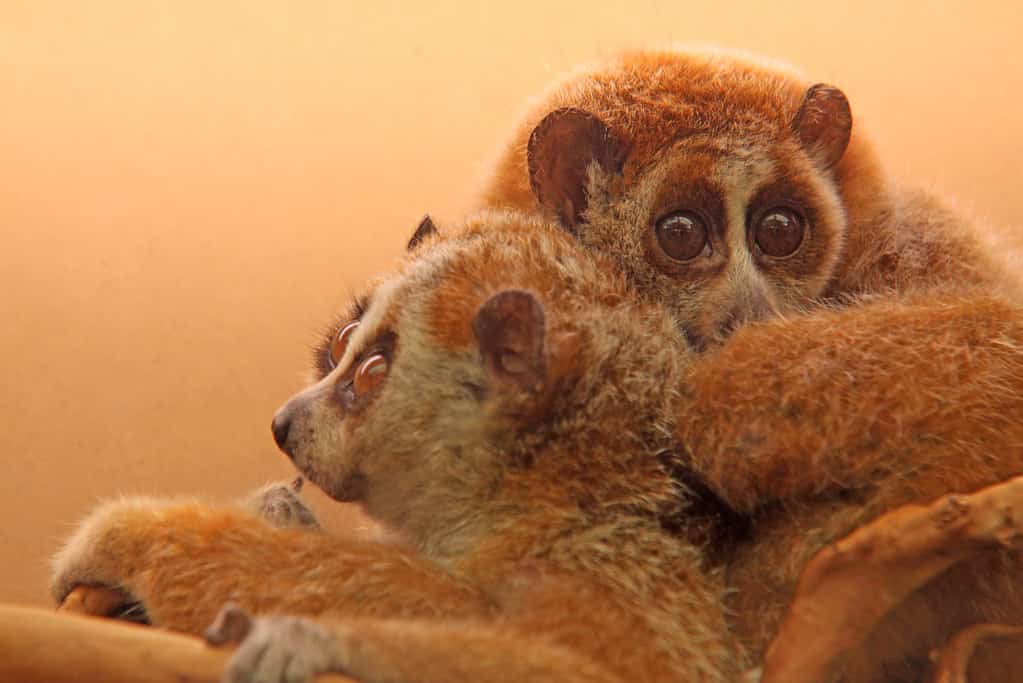
Slow lorises have a complex social life.
©inzyx/iStock / Getty Images Plus via Getty Images
Careful preparation is only half the battle, however; the actual outcomes must be tracked long after the animal leaves its crate. Scientists often use radio collars to monitor lorises for at least a year after their release. By tracking their movements, researchers ensure the animals do not drift into dangerous areas near roads or known poaching hotspots where their survival would be at risk.
How You Can Help
The future of the slow loris depends as much on public behavior online as it does on conservation science. Experts recommend a straightforward “triangle approach” to help reduce demand created by the pet trade.
First, avoid engaging with videos of pet lorises altogether — even leaving negative comments can trick social media algorithms into promoting the video to more people and increase its overall visibility. Second, report content that shows lorises in domestic settings as potential animal cruelty or illegal wildlife trade. Finally, support organizations funding field research, radio-tracking, and soft-release programs so rescued animals have a genuine, scientifically backed chance at a long life. For these unique primates, returning to the forest should mean freedom — not just another desperate fight for their lives.