
Quick Take
- Pablo Escobar’s four escaped hippos have grown into a feral population of nearly 200 individuals in the Magdalena Basin of Colombia.
- Lack of natural predators and abundant water allow these hippos to breed significantly faster than those in Africa.
- Massive amounts of hippo waste contaminate waterways, depleting oxygen and threatening native fish and manatee populations.
- Authorities are utilizing expensive sterilizations and controversial culling to prevent the population from reaching 1,400 by 2040.
No one casts a shadow over the history and legacy of Colombia quite like Pablo Escobar. Once the most powerful drug trafficker and kingpin on earth, Escobar made billions shipping cocaine to the United States and Europe. In turn, he brought untold violence, chaos, and calamity to his native country of Colombia. All the money he made had to be spent in some way, so Escobar also built himself a private zoo at his hacienda. Though he was killed over 30 years ago, one surprising aspect of Escobar’s legacy continues to be a problem in the jungles of Colombia: hippos.
That’s right. Beyond the drug wars, assassinations, bombings, and bloodshed, one of the most enduring and unexpected shadows of Pablo Escobar’s legacy is the sheer number of wild animals he trafficked into Colombia to staff his personal menagerie. Now, decades on, the hippos have reproduced, spread, and begun causing problems in the Colombian jungle. To combat the problem, government and wildlife officials have been forced to adopt increasingly extreme tactics to stop the hippos from wreaking havoc. Let’s learn more about Escobar’s unwelcome hippos. We will discuss why they are breeding so quickly, what impact this is having on the ecosystem, and what is being done to stop them.
A Manic Menagerie

At the peak of his power, Pablo Escobar’s drug cartel controlled an estimated 80% of the world’s cocaine market.
©Atosan/Shutterstock.com
The amount of information out there about Pablo Escobar could fill a library of books. Most of it is true, some of it is legend, and the rest are outright lies. Yet, some simple facts remain: Pablo Emilio Escobar Gaviria was born on December 1, 1949, in Rionegro and raised in Medellín. His early life was humble, and he fell into a life of petty crime as a teenager. This burgeoning career quickly evolved into a complex criminal enterprise. His first smuggling missions involved stolen stereo equipment, but soon, Escobar transitioned to a far more lucrative and dangerous commodity: powder cocaine. This switch marked a profound moment in not only history but the global drug trade.
Demand for cocaine in the United States was strong, and Escobar’s Medellín Cartel sought to satisfy it. By industrializing the process of cocaine from leaf to powder, Escobar made billions of dollars and plenty of enemies. Indeed, at his peak, Escobar’s cartel controlled an estimated 80% of the world’s cocaine market. This made him a billionaire with a penchant for bloodshed. To maintain control of the drug trade and his cartel, Escobar engaged in a campaign of true terrorism: assassinations of government officials, bombings of airplanes, kidnappings, extortion, and more. Ultimately, this campaign resulted in the deaths of thousands of people, both innocent and involved.
By the mid-1980s, Escobar’s cartel was bringing in an estimated $420 million a week. With so much cash on hand, Escobar had to spend it before it rotted or rats ate it. This resulted in many exorbitant purchases, not least of which was a personal zoo on one of his properties. This is where the Colombian hippos enter the story.
Too Dangerous To Move
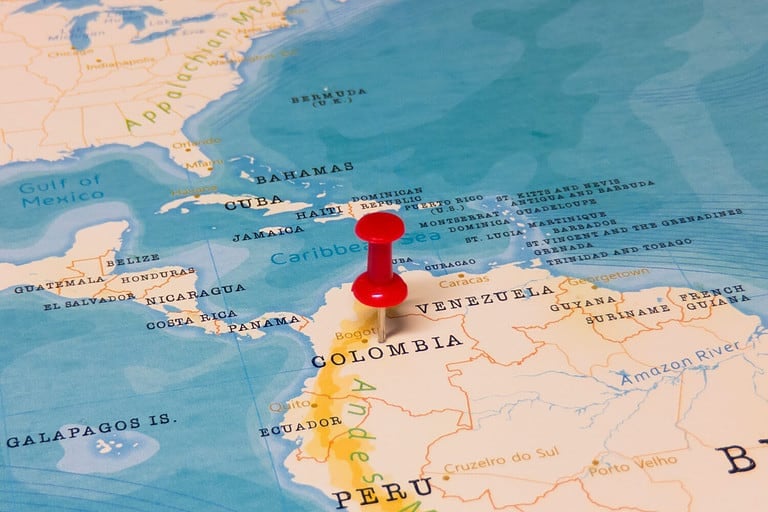
Escobar spent millions on lavish purchases, including a private zoo full of exotic animals like elephants, zebras, giraffes, and kangaroos. After Colombian police and American agents shot Escobar dead in Medellín in 1993, people poured onto his hacienda outside Doradal, a town about ten miles west of Magdalena. They were looking for guns and money, but these animals were there, too. A few years later, the government seized the property. Officials eventually transferred most of the animals to domestic zoos. However, they considered the hippos too dangerous to move, so they just left them to their own devices. This small hippo population included three females and one male.
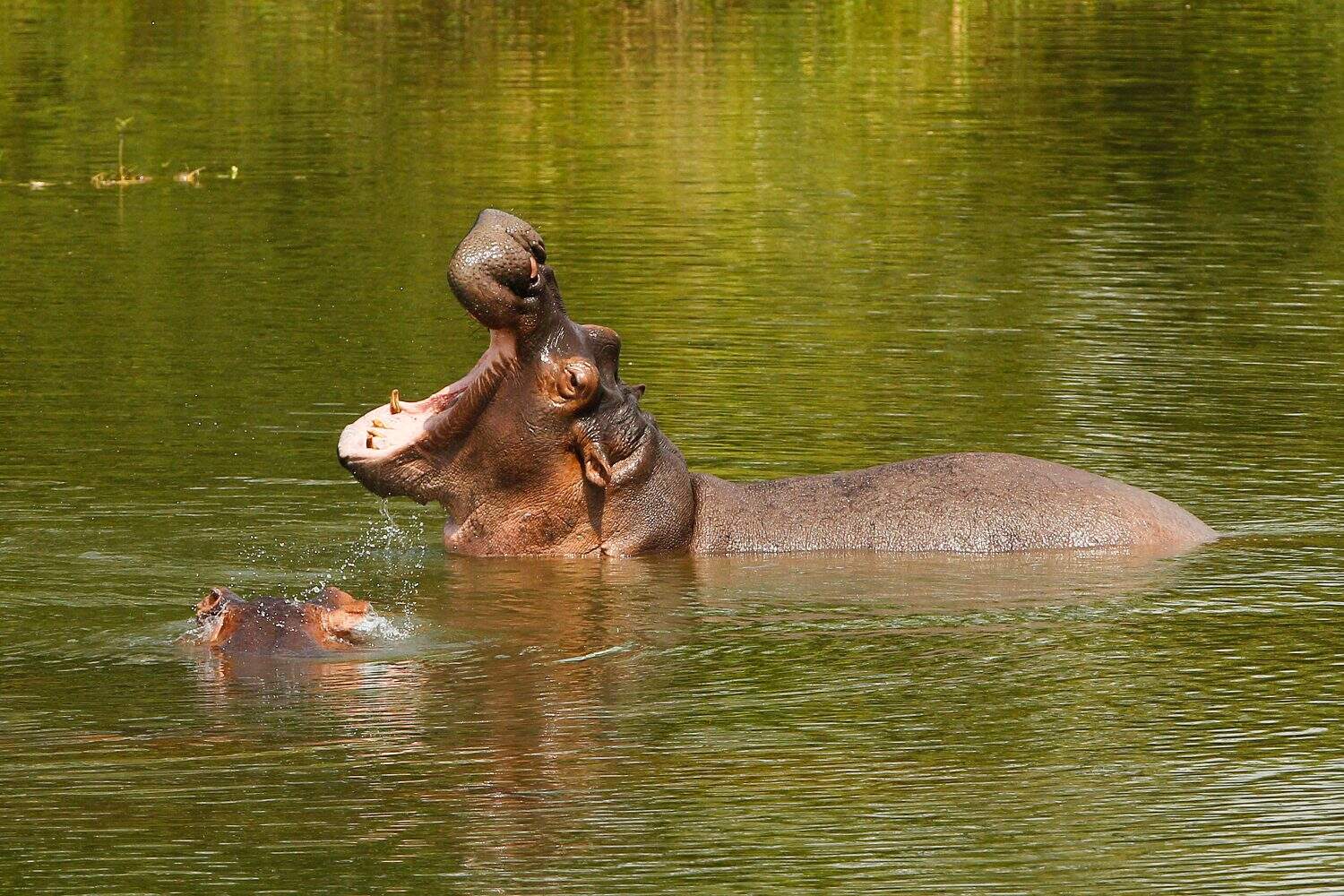
A single female hippo can produce a calf every 18 months, which adds up to about 25 separate births during their 40-50 year lifespan.
©Memo Ossa/Shutterstock.com
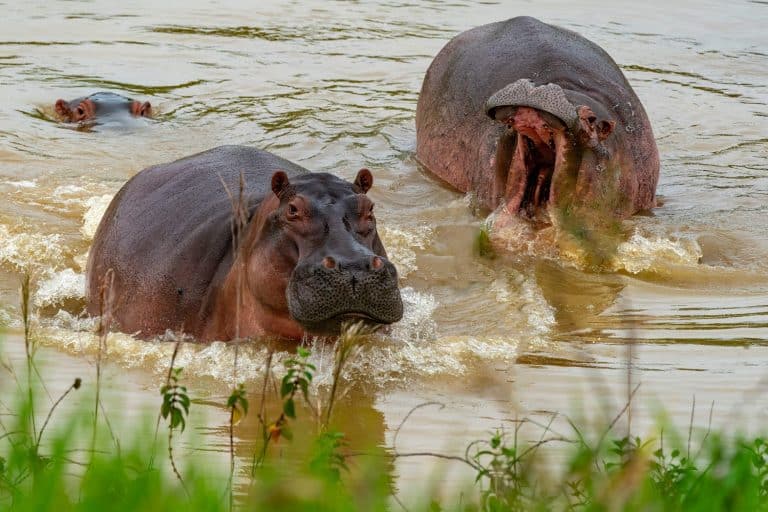
Left to their own devices out on the edge of the jungle, the hippos multiplied. A female hippo, for example, can produce a calf every 18 months. This means they can give birth 25 times during a 40-50-year lifespan. If males are cast out of a hippo herd, they migrate to other areas, starting their own herds and taking over new territory in the process. These days, no one knows exactly how many hippos live in the rivers and lakes of the Magdalena Basin. It’s an area covering approximately 100,000 square miles and is home to at least two-thirds of Colombia’s total population.
At last count, in 2023, government officials recorded 169 hippos. The chief of the Biodiversity Management Office of Cornare, David Echeverri López, a regional environmental agency, says the number could be as high as 200 now. Worse, if left unchecked, the hippos could grow to up to 1,400 by 2040. As López explained to Smithsonian Magazine, “They’ll get all the way to the sea, because they will just follow the river.”
Ecosystem Evisceration
Hippos kill approximately 500 people a year, which makes them one of the most dangerous animals on earth. While Colombia managed to avoid violent hippo encounters in the past, concerning incidents have been increasing in recent years. Hippos have begun attacking farmers and destroying crops. Furthermore, a car struck and killed a hippo crossing a highway last year. A hippo even wandered into a schoolyard, sending both teachers and students running for cover. Luckily, no one was hurt, but the hippo problem has become too hard to ignore.
On the ecological side of the equation, the invasive Colombian hippos are affecting the ecosystem. Just one hippo can produce up to 20 pounds of feces per day. While this waste functions as nutrients for fish in some rivers and lakes, it can easily reach critical mass. With warming temperatures and increasing drought problems, hippo poop has accumulated to dangerous levels in some bodies of water. It kills off the aquatic life that it previously helped. Not only that, but hippos are so big that they can literally re-engineer the environment around them. By trampling through riverbanks and creating deep underwater paths, hippos easily alter water flow. This destroys the habitats of smaller organisms and redirects streams, even rivers.
While Colombia is a place with incredible biodiversity, it’s a variety of animals adapted and evolved for each other. Animals like otters, capybaras, turtles, and West Indian manatees could easily be displaced. According to Rebecca Lewison, an ecologist at San Diego State University’s Coastal and Marine Institute, the problem is a matter of scale. She said, “If I lived in Colombia, I would be worried. Colombia has great biodiversity, and this is not a system that has evolved to support a mega-herbivore.”
Combating the Problem
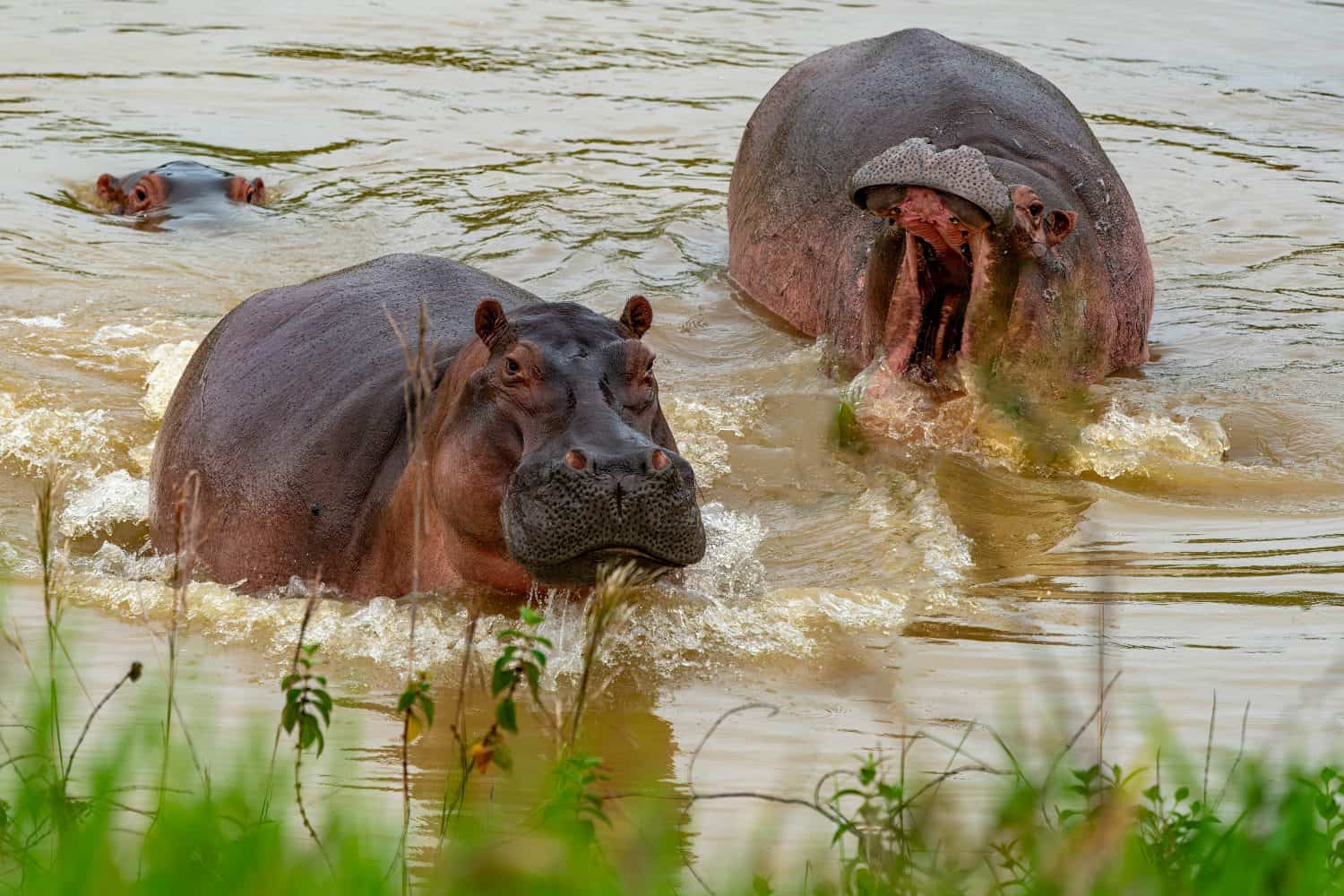
To combat the growing hippo problem, the Colombian government has employed a mixture of culling, recolating, and surgical sterilization strategies.
©Andrea Izzotti/Shutterstock.com
The destruction caused by these hippos is one thing; effectively dealing with these massive creatures, however, is another problem entirely. The Colombian government and, more specifically, regional agencies are pulling their proverbial hair out while they try a multi-pronged approach to dealing with the hippos. This strategy involves three main approaches: surgical sterilization, culling, and relocation.
Currently, surgical sterilization is the preferred method for dealing with these hippos. Since hippos are pretty hard to move around easily, sterilizing them remains the most effective course of action, even if it takes years to pay its dividends. However, castration is also difficult. It involves darting a hippo with a tranquilizer, following it while waiting for it to lose consciousness, and then performing serious, invasive surgery in unpredictable terrain.
Culling is another method employed by the Colombian government. While controversial, this method is the only one that can fully stop the hippo invasion. Indeed, the Ministry of Environment in Colombia recently suggested that euthanasia would only be needed for a percentage of the population, just enough to prevent a total ecosystem takeover. When these methods fail, the Colombian government tries to relocate the unruly hippos. This completely removes hippos from the ecosystem, but it is the costliest and logistically most complex strategy.
Going Forward
With a growing concern over the mounting hippo problem, the Colombian government has undoubtedly made some progress when it comes to at least figuring out exactly what to do with these massive, invasive herbivores. If more rational minds prevail, they will likely focus on a management system as the 21st century progresses.
Indeed, invasive species are hard to get rid of, no matter their location or size. As pointed out by the Smithsonian Magazine piece, only a few of the 3,500 invasive animal species introduced by humans into new, unsuitable biomes have been eradicated. It’s likely there is no demonstrable way to turn back the clock on Escobar’s hippos, but luckily, there are at least ways of finding a sustainable, separate peace.