
Quick Take
- Researchers from Osaka Metropolitan University recently released findings that show cleaner wrasse may be more self-aware than previously believed.
- In the study, the fish demonstrated “contingency testing” skills, an attempt to figure out cause-and-effect.
- This behavior was previously associated with marine mammals, but not fish.
- Researchers hope their findings will spur additional research in the realm of animal self-awareness.
Cleaner wrasses (Labroides dimidiatus) thrive in coral reefs around the world. But they’re more than just another pretty face among the brightly colored marine ecosystem. Despite their diminutive size, cleaner wrasses play an important role on the reef.
These creatures are basically the spa workers of the sea, making sure their fellow fish are living their smoothest, cleanest, and most parasite-free lives.
Now, thanks to a new study from Osaka Metropolitan University, we know that these underwater beauty professionals have demonstrated behaviors that suggest they are more than just another colorful reef dweller. They’ve shown similar levels of self-awareness and intelligence as some marine mammals.
The Cleaner Wrasse’s Importance to Coral Reefs
When you’re snorkeling or scuba diving, look closely at any coral reef and you’ll eventually notice what is known as a fish “cleaning station.” You can quickly identify a cleaning station by the number of fish patiently waiting for their turn to be tended to by the resident cleaner wrasse population.
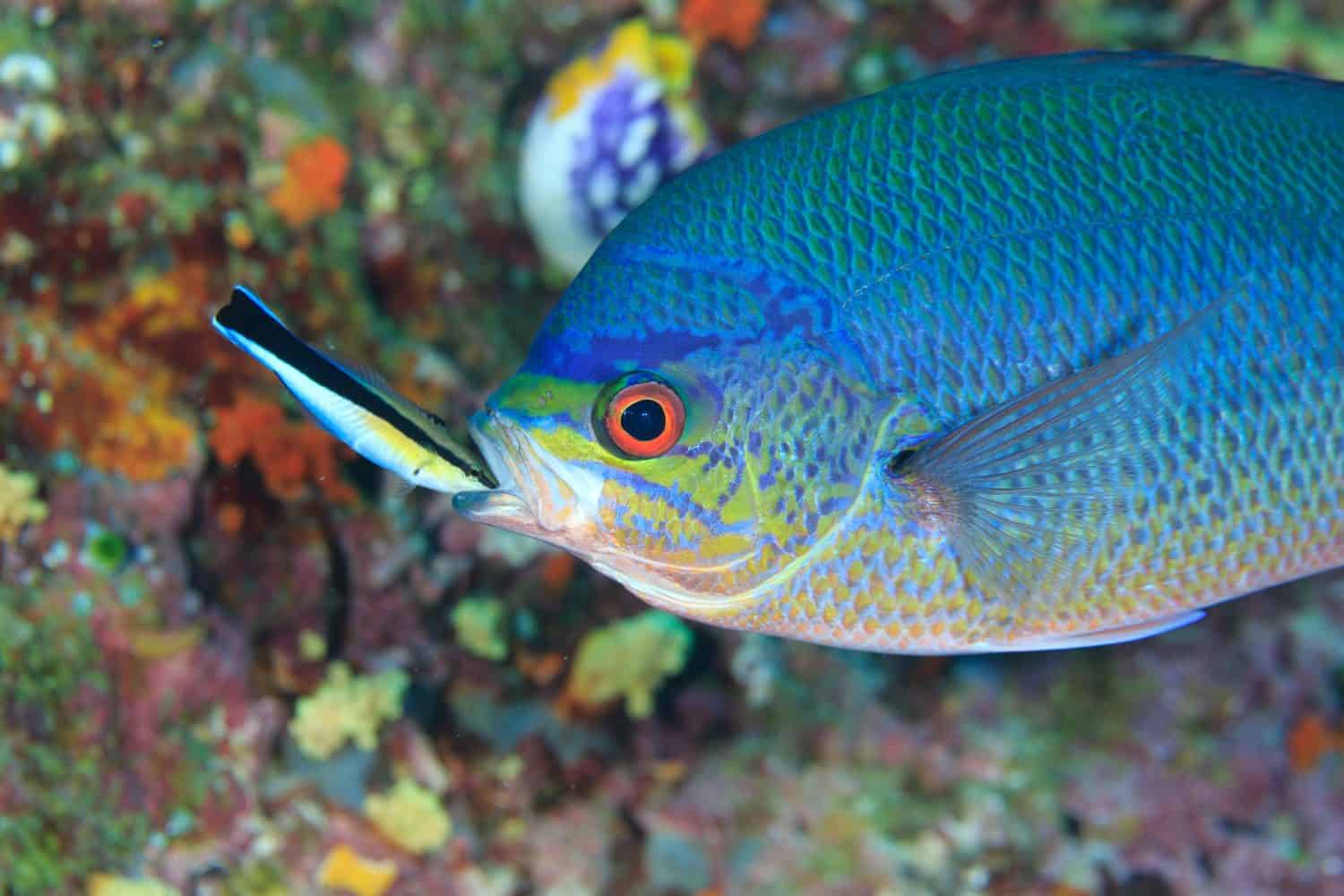
What’s a wrasse’s job? To quickly and efficiently remove dead skin and parasites from their fish clientele.
The wrasse’s attention to detail goes beyond the fish’s exterior. Spend a few minutes up close to a cleaning station and you’ll see wrasses confidently working inside a fish’s mouth, like a miniature dental hygienist. It’s an amazing sight to see, and a great example of mutualism at work.
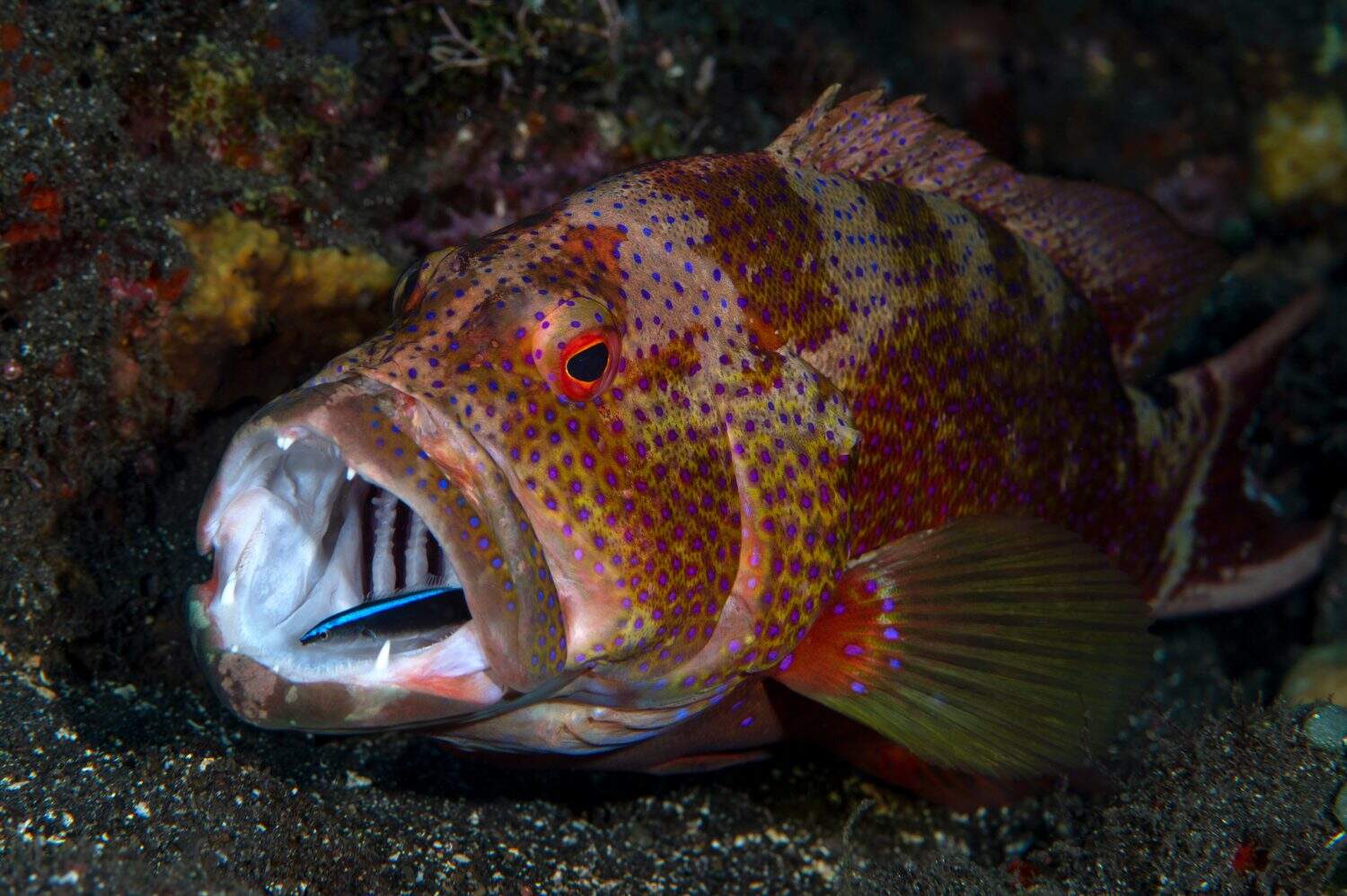
Cleaner wrasse play an important role in keeping other reef fish clean and parasite-free.
©DiveIvanov/Shutterstock.com
The tiny wrasse performs their service and the bigger fish, that could easily eat the wrasse, allows the wrasse to get on with its job. Once the wrasse is finished, it simply swims out of the bigger fish’s mouth. Everyone’s happy.
Cleaner wrasses are critically important to overall reef hygiene. Not only do they keep other fish clean, but their efforts also keep parasite populations under control and boost reef biodiversity.
Researchers have long known the important role of cleaner wrasse, but now they also have data that suggests these tiny fish are far more intelligent than previously thought.
How Did the Study Test Cleaner Wrasse?
Scientists started with a group of wrasses and placed small marks on their bodies to imitate parasites. Then, the researchers lowered a mirror into the tank to gauge the initial reactions of the fish. The mirror was left in the tank for several days to see if reactions changed over time.
Researchers also placed small bits of shrimp on the tank floor to gauge any response to its presence.
What Did Scientists Learn?
This study built upon previous mirror research with cleaner wrasse.
It has long been known that cleaner wrasses respond to mirror images, demonstrating their highly social instincts. Previous studies also tested how quickly a wrasse, already accustomed to a mirror, would respond when a new parasite marking appeared on its body.
However, in the new research, scientists wanted to know how quickly the wrasse would respond when the parasite marks were present before they ever saw the mirror.

Cleaner wrasse are very social and also respond to their images in mirrors.
©Vojce/Shutterstock.com
What the scientists discovered is that even a wrasse that had never seen a mirror before quickly learned to use their reflection to locate the “parasite,” then try and remove it. But it was the speed of the response that surprised researchers.
In previous studies, where a wrasse was introduced to a mirror before the body was marked, it could take several days before the wrasse would attempt to remove the mark. However, in the current study, the wrasse took very little time before getting busy. In some cases, the wrasse began attempting removal in less than one hour. The average time was around 82 minutes.
But this wasn’t the most surprising finding of the study.
What Was the Study’s Biggest Find?
Scientists discovered a brand-new behavior in cleaner wrasses.
While previous studies showed that wrasses were capable of recognizing their reflections and even using that reflection to eventually attempt parasite removal, this new study revealed a deeper level of intelligence.
After a wrasse had a mirror added to his environment, the fish began conducting his own experiments. He would pick up a tiny bit of shrimp from the tank floor, carry it upward, and intentionally release it close to the mirror. Then, the wrasse would track the movement as the particle slowly drifted back to the ground, repeatedly touching the mirrored reflection while watching it fall.
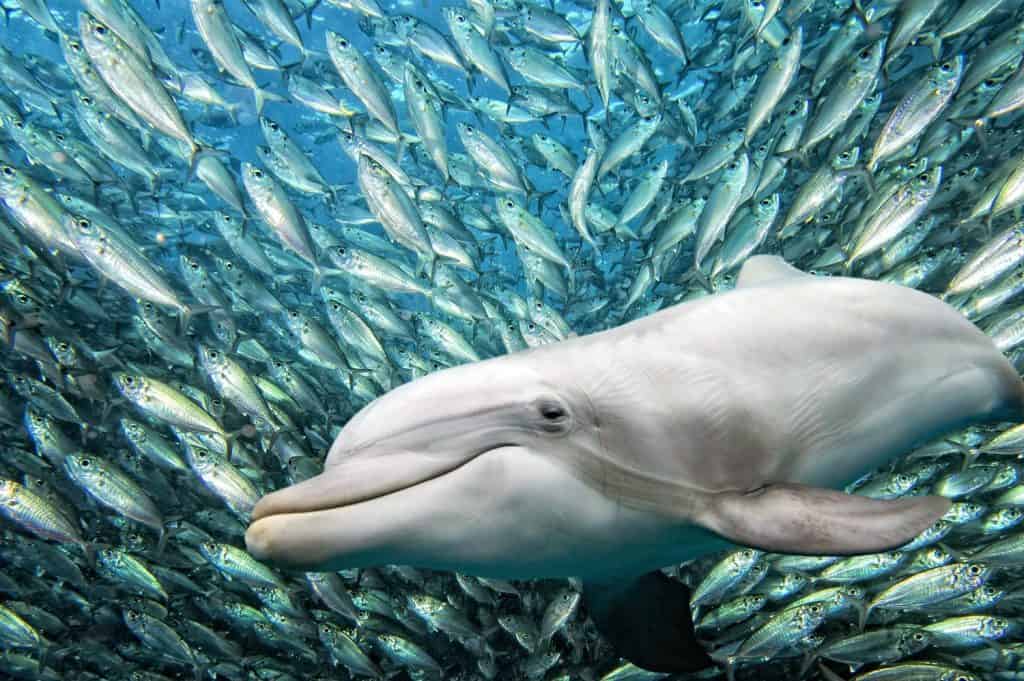
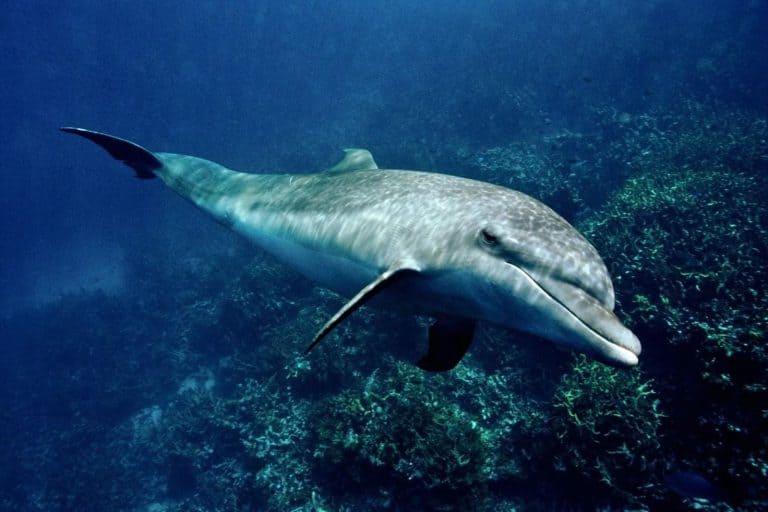
Previous studies on “contingency testing” were conducted on marine mammals like dolphins.
©Andrea Izzotti/Shutterstock.com
That experimental behavior suggests that the tiny wrasse is capable of something called “contingency testing.” When species contingency test, they are trying to figure out cause-and-effect between their actions and an outcome. The tiny wrasse was basically trying to figure out how the mirror worked.
Until these research findings were released, the scientific community associated contingency testing more often with dolphins and other marine mammals. Now, the evidence suggests that even tiny reef fish have the same or similar ability.
What Does This Research Mean for Animal Self-Awareness?
According to the study’s authors, this kind of deliberate behavior suggests that the wrasse was demonstrating critical thinking skills.
“These findings in cleaner wrasse suggest that self-awareness may not have evolved only in the limited number of species that passed the mirror test but may be more widely prevalent across a broader range of taxonomic groups, including fish,” says Dr. Shumpei Sogawa, a Specially Appointed Researcher at Osaka Metropolitan University.
The research team hopes their findings will help reinforce the importance of studying self-awareness in a wider range of animals.