
Quick Take
- Protecting sacred messengers once resulted in the death penalty under the Nara prefecture law.
- Shinto legends claim the original Sika deer once descended with Takemikazuchi bearing a white coat.
- Performing Shikayose annually lures deer from the woods with music to feed on acorns.
For centuries, animals have been worshipped by cultures around the world. Some, such as deer, are even considered sacred in religions like Shinto. The stories passed down through generations about these majestic legends are still very much alive today. In Shinto tales, the Sika deer play a powerful otherworldly role. Just as foxes are sacred to Inari Ōkami, deer are revered and respected in Japan’s Nara Prefecture. Here’s what their mystical presence means for those who still see them through ancient eyes.
How Did Deer Become Messengers of the Gods?
In Nara, Sika deer are known as messengers of the kami. In Japanese, this literally translates to “god,” “spirit,” or “deity.” These gods or spirits also relate to ancestors, sacred locations, and anything with spiritual significance. Some examples of this include the Sun Goddess Amaterasu, samurai heroes who have ascended after death, and, in the case of Sika deer, legendary gods.
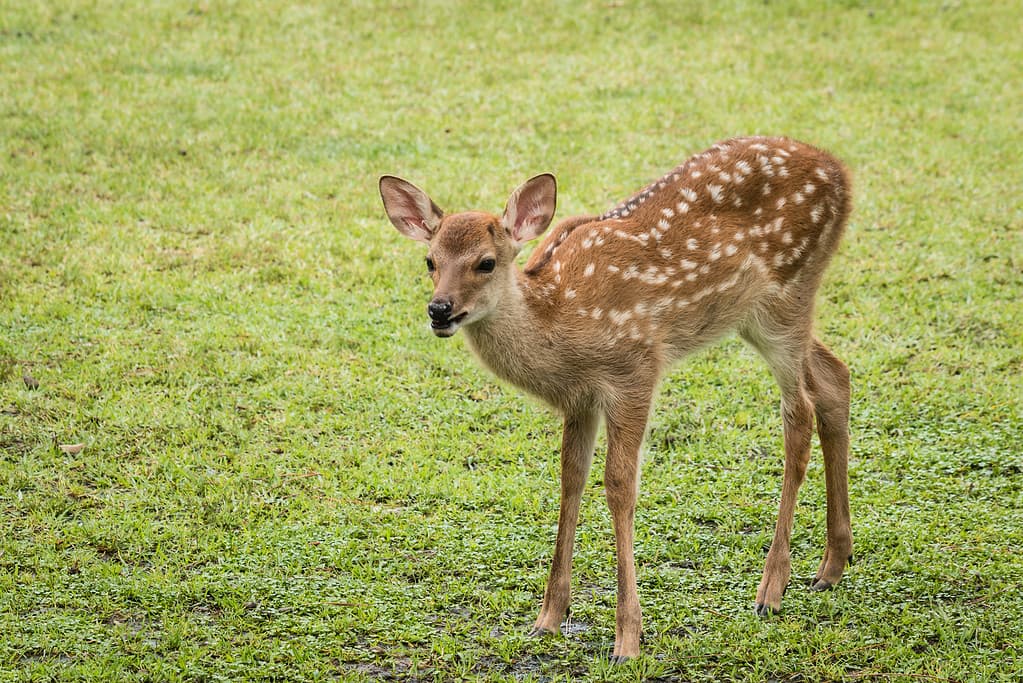
According to Shinto legend, the Sika deer bore an all-white coat.
©PatrikStedrak/iStock via Getty Images
In Shinto, which is followed throughout most of Japan, deer are animals of legend. Their origin dates back to the tale of the Thunder God Takemikazuchi no Mikoto. According to the story, Takemikazuchi rode into Nara on the back of a white deer. He declared Nara a sacred land, including all the Sika deer that call it home.
In Shinto, this was a holy event, particularly surrounding the Kasuga Grand Shrine. Legend says that Takemikazuchi’s white deer rode from this shrine to Nara, carrying a scroll bearing a divine message. The god’s arrival meant prosperity and happiness for the people of Nara. Since then, Sika deer have been revered as messengers to many Kasuga Shrine gods. However, their presence in Nara is more than folklore.
Nara Prefecture Protects Its Native Sika Deer
Shinto holds that deer symbolize good luck, purity, and longevity. It’s this belief that once carried severe consequences for anyone who caused them harm. Until 1637, killing a Sika deer in Nara was actually punishable by death. Following World War II, this law was changed. While penalties remain heavy, Sika deer are now protected as wildlife rather than sacred messengers.
Today, they’re designated as National Natural Treasures, and protecting them is essential to protecting the living monument. The Cultural Properties Protection Act prohibits anyone from harming the deer. If they do, the punishment includes fines, jail time, and probation.
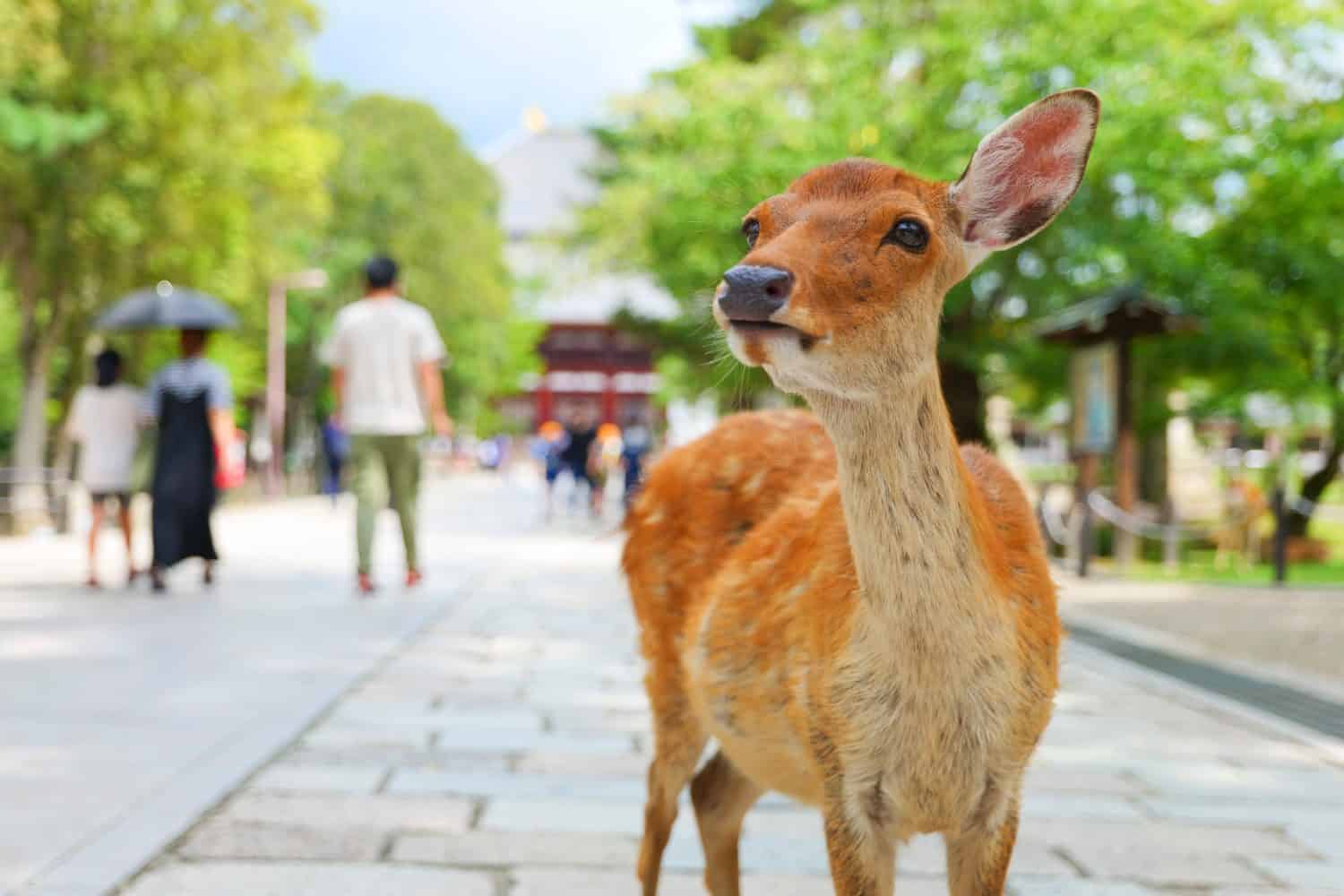
Sika deer are abundant around Kasuga Taisha Shrine and are accustomed to tourists.
©iStock.com/Elena Tcykina
It’s estimated that roughly 1,465 Sika deer freely wander Nara Park today. Given the extremes to protect them, their native population has exploded in the last few decades. The park spans 1,630 acres and includes Kasuga Taisha Shrine, Buddhist temples, and plenty of protected woodland. The deer are so abundant in Nara Park that you’ll rarely find a photo of its temples without them. In addition to Sika deer, the region around Nara also has a healthy population of other deer species. While some worry about the intermingling of the two, the Sika deer are still protected by law.
How Can Tourists See Nara’s Sacred Messengers?
Despite their reverence, tourists looking to meet Nara’s sacred deer find that it’s quite easy. Vendors in Nara Park sell shika senbei, a type of cracker. Tourists can purchase these deer crackers to hand-feed the deer, a popular experience at Kasuga Taisha Shrine. These crackers are also registered trademarks of the Foundation for the Protection of Deer in Nara, meaning the profits from their sales go toward protecting Sika deer. Although the deer forage for themselves, they’re extremely familiar with humans and won’t hesitate to eat the wheat-and-rice-bran crackers.

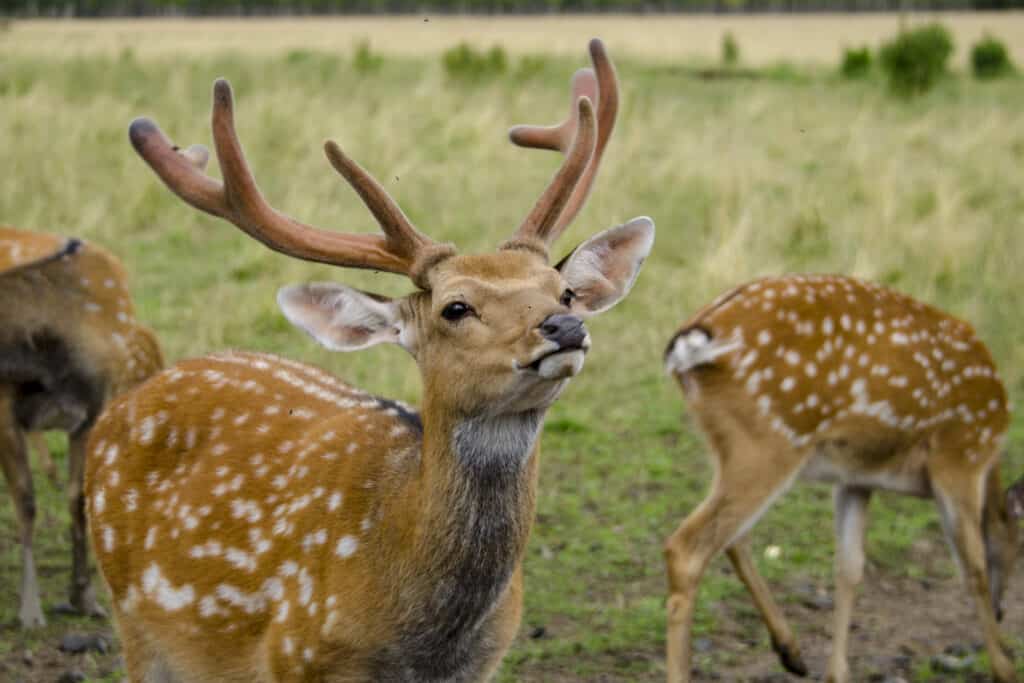
Deer shed their antlers, but annual cutting helps ensure everyone’s safety.
©Martin Mecnarowski/Shutterstock.com
Along with hand feeding, tourists also flock to Nara Park for two popular annual events. The Deer Calling, also known as Shikayose, is when tourists can observe deer being called from the forest by a French horn. The musician often plays Beethoven’s “Pastoral,” which beckons the deer for feeding time. They gather to eat acorns in a rendition of the sacred traditions of centuries past. The event takes place on Sundays in July and August, and on weekends and holidays in January and February.
Antler cutting is another sacred tradition that tourists can observe at Nara Park. The tradition itself is 350 years old and began during the Edo Period. Cutting the antlers of mature Sika deer is for their safety and for those observing them. As the deer compete with females during mating season, they become more aggressive. Sharp antlers can wound and even become fatal to other males, as well as tourists. The process is harmless to the deer and allows new antlers to grow the following year.