
Quick Take
- Elephants are revered as deities by Hinduism, Buddhism, and other religions.
- Elephants have excellent memories, demonstrate empathy, and are exceptionally strong. These characteristics, and others, are what earned the elephant such high religious regard.
- Modern Indian festivals (poorams) feature live elephants in elaborate processions.
- Animal advocacy groups are fighting for better living conditions for captive elephants used in festival processionals.
The elephant is an important part of many religions. Elephants play a central role in Hinduism, Buddhism, and other religions throughout Asia and Africa—whether as deities, central characters in mythological stories, or through their depictions on temples. Read on to discover why the elephant has achieved this elevated status.
Ganesha the Elephant-Headed God
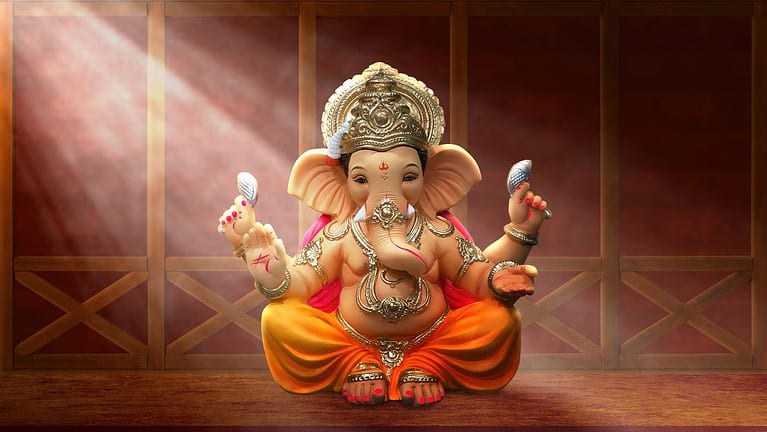
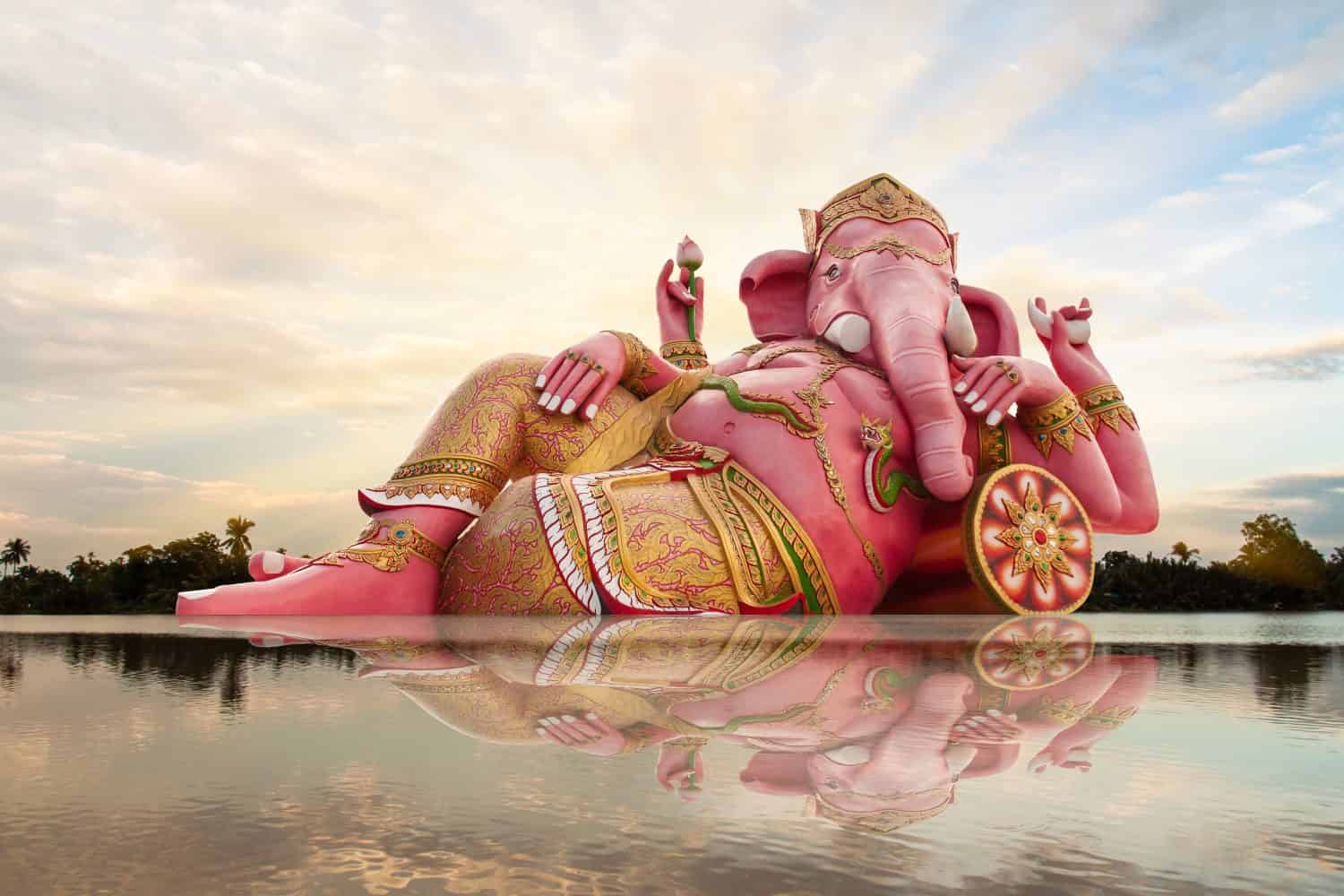
Perhaps the most famous elephant is the one associated with Ganesha, the elephant-headed Hindu god of beginnings, wisdom, and the remover of obstacles. Ganesha is one of the most revered deities in the Hindu religion, the son of Shiva and Parvati. He has an elephant’s head with one broken tusk and a human body with four arms. The most widely held myth of Ganesha’s birth is an interesting one.
It is said that Parvati created Ganesha out of the need to guard her from Shiva while she bathed. Shiva had a habit of barging in on Parvati while she bathed, and she wanted her privacy. So she collected the dirt she rubbed off her body and crafted a statue of a child, which then came to life. It became the newly formed child’s duty to keep Shiva out.
Shiva, upon encountering the child, did not recognize him and, in a fit of anger, cut off the boy’s head. To remedy this, he replaced it with an elephant’s head. He also gave him a protruding belly as an extra touch. Thus, the Ganesha we know today was born.

Ganesha is one of the most revered Hindu deities.
©Denis Moskvinov/Shutterstock.com
Ganesha is considered the god of new beginnings, wisdom, and the remover of obstacles. His head represents divine wisdom and the soul, while his body represents the physical world. He is the patron of intellect, representing writers, intellectuals, and students. His primary role is to clear the way to success.
Elephants in Other Religious References
Other religions, such as Buddhism, Jainism, and African belief systems like those of the Ashanti, also recognize the elephant as an important part of their worship. Elephant carvings can be found in temples, the animal appears as a central character in religious scriptures, and references to elephants are common in daily life.
For example, the elephant appears prominently in Buddhism’s Jataka tales, which are stories of Buddha’s past lives. Elephant images and characteristics are often used as metaphors in Buddhist teachings, too.
What Does the Elephant Symbolize?
Elephants are known for their exceptional intelligence, powerful memory, and the ability to show empathy. They are comparable to great apes in terms of their intelligence, ability to solve problems, use tools, and demonstrate self-awareness. As the largest land mammals in the world, elephants are also incredibly strong. They also live very long lives, with many reaching more than 80 years old.
The elephant is a truly unique and special animal. It is no wonder that so many religions chose the elephant to symbolize important attributes. While many religions revere the elephant, they do not all focus on the same traits.
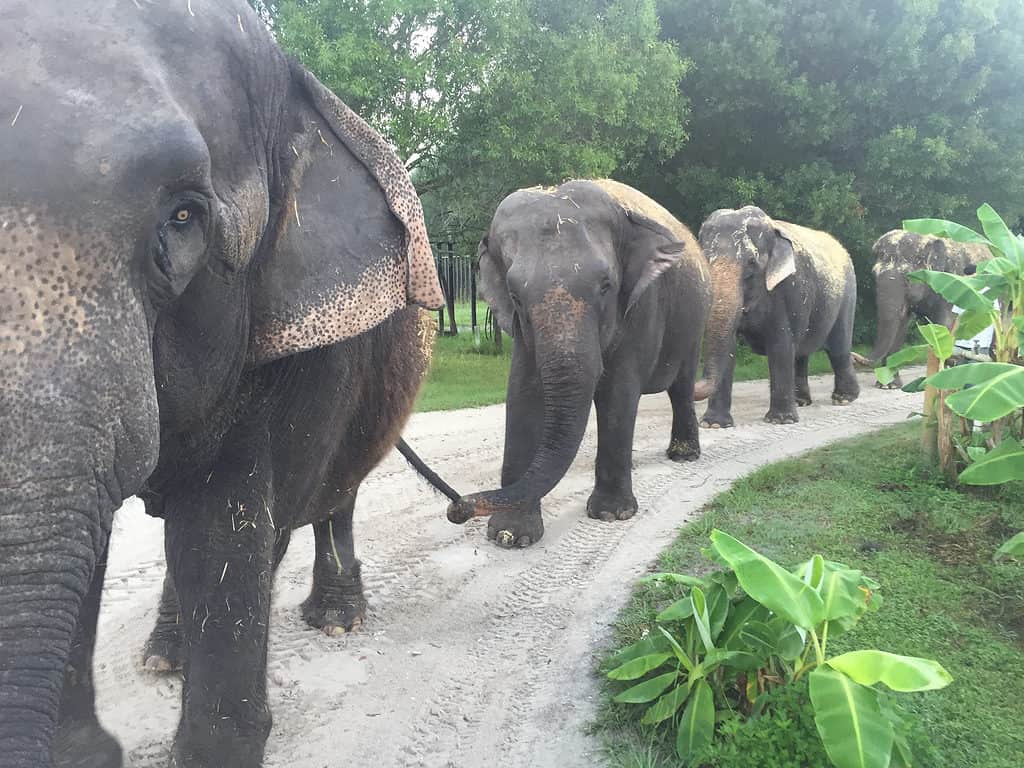
Elephants are beautiful animals full of symbolism.
©ElephantErik/Shutterstock.com
In Hinduism, elephants are sacred and divine. They represent loyalty, wisdom, and strength. Buddhists revere elephants for their purity, power, and potential. Various folk religions bring elephant figurines to shrines for luck and longevity.
How Living Elephants Play a Role In Religious Life
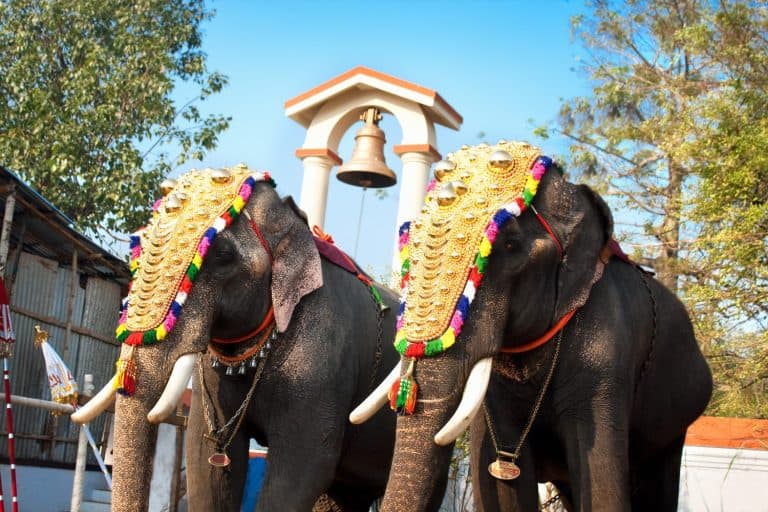
Throughout India, elephants can be found participating in a variety of Hindu religious ceremonies and festivals. The most eye-catching are the temple processions, where you’ll see elephants decorated with elaborate headgear and brightly-colored garments adorned with ornaments. These blinged-out elephants lead processions, symbolizing chariots for the gods.
One of the grandest and most famous of these festivals—known as poorams—is the Thrissur Pooram in Kerala, India. Held annually in April/May at the Vadakkunnathan Temple grounds, the festival features elaborate processions of elephants, accompanied by drum performances and fireworks.
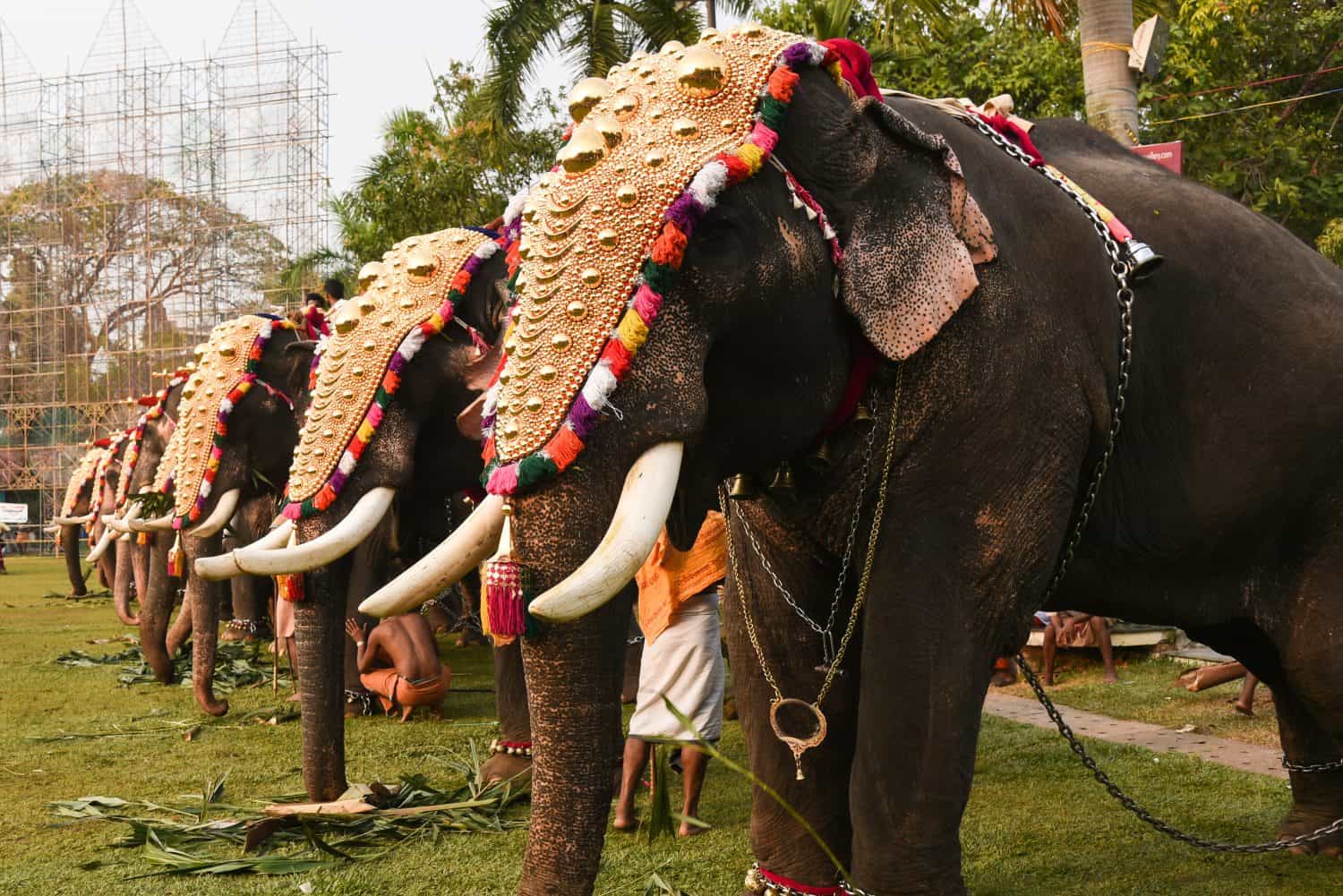
Elephants prepare for a festival procession in India, adorned in elaborate outerwear.
©Santhosh Varghese/Shutterstock.com
Elephants are also often present near the entrance to temples throughout India. Worshippers receive blessings when these elephants gently tap them on the head with their trunks. Buddhists also incorporate elephants into their religious ceremonies, but not as elaborately as Hindus. Some Buddhists, especially in places like Thailand, may keep temple elephants near worship pagodas. These elephants are mostly for show and are not used in elaborate processions as seen in India. For Buddhists, though, elephants are most often referenced in teachings as symbols of patience, mental strength, and calmness.
The Use of Live Elephants Is Not Without Controversy
The modern use of live elephants in religious ceremonies is highly controversial. Conservation groups and elephant protection organizations regularly speak out about the negative impact that captive elephants, like the ones used in processions or as temple elephants, face.
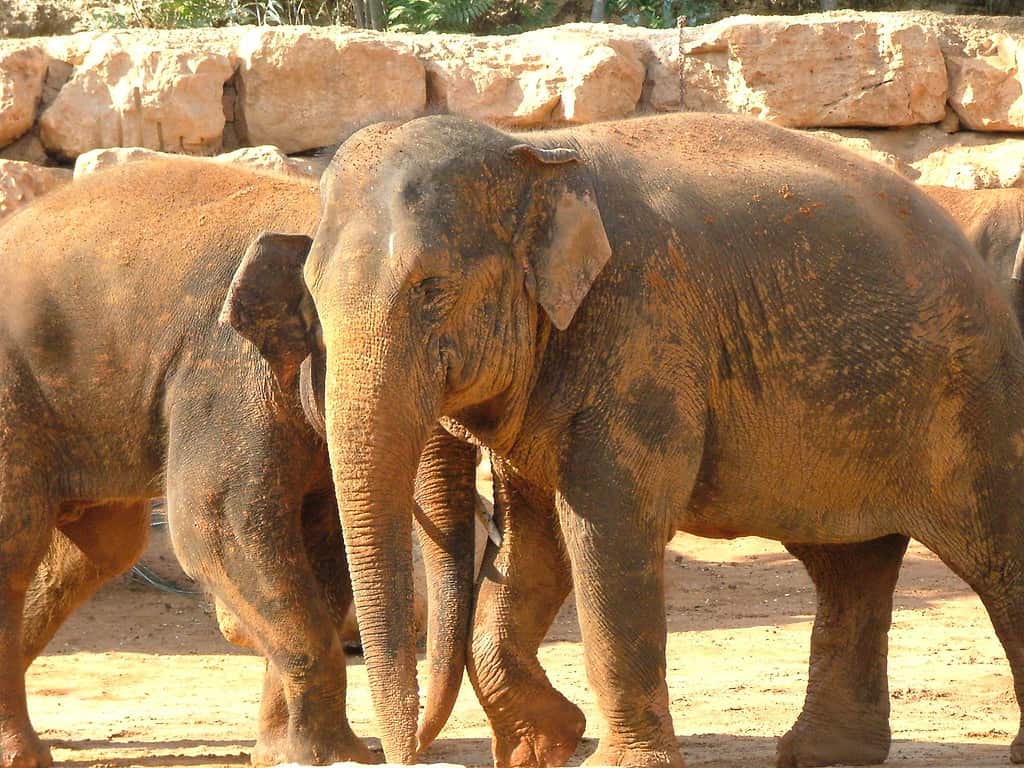
Advocacy groups are fighting to give captive elephants a better life.
©SuperJew, CC BY-SA 3.0, via Wikimedia Commons – Original / License
These elephants are often kept in poor conditions, chained up with nothing but concrete floors beneath them. They lack the social interaction with other elephants that is essential for their well-being. When used in processionals, these elephants are subjected to loud noises and unruly crowds. The elephants may be treated cruelly in an effort to “train” them to endure these unnatural conditions. That training is not always effective.
Thanks to advocacy by groups like Wildlife SOS and World Animal Protection, new laws have been implemented to protect elephants. For example, the Supreme Court of India has addressed the use of elephants in temple festivals, emphasizing the need to balance cultural traditions with animal welfare.