
Quick Take
- A kangaroo far from shore isn't as freakish as it sounds. There's an ancient survival instinct behind it.
- The animal in the news may not be the species the headlines claimed.
- These waters hold a famous predator, and the crew's rescue had a lucky edge.
- The crew had a clever trick for hauling a powerful animal aboard, and one body part demanded special care.
At 7 a.m. on a spring morning in mid-October, a four-person dive crew left the marina at Port Lincoln, South Australia, to inspect kingfish farms in Boston Bay. They were getting their gear ready when skipper Ryan Smith turned around and said he thought he saw a kangaroo.
Nobody bought it. “He’s like, ‘I reckon there’s a roo in the water’, and we’re like, ‘Yeah, sure. All right, Ryan, sure,'” diver and farmer Jake Murray told ABC News. “So we doubled back to check it out and yeah, it was a bloody roo in the water!”
The male kangaroo was nearly 2 miles offshore by Murray’s estimate, between Boston Island and Port Lincoln. As the boat came closer, it swam over. “It was amazing, as we were coming in closer he just swam up to the door like he knew what to do,” Murray said on Sunrise.
The crew opened the sea door, which drops to about water level, Murray told ABC. That let them get under the kangaroo’s arms, bring him on board and hold him there. Murray kept hold of its legs, “because they’re quite mighty and powerful.”
The animal was “pretty knackered, pretty waterlogged,” Murray said. “Honestly, I was just kind of cradling him there for a while and it was almost like he was having a little nap.”
Crewmate Miguel Villarroel, a diver from the Galapagos Islands, had never seen a kangaroo before. “Does anybody expect a kangaroo swimming in the middle of the ocean?” he told ABC News.
The kangaroo recovered on the ride back, and the crew released it in Lincoln National Park, ABC News reported.
Can kangaroos swim?
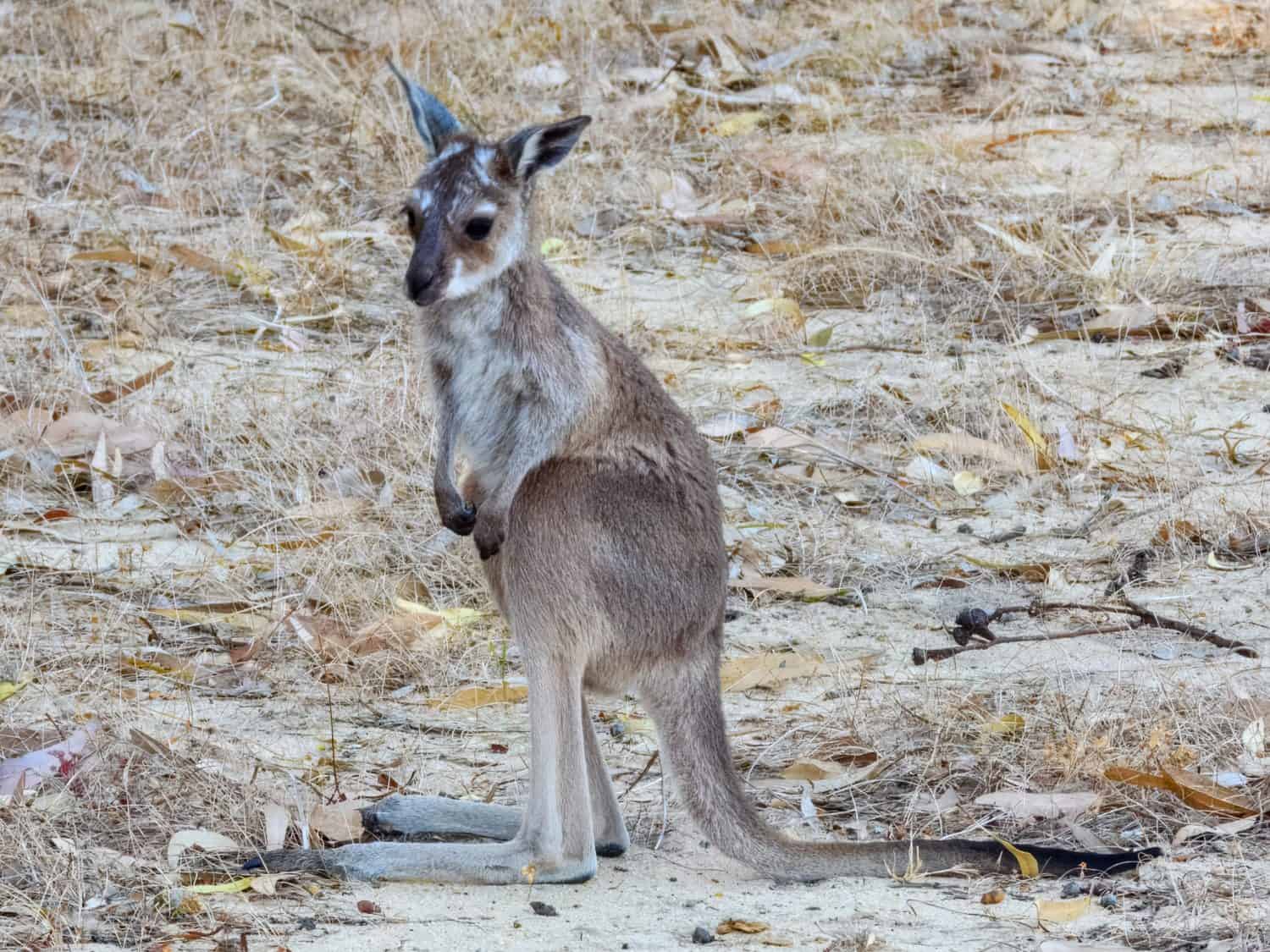
A western grey kangaroo, the species most often seen in Lincoln National Park. This isn't the rescued kangaroo. ©Imogen Warren/Shutterstock.com
©Imogen Warren/Shutterstock.com
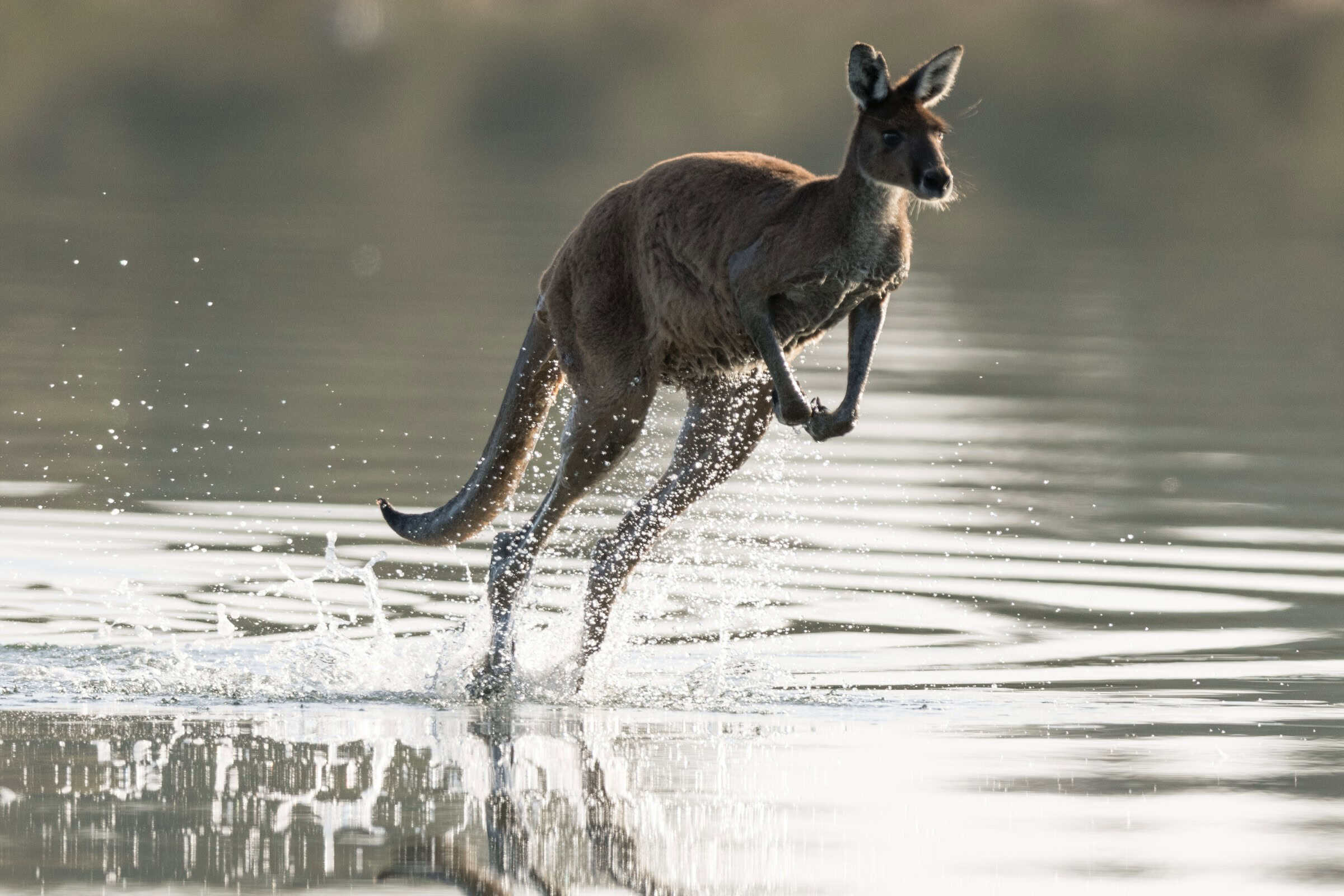
Yes. The San Diego Zoo Wildlife Alliance’s fact sheet on red kangaroos describes them as good swimmers that “dog-paddle” by alternating kicks of the hind legs. Kangaroos can move their hind legs independently, and they do it when swimming and when moving backward.
Murray told ABC he had seen kangaroos “around the area, like in shallows, at surf beaches.” The middle of the bay was new: “never in my wildest dreams would I think I’d see that.”
Why would a kangaroo be in the ocean?
Kangaroos head for water when a predator is after them. Graeme Coulson, a kangaroo ecologist at the University of Melbourne, told ABC Science that “kangaroos will go to water if they’re threatened by a predator.”
Euan Ritchie, a professor of wildlife ecology and conservation at Deakin University, told Live Science the habit is one way kangaroos learned to survive dingo attacks. Dingoes hunt kangaroos in packs and take turns chasing until the prey is exhausted. Dingoes likely reached mainland Australia 5,000 to 8,500 years ago. A kangaroo that hops into the nearest body of water has an escape that “works well for domestic and farm dogs too,” Ritchie said.
Nobody saw what sent this one into Boston Bay. Murray’s guesses: the water was calm and flat that morning, or the animal got caught in the tide. The national park sits close to town, he said on Sunrise.
Which kangaroo was it?
7NEWS called it a red kangaroo, and ABC never named a species. Red kangaroos live in the arid and semi-arid regions of mainland Australia, according to the Australian Museum. Males tend to be orange-red, and both sexes have black and white cheek patches.
The kangaroo in Murray’s photo is small and grey-brown. National Parks and Wildlife Service South Australia says visitors to Lincoln National Park are likely to spot western grey kangaroos.
Either species can be a handful. Red males reach about 200 pounds and females 86 pounds. Western grey males run 39 to 158 pounds. This one fit in one man’s arms.
Were sharks a real risk?
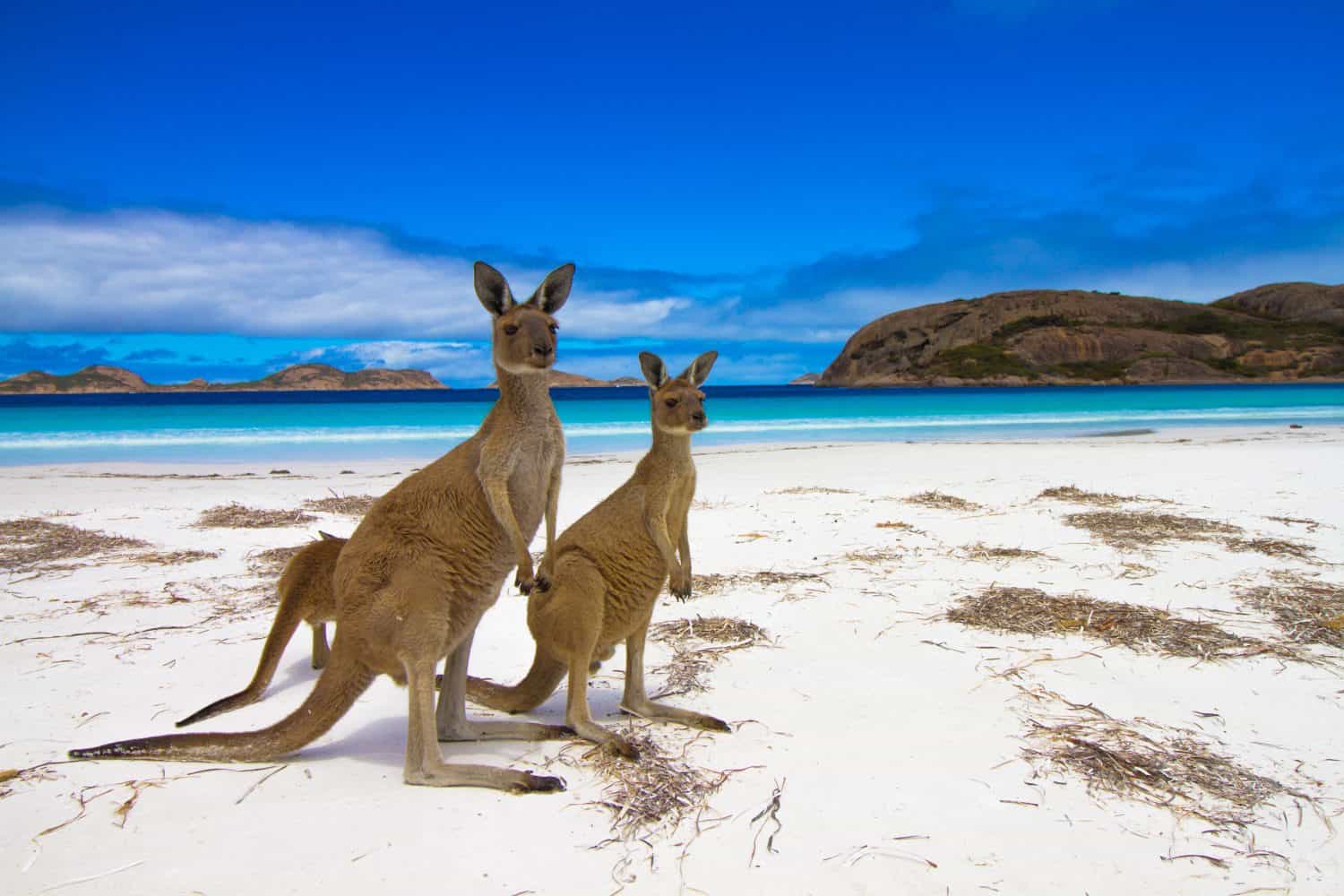
Western grey kangaroos on the beach at Lucky Bay, Western Australia. ©LIBIN THOMAS OLAPRATH/Shutterstock.com
©LIBIN THOMAS OLAPRATH/Shutterstock.com
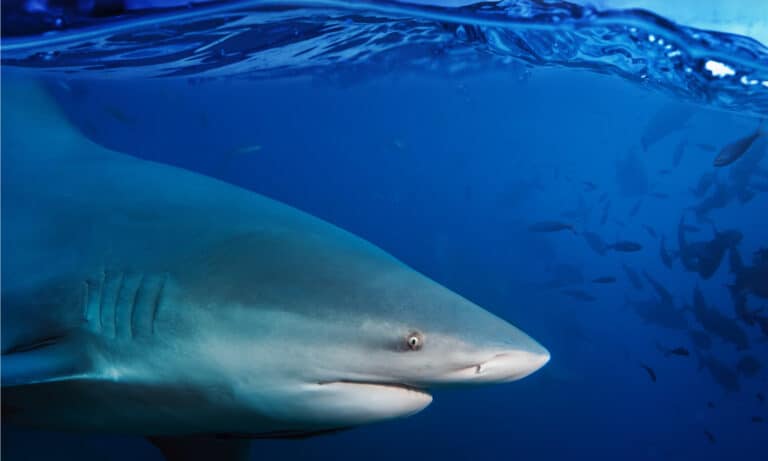
Port Lincoln is the access point for the Neptune Islands Group Marine Park, which Marine Parks South Australia calls “an internationally-significant site for great white sharks.” It is the only place in Australia where people can cage-dive with them.
“You’ll see more sharks out there than kangaroos, that’s for sure,” Murray said on Sunrise. “I think Skippy was lucky there was no big fish around that morning.”
Back ashore, the kangaroo sat on the beach and rested. Then it hopped away.