
Quick Take
- Sources can't agree on how many snakes share this den, and the gap is enormous.
- Some of these snakes have names, fan followings, and distinct personalities. One loves the rain.
- Newborn snakes may be getting babysat by females who aren't their mothers.
- Leave too early and they starve. Leave too late and they die. How do snakes time it?
Each winter, the rattlesnakes at a Colorado “mega den” hibernate beneath the surface of the rock outcrop where a livestream camera is posted, The Denver Gazette reported. Project RattleCam, which California Polytechnic State University launched at the den in 2024, pauses for the season, according to the Gazette.
Max Roberts, who worked on the project as a Cal Poly graduate student, told the Gazette that winter viewing “is not geographically possible.” He described the snakes’ hibernation quarters to the Gazette as “a maze or matrix of fissures.”
“It’s basically impossible to get a camera where you can see,” Roberts told the Gazette.
How many snakes winter in the den?
The Denver Gazette reported that the rattlesnakes at the den “have been estimated in the hundreds.” The Associated Press reported in 2024 that as many as 2,000 spend the winter there. Project RattleCam’s website says hundreds of snakes overwinter at the site.
The den sits on private land, and the researchers keep the location secret to discourage trespassers, according to the AP. North Forty News places the den on a rocky hillside in northern Colorado.
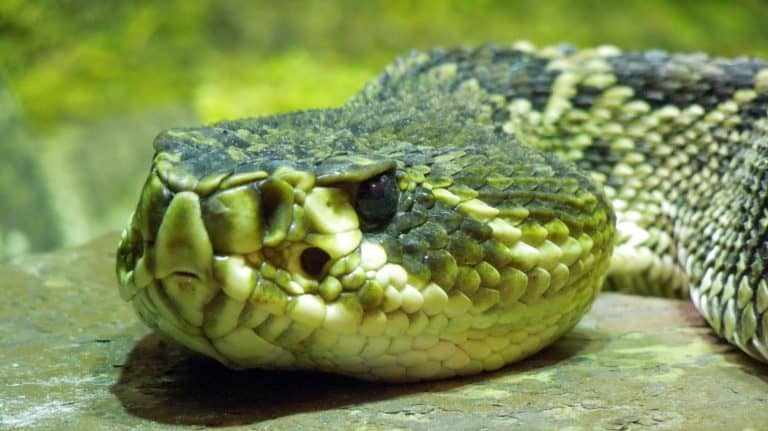
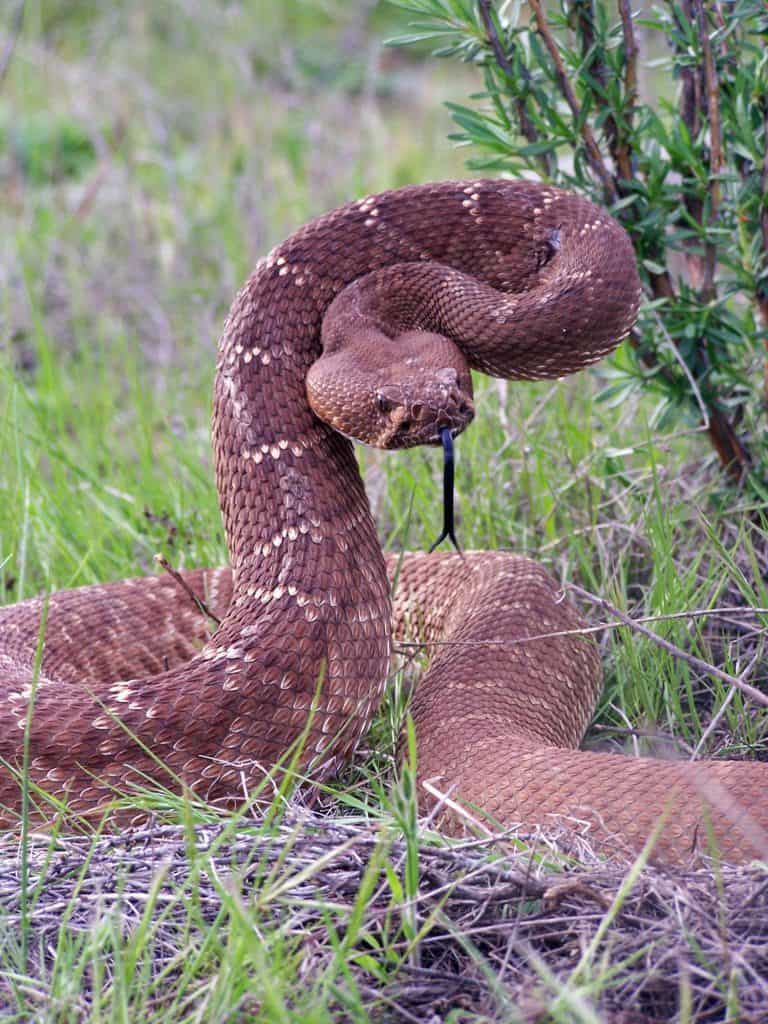
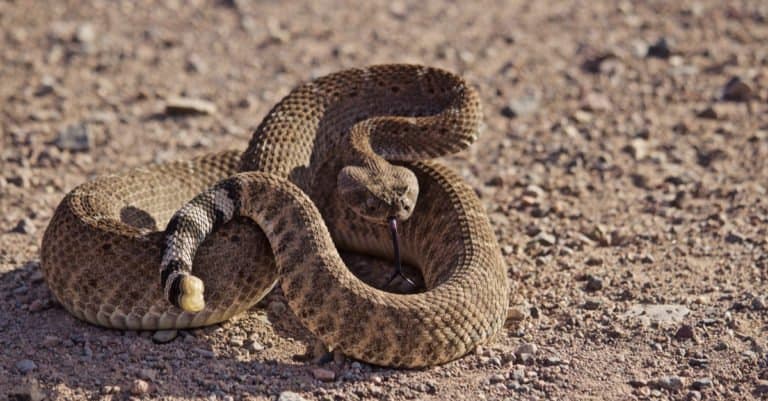
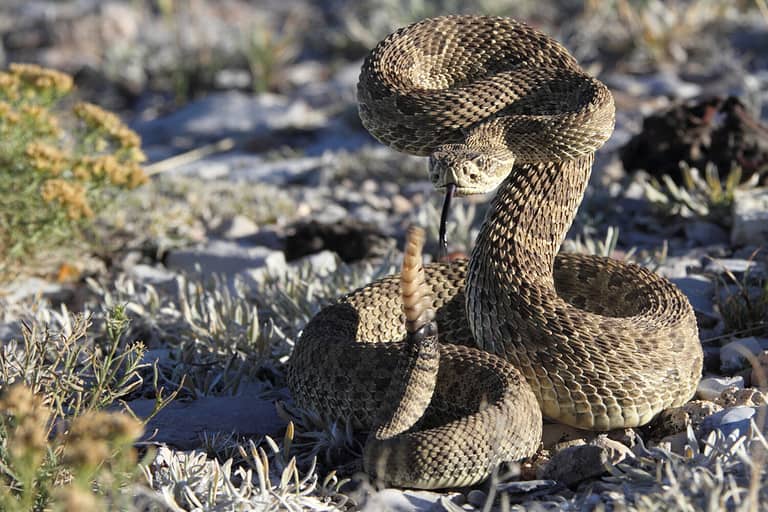
The snakes are prairie rattlesnakes, a species found in much of the central and western U.S., the AP reported. Once the weather warms, only pregnant females remain at the den while the others disperse to nearby territory, according to the AP.
Why do rattlesnakes have to go underground?
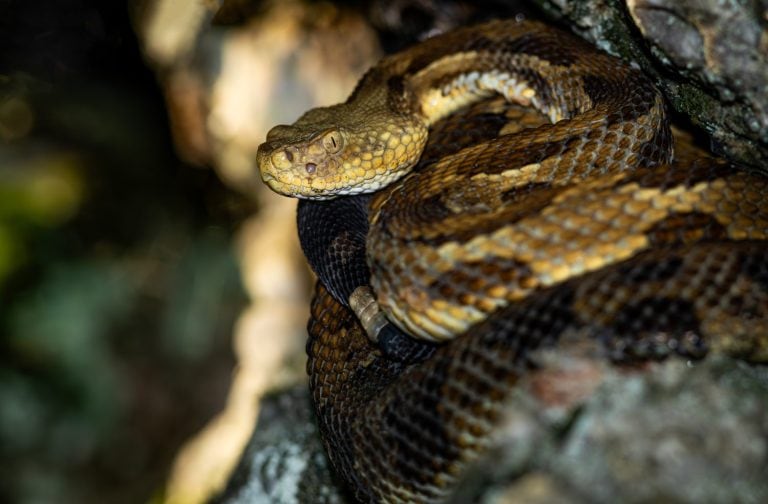
Scott Eckert of Principia College has spent more than a decade studying timber rattlesnakes, a species of the central and eastern United States, and he explained the biology in Wildlife Illinois. Timber rattlesnakes are ectotherms with little ability to generate their own body heat, so they depend on outside warmth, Eckert wrote. Across much of their range, they cannot survive above ground during winter, he wrote.
In Illinois, the underground sites hold steady at around 50°F, Eckert wrote. The University of Virginia’s Mountain Lake Biological Station says timber rattlesnake dens typically extend below the frost line.
A snake that goes under too early loses feeding opportunities, and one that goes too late may die of exposure, Eckert wrote. Eckert’s research found the snakes stay down until outside temperatures, particularly at night, consistently exceed 52°F. They can spend up to seven months a year inside, according to Eckert.
A timber rattlesnake may share its den with up to 60 other rattlesnakes, plus copperheads, black rat snakes or garter snakes, according to the Virginia station.
What did the camera show before the snakes went under?
Professional and citizen scientists logged more than 350,000 hours of viewing, the Gazette reported. Owen Bachhuber, one of the graduate students who led the project, studied how the snakes spend time together, the Gazette reported.
“My research found that the females are more gregarious than the males,” Bachhuber told the Gazette.
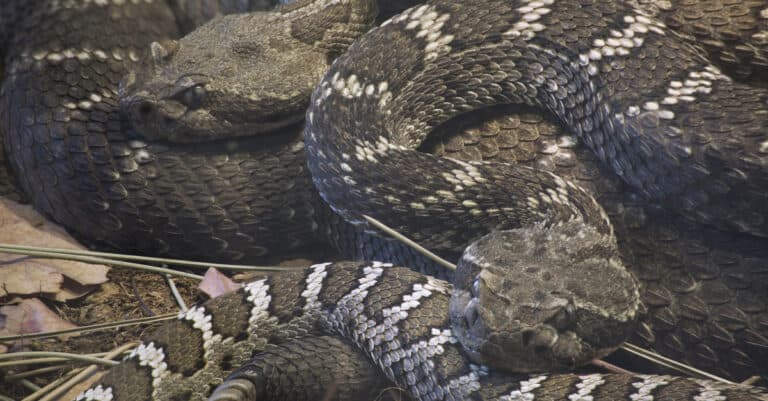
Pups were seen at the side of females that were not their mothers, suggesting females share caretaking duties, the Gazette reported. Adults protect and lend body heat to pups from birth until they enter hibernation in mid-autumn, Roberts told the AP.
“We regularly see what we like to call babysitting, pregnant females that we can visibly see have not given birth, yet are kind of guarding the newborn snakes,” Roberts told the AP.
Viewers have named 44 identifiable snakes, the Gazette reported. They include Gladys, who “especially loves when it rains and she can catch the water on her scales,” and Thor, known for his swollen lip and his aggression, according to the Gazette.
Why do rattlesnakes use the same den every year?
Timber rattlesnakes return to the same den every year, even after traveling about 1.2 to 2.5 miles as solitary hunters in summer, according to the Virginia station. Eckert wrote that the rocky sites are thermally stable and geologically reliable, which lets snakes come back annually.
Eckert’s research found timber rattlesnakes also return each year to the same hunting grounds and travel routes, a site fidelity that appears crucial for survival. Snakes rarely thrive when relocated and should never be moved out of their home range, Eckert wrote. In Illinois, a male’s home range covers about 220 acres, Eckert wrote.
Newborn timber rattlesnakes may follow their mother’s chemical cues to her foraging sites for a first meal, then back to the same den as winter approaches, Eckert wrote.