
Quick Take
- Most bird tongues are simple, passive structures. The hyacinth macaw's breaks every rule about what a tongue can actually do. See the tongue in action →
- A single Y-shaped structure inside this macaw's tongue is the reason it can do something no fingers are required for. Explore the Y-shaped bone →
- Parrot tongues and mammalian tongues are built from completely different materials, and that difference changes everything about how macaws interact with the world. Discover how it's built →
- The macaw's tongue serves at least four distinct purposes beyond eating, and one of them involves testing the physical world like an engineer. See all four tongue uses →
Usually, nature follows a simple rule of thumb: the bigger the creature, the less nimble it is in its movements. But there is always an exception that proves the rule, and that very well may be the hyacinth macaw. As the largest flying parrot species on earth, it features a body part that is arguably the most dexterous of any bird on Earth: a finger-like tongue.
Indeed, there are not many creatures with tongues capable of being both rigid and flexible depending on the circumstance. Hyacinth macaws use their tongues to explore their environment, manipulate objects, and sometimes, mimic human speech in a truly remarkable way.
Tenacious Tongue
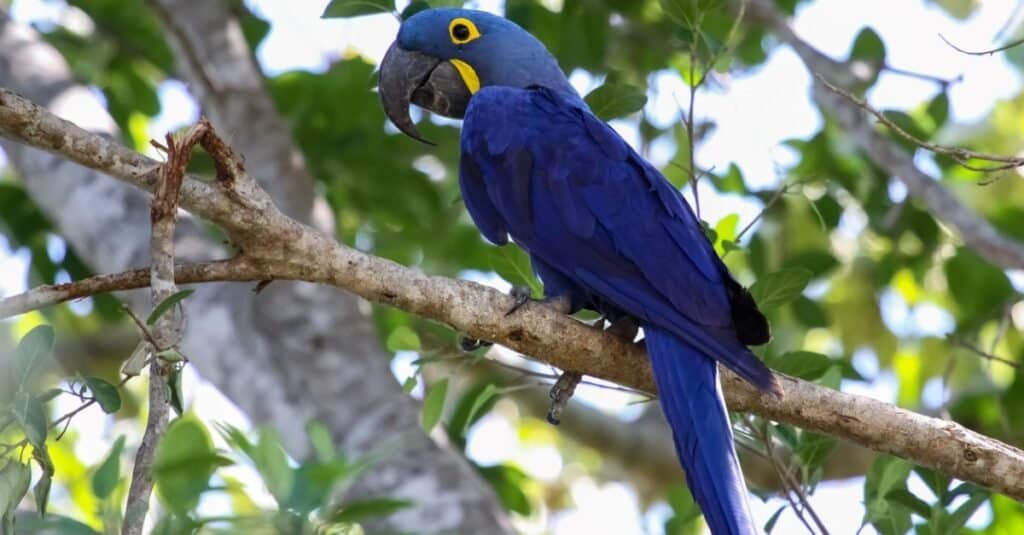
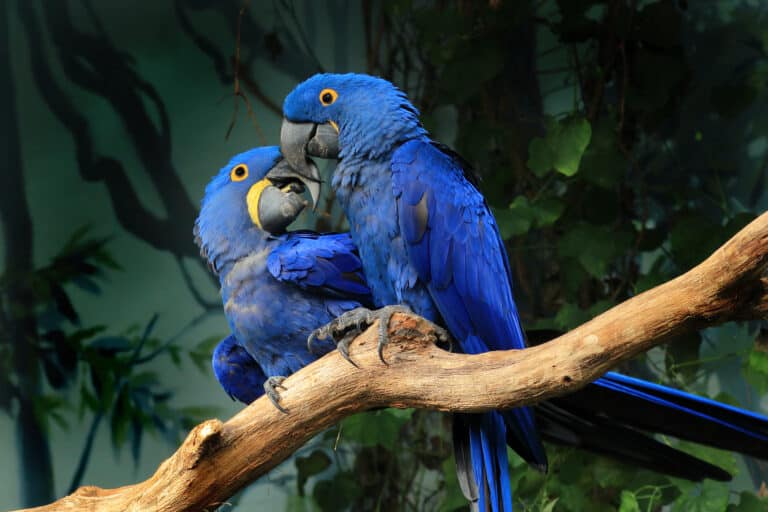
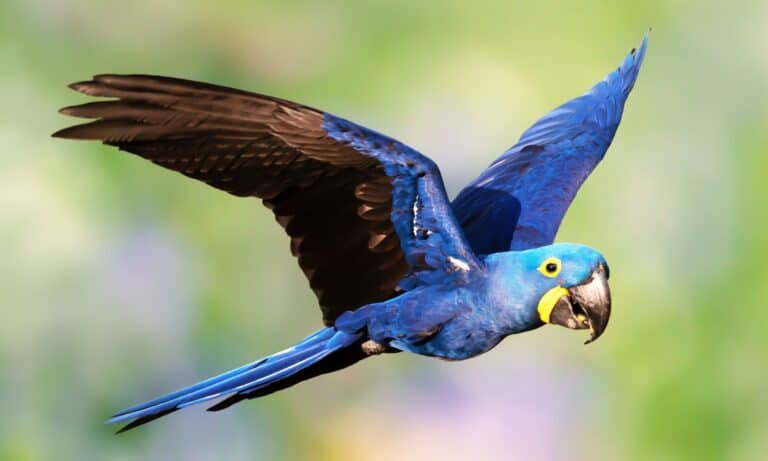
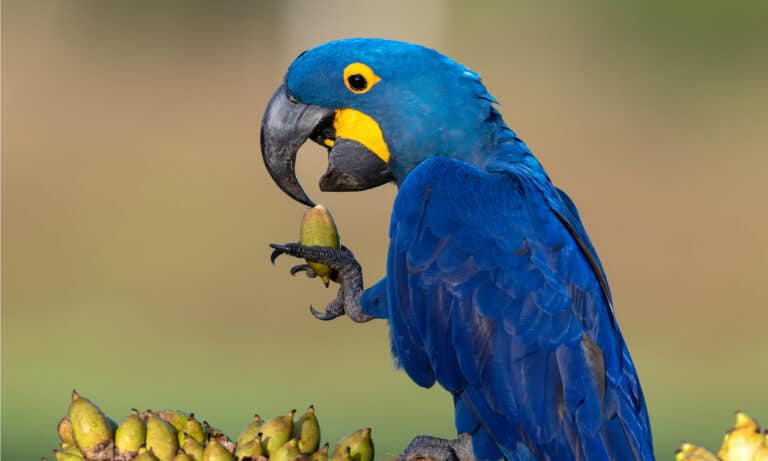
These parrots feature rich blue feathers and yellow circles around their eyes.
©iStock.com/Uwe-Bergwitz
Hyacinth macaws are native to central and eastern South America. Physically, they are characterized by long, pointed tails and bluish grey feathers that are a lighter shade near their neck. These birds also feature black undertails and vivid yellow rings around their eyes. Unbeknownst to many, Hyacinth macaws also have equally distinct tongues that are black with yellow markings on their sides.
While mammal tongues are entirely composed of muscle tissue, parrots have bones in their tongues. Hyacinth macaws have a bony structure within the tongue known as the hyoid apparatus that allows their tongues to go rigid or become incredibly flexible, depending on the situation. Since they lack fingers, macaws use their dexterous tongues to explore their environment.
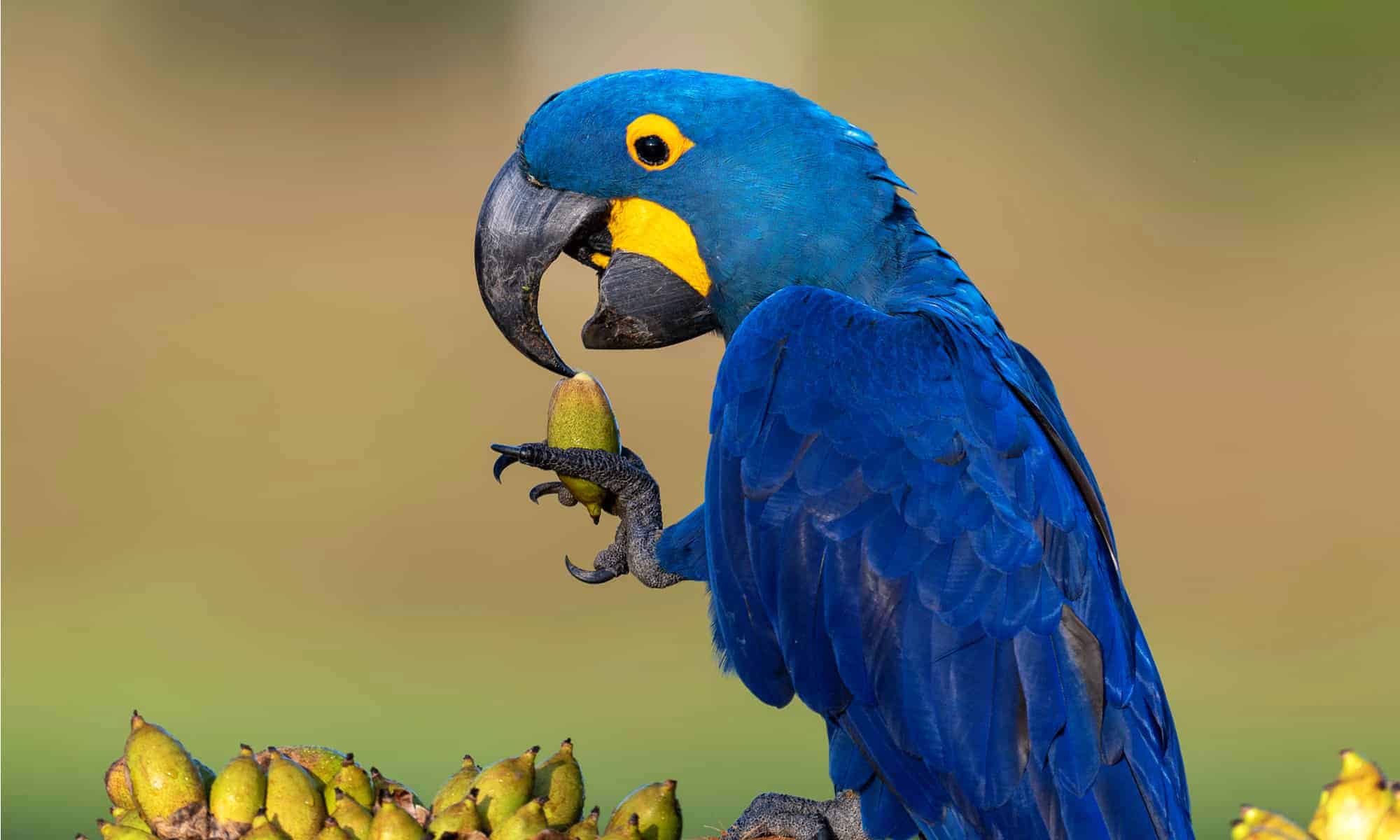
They also use their long, textured tongues to manipulate items such as food. The bone in the hyoid apparatus closest to the tongue tip forks into a Y shape, producing a small indentation that allows macaws to hold objects. Hyacinth macaws can expertly handle nuts or other small items with their dexterous tongue in the same way that humans can with their fingers.
Other Uses
One of the most defining characteristics of birds like parrots and macaws is their ability to eerily mimic sounds, especially human speech. While hyacinth macaws are less talkative than their other parrot relatives, they still occasionally mimic a word or two. Most of the time, however, they use their tongues to help produce lower, more guttural squawking sounds. When they aren’t manipulating food, macaws use their tongues to test the structural integrity of branches, assess the strength of different objects, or groom themselves.