S
Species Profile

Spix’s Macaw

Cyanopsitta spixii

Blue hope from Brazil's Caatinga
Danny Ye/Shutterstock.com

Spix’s Macaw Distribution

Click a location to explore more animals from that region

Endemic Species
Loading map...

Found in 1 country

The Spix's macaw is a macaw native to Brazil. The bird is a medium-size parrot. The IUCN regard the Spix's macaw as probably extinct in the wild. Its last known stronghold in the wild was in Brazil.

At a Glance

Wild Species
Also Known As Little blue macaw, Blue macaw, Ararinha-azul
Diet Granivore
Activity Diurnal+
Lifespan 20 years
Weight 0.4 lbs
Did You Know?

It's the only species in its genus (Cyanopsitta), making it taxonomically unique among macaws.

Scientific Classification

Spix's Macaw is a small blue macaw endemic to Brazil, historically associated with the Caatinga region. It is famous for its extreme rarity and intensive conservation breeding and reintroduction efforts.

Kingdom
Animalia
Phylum
Chordata
Class
Aves
Order
Psittaciformes
Family
Psittacidae
Genus
Cyanopsitta
Species
Cyanopsitta spixii

Distinguishing Features

  • Predominantly pale to medium blue plumage with darker wings and tail
  • Distinct grayish bare facial skin patch typical of many macaws
  • Relatively small macaw with a long tail and strong hooked bill
  • Endemic Brazilian species; not naturally widespread outside its historical Caatinga range

Physical Measurements

Length
1 ft 10 in (1 ft 10 in – 1 ft 10 in)
Weight
1 lbs (1 lbs – 1 lbs)
Tail Length
11 in (10 in – 12 in)
Top Speed
31 mph
flying

Appearance

Primary Colors
Secondary Colors
Skin Type Feathered body with small bare facial skin patch around eyes; keratinized black bill and claws.
Distinctive Features
  • Adult total length reported ~55-57 cm; notably long, pointed tail for a small macaw.
  • Plumage appears powdery blue to blue-gray; wings and tail typically deeper cobalt-blue.
  • Bare dark facial skin around eyes/lores contrasts with paler blue-gray head feathers.
  • Large, strongly decurved black bill typical of macaws; adapted for hard seeds and nuts.
  • Endemic to northeastern Brazil, historically associated with riparian (gallery) woodlands in the semi-arid Brazilian dry-forest region, especially Tabebuia aurea stands.
  • Conservation: Critically Endangered; long-term captive-breeding (international and Brazilian programs) supplies birds for carefully monitored reintroduction releases in Bahia.
  • Primary historical threats: habitat loss/degradation of riparian woodland and illegal trapping for the cage-bird trade.
  • Behavior (field/captive reports): diurnal; often in pairs; cavity-nester; diet includes seeds, fruits, and nuts; strong, direct flight when traveling between feeding and nesting sites.

Did You Know?

It's the only species in its genus (Cyanopsitta), making it taxonomically unique among macaws.

Adult length is about 55-57 cm (including the long tail); mass is commonly reported around ~300-400 g.

It became globally famous as one of the rarest birds on Earth and a flagship for parrot conservation breeding.

Wild habitat was tightly linked to Caatinga riverine gallery forests, especially areas with Tabebuia aurea trees.

Typical clutch is reported as 2-3 eggs; nests are placed in natural tree cavities in large, old trees.

Modern recovery relies on coordinated ex-situ breeding plus carefully staged releases in northeastern Brazil with post-release monitoring.

Its story helped push public awareness of wildlife trafficking and habitat loss (and inspired popular media depictions of a blue macaw).

Unique Adaptations

  • Caatinga specialization: ecology tied to xeric landscapes, with reliance on riparian woodland "islands" that provide food, shade, and nesting cavities.
  • Powerful hooked bill + zygodactyl feet (two toes forward/two back): enables strong grip and precise handling of hard seeds and tough fruits.
  • Elongated tail and strong flight muscles: efficient commuting between scattered feeding and nesting sites along river corridors.
  • Social cognition and learning: problem-solving and rapid association learning support acclimation training (e.g., predator awareness, novel foods) used in conservation programs.
  • Cryptic habitat matching: the blue-gray plumage blends surprisingly well against sky, riverine canopy, and pale Caatinga light, aiding concealment in open woodland edges.

Interesting Behaviors

  • Long-term pair bonding: like many macaws, pairs are typically socially monogamous and maintain close contact (duetting/calling, mutual preening).
  • Cavity nesting: selects deep natural hollows; breeding success depends heavily on the availability of mature trees with suitable cavities.
  • River-corridor use: historically concentrated along seasonal watercourses where taller gallery forest persists within the otherwise dry Caatinga matrix.
  • Social foraging: forages in pairs or small groups, using foot-and-bill coordination to manipulate fruits/seeds and strip plant material.
  • High vocal activity: loud contact calls help maintain pair/group cohesion across open, patchy habitat.
  • Neophobia/neophilia balance: cautious around novel threats but capable of learning new food sources and routines-important for reintroduction conditioning.

Cultural Significance

Spix's Macaw (Spix's blue macaw) has become a Brazilian and global emblem of extinction risk, wildlife trafficking, and habitat restoration in the Caatinga. Its recovery program-built on intensive captive breeding, genetic management, and carefully phased reintroduction in northeastern Brazil-has made the species a case study for coordinated species recovery.

Myths & Legends

Spix's Macaw (Cyanopsitta spixii) is named for German naturalist Johann Baptist von Spix, who collected and described it in the 19th century during exploration trips that brought many new species to science.

Rarity lore among birdkeepers: through the late 20th century it gained a near-mythic reputation as the "rarest macaw," with stories of the last wild individual persisting alone-fueling both conservation urgency and illicit demand.

Modern tale: in public imagination, the 'last blue macaw returning home' about Spix's Macaw (Cyanopsitta spixii) became a conservation story, spread by media and used in campaigns against trafficking and habitat loss.

Conservation Status

EW Extinct in the Wild

Known only to survive in captivity.

Population Increasing

Protected Under

  • CITES Appendix I (international commercial trade prohibited)
  • Brazil: protected under national wildlife protection and threatened-species legislation (species fully protected; capture and trade illegal)

Life Cycle

Birth 2 chicks
Lifespan 20 years

Lifespan

In the Wild
10–30 years
In Captivity
20–40 years

Reproduction

Mating System Monogamy
Social Structure Socially Monogamous
Breeding Pattern Long Term
Fertilization Internal Fertilization
Birth Type Internal_fertilization

Spix's Macaw forms a stable male-female pair bond typical of parrots, with biparental incubation and chick care. Reproduction is via internal fertilization; most documented breeding comes from intensively managed captive pairs used for conservation and reintroduction.

Behavior & Ecology

Social Flock Group: 2
Activity Diurnal, Matutinal, Vespertine
Diet Granivore Seeds/pods of the Caribbean trumpet tree (Tabebuia aurea; Bignoniaceae)

Temperament

Strong pair-bonding; typically occurs in pairs or small family groups, with only small loose flocks occasionally reported.
Generally wary and alert in the wild; cautious approach to novel stimuli (Collar et al., 1992).
In captivity, notably social with familiar conspecifics/keepers; can be gentle but needs enrichment (Juniper & Parr, 1998; Loro Parque reports).
Territoriality concentrated at nest sites; defense primarily by vocal displays and approach flights (Juniper & Parr, 1998).

Communication

Loud contact calls to maintain pair/flock cohesion in open Caatinga woodland Juniper & Parr, 1998
Alarm calls given on disturbance; rapid repeated calls increase with perceived threat Collar et al., 1992
Begging calls by juveniles; higher-rate calling during provisioning General psittacid pattern; Juniper & Parr, 1998
Allopreening between pair members; reinforces pair bond and reduces conflict Juniper & Parr, 1998
Body postures (upright stance, raised head/neck feathers) used in threat and nest defense.
Bill contact/'beaking' in affiliative interactions; common in captive pairs Husbandry observations
Flight and perch positioning: paired birds perch closely and follow each other during short flights.

Habitat

Biomes:
Tropical Dry Forest Savanna
Terrain:
Riverine Valley Plains
Elevation: 656 ft 2 in – 1968 ft 6 in

Ecological Role

Riparian Caatinga gallery-forest specialist functioning mainly as a seed predator (granivore) and occasional disperser when consuming fleshy fruits.

Seed predation that can influence recruitment and population structure of key riparian trees/shrubs (notably pod-bearing species such as Tabebuia aurea) Occasional seed dispersal when ingesting/transporting fleshy fruits and dropping partially processed items Nutrient cycling via deposition of feces and discarded husks beneath feeding perches, locally enriching soils in gallery-forest patches

Diet Details

Other Foods:
Caribbean trumpet tree seeds Euphorbiaceae seeds Riparian woodland seeds Fleshy fruits

Human Interaction

Domestication Status

Wild

Spix's Macaw (Cyanopsitta spixii) is a wild parrot from Brazil's Caatinga gallery woodlands and is not domesticated. Humans captured it for the illegal pet trade and kept it in private collections and zoos. Loss of habitat and trapping wiped out wild birds around 2000. Since the 1980s, people have run captive breeding and reintroduction programs.

Danger Level

Low
  • Bites/pinches causing localized injury (strong beak typical of parrots; risk increases with stress/handling)
  • Allergic reactions to dander/feather dust in sensitive individuals
  • Zoonotic disease risk typical of psittacines in captivity (e.g., Chlamydia psittaci/psittacosis) if hygiene/quarantine is poor
  • Noise-related nuisance/hearing discomfort at close range (behavioral trait common in parrots)

As a Pet

Not Suitable as Pet

Legality: Spix's Macaw (Cyanopsitta spixii) is not usually legal as a pet. It is on CITES Appendix I. Countries like Brazil ban capture and trade; most birds are in breeding programs. Private ownership needs rare permits and proof of captive breeding.

Care Level: Expert Only

Purchase Cost:
Lifetime Cost: $30,000 - $80,000

Economic Value

Uses:
Conservation funding and employment (captive breeding, field monitoring, habitat restoration) Zoological/educational exhibition value Ecotourism potential (where reintroduction establishes viewable wild populations) Symbolic/media value driving donations and policy attention Research value (avian reproduction, genetics, reintroduction science)
Products:
  • non-commercial conservation-bred individuals allocated to reintroduction and assurance colonies (not a legal consumer product)
  • institutional visitor revenue (zoos/conservation centers)
  • education/outreach programming
  • scientific data outputs (genetic management plans, veterinary/reintroduction protocols)

Relationships

Predators 5

Roadside Hawk Rupornis magnirostris
Aplomado Falcon Falco femoralis
Crested Caracara Caracara plancus
Boa Constrictor
Boa Constrictor Boa constrictor
Black-and-white Tegu
Black-and-white Tegu Salvator merianae

Related Species 4

Lear's Macaw Anodorhynchus leari Shared Family
Hyacinth Macaw
Hyacinth Macaw Anodorhynchus hyacinthinus Shared Family
Glaucous Macaw Anodorhynchus glaucus Shared Family
Blue-and-yellow Macaw Ara ararauna Shared Family

Ecological Equivalents 4

Animals that fill a similar ecological role in their ecosystem

Lear's Macaw Anodorhynchus leari Most similar Brazilian semi-arid macaw. Overlaps with Spix's Macaw in northeastern Brazil's thorn scrub and gallery woodland; uses tree cavities for nesting; is typically found in pairs; and serves as a model for reintroduction risks (nest-site limitations, hunting, and drought-related food shortages).
Blue-and-yellow Macaw Ara ararauna Large, cavity-nesting, flocking macaw that relies on riparian/gallery forest trees for nesting and feeding; shows similar structural habitat dependence to Spix's Macaw, which was historically associated with semi-arid gallery woods (especially Tabebuia aurea stands).
Hyacinth Macaw
Hyacinth Macaw Anodorhynchus hyacinthinus Another specialist macaw, strongly constrained by specific key food plants and reliance on nest cavities; used as a comparator for conservation management, including intensive nest protection, artificial nest boxes, and long-term demographic monitoring.
Glaucous Macaw Anodorhynchus glaucus Cautionary niche-parallel. Historically tied to riverine forest systems and specific palm/seed resources, and it suffered severe declines from habitat conversion—an extinction-risk pathway that is relevant to Spix's Macaw recovery planning.

Spix’s Macaw is named after German naturalist Johann Baptist von Spix, who collected the first of these birds in 1819. However, in 1638, German naturalist Georg Marcgrave was the first European to describe the species.

Also known as the little blue macaw, these birds are lively and loyal to their mates. Spix’s macaws once occupied the desert woodlands of Brazil. However, habitat loss, predation, and poaching drove them to extinction in the wild. They are now bred exclusively in captivity.

The Spix’s macaw is considered by the IUCN to be extinct in the wild.

Appearance and Behavior

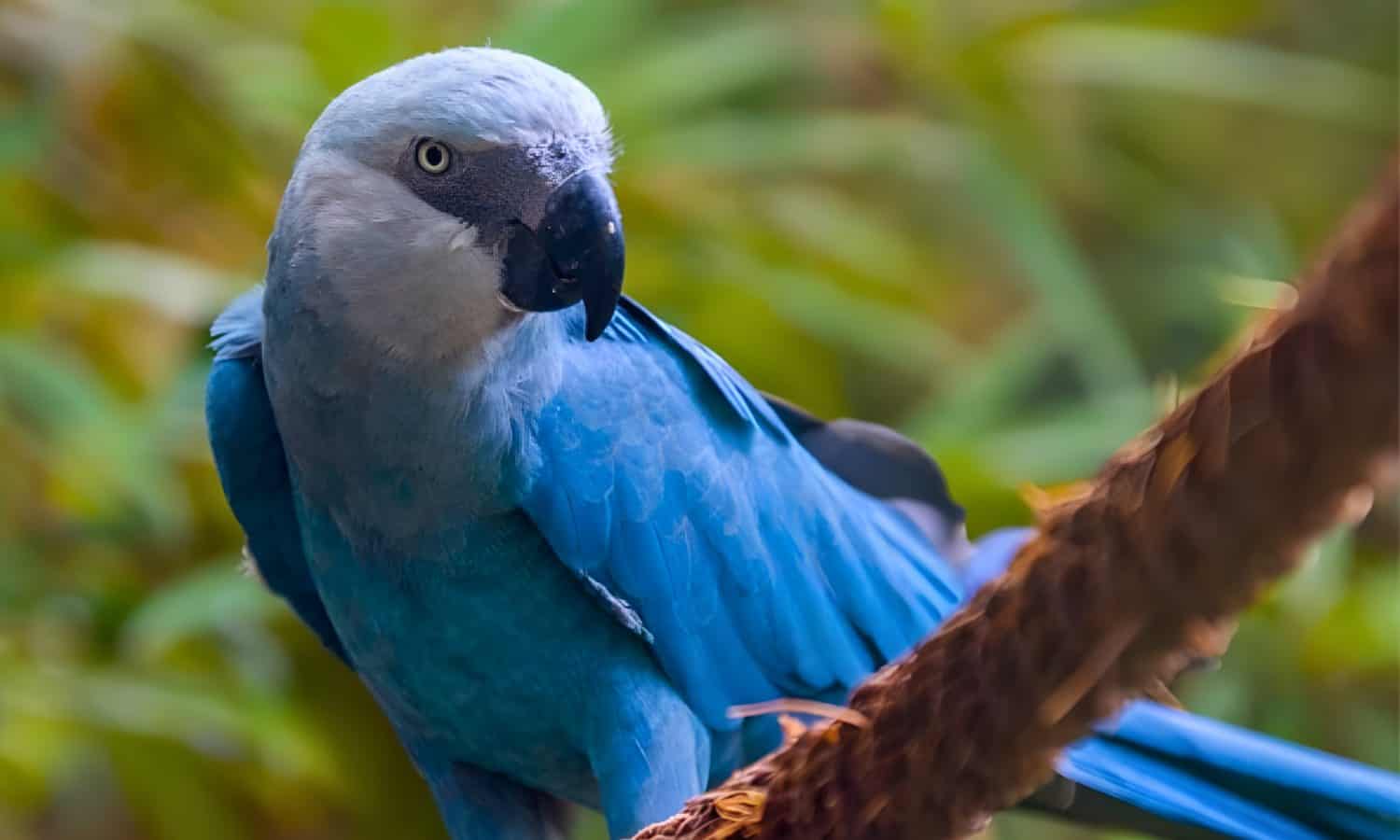
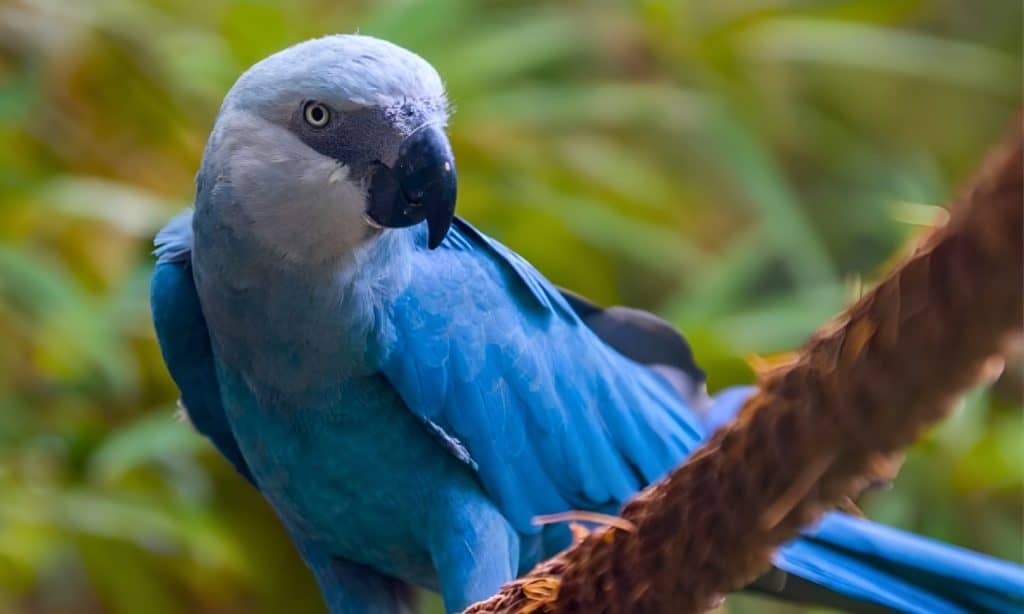
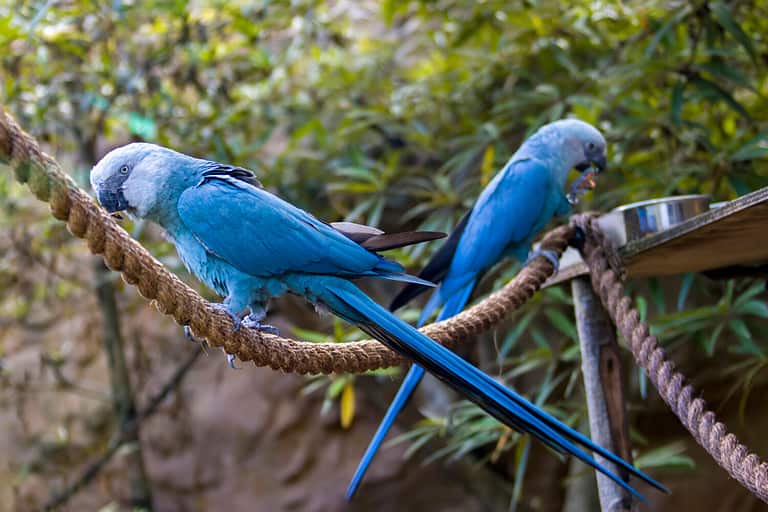
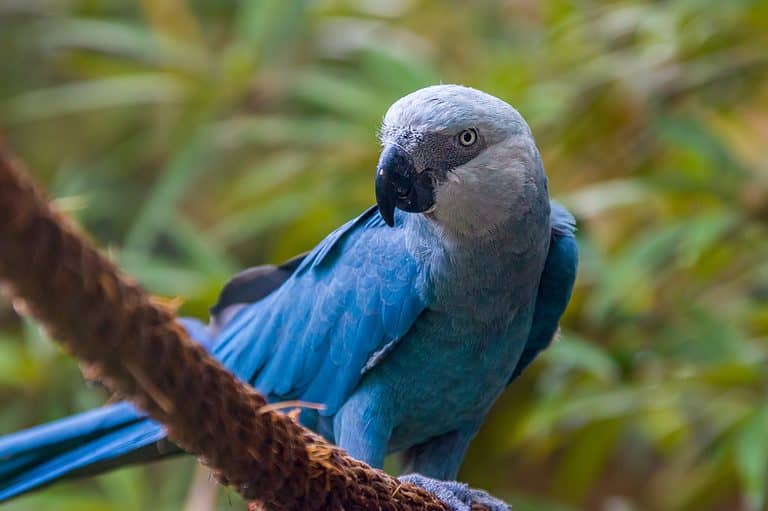
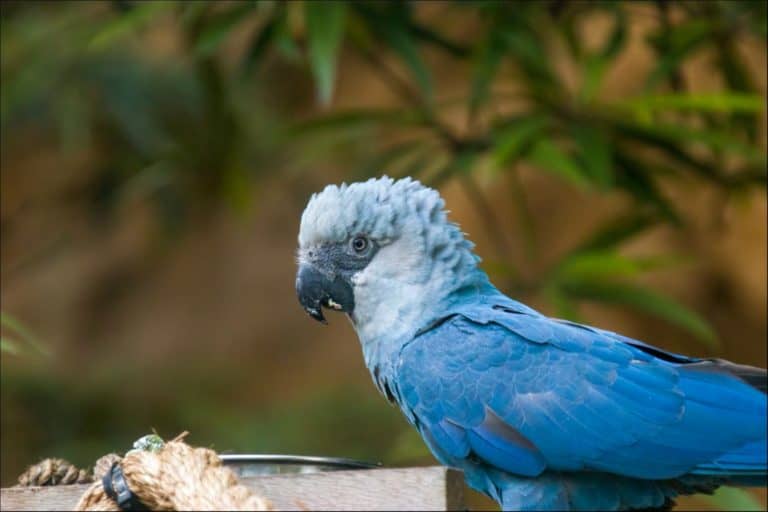
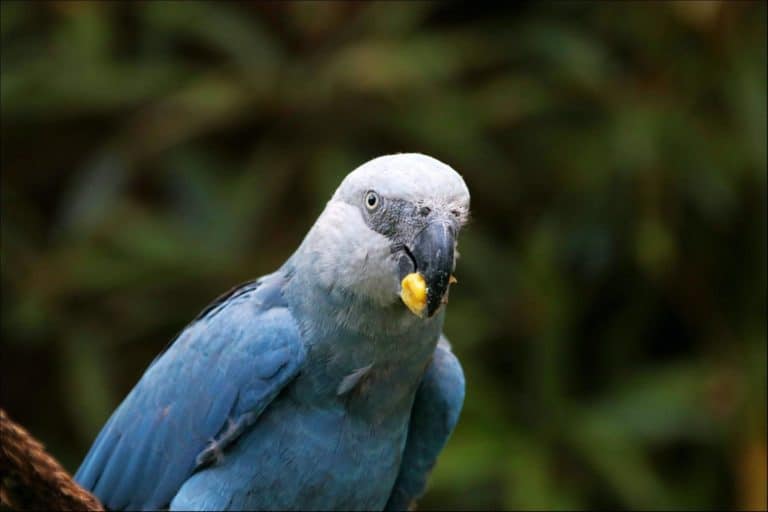
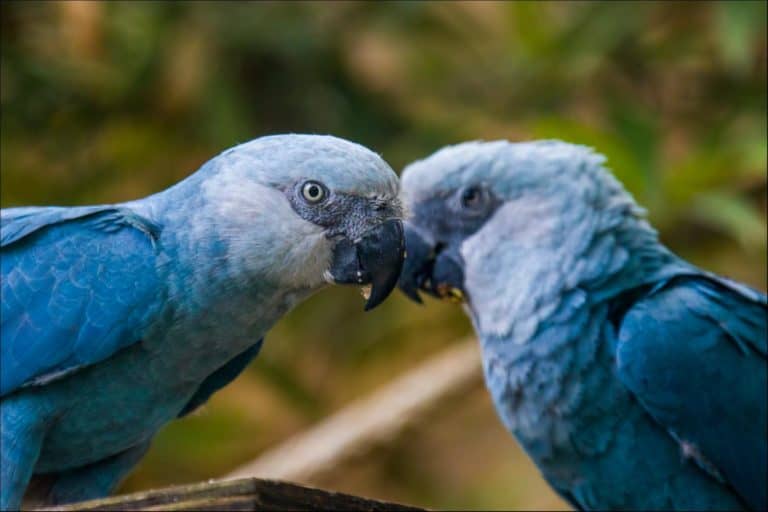
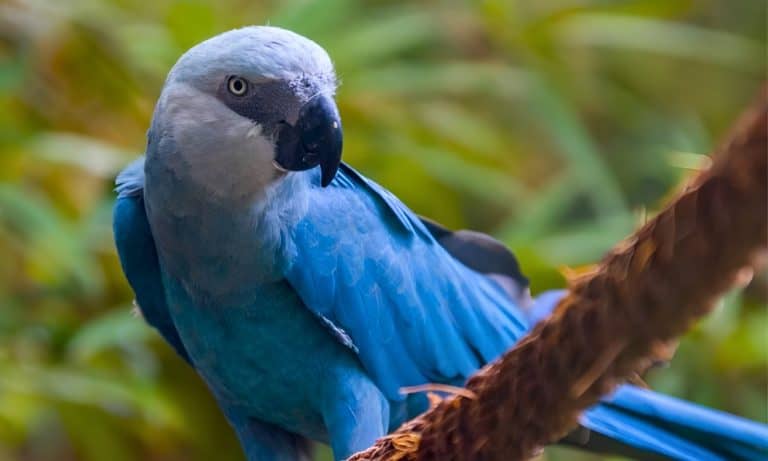
Spix’s macaws can be identified by their blue color, which ranges from turquoise blue along its breast and abdomen to a duller gray-blue color on the head. It also has gray skin, pale yellow eyes, and a black, curved bill.

An average Spix’s macaw measures around 22 inches, its tail feathers being about as long as the rest of the body. Males tend to be larger than females, but the sexes are otherwise similar in appearance.

This bird has an amazing vocal range, and they communicate with each other through screeching and squawking sounds. Like many parrots, they can mimic human speech, which has made them a popular pet in the illegal bird trade.

Due to their remarkable intelligence, Spix’s macaws follow a very precise daily routine, with their flight paths, hunting strategies, and bathing all taking place according to schedule. The birds are most active during the day, and they sleep at night. They may occasionally move from place to place in response to food availability and nesting sites, but otherwise, they remain within a close proximity of their home.
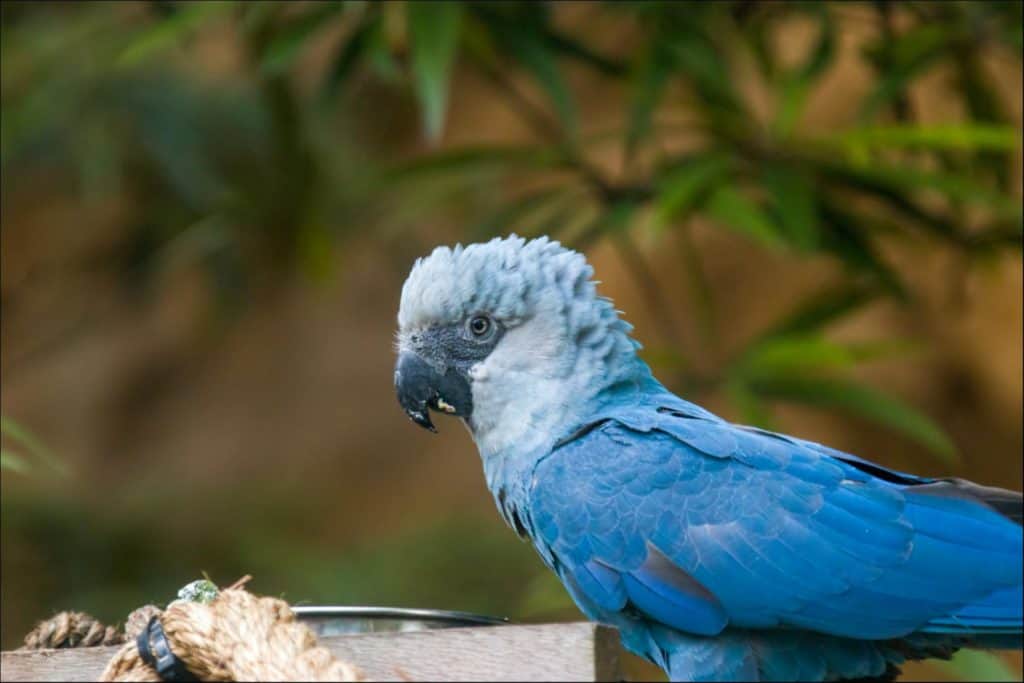
The Spix’s macaw’s body is a brilliant blue.

History and Evolution

The evolution of Spix’s macaw is poorly understood, but the parrot as a group is an ancient bird that probably evolved in the Paleogene period between 23 and 66 million years ago, around the time that the true parrots split from cockatoos and then divided into different lineages.

Diet

Spix’s macaws’ beaks are specifically adapted to crack open hard-shelled nuts. In captivity, the birds are fed a variety of different foods, including palm nuts, seeds, fruits, and even some meats. Their diet is supplemented with vitamins and minerals.

Predators and Threats

In the wild, Spix’s macaws were susceptible to predation from rats, feral cats, mongooses, and monkeys. When threatened, the birds will make loud noises and flap their wings to scare off predators, or they may take to the air. Eggs and young birds are most vulnerable to attack because they haven’t yet learned to fly, so they require the protection of adults.

Threats to and causes for the decline in the population include hunting, destruction of the Caraibeira trees, and the introduction of African bees, which compete for nesting sites in the trees.

In addition to habitat loss and predation, the lucrative bird trade further depleted numbers in the wild. When the trade was at its height in the 1980s, a single bird could easily fetch $40,000 on the black market. It is currently illegal to trade the birds except for conservation, educational or scientific purposes.

Reproduction and Lifespan

The bird’s breeding season takes place each year between November and March (or August in captivity). The wild couples produce a fresh clutch of two to three eggs in the hollows of the Caraibeira trees. Because they are creatures of routine, they seem to reuse the same nest location every breeding season.

The female incubates the egg for 26 days before it hatches. It takes about two months for a young bird to fully fledge, though the birds may continue to feed with the parents for a few more months until the chicks achieve full independence. If the young birds are threatened by a predator, then the parents may pretend to be injured in order to draw the threat away from the nest.

Chicks reach full sexual maturity in about seven years in captivity, which is an especially long time for a parrot. The species has a typical lifespan of at least 20 years in the wild and up to 40 years in captivity.
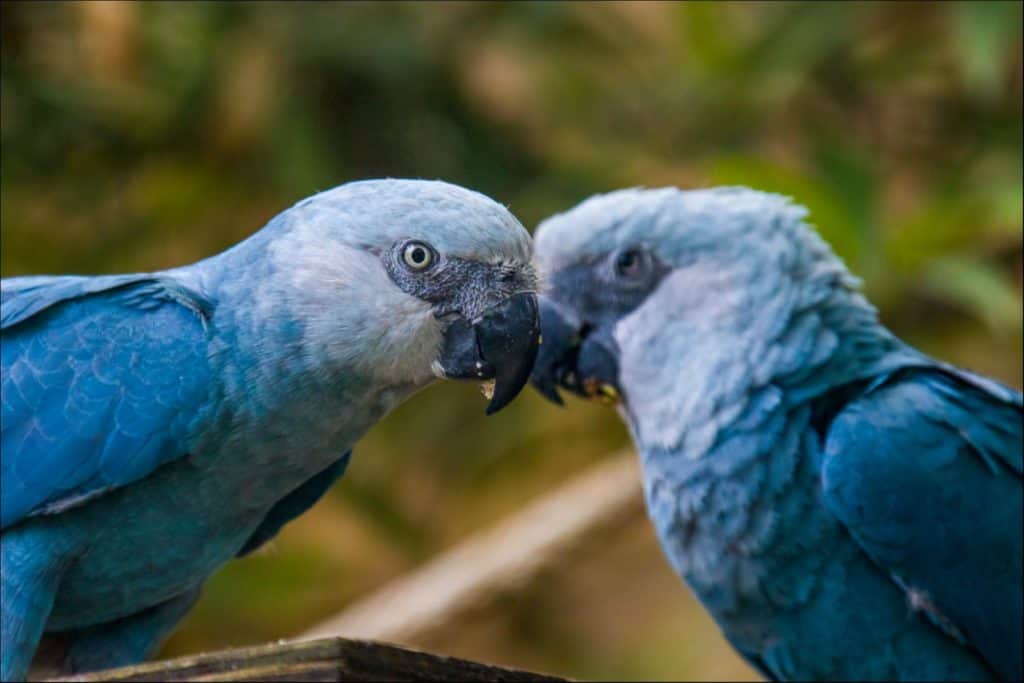
The Spix’s macaw is believed to form intense lifelong bonds with its mate.

Population

The last known wild macaw disappeared in 2000. A wild bird was briefly sighted in 2016, raising hopes that there may be more, but the individual was likely released from captivity. The Red List of Threatened Species now lists the bird as officially extinct in the wild.

The remaining Spix’s macaws are now only bred in captivity and fed by hand, and the conservation efforts are overseen by the Brazilian government. Since the species cannot return to the wild until the habitat is restored, efforts are underway to create protected areas for eventual reintroduction.

Due to the number of private collectors, it is difficult to estimate exactly how many birds are left in the world, but there are perhaps 160 known individuals in captivity. Most of these are held by wildlife preservation programs.

View all 391 animals that start with S
Heather Ross

About the Author

Heather Ross

Heather Ross is a secondary English teacher and mother of 2 humans, 2 tuxedo cats, and a golden doodle. In between taking the kids to soccer practice and grading papers, she enjoys reading and writing about all the animals!

Thank you for reading! Have some feedback for us?