
Quick Take
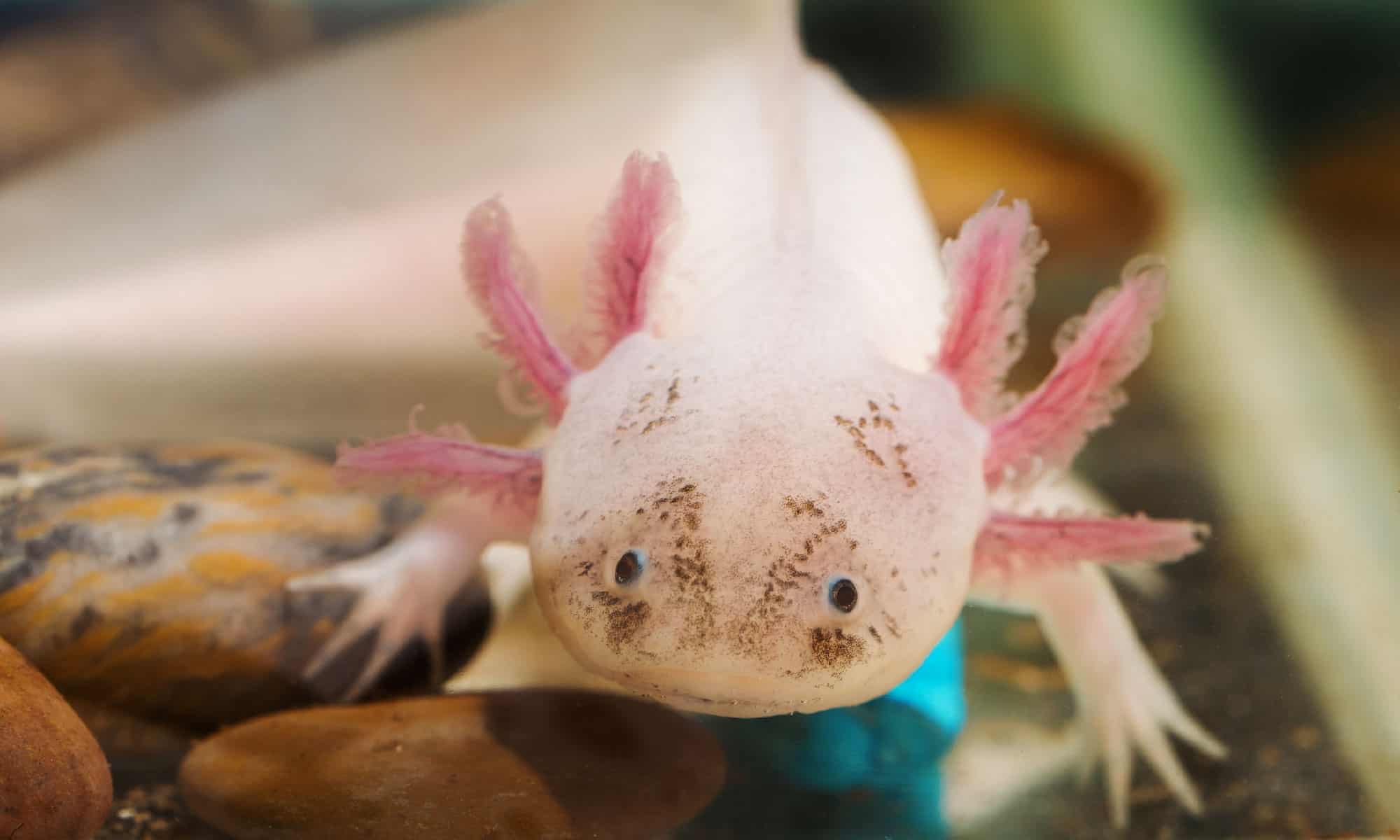
- Axolotls are biological marvels, capable of regrowing limbs, spinal cords, and even heart tissue without any scarring.
- Neoteny allows them to retain larval features like feathery gills, triggering a “baby schema” response that humans find irresistible.
- Their inclusion in Minecraft transformed them into “real-life Pokémon,” driving massive demand for plushies and pets.
You never know what the future holds. You can be used to a life on the cultural margins, living in small bodies of water, and not being acknowledged except by niche biologists. Beyond that, your reputation is confined to folklore. That is, until you explode onto the world stage. One day, you’re a nobody, and the next day, you’re a staple character in a best-selling video game, a viral star, and the subject of several plushie toys. This narrative arc is hypothetical unless you’re the axolotl, a critically endangered salamander native to Mexico. In the past few years, digital aesthetics and biology have combined to produce unexpected stars of the animal kingdom like axolotls.
These endangered salamanders, whose name is often linked to Aztec mythology and the idea of a “water monster” or “water dog,” have captured the imagination of many young people in just a few years. Axolotls reached this hallowed status for good reason: they have an alien-like appearance that is both unexpected and adorable. Plus, these creatures have powers that seem positively supernatural—they can regenerate parts of their body, including limbs and some tissues in organs such as the eye, heart, and brain, after injury. Let’s learn more about these fascinating creatures and how a perfect storm of biology, mass media, and internet virality made them global sensations.
Meet the Axolotl
©ArnPas/Shutterstock.com
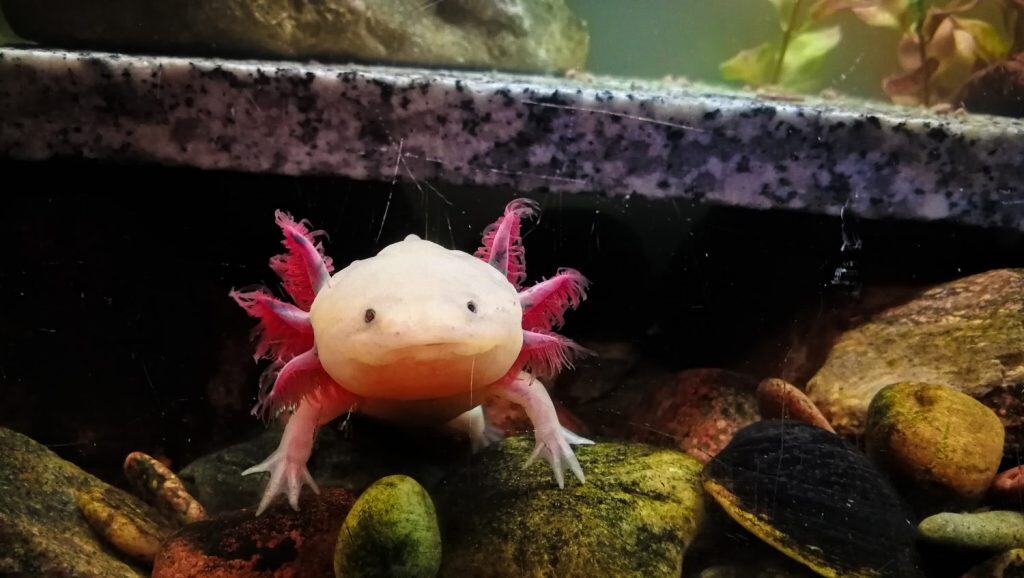
There are plenty of amphibian species out there, but few are as unusual as the axolotl. Also called Ambystoma mexicanum, axolotls are paedomorphic mole salamanders. Found exclusively in the remnants of Lake Xochimilco and its surrounding canal systems near Mexico City, these creatures live unique lives. Unlike other salamanders, which undergo metamorphosis to live on land, axolotls are neotenic.
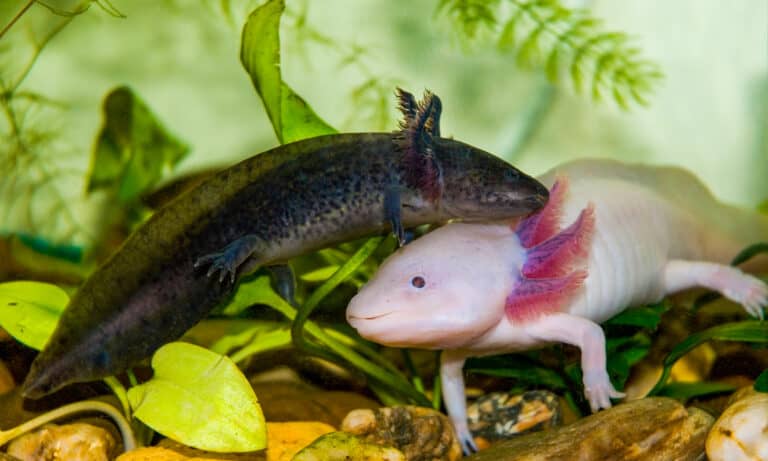
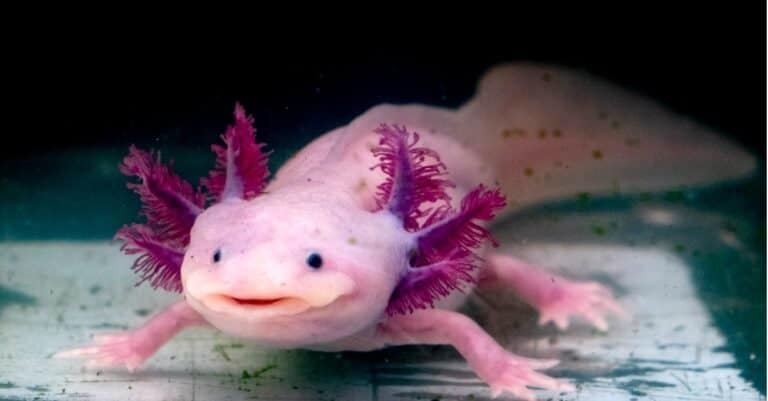
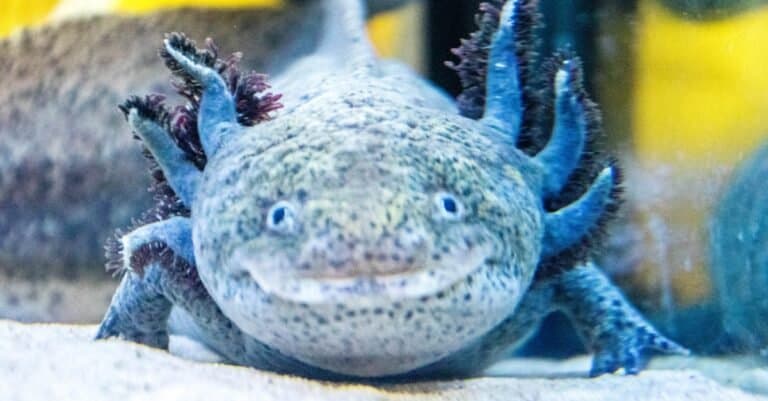
This means they keep their juvenile aquatic features, like feathery gills and finned tails, for their entire lives. They have wide, lidless eyes and a small mouth that often gives them a smile-like expression. Though they can grow up to 12 inches long, axolotls are confined to the water; they use their gills and a pair of primitive lungs to breathe. This perma-juvenile appearance with big eyes and a wide smile gives axolotls a distinctly alien, but cute appearance. What’s more, they can regenerate many parts of their body. Indeed, these amphibians can regrow entire lost appendages, including limbs and tails, over a period of months. In some cases, they can even grow back tissues of the eye and heart.
In Aztec mythology, the axolotl is associated with Xolotl, the god whose name is linked to the animal. Indeed, they are named after Xolotl, the god of fire and lightning. As the story goes, Xolotl transformed himself into one of these “water dogs” to avoid being sacrificed by his fellow gods. While they continued to appear in Mexico’s culture throughout the centuries, most notably in the works of muralist Diego Rivera, it took until the advent of 21st-century entertainment for axolotls to be truly introduced onto the global stage.
Minecraft Madness
Axolotls became far more widely known after they were introduced as mobs in the sandbox video game Minecraft in June 2021. This introduced them to over 140 million monthly players. TikTok and other social media platforms amplified this creature’s exposure until they became veritable stars of the web. Looking like a type of Pokémon and featuring supernatural regenerative powers in real life ensured that axolotls would win the hearts and minds of children. In recent years, their popularity has surged well beyond biology and conservation circles. They have appeared on the Mexican 50-peso note and are starring in the Squishmallow plushie toy line. There is clothing, merchandise, television appearances, and more. However, this increasing popularity makes the vulnerability of this creature all that much easier to ignore.
A Harsher Reality
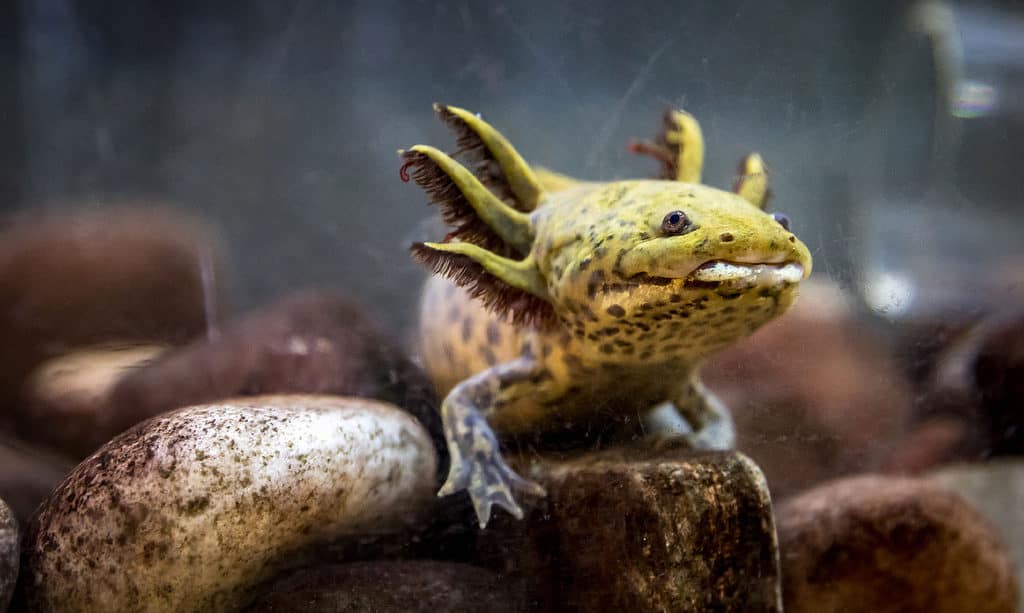
Wild population estimates are extremely low, with some conservation sources placing the number of remaining adults at roughly 50 to 1,000.
©iStock.com/Gerardo Martinez Cons
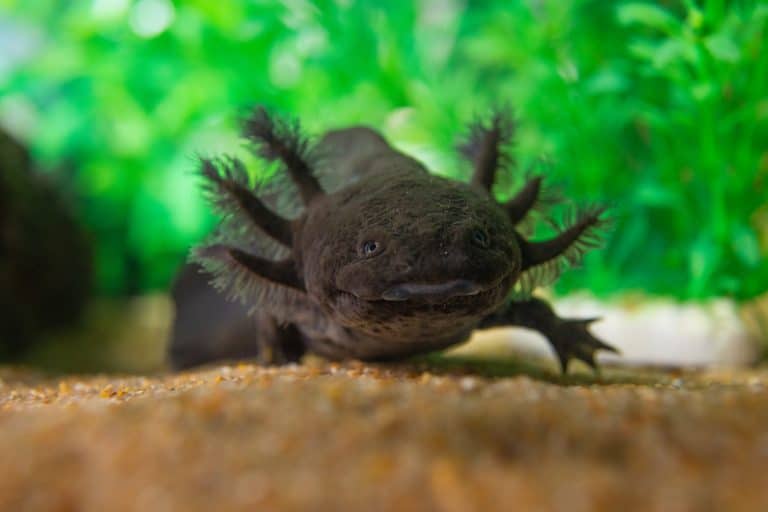
Axolotls have been an increasingly popular amphibian to keep in captivity, but they remain critically endangered in the wild. Indeed, current estimates put the total wild population of this creature at fewer than 1,000 individuals. This is due to a confluence of factors, including habitat loss, pollution, and invasive species like tilapia. In the wild, axolotls are typically dark, mottled olive-brown rather than the pinkish leucistic form that is common in captivity and online.
Furthermore, axolotls require careful consideration in captivity. They require careful temperature and water management; cool water is best, and temperatures above about 71.6°F can cause serious stress, while sustained higher temperatures can become dangerous or fatal. Axolotls lack scales, making their skin sensitive to toxins. In captivity, this means they need a fully cycled aquarium tank with 0 parts-per-million ammonia. Gravel in tanks can hurt them, and their diet requires earthworms or high-protein pellets. They also lack eyelids, so any tank containing axolotls requires dark alcoves and hides.
Axolotls may be famous for their cute appearance, but they are also critically endangered animals whose wild population remains in serious trouble. The explosion of their popularity on social media for kids makes it all too easy to ignore just how vulnerable these “living Pokémon” really are.