
Quick Take
- Muscle power alone can't explain how a chameleon's tongue hits 60 mph, leaving the question of what is actually launching it wide open. See the elastic mechanism →
- The rosette-nosed chameleon is tiny, slow, and endangered, but it holds a record that larger, faster animals can't touch. Meet the record holder →
- This chameleon's tongue generates a power output that sounds more like an engine than an animal, and the number is genuinely hard to believe. Check the power output →
- Evolution gave this chameleon a superpower it didn't choose, not because of survival but because of something far more basic. Explore how evolution shaped it →
Rosette-nosed chameleons (Rhampholeon spinosus) may look like the slower-moving dinosaurs from The Flintstones, but there is nothing sluggish about their tongues. This old-world lizard holds the record for the fastest muscle movement in the reptile world. Indeed, a chameleon can shoot its tongue out so fast that it goes from 0 to 60 mph in a hundredth of a second.
The bigger chameleons hog all the attention thanks to their rapidly changing color schemes, but the smaller ones (like rosette-nosed chameleons) achieve breakneck speeds, all without moving their legs. Let’s learn more about these fascinating creatures and how evolution turned their tongues into biological catapults.
Rhampholeon Spinosus Chameleon
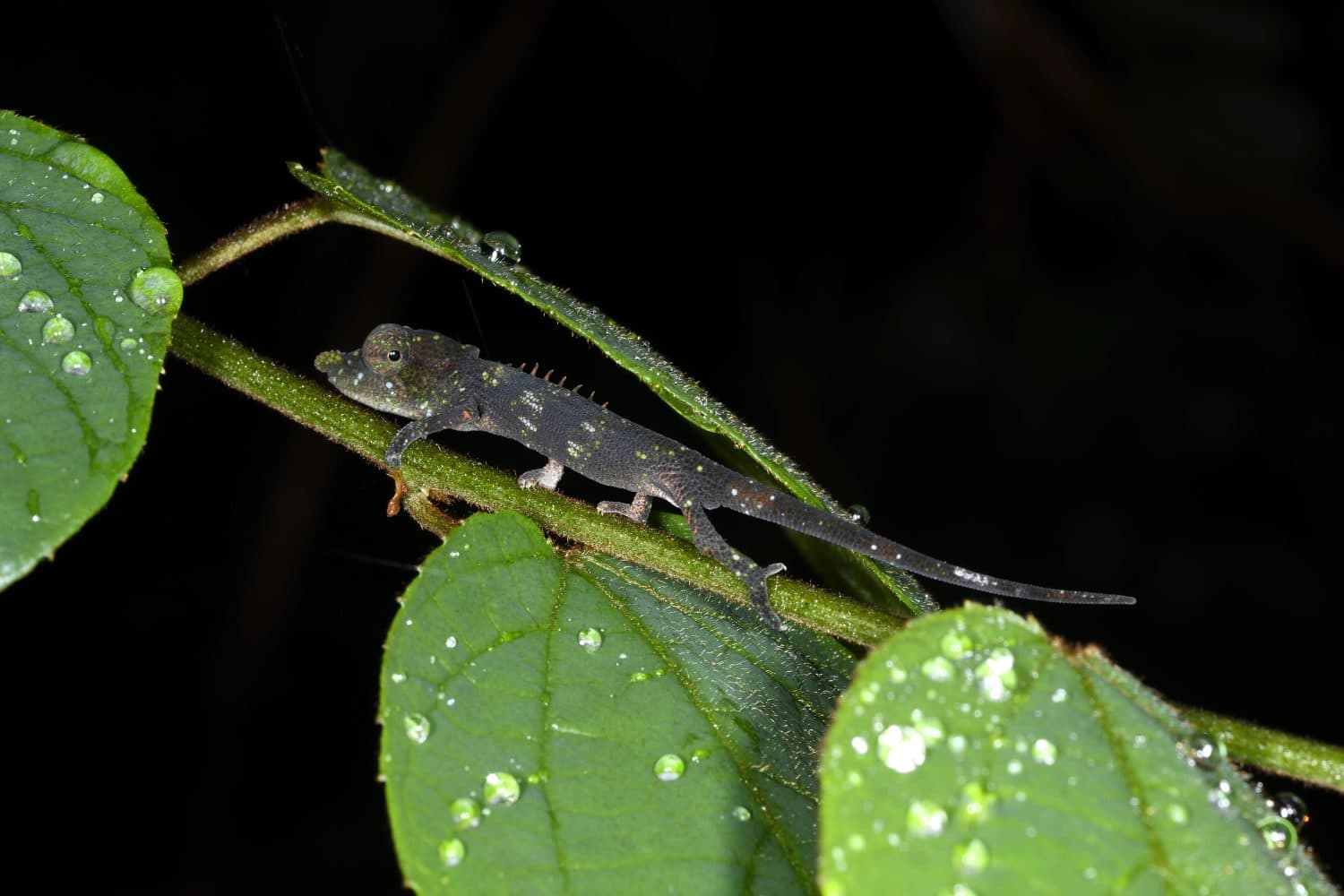
Rhampholeon spinosus chameleons are endemic to the forests and woodlands of northeastern Tanzania.
©aspas/Shutterstock.com
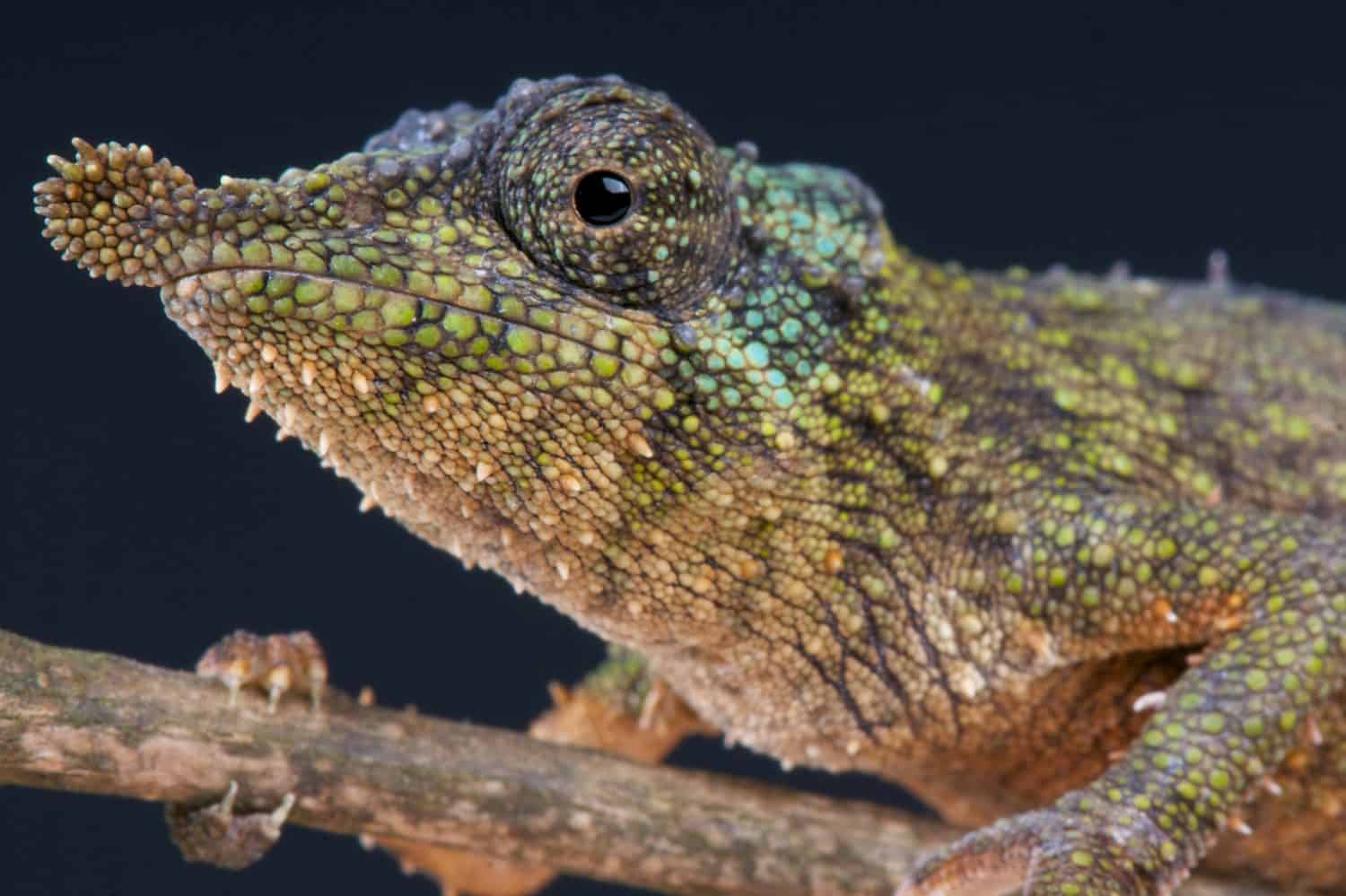
These creatures are a small species of chameleon that are endemic to the forests and woodlands of the Usambara Mountains in northeastern Tanzania. Rhampholeon spinosus chameleons are endangered and feature an ash-grey coloration. They also have a distinctive rosette-like nose appendage at the end of their face.
Growing to only about 5 centimeters long, these tiny chameleons have the ability to change color like their larger relatives. Most of the time, however, they prefer to stay a nice earthy brown to blend in with the trees. Their most impressive attribute, by far, is their swiftly moving tongue, which can dart out so fast it will make your head spin.
Turbo Tongues
The tongues of these tiny chameleons are among the fastest reptile muscles in the world, if not the fastest. Though certain snakes strike with great speed, none can match the pure velocity of the rosette-nosed chameleon’s tongue. These sticky appendages accelerate from 0 to 60 mph in roughly a centisecond. This acceleration produces a shocking power output of 14,040 watts!
Because muscle contraction can only take tongues so far, these chameleons use a type of elastic recoil mechanism to make their tongues shoot out like lightning. They preload energy in internal collagen bands, which release in an explosive burst like a bowstring launching an arrow. This also allows their tongues to extend to twice the length of their bodies.
Morphological Specialization
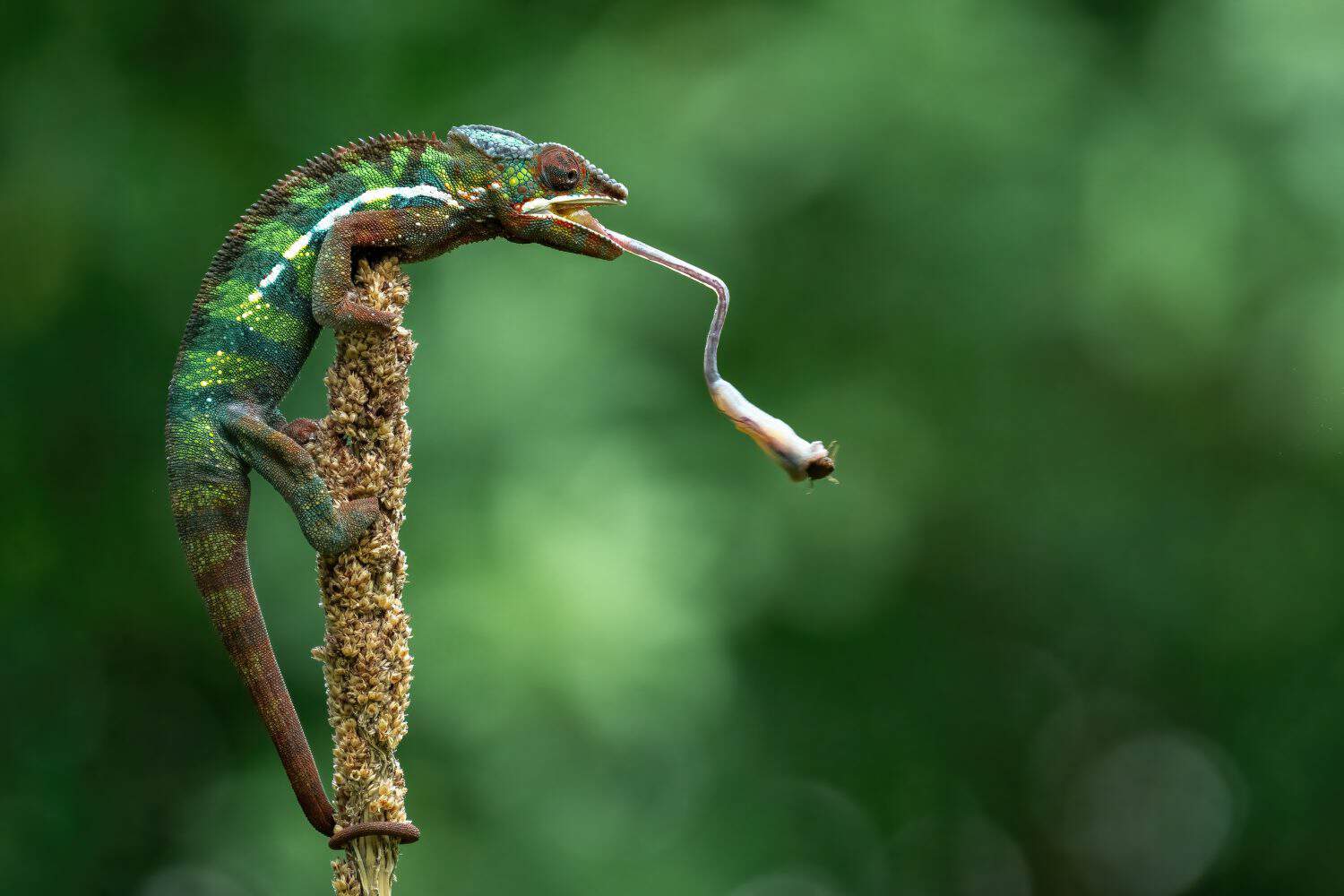
Rhampholeon spinosus chameleons can’t move quickly, so they compensate with lightning-fast tongues.
©Lauren Suryanata/Shutterstock.com
These tongues are a physiological wonder as much as they are a product of evolution. More specifically, these turbo tongues are a product of morphological specialization, which occurs when environmental pressures demand specialized, super-powered traits. Their tongues are a direct response to high metabolic demand. Although these chameleons can’t travel very fast, they make up for it with one overclocked appendage: their tongues.