

































Quick Take
- A snake's body shape silently reveals exactly how it hunts, and once you know the tell, you'll never look at one the same way. See body shape clues →
- Garter snakes have a decades-long reputation for being completely harmless, though science has recently complicated that story. Learn about garter snakes →
- Female snakes can delay something most animals do immediately after mating, and the window for doing so is far longer than you'd expect. Explore snake reproduction →
- Most people overestimate how many venomous snakes can actually hurt them. The real number is surprisingly narrow. Check venom statistics →
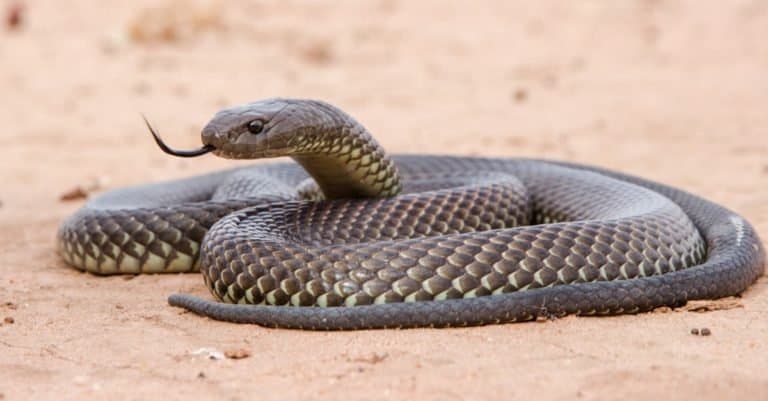
Snakes are easily noticeable by their elongated body that looks like little more than a head with a long tail. Their bodies are incredibly strong, though this strength is used for multiple purposes.
Snakes have a close relationship with lizards, which are also reptiles. While snakes have no eyelids or ear holes, they have become well-loved pets by many eclectic owners. The serpent, a mythical symbol that is widely known, is simply another term for a snake.

5 Incredible Snake Facts
Here are a few interesting facts about these reptiles:
- Out of nearly 4,000 different species, only around 600 are venomous. Snakes like the gopher snake and kingsnakes are nonvenomous. Only 200 of these snakes have enough potency to harm a human.
- Though they are reptiles like lizards, they have no eyelids or ear holes.
- Snakes do not chew their food, despite the presence of teeth. Instead, they swallow it whole.
- These reptiles can be found on every continent except for Antarctica.
- The oldest snake in captivity ever was Ben (USA, b. 31 May 1974), aged 42 years 6 days when he passed away on 6 June 2016.
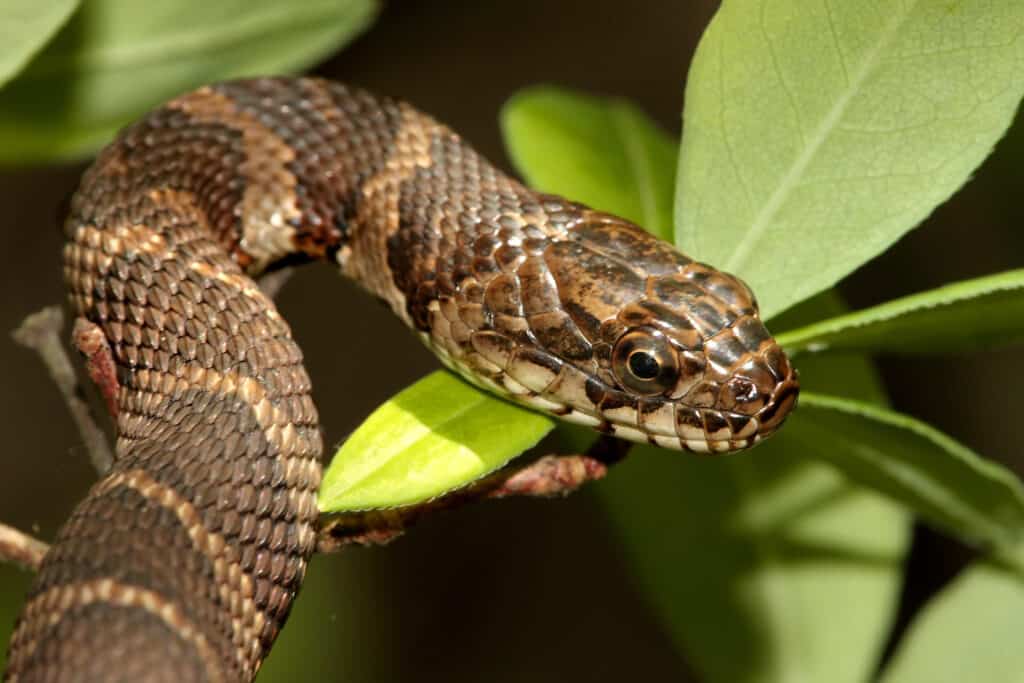
Snakes do not chew their food, despite the presence of teeth. Instead, they swallow it whole.
©Steve Byland/Shutterstock.com
Evolution and Origins
Snakes are a group of reptiles that are thought to have evolved from lizards, perhaps during the Jurassic period, with the earliest known fossils dating to around 150 million years ago. They have evolved to have long, slender bodies and no limbs, allowing them to move efficiently through various habitats such as grasslands, deserts, and forests.
Snakes are thought to have evolved from terrestrial lizards, with their ancestors likely having four legs. Over time, snakes lost their limbs through a process of evolution known as reduction. This occurs when certain body parts are no longer needed, gradually becoming smaller until they disappear.
Today, there are around 3,000 species of snakes found on every continent except Antarctica.
Classification and Scientific Name
These reptiles belong to the order Squamata, the kingdom Animalia, and the Phylum Chordata. Their class is called Reptilia, and the suborder is called Serpentes, with the clade called Ophidia.
Serpentes, which is often shortened to the serpent in mythical stories, comes from the Latin word ‘serpens,’ which means ‘creeping animal’ or ‘crawling animal.’
Common Types of Snakes
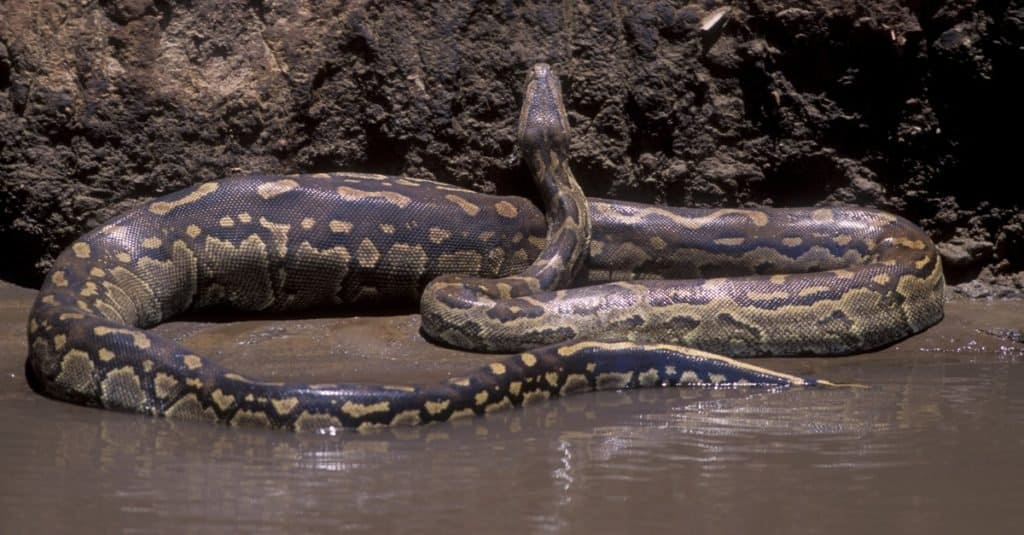
Like all pythons, the African Rock Python is non-venomous. It kills by constriction, ambushing, and coiling around its prey.
©zaferkizilkaya/Shutterstock.com
The following list includes some common types of snakes found around the world:
- Pythons: Pythons are a family of snakes consisting of approximately 40 recognized species. These reptiles are found primarily in Asia, Australia, and Africa; however, the Burmese python was introduced to the Florida Everglades and is currently considered an invasive species. Most species in this family are “ambush predators,” meaning they remain motionless and strike as prey passes.
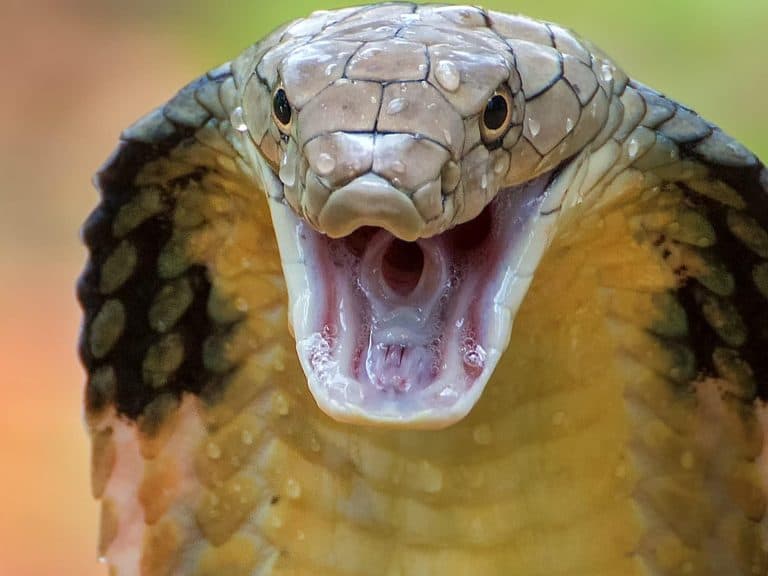
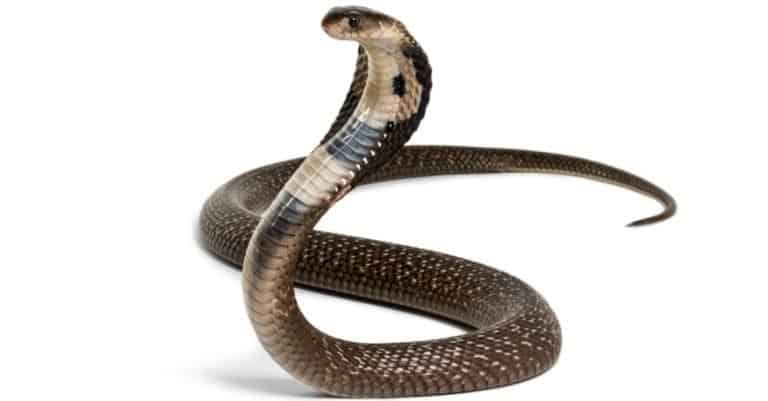
- Elapids: Most elapids are commonly referred to as “cobras”; however, not all elapids are cobras. These snakes are characterized by erect, venomous fangs at the front of their mouths, and species can be terrestrial or aquatic. Elapids are endemic to tropical and subtropical regions throughout the world.
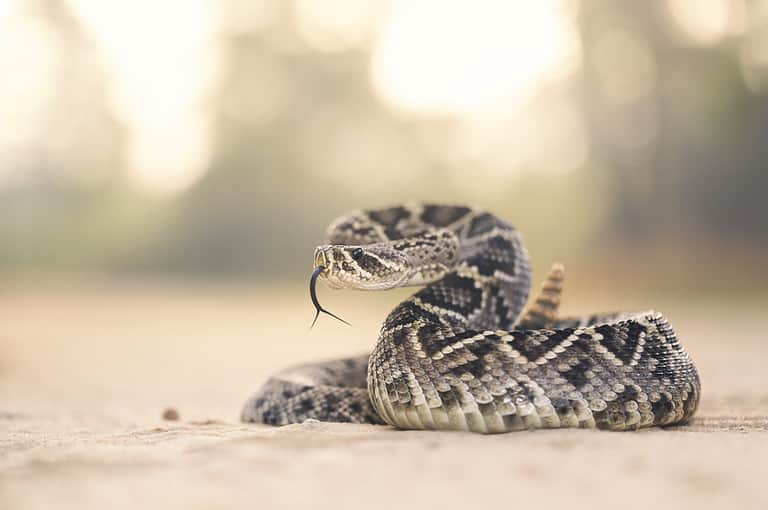
- Rattlesnakes: Rattlesnakes are found on the American continent and are characterized by the rattle at the end of their tails, which they use to scare off predators. Although rattlesnakes rarely attack humans unless provoked, rattlesnake bites are the leading cause of snakebite injuries in North America. They are an example of pit vipers of the Viperidae family of snakes.
- Garters: Garter snakes are generally harmless in North and Central America. These snakes were long believed to be non-venomous, but recent studies have determined that they produce a neurotoxic venom that is too mild to injure or kill a human.
Appearance
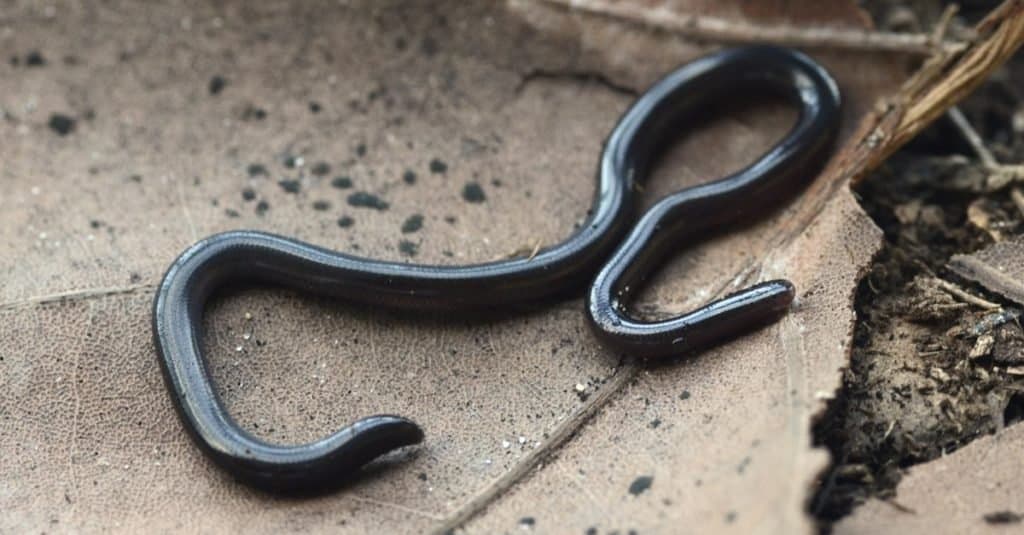
Some snakes are as short as 4.1 inches (like the Barbados thread snake), though the longest snake in the world (which is the reticulated python) is over 20 feet long.
©Patrick K. Campbell/Shutterstock.com
Snakes are reptiles, but they noticeably have no legs. However, not every legless reptile is known as a snake.
Seemingly, the only components of a snake are its head and its tail, which take up the entire length of its body. Some snakes are as short as 4.1 inches (like the Barbados thread snake), though the longest snake in the world (which is the reticulated python) is over 20 feet long.
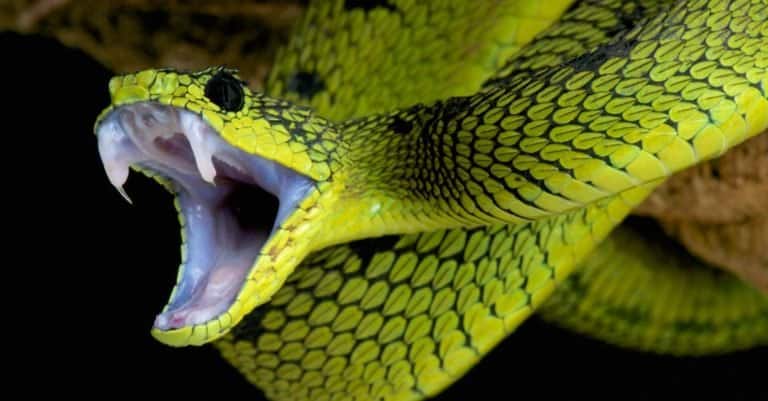
The teeth of these reptiles will vary by species as well. Many species have several needle-sharp teeth, but venomous species have fangs. Venomous snakes typically store the venom in glands in the head behind their eyes. Only about 600 snake species are venomous. A snake, sometimes referred to as a serpent, has no earholes, but its ears are internal.
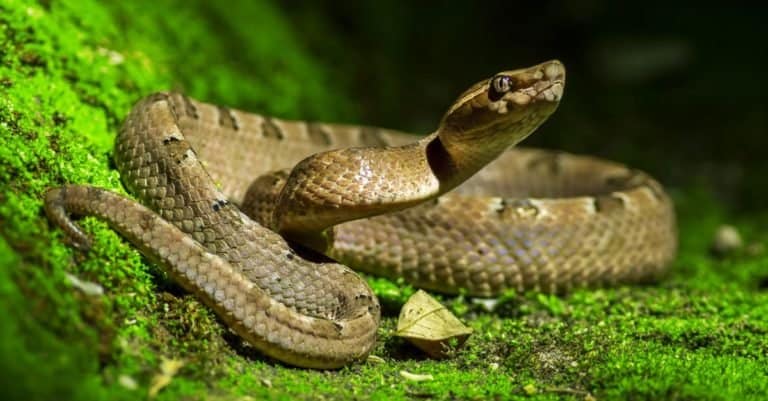
These reptiles are covered in scales, though they have skin like humans underneath them. Some snakes have keeled scales with a ridge down the center of each scale, and others have smooth scales. The markings are determined by the species, but there is hardly a color that you won’t see.
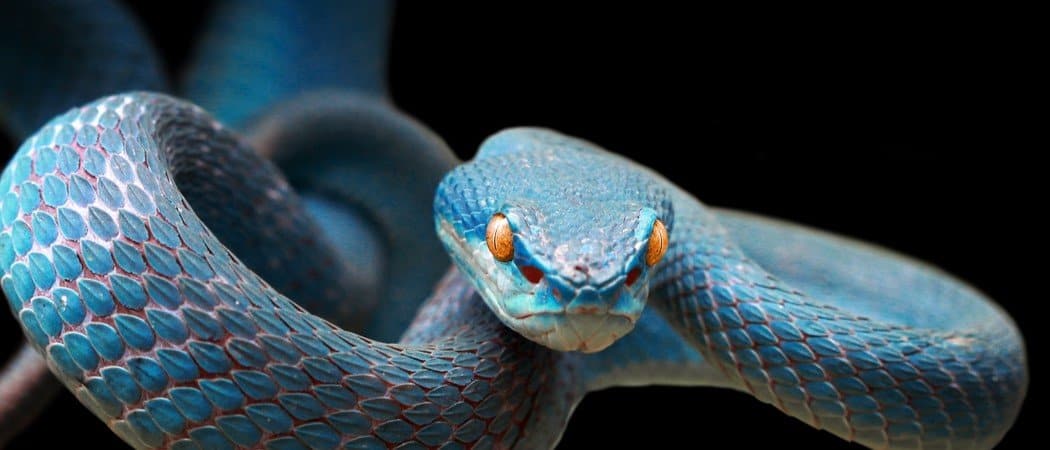
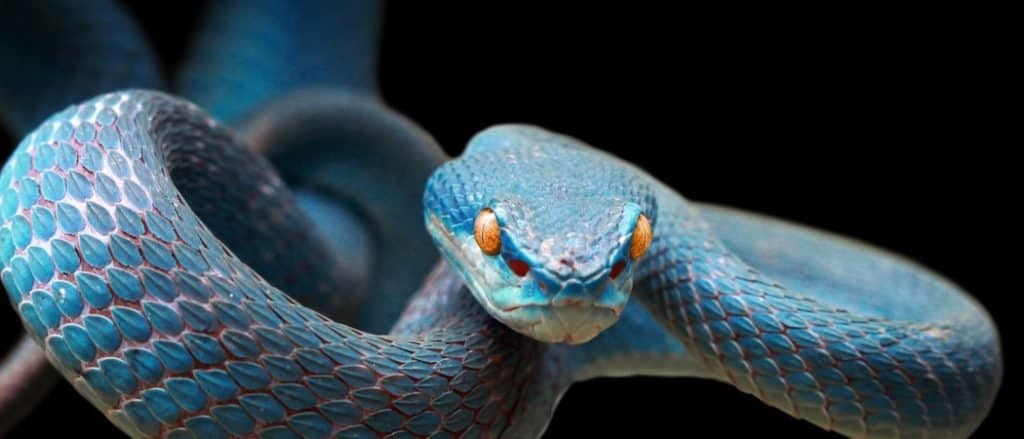
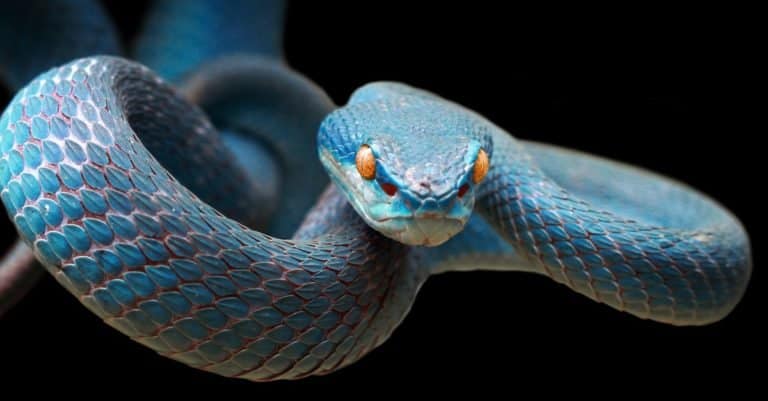
The color is sometimes a sign of how dangerous the snake is, but the pattern will help differentiate the threats from harmless animals. Snakes come in every color of the rainbow, including red, green, yellow, blue, and black.
Rattlesnakes have a large rattle at the end of their tail, which emits a loud noise to let animals and humans keep away. It is also important to note that there are some animals that look like snakes, but aren’t.
The body of the animal is also indicative of the way that the snake hunts. Animals with long and thin bodies are usually more active hunters, often chasing down their prey, while short yet thick snakes typically sit and wait for their prey.
Behavior
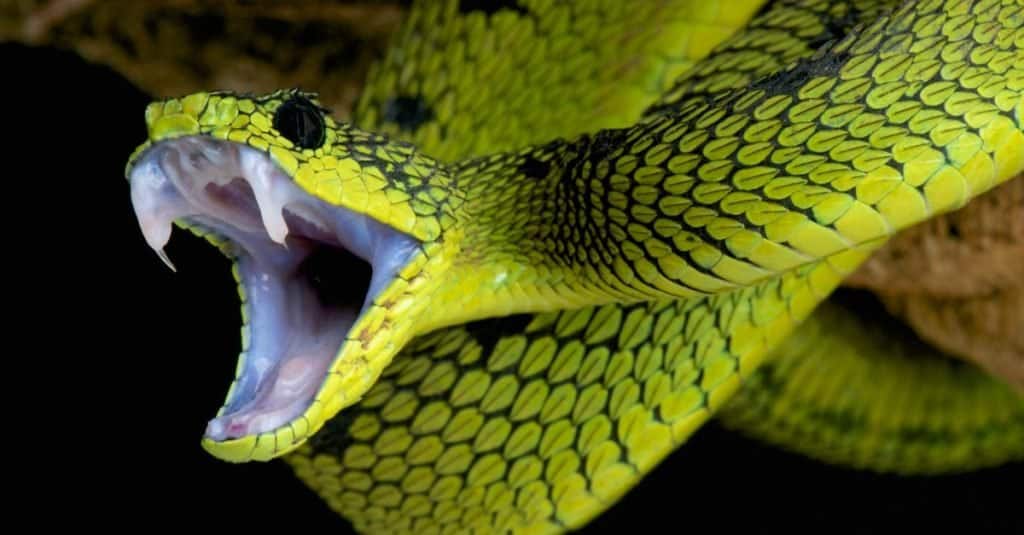
When it comes to hunting, snakes have an incredible sense of smell that they rely on. As they flick out their tongue, they seek out the chemicals in the air.
©reptiles4all/Shutterstock.com
When it comes to hunting, snakes have an incredible sense of smell that they rely on. As they flick out their tongue, they seek out the chemicals in the air. Other snakes will use their ability to detect body heat. Constriction and venom tend to be the main ways that the prey is overpowered.
These reptiles seek out the right environment to keep their body warm since their cold-blooded bodies are unable to regulate their temperature internally. Snakes move back and forth between warm and cool areas, depending on their needs.
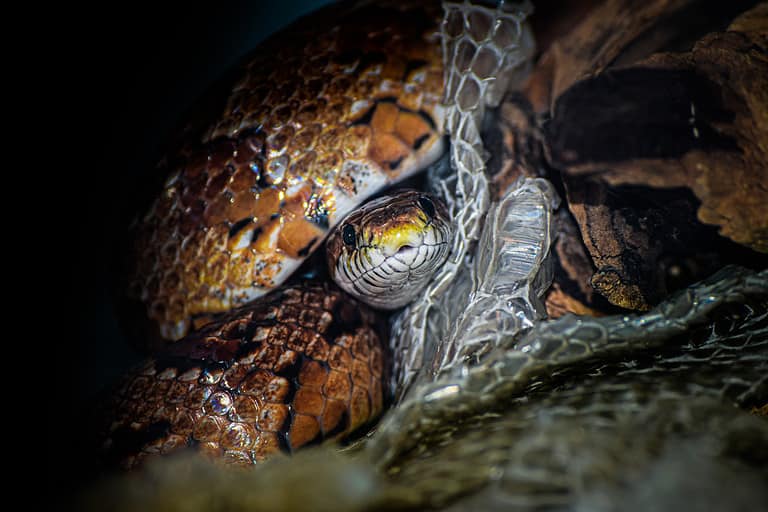
Snakes shed their skin as they grow; many shed 2 to 4 times per year. The shedding process can be rather uncomfortable, but it is a healthy process that reptiles undergo.
Though some species produce venom, the majority do not. Only 600 species have any kind of venom, and only a third of those venomous snakes have the capacity to wound humans at all, and even fewer can kill them.
Though humans are not a natural part of the reptile’s diet, it will bite if it feels threatened. In certain species, this bite can be fatal. Some species are particularly dangerous, the most lethal being the saw-scaled viper, killing more humans than any other species.
Habitat
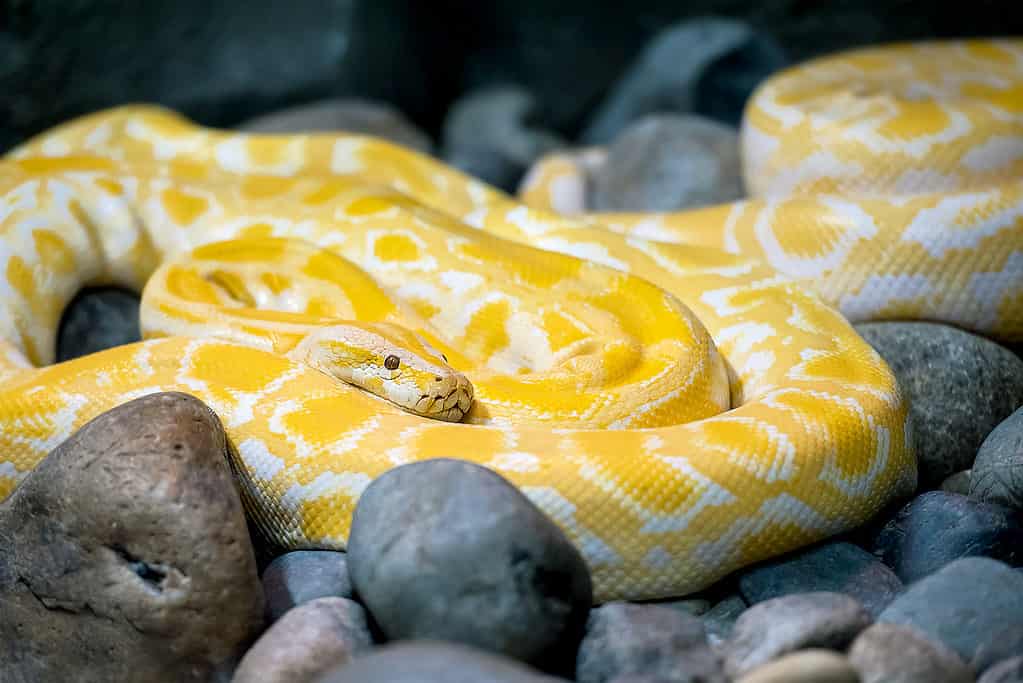
Snakes are quite versatile and are found in most habitats of the world.
©PaniYani/Shutterstock.com
Snakes are quite versatile and have adapted to many types of climates. Though the only continent without snakes is Antarctica, there are a few countries that aren’t home to any native snakes, including Ireland, New Zealand, and Iceland. Alaska is one of the few states that also has no native species.
The range of habitats snakes occupy is as broad as their geographic distribution. In water-based and land-based environments alike, these reptiles can also be found in tropical areas. While the water moccasin and the water snake commonly live near and in water, most snakes live on land. Based on the species, snakes can live in deserts, prairies, grasslands, and the rainforest.
Diet
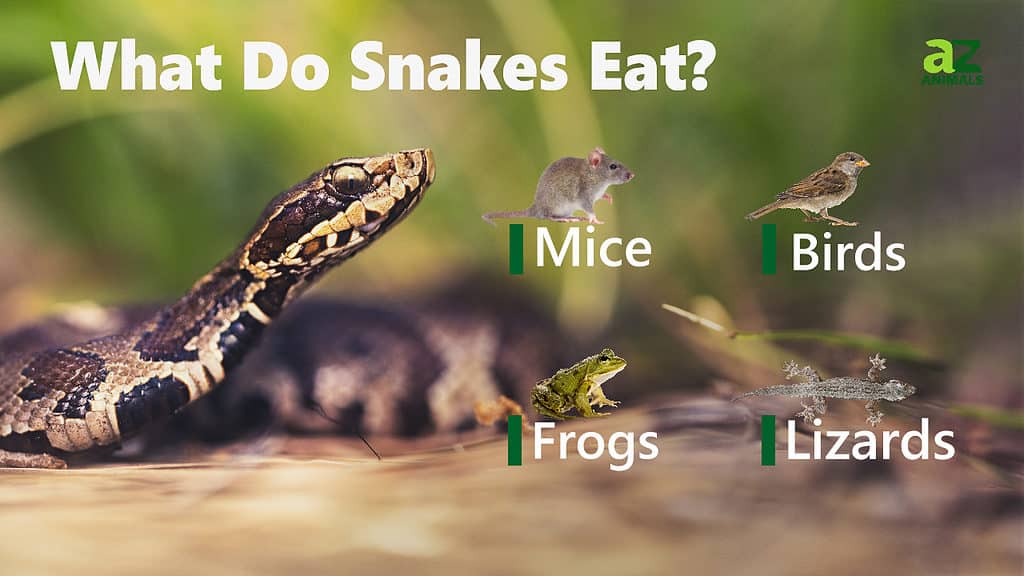
These reptiles have a carnivorous diet, meaning that their diet entirely consists of other animals. They can choose warm-blooded or cold-blooded animals, seeking out amphibians, insects, and mammals; some species feed exclusively on other snakes and lizards.
Though every snake consumes its prey whole, the method by which they render prey helpless varies. Boas and pythons bite their prey to hold onto it, wrapping their bodies around it and squeezing the life out. If the animal has fangs, it will deliver venom to its prey. The venom comes from a sac that is hidden behind the eyes.
What Do Snakes Eat?
Since all of these reptiles are carnivores, there are many small animals that can become their prey. The diet of each snake depends on its species. Insects, amphibians, earthworms, slugs, fish, rodents, rabbits, and birds are all possible foods. Some snakes eat eggs.
Predators and Threats
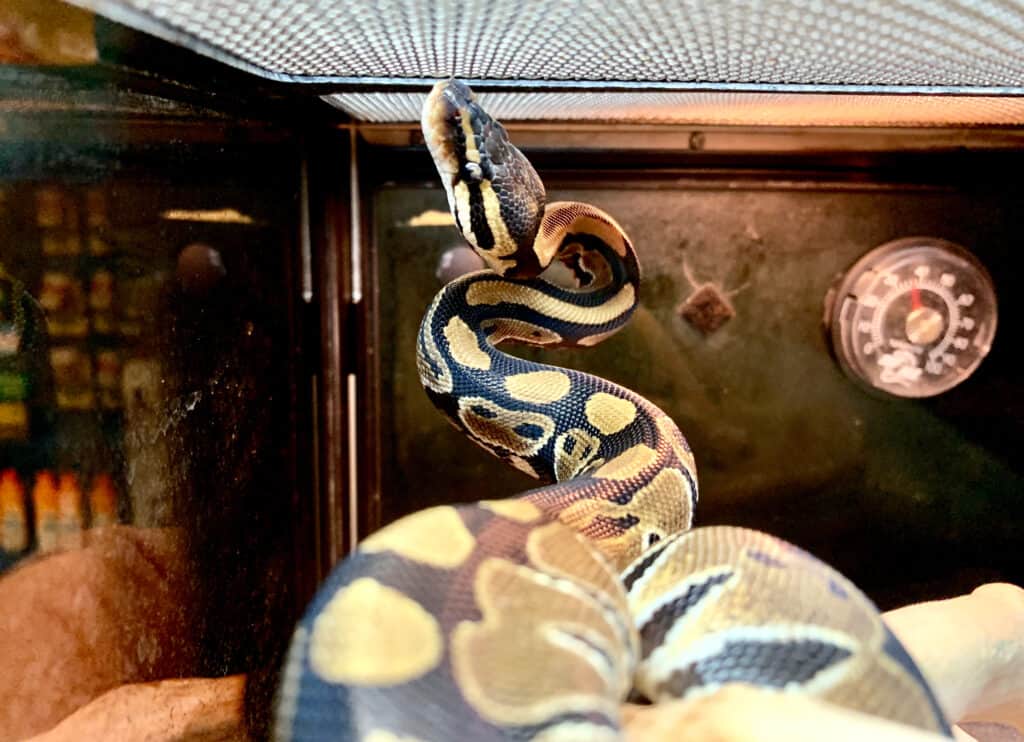
Snakes are relatively quick and effective predators, but they are also the prey of many different animals.
©Megan Czarnocki/Shutterstock.com
These reptiles are relatively quick and effective predators, but they are also the prey of many different animals. One of the biggest predators of these reptiles is humans because some people hunt them for meat, clothing, and many other purposes. However, snakes in general aren’t considered endangered.
The population of these reptiles can be negatively impacted by deforestation, hunting, and climate change. Ultimately, the threat that the snake faces is specific to many factors, like the species, where they live, and how much meat they provide.
What Eats Snakes?
These reptiles may be rather impressive hunters, but animals like large birds and coyotes have made these reptiles into a regular part of their diet.
They are also hunted by mongooses, wild boars, foxes, raccoons, and other game that can pick them up and consume them. Some snake species prey on other snakes — king snakes, indigo snakes, and king cobras are good examples.
Each species has its own way to defend itself against threats. Camouflage plays a major role, providing additional cover. Venomous species will bite as a last resort, but they generally try to flee instead.
Reproduction, Babies, and Lifespan
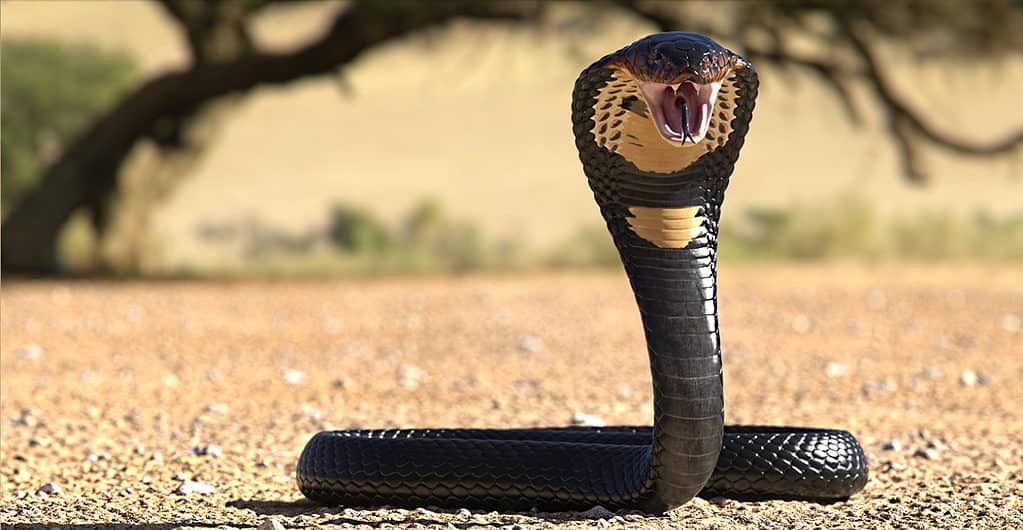
Cobras eat other snakes but will also eat birds.
©Roberto 33/Shutterstock.com
The reproduction process of these reptiles is primarily a process of internal fertilization. Most species intertwine their bodies with that of their partner, and the male releases sperm from one of its two reproductive organs. The female doesn’t necessarily become pregnant with her young right away; some females can store the male’s sperm for up to 6 years before fertilization.
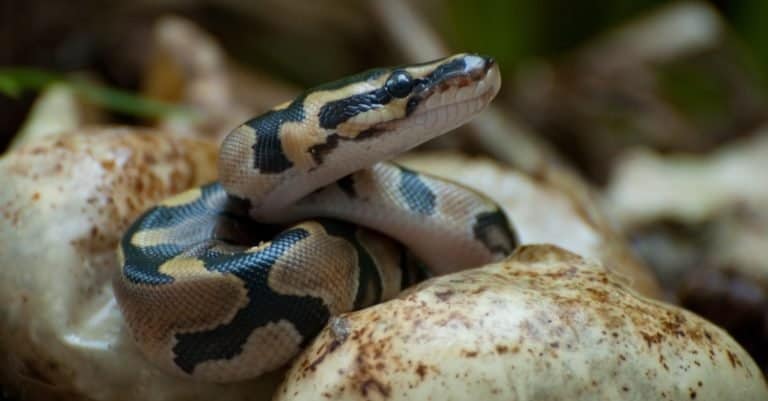
The species will determine the type of birth that the female has. Rattlesnakes and garter snakes give birth to live young, which makes them ovoviviparous. However, species like the ball python and the corn snake lay eggs, making them oviparous. In fact, approximately 70% of all these reptiles are oviparous, rather than ovoviviparous.
The number of eggs or live young will vary greatly. For snakes that give birth to live young, about 10 to 30 are born in each litter, though the diamondback water snake can have up to 40 babies in a litter.
The live-bearing females often find a sheltered spot where they give birth to the babies. For the species that lay eggs, the clutch size varies significantly. While the ball python may only lay a single egg, some clutches are up to 100 eggs annually.
The species of snake determines its lifespan. While smaller species (like the garter snake) live for less than ten years, the various types of boas can live for about 25 to 50 years.
Population
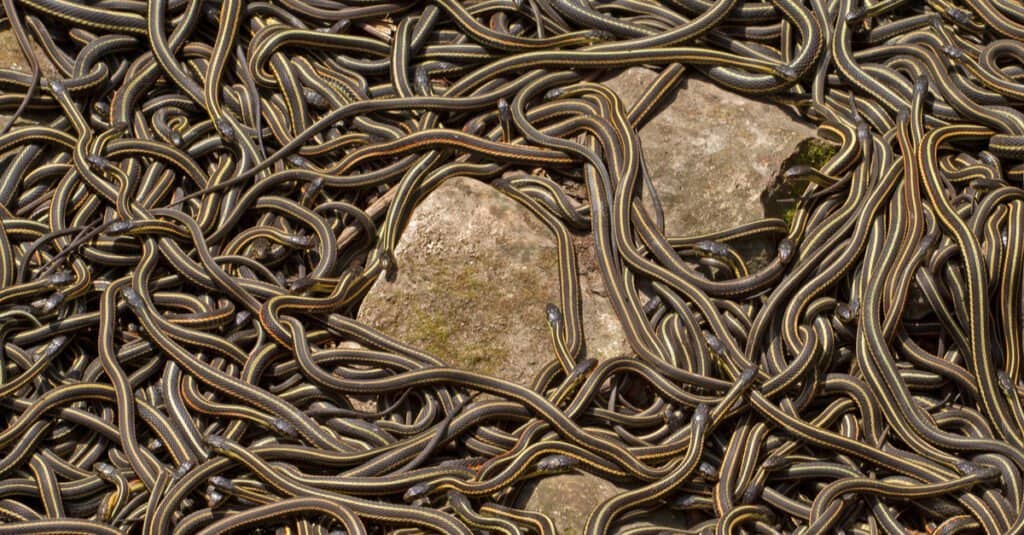
With over 4,000 types of snakes around the world, the total population varies from country to country.
©Jukka Palm/Shutterstock.com
With over 4,000 types of snakes around the world, the total population varies from country to country. Interestingly, there are a few countries that have no known native species of snakes at all, including Antarctica.
Though there are some species with lower populations, snakes as a group are not classified as extinct by the IUCN.
In the Zoo
These reptiles can be found at nearly every major zoo, allowing the public to become more informed about the types of these reptiles that span across the globe. Most often, the zoos will include snakes that are local to their region, so the species will vary from one location to the next.
When visiting these reptiles, most species will simply relax in their tank. However, some zoos (like the Virginia Living Museum) feature demonstrations outside of the tanks to allow patrons to get a closer look. With more awareness of and information about snakes, the fear typically associated with these animals can be reduced.
Snakes that live in zoos may not display the same symptoms of illness as they would in the wild. Zookeepers are incredibly familiar with the behavior that these snakes show when they are ill, allowing them to get fast treatment when they become sick.
Some types of snakes can be kept as pets, like the corn snake or the rosy boa.
Snake Pictures
View all of our Snake pictures in the gallery.

Kurit afshen/Shutterstock.com
Sources
- Britannica / Accessed February 12, 2021
- Science Kids / Accessed February 12, 2021
- Pet MD / Accessed February 12, 2021
- Ranker / Accessed February 12, 2021
- Project Pawsitivity / Accessed February 12, 2021
- San Diego Zoo / Accessed February 12, 2021
- VCA Hospitals / Accessed February 12, 2021
- Kid Zone / Accessed February 12, 2021
- Save The Snakes / Accessed February 12, 2021
- How To Create A Snake Nesting Structure / Accessed February 12, 2021
- National Geographic / Accessed February 12, 2021
- Wikipedia / Accessed February 12, 2021
- Everything Reptiles / Accessed February 12, 2021
- Oddly Cute Pets / Accessed February 12, 2021