
Quick Take
- This close encounter was no accident, and the scientists inside were chasing a first nobody had pulled off. See the expedition goal →
- Why was the shark rising so calmly toward the sub? Her body holds a trick that makes the climb almost free. Learn her buoyancy trick →
- A sub full of people became a rival in her eyes, and a film crew found out how pushy that rivalry gets. See the rivalry instinct →
- Why do so few people ever meet one of these giants eye to eye? Find why meetings are rare →
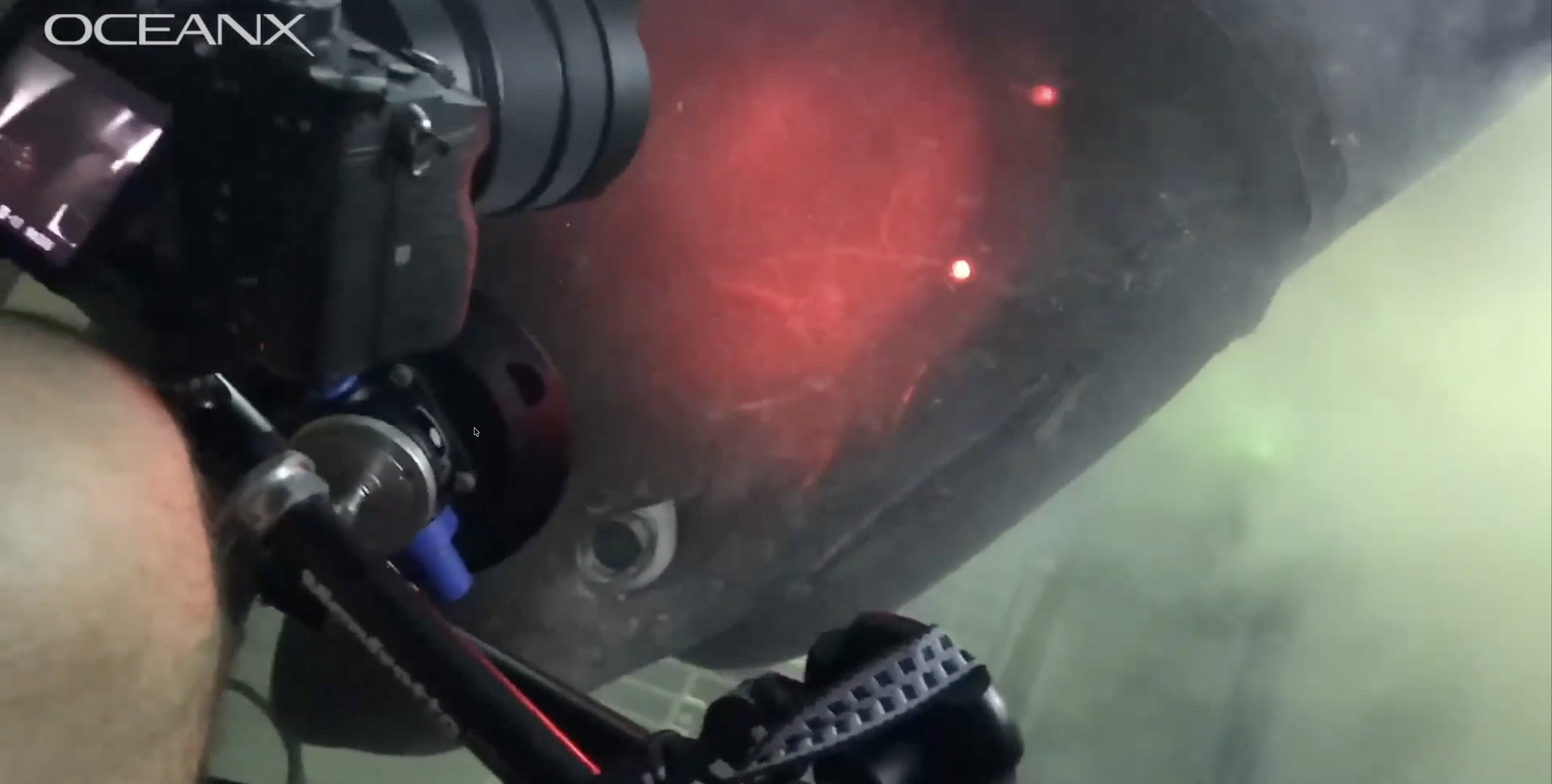
A shape comes up out of the dark below a research sub sitting 2,600 feet below the ocean’s surface, gray and wide and still rising. It turns slowly along the clear dome, in no hurry at all, and presses one eye against the glass, with the crew sitting just on the other side.
The crew gasps. “Oh my goodness. This is a monster! She’s huge!” As the clip closes, the sheer size of the deep sea shark dawns on the crew, with one member saying “She is definitely bigger than the sub is long.”
That clip is making the rounds again. Nature Unedited posted it on X on November 21 with one line about a massive deep-sea shark approaching a submarine, and the post has since passed 41 million views and 267K likes. The animal is a bluntnose sixgill shark, and the meeting was arranged.
The Dive the Clip Came From
The footage was shot in 2019, off the Bahamas, and the people inside the sub were on the job. Researchers from Florida State University, the Florida Museum of Natural History, the Cape Eleuthera Institute and OceanX wanted to put a tracking tag on a sixgill down in the deep water where it lives, which nobody had ever managed. Scientists had been tagging sixgills since 2005, but they’d always hauled the shark up to the surface first.
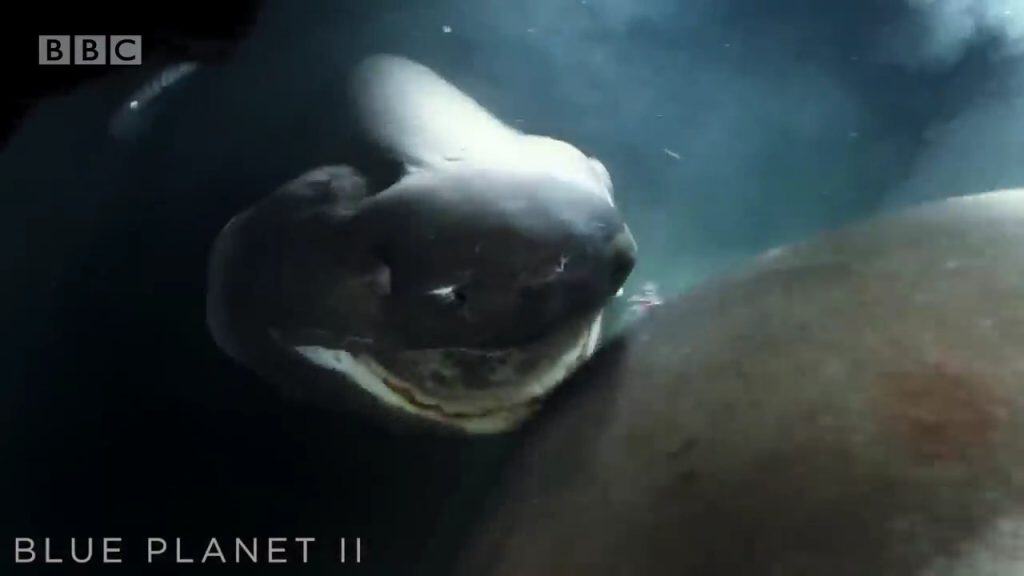
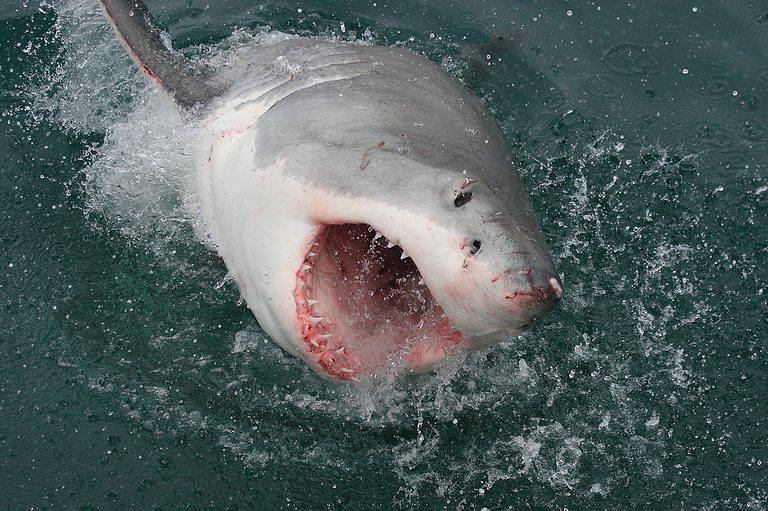
Sixgills scavenge sunken carcasses like whales and treat any other feeding animal, even a submersible, as a rival.
©BBC News / YouTube – Original
Bringing the scientists down to the shark instead took three separate trips before it worked. The Florida Museum called the result a historic first. Three months after the tag went on, it popped loose from the shark and floated up to the surface, where the team could collect it.
Why the Shark Is a She
With sixgills, size depends a lot on sex, and the females are the big ones. Grown males average 10 to 11 feet. Grown females run 11 to 14 feet and keep growing, and they’re only ready to breed at around 15 feet. The biggest on record are 20 feet long and 2,200 pounds. A shark long enough to fill the sub’s window is most likely a female.
Sixgill shark length by sex
Why She Came Up Out of the Dark
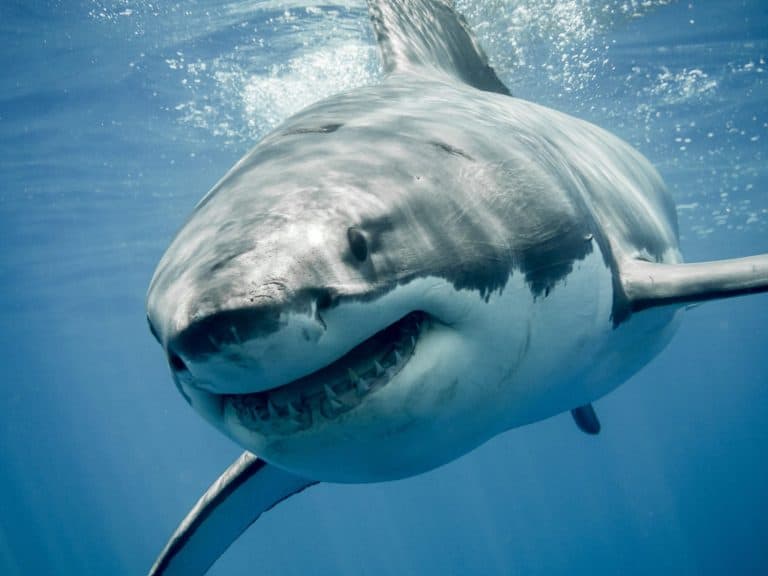
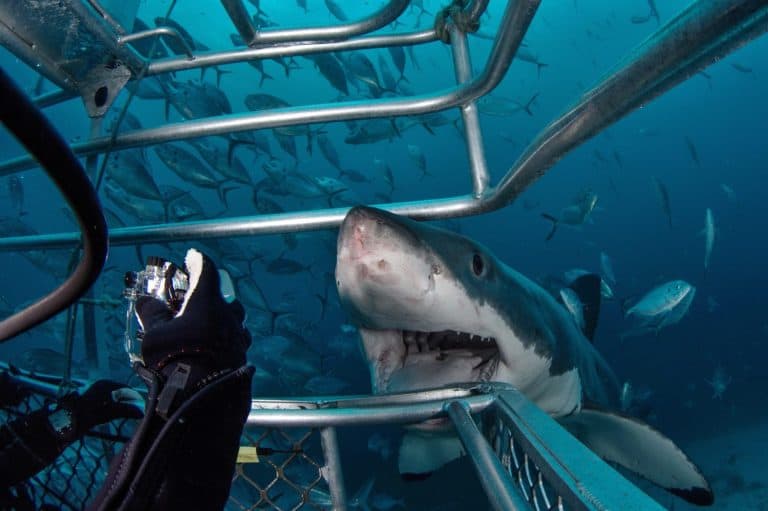
Sixgills find food by smell. They hunt live prey and eat animals that are already dead, and they’ll take whatever sinks to them: seals, sea lions, whole whales. They also treat anything else near the food as competition. On a dive for the BBC series Blue Planet II, over a dead whale at 2,461 feet, sixgills shoved the film crew’s sub with their bodies until they figured out it wasn’t eating anything.
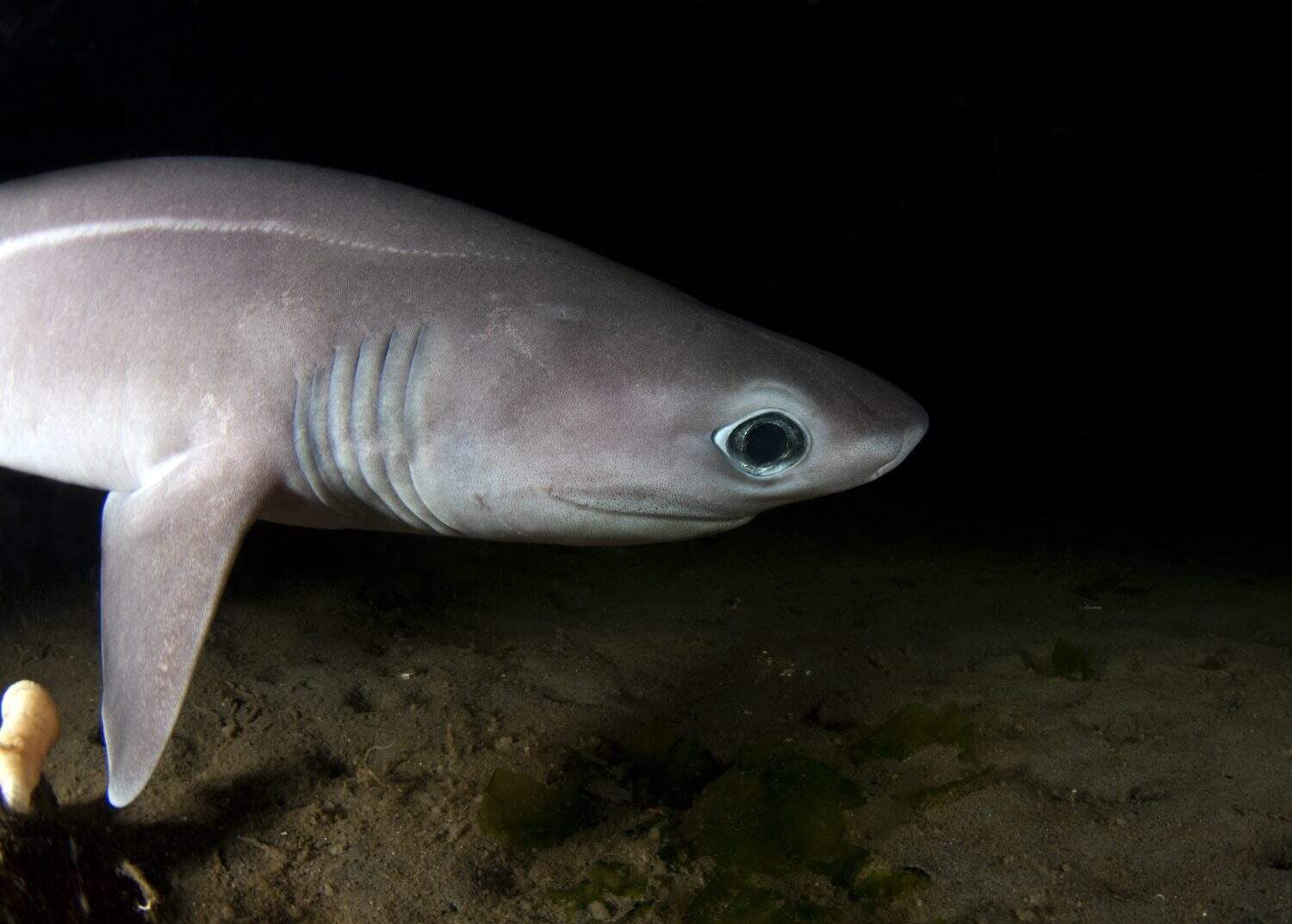
Juvenile sixgills are a common sight in places like Puget Sound, while adults stay hidden in deep offshore water.
©Greg Amptman/Shutterstock.com
Swimming up from the deep to reach a meal takes a sixgill almost no effort. Most sharks sink when they stop swimming, which is why so many of them keep moving all the time. The sixgill simply glides upward without much effort, because its body naturally floats. These sharks beat their tails harder swimming down than swimming up, and they can drift upward for several minutes at a time. That’s how they spend their nights: rising into water with more to eat after dark, then sinking back down to the cold by midday, where their bodies burn energy more slowly and a meal goes further. It also means a sixgill can rise toward something from straight below, barely moving, and arrive before whatever’s above has noticed a shape.
The Oldest Design in the Water
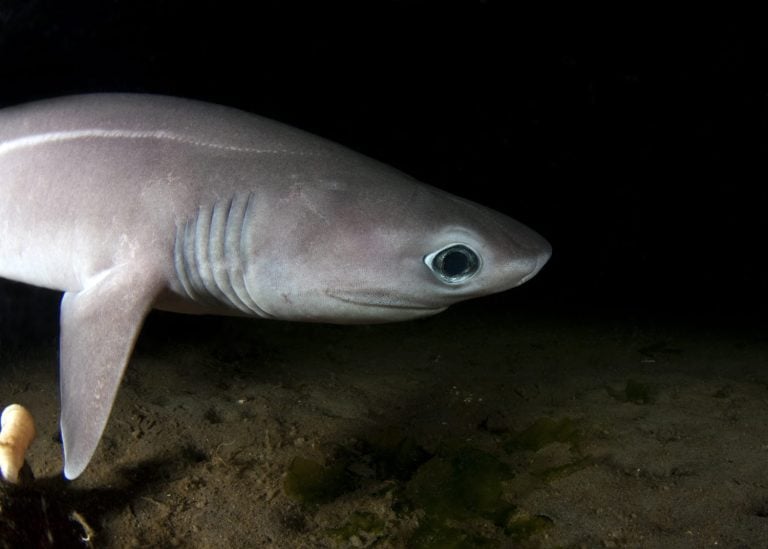
Count the gill slits in the clip and you’ll find six. Nearly every other shark alive has five. The sixgill’s close relatives go back roughly 200 million years in the fossil record, and its family has more extinct members than living ones. Its eyes are a fluorescent blue-green, its lower jaw has six rows of teeth with saw-like edges, and it can live 80 years.
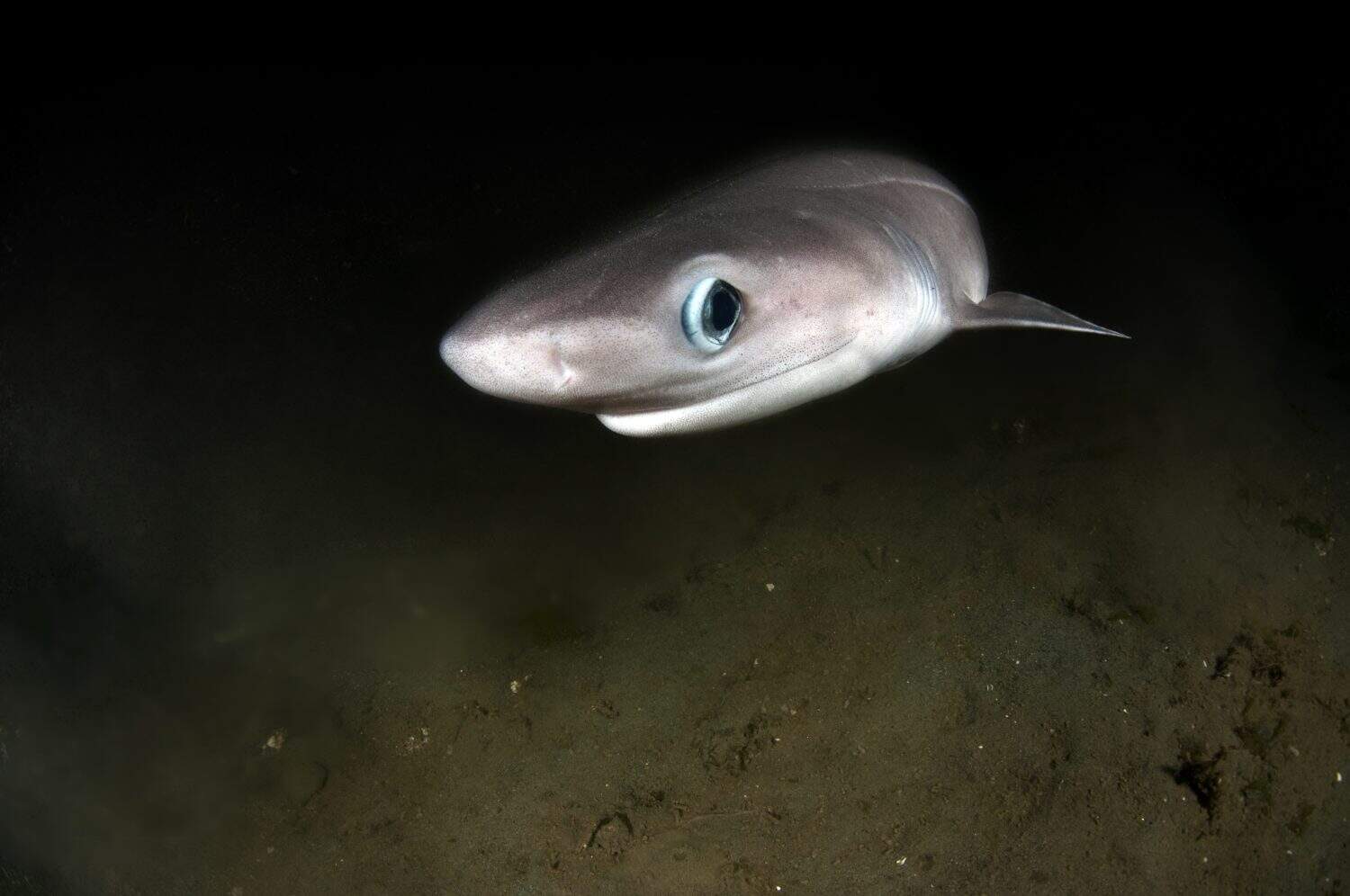
A young sixgill’s eyes glow fluorescent blue-green, a trait of a lineage with far more extinct relatives than living ones.
©Greg Amptman/Shutterstock.com
In Puget Sound, no shark grows bigger. Juveniles are a common sight there, while the adults stay out in deep water off the coast. That’s why hardly anyone ever meets a grown one face to face, and why a few seconds of eye contact through a sub’s window has traveled this far.