



Quick Take
- Sixgill sharks have survived virtually unchanged for 200 million years, and the reason they've outlasted almost every relative comes down to something most sharks lost long ago. Prehistoric survival facts →
- Their reproduction method is neither egg-laying nor live birth, but something stranger that sits right in between. Unusual reproduction explained →
- Most sharks work hard just to avoid sinking, but sixgills don't, and their unusual anatomy is the reason. Buoyancy without effort →
- Part of this shark is considered toxic enough to make you sick for over a week, and the culprit is not the teeth. Toxic parts revealed →
Sixgill sharks are a genus of ancient prehistoric sharks that contains three distinct species. By far the best-known species is the bluntnose sixgill shark, which can sometimes be observed near Puget Sound or Vancouver Island. Due to their solitary and elusive nature, not a lot is actually known about their behavior.

5 Incredible Sixgill Shark Facts
- These sharks are considered to be among the most prehistoric of sharks. This means it retains some characteristics and adaptations that are largely unchanged from the time it first evolved some 200 million years ago.
- One of the more interesting facts is that these sharks give birth via a method called ovoviviparity. This is a halfway method between egg-laying and live birth in which the eggs develop inside the mother’s body until they are ready to hatch.
- Sxigill sharks appear to stay in deep water during the day and then migrate toward shallower waters at night.
- These sharks appear to have several adaptations that make them more buoyant. Whereas most sharks must generate lift while moving through the water to stop from sinking, the sixgill shark can simply glide upward without much effort.
- Hexanchoid sharks sense the world around them with highly developed senses of smell and eyes. They can also detect vibration and faint electrical signals.
Classification and Scientific Name
These sharks are classified in the genus Hexanchus. This quite literally means six gills in Latin. They are a member of the cow shark family, Hexanchidae, although most other members of this family are now extinct and only known from the prehistoric fossil record.
Species
There are three living species of these sharks, plus eight more extinct species found in the fossil record.
- Bluntnose Sixgill Shark (Hexanchus griseus): The largest and most well-known member of the hexanchoid sharks, the bluntnose sixgill has a wide distribution all over the world, from Patagonia to Alaska, from Puget Sound to the Japanese sea, from the North Sea to southern Africa.
- Bigeye Sixgill Shark (Hexanchus nakamurai): Named for its relatively large eyes, this shark is found in the Indian Ocean and the Western Pacific.
- Atlantic Sixgill Shark (Hexanchus vitulus): Formerly considered to be part of the same species as the bigeye sixgill, this Atlantic shark was determined to be a completely separate species in 2018. They are differentiated by their smaller size — they do not usually exceed 6 feet in length — and their Atlantic-based location.
Appearance
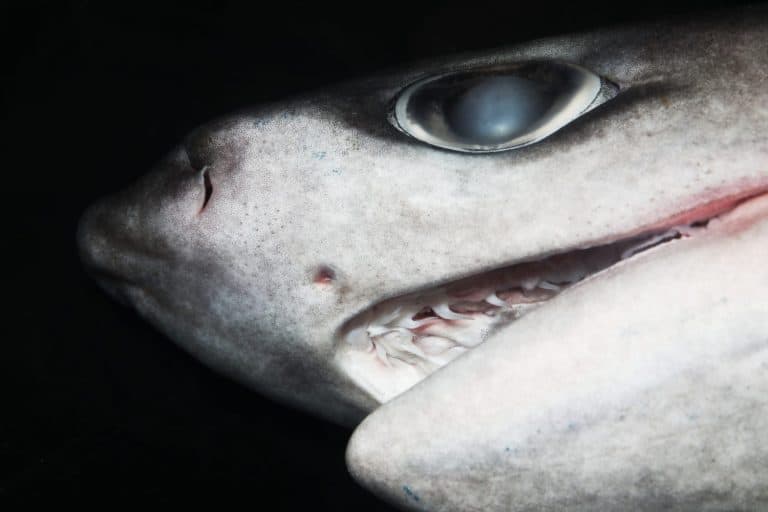
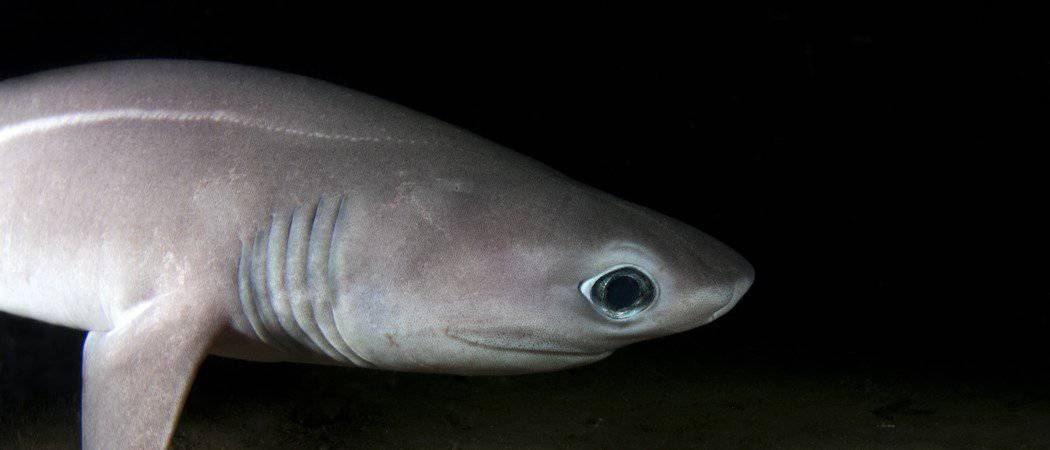
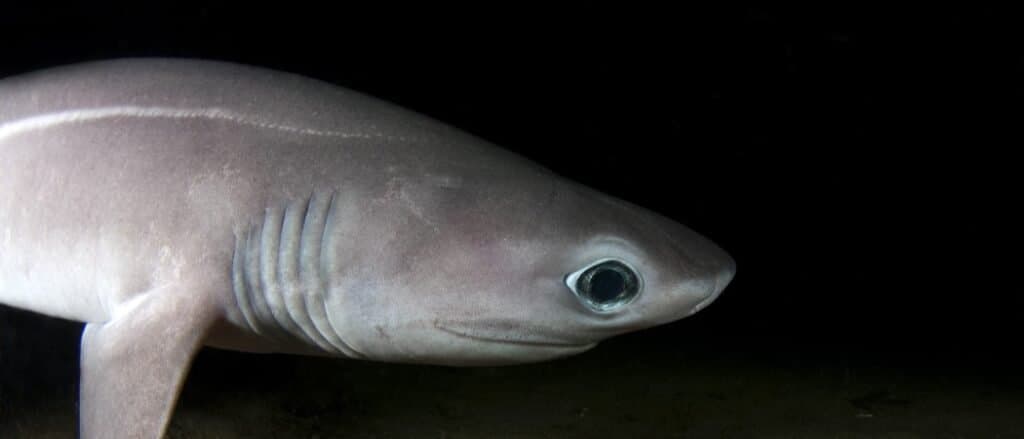
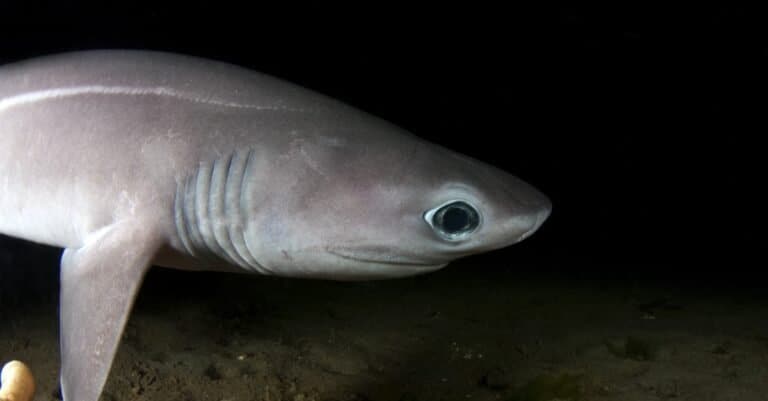
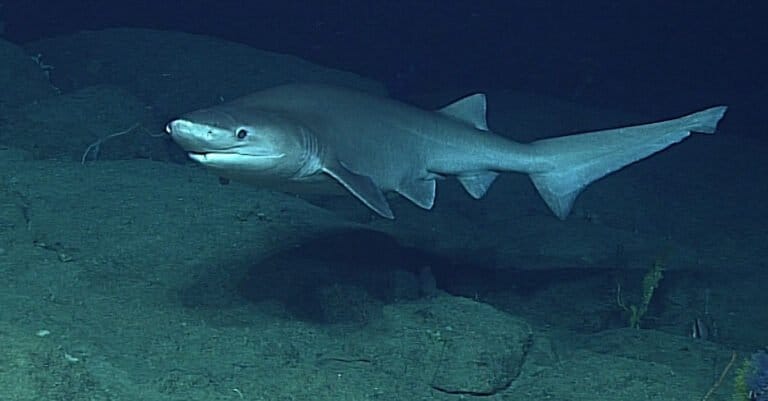
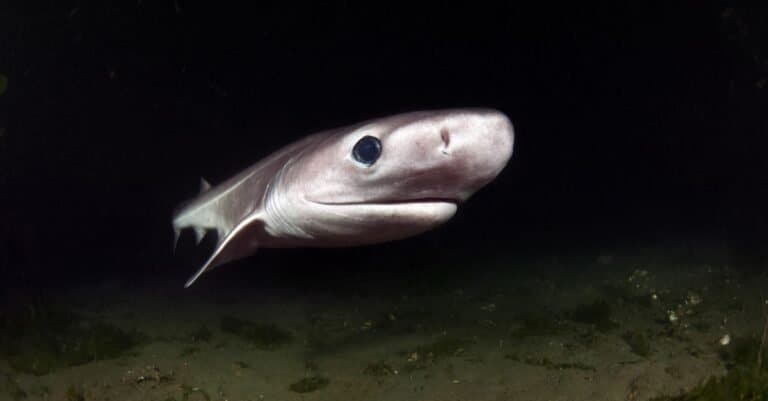
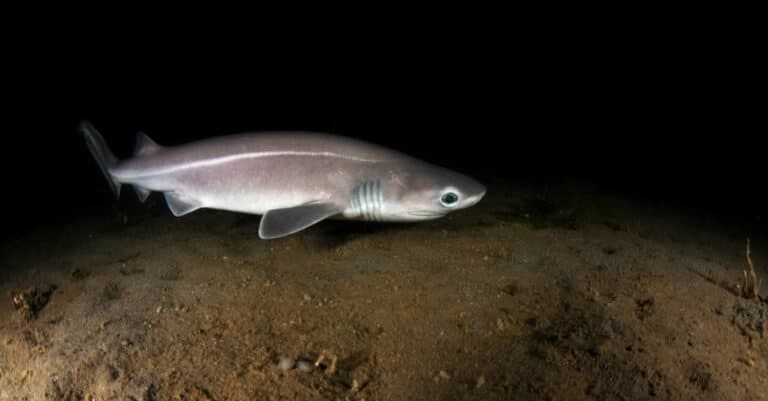
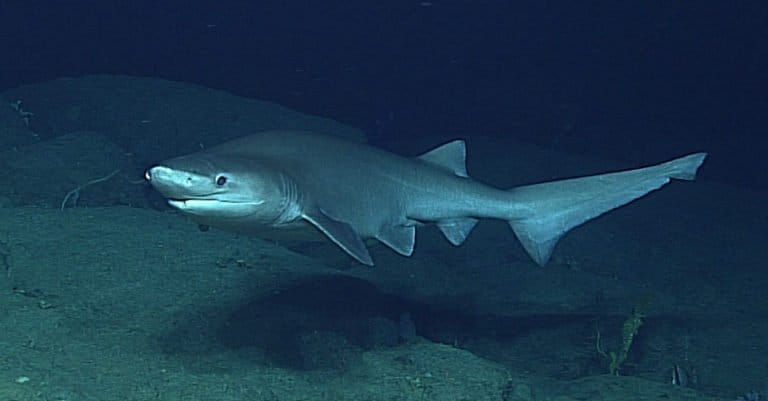
These sharks are characterized by a broad and pointed head, a long tail, large green eyes, a single dorsal fin on the back, and comb-like teeth arranged in six separate rows on each side of the lower jaw. By far the easiest way to identify them, though, is the presence of six gill pairs. Most sharks only have five. The skin color ranges from dark gray to brown to olive green near the back and lighter gray on the stomach.
Adult sharks, including the largest species, the bluntnose sixgill, measure no more than 20 feet long. The smallest species is the Atlantic sixgill at 6 feet long. Females tend to be slightly larger than males.
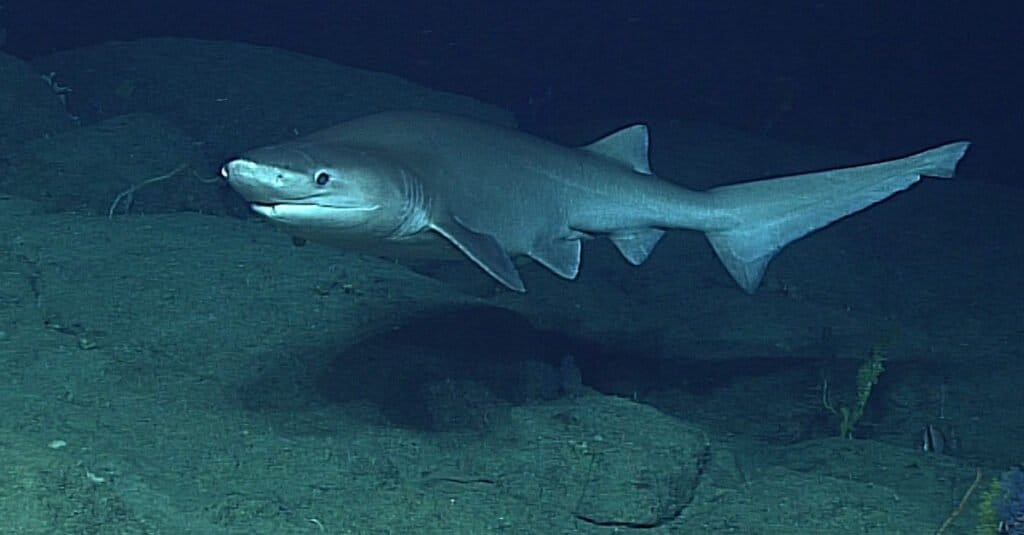
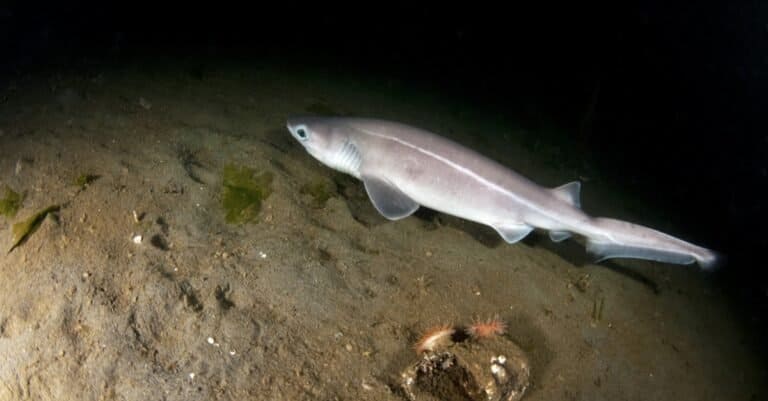
A Sixgill Shark swimming off Vancouver Island, Canada.
©NOAA Ocean Explorer from USA / CC BY-SA 2.0, via Wikimedia Commons – Original / License
Distribution, Population, and Habitat
These sharks are found across temperate and tropical seas all over the world. They tend to roam around deep water fairly close to continental shelves, islands, seamounts, and mid-ocean ridges. In colder environments, like Puget Sound and Vancouver Island, they like to live in shallower water.
The bluntnose sixgill and bigeyed sixgill sharks are considered to be near threatened by the IUCN Red List, with both of their population numbers falling, while the Atlantic sixgill shark is a species of least concern. The biggest threat is overfishing, both as accidental bycatch and for food and sport.
Predators and Prey
The bluntnose shark sits near the top of the marine food chain. Despite its enormous size, it has to be wary of larger predators.
What eats the sixgill shark?
An adult bluntnose shark is preyed upon by great white sharks and killer whales. Young sixgills are also preyed upon by dolphins and sea lions.
What does the sixgill shark eat?
These sharks are highly skilled predators whose diet consists of fish, rays, crustaceans, sharks, and even carrion. While not very fast, it is thought to ambush prey at close range with a quick strike. Whatever it cannot swallow whole, it will grind up in the rows of sharp teeth.
Reproduction and Lifespan
Not many concrete facts are known about the shark’s reproductive behavior. It’s speculated that the bluntnose sixgill shark reproduces at some point between May and November, and the male possibly initiates courtship by nipping at the female’s gills, which can leave behind scars. After copulating, the female carries the eggs for approximately two years until giving birth to a litter of anywhere between 22 and 110 pups. The sheer number of young suggests it is an adaptation to compensate for the very high mortality rate.
The young are fairly well-developed at the moment of their birth, measuring up to 30 inches, and must learn to fend for themselves. The parents play no actual role in the development of the young. These are long-lived animals that grow and mature slowly. It’s speculated that a male bluntnose reaches sexual maturity between 11 and 14 years old, while the female reaches maturity between 18 and 35 years old. Their overall lifespan is estimated to be up to 80 years in the wild.
Fishing and Cooking
The bluntnose sixgill shark is caught both commercially and for sport with line gear, gillnets, traps, and trawls. The flesh can be frozen, fresh, or dried, salted, and also used for oil and fishmeal. The liver of the hexanchoid shark is thought to be toxic because ingestion has been known to cause pain and sickness for up to 10 days. Even the skin can occasionally cause sickness.
Sixgill shark Pictures
View all of our Sixgill shark pictures in the gallery.

Greg Amptman/Shutterstock.com
Sources
- Florida Museum / Accessed July 21, 2021
- Animal Diversity Web / Accessed July 21, 2021
- Sci News / Accessed July 21, 2021
- Ocean Explorer / Accessed July 21, 2021