
Quick Take
- One shark on this list has been alive since before some modern countries existed, and scientists still aren't sure exactly how long it can live. Discover the ancient Greenland shark →
- A tiny shark less than two feet long has repeatedly damaged military submarines, and it does so without even trying. See how it damages submarines →
- One of these sharks was only discovered in 2010, yet it's already outsmarting predators with a trick that works differently depending on how deep it swims. Meet the ninja lanternshark →
- The deepest-living shark ever recorded feeds on something most people would never expect to find miles below the ocean surface. Explore the deepest shark's diet →
Of the many types of sharks, deep sea sharks are definitely the most distinctive looking! Because deep in the darkest parts of the oceans, at unimaginable depths, live some of the most unusual and primitive sharks in the world. Many of these sharks live so deep that they are rarely seen and have barely been studied, and it’s entirely possible that there are even more still that are as yet undiscovered. Sharks living below depths of 984 feet are considered to be deep sea sharks, but even that is considered shallow for some of these fascinating creatures. Join us as we dive deeper than ever before to discover these deep sea sharks.
10. Bluntnose Sixgill Shark
Also known as cow sharks, bluntnose sixgill sharks (Hexanchus griseus) are primitive sharks that closely resemble more extinct sharks than living ones. Their snout is wide and blunt and they are tan, brown, or black and can reach 18 feet long. Bluntnose sixgill sharks are particularly unusual as they have six gill slits instead of the more common five.
Bluntnose sixgill sharks live in the Atlantic, Indian, and Pacific oceans near the ocean floor. They are deep sea sharks and live at depths between 590 and 3,600 feet, but their range can sometimes extend to around 8,000 feet. Bluntnose sixgill sharks have a widely varied diet and undergo diurnal vertical migration. This is where they swim closer to the surface of the ocean during the night (usually around 984 feet) to feed and then swim back down to their maximum depth at the ocean floor for the day.
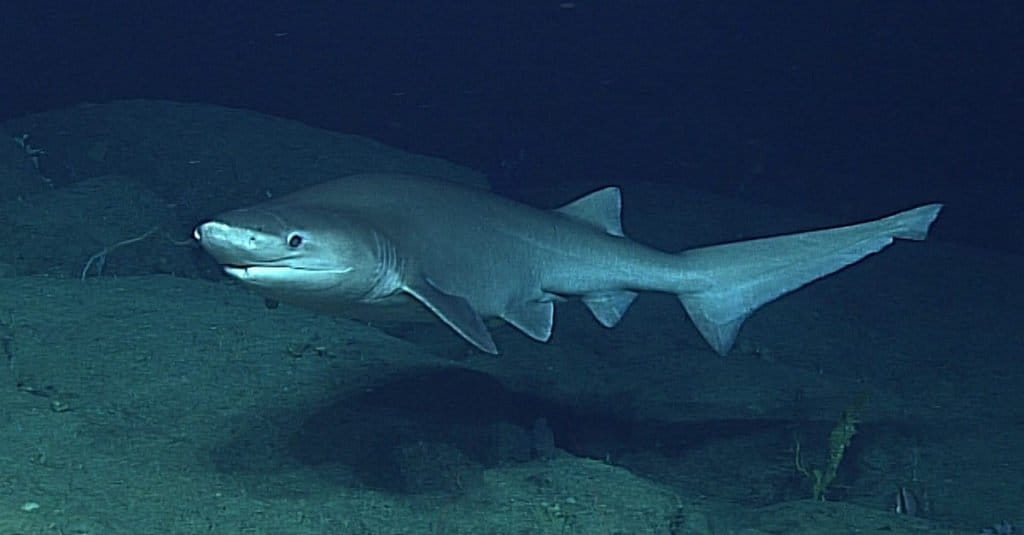
Bluntnose sixgill sharks closely resemble extinct sharks.
©NOAA Ocean Explorer from USA / CC BY-SA 2.0 – Original / License
9. Goblin Shark
Goblin sharks (Mitsukurina owstoni) are often called “living fossils” as they are the only living members of the family group Mitsukurinidae which dates back many million years. They have a very long, flat snout and protruding jaws which can extend to the end of their snout when feeding. Their unusual appearance, which resembles a goblin, earned them their name.
Goblin sharks are usually between 10 and 13 feet long and live in all major oceans. They live over the upper continental slope between 900 and 3,150 feet, although they can go as deep as 4,300 feet. A tooth from a goblin shark was even found in an undersea cable which had been at 4,490 feet. Goblin sharks are slow swimmers and are ambush predators, feeding on squid and fish such as rattails.
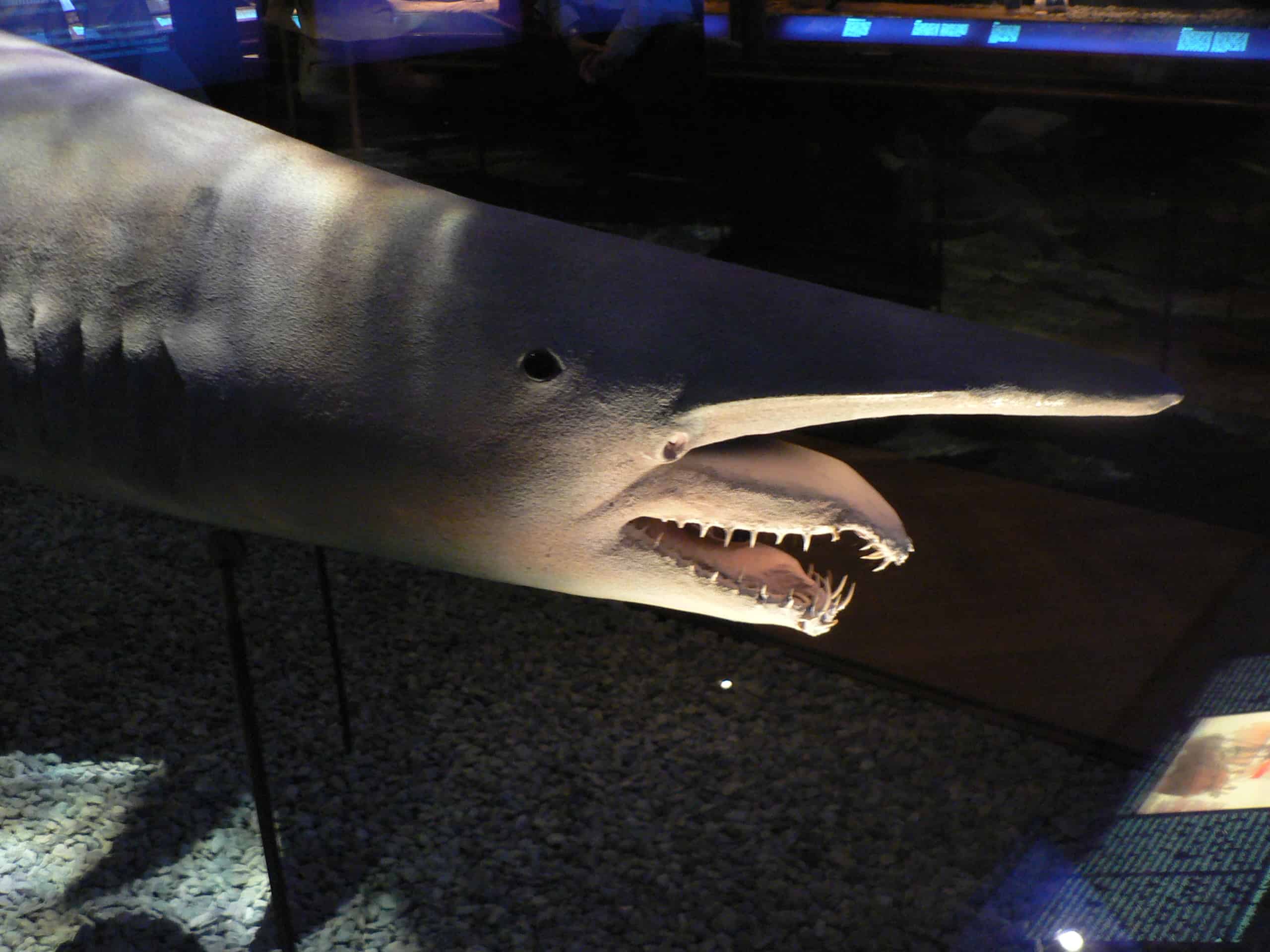
Goblin sharks are the only living member of a family group that dates back millions of years.
©Peter Halasz / CC BY-SA 3.0 / Wikimedia Commons – Original / License
8. Greenland Shark
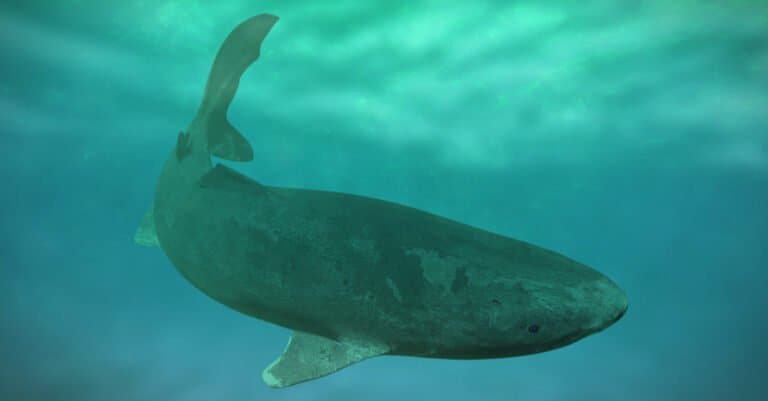
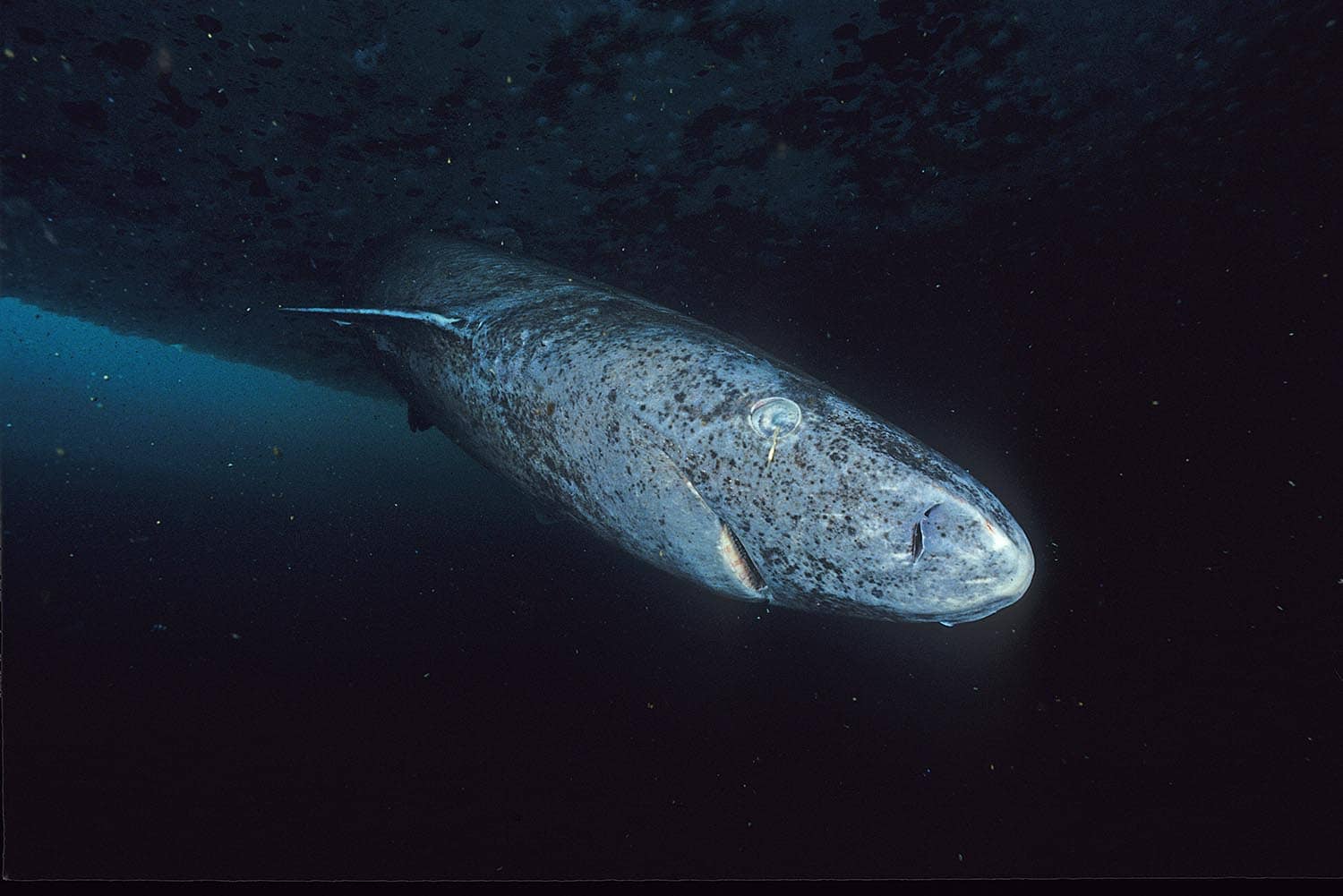
Some of the most incredible sharks are Greenland sharks (Somniosus microcephalus). Not only can they survive at unimaginable depths, but they have the longest lifespan of all sharks, which is estimated to be between 250 and 500 years. They are large sharks and regularly reach around 21 feet long. Their snouts are short and round and they have relatively small dorsal and pectoral fins for their size.
Greenland sharks live in the Arctic and sub-Arctic waters of the North Atlantic and Arctic oceans and generally live in some of the deepest areas of the ocean. Greenland sharks were spotted at 7,200 feet by a submersible that was investigating the wreck of the SS Central America. Most Greenland sharks migrate every year, but their migration is based on depth. They migrate to the shallows during the winter and then back down to the depths for the summer.
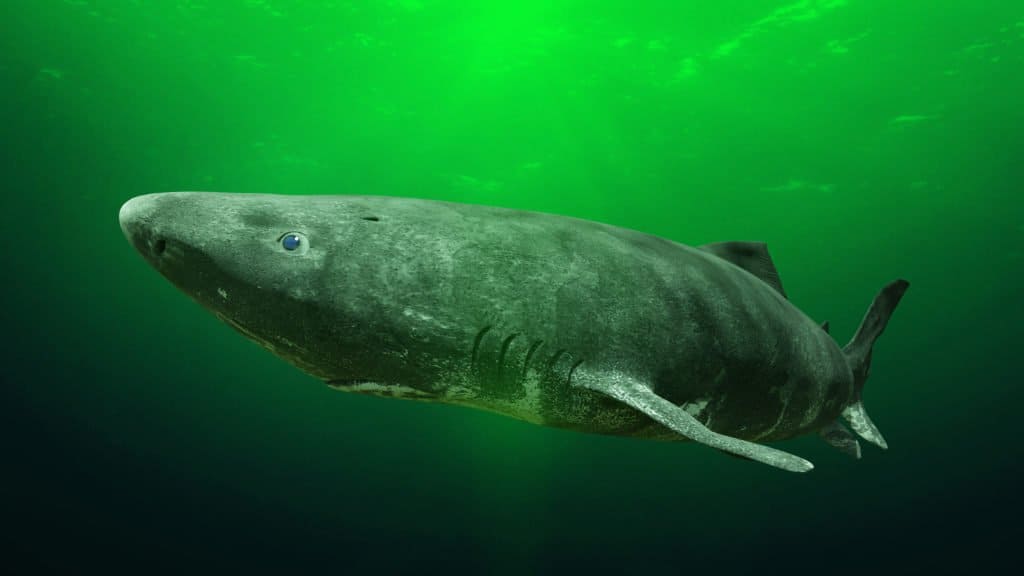
Greenland sharks have the longest lifespan of all sharks.
©iStock.com/dottedhippo
7. Frilled Shark
Another unusual deep sea shark that is considered a living fossil is the frilled shark (Chlamydoselachus anguineus). Frilled sharks get their name from their gill slits which have a fringed appearance. Frilled sharks have dark brown, eel-like bodies and reach 6.6 feet long. They eat a range of smaller sharks, bony fish, squid, and octopus and hunt by lunging at their prey and swallowing it whole.
Frilled sharks live over the upper continental slope in the Atlantic and Pacific oceans. These sharks typically inhabit water up to 3,900 feet deep. However, they are often caught as bycatch and have been captured in water as deep as 5,150 feet.
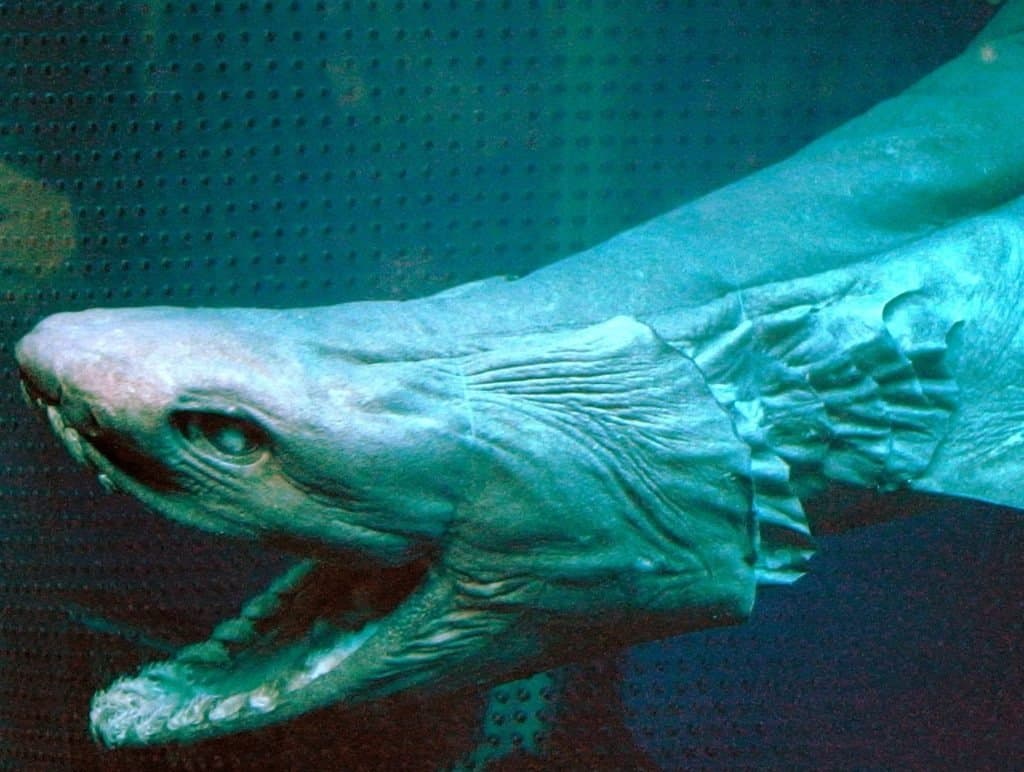
Frilled sharks get their name from their frilled gills.
©OpenCage / CC BY-SA 2.5 / Wikimedia Commons – Original / License
6. Cookiecutter Shark
Cookiecutter sharks (Isistius brasiliensis) are some of the smallest sharks, only measuring between 16 and 22 inches long. They are dark brown but have photophores on their undersides, which are organs that appear as luminous spots. Cookiecutters live in warm waters of the Atlantic, Indian, and Pacific oceans. They are common around islands and can be found at depths up to 12,139 feet. They spend their days at 3,280 feet and deeper, then rise to shallower depths during the night, although generally remaining below 280 feet.
Cookiecutter sharks create deep, round holes in their prey when feeding. This allows them to prey on animals much bigger than themselves. Many marine mammals have scars and wounds from cookiecutters. There have even been many times that they have damaged submarines by biting them, damaging the sides and sonar cable.
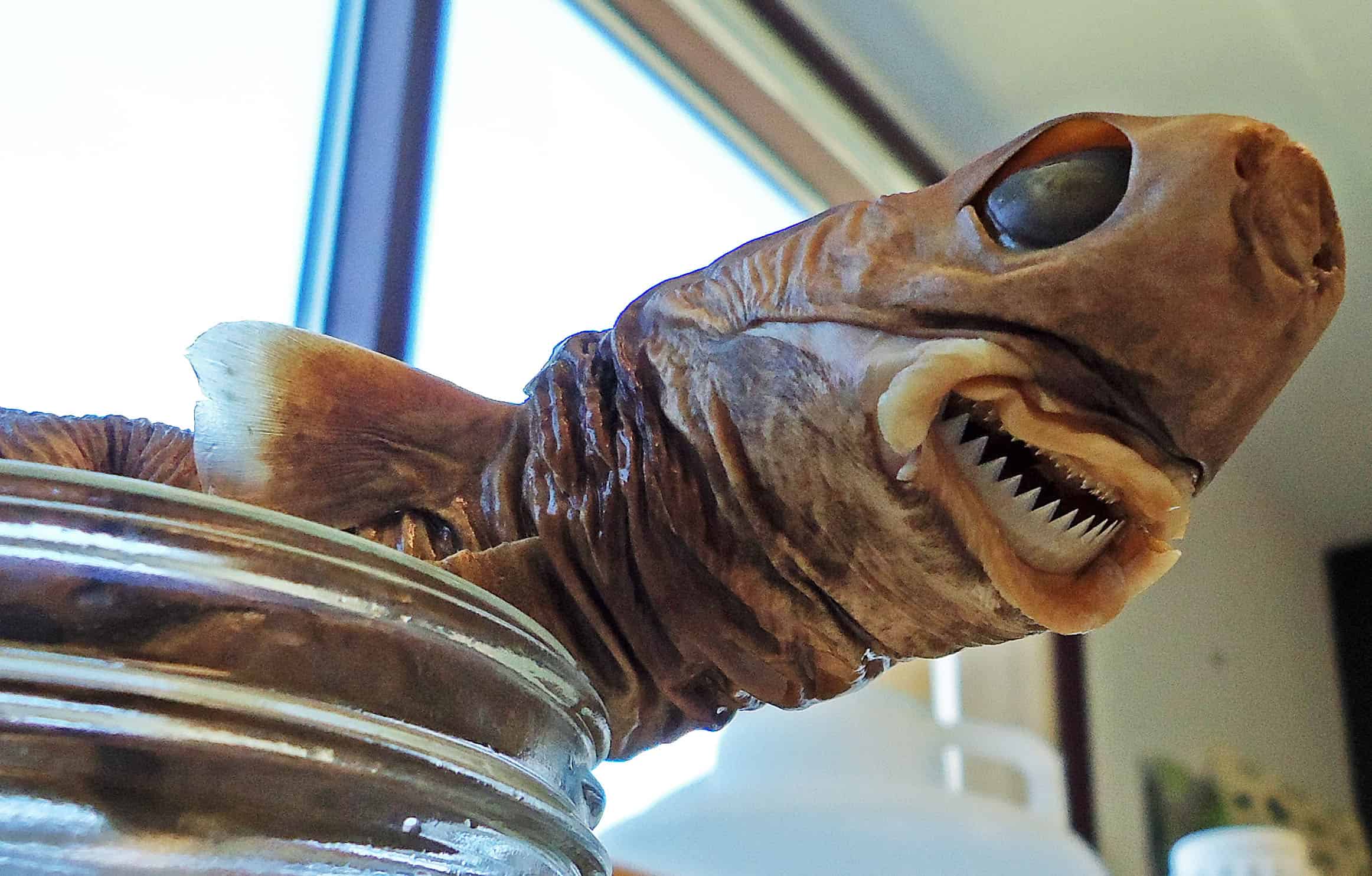
Cookiecutter sharks create deep, round holes in their prey when they bite them.
5. Swell Shark
Among the most unique sharks are swell sharks (Cephaloscyllium ventriosum). Swell sharks are a species of catshark that live in the eastern Pacific Ocean, between California and southern Mexico, as well as along the coast of central Chile. Swell sharks can be found as deep as 1,500 feet and inhabit rocky bottoms where they can hide in rock crevices all day.
They are not particularly large and only reach a maximum of 43 inches, but they have a fascinating defense mechanism. Swell sharks grab their tails in their mouths when they feel threatened and suck in water. When they suck in water, their stomachs expand, making them around twice their usual size and much harder for a predator to attack.
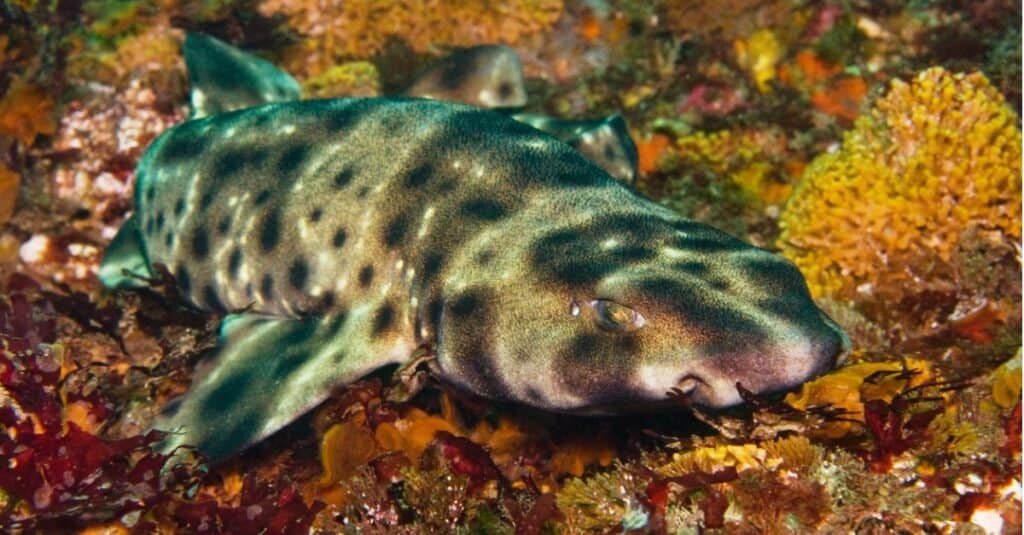
Swell sharks can double in size by swallowing water.
©iStock.com/Natalie Ruffing
4. Kitefin Shark
Another luminous shark is the kitefin shark (Dalatias licha). Kitefin sharks live in several populations around the world in the tropical and subtropical waters of the Atlantic, Pacific, and Indian oceans, as well as the Mediterranean Sea. They are mostly found between 660 to 1,970 feet, but some have been caught as deep as 5,905 feet.
Kitefin sharks have very short, round snouts and their average length is around 4 feet. Kitefin sharks, like cookiecutter sharks, have the ability to take huge chunks out of much larger animals, including whales. They prey on a wide variety of animals, including smaller sharks, skates, and bony fish.
Kitefin sharks have the ability to take huge chunks out of much larger animals, including whales.
©CSIRO National Fish Collection, CC BY 3.0 – Original / License
3. Ninja Lanternshark
A new species of deep sea shark that was only discovered in 2010 is the ninja lanternshark (Etmopterus benchleyi). Ninja lanternsharks occur along the continental slope in the eastern Pacific Ocean and their depth ranges from 2,740 to 4,735 feet. They are extremely small sharks and reach no more than 20 inches long. Ninja lanternsharks are black with white markings around their mouths.
These sharks are also luminous, which helps with camouflage and attracts prey. When they are feeding in shallower waters, their luminous belly has the same appearance as the sunlight filtering down from above, which camouflages them from would-be predators below. However, when they are in the deepest depths of the ocean, their luminous appearance attracts smaller prey to them.
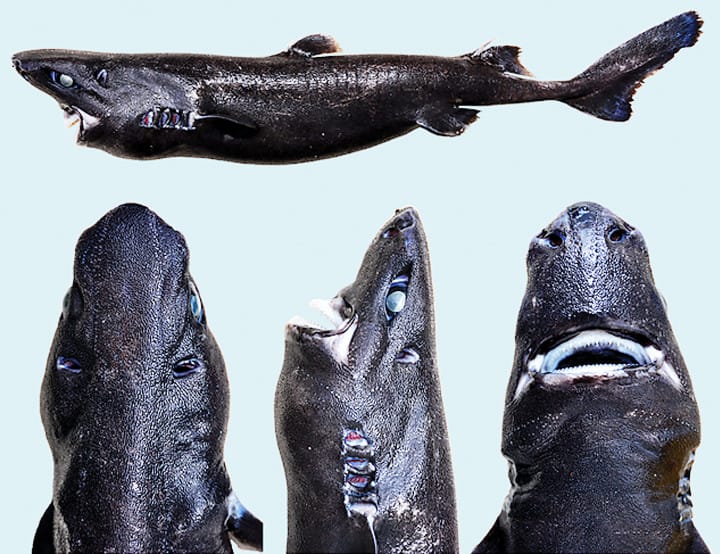
The ninja lanternshark’s luminous belly has the appearance of sunlight filtering down from above.
©Victoria Elena Vasquez/Journal of the Ocean Science Foundation, CC BY 4.0 – Original / License
2. Portuguese Dogfish
Portuguese dogfish (Centroscymnus coelolepis) are the deepest-living of all deep sea sharks and have been found at an incredible 12,139 feet deep. They have a wide range around the world, but most often occur near the ocean floor on lower continental slopes in the Atlantic, Indian, and Pacific oceans.
Portuguese dogfish are sleeper sharks that typically measure around 3-4 feet long. They are dark brown and have round, flattened snouts and small spines in front of their dorsal fin. These sharks mainly eat cephalopods and bony fish. They occasionally scavenge whale falls, — whale carcasses that sink to the ocean floor.
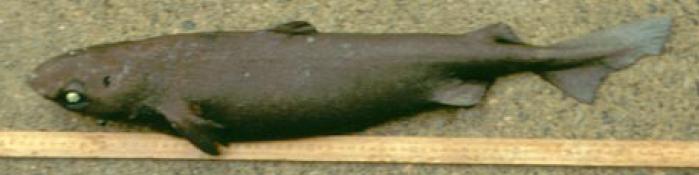
Portuguese dogfish hold the world record for the deepest-living shark.
1. Megamouth Shark
Megamouth sharks (Megachasma pelagios) live so deep that they are rarely seen by humans. Less than one hundred have been seen since the species was first discovered in 1976. Like basking and whale sharks, megamouth sharks are filter feeders and mainly eat plankton. As their name suggests, megamouth sharks have massively wide mouths, which are filled with tiny teeth. Megamouths are brownish-black above and white below, and can measure up to 18 feet long.
Megamouth sharks are fairly widespread, living in the Indian, Pacific, and Atlantic oceans. They can be found at depths of up to 3,280 feet deep. Like many other deep sea animals, they are vertical migrators, spending their days at the deepest depths, rising closer to the surface during the night to feed.
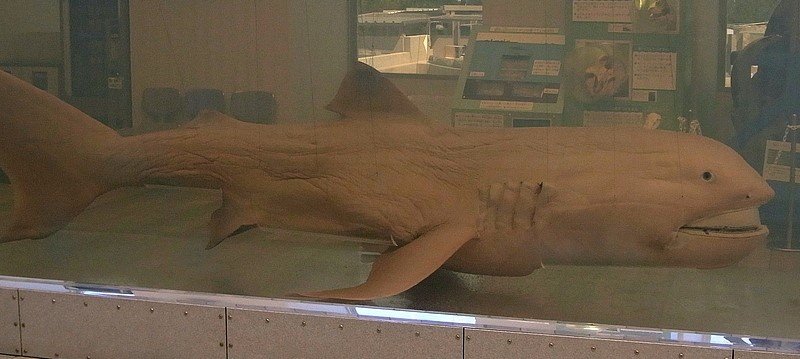
One of the weirdest animals of the sea, the Megamouth Shark, gets its name from its tub-like mouth.