
Groundhogs aren’t the only animals known for predicting the weather. Move aside, Punxsutawney Phil — a smaller creature can supposedly predict weather conditions before the start of winter, according to urban legend!
If you haven’t heard, woolly bear caterpillars (Pyrrharctia isabella) can indicate the upcoming forecast based on the colors of their bristles. According to folklore, people believe that these insects, also known as woolly worms, can predict winter temperatures. But is this actually real or is it just an old wives’ tale passed around for fun?
What is a woolly worm?
These fuzzy little guys are not actually worms (or bears!). Instead, they are caterpillars that appear every fall. And they are tiny — woolly worms weigh less than one ounce and only reach a length of one to two inches. They live in a variety of habitats in North America, including meadows, prairies, forests, fields, gardens, and urban areas, and eat low-growing broadleaf plants.
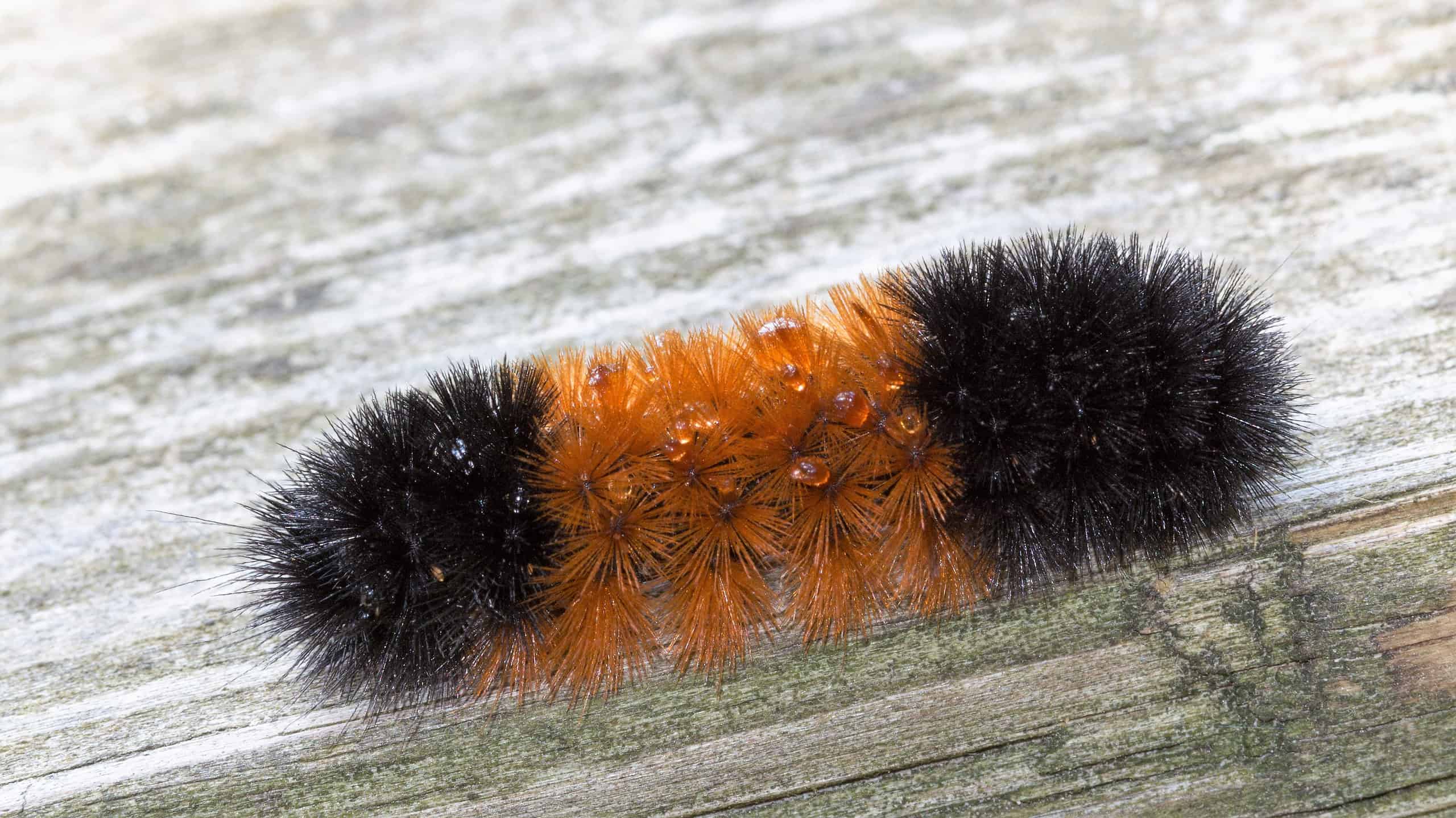
A woolly worm looks fuzzy, but its bristles are rough.
©Nancy Bauer/Shutterstock.com
These caterpillars look soft and fuzzy, but they are actually covered in rough bristles (so don’t try to cuddle up with them or you’ll regret it). These bristles are orangish-brown and black, and the color of their stripes vary. This variation is an important factor surrounding the folklore of their weather predicting abilities.
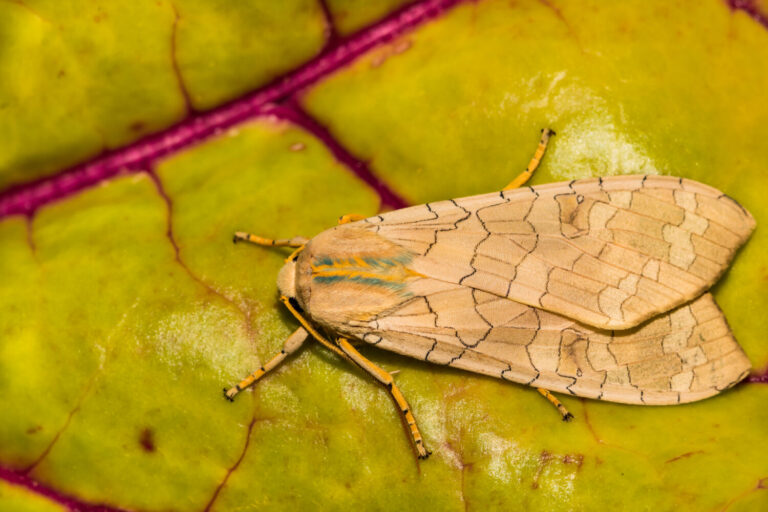
Like all caterpillars, woolly bear caterpillars will eventually take on a new form: the Isabella tiger moth (Pyrrharctia isabella). Woolly worms are the larval stage of this beautiful moth. People usually see them in the fall because they are on the hunt for places to overwinter, like under bark or logs. Then, they will emerge in the spring to spin cocoons and become Isabella tiger moths. These moths resemble butterflies due to their brightly colored wings.
How do they predict the weather?
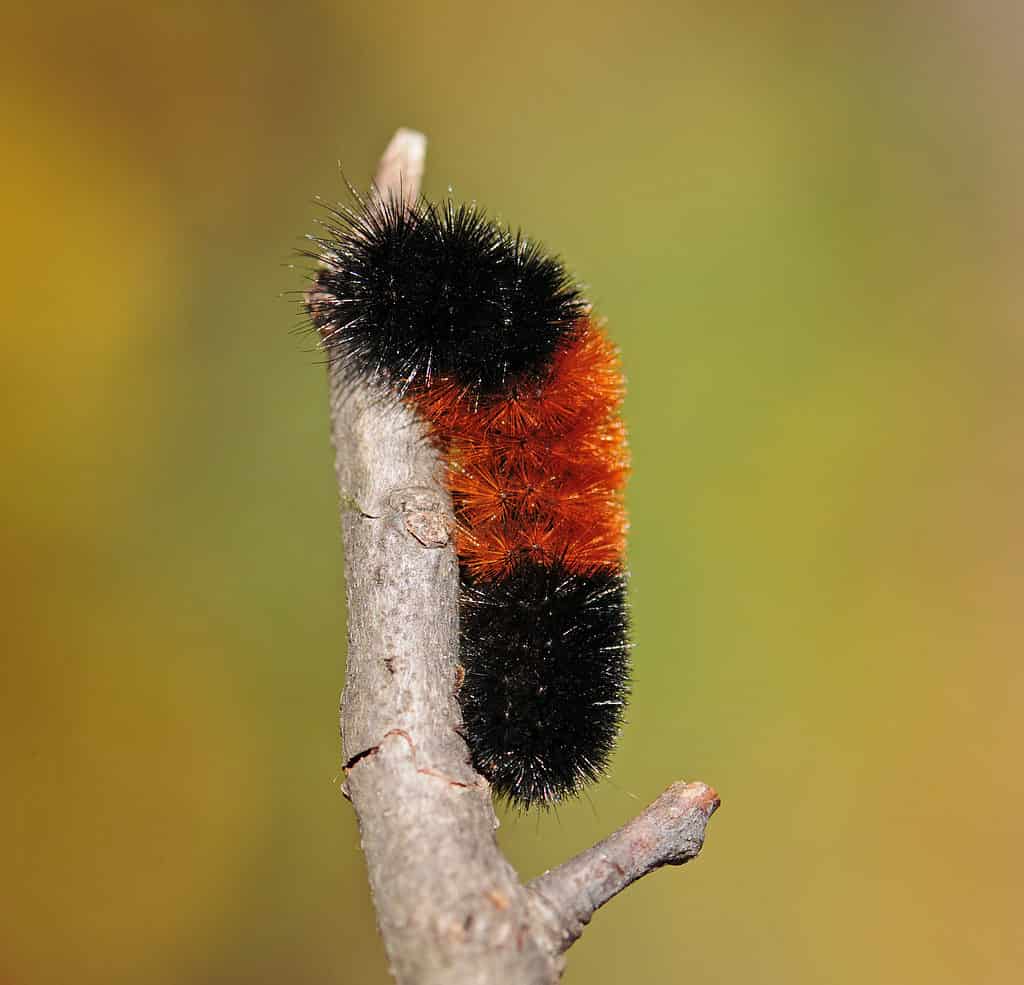
According to the folklore, to figure out if it’s going to be a challenging winter or a mild one, all you have to do is examine the woolly worm’s colorful bands. According to the Farmer’s Almanac, the wider the brown band, the milder the winter will be. However, if there are more black sections, it means a more severe winter is on its way.
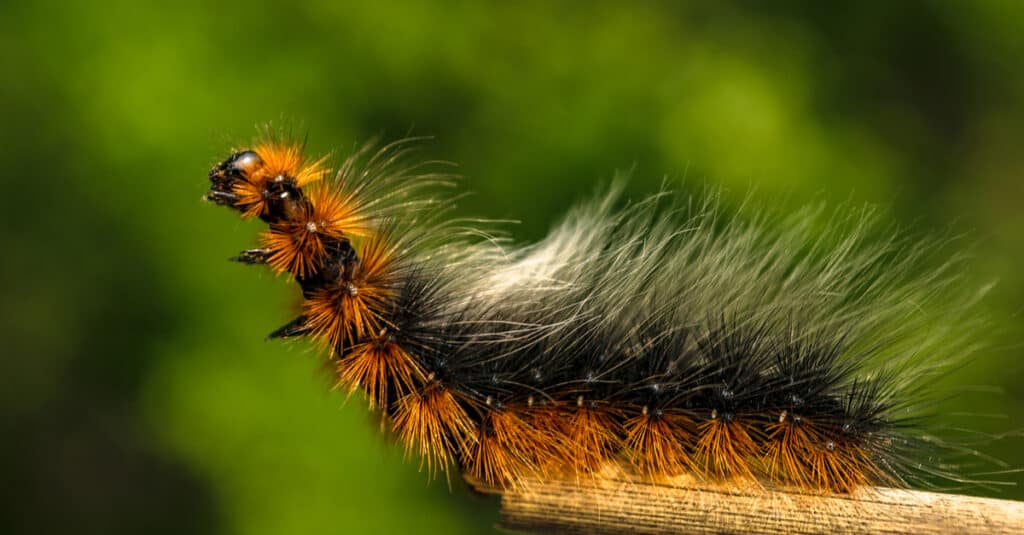
Woolly bear caterpillars may not actually predict the winter weather, but it is fun to guess.
©AlbertMi/Shutterstock.com
This rumor was started a long time ago, but it first became nationally recognized in 1948. Dr. C. H. Curran, curator of insects at the American Museum of Natural History in New York City, took his wife to Bear Mountain State Park to count the rings on the caterpillars and forecast the coming winter weather with a reporter friend at The New York Herald Tribune.
According to Farmer’s Almanac, Dr. Curran did this experiment over eight years, noting that winters were milder than average when the caterpillar’s brown band took up more than a third of its body. He concluded that the folklore had some credibility. Others have said that it is all in good fun (much like the groundhog) and is not at all scientific.
But, is it real?
The meteorologists at National Weather Service say that the woolly bear caterpillars can’t actually predict the weather. Their coloring is determined by how long the caterpillar has been feeding, its age, and its species. According to them, the width of the woolly worm’s banding indicates the past season’s growth and does not predict the upcoming winter.
Still, knowing it’s not scientifically accurate doesn’t take away any of the fun, and people still love checking the woolly worm’s stripes before planning for winter.
What do they predict for this winter?
Winter is quickly approaching, so of course, we’re wondering: what weather are these woolly worms’ forecasting in the coming months?
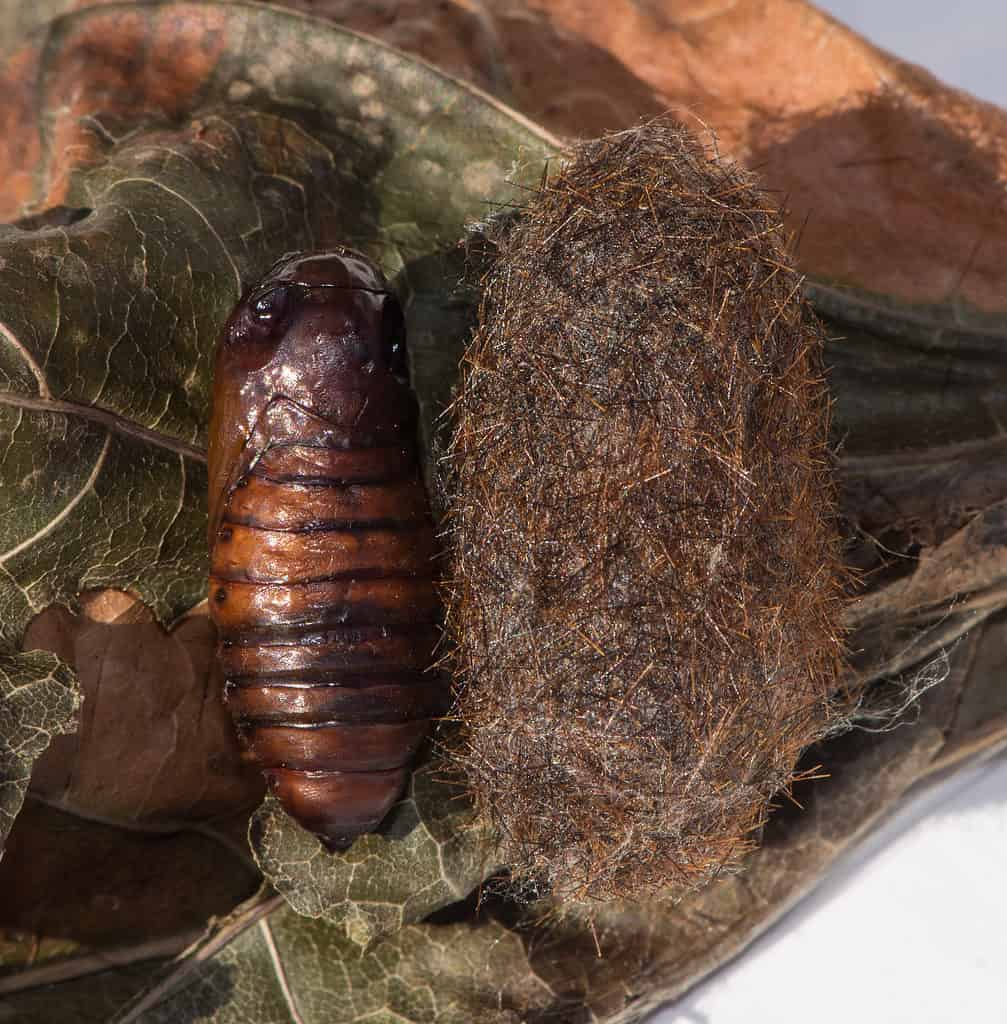
The woolly bear caterpillar will transform into an Isabella tiger moth in the spring.
©Landshark1/Shutterstock.com
The Farmer’s Almanac examined the insects gathered near their Dublin, NH, office and compared the number of black sections to brown sections on the caterpillars. Out of the six caterpillars they studied, five of them had brown stripes that took up more than a third of their body. That means the insects are predicting a calm winter this year, so we can’t complain about that!
Although the woolly worm predictions might not be based on science, there are many animals who can detect natural events before humans. For example, dogs can tune into frequencies that we miss and may become anxious when they sense an earthquake coming. Also, fish can detect pressure changes and will flee to safer waters ahead of a natural disaster. It just goes to show that animals are truly extraordinary.